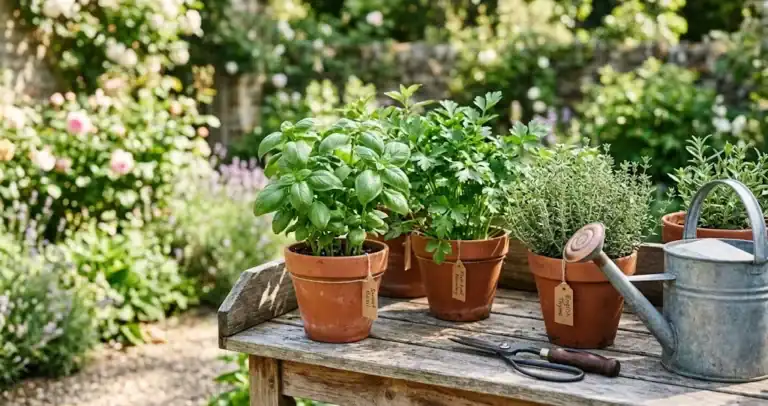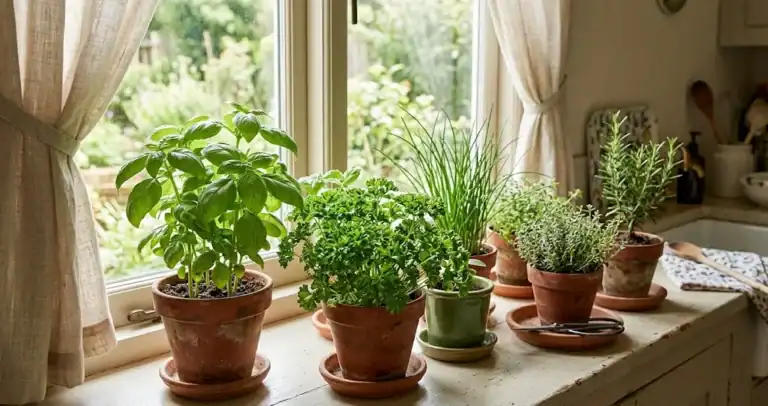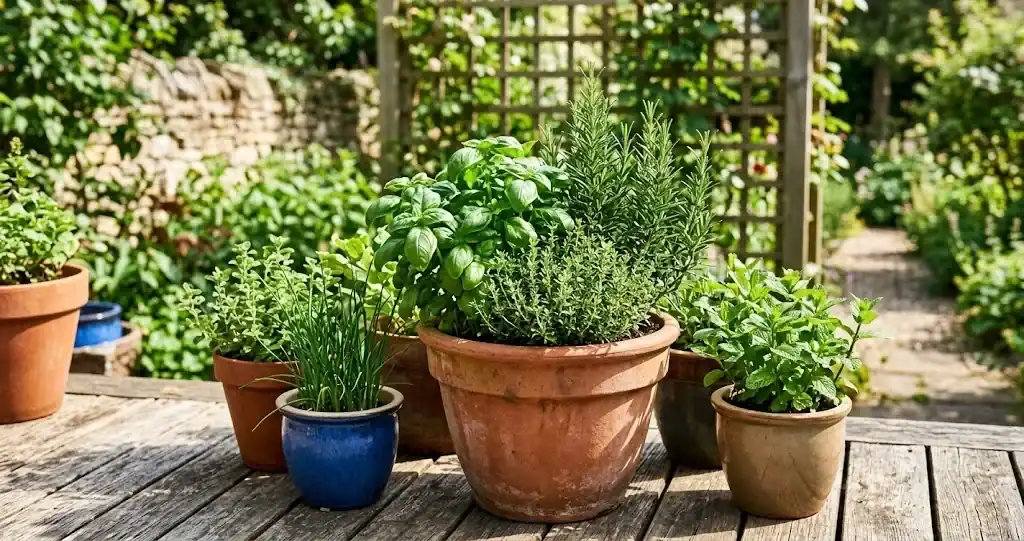
Growing fresh herbs in pots is one of the most rewarding gardening projects you can undertake. Whether you cultivate an expansive patio display, a sunny balcony corner, or a compact planter outside your kitchen door, a well-planned container herb garden gives you quick access to aromatic flavors every day. Starting a dedicated herb planter collection allows any gardener to grow herbs in small footprints where traditional in-ground planting is impractical.
When you plant herbs in containers, you gain complete authority over their soil quality, drainage, and daily light exposure. You can move pots to capture peak morning sun, shelter delicate seedlings from heavy spring rain, and bring tender pots inside when autumn temperatures drop. With smart companion planting and thoughtful pot placement, you can gather vibrant culinary greens across the entire growing season.
Best Herbs to Grow in Containers and Themed Pairings
Certain culinary herbs grow exceptionally well in containers. Grouping herbs with similar water and light requirements in one container simplifies ongoing maintenance and keeps every herb plant vigorous. These classic varieties are remarkably easy to grow when matched with suitable companions.
Mediterranean Herbs for Sunny Patios
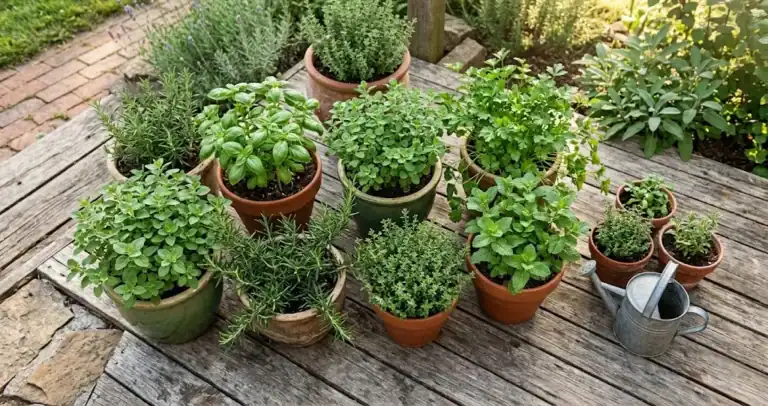
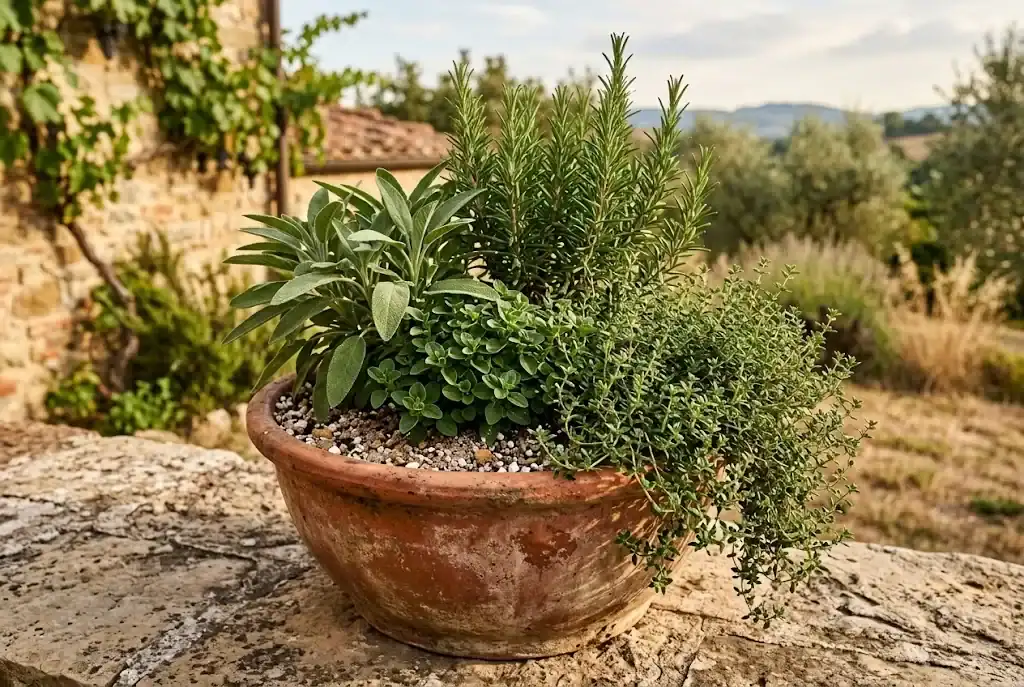
Sun-drenched Mediterranean herbs thrive in dry, gritty potting mix and hot afternoon sun. These woody perennials are among the easiest herbs to grow together in a single large planter:
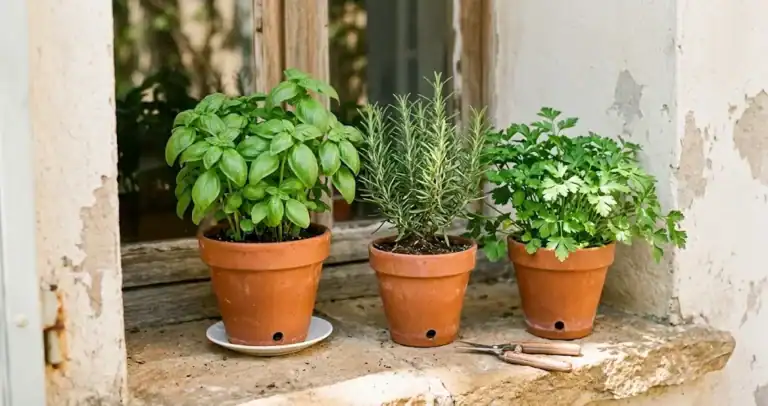
- Rosemary (Salvia rosmarinus): A drought-tolerant upright perennial that demands full sun and porous soil. Use deep terracotta pots or large containers with adequate drainage holes to give its roots room to expand.
- Thyme (Thymus vulgaris): A fragrant, low-growing ground cover that cascades over the edges of pots and provides continuous seasonings for roasts, soups, and marinades.
- Oregano (Origanum vulgare): A hardy, sun-loving herb that produces pungent leaves all summer long. Greek oregano is especially flavorful for homemade pizza and sauces.
- Sage (Salvia officinalis): A handsome perennial featuring velvety grey-green leaves that harmonize with culinary dishes and ornamental plantings alike.
Plant these drought-hardy Mediterranean varieties together in a sandy, fast-draining blend. Allow the top of the soil to dry out between waterings, and position the planter where it receives at least 6 hours of sun a day.

Fresh Salad and Cooking Herbs in One Container
Soft, leafy herbs need richer, moisture-retentive soil and steady hydration compared to woody perennials. Combining complementary salad varieties in a wide trough or window box creates an abundant kitchen supply:
- Sweet Basil (Ocimum basilicum): A heat-loving warm-season annual that thrives in fertile soil and warm sunshine. Regular trimming of top leaf sets prevents premature flowering.
- Flat-Leaf Parsley (Petroselinum crispum): A versatile biennial offering clean, peppery flavor that enhances stocks, sauces, and fresh compound butter.
- Chive (Allium schoenoprasum): A perennial allium that forms tidy clumps of mild onion-flavored greens crowned by purple flowers in late spring.
- Cilantro (Coriandrum sativum): A fast-growing cool-season herb prized for salsas and curries. Plant successive seeds every few weeks for ongoing pickings.
- Dill (Anethum graveolens): A delicate, feathery culinary staple that pairs naturally with fresh fish, cucumbers, and potato dishes.
Keep the soil evenly moist for this leafy collection, providing light afternoon shade during intense summer heatwaves.
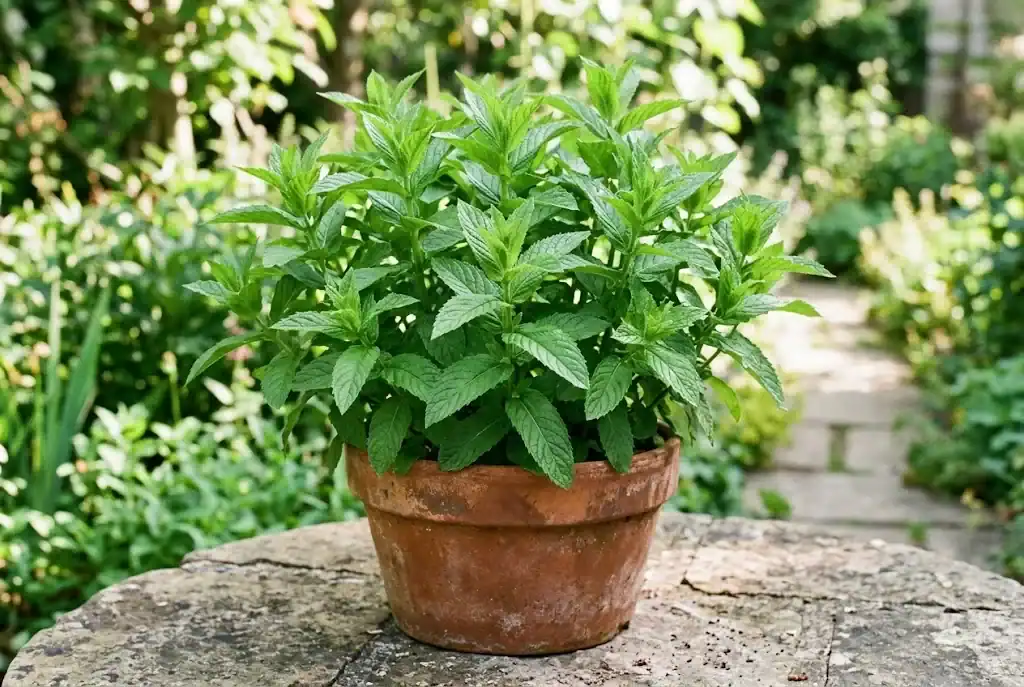
Beverage and Tea Herbs: Why You Must Grow Mint Alone
A dedicated beverage garden provides aromatic ingredients for herbal tea, lemonade, and summer cocktails. Favorite herbs to grow for drinks include lemon balm (Melissa officinalis), chamomile, and spearmint.
However, successful gardeners always heed one golden rule: give mint its own container. Plants in the mint family spread vigorously through underground runners. If you mix spearmint or peppermint with other herbs near the same root zone, mint will quickly choke out neighboring roots and overtake the pot. Growing mint in a standalone pot or container keeps its invasive stolons safely confined while supplying abundant fragrant leaves.
Creative Container Garden Layouts and Small-Space Ideas
You do not need a large garden area to produce an impressive herb supply. Creative layouts allow you to use herbs vertically, horizontally, and decoratively throughout your living space.
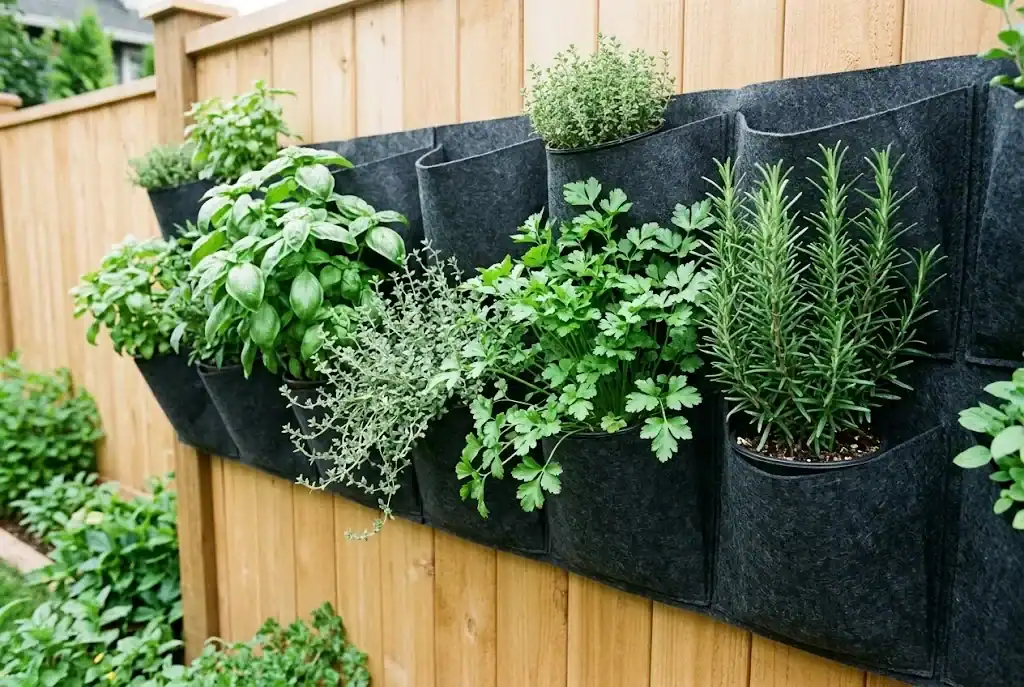
Vertical Herb Planter Walls and Pocket Systems
Vertical gardening turns bare exterior walls, balcony railings, and courtyard fences into productive growing stations. Modular pocket planters, cedar wall ladders, and hanging canvas pockets keep fresh herbs on hand at eye level. These setups improve airflow around foliage, keep plants away from soil-dwelling garden pests, and fit comfortably on compact balconies.

Tiered Planters and Stackable Pots
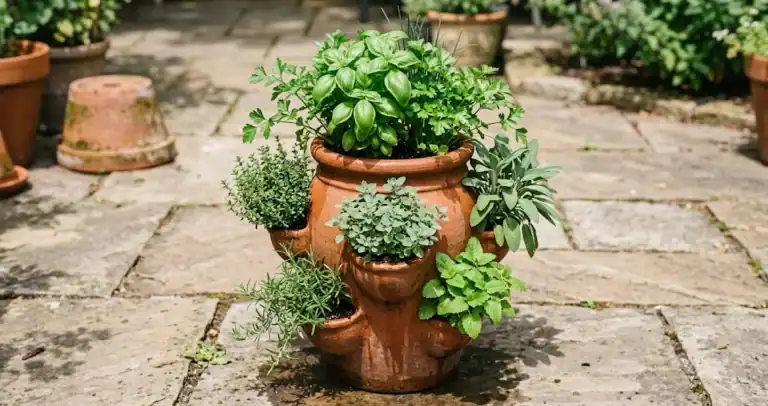
Stacking three graduated pots creates a freestanding herb tower with a minimal floor footprint. Place upright growers like rosemary and sage on the top tier, mid-height favorites like basil and parsley on the middle shelf, and cascading varieties like creeping thyme around the base. This vertical stacking makes watering efficient, as excess runoff trickles downward through the levels.
Window Boxes and Railing Planters
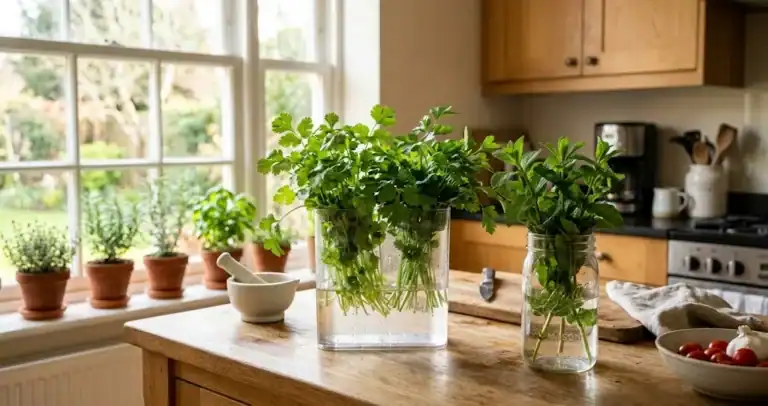
Mounting sturdy window boxes directly beneath kitchen sills keeps favorite herbs for cooking within arm’s reach of your stove. When setting up railing planters, select models measuring at least 8 inches deep so root systems develop strong anchors against wind.
Pretty and Edible Mixed Container Arrangements
Herbs are as ornamental as they are flavorful. Mix colorful purple varieties, golden oregano, and tricolor sage alongside companion flowers like calendula or nasturtiums. This combination creates an attractive, decorative display that attracts beneficial pollinators while enhancing outdoor dining areas.
Pots, Soil, and Drainage Essentials
Healthy root systems are the foundation of thriving potted herbs. Selecting appropriate materials, pot sizes, and growing mediums prevents root rot and stunted growth.
Container Materials and Sizing
Choosing the right pot material influences how often you need to water:
- Terracotta Pots: Breathable, porous clay allows moisture to evaporate through pot walls, making it ideal for drought-tolerant Mediterranean herbs.
- Glazed Ceramic and Plastic Planters: Non-porous surfaces hold moisture longer, which benefits thirsty annuals like basil and chives.
- Fabric Grow Bags: Breathable fabric promotes air-pruning of roots, preventing circling root balls in compact quarters.
Ensure larger perennials like rosemary have at least 12 inches of potting depth to support mature root networks. For an in-depth breakdown of vessel materials, shapes, and root volumes, see our practical advice on choosing the right herb containers.
Potting Mix and Base Drainage
Never scoop heavy topsoil from outdoor garden beds into containers. Garden soil compacts in pots, suffocating roots and impeding drainage. Instead, purchase a loose, nutrient-balanced potting mix from your local garden store, enriched with perlite, vermiculite, and composted bark.
Always verify that containers have functional drainage openings in the base. Standing water in sealed saucers quickly drowns root hairs. Elevate pots slightly on pot feet to ensure water flows freely away after irrigation.
Sunlight, Water, and Indoor Herb Growing
Meeting daily environmental needs ensures your potted arrangement produces robust essential oils and fragrant foliage.
Sunlight Requirements
Most culinary herbs require at least 6 hours of sun daily to build rich flavor. Place outdoor planters in a bright, sunny spot with direct exposure. If you plan to grow herbs indoors on a sunny windowsill or under dedicated grow lights, rotate the pots twice a week to maintain balanced, upright growth.
Watering Techniques
Watering container plants requires observation rather than rigid schedules. Check the top of the soil with your index finger; when the top inch feels dry, water deeply until liquid exits the bottom openings. Consistent moisture is essential during hot summer spells, when small containers dry out quickly.
For gardeners looking to expand their growing space and build foundational gardening skills, our step-by-step guide to growing an herb garden details site planning, soil preparation, and perennial management.
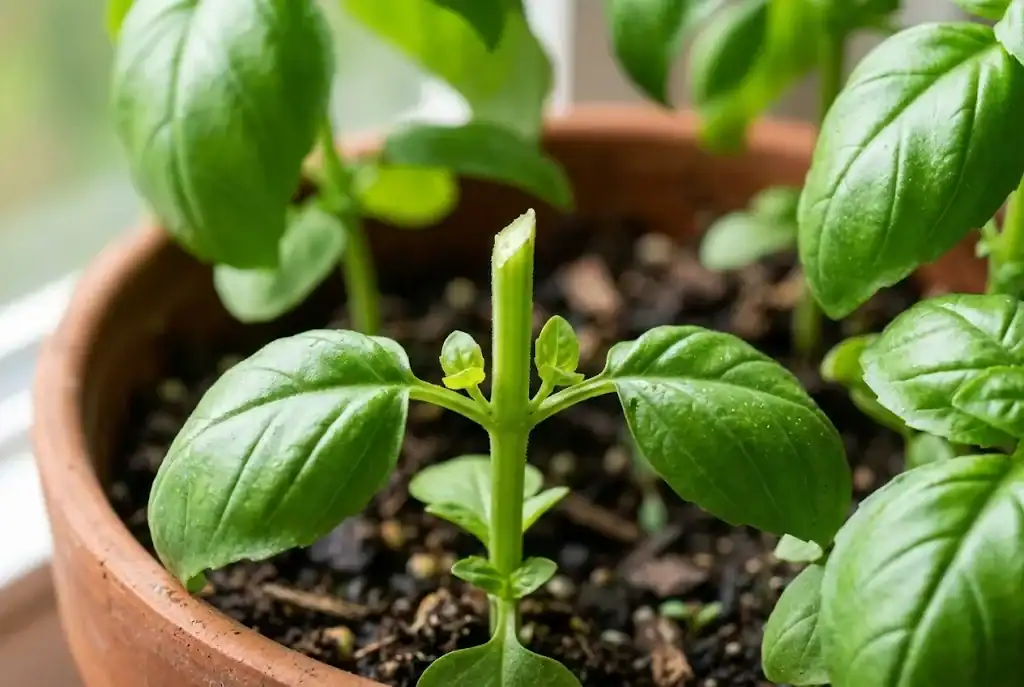
Harvesting Tips to Keep Herbs Growing All Season Long
Frequent, correct clipping stimulates vigorous new growth and prevents herbs from turning woody or bitter:
- Prune Above Leaf Nodes: Always cut stems just above a pair of healthy leaves. This encourages the plant to branch into two fresh stems at each cutting point.
- Remove Flower Buds Early: Pinch off developing flower spikes on basil, oregano, and cilantro as soon as they appear to direct energy into lush leaf production.
- The One-Third Rule: Snip no more than one-third of the total foliage during any single harvest session. Leaving two-thirds of the foliage intact allows the plant to recover and grow back rapidly.
To keep your potted plants healthy across multiple seasons through repotting and overwintering, explore our complete checklist on tips for maintaining herbs in pots.
Frequently Asked Questions About Growing Herbs in Pots
What herbs grow best together in one container?
Herbs with matching water, soil, and sunlight preferences thrive when planted together. Group Mediterranean herbs like rosemary, thyme, oregano, and sage in one gritty pot, or combine moisture-loving culinary herbs like sweet basil, parsley, and chives in a richer blend.
Can I grow potted culinary herbs indoors all year?
Yes, you can grow herbs inside throughout the year if you provide at least 6 hours of bright sunlight on a south-facing windowsill or supplement with a full-spectrum LED grow light for 12 to 14 hours daily.
Why does mint need its own separate pot?
Mint produces aggressive rhizomes that spread rapidly beneath the soil surface. Planting mint in its own container prevents its invasive root system from outcompeting and crowding out other culinary herbs.
How often should I water herbs in containers?
Water whenever the top inch of potting mix feels dry to the touch. Container plants typically need more frequent watering than garden beds, especially in small terracotta pots during hot summer weather.