Fresh lemongrass brings an unmistakable bright citrus aroma to home cooking, yet home cooks rarely use an entire bunch in a single meal. Whether you purchased fresh stalks from supermarkets or an Asian market, or brought in garden grown lemongrass from your backyard, freezing offers a practical way to capture its distinctive flavor for cooked dishes. While freezing softens the cell structure so thawed stalks lose their original crispness, the aromatics remain well suited for infusing into hot woks, broths, and marinades.
Proper preservation ensures that your culinary lemongrass stays ready to use for months in comforting noodle bowls, rich curry pastes, and fragrant stir-fries. Before preserving your harvest, reviewing our broader guide to harvesting herbs helps you understand the peak timing for gathering aromatic plants with high essential oil content.
Selecting and Preparing Fresh Lemongrass Stalks
Before you begin the freezing process, choose plump stalks with a firm bulbous base and clean pale green coloration. Avoid stalks that feel light, dry, or brown throughout. Culinary lemongrass (Cymbopogon citratus) is the type used in cooking; choose it rather than citronella grass when you need edible stalks, as it offers a sweeter, lemony fragrance reminiscent of lemon verbena.
If you are gathering fresh stems from your garden, our guide on harvesting fresh lemongrass stalks outlines how to cut mature stems cleanly at the soil line without damaging the plant base. Once you have your stalks, follow these essential prep instructions:
- Rinse each lemongrass stalk under cool running water to remove garden soil or debris.
- Pat the stalks completely dry with clean kitchen towels, since excess moisture creates ice crystals during freezing.
- Use a sharp knife to cut away the dry root end, removing roughly a quarter inch from the base.
- Peel away the dry, woody outer layers until you reveal the tender, pale white part in the lower section.
- Trim off the upper leafy green parts and set them aside for brewing flavorful stocks or herbal teas.
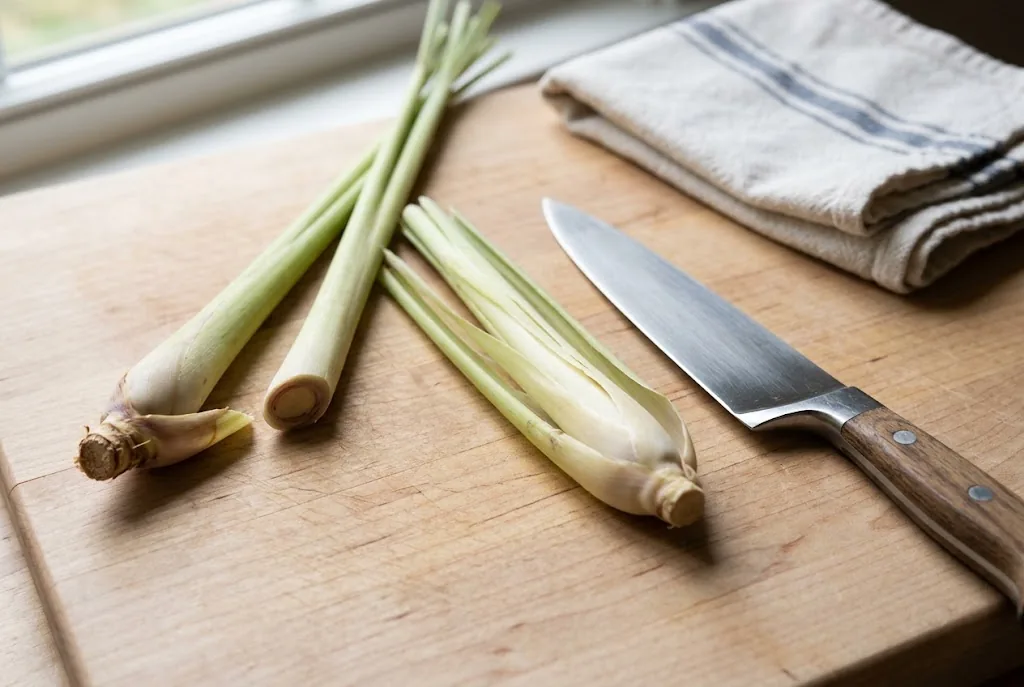
Method 1: Freezing Whole Stalks and Trimmed Segments
Freezing whole stalks and trimmed pieces is the simplest preservation method and works perfectly for broths, curries, and simmered dishes across Southeast Asian cuisines. When you freeze whole segments, you can drop them directly into hot liquid during cooking to release their essential oils, then discard the fibrous stalk before serving.
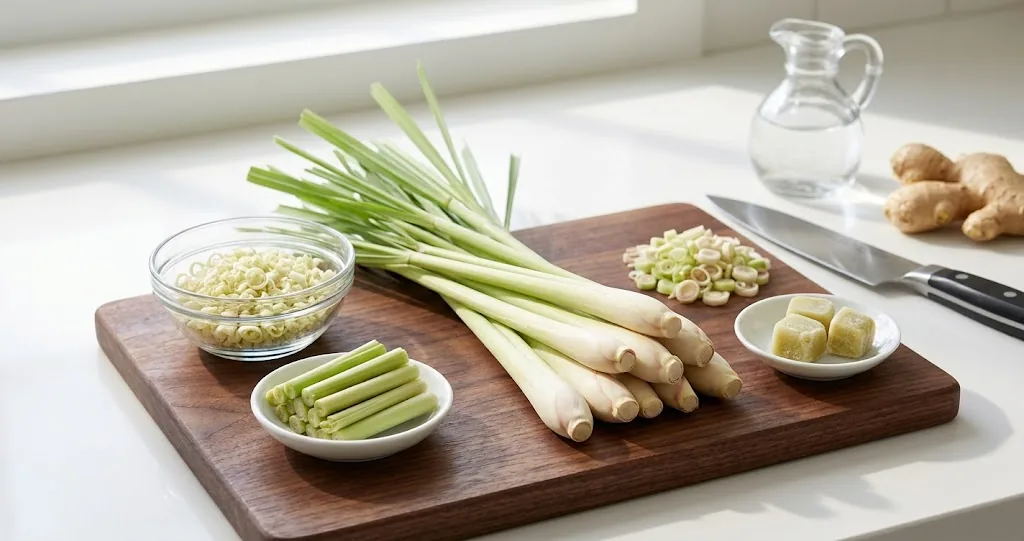
To prepare segments, take your trimmed stalks and slice them into manageable three to four inch pieces. Bruise each piece lightly with the flat side of your chef knife to rupture the oil cells, which makes it easier to chop and extract maximum flavor during simmering. Arrange the prepared pieces in a single layer on a parchment-lined baking sheet and place them in the freezer for two hours until firm.
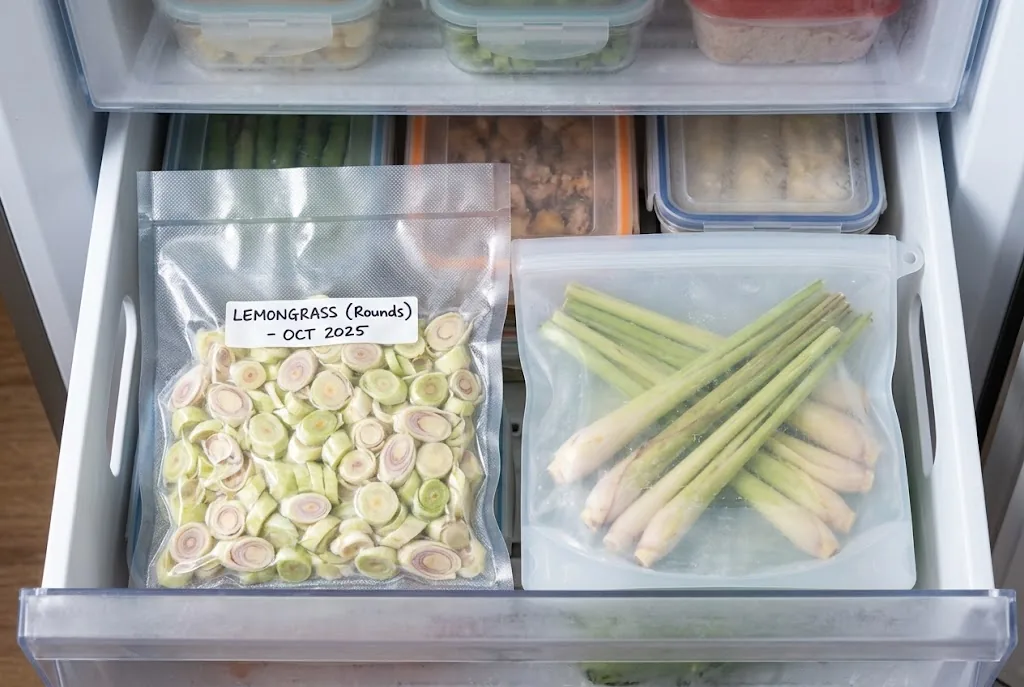
Once frozen solid, transfer the pieces into airtight freezer bags or a heavy-duty zip-top bag. Press out all excess air to protect against freezer burn, or use a vacuum seal machine for extended freshness. Label the bag with the storage date before returning it to the freezer.
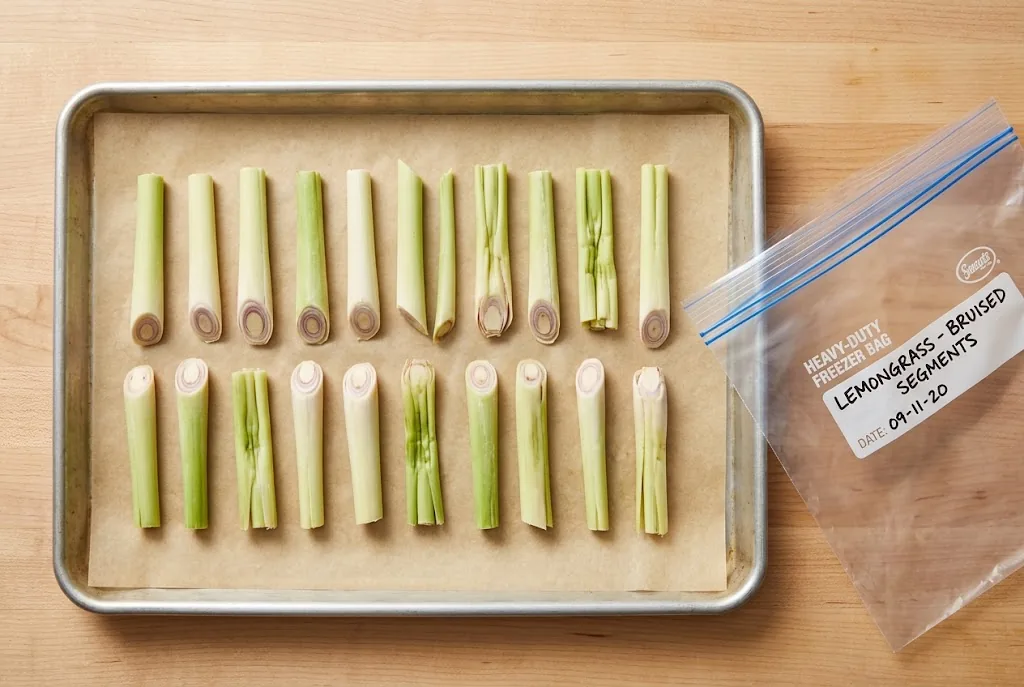
Method 2: Freezing Sliced and Finely Chopped Lemongrass
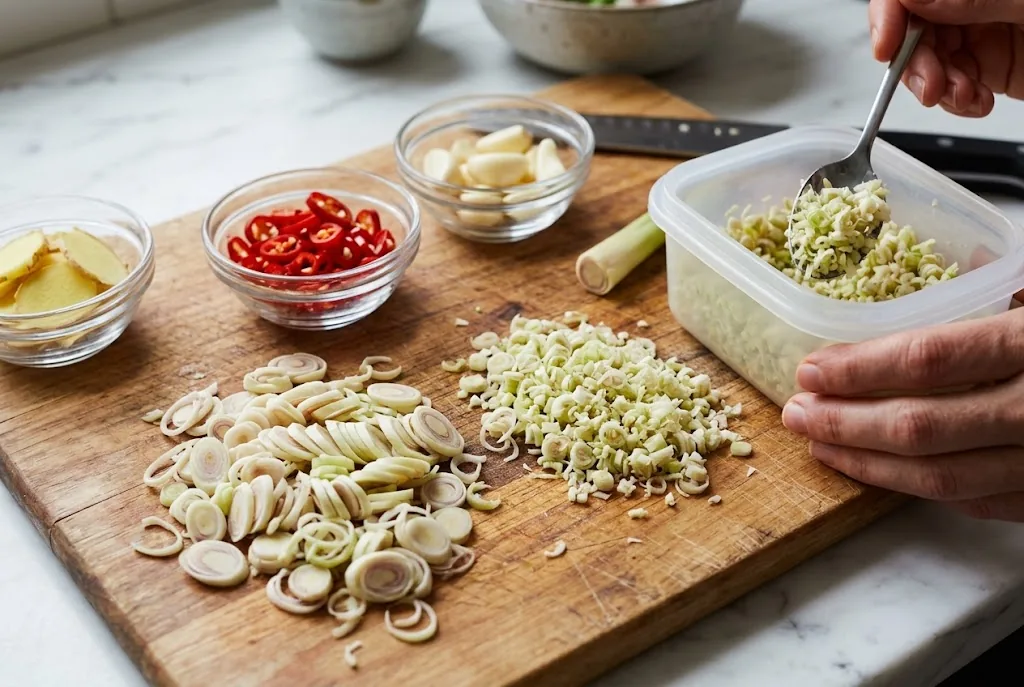
If you enjoy quick weeknight cooking, preparing finely chopped lemongrass before freezing saves considerable prep time. Sliced lemongrass thaws in minutes and blends seamlessly into sauteed aromatics alongside minced ginger and garlic, scallion, and fresh chili pepper.
To chop lemongrass efficiently, slice the tender white core into paper-thin rounds. Because the plant fibers run lengthwise, thin crosswise cuts make the pieces tender enough to chew. Transfer the thin rounds to a cutting board or food processor and mince them until you achieve a fine, uniform texture.
Spread the finely chopped pieces across a lined tray to flash freeze for one hour, then portion them into a sealed container or flat zip-top bag. When you need aromatics for a quick satay marinade or wok dish, break off a single tablespoon and drop it straight into the hot pan.
Method 3: Pureed Lemongrass Paste in Ice Cube Trays
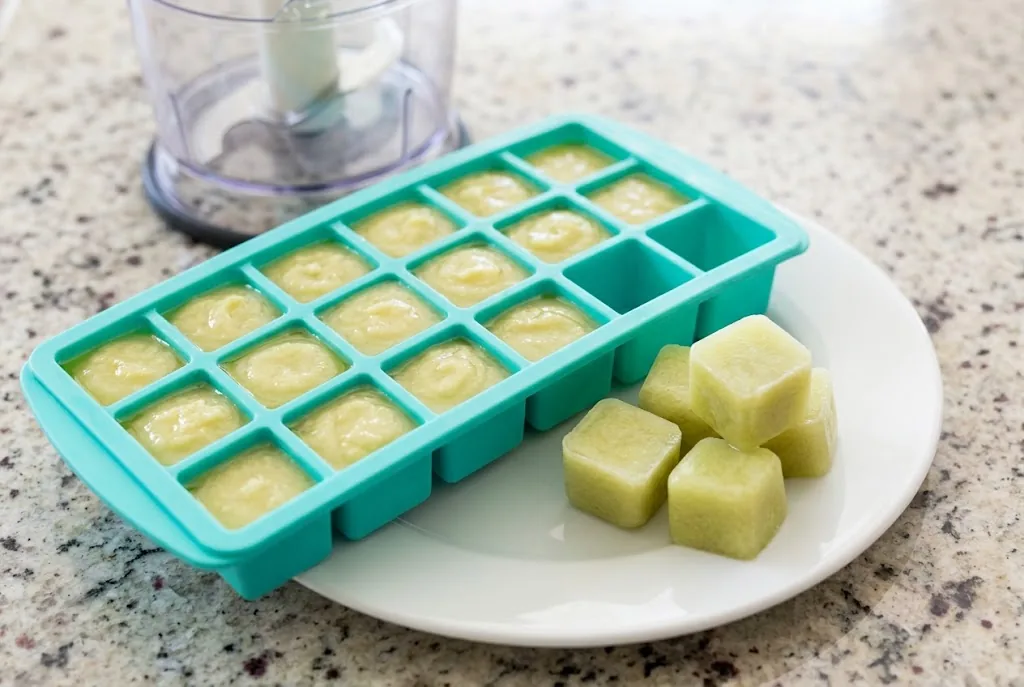
Creating pureed lemongrass cubes gives home cooks convenient, pre-measured portions for sauces, marinades, and dressings. Blending the tender white core produces a smooth paste that disperses evenly throughout delicate recipes, while slicing the core thinly first helps the food processor handle its dense fibers.
Place two cups of sliced lemongrass into a food processor with one tablespoon of neutral vegetable oil or a small splash of water. Pulse until a smooth paste forms. Spoon the mixture into silicone ice cube trays, packing roughly 1 tablespoon or 1 teaspoon into each cavity.
Freeze the tray for four hours until the lemongrass paste cubes are completely solid. Pop the cubes out of the tray and store them in an airtight container or ziplock bag. Each cube delivers concentrated citrus flavor that melts effortlessly into simmering Thai curry, braised meats, or Asian cooking glazes.
Using Frozen Lemongrass in Soups, Marinades, and Curries
One of the greatest benefits of freezing lemongrass is that you rarely need to defrost it before cooking. Minced pieces and pureed cubes melt within seconds when tossed into a sizzling wok, hot skillet, or simmering saucepan.
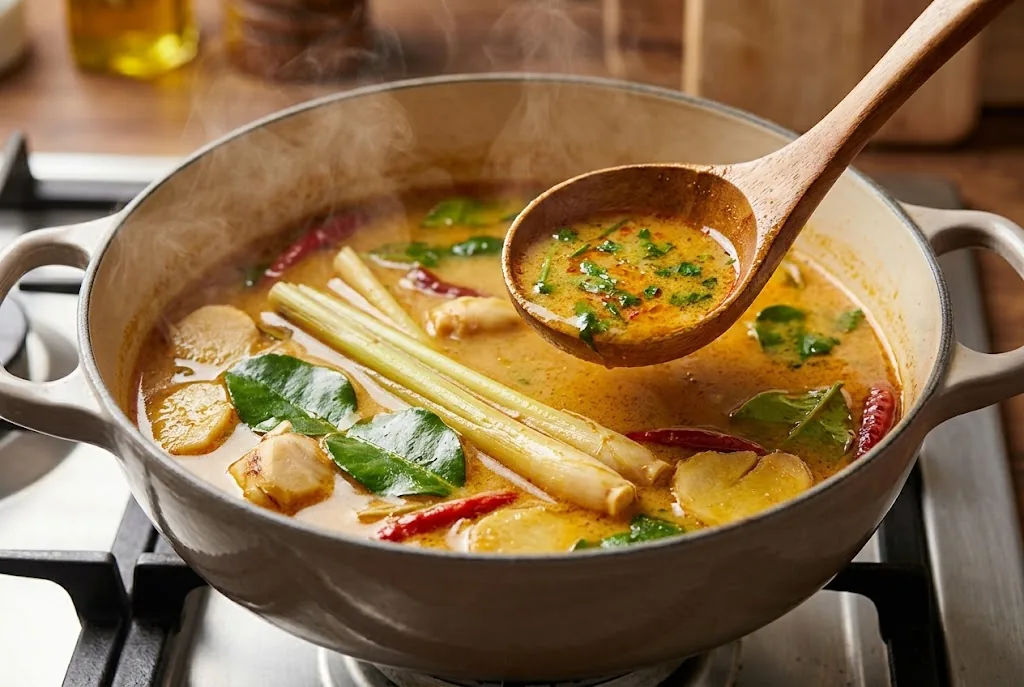
Whole frozen segments can go directly into boiling water or broth when preparing authentic Thai soups and stews, such as Tom Yum or Tom Kha Gai alongside makrut lime leaves. Simmering allows the citrusy aroma to infuse into coconut milk and broth while softening the firm stem. For home cooks looking for fresh recipe ideas, our guide on delicious ways to cook with lemongrass showcases how to balance aromatic herbs with savory meats, seafood, and vegetables.
When you want to make a marinade for grilled pork, chicken satay, or roasted tofu, thaw minced portions in the refrigerator for twenty minutes before whisking them with fish sauce, soy sauce, lime juice, and brown sugar. If you preserved the green tops, steep them in hot water with fresh ginger slices to brew a soothing cup of lemongrass tea.
Storage Life and Kitchen Troubleshooting
When stored in airtight packaging at a stable freezer temperature, frozen lemongrass delivers its best quality within six to twelve months. Over extended storage, flavor, aroma, and texture gradually decline as moisture slowly migrates and delicate compounds oxidize. Keeping air exposure minimal helps slow this gradual loss and protects against freezer burn, though older stalks will have a milder citrus impact than freshly frozen portions.
To prevent quality loss, keep these storage tips in mind:
- Always freeze the white lower portion separately from the green tops to match your culinary uses.
- Avoid leaving air inside storage bags, which leads to ice accumulation and muted aroma.
- Avoid repeated thawing and refreezing to preserve texture and flavor, though refreezing is safe if the herb stayed continuously cold under refrigeration or still contains ice crystals.
- If you store lemongrass for frequent cooking, you can freeze ginger and garlic portions alongside it for complete recipe kits.
- If you prefer shelf-stable herbs, dried lemongrass is an alternative, though it lacks the vibrant fresh citrus punch of frozen stalks.
- When buying lemongrass in large quantities, process the whole batch immediately to capture peak freshness.
With these step-by-step freezing methods, you can enjoy the vibrant taste of fresh lemongrass in your favorite dishes whenever inspiration strikes.