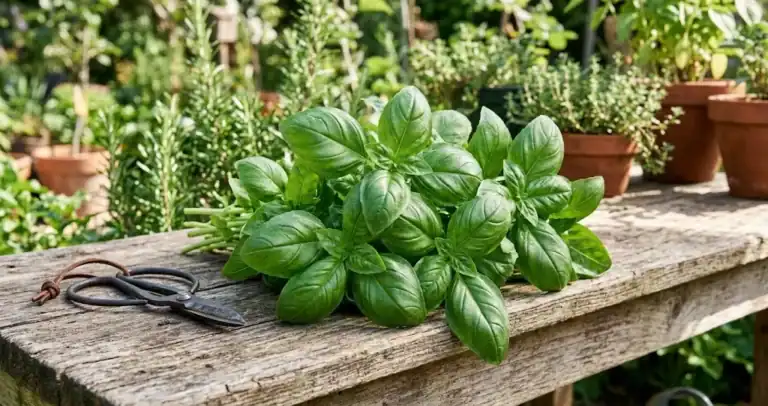
Sweet basil is among the most rewarding culinary herbs to bring into the kitchen, yet it frustrates cooks more than almost any other leafy green. Bring a fragrant bunch home from the market or clip fresh stems from the garden, slip them into the refrigerator crisper drawer, and within forty-eight hours the emerald foliage turns bruised, slimy, and black. This rapid decline is chilling injury, and avoiding it requires only a simple change in routine.
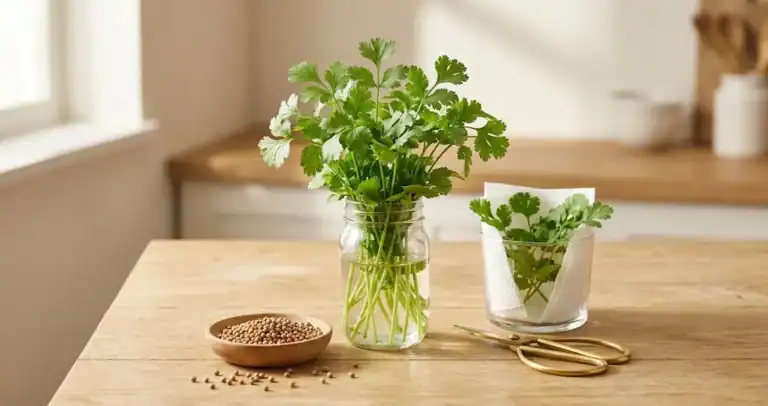
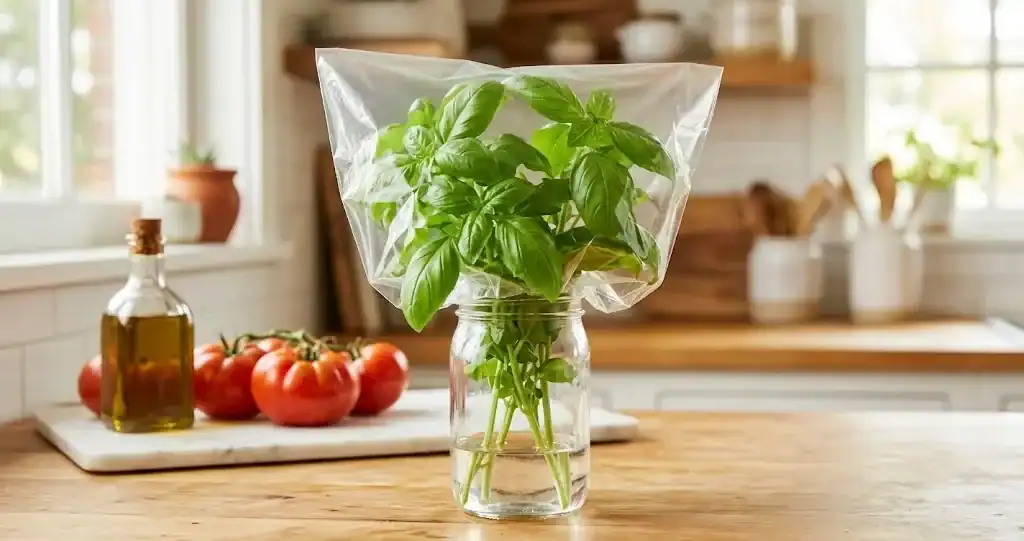
The best method for how to store sweet basil for immediate culinary use is to treat the cut stems exactly like a bouquet of fresh flowers. Place the bunch upright in a glass jar with a couple inches of water and keep it on the counter at room temperature away from direct sunlight. Stored this way, fresh basil leaves stay vibrant, fragrant, and ready to snip for one to two weeks without losing their essential oils or crisp texture.
If you grow a basil plant at home, harvest timing makes a substantial difference in how well cut stems hold up on the counter. Learning how to harvest sweet basil correctly by taking clean stem cuttings just above leaf nodes ensures the plant branches vigorously while giving you sturdy stems that drink water readily.
Why sweet basil hates the refrigerator
Most home cooks instinctively reach for the crisper drawer when unloading fresh produce. For hardy perennials such as rosemary, or cool-season tender herbs like parsley and cilantro, refrigerator temperatures near forty degrees Fahrenheit slow down moisture loss and respiration. Sweet basil, however, originated in tropical climates. Its cell walls cannot tolerate cold temperatures.
When you place tender cuttings in the fridge, temperatures below fifty degrees cause the delicate cellular membranes to rupture. Enzymes within the tissue react with atmospheric oxygen, causing the leaves to turn dark and wilt into an unusable mush within days. Unless your kitchen regularly exceeds eighty-five degrees in the peak of summer, keeping cut stems on the counter is far safer than chilling them.
The countertop bouquet: The best way to store basil for daily cooking
Keeping a countertop jar of fresh cuttings requires minimal effort and provides immediate access whenever a recipe needs fresh flavor. Follow these straightforward steps to keep your bunch of basil green and fresh:
- Trim the stems: Use sharp kitchen shears or a clean knife to trim the lower half-inch of each stem at a slight angle. This removes calloused tissue and allows the capillaries to draw moisture immediately.
- Remove lower foliage: Strip off any leaves that sit near the bottom of the stems. Submerged foliage quickly decays in stagnant water, encouraging bacterial growth that plugs stem vessels and causes the cuttings to wilt.
- Place in water: Set the cut ends in a sturdy glass or wide-mouth quart jar filled with two to three inches of clean, cool tap water.
- Loosely cover the foliage: Cover the jar with a lightweight plastic bag, loosely draped over the top of the foliage. This creates a mini-greenhouse that maintains high relative humidity around the leaves while still allowing gentle airflow. Avoid sealing the bag tightly around the rim of the jar.
- Maintain clean water: Change the water every couple of days, or whenever the liquid looks cloudy. Fresh water prevents microbial slime and keeps cut stems drinking freely.

Washing and prepping basil leaves before storage
A common mistake when handling basil from the garden is washing the entire harvest before storing it in water. Excess surface water trapped between crowded foliage encourages mold and bacterial decay. Whenever possible, leave cut stems unwashed until the moment you plan to cook.
If your basil harvest is dusty or gritty from rain splash, gently swish the stems in a bowl of cool water. Lay the stems on clean paper towels and pat them thoroughly dry before setting them in your jar with water. Never pack wet sprigs into an airtight container, as lingering moisture guarantees rapid spoilage. For broader garden harvesting schedules, consult our comprehensive guide on when and how to cut any herb.

How to freeze basil to preserve your harvest for winter
When late summer brings a lot of basil from your garden beds, countertop jars cannot keep up with the bounty. Freezing is the most reliable way to preserve the aromatic qualities of the herb for hearty winter cooking.
Freezing whole leaves in freezer bags
You can freeze basil whole for dropping into warm sauces. Pick clean, dry leaves from the stems and arrange them in a single layer on a parchment-lined baking sheet. Place the tray in the freezer for two hours until the leaves are frozen solid. Transfer the frozen foliage into a heavy-duty freezer bag, press out excess air, and seal tightly. When you need herbs for simmering broths or stews, grab a handful of whole leaves directly from the bag without needing to thaw them beforehand.
Freezing basil cubes in olive oil
Freezing herbs and oil together is one of our favorite ways to preserve fresh basil flavor. The oil coats the delicate plant cells, providing an effective barrier against air exposure that prevents the leaves from turning dark in sub-zero temperatures.
- Place clean leaves in a food processor or blender.
- Add two tablespoons of extra-virgin olive oil per cup of packed foliage. Adding the oil helps the blades chop the leaves evenly into a fine paste without over-processing.
- Spoon the fragrant paste into compartments of an ice cube tray.
- Freeze until solid, then pop the individual basil cubes out of the tray and store them in a zip-top bag in the freezer.

Each frozen cube provides roughly one tablespoon of rich herbal oil, ready to melt into warm pasta, braised vegetables, or marinara sauce.
The quick blanching method for vibrant color
If you want whole frozen leaves to retain their vivid bright green color rather than fading to olive drab, blanching is the ideal solution. Plunge clean leaves in boiling water for exactly three to four seconds, then immediately transfer them into a bowl of ice water using a slotted spoon. This rapid heat treatment denatures polyphenol oxidase, the enzyme responsible for browning.
Remove the chilled leaves from the ice bath, spread them flat on paper towels, and pat them completely dry. Pack the blanched foliage in layers separated by parchment paper inside a freezer bag and lay the bag flat in your freezer.

Preserving basil by making fresh pesto
If you have much basil left over at the end of the season, making pesto is the classic Mediterranean preservation technique. In a food processor, pulse fresh leaves, extra-virgin olive oil, fresh garlic cloves, and toasted pine nuts or walnuts to make a paste. Season with a pinch of sea salt.
If you plan to freeze your pesto, hold off on adding grated Parmesan or Pecorino cheese until you thaw the sauce for dinner. Dairy fat can turn grainy and lose its clean flavor in prolonged frozen storage. Portion the garlic and herb mixture into half-cup glass jars or freezer containers, top each container with a thin layer of olive oil to seal out air, and freeze for up to six months.
Signs that fresh herbs have gone bad
Regardless of which storage methods you use, fresh herbs eventually reach the end of their culinary life. Inspect your stored herbs before cooking and discard any foliage showing these warning signs:
- Dark or black discoloration: Leaves that have turned dark brown or completely black have suffered cell collapse and oxidized, losing their sweet aroma.
- Slimy texture: Stems or foliage that feel slippery or slimy indicate active bacterial breakdown.
- Sour or moldy smell: Fresh cuttings should smell sharp, sweet, and anise-like. A fermented, sour, or musty odor means the herb has spoiled.
- Visible mold spores: Any white or gray fuzzy growth on leaves or along the water line requires discarding the entire bunch.
Putting preserved basil to work in the kitchen
Knowing how to store sweet basil ensures that every fragrant sprig you bring home ends up on the table rather than in the compost bin. Use crisp, freshly harvested countertop leaves to finish a classic caprese salad with ripe tomatoes and fresh mozzarella, or scatter torn leaves over a piping-hot pizza margherita straight from the oven.
When winter arrives, drop your frozen basil cubes directly into bubbling tomato soups, lentil stews, or roasted vegetable sautés. To explore further culinary inspiration and discover how this classic herb elevates daily meals, read our detailed guide on ways to cook with sweet basil.
Frequently asked questions about storing basil
Is it better to store basil on the counter or in the fridge?
For fresh cut stems, keeping the bunch on the counter in a jar with water is significantly better than storing it in the fridge. Sweet basil is sensitive to cold temperatures and develops black spots, wilted foliage, and decayed leaves when subjected to standard refrigerator temperatures below fifty degrees Fahrenheit.
Can you store fresh cuttings in a produce bag?
You can loosely drape a produce bag or zip-top bag over a jar of cut stems on the counter to retain humidity. However, you should never seal dry or damp herbs tightly inside an airtight bag in the refrigerator, as trapped moisture and cold temperatures quickly turn the leaves into black mush.
Can you dry sweet basil instead of freezing it?
While you can dry the herb using a dehydrator or hanging small bundles in a warm, dry room, sweet basil loses a significant amount of its volatile essential oils during the drying process. For preserving authentic summer flavor and vivid green color, freezing in olive oil or pureeing into pesto produces far superior culinary results compared to dried leaves.
How long does fresh sweet basil last using different storage methods?
Cut stems kept in a jar of water on the kitchen counter typically last seven to fourteen days. Whole leaves frozen in freezer bags maintain good cooking quality for four to six months, while herbal cubes frozen with olive oil or pureed into freezer pesto stay flavorful for six to nine months.