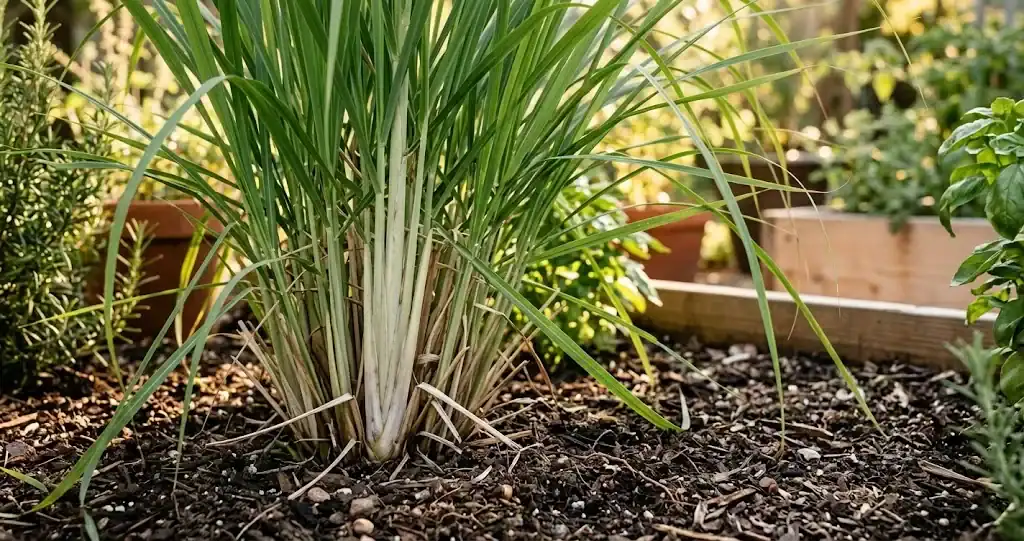
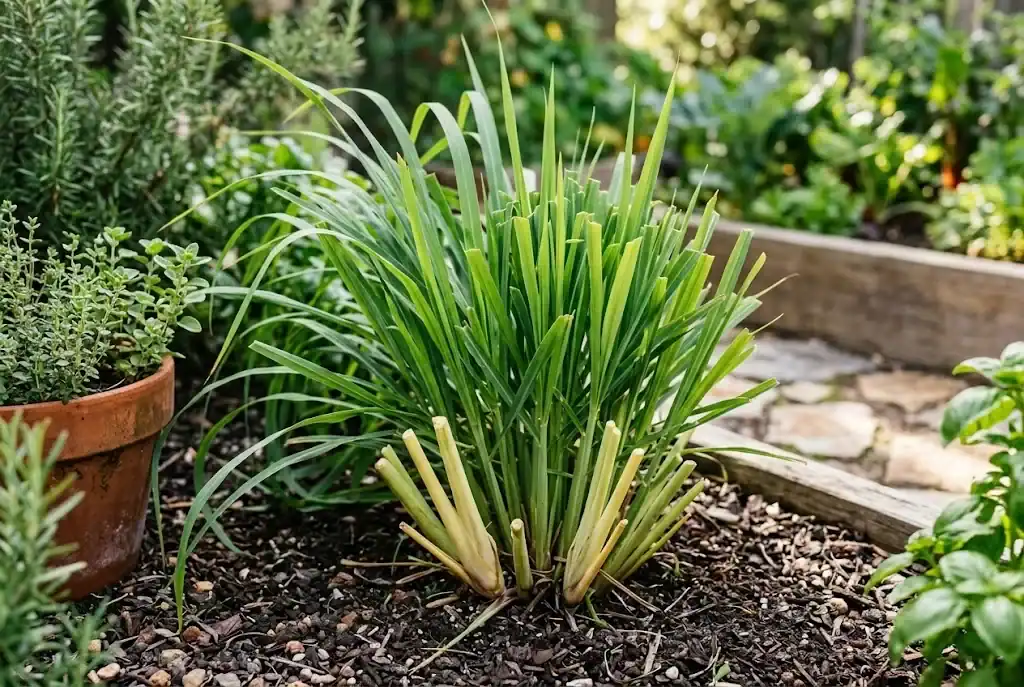
Lemongrass looks like a grass clump, but the useful part is hidden at the base. Picking it well means taking a few mature outer stalks while leaving the tight center shoots to keep growing. With a clean knife, you can gather fresh stalks for soup, marinades, or fragrant leaf infusions throughout the warm growing season.
For a broader overview of timing and technique across many kitchen plants, see this guide to harvesting herbs with care. Lemongrass has one important difference: do not shear the entire clump to ground level if you want a continuing harvest.
Know what you are picking
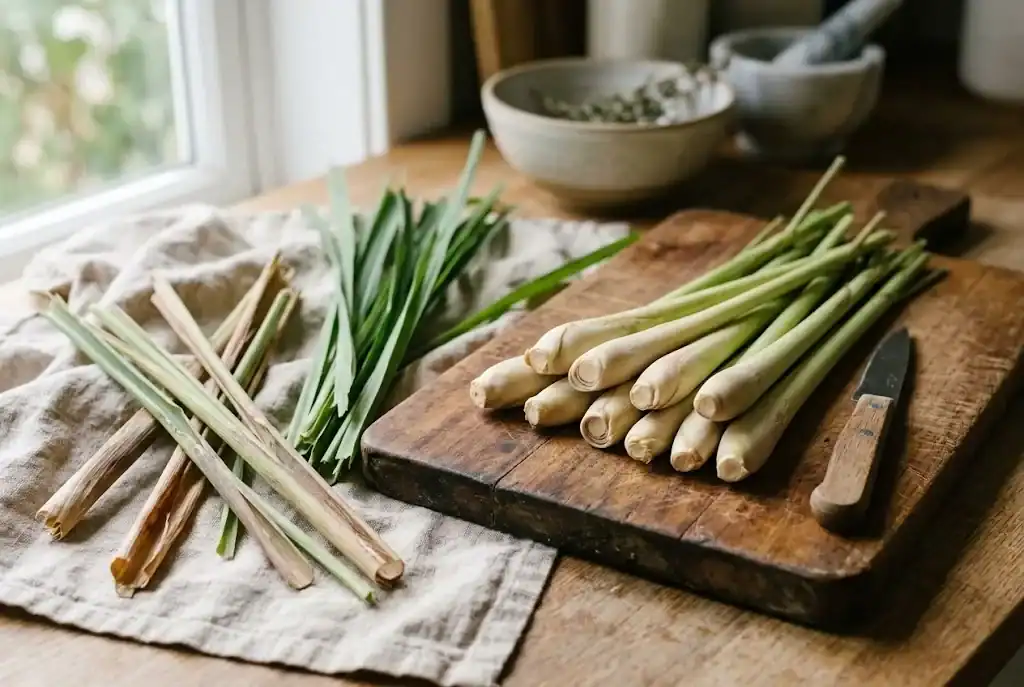
Culinary lemongrass is usually Cymbopogon citratus, often called West Indian lemongrass. It forms a dense clump of long, strap-like green leaves and pale, overlapping leaf bases. Those swollen leaf bases make the firm, aromatic lemongrass stalk used for cooking. This is not citronella grass, a related Cymbopogon plant grown mainly for its strong-scented oil.
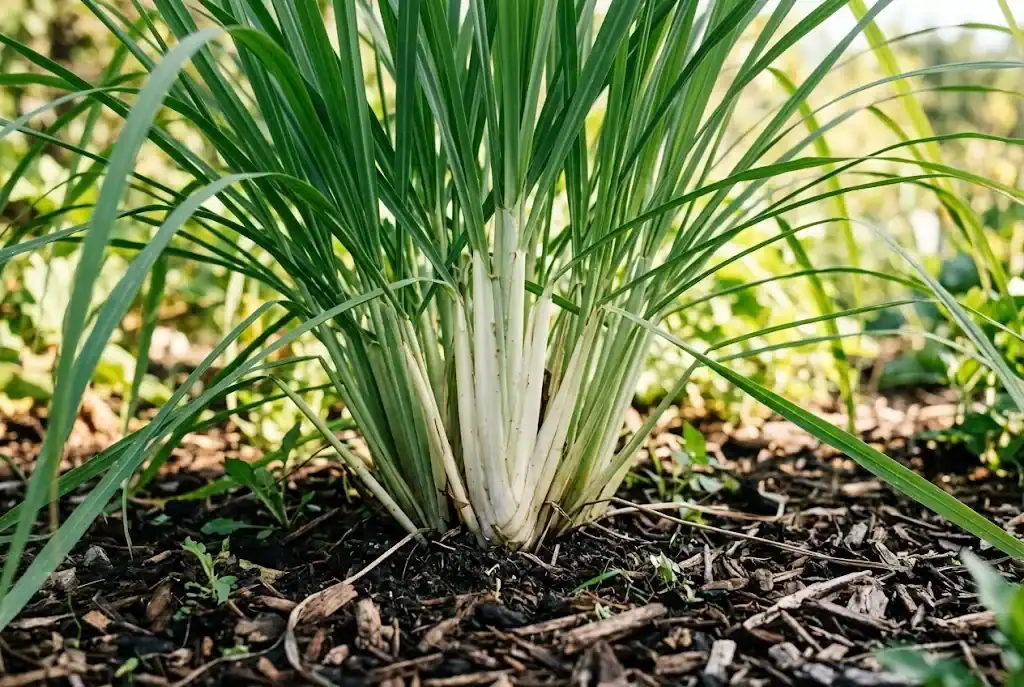
The lower base is tender enough to slice or bruise for food. The upper leaves are more fibrous, but they still add a clean lemony fragrance to stock, soup, or tea. They are usually removed before serving rather than eaten in long strands.
When lemongrass is ready to harvest
Start picking only after the lemongrass plant has made several sturdy stems and the outside stalks feel at least about one-half inch thick near the base. In a warm climate, you can take a few stalks as needed once the clump is established. In cooler areas, plan the larger harvest before cold weather, because this tropical plant does not tolerate frost.
Choose a dry morning after dew has evaporated. The leaves are easier to handle when dry, and the cut stalks are less likely to carry soil into the kitchen. Avoid stripping a newly planted seedling or a small container of lemongrass. Let it build a healthy clump first.
Tools that make picking easier
- Clean garden snips or a sharp knife for cutting a mature stem.
- Gloves if the leaf edges feel sharp on your hands.
- A basket or clean bowl to keep fresh stalks off the ground.
- Pruners for trimming long, ragged leaves after the harvest.
Wipe sticky sap and soil from the blade before you start. A clean cut is easier on the plant than tearing the base apart.
Steps for a healthy harvest
- Find a mature outer stem. Look for a thick, firm stem around the edge of the clump. Leave the smaller, upright shoots in the middle.
- Pull the leaves aside. Use one hand to expose the pale base. Check that you are not cutting into the central crown.
- Cut near the soil line. With a clean knife or snips, cut the stem close to the base without digging into the roots. Take only a few stalks from different sides of a large clump.
- Trim in the kitchen. Remove the dry outer leaf sheaths and any damaged leaf tips. Rinse it, then peel away tough wrappers until you reach the pale, aromatic center.
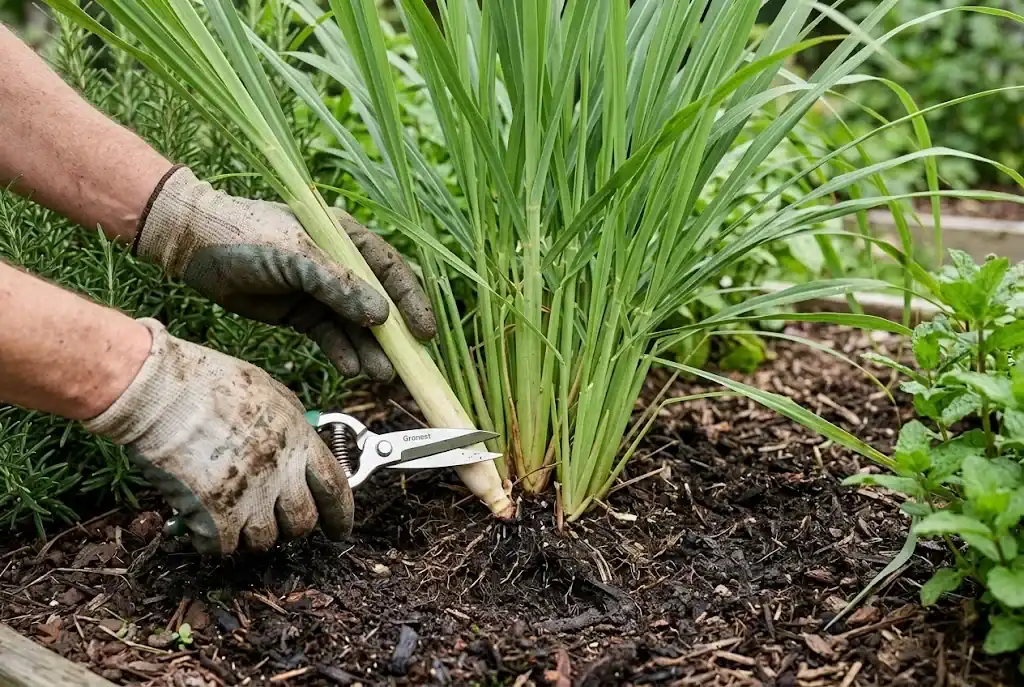
For a small plant, harvest one stem at a time and wait for more growth before taking another. A mature clump can spare more, but it is still wise to leave most of the stalks and the center intact. That is how you harvest lemongrass so it keeps growing.
Can you cut the leaves, too?
Yes. You can snip a modest handful of lemongrass leaves from the outside of the clump, especially when they are long and healthy. Cut the leaves several inches above the base instead of cutting through the crown. The leaves are useful for lemongrass tea, broth, and infusions, where their citrusy flavor can steep into liquid.
Do not expect the leaves to behave like the tender base. They stay stringy even after cooking, so tie them into a bundle or add larger pieces to a soup or stew, then remove them before serving. For chopped lemongrass in a stir fry, sauce, or marinade, use the soft lower base and mince it finely.
What to do right after harvesting
Brush away soil, rinse the stalks under cool water, and dry them well with a clean towel. Keep the base whole until you are ready to prep it. The fragrant inner layers dry out more quickly once they are sliced.
If you want to preserve a larger harvest, learn the practical steps for freezing lemongrass before the stalks lose their fresh scent. Freezing whole or cut pieces gives you a useful supply for recipes without turning this harvest guide into a storage manual.
Will lemongrass grow back after harvest?
It can keep producing when you take outer stalks and protect the center of the clump. Give the plant its usual care after you pick: full sun, evenly moist soil that drains well, and room for air around the base. If you grow lemongrass in a container, a little compost or a balanced fertilizer can support the plant during active growth. Avoid pushing tender growth late in the season if frost is near.
If a clump is crowded, you can divide it during the growing season or repot it into fresh, well-draining soil. Keep each division rooted and water it in well. Harvest lightly until the divided plant settles and makes new shoots.
Common mistakes to avoid
- Cutting the center of the clump: the newest shoots are where future stalks begin.
- Taking every thick stem: leave enough green growth for the plant to recover.
- Pulling hard on a rooted stem: this can loosen nearby roots and disturb the crown.
- Using only the leaf tops in a recipe: the lower lemongrass base carries the strongest flavor and is less fibrous.
- Waiting until a freeze is expected: harvest what you need before cold damage turns the leaves brown.
Use the harvest while the flavor is bright
Fresh lemongrass works especially well when it is bruised, sliced, or minced so its aromatic oils can flavor the dish. Add a whole, crushed piece to soups, a Thai-style curry, or rice cooking liquid, then remove it before serving. Finely chopped tender base can join fresh ginger and garlic in a stir fry or marinade.
Once your stalks are trimmed and stored, move on to simple ways to cook with lemongrass for ideas that make the most of that fresh, lemony flavor. A small, regular harvest keeps the clump tidy and gives you a steady supply without exhausting the plant.
A simple plan for a larger harvest
When a cold night is forecast, decide whether to keep the whole plant indoors or gather most of the mature growth. In a mild climate, lemongrass is a perennial that may go dormant in a cold spell and return when warmth comes back. In a cold-winter garden, lift a rooted division before frost if you want to grow your lemongrass again next year.
For a plant in a raised bed, take the best fresh pieces first and leave a rooted section if the weather allows. For a container plant, move it into bright shelter before the first hard frost. Lemongrass grows best with steady warmth, full sun, and well-draining soil, so a sunny windowsill is more useful than a cool garage.
Sort the harvest by use. Reserve the fattest bases for recipes, bundle thinner leaves for broth, and freeze any extra fresh pieces. Dried lemongrass can flavor a pantry tea blend, although the fresh plant has the strongest lemony scent. This small sorting step makes it easier to use the whole harvest without waste.
Prepare fresh lemongrass for the kitchen
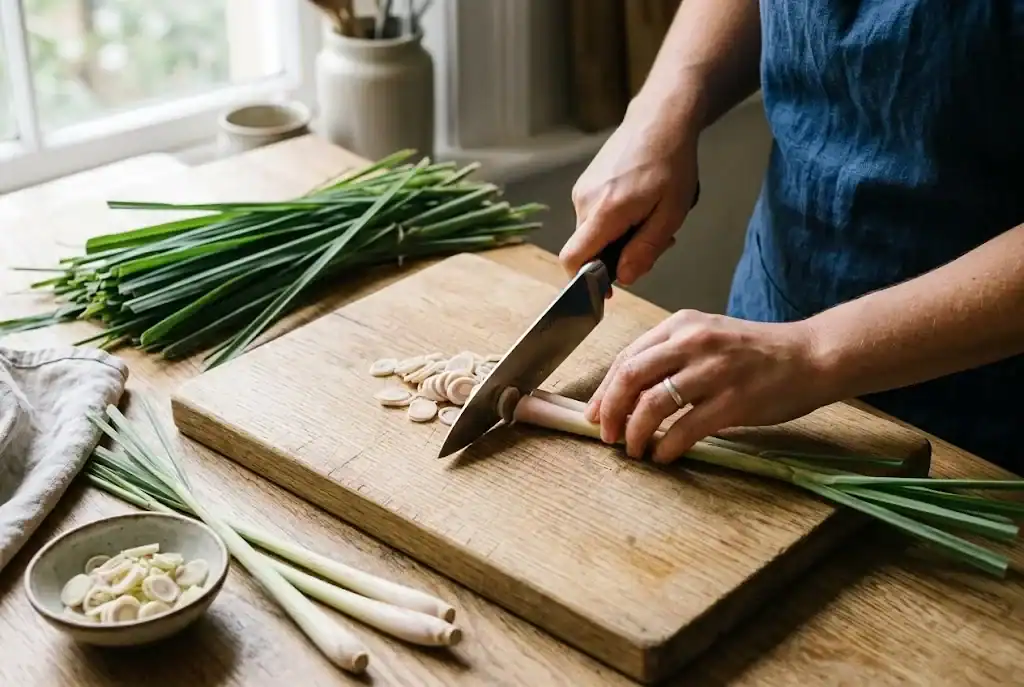
Start by trimming the tough root plate from each fresh piece. Remove any bruised outer leaf sheaths, then cut away the long green leaves where the pale base begins. If the inner core feels tender when pressed with a thumbnail, it is ready to slice. If it feels woody, bruise it with the back of a knife and use it to perfume broth, then remove it before serving.
For quick cooking, cut the tender base across the grain into thin coins and mince them further if the recipe calls for an even texture. A food processor can help with a large batch, but stop before it turns the pieces into wet paste. Freeze minced portions in a thin layer so you can break off just what a recipe needs.
For a simple infused drink, rinse the long leaves, tie them loosely, and steep them in hot water. The resulting liquid has a lemony fragrance, but this is culinary use, not a substitute for medical care. Compost the spent leaves and keep any rooted divisions watered while they settle.
Frequently asked questions
What part of lemongrass do you use?
The pale lower portion is the part most often used for cooking. Remove dry outer layers or wrappers, trim the root end, and use the tender inner core. The leaves can flavor tea or soups, but they are too fibrous to eat in long pieces.
How do you know when lemongrass is ready to pick?
Wait until the plant has several stems and an outside stem feels firm and at least about one-half inch thick at the base. Pick the mature outer stalks first and leave young center shoots to grow.
How often can you pick it?
Take a few mature stalks when you need them during warm weather. The exact pace depends on the size of the clump, growing conditions, and whether it is in a pot or raised bed. Let a small plant replace what you take before picking again.