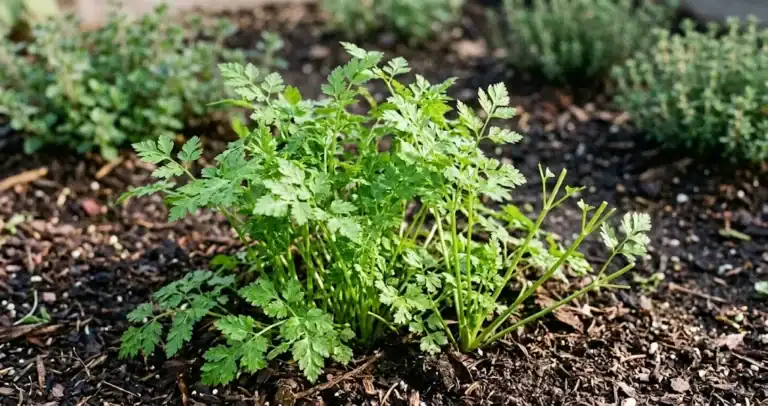
Chervil has soft, lacy leaves and a light anise-like flavor that fades quickly after picking. The best way to store chervil is to trim the stems, stand them in a little water, cover the leaves loosely, and refrigerate it. Use the fresh herb within a few days for its best flavor.
Chervil is a tender culinary herb, much closer to parsley and cilantro than to rosemary or thyme. Gentle handling starts at harvest. If you are cutting it from the garden, follow this guide on how to harvest chervil before you store it, so the stems are clean and undamaged.
The best way to store fresh herbs such as chervil
- Remove any yellow, bruised, slimy, or crushed leaves.
- Trim a small amount from the stem ends with a clean knife or scissors.
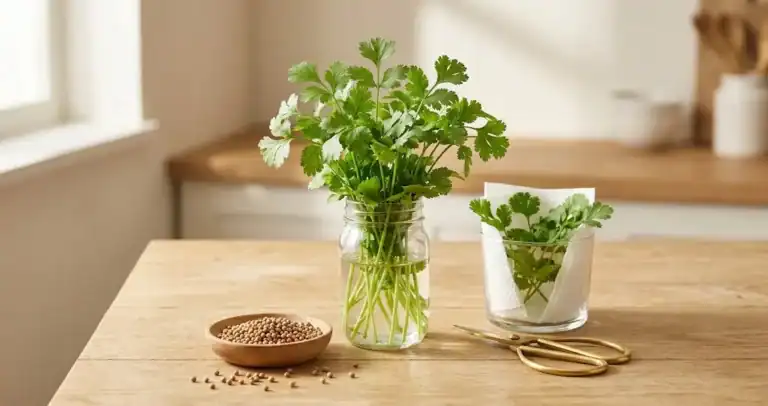
- Put the stems in a mason jar, glass, or small container with about an inch of cool water.
- Keep the leaves above the waterline and cover them loosely with a plastic bag.
- Refrigerate the jar away from the coldest back wall.
- Change cloudy water and use the leaves while they are still bright and crisp.
This upright method gives the stems moisture without leaving the delicate leaves wet. The loose cover slows water loss and shields them from refrigerator drafts. It is a reliable way to keep tender herbs fresh without sealing in condensation.
Should you wash chervil before storing it?
Wash it only when it needs cleaning. If the leaves are dusty or gritty, rinse them gently in cold water, then pat them dry very well in a salad spinner or between clean paper towels. Do not place dripping leaves in a closed container.
If the leaves are already clean and dry, wait to wash it until just before cooking. Both approaches work. What matters is keeping pooled water away from the leaves, since wet foliage deteriorates faster than dry foliage with a little humidity around it.
How long does fresh chervil last?
It is best during the first few days, when the leaves are crisp and the aroma is bright. A carefully stored packet may stay usable for about five to ten days, depending on how fresh it was when purchased or picked. Use any slightly wilted but clean leaves in a warm dish rather than a salad or cold sauce.
Discard leaves that are slimy, moldy, or unpleasantly scented. For a broader look at harvest timing and handling across culinary herbs, see the complete herb harvesting guide.
Store a small amount in a damp paper towel
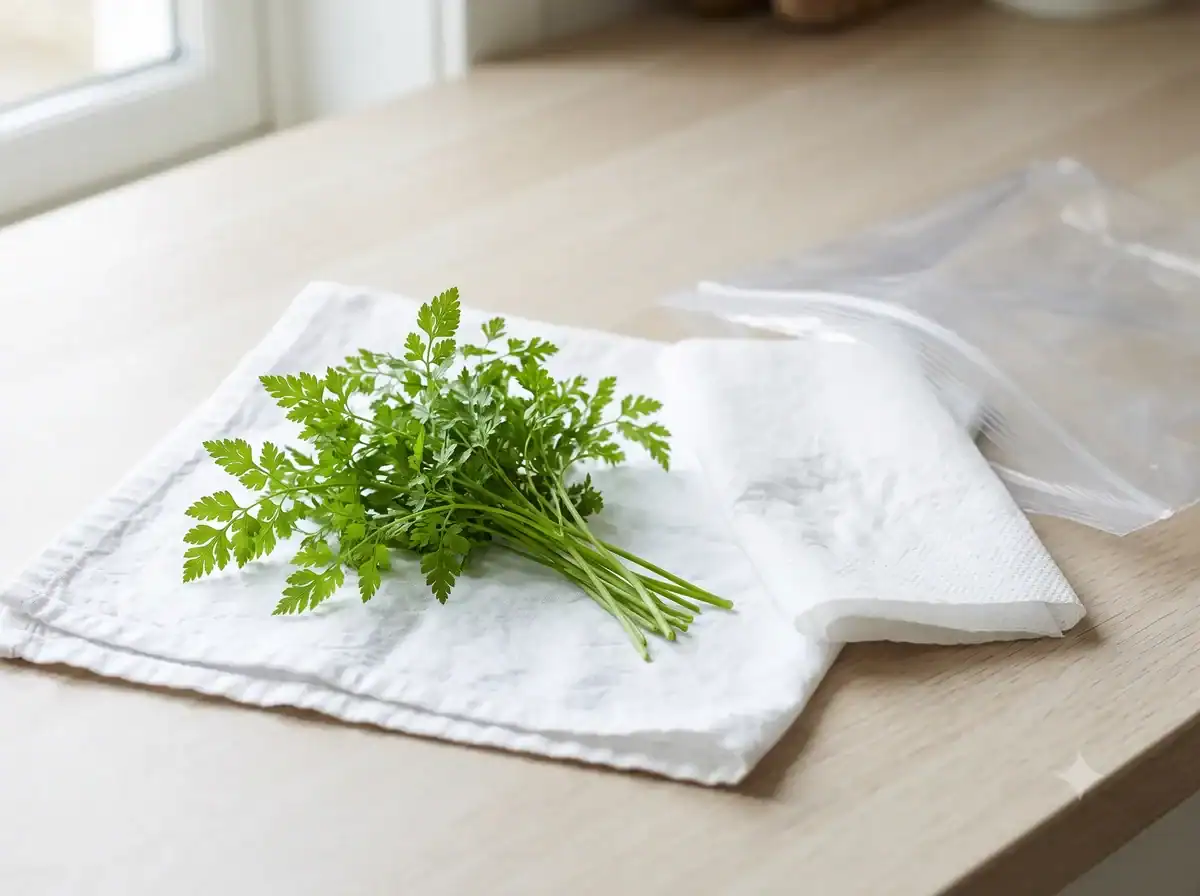
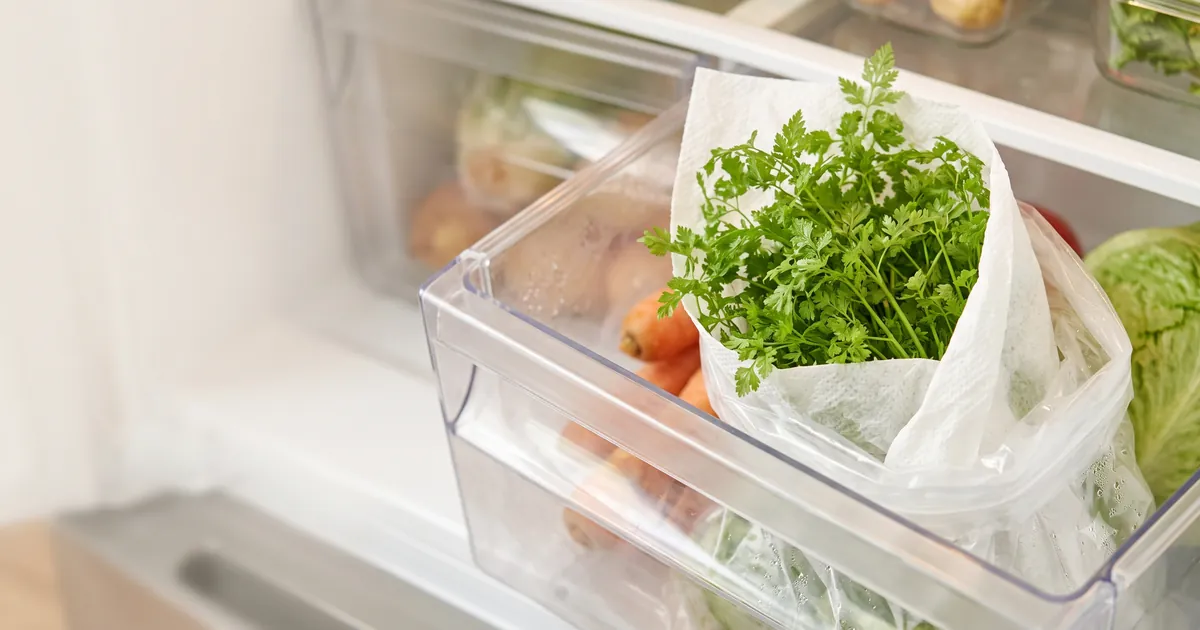
When refrigerator space is tight, lay the dry leaves in a single layer on a barely damp paper towel. Fold it loosely and place it in a partly open bag or container in the refrigerator. Check it often. The towel should feel humid, never soggy.
Use a dry towel if the leaves already hold moisture. This method works well for a few sprigs, but the jar method usually gives a larger supply more breathing room. Do not compress the leaves beneath heavier produce.
Tender herbs and hardy herbs need different treatment
Parsley, tarragon, cilantro, chives, and chervil are tender herbs with stems and leaves that wilt easily. They generally do well upright in water. Hardy herbs such as rosemary and thyme have firmer leaves, so a damp paper towel and container often suit them better.
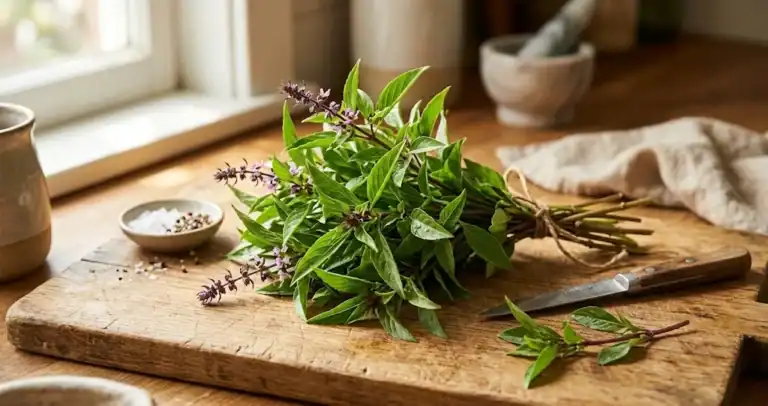
Do not store every herb by the same rule. Basil can darken in a cold refrigerator, while these delicate leaves prefer refrigeration. The useful distinction is leaf texture, not whether an ingredient is simply called an herb.
Freeze chervil for cooked dishes
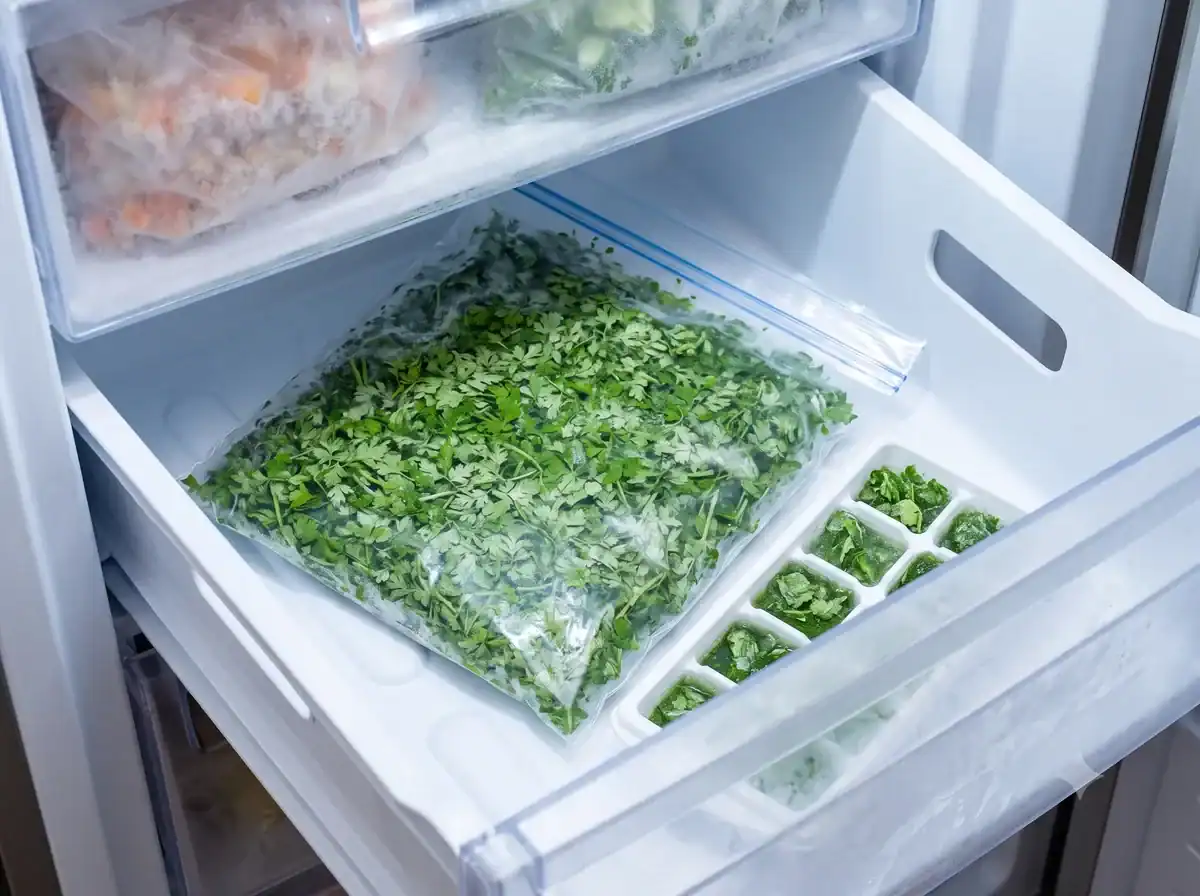
Freezing preserves the flavor better than drying, although the leaves become soft after thawing. Use the frozen leaves in soup, sauce, eggs, a stew, or herb butter rather than as a fresh garnish.
- Wash only if needed, then dry the leaves well.
- Mince the leaves and tender stems.
- Put the mince into an ice cube tray.
- Add a little water, stock, or oil to cover it.
- Freeze until solid, then move the cubes to a labeled freezer container.
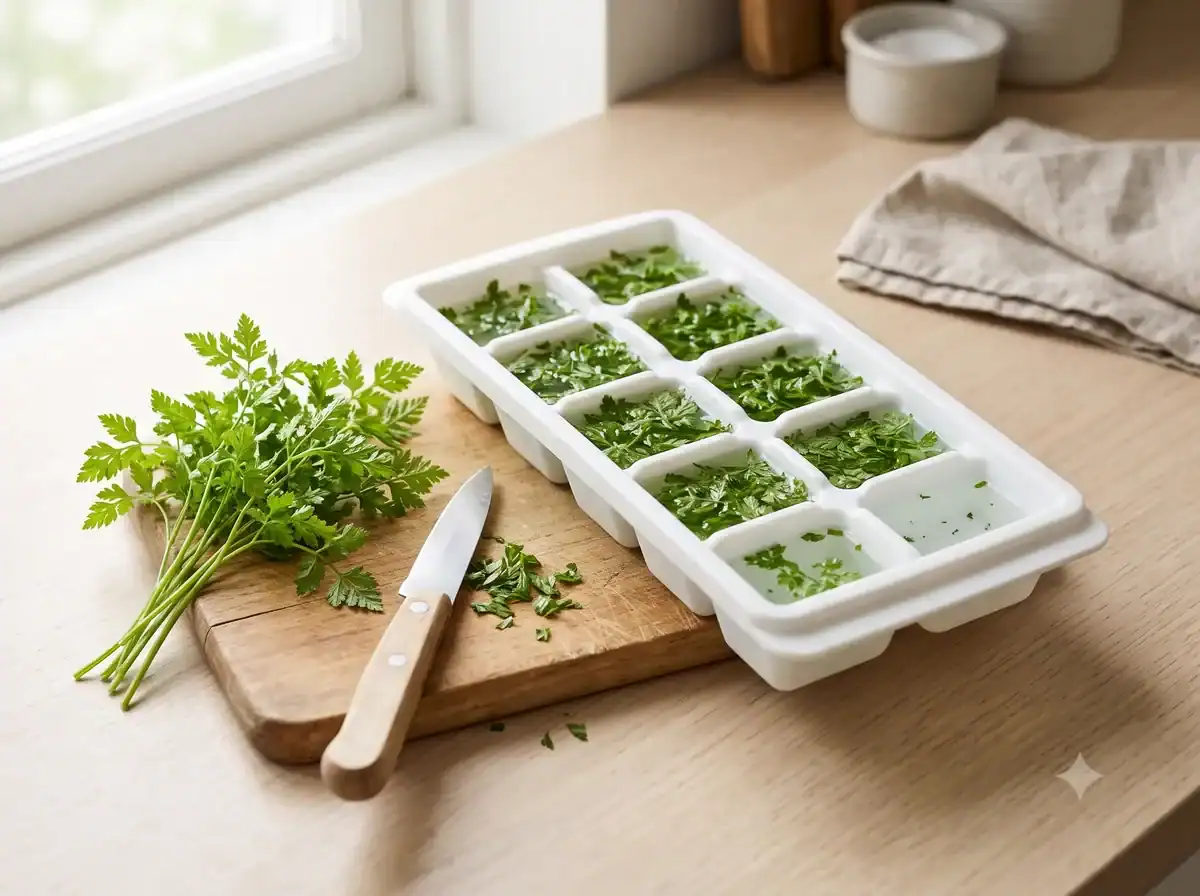
Add a frozen cube near the end of cooking. You can also freeze the mince in softened butter, then slice off what you need for vegetables, pasta, chicken, or a simple sauce.
Is dried chervil worth keeping?
You can dry it, but it loses much of its delicate flavor. If you have a surplus, freezing herbs is usually the better choice. Keep the dried leaves in an air-tight container in a cool, dark cupboard and use them in a long-cooked soup or stew where other ingredients carry the dish.
Use chervil while its flavor is bright
Chervil is one of the classic fines herbes, often paired with tarragon, parsley, and chives. Add it near the end of cooking so heat does not flatten its delicate flavor. It is especially good with eggs, fish, cream sauces, potatoes, salads, and a light vinaigrette.
Once you have handled the storage side, explore these ways to cook with chervil for practical uses that make the most of fresh leaves.
Avoid these common storage mistakes
- Leaving it on the counter: tender leaves wilt quickly in a warm kitchen.
- Keeping it in a wet, sealed bag: trapped moisture encourages slimy leaves and mold.
- Storing it beside a freezer vent: very cold air can damage the thin leaves.
- Washing without drying: surface water shortens their useful life.
- Saving it without a plan: choose a soup, omelette, sauce, or salad while the flavor is still at its best.
Frequently asked questions
Can I freeze whole chervil leaves?
You can, but chopped leaves frozen in small cubes are easier to use and take up less space. Whole frozen leaves suit cooked dishes, not a fresh garnish.
What should I do with curled chervil?
Use clean, slightly curled leaves soon in a cooked dish. Discard any that are slimy, moldy, or smell off.
Can I store chervil with other fresh herbs?
Yes, when they need the same treatment. Chervil can share a loose cover and refrigerator shelf with parsley, tarragon, cilantro, or chives, but do not crowd the leaves or combine them with wet leaves.