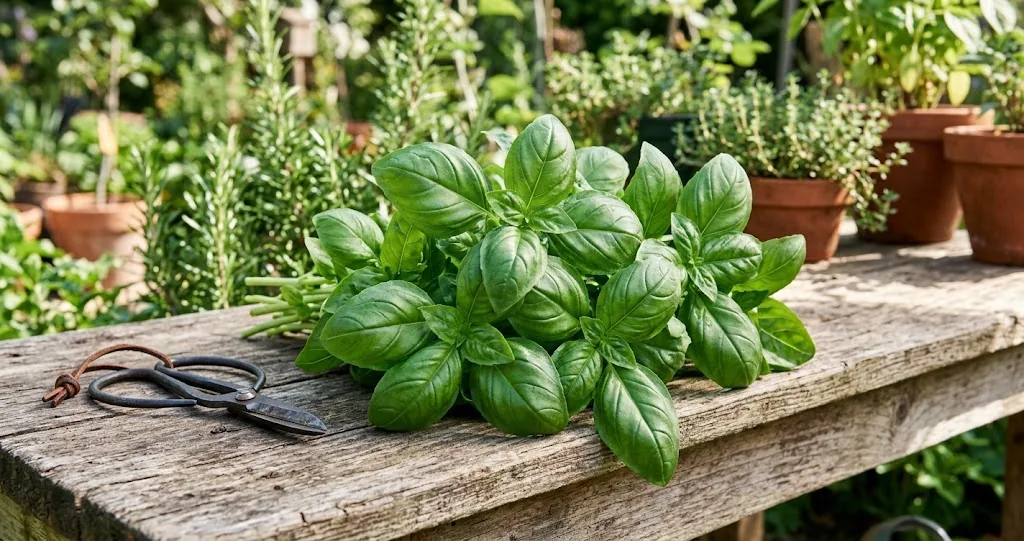
Sweet basil is one of the most rewarding culinary herbs in any summer garden or indoor container setup. A well-tended basil plant yields fragrant, flavorful leaves from late spring until autumn frost arrives if you prune it consistently. The secret to a generous supply of aromatic foliage is knowing how to harvest basil the right way. Stripping individual green leaves from the base of the stalk starves the root system and leaves behind a woody stem. When you cut stems just above a leaf node, you stimulate the plant to produce two vigorous new shoots at every cut site, transforming a single stalk into a bushy basil plant that keeps producing all summer long.
Whether you grow basil in outdoor beds, patio containers, or indoors under a grow light, regular trimming is essential care. Proper technique keeps your basil vigorous and productive for months. This guide explains harvest timing, the node-cutting method, flower pinching, cold protection, and reliable kitchen storage methods. For broader harvest techniques across common culinary greens, explore our fuller guide to harvesting herbs.
When to start harvesting sweet basil
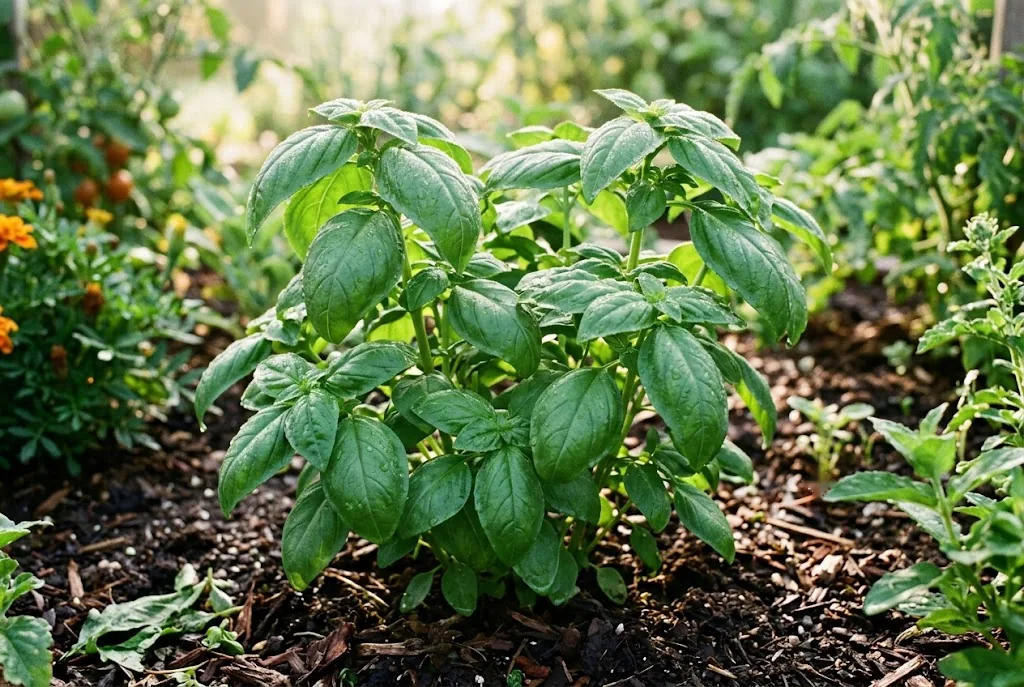
Timing your first harvest properly ensures the young seedling has established a deep root system before you remove foliage. Wait until your sweet basil is six to eight inches tall and has formed three to four distinct sets of true leaves along the main stalk. Taking cuttings too early can stunt seedling development and delay subsequent flushes of growth.
The ideal time of day to collect leaves is mid-morning, after morning dew has fully dried from the foliage but before midday sun heats the garden. In the cool morning hours, volatile essential oils remain concentrated within the foliage, giving the herb its richest fragrance and taste. Strong midday heat causes leaves to soften and lose essential oils, reducing culinary quality.
Optimal growing conditions dictate how frequently you can collect fresh cuttings. Outdoor plantings receiving six to eight hours of direct sun grow rapidly during peak summer heat. Indoor herb pots on bright sills or under full-spectrum lights develop at a moderate pace. In either environment, plan to trim every seven to fourteen days during active growth. Routine pruning prevents woody stems and keeps plants producing tender foliage continuously.
How to harvest sweet basil without killing the plant
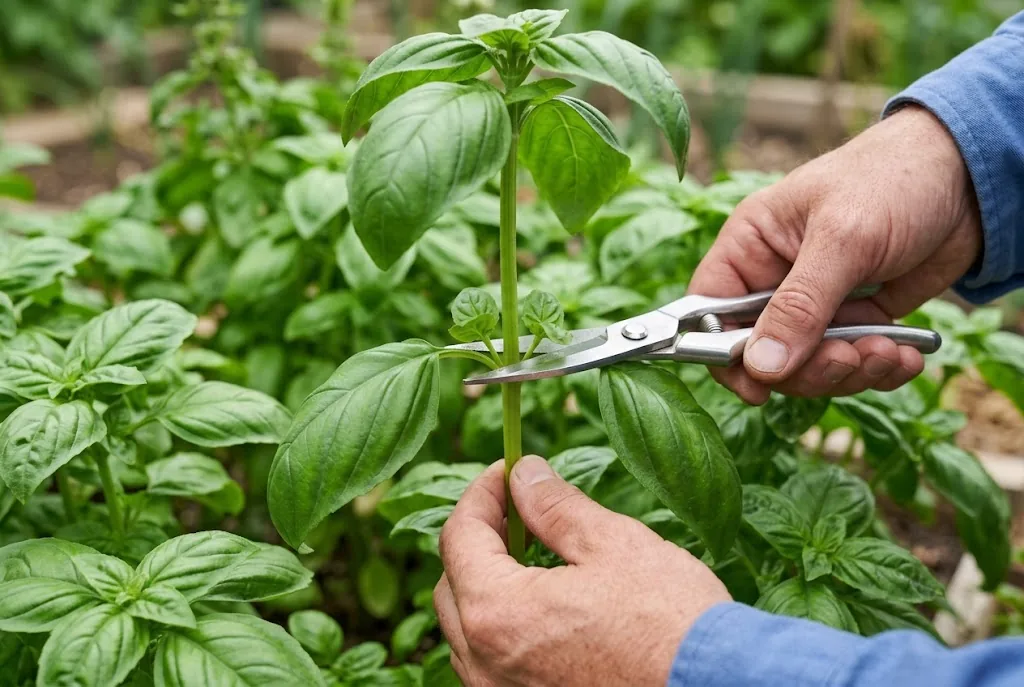
A widespread mistake among home gardeners is pulling individual big leaves from the bottom of the plant. Those lower leaves function as primary energy centers, capturing sunlight to feed the root system. Removing them weakens the plant and leaves a bare, unproductive stalk. Instead, always harvest by pruning upper stem tips directly above a leaf node.
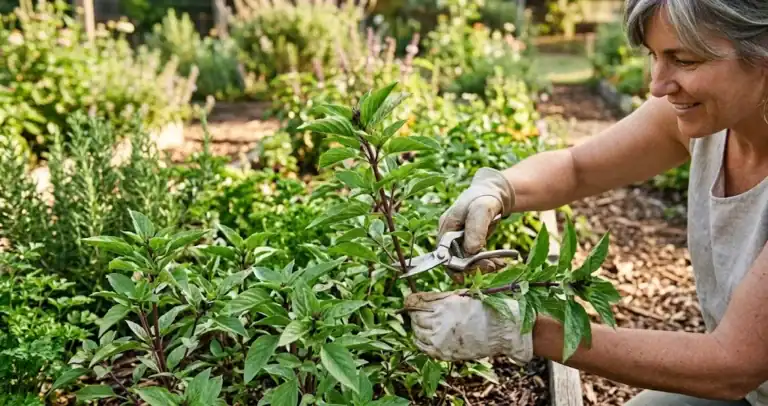
A node is the small junction where a pair of leaves joins the main stalk, usually sheltering two tiny dormant buds in the leaf axils. Use sharp scissors or pruning shears to make a clean horizontal cut roughly one-quarter inch above the node. Never pinch or tear stems with blunt fingernails, as crushed tissue heals slowly and invites fungal infection.
Apply these practical rules whenever you trim:
- Cut above a set of leaves: Always cut just above a healthy leaf pair so the two dormant side buds immediately develop into two new leafy branches.
- Protect lower foliage: Leave the bottom two or three leaf tiers completely intact to maintain photosynthesis and nutrient circulation.
- Follow the one-third rule: Never remove more than one-third of the total foliage during a single routine trimming session to prevent root shock.
- Prune from top to bottom: Trim the central top shoots first to encourage branching outward rather than upward.
Within several days of making a clean cut, the two dormant buds at the node swell and push out new leaves. In two to three weeks, those new shoots grow into mature branches ready for another harvest cycle.
Pinching flower buds to keep your plant healthy and productive
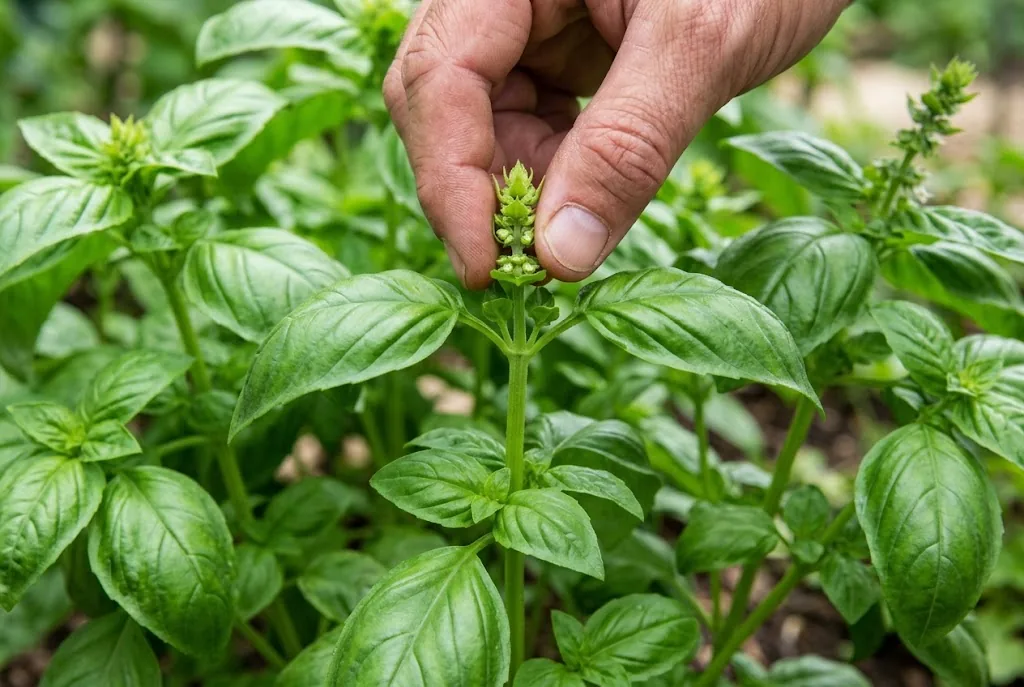
As summer temperatures peak and daylight hours lengthen, sweet basil naturally attempts to shift from vegetative growth to seed production by sending up flower spikes at the branch tips. If you allow a basil plant to bloom, hormonal changes alter leaf chemistry. The foliage quickly turns tough, leathery, and noticeably bitter, while vegetative growth stalls completely.
Inspect your herb patch every few days for developing flower buds. As soon as you spot small green or white flower clusters forming at the stem tips, pinch or snip them off immediately down to the next set of leaves. Removing a basil flower before it opens forces the plant to redirect its energy into fresh foliage, extending your harvest window through late summer.
Toward the end of the growing season in late autumn, you can allow a few plants to flower if you want to feed beneficial garden pollinators or collect seed for the following spring. For your primary kitchen supply, however, steady pinching keeps sweet basil productive right up until frost.
Handling end-of-season and bulk basil harvests
Sweet basil is a tender annual that cannot withstand cold temperatures. When nighttime garden temperatures dip below 50°F (10°C), leaf tissue develops black spots and begins to collapse from chilling injury. Before the first expected autumn frost arrives in your area, perform a final bulk collection to save all remaining usable foliage.
For a final end-of-season clearing, cut the plant down to three or four inches above the soil line, gathering all healthy stems and leaves. Discard any yellowed, spotted, or pest-damaged foliage. Swish the harvested cuttings gently in a basin of cool water to remove garden grit, then dry them completely using a salad spinner or clean kitchen towels. Moisture trapped on stored foliage accelerates spoilage.
How to store fresh basil leaves after harvest
Proper post-harvest handling keeps fresh leaves crisp and fragrant. Unlike woody herbs such as rosemary or sage, sweet basil should never be stored loose in a cold refrigerator. Low temperatures cause cell breakdown, turning delicate green leaves black and watery in less than a day.
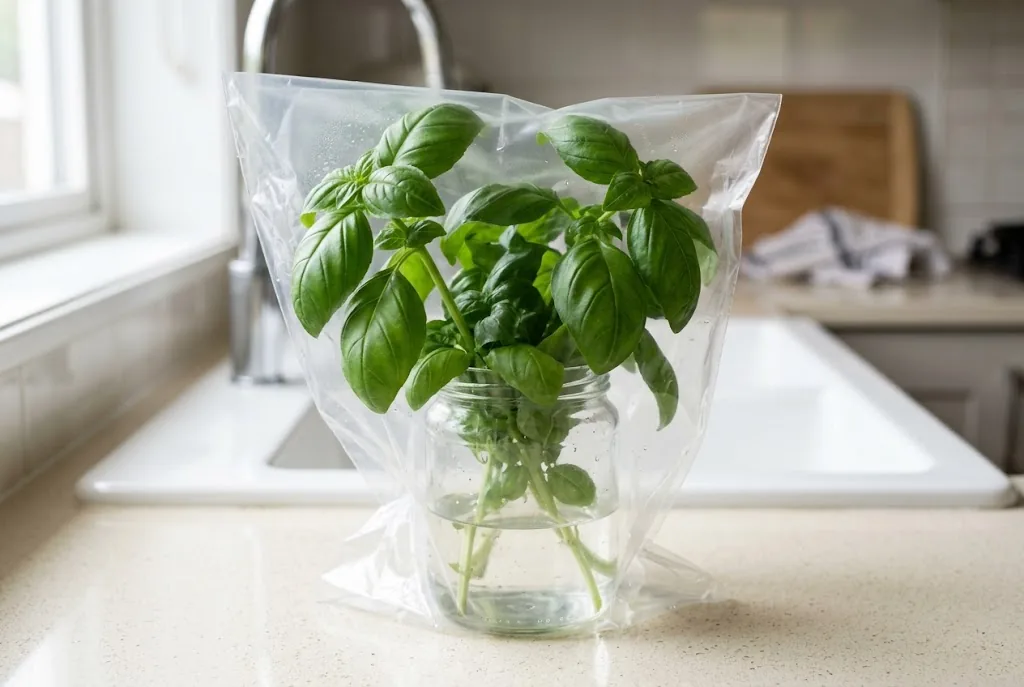
For short-term countertop storage lasting up to a week, treat freshly cut stems like a bouquet of flowers. Snip a fresh half-inch off the stem bases, stand them in a glass jar filled with two inches of clean room-temperature water, and drape a clear plastic bag loosely over the foliage to maintain humidity. Refresh the water every two days to prevent bacterial growth.
If you have an abundant harvest that exceeds your immediate cooking needs, freezing basil provides excellent flavor retention. Puree clean, dry leaves with a small pour of extra-virgin olive oil and freeze the paste in ice cube trays. Once solid, pop the herbal cubes into an airtight freezer bag. Each cube offers an instant portion of rich herbal flavor for winter soups, stews, and pasta sauces. While you can also produce dried basil in a food dehydrator or warm, ventilated room, freezing in olive oil preserves far more of the characteristic sweet aroma. For detailed preservation methods, consult our guide on practical tips for storing sweet basil.
Best ways to use your fresh sweet basil harvest
Fresh sweet basil brings lively aroma and vibrant taste to home cooking. Its sweet, peppery notes complement summer tomatoes, garlic, soft cheeses, and roasted vegetables. For quick everyday dishes, scatter whole leaves across homemade pizza, fold torn leaves into warm tomato sauces, or layer them with sliced mozzarella and ripe tomatoes for a fresh Caprese platter.
When you have a large batch of fresh leaves, the most satisfying project is to make pesto. Process fresh leaves with garlic, toasted pine nuts, grated Parmesan cheese, coarse salt, and olive oil until rich and emulsified. Fresh pesto can be tossed directly with warm pasta or frozen in small jars for convenient weeknight meals.
Because delicate volatile oils break down rapidly under sustained cooking heat, always add sweet basil during the final minutes of cooking or as a fresh garnish immediately before serving. For additional culinary ideas and recipe pairings, see our practical suggestions on ways to cook with sweet basil.
Frequently asked questions about harvesting sweet basil
How often can I harvest sweet basil from the same plant?
During warm summer weather with ample sunlight, you can harvest from an established sweet basil plant every seven to fourteen days. Regular pruning stimulates branching and promotes continuous leaf production.
Will sweet basil grow back if cut back heavily?
Yes, provided you leave at least two or three sets of leaves at the base of the plant. If you cut the plant down to bare soil without leaving viable leaf nodes, it cannot regenerate new foliage.
Why do my harvested basil leaves turn black so quickly?
Basil leaves turn black when exposed to refrigerator cold, excess moisture during storage, or rough handling that bruises cell walls. Store cut stems at room temperature in water and handle foliage gently.
Can I harvest Genovese basil and lemon basil the same way?
Yes. The node-pruning technique applies equally to Genovese basil, lemon basil, Thai basil, and purple varieties. All varieties of sweet basil respond to node cuts with fuller, bushier branching.