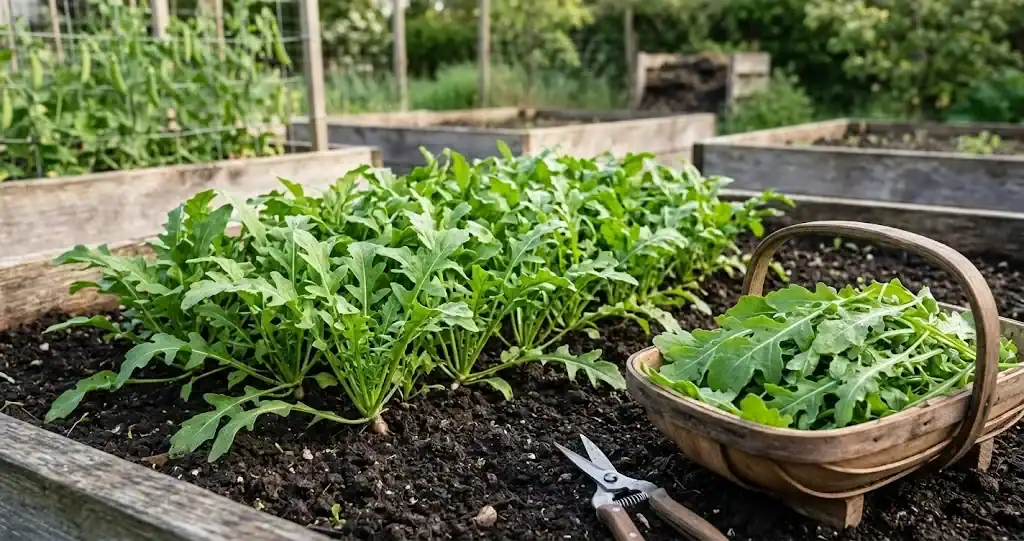
Few leafy salad greens grow as quickly or offer such a bold, peppery flavor as rocket. Also known as arugula (Eruca sativa), this fast-growing annual salad rocket rewards any home gardener who knows when and how to pick it. When you grow rocket in a home garden or patio container, cutting the entire plant off at the soil line robs you of repeated harvests. Instead, a few simple cutting techniques allow you to gather fresh leaves across several weeks while encouraging vigorous new plant growth.
Whether you sow small rows in the garden bed or keep a growing pot on the windowsill, harvesting rocket is straightforward once you recognize the signs of tender, prime leaves. Gathering your crop at the right moment keeps the greens crisp, mild, and enjoyable in any fresh salad mix.
When rocket leaves are ready for harvest
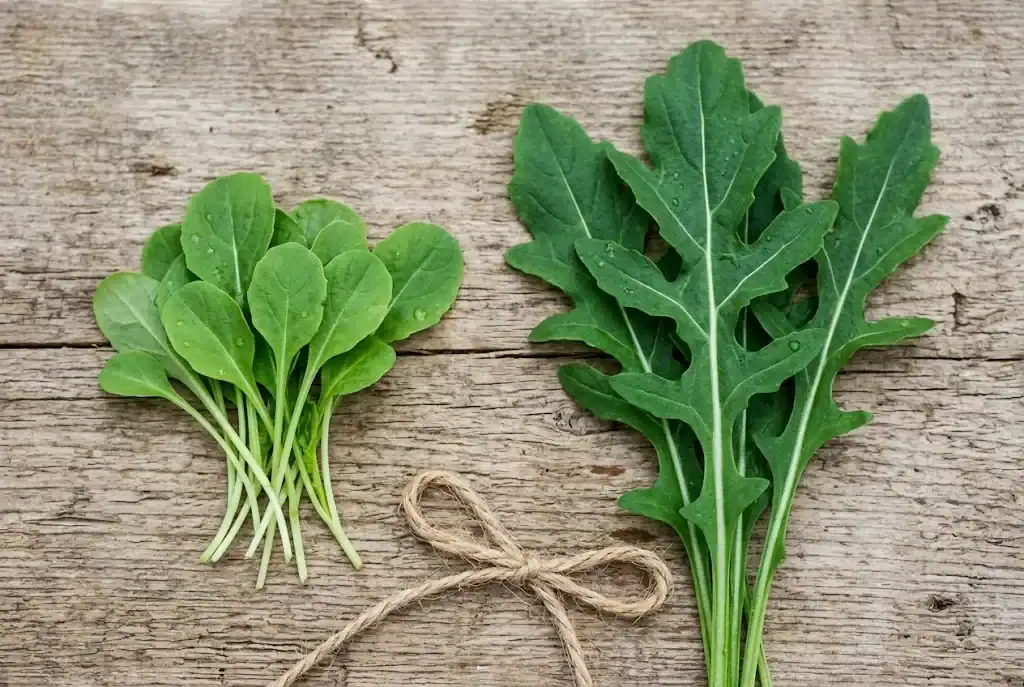
Rocket grows rapidly from seed, often reaching baby leaf size in about four to six weeks. The ideal time to start harvesting depends on the flavor profile you prefer and whether you want delicate baby greens or robust, mature foliage.
- Baby leaves: You can begin picking young, tender leaves when they reach two to three inches in length, roughly four weeks after sowing. These early thinnings taste mild, sweet, and gently peppery.
- Mature leaves: Larger, serrated leaves develop a punchier bite around five to six weeks after sowing. Pick them before they become tough or leathery.
- Morning timing: Gather your greens early in the day while temperatures are cool. Leaves picked after a dewy night hold higher moisture and stay crisp longer than those harvested under hot afternoon sun.
If you planted densely, you can use the thinnings directly in the kitchen. Removing crowded growth creates space for each young seedling to develop into a strong, productive plant.
How to harvest rocket leaves using the cut-and-come-again method
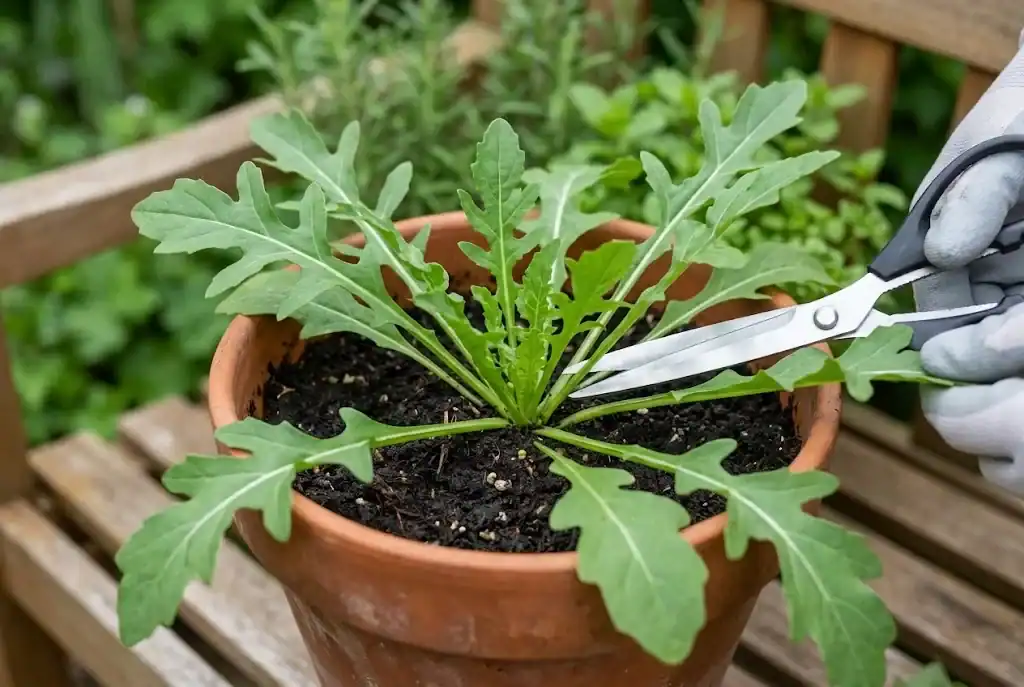
The cut-and-come-again technique is the most reliable way to harvest rocket leaves while keeping each plant productive. Rather than pulling up the root system, you harvest only the outer foliage and leave the central growing point intact.
To practice cut and come again harvesting, follow these practical steps:
- Inspect the crown: Look at the center of the plant. The growing crown sits right above the root collar and continuously unfurls fresh foliage. Never cut into this central rosette.
- Select outer leaves: Choose the largest, lowest leaves around the outside perimeter. These older leaves have captured abundant sunlight and are fully developed.
- Make a clean cut: Use clean kitchen scissors or sharp garden snips. Cut the leaf stem about half an inch above the soil, avoiding any tearing of the plant tissue. Tearing bruises the plant and invites disease.
- Leave one-third behind: Always leave at least three or four healthy central leaves on each plant. These inner leaves capture light to fuel steady regrowth.
Mastering this technique aligns with the broader principles of harvesting herbs at the right stage, where balanced cutting preserves plant vigor for future pickings.
Under good conditions, cut plants will produce fresh harvestable foliage every seven to ten days. Keeping the soil moist and feeding plants sparingly with balanced organic matter supports healthy regrowth throughout the season.
Harvesting wild rocket versus annual salad rocket
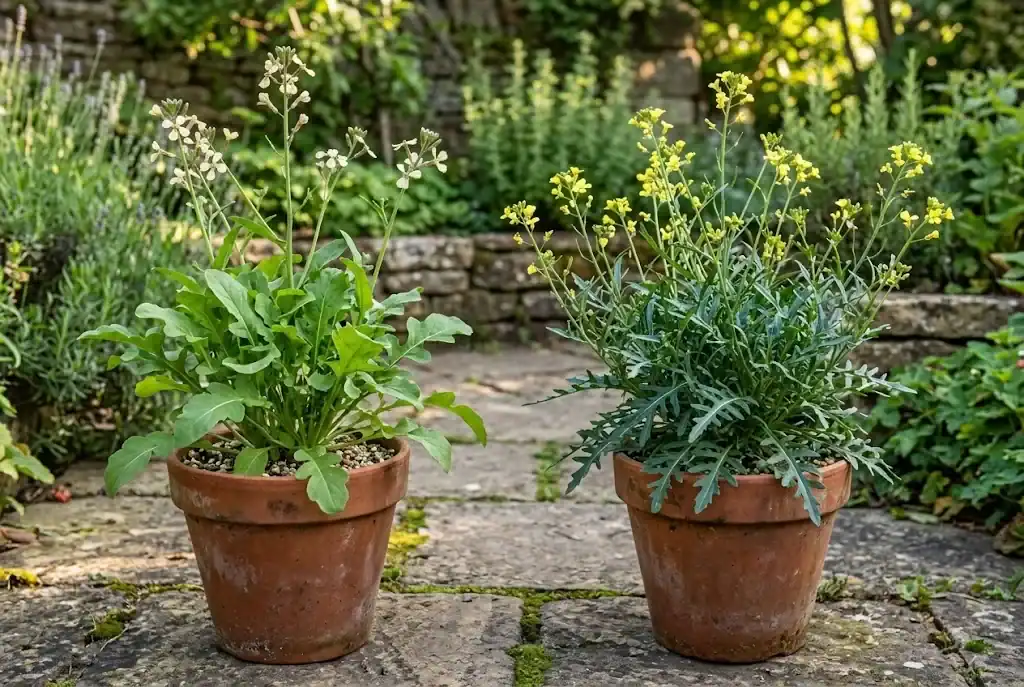
Gardeners often cultivate two distinct types of rocket, each requiring slight adjustments in harvesting:
- Annual salad rocket (Eruca sativa): Fast-growing with rounded to moderately lobed leaves. It delivers a bright, nutty, and peppery taste. It grows quickly from seed, produces rapid flushes of foliage, and finishes its lifecycle in a single season.
- Wild rocket (Diplotaxis tenuifolia): A hardy perennial with deeply lobed, finely serrated leaves. Wild rocket grows more slowly initially, but it is perennial in suitable climates; protect it from hard frost or grow it as an annual where winters are colder. Its foliage carries an intense, pungent, and sharp peppery bite.
Because wild rocket is a perennial herbaceous plant, you should harvest its first-year stems sparingly to allow strong root establishment. Once established in a sunny spot with free-draining soil, wild rocket thrives over multiple seasons and tolerates heavier cutting than annual varieties.
How to slow bolting and use rocket flowers
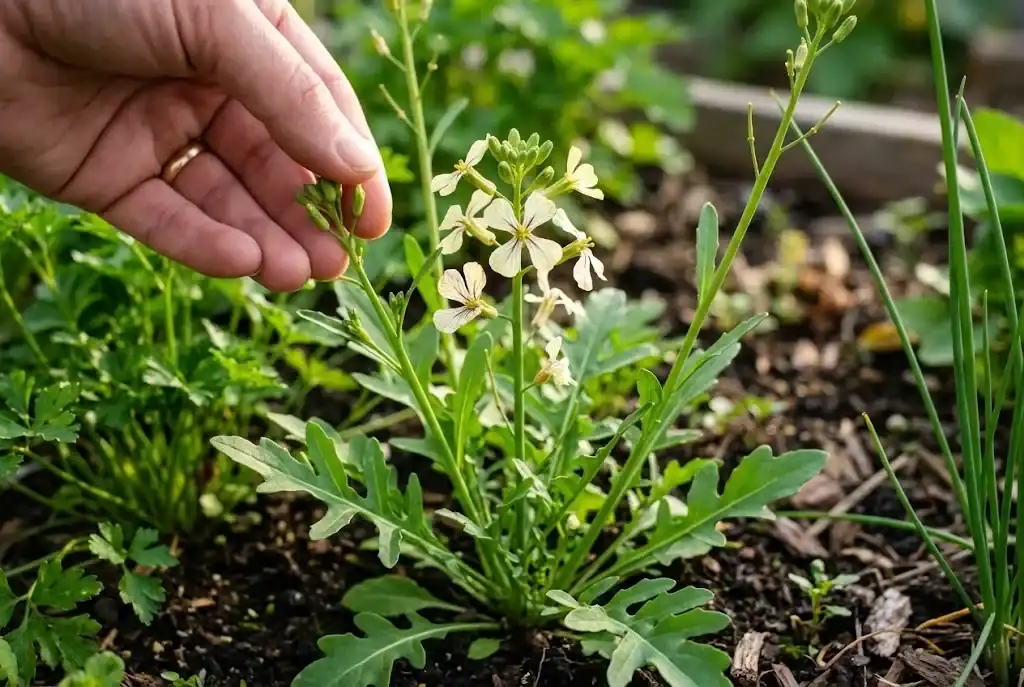
Rocket naturally wants to bloom and set seed once daylight lengthens and hot weather sets in. When a plant starts to bolt, it sends up a tall central stem. The foliage rapidly turns unpleasantly bitter, tough, and intensely hot.
To prolong cropping and prevent early bolting:
- Pinch early buds: If you spot an emerging bud at the top of the central stem, pinch it off immediately. This redirects energy back into vegetative leaf production for another week or two.
- Provide afternoon shade: In late spring and summer, shade cloth or planting beneath taller crops such as peas or beans protects plants from intense heat.
- Keep soil cool and moist: Apply a light layer of mulch around the base of plants. Mulch keeps root zones cool and retains soil moisture during dry spells.
- Succession sowing: Sow small batches of seeds every two to three weeks during spring and autumn. When older plantings eventually go to seed, new seedlings will be ready for harvest.
If your plants produce an open flower, do not discard it. The yellow or white flower petals are entirely edible and make an attractive, spicy garnish for soups and salads. You can also let a few vigorous plants go to seed to establish a semi-wild patch in the garden.
Handling pests and preparing fresh leaves after harvest
Inspecting your greens during harvest keeps unwanted insects out of your kitchen. Rocket is a member of the brassica family, making it appealing to common garden pests.
Small holes scattered across leaves usually point to the flea beetle, an active pest that thrives in dry conditions. Keeping the soil consistently moist and covering young seedlings with fine horticultural fleece deters them effectively. During wet periods, watch for the occasional slug feeding on low-growing foliage. Simply discard damaged leaves during harvest.
After picking, handle the tender greens gently to avoid bruising:
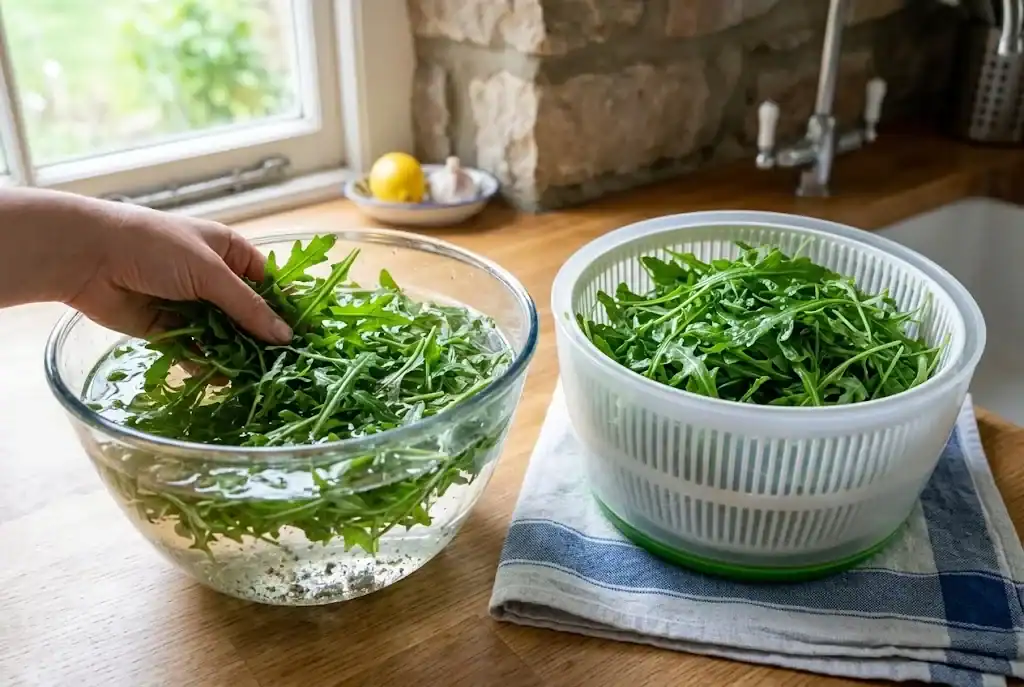
- Submerge leaves in a bowl of cold water to float away garden soil and grit.
- Lift the leaves out rather than pouring water through them, letting sand settle to the bottom.
- Dry the leaves thoroughly using a salad spinner or clean tea towels. Residual surface moisture accelerates leaf breakdown.
For detailed techniques on keeping greens crisp in the refrigerator, explore our guide on reliable ways to store rocket herbs.
Clean, dry rocket brings lively crunch to everyday cooking. Storing leaves properly keeps them crisp for several days, ready to toss directly into salads or blend into fresh sauces.
Frequently asked questions about harvesting rocket
How many times can you harvest from a single rocket plant?
When harvested using the cut-and-come-again method, healthy rocket plants typically yield three to five full pickings before blooming. Plants grown in cool weather with steady moisture may continue growing and producing foliage for up to two months.
Can you eat rocket leaves after the plant blooms?
Yes, leaves remain safe to eat after blooming begins, but their flavor becomes significantly more pungent and bitter. If you find the taste too sharp for raw salads, explore these culinary ideas for cooking with rocket, where gentle heat and olive oil soften the spicy bite in pasta dishes and soups.
What is the best tool for harvesting rocket?
Sharp kitchen shears or curved herb snips work best. A clean scissor cut prevents tearing the fragile stems, protects the plant crown, and speeds up plant recovery after each picking.