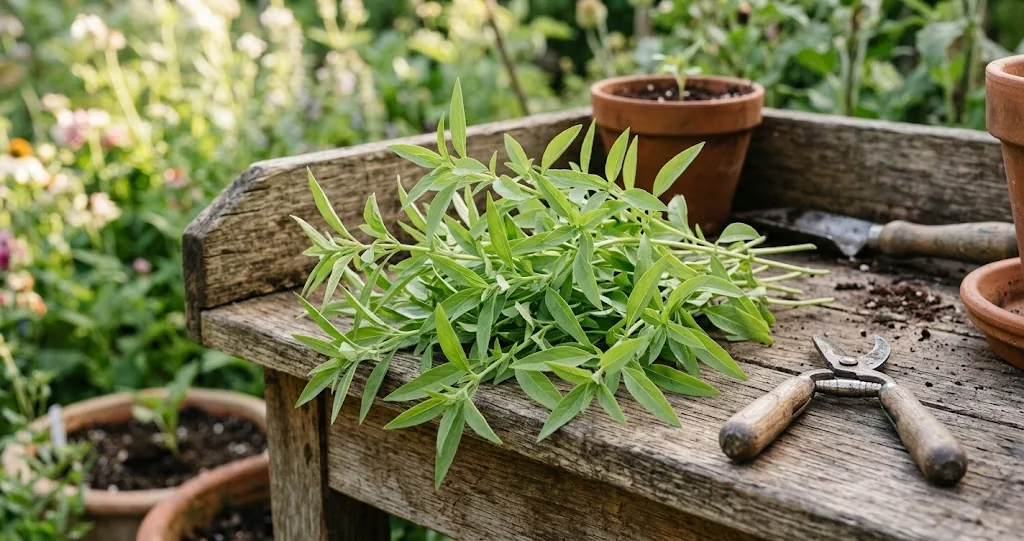
Lemon basil (Ocimum x citriodorum) is a beloved annual herb treasured by every kitchen gardener for its crisp citrus aroma and peppery warmth. This basil is one of the most productive culinary greens you can cultivate, and gardeners who grow herbs for fresh seasoning appreciate its rapid response to regular trimming. Knowing how to harvest the plant properly protects overall health and ensures an abundant supply of fresh leaves without killing the plant or causing premature bitterness.
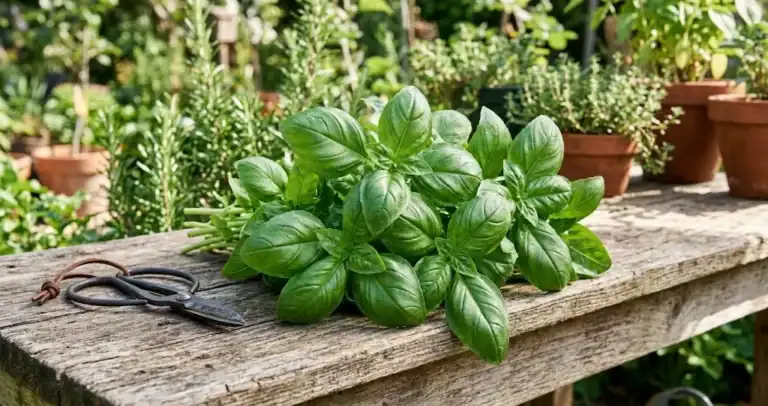
Unlike standard sweet basil varieties that develop large, cupped leaves, this citrus cultivar produces smaller, delicate green leaves on slender stems. Different varieties of basil, including Thai basil, cinnamon basil, lime basil, and purple basil, each show distinct growth habits. For this type of basil, regular harvesting stimulates lateral branching at every growth point, keeping stems compact rather than tall and leggy, a response this variety shows especially strongly compared to larger-leaved basils. If you cultivate other culinary crops, our fuller guide to harvesting herbs outlines broad timing rules and harvesting frameworks for annuals and woody perennials alike.
When to Start Harvesting This Basil for Bushy Growth
You can begin your first harvest once the young basil plant reaches about 6 to 8 inches tall and displays at least three to four sets of leaves. Starting too early can compromise root stability, while waiting too long allows the main stem to harden and initiate premature blossoms.
- Plant size: Begin when seedlings stand 6 to 8 inches tall with multiple healthy leaf sets.
- Leaf pairs: Ensure the central stem has developed several tiers of true leaves before trimming.
- Root establishment: Confirm the plant is anchored firmly in nutrient-rich soil and actively producing leaves.
Early pruning acts as a natural growth stimulant. When you grow basil, snipping the central terminal stem encourages your basil to push out dual side branches, transforming a single upright stalk into bushy basil plants that yield far more flavorful leaves all season.

The Best Time of Day to Harvest Aromatic Leaves
The best time to harvest fresh basil leaves is during the cool morning hours, just after morning dew evaporates but before the afternoon sun heats the garden. Essential oils, including citral, limonene, and linalool, reach peak concentration in the leaf tissue at this time, delivering the most flavorful basil harvest possible.
Harvesting under intense midday heat causes cut stems to wilt quickly and lose volatile aromatics. If you must harvest leaves later in the day, place the fresh stems in cool water immediately to rehydrate the cut sprigs and protect overall flavor.
How to Prune and Harvest This Basil Step by Step
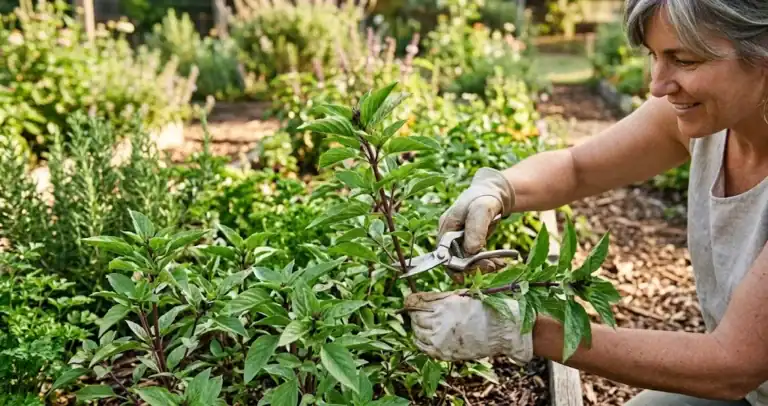
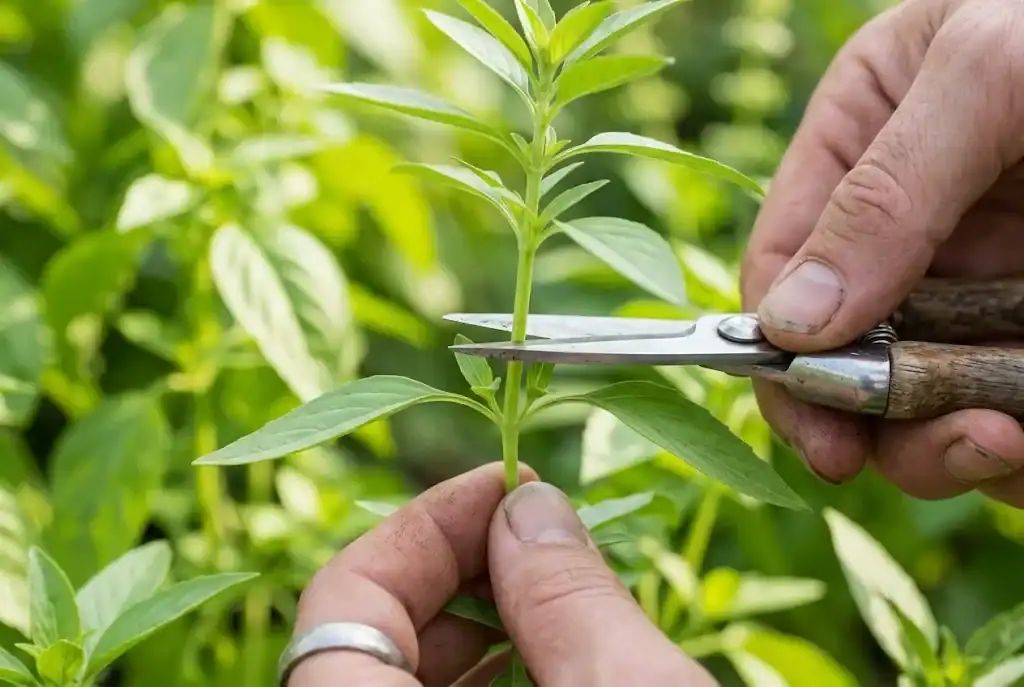
Knowing how to prune and harvest properly protects the herb from mechanical tearing and fungal plant disease, which ensures active basil growing conditions through summer. Whether you are growing basil in the ground or in patio pots, follow these practical steps whenever you harvest leaves:
- Prepare your cutting tools: Use sharp pruning shears or a clean, small pair of scissors. Wipe the blades with rubbing alcohol to avoid transferring pathogens across plants.
- Identify a growth point: Locate a node where two young side shoots emerge from the main stem.
- Cut above the leaf node: Slice cleanly across the stem roughly one-quarter inch above the junction. Leaving this small buffer protects the emerging side shoots without creating a decaying stem stub.
- Respect the one-third rule: Never remove more than one-third of the total foliage during a single clipping session. Leaving ample green leaves maintains photosynthesis and sustained root vitality.
- Avoid cutting near the ground: Never cut the plant down to its base, as hard lower wood cannot readily regenerate active leafy stems.
Consistent, moderate cutting keeps your plant compact, healthy, and constantly generating new growth.
Pinching Flower Spikes to Encourage Your Basil
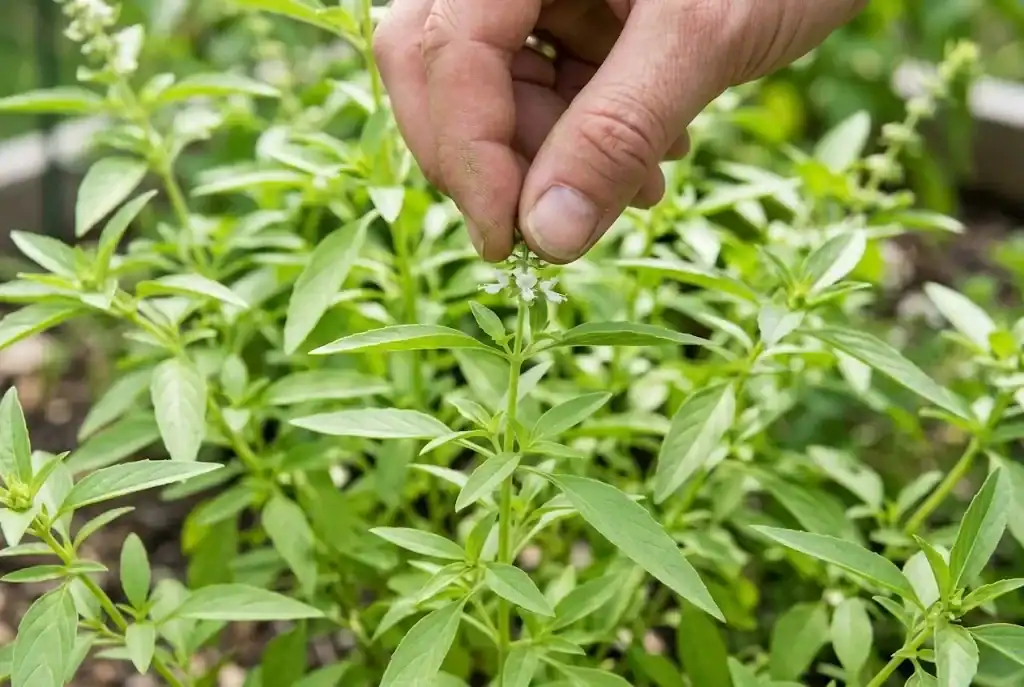
As summer temperatures rise, the citrus-scented herb naturally attempts to produce slender flower spikes with white blossoms. When a basil flower spike develops, the plant redirects energy away from leaf growth toward seed production, causing each remaining basil leaf to turn coarse and bitter.
Inspect your herbs weekly and pinch off emerging flower buds using your fingers or a small scissor. Pruning flower spikes signals the plant to continue vegetative growth, extending your harvest as long as possible. If you want to collect basil seeds for the following spring, allow a few plants to flower freely toward the end of the growing season.
How to Store Harvested Stems
Freshly cut citrus basil is tender and prone to chilling damage. Storing fresh cuttings in a cold refrigerator causes leaves to blacken and decompose rapidly.
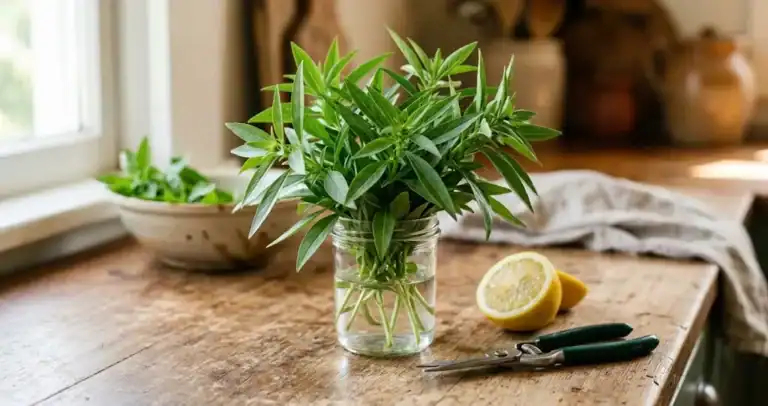
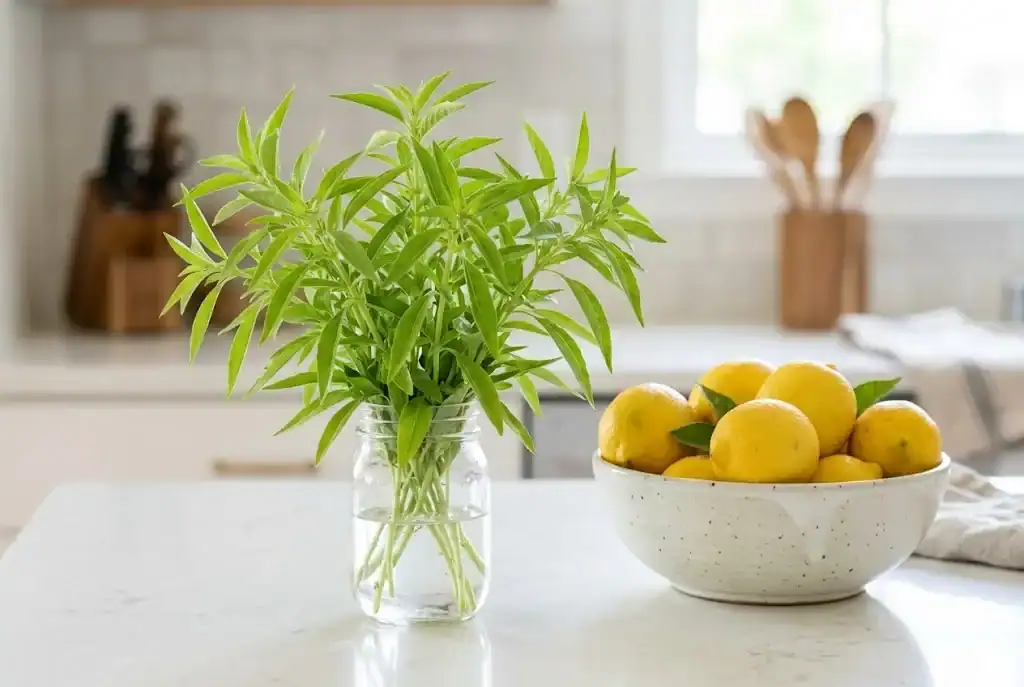
To store fresh basil on the counter, trim stem bases and place the bouquet upright in a small glass of water at room temperature out of direct sunlight. When you harvest more than you can use immediately, try these preservation techniques:
- Freezing basil in olive oil: Finely chop clean leaves, pack them into ice cube trays, cover with olive oil, and freeze solid. Store the oil and basil cubes in freezer bags for instant additions to soups and sauces.
- Drying basil leaves: Lay clean sprigs across drying racks in a warm, dark, well-ventilated space. Once the leaves are completely dry and crumble readily, store dry basil in airtight glass jars away from light and heat.
For additional details on humidity control and cold-storage prevention, explore our comprehensive guide on proper techniques for storing your harvest.
Ways to Use Aromatic Leaves in the Kitchen
This aromatic citrus herb provides a distinctive brightness that pairs effortlessly with savory proteins, light seafood, roasted vegetables, and crisp summer salads. Add freshly torn leaves at the very end of cooking to preserve their delicate citrus aroma.
You can also steep fresh leaves in boiling water for herbal infusions, blend them into citrus vinaigrettes, or combine them with garlic, toasted pine nuts, parmesan cheese, and olive oil to make pesto with a tangy herbal profile. For practical recipe inspiration and cooking methods, see our guide on culinary ideas for cooking with this citrus herb.
Frequently Asked Questions About This Basil’s Care
Does harvesting encourage bushier plant growth?
Yes. Cutting stems right above a leaf junction awakens dormant side buds, doubling the number of growing shoots and creating a fuller, more productive plant.
Can you harvest leaves after the plant begins flowering?
Yes, but the leaves may taste slightly more astringent. Pinching off flower spikes promptly redirects energy back into sweet, aromatic leaf production.
How often can you harvest fresh leaves?
During peak summer conditions with fertile soil and adequate sunlight, light harvests every three to five days or a moderate trimming once a week keep plants healthy and prevent early flowering.