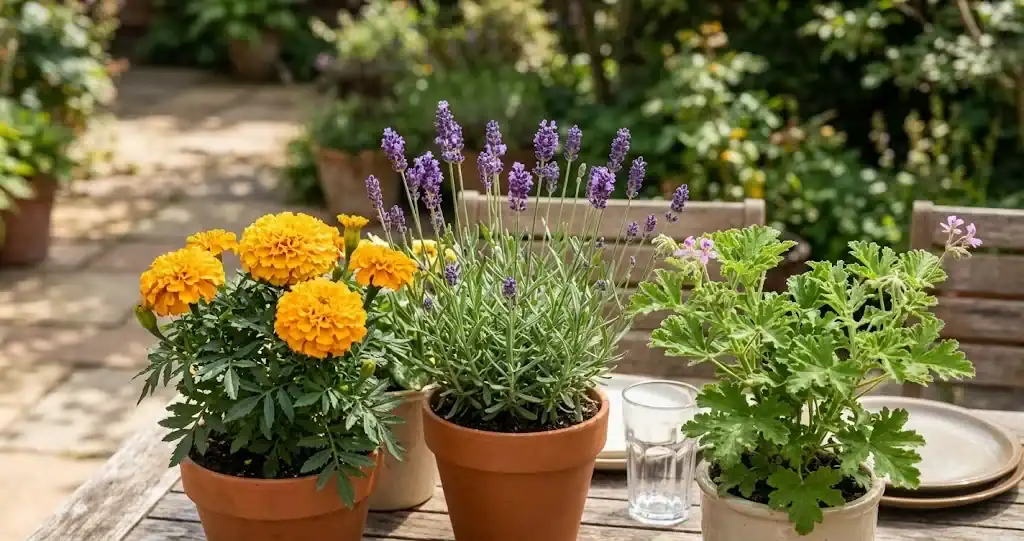
Hoverflies, also called syrphid or flower flies, are common visitors to patios and gardens. Their yellow-and-black markings can make them look like bees or wasps, but hoverflies are flies in the family Syrphidae. They do not bite or sting. In most gardens, they are visitors worth keeping: adults move pollen as they feed at flowers, and many larvae eat aphids and other soft-bodied plant pests. University of Minnesota Extension and Oregon State University Extension both describe hoverflies as beneficial insects.

What are hoverflies?
Hoverflies are easy to mistake for stinging insects because many species mimic the colors and bands of bees or wasps. Look closely at the wings: a hoverfly has one pair, while bees and wasps have two pairs. Large eyes, short antennae, and its ability to hover in place are other useful clues. If the insect is hovering around flowers and has these features, it is likely a hoverfly rather than a wasp.
Adults visit flowers for nectar and pollen. Females often lay eggs near aphid colonies, and the slug-like larvae search plants for prey. A single larva can eat many aphids, although the exact number depends on the species and conditions. This is why a hoverfly on a patio beside flowering pots is usually not a problem to solve.

Why hoverflies gather on a patio
A sunny patio with flowering containers gives adult hoverflies nectar, pollen, warmth, and a place to rest. They may also pause near aphid-infested plants because that is where some species lay eggs. Their presence does not mean your patio is dirty, and it does not mean they are nesting in the way bees or wasps might.
Before trying to move any insect away, check the identification. Small flies around fermenting fruit, drains, or potting soil may be fruit flies, drain flies, or fungus gnats, not hoverflies. A true hoverfly does not sting. If you see a nest, repeated stinging behavior, or insects entering a wall void, get local pest-control advice for the insect you actually have.

Why it is usually better to leave hoverflies alone
- They help pollinate flowers as adults visit for nectar and pollen.
- Many hoverfly larvae are useful aphid predators.
- They do not bite or sting people or pets.
- They are part of the garden food web and are often a sign that the space supports beneficial insects.
For these reasons, avoid broad-spectrum insecticides, sticky traps, and homemade killing traps for hoverflies. These methods can harm the pollinators and pest predators you want in a garden, along with other insects that happen to visit the area.

How to get rid of hover flies on a patio without harming them
If you want to get rid of hoverflies from the part of the patio where you eat, relax, or open a door, aim to redirect them instead of killing them. These seven steps help make that small area less appealing while leaving hoverflies free to do their useful work elsewhere in the garden.
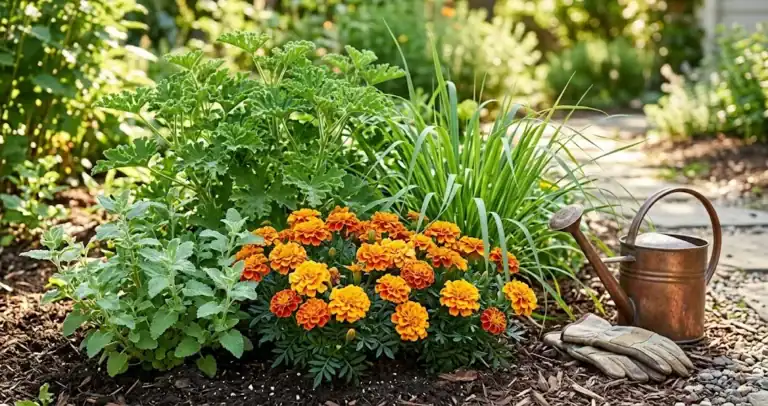
- Move flowering pots a short distance away. Shift the most nectar-rich containers to the edge of the patio or another sunny part of the garden. Do this gradually so you still have flowers for pollinators.
- Put food and sweet drinks away promptly. Cover drinks, wipe spills, and empty outdoor recycling. This will not repel hoverflies specifically, but it reduces reasons for many flying insects to investigate a table.
- Use a fan where you sit. Hoverflies are agile fliers, but a steady breeze can make a dining or seating area less comfortable without harming them.
- Give them another flower stop. If space allows, place flowering plants farther from the patio. A small patch at the garden edge can draw visiting insects away from the door.
- Check plants for aphids. Look at new growth and leaf undersides. Finding hoverfly larvae among aphids is a good reason to let them work. If aphids need attention, start with a targeted garden approach rather than removing their natural enemies.
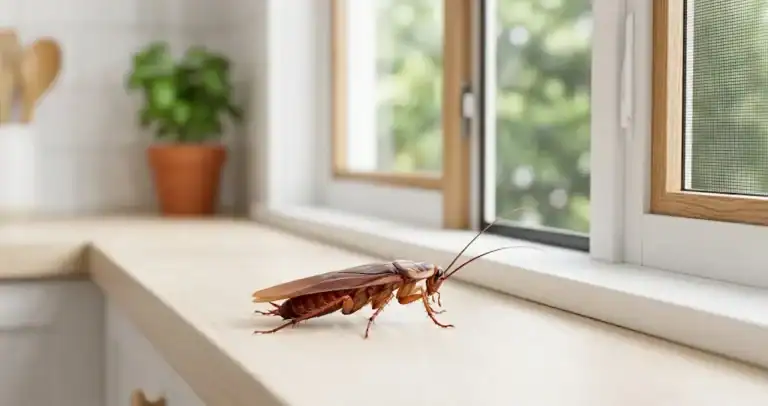
- Close the route indoors. Repair window screens, keep doors closed when practical, and use a screen door if outside insects are entering the house.
- Remove a single visitor by hand. A cup and a stiff card are enough for an occasional hoverfly indoors. Cover it, slide the card underneath, and release it outside near flowers.

What not to use for hoverflies
Skip vinegar traps, soapy-water traps, neem sprays, essential-oil sprays, diatomaceous earth, nematodes, and electric zappers for a hoverfly visitor. The old advice to use these methods was not supported for hoverflies and conflicts with the value they provide in a garden. Products described as natural can still kill or disrupt beneficial insects when they contact them.
There is also no need to buy ladybugs or other predators to control hoverflies. The goal is not to create a predator contest on your patio. If flies are appearing in large numbers indoors, identify the fly and look for its breeding source, such as overripe produce, a drain, damp organic material, or a gap around a window. That is a different situation from a few hoverflies visiting outdoor flowers.

Common questions about hoverflies on a patio
What attracts hoverflies to a patio?
Hoverflies are attracted to flowers because adults feed on nectar and pollen. Sun, shelter, and nearby plants with aphids can also explain why hoverflies gather near your patio. Moving a few flowering pots can be more effective than trying a hoverfly repellent.
Do hoverflies build nests?
No. Hoverflies do not build nests like wasps or bees. A group of hoverflies hovering in one spot may look alarming, but it is not a nest. If you find a paper nest or see insects repeatedly entering one opening, identify the insect before deciding how to respond.
Should you use a fly trap for hoverflies?
A fly trap may catch hoverflies along with other beneficial insects, so it is not a good choice for a garden patio. If a few hoverflies get inside, use a cup and card to release them outdoors. If you need to get rid of flies breeding indoors, find and remove the food or moisture source for that specific fly.
Can you repel hoverflies from one area?
There is no need to use a chemical hoverfly repellent. A fan, covered food, clean spills, and flowering pots placed a little farther from your seating area can encourage hoverflies to move elsewhere. These steps are a better fit than trying to kill helpful flies in the patio or garden.
When to ask for help
If the insects are stinging, building a visible nest, damaging a structure, or you cannot identify them confidently, contact a local extension office or qualified pest professional. Describe where you see them, what they look like, and whether they are entering a building. Accurate identification prevents a useful garden insect from being treated as a pest.
Hoverflies can be surprising when several gather around a patio, but they are usually harmless guests. A little distance between your seating area and flowering pots, plus basic food and screen habits, is often all you need.