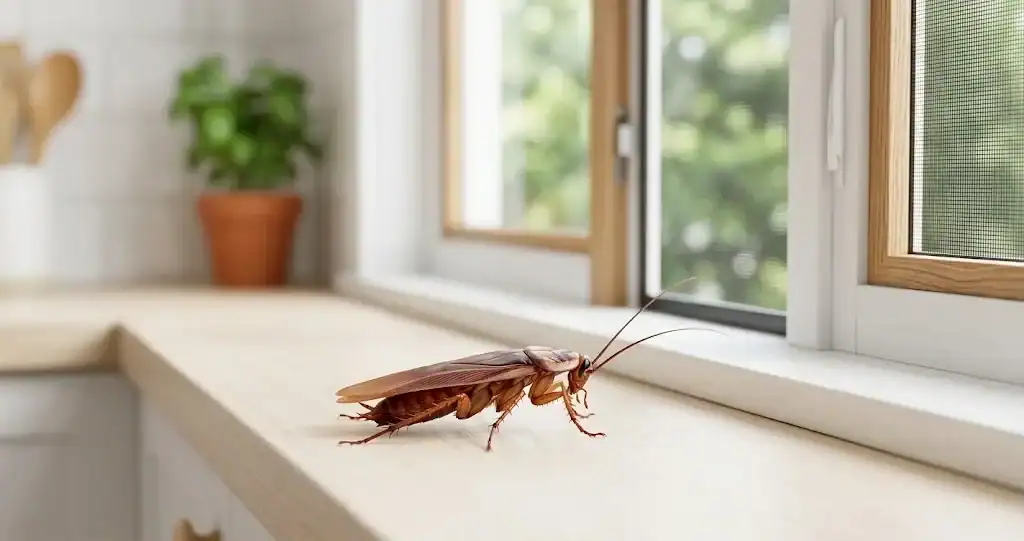
A cockroach with wings can be startling, especially when it glides across a room. The short answer is yes: some cockroach species can fly or glide, but many common indoor cockroaches do not fly well. Wings alone are not a reliable way to identify the species.

Do cockroaches actually fly?
Some adult cockroaches have fully developed wings and can fly or glide for short distances. Others have wings but rarely use them, while juveniles have no wings at all. Warm conditions, bright lights, disturbance, food, and the search for a mate can all make a winged cockroach more noticeable.
Flight varies by species, sex, age, and conditions. It is more accurate to say that some cockroaches can fly than to assume every cockroach with wings will take off. A flying insect indoors can also be a beetle or another lookalike, so identification matters before choosing a control method.
Which cockroaches are most likely to fly?
American cockroaches are large, reddish-brown cockroaches that may fly or glide, particularly in warm weather. Brown-banded cockroaches can also fly, with males more likely to do so. German cockroaches have wings but generally move by running rather than sustained flight. Oriental cockroaches are usually poor fliers. Species and habits vary by region, so a local pest professional or extension service can help with uncertain identification.

The University of Minnesota Extension guide to cockroaches describes common household species and notes that a specimen can be submitted to an insect specialist or pest-management expert when identification is difficult.
How far can a flying cockroach travel?
There is no useful single distance for every species. A cockroach may make a brief, awkward flight or glide from a wall, tree, porch, or outdoor hiding place. It is better to focus on where it is entering and what is attracting it than to guess how far it can travel.

Do cockroaches have wings?
Adult cockroaches in many species have two pairs of wings. The forewings form a tougher cover, while the hind wings do the work of flight when flight is possible. Nymphs, the immature stage, are wingless. A winged cockroach does not jump into the air and glide with its body. It uses its wings, although some species use them only rarely.

Are flying cockroaches dangerous?
A flying cockroach is not inherently more dangerous than a crawling one. The concern is an indoor cockroach population, not its mode of travel. Cockroach material can trigger allergy or asthma symptoms in some people, and food or utensils should be cleaned if they may have been contaminated. People with asthma should be especially careful about sprays and foggers, which can trigger attacks.
The CDC recommends removing food and water sources, cleaning crumbs and spills promptly, storing food in airtight containers, keeping trash closed, and sealing cracks around cabinets, walls, baseboards, and plumbing. The CDC also advises avoiding sprays and foggers for pest control when asthma is a concern.

How to make your home less inviting to cockroaches
Start with the conditions cockroaches need: food, water, shelter, and entry points. These practical steps can reduce the chance of an indoor problem:
- Clean dishes, counters, crumbs, and spills promptly.
- Store human and pet food in sealed containers, and empty garbage regularly.
- Fix leaks and dry areas around sinks, refrigerators, laundry equipment, and plumbing.
- Seal gaps around pipes, doors, windows, cabinets, and baseboards.
- Reduce cardboard, paper piles, and clutter that provide hiding places.
- Move firewood, leaf litter, and other outdoor debris away from the foundation.

What to do if you see cockroaches indoors
One cockroach does not always mean a large infestation, but repeated sightings, droppings, egg cases, or a musty odor deserve attention. Place sticky monitoring traps where children and pets cannot reach them, such as behind appliances or under sinks. The traps can show where activity is concentrated and help a professional identify the problem.
For an established infestation, use an integrated pest management approach. That means sanitation, exclusion, monitoring, and the least hazardous effective control method rather than relying on a room spray. Gel baits or enclosed bait stations may be useful when used exactly as their labels direct. Keep any pesticide away from food-preparation surfaces, children, pets, and areas they can access.

Use pesticides carefully
Do not mix products, use more than the label allows, or apply a product in a place the label does not permit. The EPA advises using food, water, and shelter reduction first. If bait is used, choose a tamper-resistant station and place it where children and pets cannot touch it. Avoid total-release foggers unless a product label and a qualified professional specifically support their use. They can leave pesticide residue where it is not wanted and can create avoidable exposure risks.
Essential oils, coffee grounds, and other home remedies are not a dependable substitute for identifying the species, removing attractants, and sealing entry points. Do not use unlabelled chemicals or make homemade pesticide mixtures. If you rent, report a persistent problem to the landlord or property manager because treatment may need to include neighboring units or shared building areas.
When to call a pest-control professional
Consider a licensed pest-management professional when sightings continue after cleaning and exclusion, when cockroaches appear in several rooms, or when you cannot identify the insect. Ask what species was found, where treatment will be placed, what preparation is needed, and how children, pets, and people with asthma should be protected. A good plan explains how sanitation and repairs support the treatment, not just which product will be applied.

Common species you may encounter
German cockroach
German cockroaches are small, light brown to tan, and marked with two dark stripes behind the head. They often live near warmth, moisture, food, and plumbing in kitchens and bathrooms. Adults have wings but are usually seen running.
American cockroach
American cockroaches are much larger and reddish brown. They often occur in warm, damp sites such as sewers, basements, utility spaces, and floor drains. Adults can fly or glide, especially in warm conditions.

Oriental cockroach
Oriental cockroaches are dark and prefer damp places. They are often called water bugs, although that name is also used for other insects. They are generally poor fliers and may enter from drains, crawl spaces, basements, or outdoor areas.
Wood cockroach
Wood cockroaches live outdoors in leaf litter, wood piles, and decaying material. They may wander indoors by accident, especially near wooded areas, but they do not usually establish the same indoor infestations as German cockroaches.

The bottom line
Some cockroaches can fly, but flight alone does not tell you how serious a pest problem is. Identify the insect if possible, remove food and moisture, seal entry points, and use the least hazardous effective control method. Persistent indoor activity is a good reason to call a licensed professional.