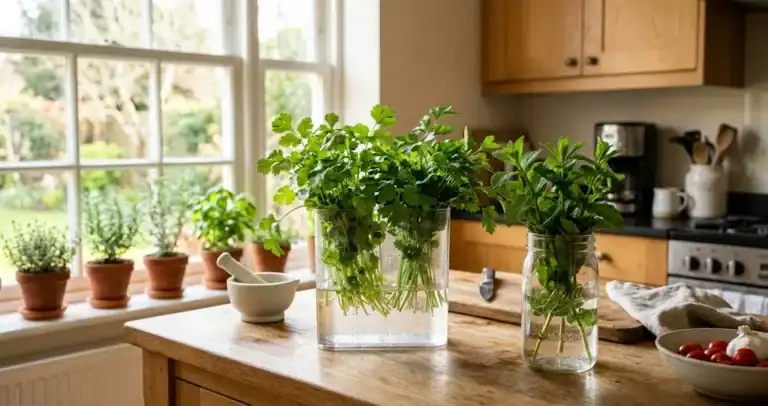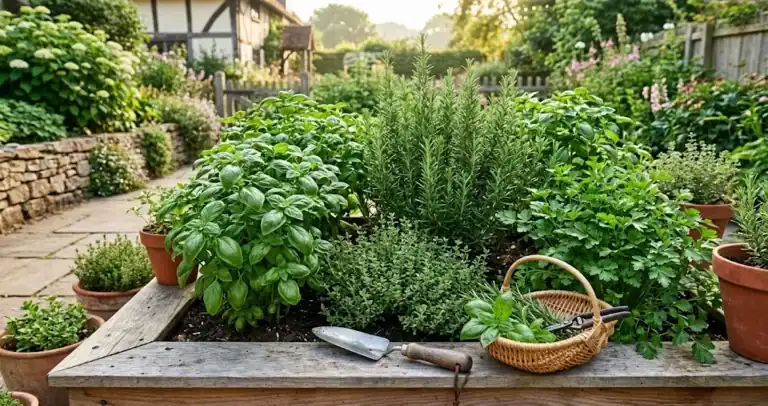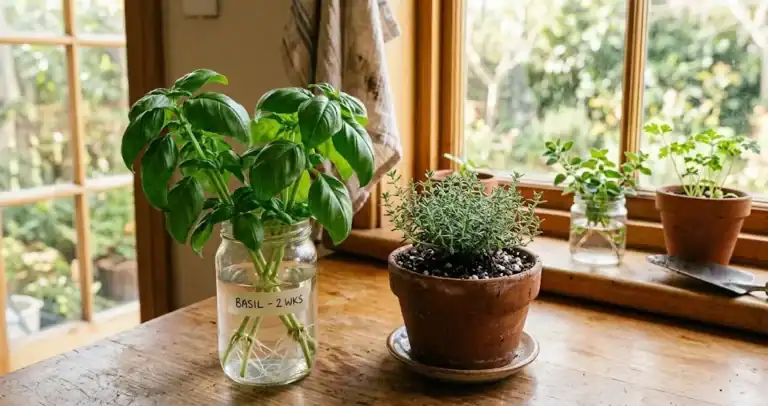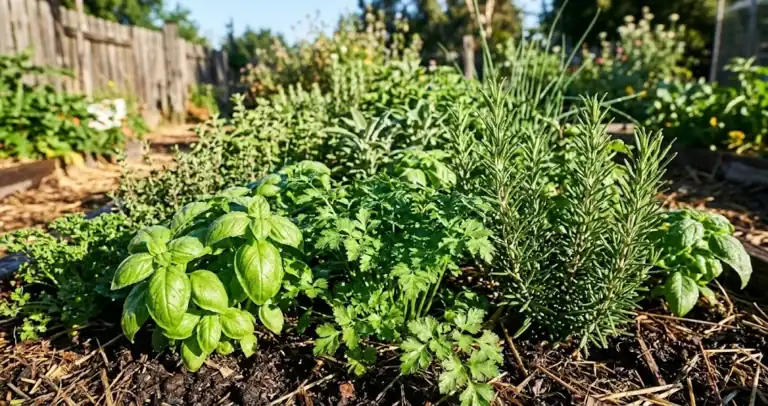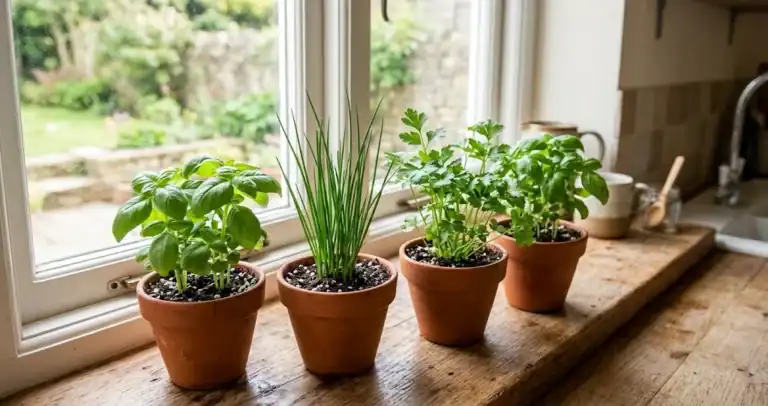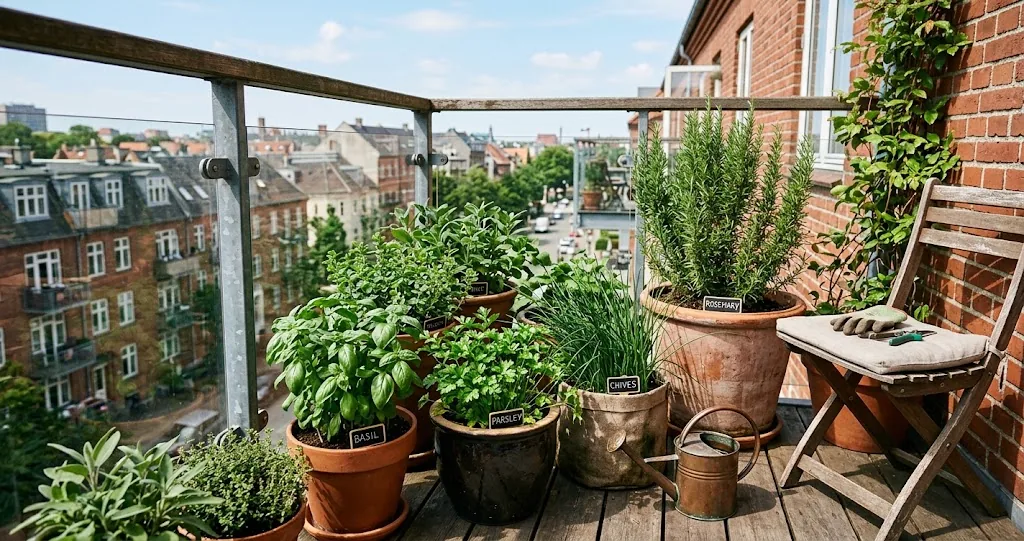
City living does not give you a backyard. It usually gives you a balcony, a windowsill, a fire escape (where your building and local rules permit), or a stretch of concrete you share with everyone else. None of that disqualifies you from growing herbs. With the right containers, soil, and plant choices, even a one-square-foot patio can supply fresh leaves for pasta and tea through most of the year.
This guide covers the practical decisions that make urban herb gardening work: where to put the containers, what to grow, how to keep plants alive through a hot, dry summer and a cold, dim winter, and how to deal with the pest and weather problems you will actually meet in the city. The same principles apply whether you are gardening on a small rooftop, in a sunny apartment window, or on a patio or community plot. Fire-escape gardening is its own question: local rules and your building management must permit it, the planters must never obstruct an emergency exit, and a balcony, windowsill, patio, rooftop, or community plot is the safer default wherever that is uncertain. Urban herbs reward the same care as rural ones, just in tighter quarters.
What counts as urban herb gardening
An urban herb garden is simply a collection of culinary or aromatic plants grown within a city setting. The defining trait is the constraint: limited space, often limited light, sometimes limited soil. Most city gardeners cultivate in containers, on rooftops, in shared plots at community gardens, or on outdoor patios. The same logic applies to a wider urban garden planted in a sunny corner lot, where the principles of light and drainage still rule.
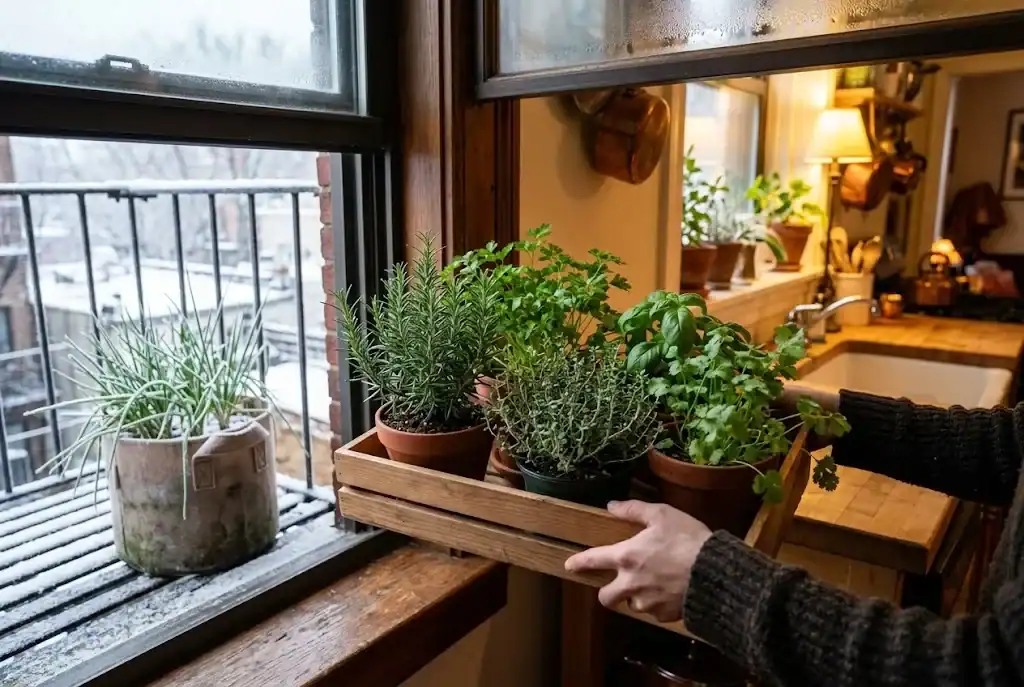
The scope overlaps with container gardening, indoor gardening, and patio gardening, but the practical center of gravity is this: you are working around the city, not against it. You pick the warmest wall, the brightest window, the wind-sheltered corner, and you grow what fits. Apartment dwellers face many of the same constraints, and the dedicated walkthrough on growing and maintaining herbs in an apartment covers the lighting, humidity, and watering adjustments that indoor-only situations need.
Pick the right spot before you pick the plants
Most culinary varieties want at least six hours of direct light a day, with sun lovers at the high end and shade-tolerant plants at the lower end. Before buying anything, spend two or three days watching where the sun lands on your patio, rooftop, or windowsill.
A south or west-facing wall holds the most warmth and light in the northern hemisphere. An east-facing window gives strong morning sun and gentler afternoons, which suits tender leaves that wilt in peak heat. A north-facing window is workable only for shade-tolerant varieties, and even those do better with a grow light during the darker months.
Wind is the second constraint. A rooftop or high outdoor space can dry out a small vessel in a single afternoon and snap tender stems. Group containers near a wall, behind a railing screen, or inside a low planter box to cut the wind. Weight matters too: never put a tall, top-heavy planter where a gust can push it over.
Containers that suit an urban setup
Container choice sets the limit on what will actually thrive. A vessel that is too small dries out fast and forces the plant into constant stress. A container with no drainage waterlogs the roots and kills them in a week. Match the size to what you are growing.
For most culinary varieties, a container at least 8 to 10 inches deep with drainage holes at the bottom is the floor. Woody Mediterranean plants want even more depth because their roots travel. Mint is the exception: it spreads aggressively, so grow it in its own vessel or it will take over anything planted beside it.
Material matters less than drainage. Terra-cotta breathes and dries out faster, which suits Mediterranean varieties that hate wet feet. Glazed ceramic, plastic, and fabric grow bags hold moisture longer and suit leafy annuals. Whatever you choose, raise the vessel slightly off the surface with pot feet or a small wooden slat so excess liquid can drain and the base does not sit in a puddle. The full breakdown of size, material, and drainage lives in the dedicated guide to choosing the right herb containers, which is the natural next read once you know what you want to grow.

Build the right soil mix
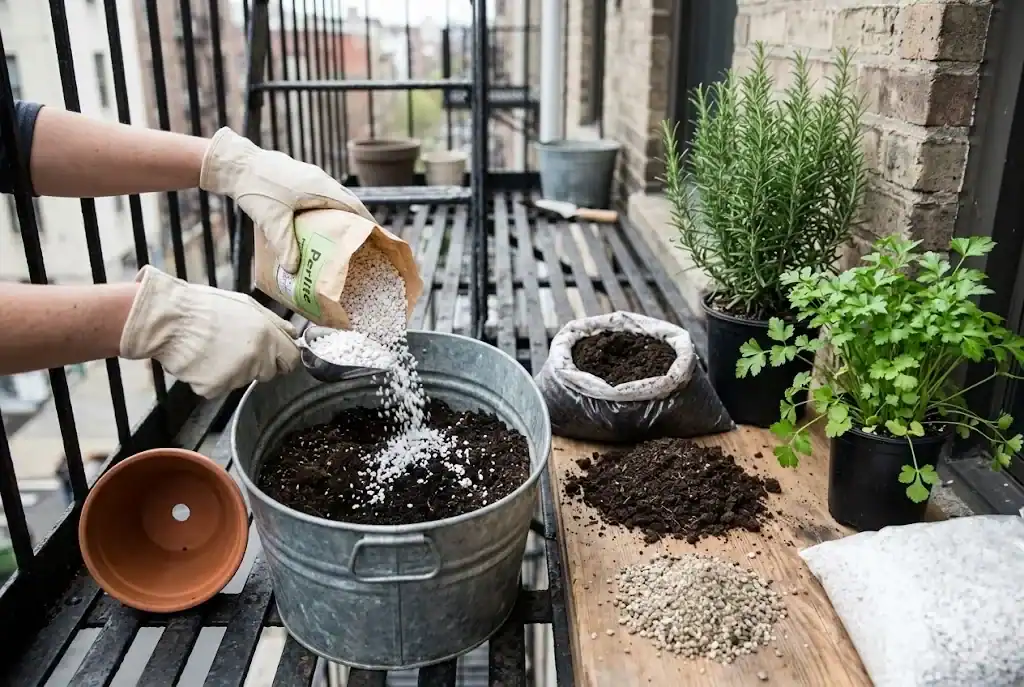
Bagged garden soil is too dense for containers. It compacts, holds too much moisture, and chokes roots in a small volume. Use a potting mix designed for containers, or build your own from two parts potting soil, one part compost, and one part perlite or coarse sand for drainage.
Most culinary plants prefer a slightly lean mix. Too much fertilizer pushes leafy growth with little aroma, and the plant becomes a target for aphids. A light feeding once a month with a diluted liquid fertilizer is plenty during the growing season. Skip feeding altogether for Mediterranean woody herbs, which evolved in poor, rocky soil.
Pick varieties that actually thrive in containers
Not every culinary herb earns its space in a small urban setup. Some grow too large, some demand more root depth than a container can provide, and some collapse under the heat reflected off a concrete wall. The reliable choices for city growing split into three groups: basil and flat-leaf parsley for the warm months, thyme and rosemary as long-term plants, and chives and mint for the cool season.
Start with two or three you cook with weekly. Basil is the highest-value starting point for most kitchens: it is productive, transplants easily, and responds well to regular harvesting. A third option depends on what you cook with, so add a tea herb if you drink tea or cook Southeast Asian or Middle Eastern food, or a sunny-corner Mediterranean plant. Spearmint needs its own vessel because it spreads aggressively; rosemary grows upright and can share a suitably sized container with the other heat-loving plants.
Woody Mediterranean varieties are the long-term plants. They grow slowly but live for years in the right spot. Once established in a deep planter against a sunny wall, a single shrub can become a backbone that holds the whole collection together. A beginner gardener who wants a low-effort anchor can start with any of them, since the woody Mediterranean varieties are forgiving once they are established.
Watering and feeding in a city setting
City heat reflects off walls, pavement, and railings, and a small container on a sunny patio can dry out in a single summer afternoon. Watering is the daily task you cannot avoid. Stick a finger an inch into the soil: if it feels dry, soak thoroughly until liquid runs out the drainage holes. If it is still moist, leave it.
Irrigate in the morning rather than the evening so the leaves dry before nightfall. Wet leaves overnight invite fungal disease, especially on basil and parsley. If the vessel is small and the day is hot, you may need to soak twice. Group containers together to slow evaporation and create a slightly humid microclimate around the leaves.

Feeding is light and infrequent. A half-strength liquid fertilizer every three to four weeks during active growth is enough for leafy varieties. Stop feeding entirely in late summer so the plants harden off before winter.
Pests and diseases in urban settings
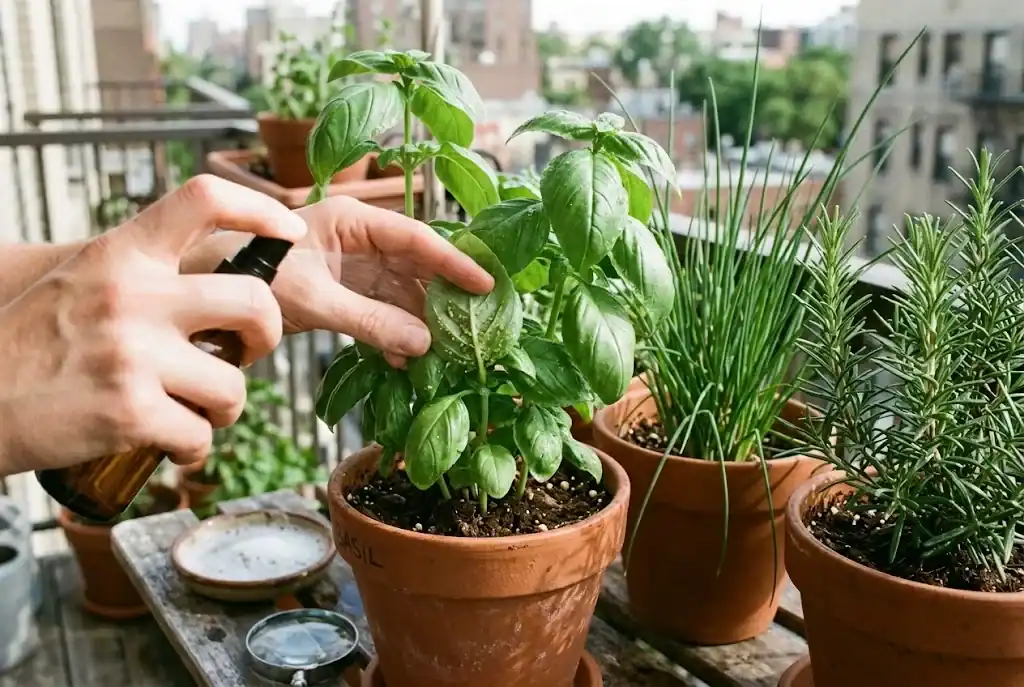
City gardens do not escape pests; they trade field problems for patio problems. Aphids, whitefly, spider mites, and the occasional caterpillar are the main issues. The first line of defense is a strong spray of water on the undersides of the leaves, which knocks aphids off without harming the plant.
If spraying alone does not clear the infestation, a dilute soap spray (one teaspoon of pure liquid soap per liter of water) covers most soft-bodied insects. Apply in the evening when the sun is off the leaves to avoid scorching. Companion planting helps too: chives under roses, mint in its own container on the far side of the patio. Healthy plants resist infestations better than stressed ones, so consistent irrigation is the real prevention.
Year-round planning and seasonal moves
Growing herbs in the city does not stop at the first frost, but the lineup changes. Tender annuals like basil collapse once nights drop below 10 degrees Celsius (50 degrees Fahrenheit). Parsley and cilantro tolerate cooler conditions and may handle light frost, but they slow down sharply in deep cold. Chives tolerate light frost and keep producing into early winter. Winter survival of thyme, oregano, rosemary, and sage in containers varies by species, cultivar, exposure, and local climate; container roots are less insulated than in-ground roots, so check the hardiness of your cultivar against your lowest expected temperatures and protect or bring in vulnerable pots before hard freezes.
Bring tender plants inside before the first frost. A south-facing window keeps basil productive for another month or two. In mid-spring, move everything back outside after the last frost and resume regular feeding.
If you are gardening on a patio in a cold climate, expect to replace these tender annuals each year from seed or seedling. Chives and the long-term Mediterranean plants hold the collection together year after year. The wider picture of planning an herb setup from soil prep to seasonal rotation is laid out in the beginner’s guide to growing an herb garden, which is a useful next step once your city pots are settled and you want to expand.
Quick answers about urban herb gardening
What herbs grow best in a small city garden?
The kitchen staples cover all the bases. Most kitchen herbs work well in containers, and the long-term Mediterranean plants need a deep pot and full sun to anchor the collection year after year.
How much sun does an urban herb garden need?
Six hours of direct light is the target. Less than four hours leaves you with shade-tolerant varieties, which produce less flavor in low light.
Can I grow herbs indoors year-round?
Yes, with a south-facing window or a basic grow light and good drainage in a container that fits each variety. Match the herb to your light, temperature, and humidity; not every kitchen herb thrives under the same conditions.
How often should I water herbs in pots?
Check daily during the growing season. Small containers in full sun may need moisture twice a day in July. Larger vessels in part shade usually need watering every two or three days.
Start with three herbs you already cook with, put them in the sunniest spot you have, and irrigate when the soil dries out. The rest of your urban garden grows from there.