Most gardeners divide their planting beds into two familiar groups: annuals that finish their run in a single summer, and perennials that return season after season. Biennial herbs occupy a fascinating middle ground. These selections take two full growing seasons to complete their biological cycle, offering fresh kitchen harvests in their first year and dramatic flowering displays in their second.
Understanding how two-year herbs develop allows you to organize your garden beds effectively. Rather than wondering why lush greenery suddenly bolts into a tall flower stalk or why angelica produces leafy crowns without blooming, you can anticipate each stage of growth. Learning these patterns is an essential part of identifying common garden herbs and managing their seasonal rhythms.
What Is a Biennial and How Does Its Life Span Work?
A biennial species requires two distinct growing seasons from initial germination to setting seed. The plant divides its energy into two clear chapters separated by winter cold.
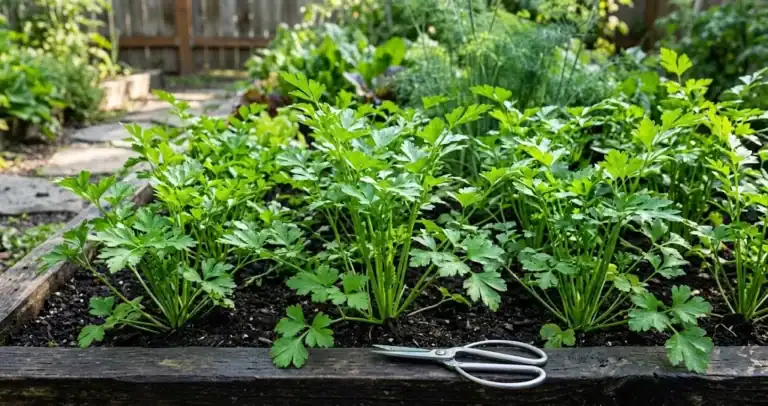
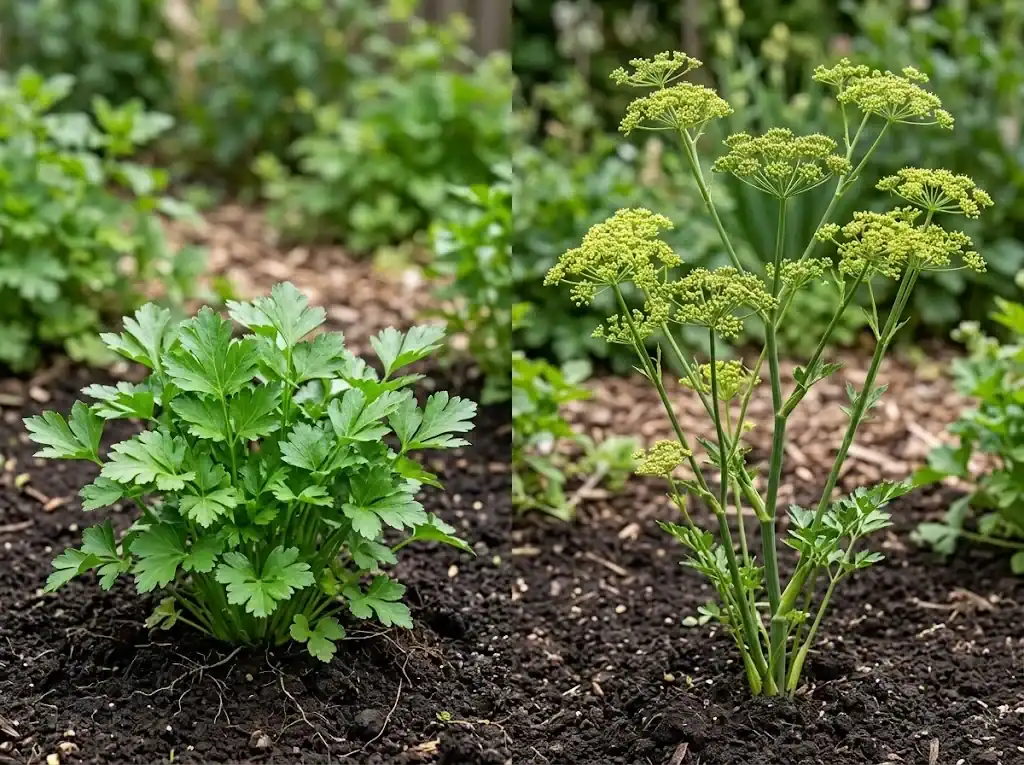
During the first growing season, the botanical specimen focuses entirely on vegetative growth. After sowing in spring or early summer, the seedling develops a robust root system, often forming a deep taproot or thick crown. Above ground, it forms a compact rosette of leafy foliage that gathers sunlight and stores nutrients. In this initial year, the herb does not send up flower stalks or blooms.
As autumn arrives and temperatures drop, the herb prepares to overwinter. The top foliage may die back or stay low against the soil, while the underground root reserves remain alive through winter freezing. This exposure to winter cold, known biologically as vernalization, triggers hormonal shifts inside the crown.
When spring warmth returns in the second year, stored root energy fuels rapid upward growth. The herb sends up strong flowering stalks, develops showy bloom heads, blossoms, and sets new seeds. Once those mature in late summer or autumn, the parent completes its reproductive journey and will naturally wither.
Comparing Annual, Biennial, and Perennial Varieties
To design a productive garden space, it helps to understand how two-year herbs contrast with other garden groups:
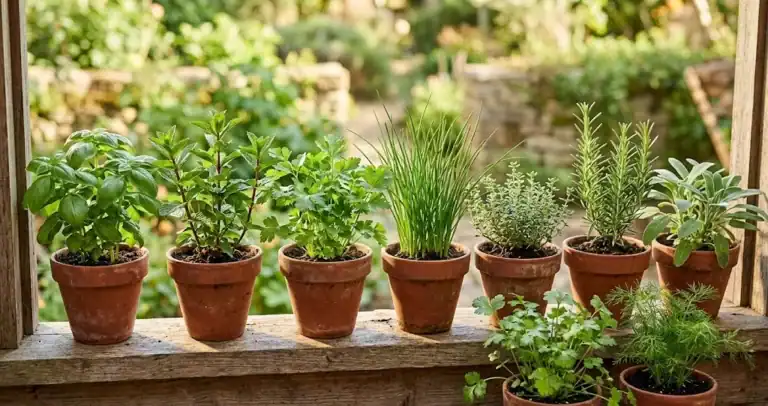
- Annual herbs: Quick-growing selections such as basil, summer savory, and dill complete their entire run in a single frost-free summer. Sowing quick-growing annual herbs provides fast kitchen harvests within weeks of planting.
- Biennial species: Varieties such as parsley, caraway, and angelica require two seasons. They yield abundant leaves in year one and yield flowers and seeds in year two before finishing.
- Perennial herbs: Woody and herbaceous selections such as rosemary, thyme, oregano, and sage live for three or more years. Learning how to grow perennial herbs establishes permanent aromatic foundations across your landscape.
Climate and temperature can influence these categories. Some tender perennial selections, such as sweet fennel or coriander, are frequently cultivated as annuals depending on winter severity and regional hardiness zone conditions.
Popular Kinds of Two-Year Herbs for the Home Garden
Several widely used culinary, aromatic, and ornamental varieties belong to the two-season group. Here are the most rewarding kinds to grow at home.
Parsley and Its Culinary Varieties
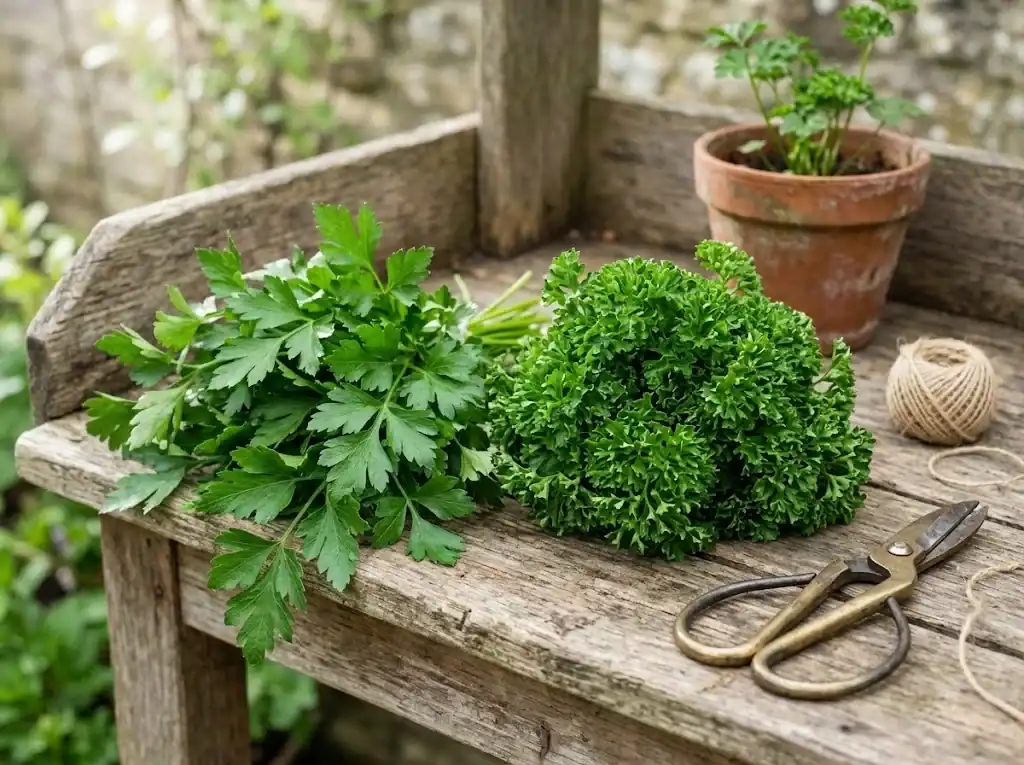
Parsley (Petroselinum crispum) is the most common culinary biennial grown worldwide. A member of the Apiaceae carrot family, these plants form dense rosettes of flavorful green foliage throughout their first season. Gardeners grow both curly leaf and flat-leaf Italian varieties for fresh kitchen use.
In its second year, this kitchen staple sends up tall, branched flower stalks topped with flat umbel clusters of tiny yellow flowers. While second-year leaves become tough and pungent, the blooming umbels attract beneficial pollinators and provide a vital food source for black swallowtail butterflies. After flowering, the green umbels mature and finish their run.
Caraway for Aromatic Seeds and Roots
Caraway (Carum carvi) is an ancient European two-season plant prized for its aromatic seeds and edible roots. In year one, it produces fine, feathery foliage that closely resembles carrot tops, spending the first season building a substantial taproot.
Following winter dormancy, caraway shoots upward in spring, forming delicate white to pale pink umbel flower heads. By midsummer, the blooms transform into crescent-shaped seeds with a warm, anise-like fragrance. Gardeners harvest the mature heads for baking, rye breads, and savory vegetable dishes.
Angelica for Stems and Architectural Blooms
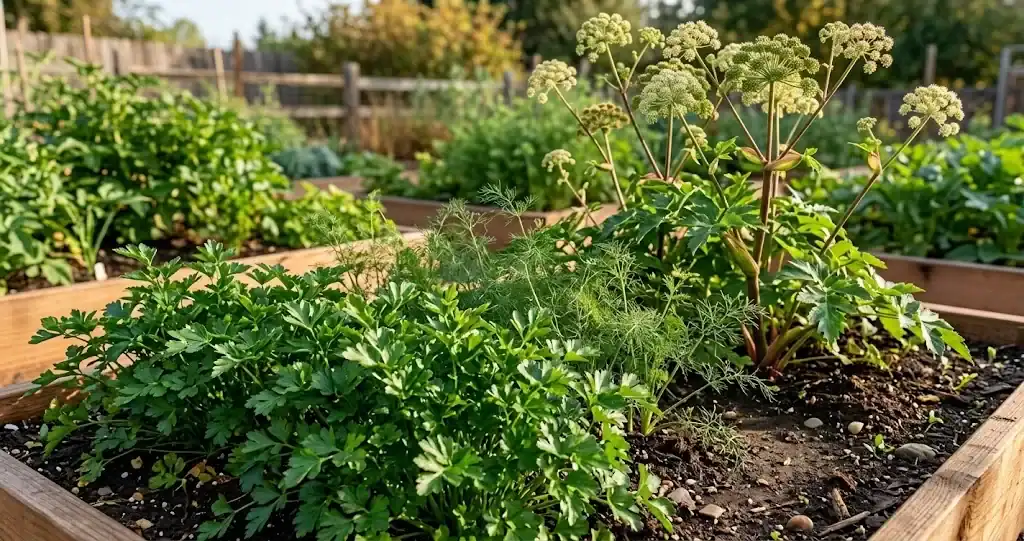
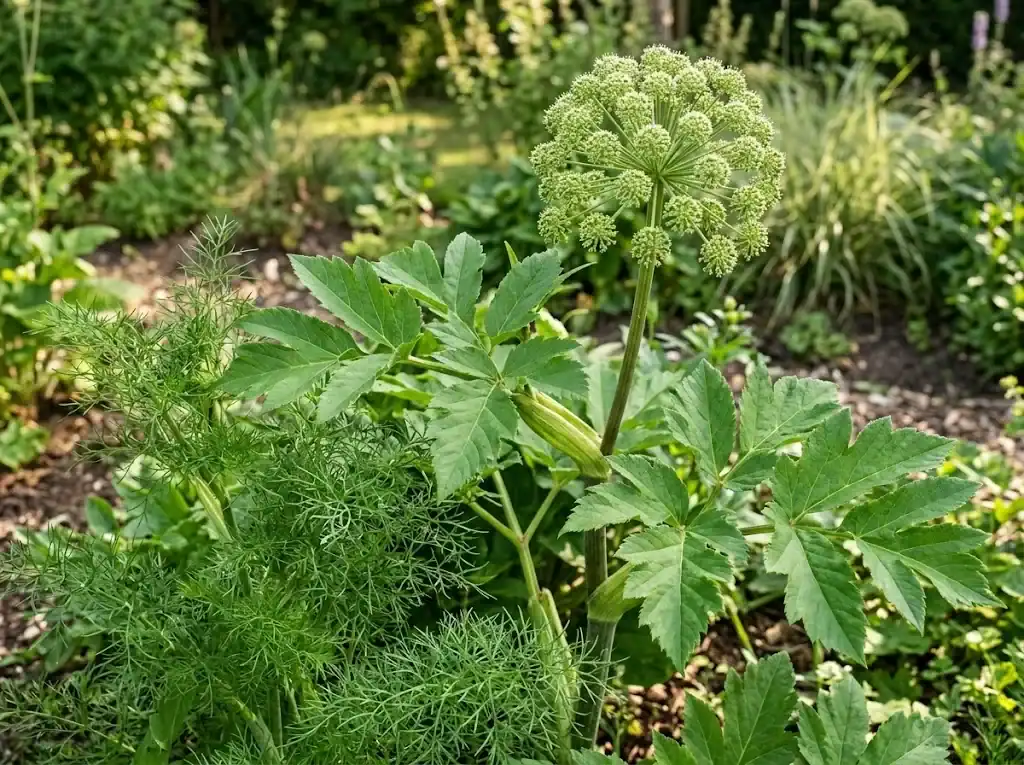
Angelica (Angelica archangelica) is an impressive, architectural specimen that can reach six feet in height during its second year. Native to northern Europe and temperate regions, it creates lush, divided foliage in year one and massive spherical umbels of fragrant greenish-white flowers in year two.
Every part of angelica is useful. The hollow stems are traditionally candied for confectionery, roots and foliage are used in herbal teas and aromatic liqueurs, and nectar-rich flowers attract predatory wasps and hoverflies that help control garden pests.
Clary Sage for Fragrant Foliage and Bracts
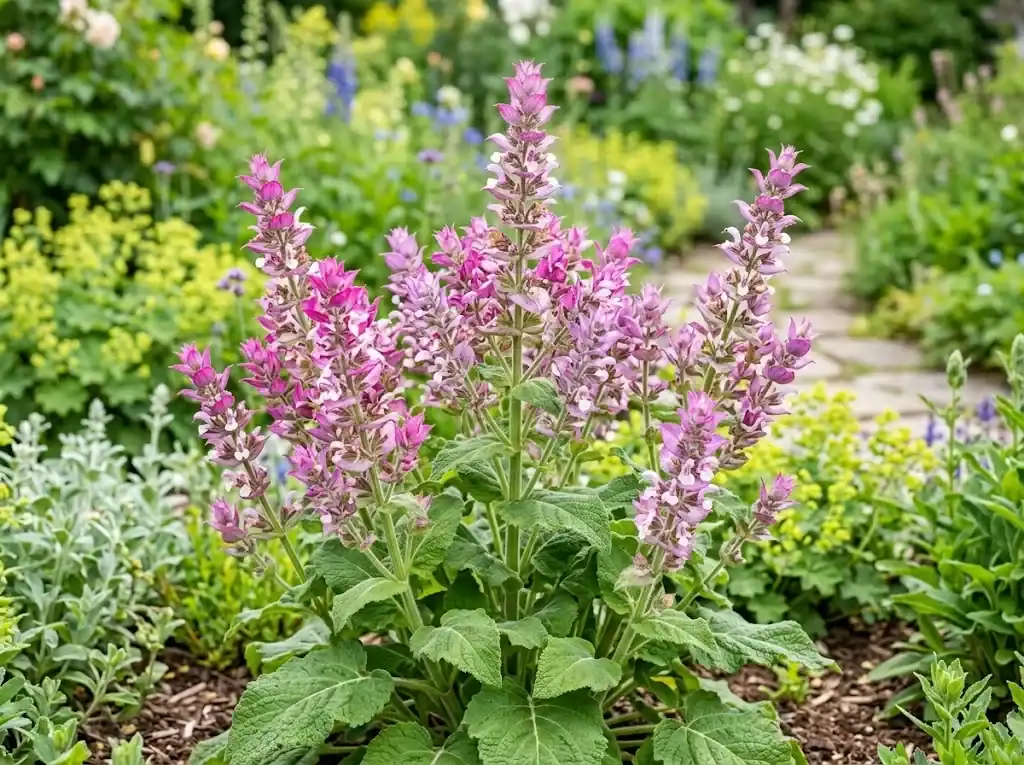
Clary sage (Salvia sclarea) is a striking two-year member of the Lamiaceae mint family. During its first season, it creates broad, pebble-textured, velvety leaves that stay close to the ground. In early summer of its second year, it displays showy, long-lasting flower spikes featuring pink, white, and violet floral bracts.
The foliage carries an earthy, floral fragrance that makes it popular in perfume manufacturing, essential oil distillation, and ornamental flower beds and borders. Its attractive blooms remain colorful for several weeks.
Evening Primrose and Mullein
Two traditional herbs valued for medicinal uses in cottage gardens are evening primrose (Oenothera biennis) and common mullein (Verbascum thapsus). Evening primrose forms a ground-level rosette in year one and opens fragrant yellow flowers at dusk during year two. Mullein displays large, woolly, silver-green foliage in its first year and a towering central spike of yellow blooms in its second year.
How to Grow and Care for Two-Year Herb Selections
Two-season herbs are generally hardy and straightforward to cultivate when given suitable soil and sunlight conditions.
Soil, Sunlight, and Moisture
Most two-year herb selections thrive in full sun to part shade, requiring at least six hours of direct sunlight daily for optimal vigor. They prefer fertile, organically rich, well-drained soil with a neutral to slightly acidic pH. Incorporating well-rotted compost into garden beds provides steady nutrition over two years.
Provide consistent moisture during the first year of leaf growth. While mature specimens with established taproots develop moderate drought tolerance, young seedlings need evenly moist soil to establish healthy roots before winter freeze.
Planting in Garden Beds and Containers
You can start these herbs from seed sown directly into raised beds or garden borders in spring or early autumn. Because many taproot species resent root disturbance, direct sowing often produces sturdier growth than indoor seedling transplants. If you buy plants in nursery pots, transplant them carefully to avoid damaging the central root system.
If growing in a container, select a deep pot with ample drainage holes to accommodate root expansion. Container-grown specimens in cold winter regions may need winter protection, such as moving the pot to an unheated garage or sheltered porch to overwinter successfully.
The Succession Sowing Strategy
To enjoy a continuous yearly harvest, practice staggered succession planting. If you only sow seeds once every two years, you will alternate between seasons with only leaves and seasons with only flowers.
By sowing a fresh batch of seeds every spring, your garden will always contain first-year crops yielding tender leaves and second-year crops with flowers, beneficial insect habitat, and seeds. This rhythm ensures long-term sustainability and a steady supply of garden produce.
Harvesting Leaves, Seeds, and Stems Across Two Seasons
Harvesting techniques change significantly depending on whether your herb is in its first or second season:
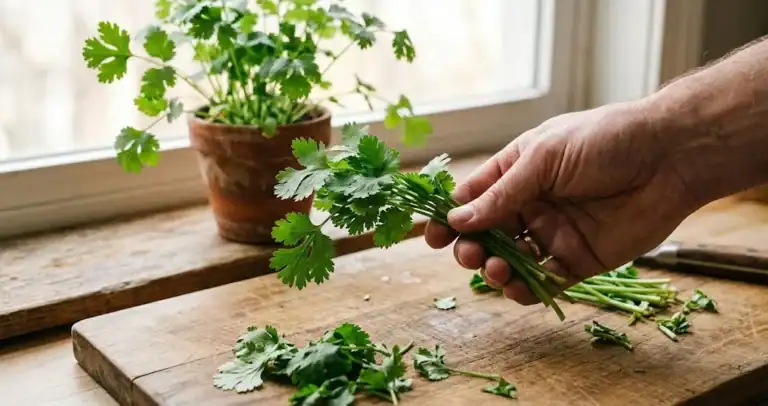
- First-year leaf harvest: Gather outer foliage from first-year plants and angelica throughout summer and autumn. Always leave the inner growing crown intact so the root continues gathering energy for winter storage.
- Second-year leaf harvest: Harvest early in spring as new shoots emerge. Once flower stalks begin to rise, leaves generally become tough, bitter, and less palatable.
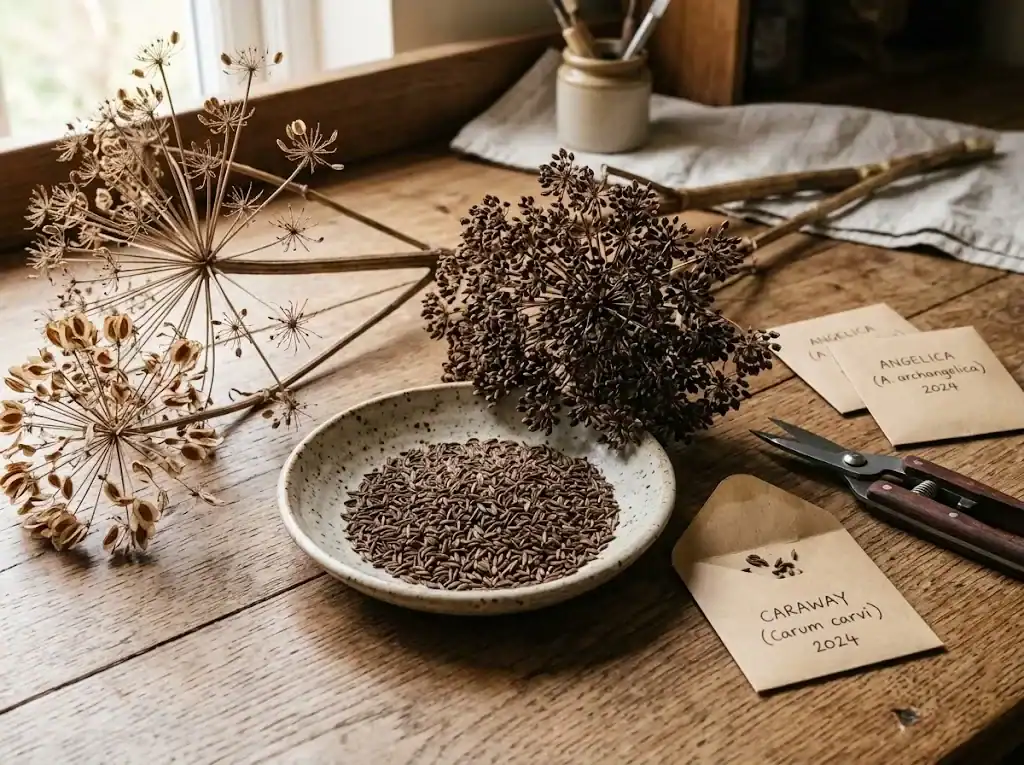
- Seed harvesting: In late summer of year two, allow umbels on caraway and angelica to turn brown and dry on the stem. Cut the seed heads on a dry morning, place them upside down in a paper bag, and let the seeds drop naturally as they cure.
- Root and stem harvest: Dig culinary roots, such as angelica or caraway roots, in late autumn of year one or early spring of year two before flowering stalks develop.
Frequently Asked Questions About Two-Year Garden Herbs
Do two-year herbs return after their second season?
No, these species do not return after completing their life cycle and producing seeds in their second year. However, many varieties readily drop their seeds in the garden, creating self-sown seedlings that appear every spring without replanting.
Why do first-year plants sometimes flower early?
Premature flowering, or bolting, can occur if young seedlings experience extreme temperature fluctuations, cold snaps followed by heatwaves, or severe drought stress. These environmental stresses trick the young herb into initiating its second-year reproductive phase early.
Can you keep a two-year herb alive by cutting off flower stalks?
Pruning flower buds may prolong leaf harvest by several weeks, but it will not convert a short-lived herb into a permanent perennial. Once the herb enters its reproductive phase, its energy shifts toward seed formation and natural senescence.
Sources and Botanical References
- North Carolina State University Extension: Petroselinum crispum Plant Profile
- Missouri Botanical Garden: Angelica archangelica Care and Characteristics
- University of Wisconsin-Madison Extension: Growing and Managing Culinary Greens in the Home Garden