Chamomile is one of the easiest herbs to grow from seed, and a single packet puts a season of homegrown tea within reach for almost no cost. The plants stay compact, the foliage smells faintly of apples, and the daisy-like bloom shows up in late spring when most of the garden is still waking up. If you have a sunny patch of well-drained soil, you can succeed with chamomile.
This guide walks through the two types a gardener is most likely to plant, the conditions each one prefers, and the small steps that carry a sowing from seed to a generous harvest of fragrant flowers.
German chamomile vs Roman chamomile: which one to plant
Two plants share the chamomile name, and they grow differently enough to matter when you plan a bed. Choosing between the two types of chamomile comes down to climate and how permanent you want the planting to be.
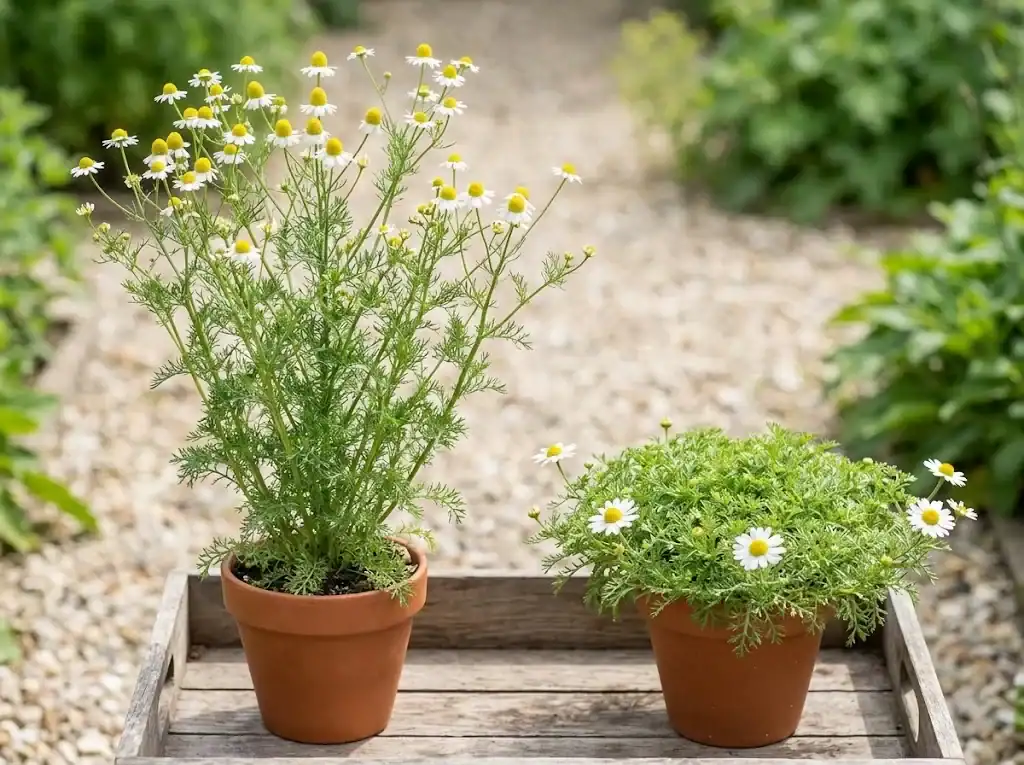
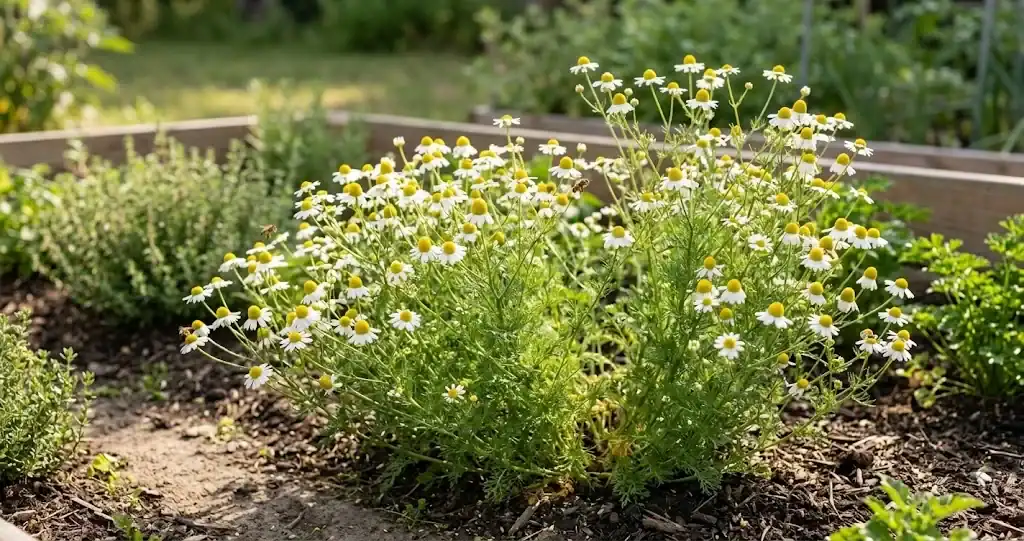
German chamomile (Matricaria chamomilla) is the annual most tea drinkers picture. It reaches about two feet tall, branches freely, and produces a long flush of small, hollow-centered flowers over the warm months. The species is easy to raise from seed, self-seeds in disturbed soil, and finishes its life with the first hard frost. Gardeners in cold-winter climates usually pick this type because it matures fast and stores well as a dried tea herb.
Roman chamomile (Chamaemelum nobile) is a low-growing groundcover that hugs the soil like a soft mat. It is a hardy perennial that survives mild winters, sends up fewer but larger flowers, and works well as a lawn substitute or a path edge. Roman likes the same sun and soil as its German cousin but stays put year after year, which is a strength if you want a permanent planting and a drawback if you like to rotate beds. In a perennial herb garden it can hold its spot for years.
For most home gardeners starting out, German chamomile is the easier and more productive choice. Plant the Roman type if you specifically want a permanent mat or a fragrant groundcover that returns each spring to the same corner of the bed.
What chamomile needs from a site
The planting tolerates a wide range of conditions, but it grows best where it gets the basics right: full sun, fast-draining soil, and steady moisture during germination.
- Light: Full sun (six or more hours of direct sunlight a day) gives the strongest stems and the most flowers. The plants handle light afternoon shade, especially in hot southern summers, but the bloom thins out in heavy shade.
- Soil: Average to sandy, well-drained ground suits this annual. It dislikes wet feet, and heavy clay that holds water in winter will rot the roots. If your soil is heavy, work in two or three inches of compost and consider a raised bed.
- Soil pH: Slightly acidic to neutral, roughly 6.5 to 7.5. Most garden soils sit in this range without amendment.
- Wind: Choose a spot that is not constantly exposed to strong wind. Tall stems of the German type flop in a stiff breeze, and the plants recover but look untidy in the meantime.
When to plant chamomile
Timing depends on whether you start a tray under lights or direct seed in the garden.
Direct seeding outdoors: Wait until the danger of frost has passed and the soil has warmed to about 55 to 60 degrees F. In most of the temperate United States, that lands between late March and mid-May. Seeds are small, and a steady, mild start beats a cold shock.
Starting seeds indoors: Plant about six weeks before your last expected frost. Young plants transplant reasonably well as long as you do not let them become root-bound in their pots. Starting under lights gives northern growers a head start on the season and is the most reliable way to get a Roman planting established.
How to grow chamomile from seed
Chamomile seeds are tiny: a single gram holds several thousand, and a packet goes a long way. They need light to germinate, so surface sowing matters more than with most garden herbs.
Starting seeds under lights
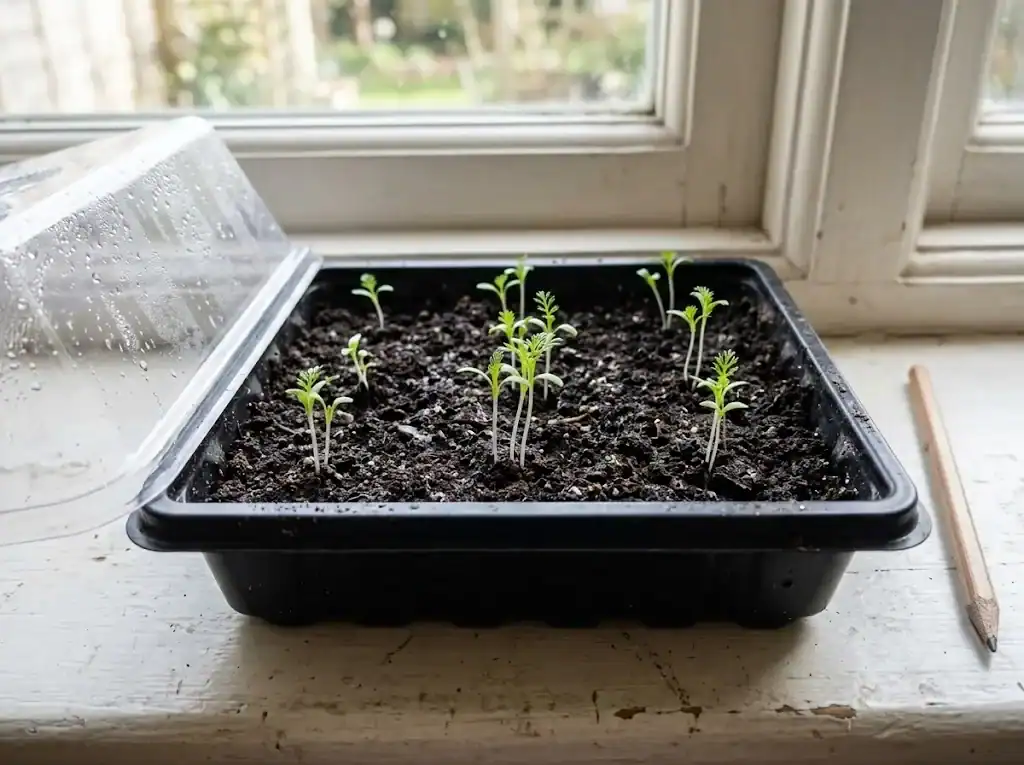
- Fill shallow trays or small pots with a fine seed-starting mix. Moisten the mix before planting so the seeds do not wash into clumps when you water.
- Scatter seeds thinly across the surface. Press them down gently so they make contact with the soil, but do not cover them. Seeds buried under more than a thin dusting of soil are unlikely to sprout.
- Cover the tray with a clear dome or a sheet of plastic to hold humidity, and set it in a bright spot at about 65 to 70 degrees F.
- Keep the mix lightly damp but not soggy. A daily mist from a spray bottle works well until a young chamomile plant puts out true leaves.
- Expect germination in seven to fourteen days. Once a chamomile seedling has two sets of true leaves, thin to about two inches apart, or prick them into individual pots.
- Harden off for a week before transplanting by setting the trays outside for increasingly long stretches each day.
Direct seeding in the garden
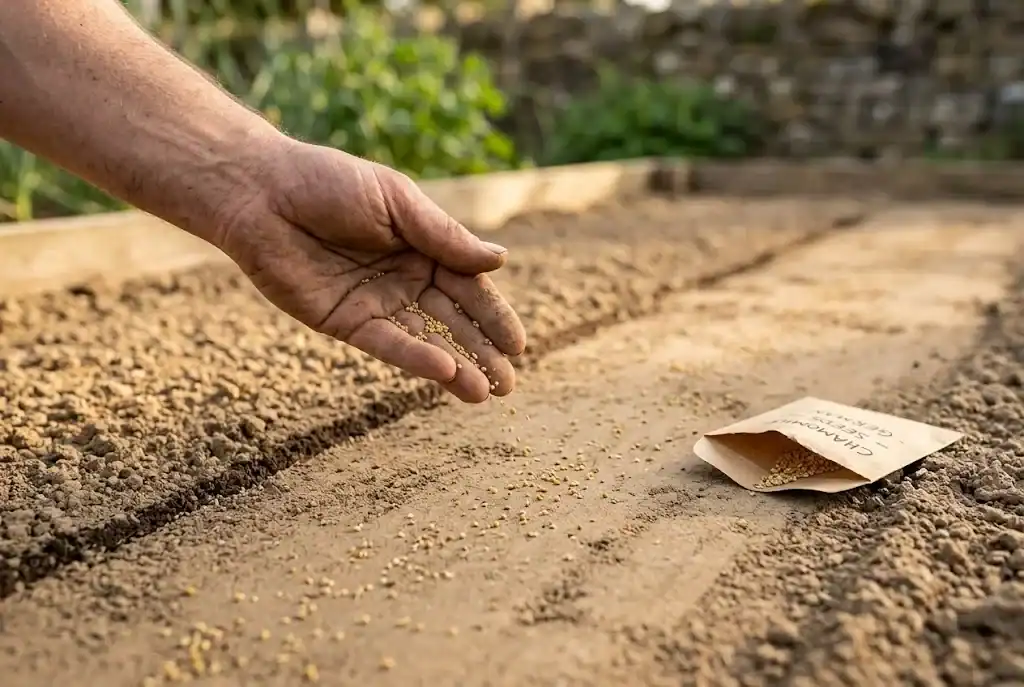
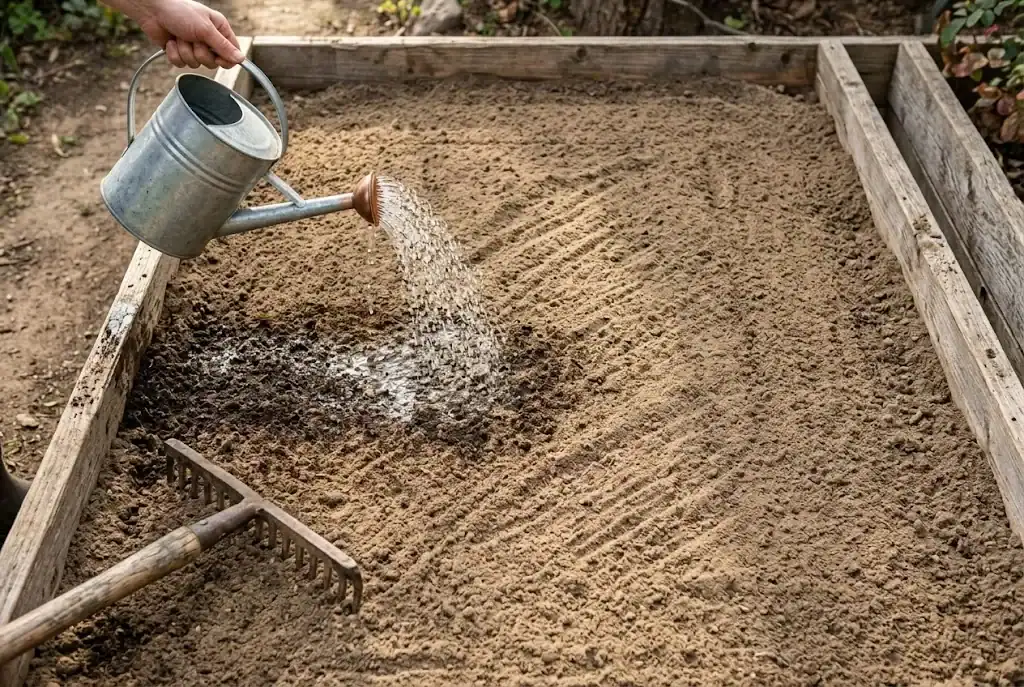
- Prepare a fine, weed-free seedbed. Rake the surface smooth and water it the day before planting.
- Scatter seeds thinly across the surface. Mixing them with a small amount of sand helps you see where the seeds have landed.
- Press the seeds into the soil with the back of a rake or a flat board. Do not bury them.
- Water gently with a fine mist to avoid dislodging the seeds.
- Keep the bed lightly damp until germination. In dry spring weather, a light floating row cover holds humidity.
- Thin to six to twelve inches apart once the seedlings reach two inches tall. Good airflow around the stems prevents disease in humid weather.
Transplanting chamomile seedlings
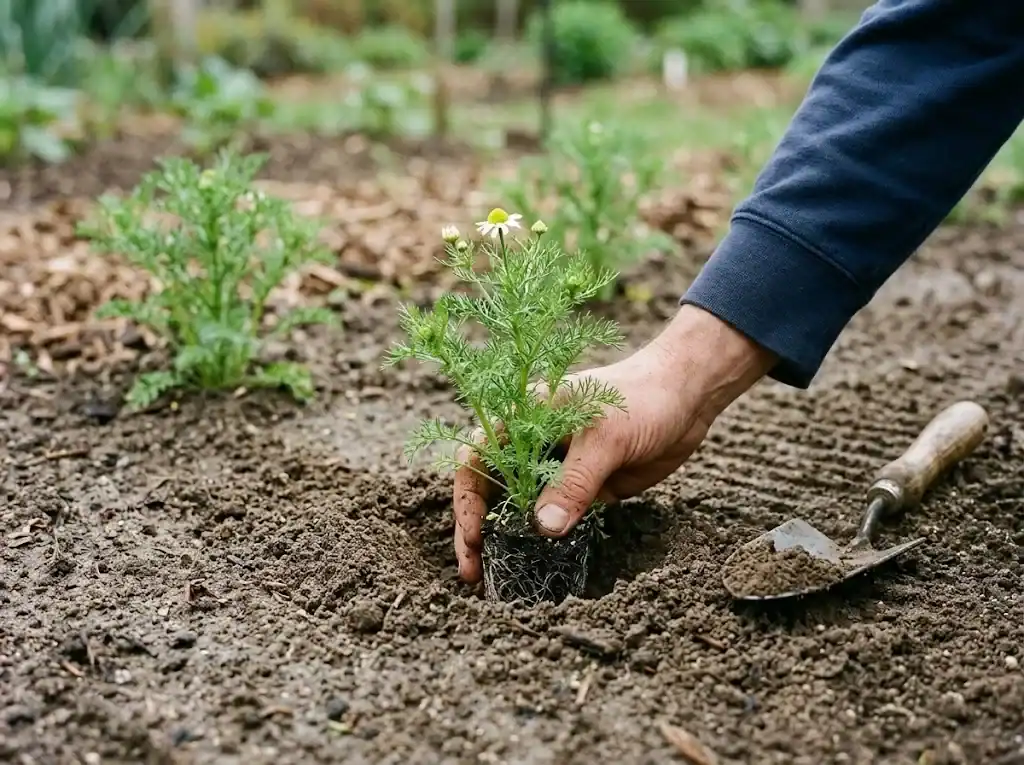
Whether you started chamomile seeds on a windowsill or bought plants from a nursery, transplant on a cool, overcast day or in the early evening so each one has time to settle before facing heat and sun.
Set plants six to twelve inches apart in rows that are about eighteen inches apart. Water them in well with a slow, deep soak, and keep the bed lightly moist for the first week. After that, taper off so the roots search for water on their own. Rich soil is not required, and overfed plants tend to flop rather than flower.
Water, feeding, and ongoing care
Once established, this annual is unfussy, but a few care tips keep the planting productive through the season.
- Watering: Give the bed about an inch of water a week, more during dry stretches. Allow the top inch of soil to dry between waterings. Wet foliage invites fungal problems, so water at the base rather than overhead.
- Feeding: Most plants do not need fertilizer. A single light application of compost tea in midseason is plenty if the soil is poor. Skip nitrogen-rich feeds, which push leafy growth at the expense of flowers.
- Weeding: Young plants do not compete well with aggressive neighbors early in the season. Keep the bed free of weeds until it knits together.
- Staking: Tall German stems benefit from a low peony ring or twiggy branches pushed into the row before the stems lean.
- Saving seed: If you want a guaranteed patch next year, sow the small seed you’ve saved into a clean tray in late summer, or simply let a few blooms mature and shake the seed heads where you want next year’s row.
Pests and disease
The herb is mostly trouble-free, but a couple of common garden pests are worth watching for.

Aphids cluster on the flower buds and tender stem tips in cool spring weather. A strong spray from the hose knocks them off; insecticidal soap works for heavier pest pressure. Ladybugs and lacewings usually move in once aphids appear, so hold off on broad sprays.
Powdery mildew shows up as a white coating on leaves in humid, poorly ventilated patches of the garden. Give plants more breathing room at planting time, water at the base, and remove badly affected foliage.
Damping off can knock down a young plant before it gets its true leaves. Good airflow, clean trays, and a light dusting of fine grit on the soil surface help prevent it.
The planting is rarely bothered by the same insects that trouble vegetables, which is one of the reasons gardeners use it as a companion plant for brassicas, onions, and mint. The small bloom pulls in hoverflies, parasitic wasps, and other beneficial insects that prey on aphids and similar pests.
Companion planting with chamomile
The open flowers attract hoverflies, parasitic wasps, and other beneficial insects that prey on garden pests, so a clump near cabbage, kale, broccoli, onions, or beans is worth considering as part of a mixed bed. Plant chamomile where you want those pollinators to visit, but treat companion-planting claims with caution: chamomile has a long folk tradition alongside vegetables, yet evidence that it actively improves neighbouring crops is limited, and it should not be relied on as pest control on its own.
Harvesting the flowers
Pick chamomile flowers when the petals are flat and fully open and the yellow cone at the center has lifted slightly. Blooms harvested too early hold less of their characteristic aroma, and flowers left too long go brown and lose potency. Watch for aphids on the bud clusters as you pick; a quick rinse during washing clears most of them out, since a single aphid left in the drying tray quickly becomes several.
Harvest in the morning after the dew has dried but before the heat of the day. Pinch or snip the flower heads with about half an inch of stem attached, and avoid brown or wilted blooms.

For a step-by-step look at when to harvest, how often to pick, and how to keep a steady supply coming through the season, see our guide on how to harvest chamomile.
Drying and storing chamomile
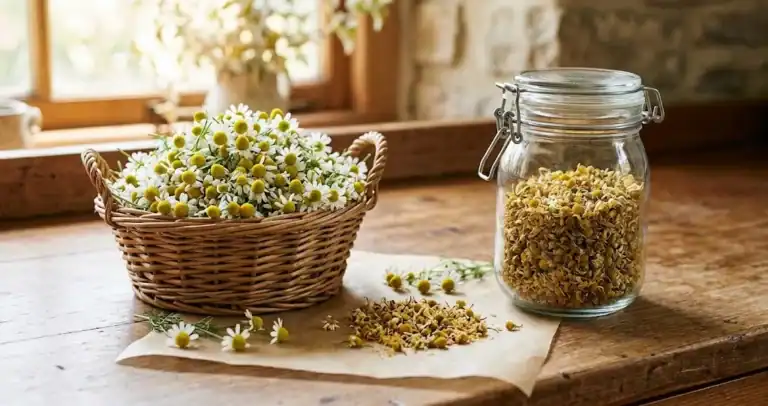
The flowers dry well and keep their flavor for months if handled gently. Spread fresh blooms in a single layer on a screen or a sheet of paper towel in a dark place with good airflow. A small fan set on low speeds drying without overheating the petals. Most batches are fully dry in five to seven days.
Store dried flowers in airtight containers out of direct sunlight. Label with the date and aim to use them within a year for the best flavor in a cup of chamomile tea. To keep blooms intact for tea, skip the oven and stick to air drying.
For the full storage picture, including how to handle fresh flowers when you have a glut on hand, see our guide to how to store fresh chamomile.
Common questions about growing chamomile
Is chamomile easy to grow from seed?
Yes. Chamomile is one of the easiest plants for a beginner gardener to start from seed, especially the German type. Sprinkle the tiny seeds on the surface, keep them damp and in light, and expect sprouts in a week or two.
How long does chamomile take to grow?
A chamomile plant raised from seed reaches flower in roughly eight to ten weeks under good conditions. Transplants shorten that timeline by several weeks. Roman chamomile grows more slowly in its first year but returns on its own in subsequent seasons in a garden that lets it.
Does chamomile come back every year?
German chamomile is an annual that finishes with the first hard frost, though it often self-seeds in place. Roman chamomile is a permanent groundcover that comes back from its roots in mild climates and forms a thicker mat each year.
Can chamomile grow in containers?
Yes. Use a pot at least eight inches deep with drainage holes, fill it with a quality potting mix, and place it where the plant gets full sun. Container-grown chamomile dries out faster than a garden planting, so check moisture regularly in summer.
Does chamomile need full sun?
The plant prefers full sun and produces the most flowers in a bright spot. It handles partial shade in hot southern climates, but yields drop sharply in heavy shade.
Where does chamomile grow best?
Chamomile grows best in a sunny spot with well-drained soil and steady moisture during germination. It adapts well to garden beds, raised beds, and containers as long as drainage is good.
The bottom line on growing chamomile
Chamomile rewards even a small effort. Plant seeds on the surface of a sunny patch of well-drained soil, keep them damp until germination, and the plants carry themselves from there. A few square feet of German chamomile gives a summer of fresh tea; a strip of the Roman type becomes a permanent mat that softens path edges for years.
For a broader look at chamomile as one of many plants worth getting to know at home, see our guide to the herbs that earn a place in your garden.