An organically tended bed is one you manage with compost, mulch, and a careful weekly walk instead of synthetic fertilizer and pesticide. The leafy plants still need the same basics as any garden: sun, water, decent ground, and a little pruning. What changes is the source of those basics, and a small bed responds faster than almost any other planting. A planter by the back door, a flat on a sunny windowsill, and a single bed along a sunny fence will keep the kitchen supplied for most of the year, raised with weekly checks and a strong water spray or a gloved hand as the first line of defense.
For the herbarium’s broader tour of identifying and using common cooking plants, see the guide to common kitchen herbs.
What organic really means at the bed
The practice is feeding the ground rather than the leafy plant, and choosing pest tactics that leave nothing on the leaves you intend to harvest. Compost, well-rotted manure, leaf mold, and cover crops supply most of what the bed needs. Mulching, drip irrigation, and pinching out pest colonies early handle most of the rest. The same pattern that an organic farmer scales up to an acre of basil works perfectly well on a kitchen windowsill. New growers who want to grow herbs this way should start with three containers before they graduate to a bed.
High-nitrogen feeds can produce soft, fast growth that pests find attractive, so follow product directions and avoid overfeeding. A balanced feed at moderate strength is enough to keep growth compact without forcing flushes.
Choosing varieties that thrive on organic methods
Variety choice does more for organic success than any other decision. A strain bred for cool nights keeps producing where a heat-loving type has bolted. A cultivar selected for humid summers holds its leaves where a Mediterranean type rots at the crown. Match the variety to the climate, not the prettiest seed packet.
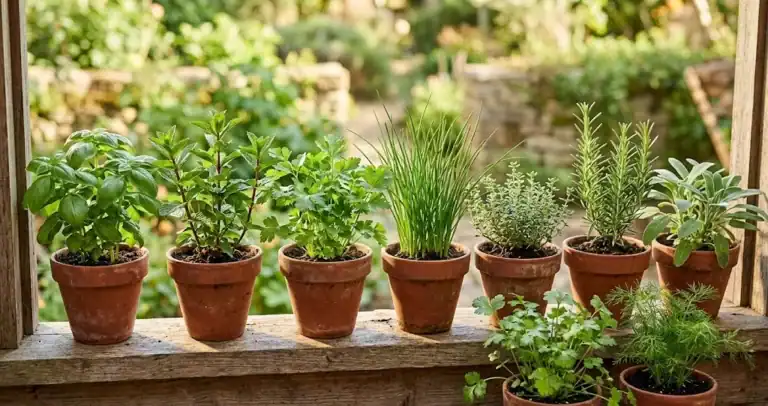
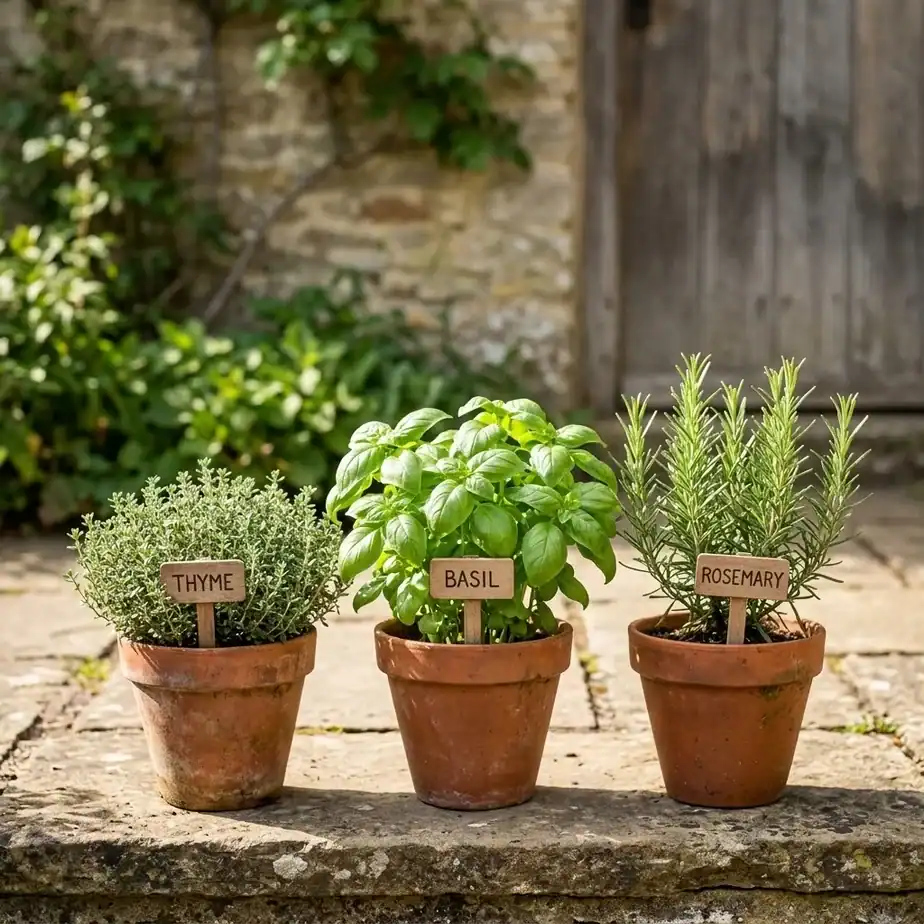
A reliable starter set for an organic culinary garden runs to about ten plants: a Genovese or Thai basil, English or lemon thyme, Greek oregano, mint in its own container, flat-leaf parsley, common sage, chives with edible flowers, slow-bolt cilantro, a hardy rosemary like ‘Arp’ for cold winters, and ‘Munstead’ lavender for sachets and shortbread. The plant you take home from a reputable nursery is one a home grower can manage without trouble.
Building healthy ground that feeds the bed slowly
Healthy soil is the core of any well-grown herb garden. Work two to three inches of finished compost into the top six inches before planting, and top-dress with another inch each spring. Compost holds moisture, releases nutrient slowly, and feeds the mycorrhizal network that helps the root zone reach water in a dry patch. The full method is laid out in the walk-through on growing herbs organically.
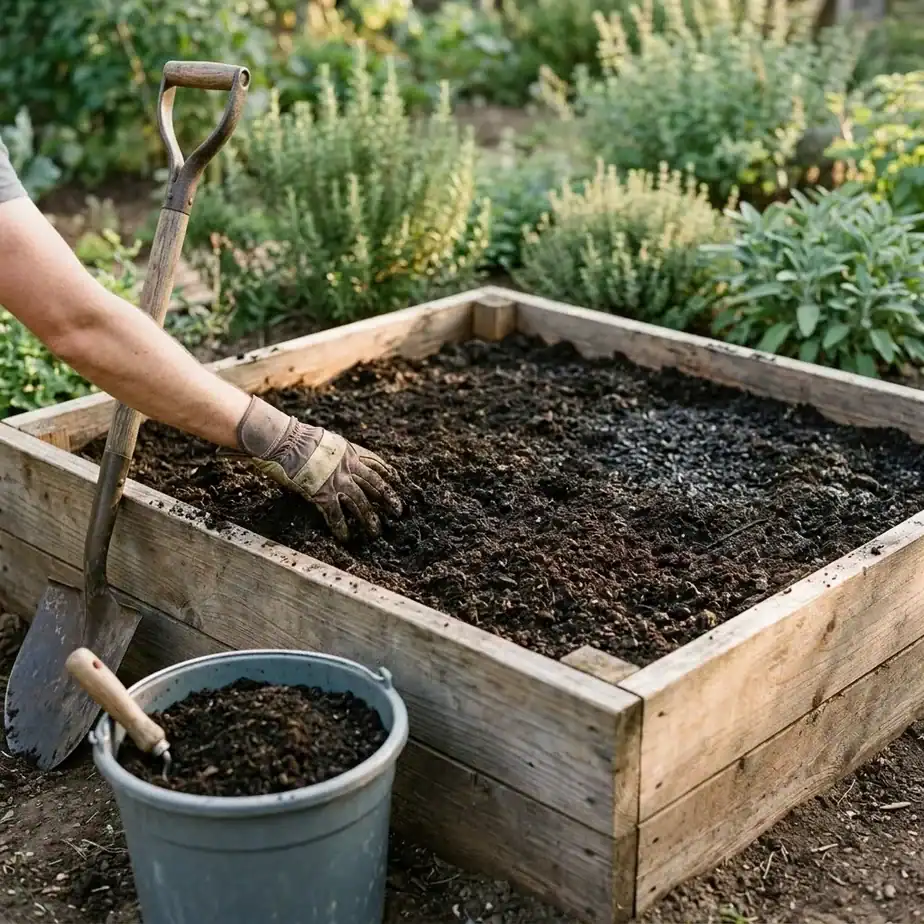
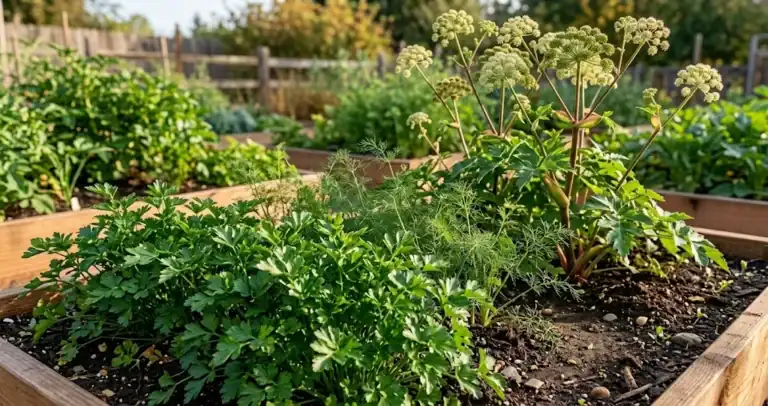
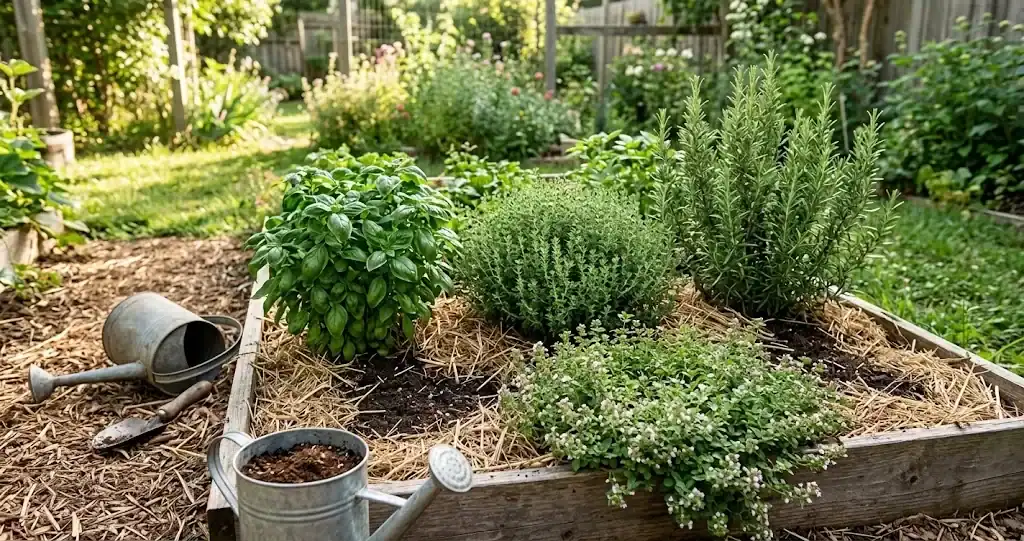
Raised beds, twelve inches deep and filled with a mix of topsoil, compost, and a little coarse sand, are a quiet lift on clay or sandy ground. They warm faster in spring, drain reliably, and keep the root zone from being stepped on. Mulch with straw or shredded leaves to suppress weeds and protect the soil life underneath; hand-pull what comes through.
Watering, light, and feeding without the spray bottle
Most culinary herbs want six hours of direct sunlight. A south-facing windowsill, a sunny patio, or a bed along a south or west wall covers this. The leafy soft-stemmed types tolerate partial shade while the Mediterranean types, lavender, rosemary, sage, and oregano, sulk and stretch in the same low light. A kitchen window that grows herbs indoors over winter works for the soft-stemmed kinds but not for the Mediterranean set.
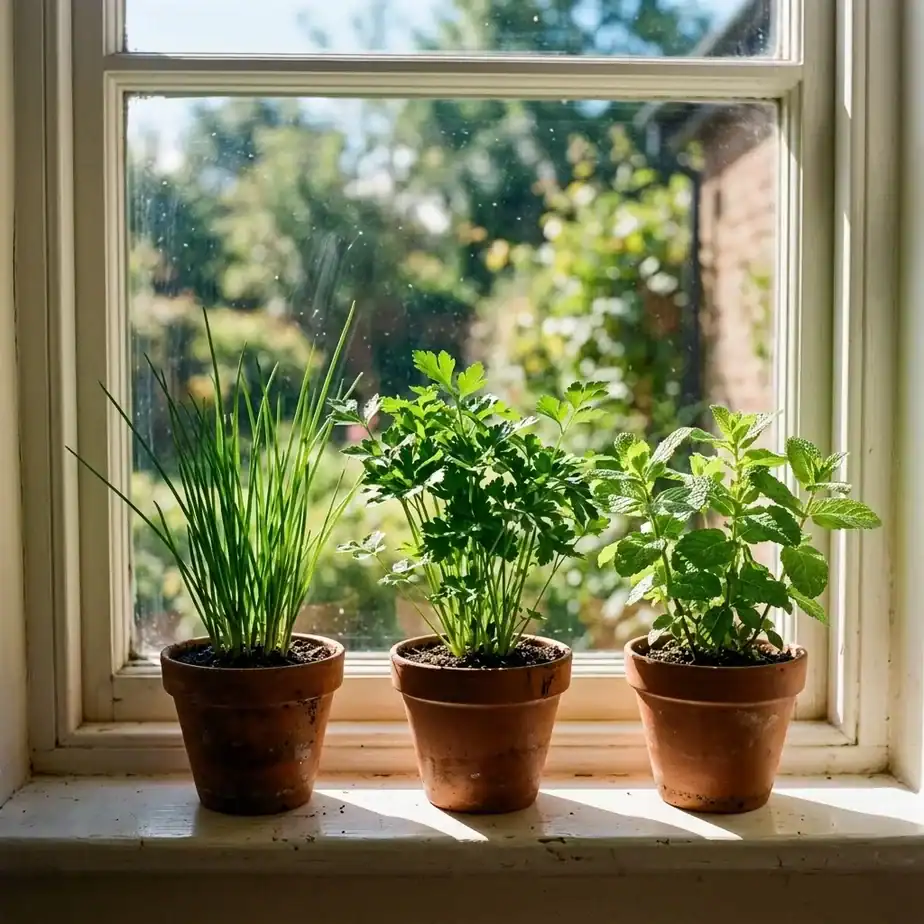
Water new transplants deeply for their first week, then adjust to the herb and conditions. Mediterranean types tolerate some drying between rains and resent wet feet, while moisture-loving herbs want steadier water. Containers dry faster than beds and sandy soil faster than clay, so check by touch rather than the calendar. Correct a genuine deficiency, pale leaves or weak new growth on an otherwise healthy stem, with compost or a diluted fish emulsion, but skip routine overfeeding.
Pests and weeds without pesticide
Walk the bed once a week. Look at the undersides of the leaves for aphid clusters. Check the stems for spider mite stippling in dry weather. Watch the soil line for cutworm damage and slug feeding. Catching these early usually means a strong jet of water or a gloved hand is enough; treatment is reserved for serious outbreaks.
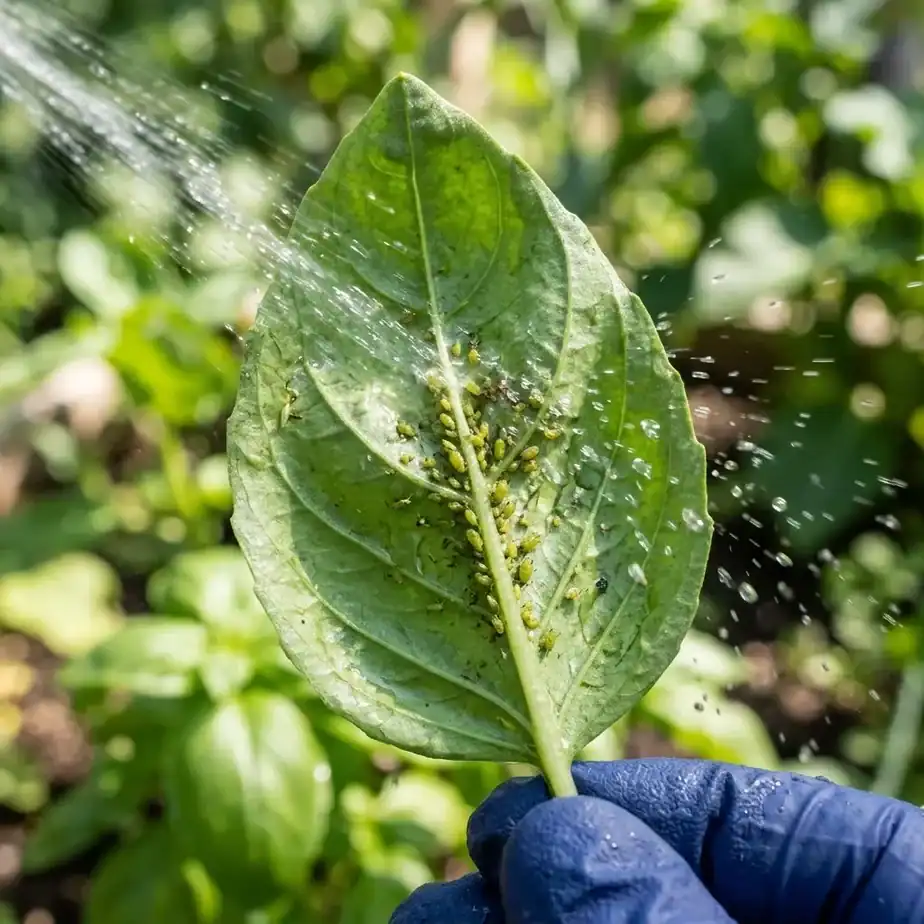
A strong jet of water from a hose knocks aphids off the leaf without harming the cuticle. Encourage pollinators and predators with flowering annuals like alyssum and calendula nearby; they bring in hoverflies and tiny wasps that handle aphids across the growing season. A high-quality mulch and regular checks handle most of the routine work; water spray or hand removal covers the rest.
Harvest without weakening the leafy stems
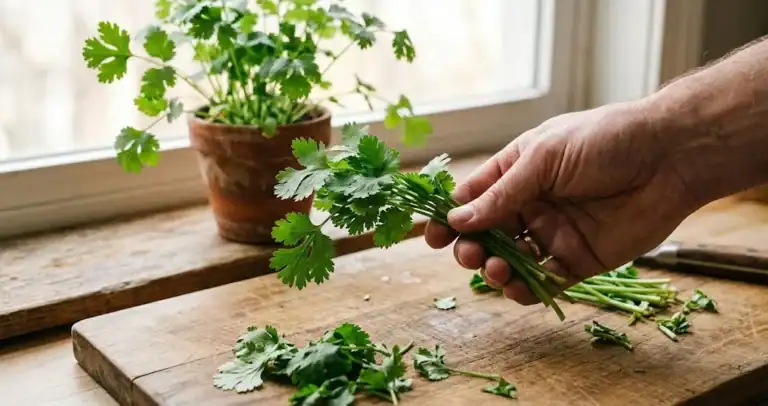
Regular, light snipping keeps the stems productive. As a general upper limit, take no more than a third of any plant at a time. For leafy herbs, snip just above a pair of leaves so the plant branches from the cut. For woody herbs, trim lightly from green growth and avoid cutting back into bare old wood. Morning work, after dew has dried but before the day gets hot, gives the most fragrance per stem.
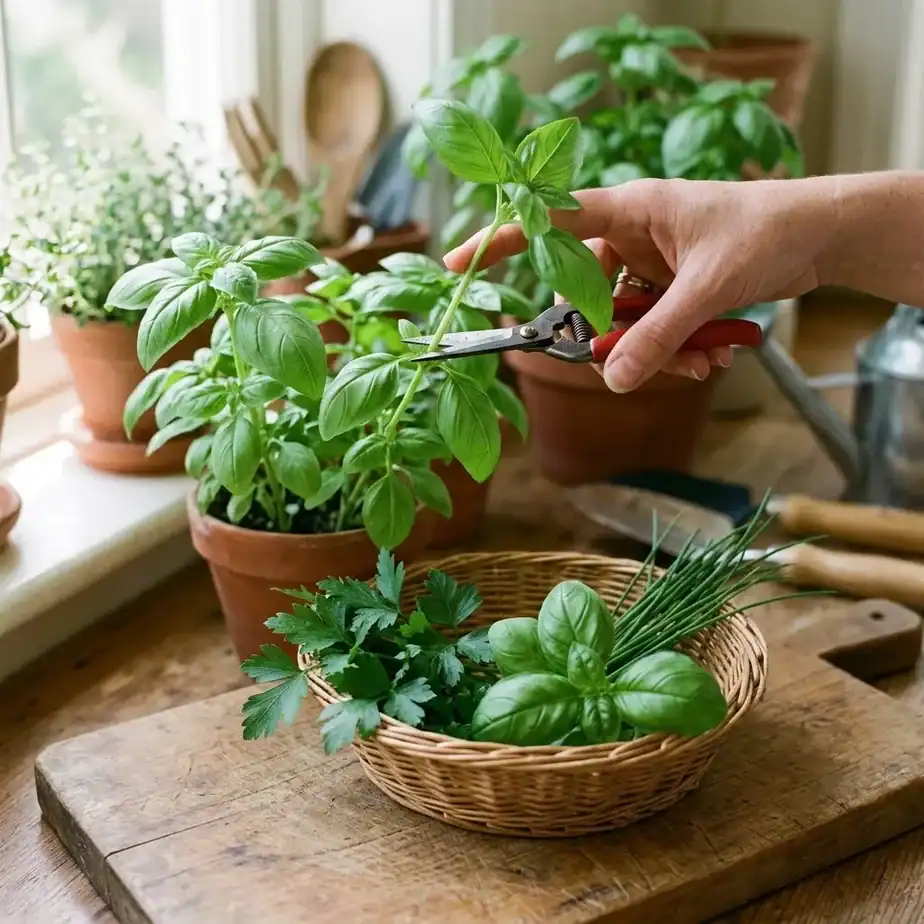
Annual types like basil and cilantro naturally want to flower and set seed. Pinch off buds as they form to keep leaves coming; let one plant per variety flower at the end of the season if you want to save seed or feed pollinators. Pruning timing depends on the herb: leafy perennials can be cut back lightly after flowering or during active growth. Woody types are best trimmed only into green growth and never cut hard into leafless wood.
Planning a small organic culinary bed
Three containers on a sunny patio can grow enough leafy herbs for daily cooking through summer. A four-by-eight-foot raised bed along a south wall can carry the full set of Mediterranean perennials and a steady annual rotation year after year. Divide clump-forming herbs only when they become crowded, weak, or bare in the center and check the individual herb’s needs rather than a fixed calendar; lift a vigorous container planting into a fresh pot of compost every two years to keep it productive.
If you have space for a full organic vegetable plot, the herb bed can be tucked along the edge of it without disturbing either planting.
For readers looking to weave an herb bed into a larger kitchen plot, see the piece on growing herbs and vegetables together for spacings and pairings that work in a single organic plot.
Quick answers
How long does a herb bed take to establish? A raised bed filled with compost can be planted on day one. A bed can be prepared and planted once the turf is removed and compost is incorporated, while a season of soil improvement helps difficult or compacted ground.
Do organically grown herbs taste different? Homegrown herbs are often more aromatic when harvested fresh, but flavor varies with species, variety, weather, and harvest timing.
Which is easiest to start with? Mint in a container, chives along a path, or a single pot of leafy soft-stemmed herbs on the back step. All forgive beginner mistakes and keep coming back.
Are organically grown herbs more nutritious? A meta-analysis in the British Journal of Nutrition found that organic crops carry higher levels of some antioxidants and lower pesticide residues, though the difference for an herb garnish is modest. The bigger win for the cook is fragrance, flavor, and the knowledge that nothing was sprayed on what ends up on the plate.