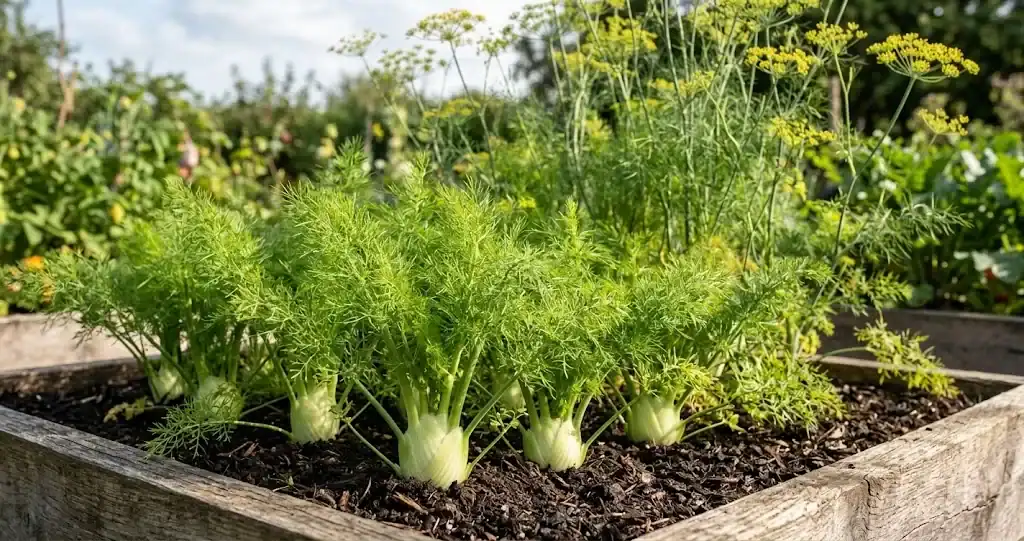
Fennel brings a sweet anise aroma, feathery foliage, and crisp texture to any backyard garden. Whether you want tender licorice-flavored fronds for seasoning or thick, crunchy bulbs for roasting, this Mediterranean plant is easy to grow once you understand its seasonal habits. Home gardeners can succeed with both sweet leaf varieties and Florence varieties by matching planting dates to their local climate.
Before putting seeds in the ground, it helps to understand that fennel encompasses two distinct culinary crops under the botanical species Foeniculum vulgare. Foliage types are grown for aromatic leaves, flowers and seeds, while Florence types (also known as finocchio or bulbing fennel) are grown for their swollen base. When growing herbs from the ground up, choosing the right variety sets the stage for a productive season.
Understanding the Types: Leaf Fennel vs Bulb Fennel
Selecting between the two main types of fennel determines how you manage your garden beds throughout the growing season:
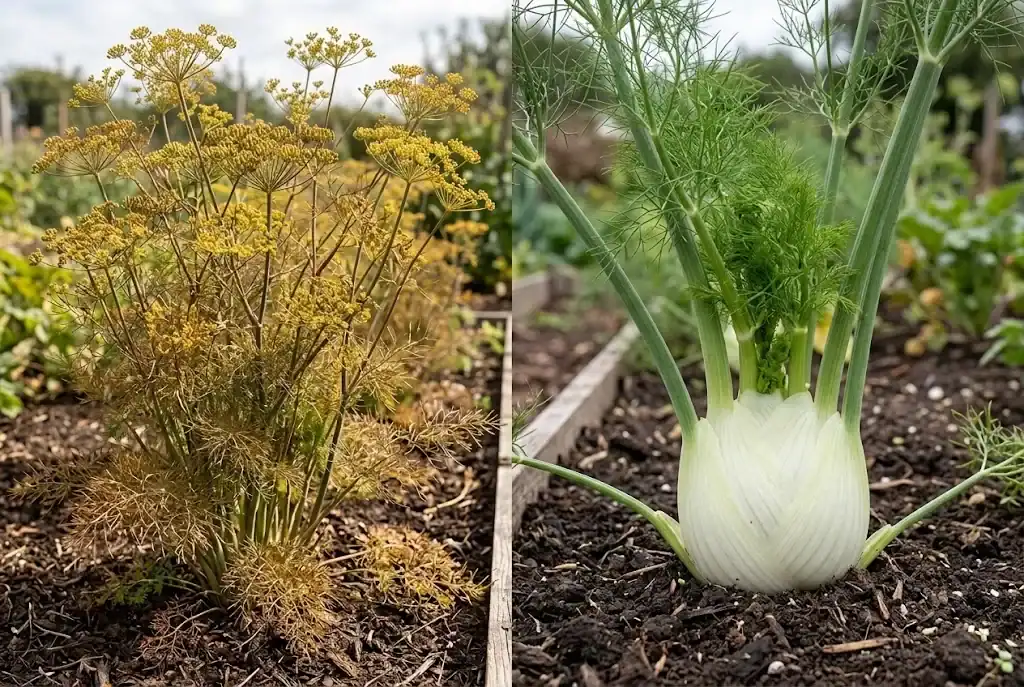
- Leaf Fennel (Sweet or Bronze Fennel): Grown as a tender perennial in mild zones or an annual elsewhere. It produces tall, feathery foliage reaching four to six feet high with golden umbels. It serves as an attractive ornamental backdrop in a flower bed or herb garden.
- Florence Fennel: Grown as a cool-season vegetable. It forms a dense, layered bulb at the soil line with edible stalks above.
Both crops share an aromatic flavor, but bulbing varieties require cool weather and attentive irrigation to form plump stalks rather than blooming early.
Sun, Well-Drained Soil, and Organic Matter
Fennel prefers full sun, needing at least six hours of direct light daily to support vigorous fennel growing. Choose an open spot in raised beds or a small garden border where surrounding garden plants will not shade young seedlings.
The ground must be fertile, loose, and well-drained. Before you plant fennel, amend the plot with generous amounts of aged compost or well-rotted organic matter. Fennel likes a soil pH of 6.5-7.5. Heavy clay stays overly wet in spring and can trigger root rot, whereas rocky dirt deforms the expanding base. If you buy fennel seeds for containers, use deep pots filled with porous potting soil to give the tap root plenty of downward room.
How to Direct Sow and Avoid Root Disturbance
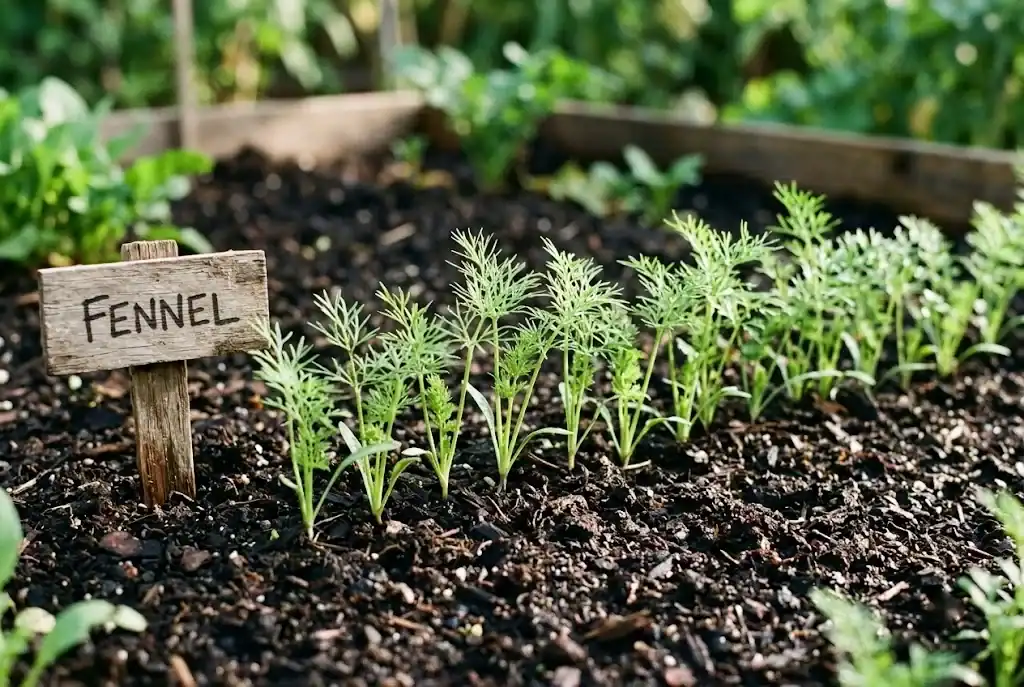
Because fennel seedlings develop a sensitive taproot, gardeners get the sturdiest results when they direct seed outdoors rather than starting in trays. Transplanting often causes stress that stunts growth or triggers premature flowering.
If indoor starting is necessary for a short spring window, start seeds in biodegradable paper pots. This allows you to transplant young fennel plants into the ground without disturbing roots. Space mature specimens 12 inches apart in rows spaced eighteen inches apart.
Follow these simple outdoor planting steps:
- Rake the bed until the top inch of soil is fine and crumbly.
- Sow seeds one-quarter to one-half inch deep after the danger of severe spring frost has passed.
- Keep the soil moist until seeds germinate and sprout, typically within seven to fourteen days.
- Thin seedlings once they develop their first true feathery fronds so plants stand 12 inches apart.
Managing High Heat and Long Days to Prevent Bolting
Proper seasonal timing is one of the most critical growing tips when you learn how to cultivate crisp bulbs. Florence varieties are prone to bolting when exposed to high heat and long days of early summer. Hot temperatures signal the plant to go to seed, making the base tough, stringy, and bitter.
To produce sweet, tender bulbs, treat the crop according to your seasonal window:
- Spring planting: Direct sow two to three weeks before the average date of your last frost. This gives bulbs time to mature during mild late-spring temperatures.
- Late summer planting: Plant seeds in late summer for a fall crop. Maturing under declining autumn day lengths and cooler evening temperatures yields the highest-yielding, most succulent bulbs.
Sweet fennel is naturally more drought tolerant and heat resistant, keeping its fresh leaves productive straight through midsummer heat.
Irrigation, Mulching, and Feeding Requirements
Even moisture is essential for quality bulb development. Aim for approximately one inch of water per week through rain or drip irrigation. Fluctuating moisture levels cause growth checks and split stems, while drought stress accelerates bolting.
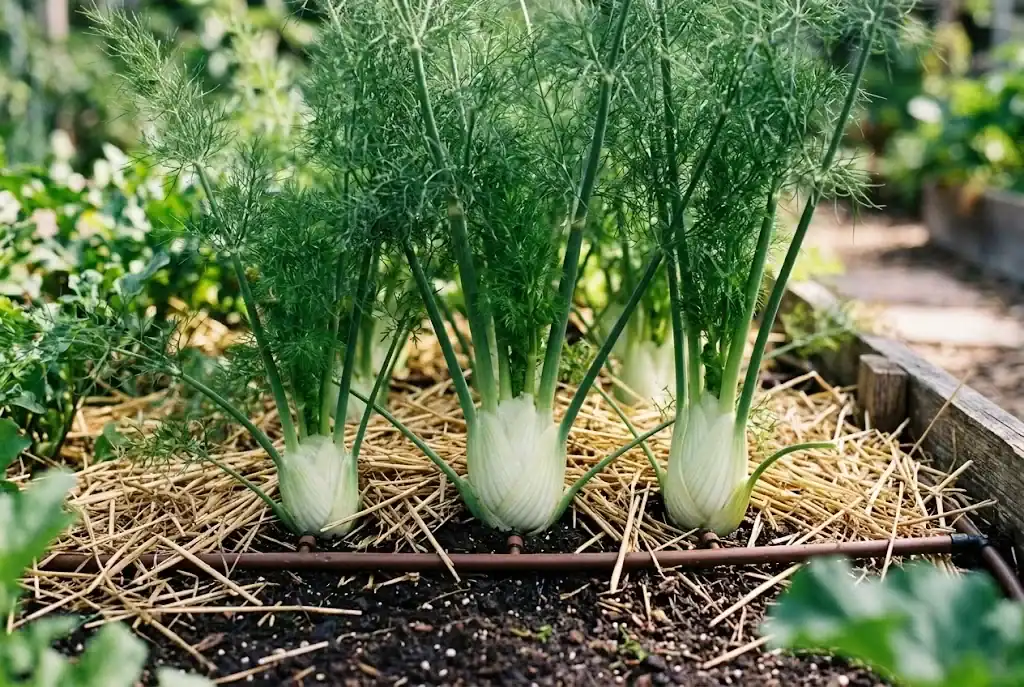
Once young plants stand four inches tall, spread a two-inch layer of clean straw mulch over the root zone. Mulch keeps roots cool, conserves moisture, and prevents weed competition. Although not heavy feeders like cabbage or corn, plants benefit from a mid-season side dressing of balanced compost to maintain steady leaf production.
Garden Isolation and Allelopathy
Fennel does best when given its own isolated corner of the garden. The roots exude chemical compounds that exhibit allelopathy, which can stunt the vigor of nearby tomatoes, bush beans, peppers, and cilantro.
You must also isolate fennel from dill. Because both belong to the carrot family, they readily cross-pollinate if they bloom simultaneously, resulting in seedlings and seeds with muddy, unpleasant flavors.
Pollinators, Common Pests, and Caterpillar Care
Fennel is a standout pollinator-friendly addition to any landscape. In midsummer, its umbrella-like yellow flower heads bloom with nectar that attracts beneficial hoverflies, lacewings, and tiny predatory wasps that feed on common garden aphids.
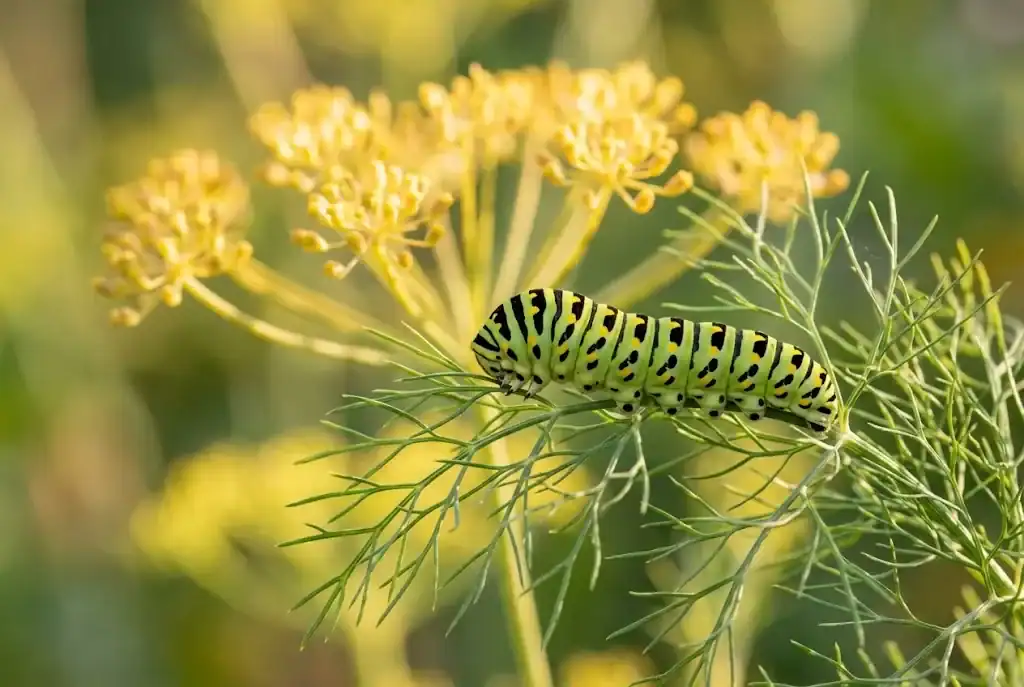
You may also encounter the brightly striped parsleyworm caterpillar feeding on fennel leaves. This is the caterpillar stage of the black swallowtail butterfly (Papilio polyxenes). Rather than spraying pesticide, gardeners often plant extra sweet fennel as a nursery patch for these beneficial insects. If caterpillars threaten a young vegetable crop, gently move them to another patch.
Harvesting Fennel Fronds, Flowers, and Bulbs
You can harvest fennel leaves continuously once stems reach six inches in height. Snip outer sprigs with clean pruning shears, leaving central shoots intact to generate fresh foliage.
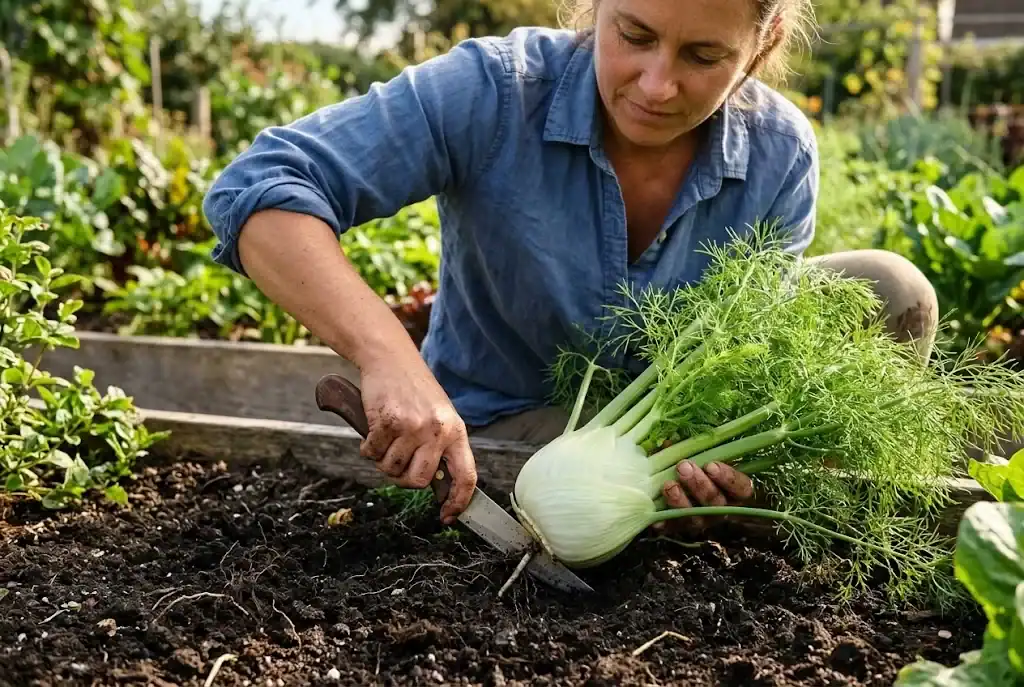
For Florence varieties, watch for the base to swell to tennis-ball size as plants reach 65 to 90 days to maturity. Use a sharp harvesting knife to slice through the taproot just below the soil line. Our comprehensive guide on how to harvest fennel explains exact cutting techniques, stalk trimming, and collecting golden edible flowers and ripe seeds.
Post-Harvest Handling and Unwashed Bulbs
Once cut, trim back the top stalks to two inches above the base. Leave unwashed bulbs intact until kitchen preparation to lock in moisture and crisp texture. To store harvested greens and bulbs in peak condition, consult our guide on how to store fennel in the refrigerator or root cellar.
With good sun, fertile soil, and attentive seasonal planting, fennel will reward you with aromatic seasonings, pollinator activity, and crisp, garden-grown bulbs all season long.