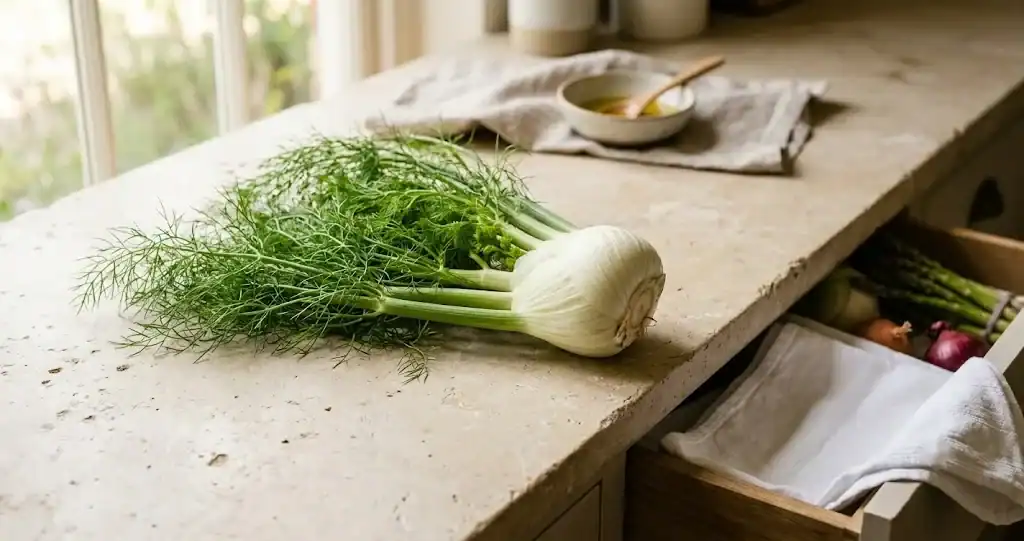
Fennel loses its snap long before it becomes unsafe to eat. A dry, tightly wrapped bulb turns limp and dull, while one stored with a little protection stays crisp enough for a crunchy slaw or a pan of browned wedges. The best approach is simple: keep it cold, unwashed, and loosely protected from drying out.
If you grow it yourself, timing matters before it reaches the kitchen. Our how to harvest fennel guide explains how to pick it at its best, which gives you more time to use it well.
Choose a bulb that will keep well
Start with a base that feels heavy for its size, with tight layers and no soft spots. Bulbs that are heavy usually have more moisture than a light, spongy one. Look for white to pale green flesh, feathery green fronds, and no serious discoloration. A little browning on a cut stalk is normal, but a slimy base or a strong off smell means the vegetable is past its prime.
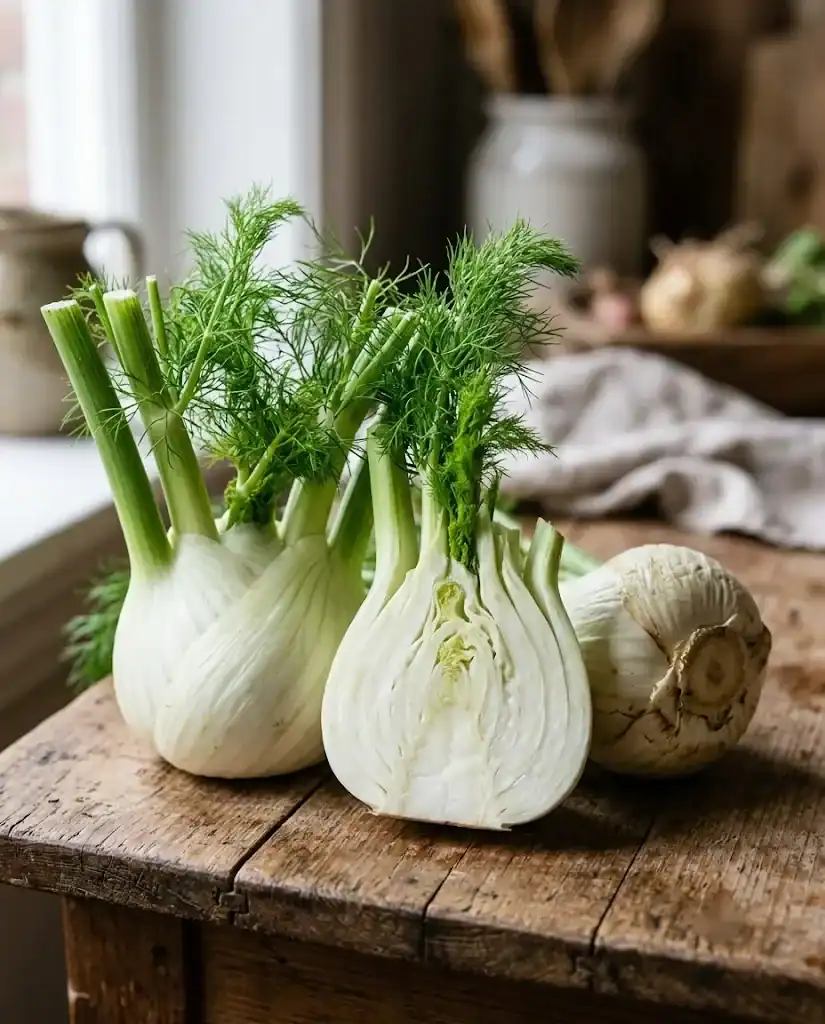
The Florence variety is the one most cooks buy for the refrigerator. It has a mild anise flavor, crisp texture, and sturdy stalks and fronds. Keep the fronds if they look fresh: they make a fragrant garnish, while the tougher fennel stalks can flavor stock.
How to store fresh fennel in the fridge
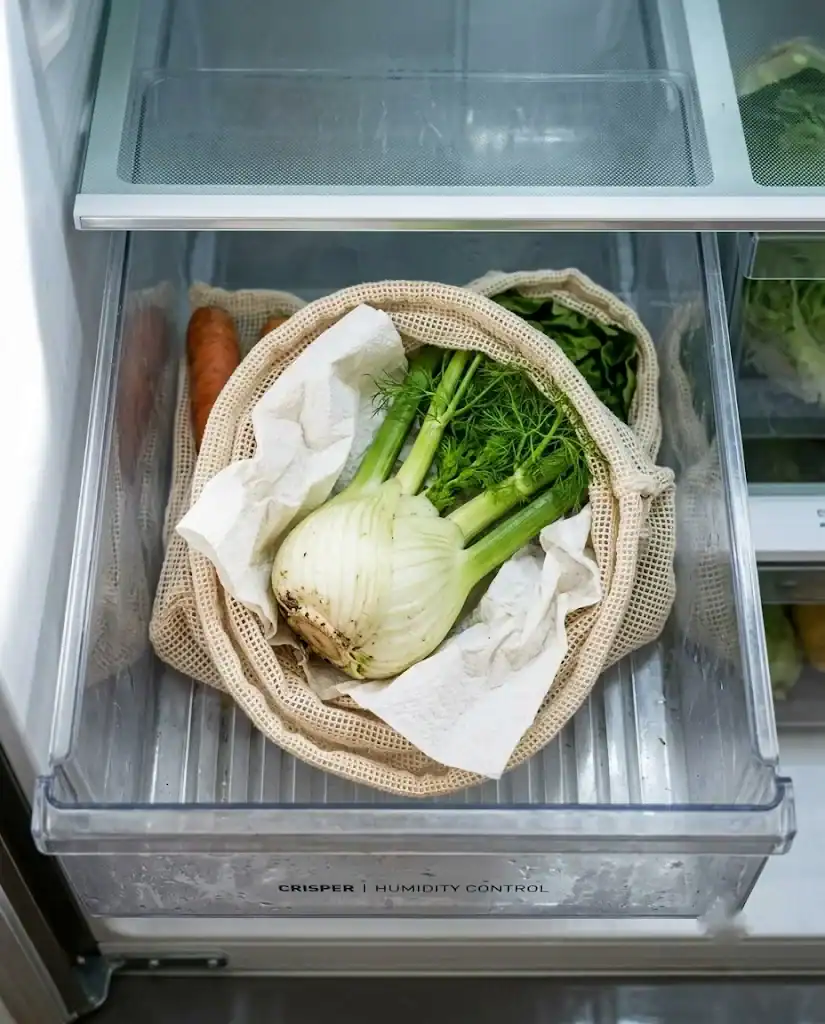
Do not wash it before you store it. Extra water encourages spoilage, so wait until you are ready to slice it. Trim only the long stalk if it makes it easier to fit in the fridge, and set any good fronds aside in a separate bag.
- Wrap it loosely in a dry paper towel.
- Place it in a reusable plastic bag or a loosely covered container.
- Keep it in the crisper drawer, away from anything that could crush it.
This method protects the bulb from dry refrigerator air without trapping too much moisture. Check the paper towel after a few days and replace it if it feels damp. It usually keeps for about five to seven days, though the exact time depends on how fresh it was when you bought or harvested it.
Use the separate parts before they fade
Its thick base stays crisp the longest. Use thin slices raw in a salad with citrus, shave it into a slaw, or cut it into wedges for the oven. A drizzle of olive oil, salt, and black pepper is enough to roast the wedges until the edges caramelize. You can also braise wedges slowly with a splash of water or broth until tender.
Use the delicate fronds sooner because each frond fades faster than the base. Chop them over fish, carrots, or a simple salad. The flavor is aromatic and lightly sweet, closer to a fresh herb than a sturdy vegetable. For more ideas once the storage job is done, see these ways to cook with fennel.
Use it in the right order
To use fennel with less waste, start with the feathery fennel fronds while they are bright, then cook or shave the fennel bulb before it softens. Save fully dried fennel seeds in the cupboard for later. This simple order keeps the most delicate parts from being forgotten.
Can you freeze fennel?
Freezing is a practical way to preserve an extra harvest, but the texture changes. Frozen pieces work best in soup, sauce, or a braise, not a raw preparation. Cut it into slices or small pieces, blanch it briefly in boiling water, cool it quickly, and dry it well. Pack the chopped pieces into a freezer-safe bag, press out excess air, and freeze it flat.
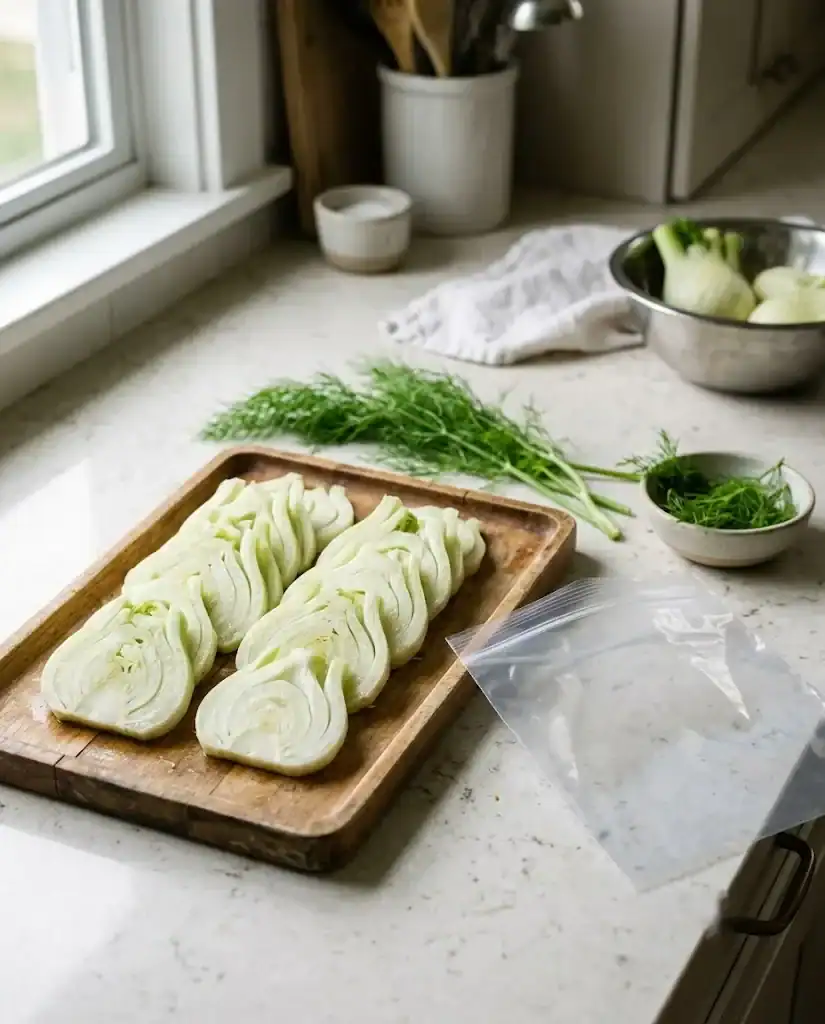
You can freeze it without blanching, but it is more likely to turn soft and lose flavor. If you plan to use it in a cooked dish soon, that tradeoff may be acceptable. Label the bag with the date so it does not disappear behind older fruit and vegetables.
Fennel 101: storing seeds, pollen, and fronds
Seeds need a different method. Store them fully dried in an airtight jar in a cool, dark cupboard. Keep pollen the same way, but buy only what you can use while its perfume is vivid. Do not refrigerate dry seeds unless the container is fully airtight, because condensation can spoil them.
For the fronds, rinse only what you need. If you have a large bunch, wrap the remaining dry fronds lightly and use them within a couple of days. They are best when scattered over a finished dish rather than cooked for a long time.
When fennel is no longer worth saving
Discard it if it has mold, a slick surface, deep brown patches, or an unpleasant smell. If the outer layer is dry but the inside is firm, peel away the damaged layer and use the rest promptly. Do not try to rescue a bulb that is soft throughout.
This storage method gives you a little breathing room, not an indefinite shelf life. Plan one simple use while the bulb is at its crispest, then turn the rest into soup, an oven-browned side, or a bright salad. For a broader look at handling herbs after harvest, visit our complete herb harvesting guide.
Frequently asked questions
How long will fennel last in the fridge?
A fresh bulb commonly lasts five to seven days when it is kept unwashed in the crisper drawer, loosely wrapped with a paper towel. Use it earlier if the bulb begins to soften or the fronds wilt.
Can you eat fennel raw?
Yes. Thinly sliced pieces add crunch and a mild anise note to a salad. Lemon juice helps keep cut pieces bright while you prepare the rest of the meal.
What is the best way to preserve an abundance of fennel?
Freeze blanched slices for cooked dishes, dry mature seeds for the spice cupboard, and use the tender stalks and fronds first. That approach lets each part keep its best texture and flavor.
