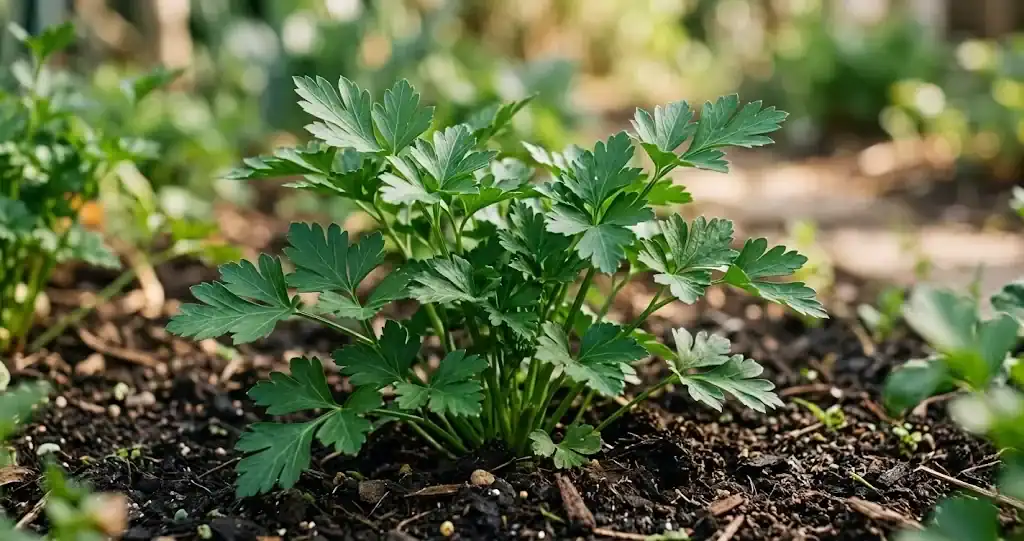
Parsley earns its space in a home garden because a small patch can supply fresh leaves for months. It is slow to start from seed, but it is not fussy once its roots are settled. Rich soil, even moisture, and careful harvesting are the keys to a productive plant.
Grow parsley as a cool-season leafy herb. Start it early in spring or late in summer, then cut the oldest outside stems as you need them. That keeps the center growing and gives you a longer harvest.
Choose flat-leaf or curly parsley
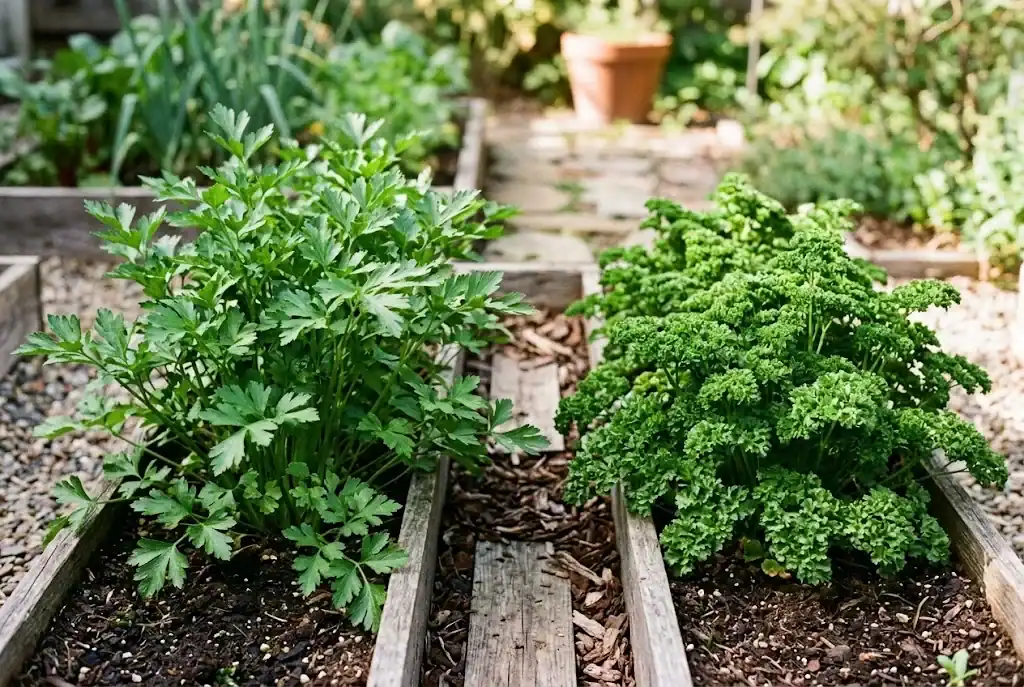
Flat-leaf Italian parsley has broad, deeply cut leaves and a stronger flavor for cooking. Curly parsley forms a neat mound and makes an attractive garnish. Both are Petroselinum crispum and need the same growing conditions.
Parsley is a biennial. It produces leaves in its first season, then flowers and sets seed in its second. Most gardeners grow it as an annual because leaves become less tender after the plant bolts and flowers.
When to plant parsley
Sow parsley outdoors in early spring when the soil can be worked. In regions with mild fall weather, plant again in late summer for a fall crop. Established plants tolerate a light frost and often stay useful after other tender herbs have faded.
For an earlier harvest, start seeds indoors six to eight weeks before the last frost. Transplant seedlings after they have several true leaves. Direct sowing also works, but parsley seed commonly needs two to four weeks to sprout.
Find the right garden site
Grow parsley in full sun where summers are mild. In hot climates, morning sun with light afternoon shade helps leaves stay tender. Use loose, fertile soil that holds moisture but drains well. Mix finished compost into the planting area before sowing or transplanting.
Space plants 8 to 12 inches apart. This gives each plant air movement and room to make a full clump. Raised beds are useful if your native soil is heavy. For wider planning advice, start with this guide to building a healthy herb garden.
How to sow parsley seeds
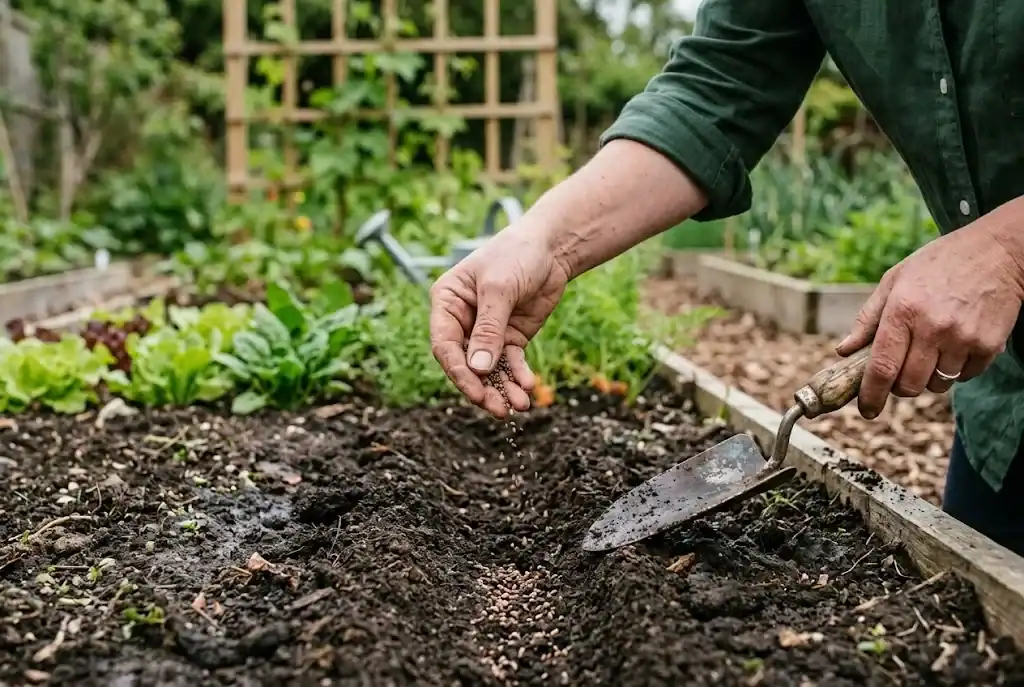
Parsley has a slow-germinating seed coat. Soaking seeds in room-temperature water for a few hours can help, but steady moisture matters more.
- Sow seeds about 1/4 inch deep.
- Keep the seedbed evenly damp, never waterlogged.
- Mark the row and wait at least three weeks before reseeding.
- Thin crowded seedlings so remaining plants can fill out.
Plant a short new row every few weeks during suitable weather if you want a continuous supply. A single oversized sowing often matures all at once.
Water and feed parsley
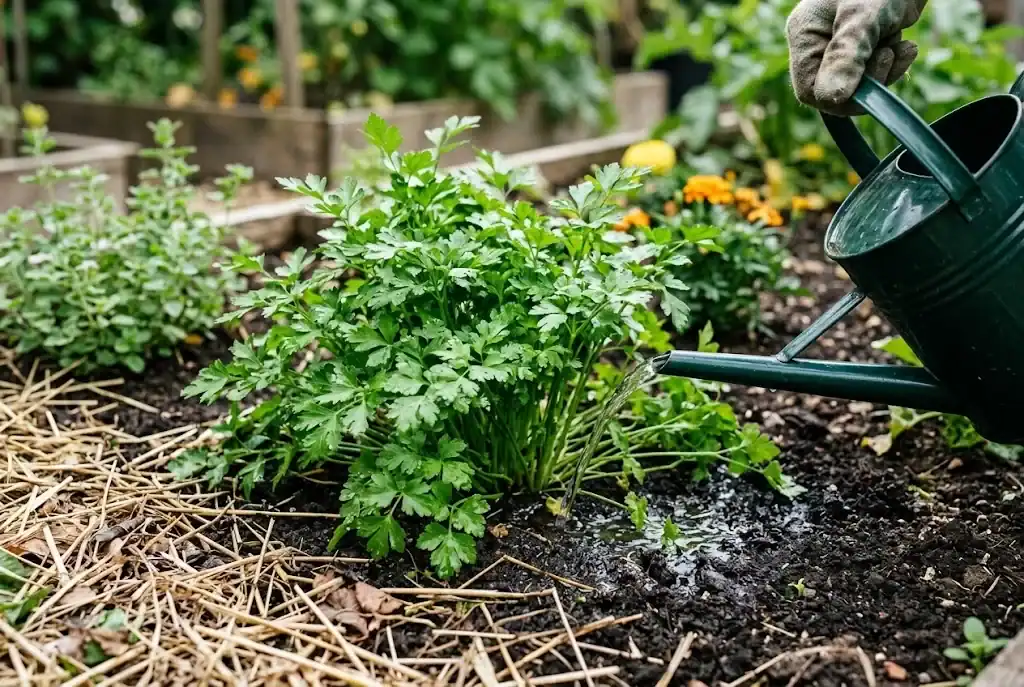
Water deeply when the top inch of soil feels dry. A thorough soak encourages roots to grow down into cooler soil, while frequent shallow watering leaves the plant vulnerable to dry spells. Add a two-inch mulch layer after plants are established, keeping it away from the stems.
Compost at planting is usually enough in most gardens. If old leaves turn pale and soil is poor, use a light application of balanced vegetable fertilizer. Too much fertilizer makes soft growth and can attract pests.
Prevent common parsley problems
Yellow leaves usually mean wet roots, repeated drought, or low fertility. Check drainage and watering before adding fertilizer. Remove damaged leaves so you can judge the plant’s overall health.
Aphids, whiteflies, and caterpillars may visit parsley. Inspect leaves before spraying anything. A strong stream of water can remove a small aphid colony, and hand-picking caterpillars is effective. Black swallowtail caterpillars use parsley as a host plant, so consider planting an extra clump if you want both butterflies and kitchen herbs.
Give plants room, keep weeds down, and water the soil rather than the foliage. Those habits reduce many fungal problems.
Harvest parsley without slowing it down
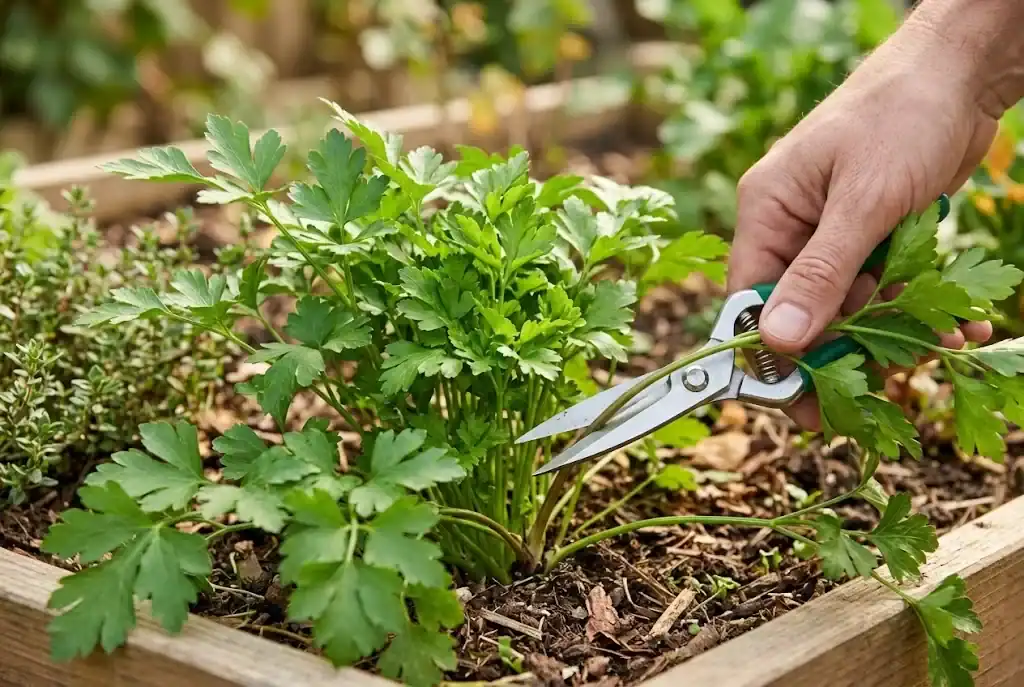
Begin harvesting after a plant has several sturdy outer stems. Snip whole stems close to the base, taking the oldest leaves first. Leave the small center growth untouched because that is where new leaves form.
Take no more than about one-third of a mature plant at one time. Small, regular harvests encourage new growth. If a central flower stalk appears, harvest the remaining leaves soon. For timing and cutting technique, see how to harvest and store it.
Store your extra parsley
Use fresh parsley promptly for the brightest flavor. For a larger harvest, chop dry leaves and freeze them in small portions. Dried leaves are convenient, but frozen parsley usually keeps more aroma. See how to pick and store parsley properly when your plants are producing more than you can use.
Questions about growing parsley
Why is parsley hard to germinate?
Parsley seeds naturally germinate slowly, especially in cold soil. Keep them moist and allow up to four weeks before deciding they failed.
Does parsley regrow after cutting?
Yes. Cut older outer stems and keep the center intact so the plant can make new leaves.
Can parsley grow in partial shade?
Yes. It grows fastest in good light, but afternoon shade is helpful where summers are hot.
How long does parsley live?
Parsley is a biennial herb. It usually produces leaves through one season, then flowers and sets seed in its second year.
Plant a small patch, keep the soil evenly moist, and cut a few stems whenever you cook. Those simple routines turn parsley into one of the most reliable herbs in the garden.