Sweet basil (Ocimum basilicum) succeeds in home gardens when you provide warm temperatures, direct sunlight, well-draining soil, and consistent moisture. Whether you want to grow basil in garden beds or keep a pot on a sunny patio, this tender annual grows rapidly once spring frosts pass and summer warmth settles in.
This guide covers practical basil growing from seed to harvest, including container care, watering routines, pinching for compact growth, and kitchen preparation. If you are planning a larger layout, learn how to start an herb garden from scratch to arrange your beds and sunlight exposure.
Choosing basil varieties for your garden
Before you plant seeds or purchase nursery starts, consider which types of basil best suit your kitchen habits and growing space. Several distinct species of basil and cultivated varieties offer diverse leaf textures, colors, and culinary qualities:
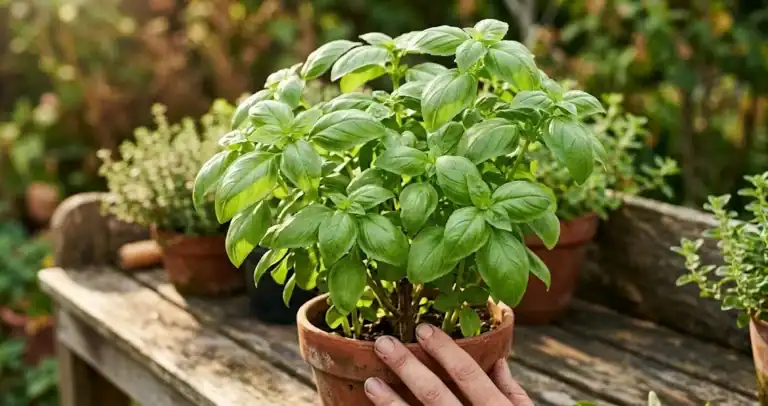
- Genovese basil: A classic culinary variety with large, cupped, glossy green basil leaves and an Italian herbal aroma suited for pesto and tomato dishes.
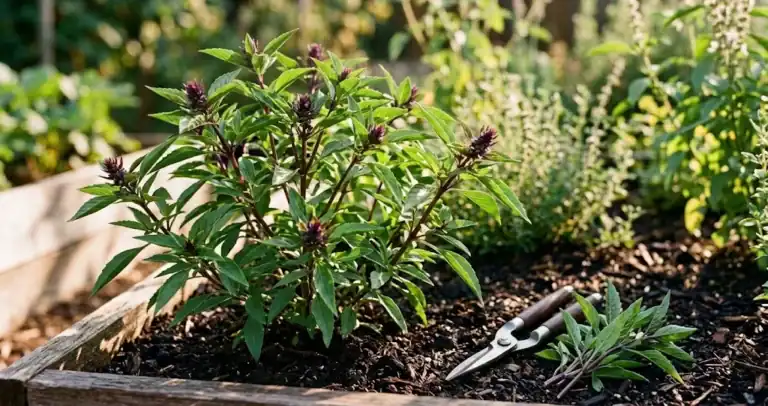
- Thai basil: Distinguished by sturdy purple stems, pointed leaves, and a spicy anise-clove flavor that holds up well in high-heat stir-fries and noodle broths.
- Purple basil: Features dark ruby or deep violet leaves that add visual contrast in garden borders and impart a distinct color to infused vinegars.
- Bush and dwarf varieties: Compact selections like Spicy Globe or Boxwood basil form tidy, rounded mounds that excel when growing in containers and small urban planters.
Beyond traditional culinary plants, many home gardeners also enjoy growing microgreens using dense trays of basil seeds. Sown closely in shallow seed-starting mix, microgreen seedlings develop their first set of leaves within ten to fourteen days, providing an intense herbal garnish for salads and sandwiches.
Starting basil from seed or transplants
Gardeners have two reliable options to begin: you can start basil from seed indoors or buy nursery transplants in spring. Starting from seed allows you to explore rare heirloom varieties, while potted transplants provide an immediate head start on the growing season.
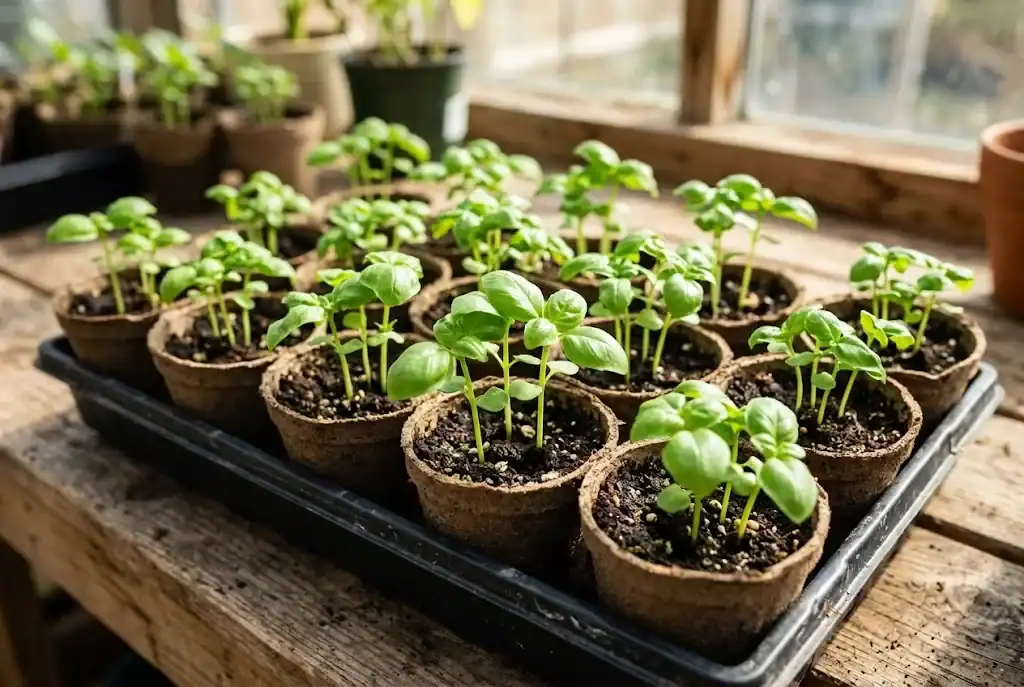
To grow from seed indoors, sow your basil seeds about six to eight weeks before your region’s projected last frost date. Fill clean seed-starting flats with a light, sterile potting mix enriched with fine compost. Scatter the small seeds across the surface and press them lightly into the mix, covering them with barely one-eighth inch of fine soil. Basil seeds require warmth to germinate; maintain a root-zone temperature between 70°F and 75°F (21°C to 24°C) using a seedling heat mat. Keep the soil consistently moist with a gentle mist sprayer.
Once seedlings emerge, position them under an adjustable LED grow light for fourteen to sixteen hours daily, keeping the light fixture a few inches above the tender foliage. Indoor plants without supplemental light often stretch toward windows, resulting in weak, spindly stems. When the young basil plant develops its second true set of leaves, gently thin or transplant individual seedlings into separate starter pots.
You can also propagate basil through a cutting taken from a vigorous, non-flowering branch. Cut a four-inch stem just below a leaf node, remove the lower foliage, and place the stem directly in water. Keep the jar of water in bright, indirect warmth. Within two weeks, white roots will form along the submerged cutting, creating a rooted cutting ready to plant into fresh potting mix.
Sunlight, soil, and growing in containers
Basil is a warm-weather plant native to tropical regions of central Africa and southeast Asia, which means it thrives under generous heat and light. To sustain vigorous plant growth, plant basil where it receives 6 to 8 hours of direct daily sunlight. In regions with scorching midsummer heat, light afternoon shade helps prevent delicate leaves from wilting or developing sun scorch.
Soil quality directly affects root health and leaf flavor. Grow basil in fertile, loose, well-draining soil with a pH between 6.0 and 7.0. Amend native garden soil with plenty of aged compost before planting to provide balanced water and nutrients while ensuring excess moisture drains freely away from root systems.
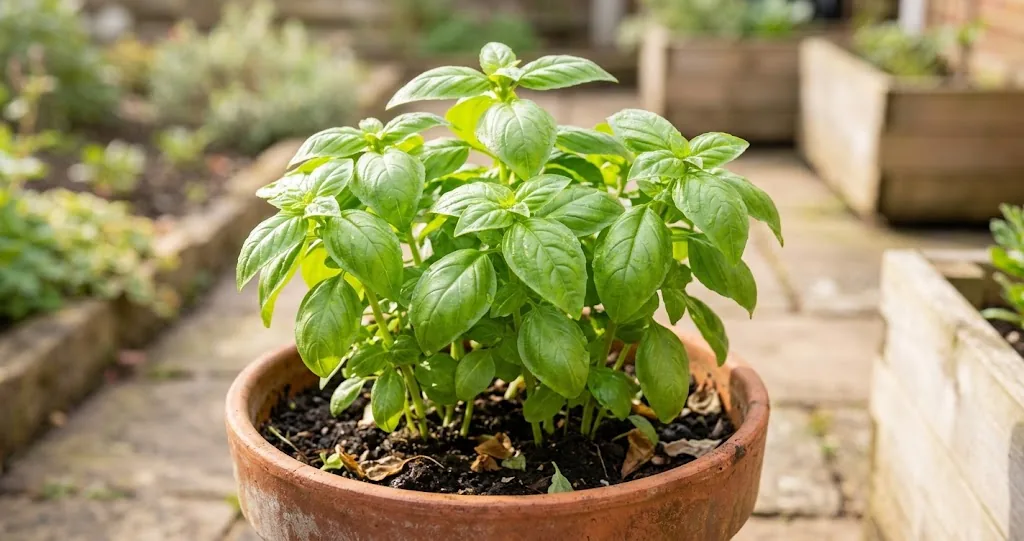
When growing in pots, select a container with ample drainage holes and a minimum diameter of eight to ten inches per plant. Unglazed terracotta pots work well because their porous walls allow soil to breathe and prevent moisture stagnation. Use a high-quality potting mix blended with perlite to maintain loose aeration around developing roots. Growing in containers makes it simple to move pots of basil into sheltered microclimates during unseasonably cool spring nights.
Watering, feeding, and practical growing tips
Proper hydration is essential when caring for growing plants. Basil needs consistent soil moisture to produce succulent foliage, but saturated, waterlogged soil quickly leads to root suffocation and fungal rot. Water basil deeply whenever the top inch of soil feels dry to the touch, directing the stream at soil level rather than wetting the foliage. Watering early in the morning allows any accidental splashes to dry quickly under the sun, protecting leaves from fungal spores.
In well-amended garden beds, a single application of compost at planting often provides all the nutrition your herb needs throughout the growing season. For container plants where nutrients leach out during routine watering, feed with a gentle organic fertilizer or diluted fish emulsion every three to four weeks. Avoid heavy synthetic nitrogen fertilizer, which stimulates rapid, watery foliage at the expense of aromatic oils and culinary flavor. For detailed regional soil testing guidelines and fertility recommendations, review the Clemson Cooperative Extension basil cultivation guide.
Spread a two-inch layer of clean straw, pine needles, or shredded bark mulch across the garden bed around your plants. Mulch conserves moisture, keeps soil cool during summer heat waves, and prevents soil particles from splashing onto lower basil leaves during heavy rainstorms.
How to prune and pinch basil for bushy growth
Pruning encourages a young basil plant to develop side branches instead of growing as a single upright stem. If left unpruned, basil naturally forms a central flower spike, leading to woody branches, sparse lower foliage, and a bitter flavor.
Begin pruning when your young plant stands roughly six inches tall and carries at least three pairs of leaves. Using clean garden snips or your fingertips, gently pinch off the top central stem just above the second set of leaves. In response, the plant activates the dormant buds tucked inside each leaf axil, sending out two vigorous lateral branches where there was previously only one. As those branches mature, prune them back in the same manner above a healthy node to multiply your harvest points.
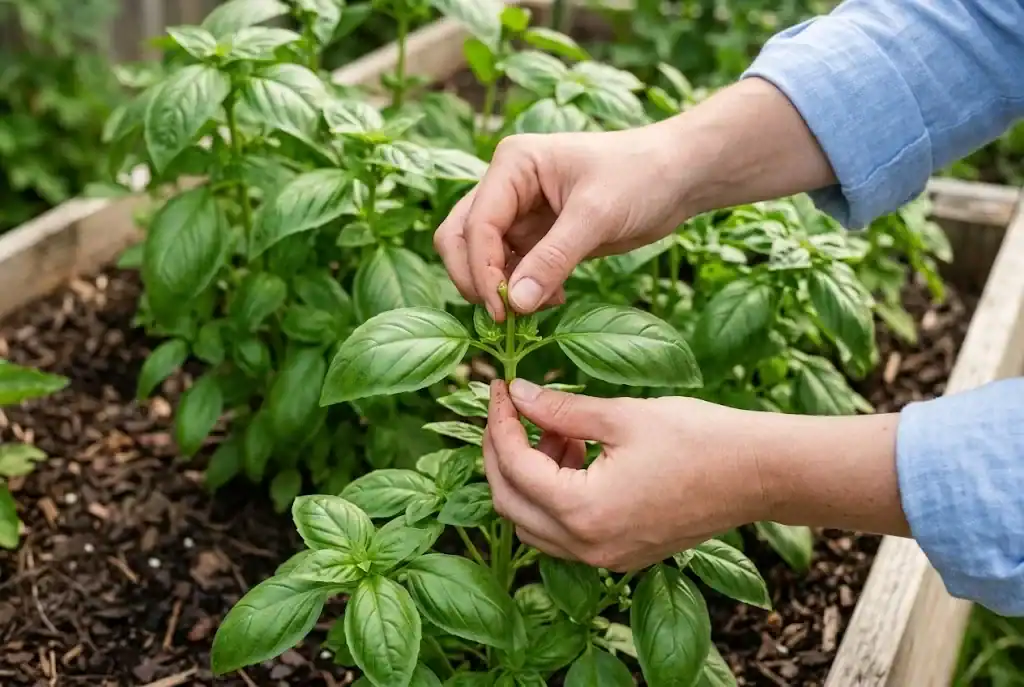
Throughout midsummer, inspect your basil regularly for emerging flower buds. Pinch off any developing basil flowers immediately. Allowing the plant to flower and set seed signals that its life cycle is complete, halting new leaf production and causing foliage to turn tough. Consistent pinching keeps your plants in a continuous vegetative state, producing tender leaves from early summer until the first autumn frost.
Managing pests and common basil plant issues
Basil is generally a resilient garden herb, but a watchful gardener should monitor their beds for a few common pests and environmental challenges:
- Aphids and spider mites: Tiny sap-sucking pests occasionally congregate on the tender undersides of the foliage. Dislodge minor infestations with a brisk spray of water from your garden hose, or apply an organic insecticidal soap on cloudy mornings.
- Slugs and snails: These nocturnal pests chew ragged holes through tender foliage near the base of the plant. Check plants during evening garden rounds to hand-pick active pests, or install a shallow beer trap or copper barrier around beds according to manufacturer instructions.
- Japanese beetles: Metallic green beetles feed on upper leaves in midsummer, skeletonizing the foliage. Hand-pick beetles into a bucket of soapy water in early morning when cool temperatures make them sluggish.
- Downy mildew and fusarium wilt: Downy mildew is caused by a water mold (oomycete) that can produce pale yellowing on leaf surfaces with dark gray sporulation underneath. Fusarium wilt is a fungal pathogen causing sudden wilting and dark stem streaks. To reduce risk from both problems, space basil plants twelve to eighteen inches apart for good airflow, water at the base to keep foliage dry, clear diseased debris promptly, and choose resistant cultivars where available.
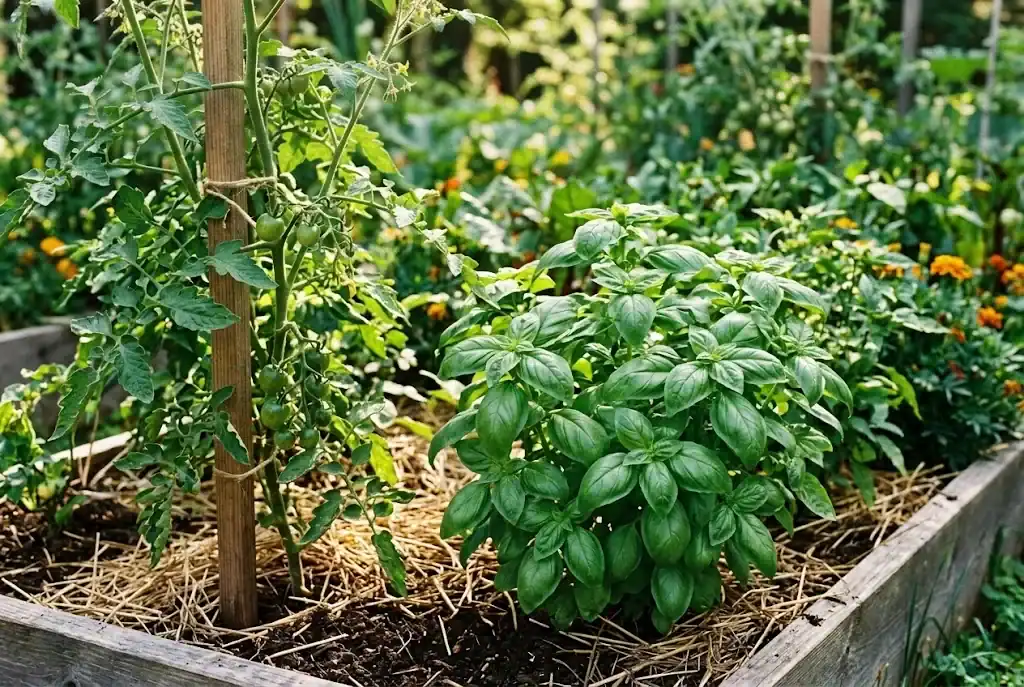
Companion planting provides a practical way to manage garden space. Planting basil beside an heirloom tomato plant or sweet bell peppers creates a classic culinary pairing in the same raised bed. Regular monitoring allows you to catch emerging pest problems early, while flowering companion plants like dill and borage nearby help attract beneficial insects to the garden.
How to harvest basil for the best flavor and kitchen uses
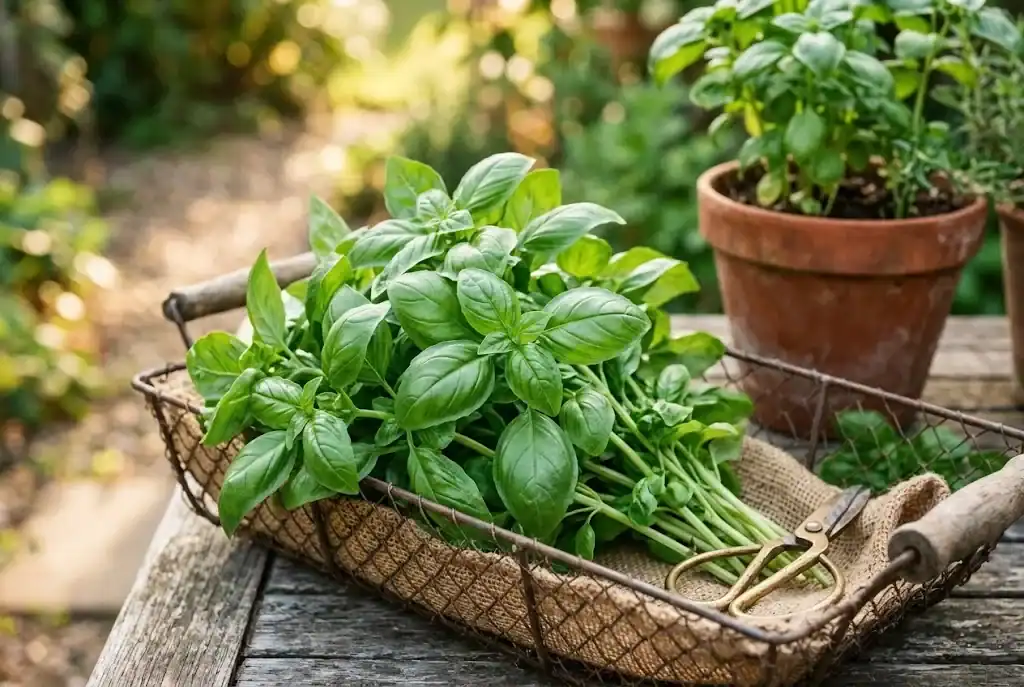
You can begin picking fresh leaves as soon as the plant has developed multiple sets of mature foliage and stands at least eight inches tall. Harvest in the morning once dew has dried, using clean snips, and take only what the plant can readily regrow.
To harvest, snip whole stem tips just above a set of growing leaves rather than pulling off individual lower leaves. Plucking single leaves results in bare, unproductive woody growth, while snipping stems above leaf nodes encourages fresh branching and steady new growth. If you are preparing a large culinary harvest or clearing plants ahead of autumn frost, see our comprehensive tutorial on how to harvest basil for step-by-step cutting instructions and timing.
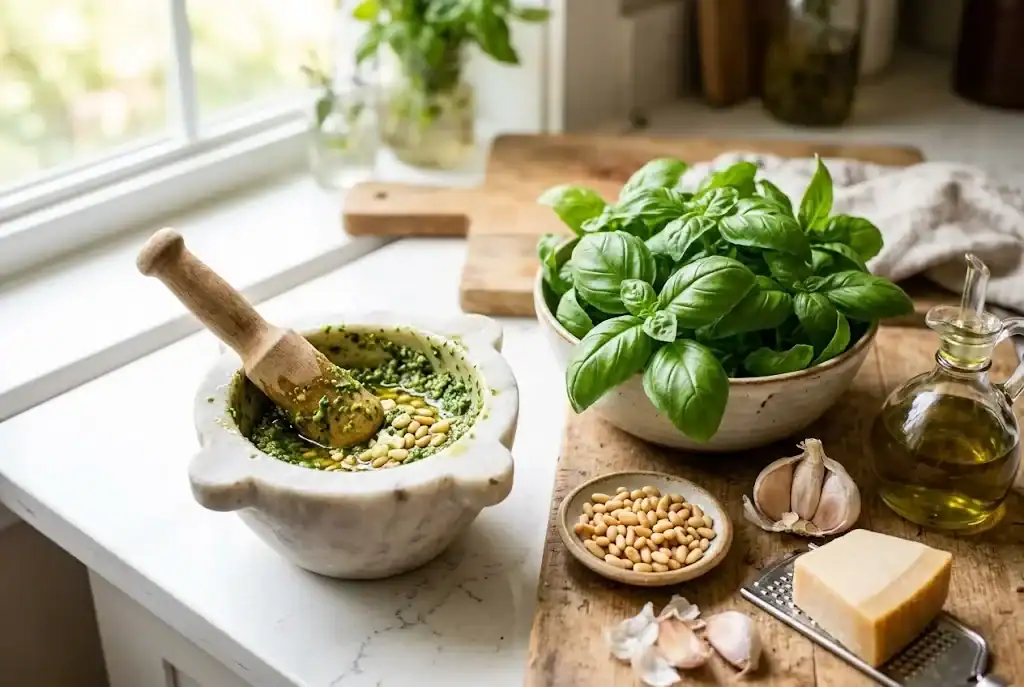
In the kitchen, freshly cut basil adds bright herbal flavor to summer meals. Blend clean leaves with toasted pine nuts, garlic, olive oil, and grated Parmesan cheese for authentic Genovese pesto. Add whole or torn leaves to Caprese salads, tomato soups, and freshly baked pizzas just before serving, as prolonged heat reduces its fresh aroma.
To keep cut basil fresh for several days, treat your harvest like a bouquet of cut flowers: trim the stem ends and stand them upright in a jar of water on your kitchen counter out of direct sunlight. Never refrigerate fresh basil stems, as temperatures below 45°F (7°C) cause tender foliage to blacken and decompose. If you have gathered a large harvest at the end of the season, read our dedicated guide on how to store basil to learn the best methods for freezing, infusing oil, and drying your freshly harvested leaves.