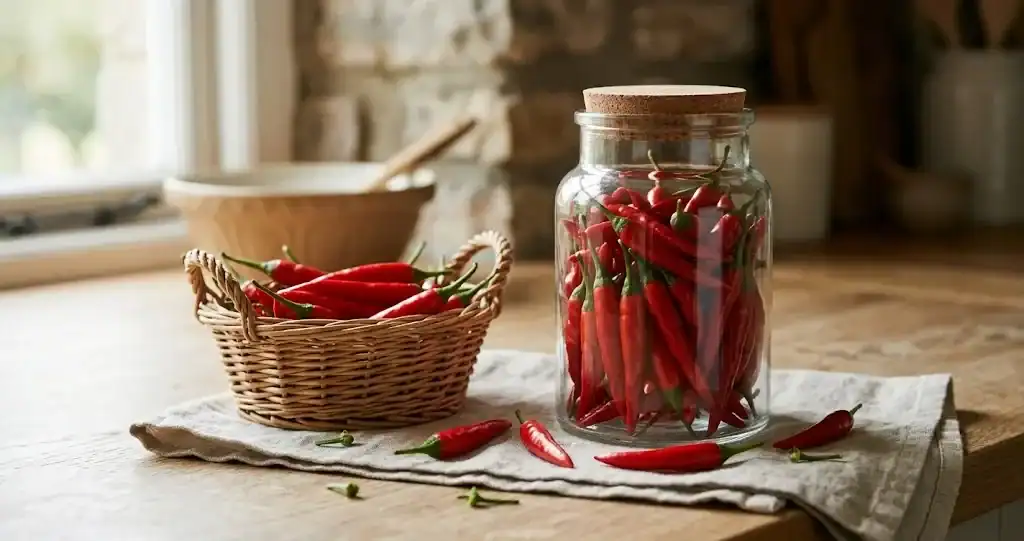
Fresh red chili peppers lose their snap within a week on the counter and a few weeks in the fridge, so the storage approach you pick decides how long that bright, fiery flavor actually lasts. Match the method to the time you have and the dishes you cook, and the pods you grew or bought will still taste good months from now.
This guide walks through the storage approaches that hold up at home, arranged from shortest to longest shelf life. Start with refrigeration for peppers you will use this week, then move into freezing, drying, pickling, and fermented pastes for the rest. If you are still bringing pods in from the garden, the broader walk-through of harvesting technique and timing sets the ceiling on how well any storage approach will perform.
Refrigerate fresh pods for one to three weeks
Whole, unwashed red peppers keep two to three weeks in the refrigerator when held the right way. Pat each pod dry, slip them into a paper towel inside a perforated plastic bag, and tuck the bag into the crisper drawer. The paper towel soaks up the moisture that otherwise turns soft pods into spoiled ones, and the perforations stop condensation from building up against the skin.
Skip the airtight container for whole fresh pods. Trapped humidity speeds up mold, and a sealed bag of damp peppers is the fastest way to lose a whole batch. If a pod goes soft or develops dark spots, cut it up and freeze it the same day rather than waiting for the rest to follow. The picks that age best are firm, fully red ones picked dry, and the red chili harvest pointers walk through how to spot them.
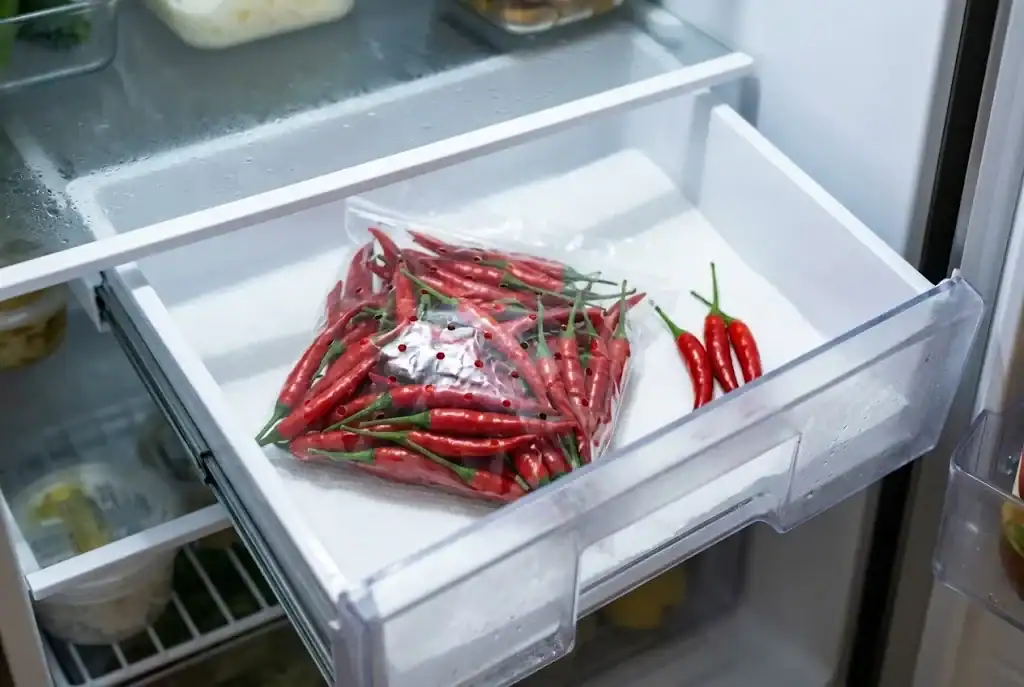
Freeze peppers for six to twelve months
Freezing is the simplest way to keep heat and flavor on standby for almost any cooked dish. Wash and dry the pods, spread them on a tray so they do not touch, freeze for an hour, then transfer to a freezer bag and press out the air. The pods freeze individually, so you can pull exactly what you need without thawing the whole bag.
Frozen peppers thaw soft, which suits pods going into curry, soup, or paste. Slice before freezing if you plan to drop them straight into a stir fry, since slicing a frozen pod with wet hands is harder than it sounds. Heat loss is small: most of the capsaicin stays put, so the pods will still taste hot after a long freeze.
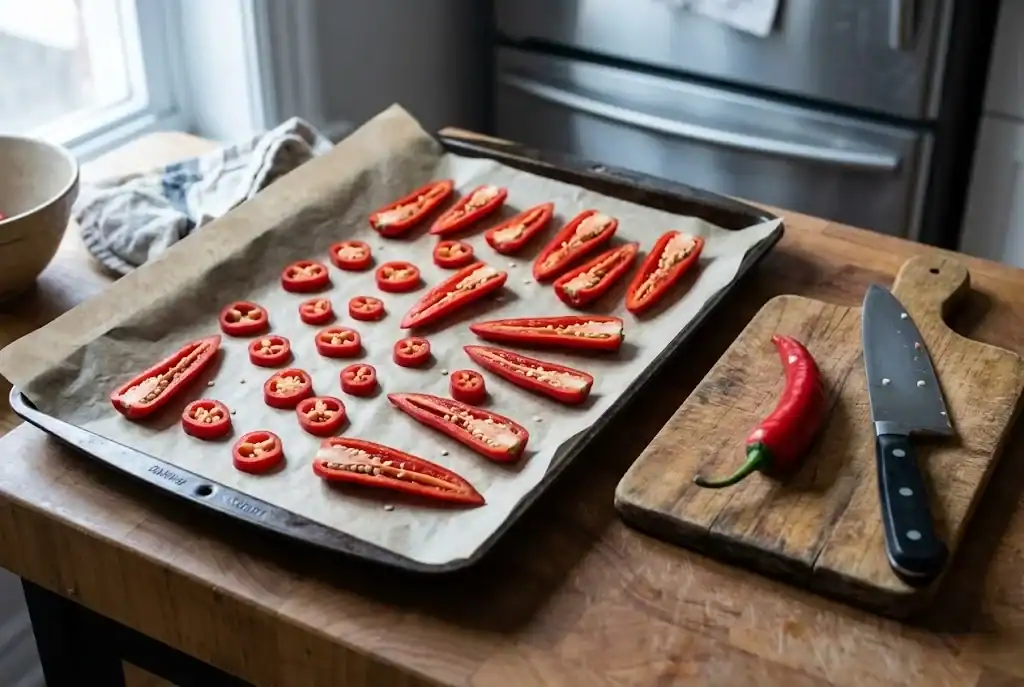
Dry peppers for six months to over a year
Dried peppers are the workhorse of long-term keeping, and the flavor deepens as the pods lose moisture. Thread whole pods onto kitchen twine and hang them somewhere warm, dry, and out of direct sunlight, or use a dehydrator set to 135 F until the pods bend without snapping. A low oven with the door cracked open works in a pinch, though it takes longer and uses more energy. Some gardeners dehydrate smaller pods in a single afternoon on a sunny windowsill indoors, then move them into jars the same day.
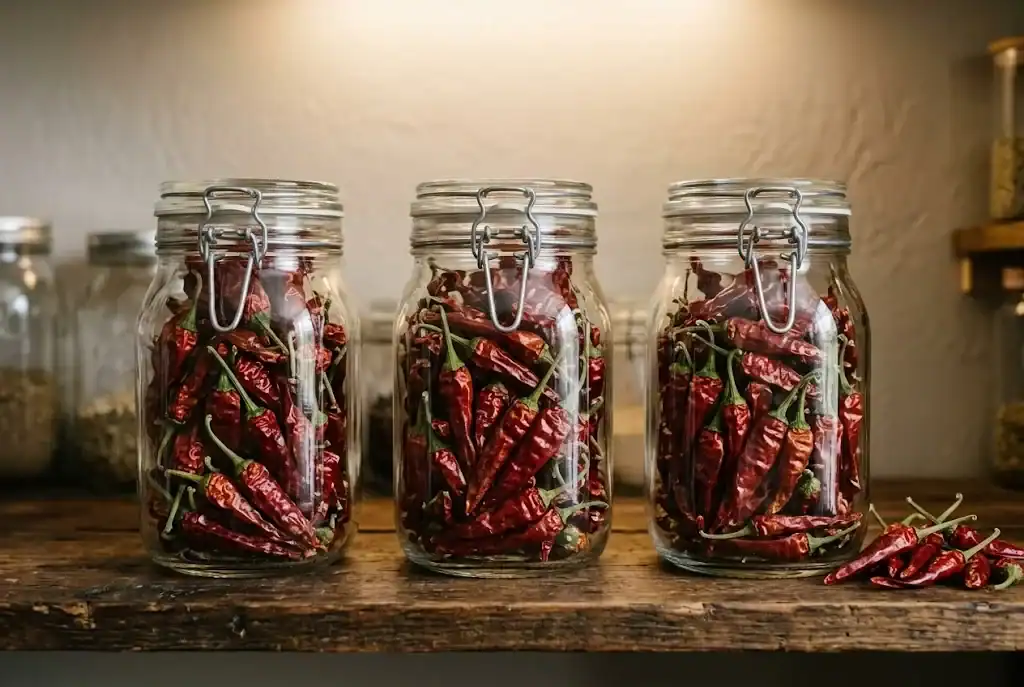
Once the pods are fully dry, keep them whole in an airtight container in a cool, dark pantry. Whole dried peppers keep their flavor and heat far longer than ground chili powder or flake, because every grind breaks more cells and releases more of the aromatic oils. Grind pods only as you need them, and reseal the rest of the container right away.
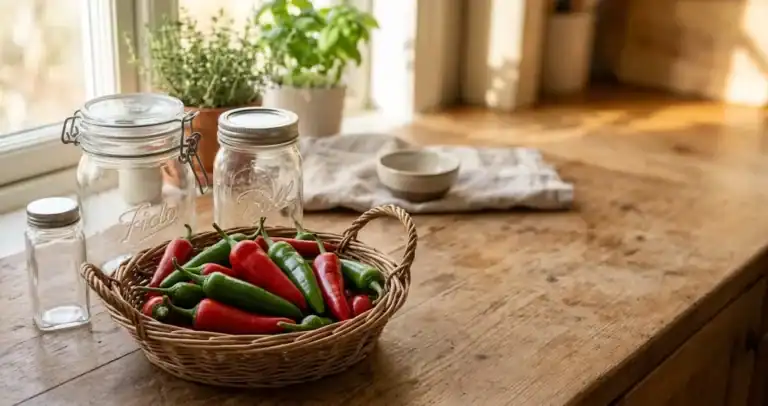
The container matters as much as the room. Glass mason jars with rubber gaskets block moisture and light, and they keep dried peppers safe from pantry moths. Skip plastic bags for long keeping, since chili oils can stain them and the bags do not seal tightly enough for shelf life over a few months.
Pickle peppers for three to six months
Pickling turns fresh red pods into a tangy condiment that holds in the fridge for months. Pack clean, whole peppers into sterilized mason jars, pour a hot brine of one part vinegar to one part water with a tablespoon of salt per cup, seal, and refrigerate once the jars have cooled. The vinegar does the preserving, the salt draws flavor out of the pods, and the brine mellows the heat into something softer and more rounded.
Pickled peppers work well on tacos, in sandwich spreads, or chopped into a quick relish for grilled vegetables. If you want shelf-stable jars for the pantry, follow a tested canning recipe with proper headspace and a water-bath processing time, since the acidity has to be high enough to keep the jars safe at room temperature.
Ferment peppers into paste or hot sauce
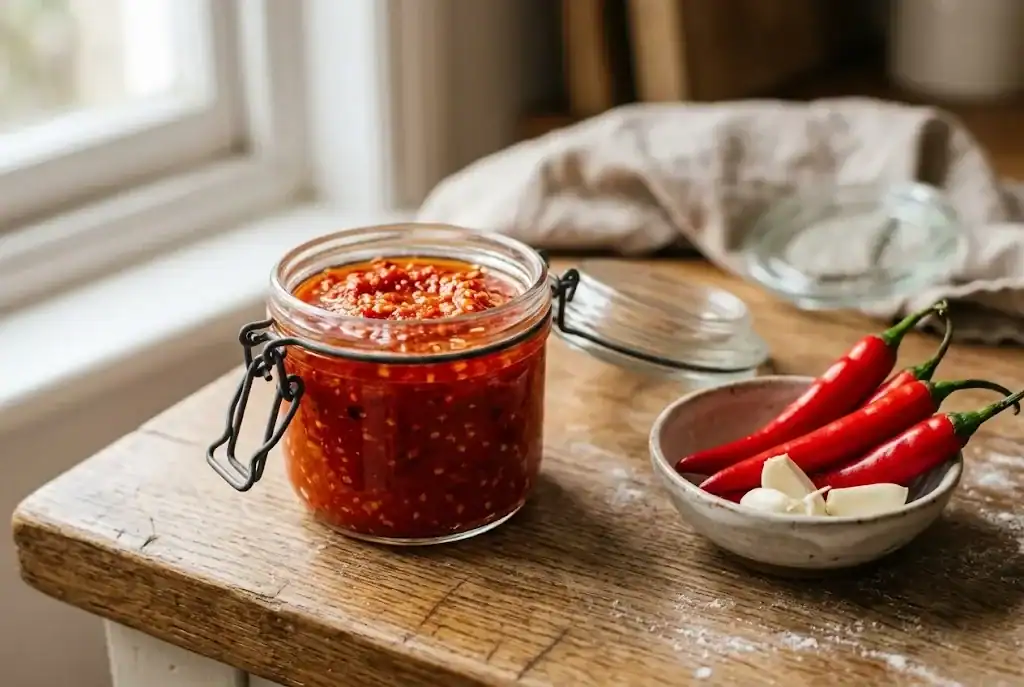
Fermented paste keeps in the fridge for up to a year and adds a deep, savory flavor that fresh peppers cannot match. Pack a clean mash of fresh pods, garlic, and salt into a jar, weigh the mash down so it stays under the brine, and let it sit at room temperature for one to three weeks. Blend the finished mash with a splash of the brine for a thick paste, or thin it further for a pourable hot sauce seasoned with a pinch of cumin.
The two things that matter most are clean equipment and consistent salt. Anything that touches the mash should be washed and dried, the salt should be non-iodized, and the mash should stay submerged the whole time. Skim any surface mold rather than stirring it in, and the ferment underneath is fine to use.
Common mistakes that shorten shelf life
The same three mistakes show up in almost every batch that spoils early. Sealing damp pods invites mold within days. Drying peppers in direct sunlight bleaches the color and dulls the flavor before the moisture is even gone. And grinding more than you need in one go turns the rest of the jar into a slow-oxygen burner that loses heat and aroma in weeks.
For food safety, keep an eye out for off smells, fuzzy growth, or any pod that has gone soft after drying or pickling. Capsaicin holds up well, but bacterial and mold growth will spoil an otherwise good batch, and the heat of the peppers will not protect you from those.
Put your peppers to work
Once you have a shelf of peppers in different forms, recipes stop feeling limited by what is fresh in the garden. Dried pods grind into seasoning blends for rubs and curries, frozen slices go straight into soup and stir fry, and pickled or fermented paste rounds out sandwiches and tacos. For more ideas on how to put a kept harvest to work, see these red chili recipe ideas.
Frequently asked questions
How long will red chili last in the fridge? Whole, dry pods in a perforated bag in the crisper drawer stay firm and flavorful for two to three weeks. Washed or damp peppers go soft within days, so skip the rinse until just before you cook with them.
Should I store red chili in the fridge? Yes, if you plan to use them within three weeks. The fridge slows moisture loss and browning, which keeps the pods from shriveling on the counter. For longer keeping, freeze, dry, or pickle them instead.
Can you freeze red chili peppers? Yes. Flash freeze the pods on a tray, then bag them and press out the air. Frozen peppers keep their heat for up to a year and thaw soft, which suits cooked dishes.
Do red chili peppers lose their heat when frozen? Very little. Capsaicin is stable at freezer temperatures, so a frozen pod will taste almost as hot as a fresh one once it thaws.
How do I know if dried chili peppers are spoiled? Look for any sign of mold, an off or stale smell, or pods that crumble into dust. Properly dried peppers bend without snapping, smell earthy, and keep their red color.
What are common mistakes to avoid when storing red chili peppers? Sealing damp pods, drying in direct sun, and grinding too much at once are the three biggest. Keep peppers dry, store them whole, and grind only what you need.