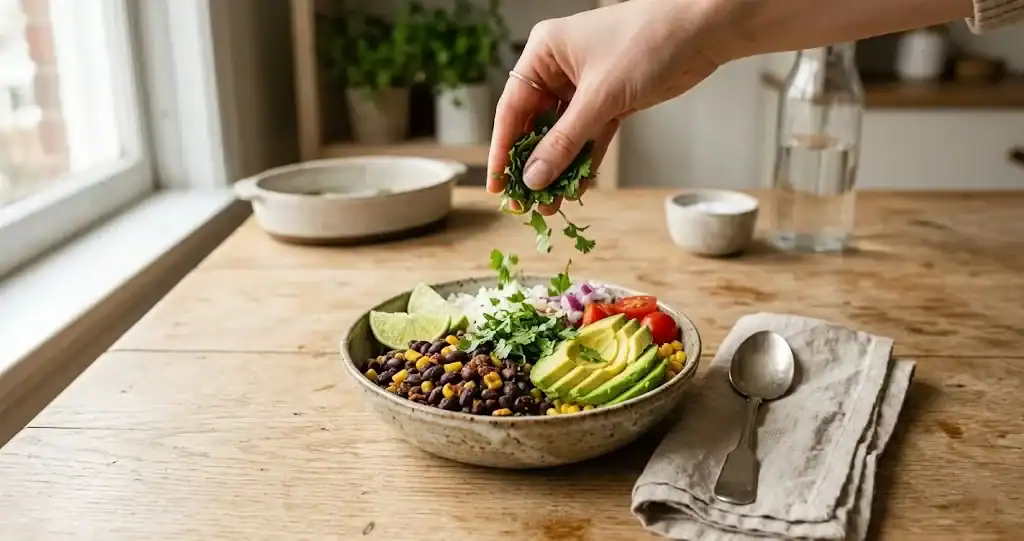
Cilantro can wake up a pot of beans, cut through a rich stew, or make a simple bowl of rice taste finished. The trick is timing. Its tender leaves lose their bright, citrusy character with long cooking, so most dishes benefit when you add cilantro near the end.
Cooking with cilantro is less about following one strict rule and more about matching the herb to the dish. Use cilantro where its fresh, citrusy character gives a rich or savory dish contrast, rather than adding it by habit. Use the stems for a deeper herb flavor in sauces and broths, save the leaves for freshness, and taste as you go. A little can be subtle. A generous handful can become the point of the meal.
What does cilantro taste like?
Fresh cilantro has a green, citrus-like flavor with a peppery edge. For many people it tastes clean and lively. Some people experience a strong soapy flavor instead, which can be linked to differences in smell and taste perception. If cilantro tastes unpleasant to you, start with a small amount or choose parsley, basil, chives, or mint where the recipe allows.
Cilantro refers to the leaves and tender stems of Coriandrum sativum. The dried seeds from the same plant are called coriander in US cooking. They taste warm, citrusy, and slightly nutty, rather than like the fresh leaves.
How to choose a good bunch
Look for leaves that are bright green, perky, and dry rather than yellowed or slimy. The stems should feel crisp, not limp. A good bunch has a clean, herbaceous scent when you gently rub a leaf between your fingers. Skip bunches with dark, wet patches, because they will decline quickly once you get home.
Buy only as much as you expect to use in a few meals. If the bunch is large, plan one fresh finish, such as tacos or grain bowls, and one blended condiment or cooked dish. That simple plan uses the leaves while they are lively and gives the stems a useful job.
Use leaves and stems differently
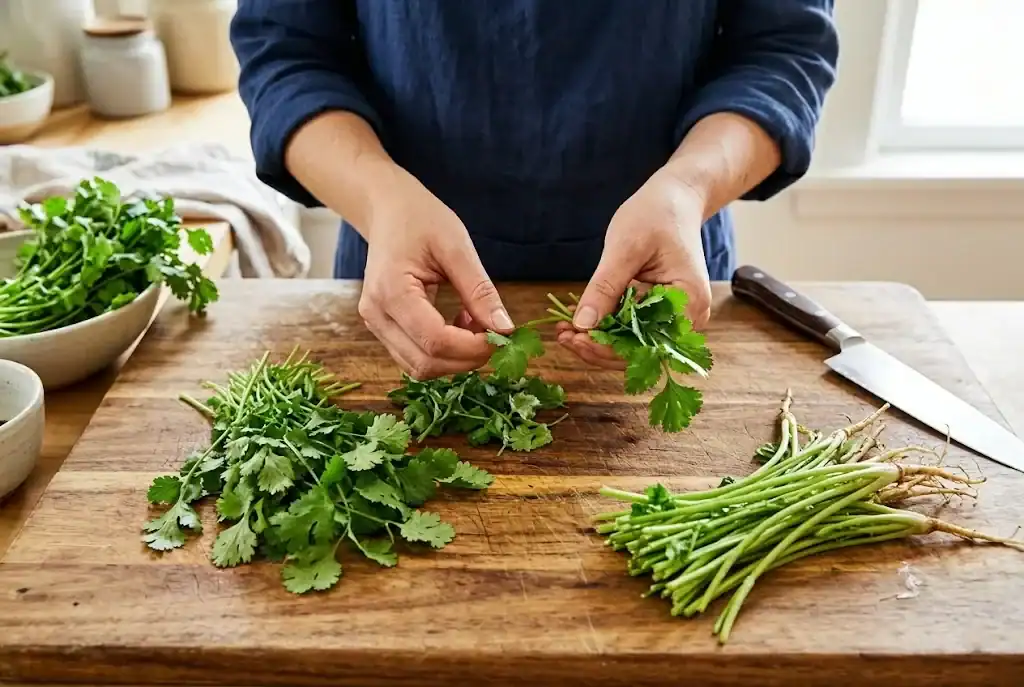
Do not throw away the upper, tender stems. They have plenty of flavor and blend well into salsa, chutney, curry paste, green sauces, and dressings. Chop the leaves and tender stems together when the dish will be cooked briefly or served right away.
Reserve the thicker lower stems for stock, soup, beans, or a simmering sauce. Bundle them with other aromatics, then remove them before serving if their texture would be distracting. This approach gives you more value from one bunch without filling a finished dish with tough pieces.
When to add cilantro while cooking
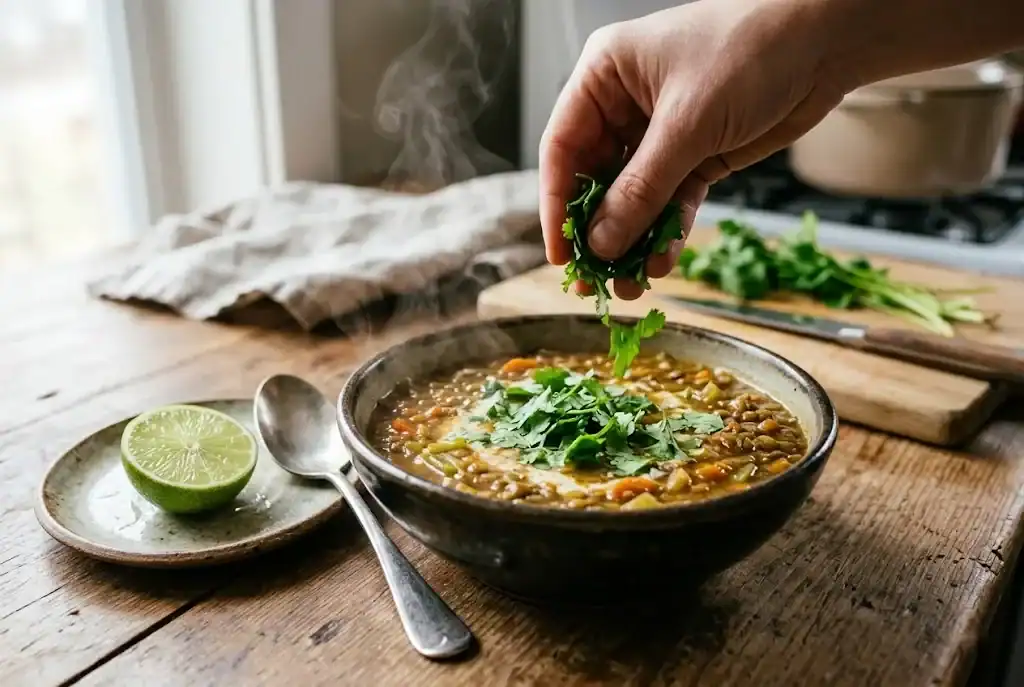
Add cilantro leaves at the end of cooking or use them as a garnish. Stir them into a pan of vegetables, soup, rice, or lentils after you turn off the heat. Their flavor stays clearer when they meet residual heat instead of a long boil.
There are exceptions. Cilantro stems can go in early with onion, garlic, ginger, or chiles when you are building a curry, soup, or braise. A green salsa or herb sauce can also be blended ahead, then spooned over the finished food. Think of leaves as a finishing herb and stems as an aromatic ingredient.
Salsa, green sauce, and other easy uses
Finish tacos, beans, and grain bowls
Scatter chopped cilantro over tacos, black beans, rice, roasted sweet potatoes, or a grain bowl just before serving. Lime juice, sliced scallions, avocado, and pickled onions all make its fresh character feel more complete. Add only enough to complement the main filling, then offer extra at the table.
Stir it into soups and stews
A handful of cilantro can lift tomato soup, chicken soup, lentil stew, chili, and vegetable broths. Add it after the pot comes off the heat, or put it in individual bowls. For a deeper base note, simmer a few stems with the other aromatics and finish each serving with leaves.
Blend a quick green sauce
Blend cilantro leaves and tender stems with olive oil, lime juice, garlic, a pinch of salt, and a little jalapeno, jalapeños, or serrano if you want heat. Loosen it with water as needed. Spoon the sauce over grilled vegetables, fish, chicken, eggs, or roasted potatoes. Keep it thick for a dip, or thin it for a dressing.
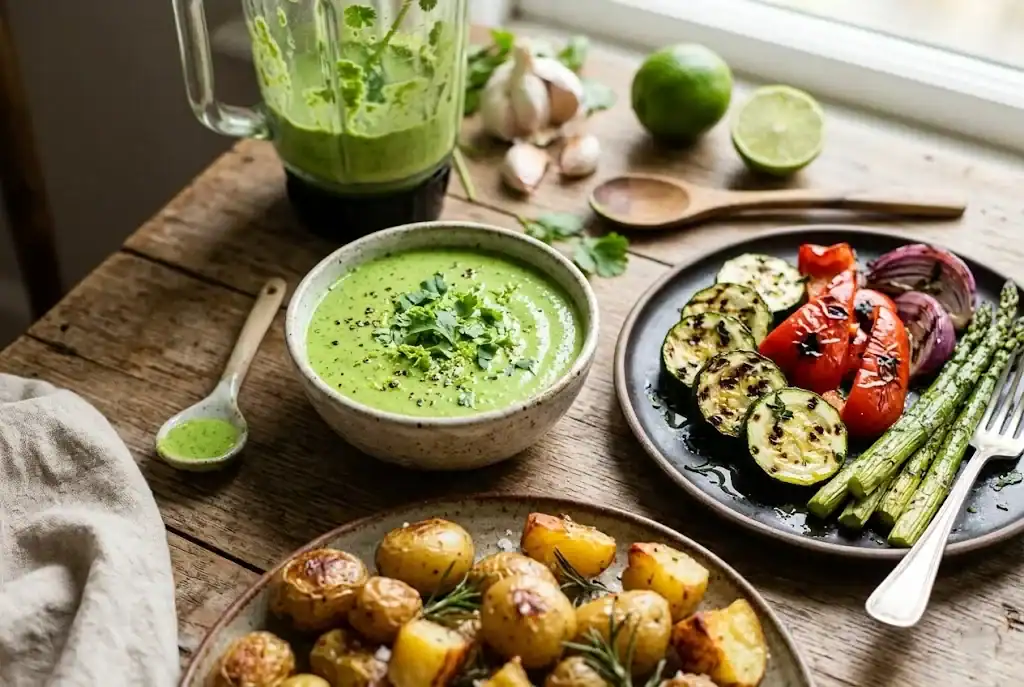
If you want dishes built around the herb rather than a finishing sauce, these cilantro recipe ideas offer the next step. Keep this article focused on technique and flavor choices, then use a recipe collection when you are ready to cook a full dish.
Use it in salsa, chutney, and relishes
Cilantro works especially well in uncooked condiments because its flavor stays sharp. Fold it into tomato salsa, pico de gallo, corn relish, mango salsa, yogurt sauce, or a bright green chutney. Chop it just before mixing so it does not darken or lose its aroma while the other ingredients wait. For salsa verde, blend cilantro with tomatillos, onion, chile, lime juice, and salt.
Add it to eggs, salads, and sandwiches
Fold cilantro into scrambled eggs or a frittata at the last minute, tuck whole leaves into a sandwich, or use a small handful in a salad with cucumber and citrus. It also works well with creamy ingredients such as yogurt, sour cream, mayonnaise, and avocado, which soften its sharper notes without hiding them.
Make cilantro lime rice and other simple sides
For cilantro lime rice, fold finely chopped leaves, lime juice, and a little lime zest into warm cooked rice. Cilantro and lime give a clean, herby finish without needing a heavy sauce. Serve it as a side dish with beans, roast chicken, grilled fish, or roasted poblano peppers. The same idea works with couscous, quinoa, buckwheat, or a noodle salad. Keep the seasoning light so the rice supports the rest of dinner instead of competing with it.
What can you make with lots of cilantro?
When you have lots of cilantro, make one herb-forward condiment and one cooked dish. To use the entire bunch without waste, plan one fresh finish and one cooked use. Turn leaves and tender stems into cilantro dressing, pesto, chimichurri, or a dipping sauce, then use the thicker stems in chicken broth, a marinade, or a pot of beans. A freshly pureed sauce is best on the day you make it. Freeze extra chopped leaves in an ice cube tray with water or olive oil for future soups and sauces. It will not replace freshly chopped leaves as a garnish, but it is useful in cooked food.
A simple recipe formula keeps the herb in balance: pair one rich or savory base with one bright element, then add the leaves late. For full cilantro recipes, use the linked recipe collection rather than turning this technique guide into a roundup.
What foods and flavors go best with cilantro?
Cilantro has enough character to stand beside chiles and garlic, but it also has a natural affinity for fresh, sweet, and creamy ingredients. Start with one or two complementary flavors rather than trying to use every match in the same dish.
- Citrus: Lime, lemon, orange, and grapefruit make cilantro taste brighter.
- Alliums: Garlic, scallions, onion, and shallots give it a savory base.
- Warm spices: Cumin, coriander seed, chile, paprika, and ginger bring contrast.
- Fresh produce: Tomato, corn, cucumber, mango, pineapple, and avocado balance its green edge.
- Proteins and legumes: Chicken, shrimp, white fish, tofu, chickpeas, black beans, and lentils all work well with cilantro.
For a broader look at choosing and using fresh herbs in everyday food, visit this culinary herbs guide. It can help when a recipe needs a different herb or a more layered herb combination.
When you have a bunch of cilantro to use, keep the applications simple. On taco night, sprinkle minced cilantro over rotisserie chicken, black beans, avocado, and red onion. Fold a smaller amount into hummus or a crisp slaw to brighten lunch. For dinner, puree tender leaves with lime juice and a jalapeño for a sauce beside roast vegetables, grilled fish, or tomatillo salsa. These are technique prompts, not a recipe collection.
How much should you use?
For four servings, begin with 2 to 4 tablespoons of chopped leaves for a garnish or a light finish. Use up to 1 packed cup in a salsa, chutney, or green sauce where the herb is meant to lead the flavor. Taste after mixing, because bunches vary in strength and some dishes need only a small lift.
When serving guests, keep a portion plain if you are unsure how they feel about this flavor. You can always put chopped leaves in a small bowl at the table. That simple choice lets everyone adjust the dish without changing the whole recipe.
How do you wash and chop cilantro?
Separate the leaves enough to check for grit near the stems. Rinse the bunch under cool running water or swish it in a bowl of clean water, then lift it out so sand stays behind. Do not use soap or produce wash. Spin it dry or blot it gently with a clean towel before chopping.
- Pick out yellowed, slimy, or badly bruised leaves.
- Rinse the bunch in a bowl of cool water, swishing away grit. Lift it out instead of pouring the water over the leaves.
- Dry it well in a salad spinner or between clean towels. Wet leaves dilute sauces and make chopping messy.
- Cut off only the thickest stem ends. Chop the tender stems with the leaves for most recipes.
- Chop just before using when possible, especially for a garnish or salsa.
Freshness matters more than elaborate preparation. If you buy it often, learning how to store cilantro can help the bunch stay usable long enough for more than one meal.
For the short term, keep the leaves dry and avoid crushing them under heavier groceries. If you need to preserve a larger amount for cooking, freeze chopped leaves in small portions with water or olive oil. They are best later in soups, sauces, and cooked rice, not as a fresh garnish.
Common mistakes when cooking with cilantro
Adding all the leaves too early: Long cooking mutes their fresh aroma. Add leaves near the end, and use stems earlier if you want a more cooked-in flavor.
Using only the leaves: Tender stems are useful and flavorful. Save them for blended sauces, soups, and cooked dishes.
Chopping it far ahead: It loses its best aroma after it is cut. Prep the rest of the meal first, then chop the herb.
Trying to make everyone like it: This herb is polarizing. Offer it at the table, or use a milder herb when its flavor would dominate the dish.
Should cilantro be cooked or raw?
Use both approaches. Raw leaves are best when you want a fresh, citrusy finish in salsa, a salad, or a garnish. They can be part of a balanced meal, but they are not a treatment or supplement. Wash them well, discard damaged leaves, and use the same food-safety care you would use for any fresh produce. Brief cooking works well when you stir the leaves into a finished curry, soup, rice dish, or sauteed vegetables just before serving.
Can dried leaves replace fresh cilantro?
Dried leaves do not make a good substitute for the fresh herb. They lack the bright, citrusy flavor that makes fresh leaves useful as a garnish, salsa ingredient, or finishing herb. If you do not have it, use parsley for a green finish, or choose another herb that fits the recipe. Ground coriander is also not a direct replacement because it comes from the seed and has a warmer flavor profile.
Cooking without cilantro: what can you use instead?
Parsley is the easiest substitute when you need a fresh green garnish without this herb’s distinctive flavor. For a brighter direction, try parsley with a little mint and lime zest. Thai basil can work in some Southeast Asian dishes, while dill can suit fish, potatoes, and yogurt sauces. For a quick sauté, add the substitute near the end so its aroma stays clear. No substitute tastes exactly the same, so choose one that fits the dish rather than forcing a match.
Make it a finishing habit
Keep this herb in mind whenever a dish tastes rich, heavy, or slightly flat. A chopped handful with lime can bring back contrast without extra salt or a complicated sauce. Start small, add it late, and use the stems where their fuller flavor has time to cook. Those few habits make it easier to use well in everyday meals.
