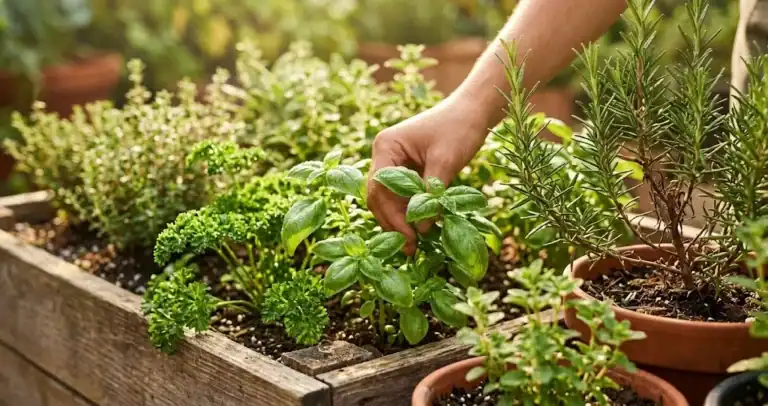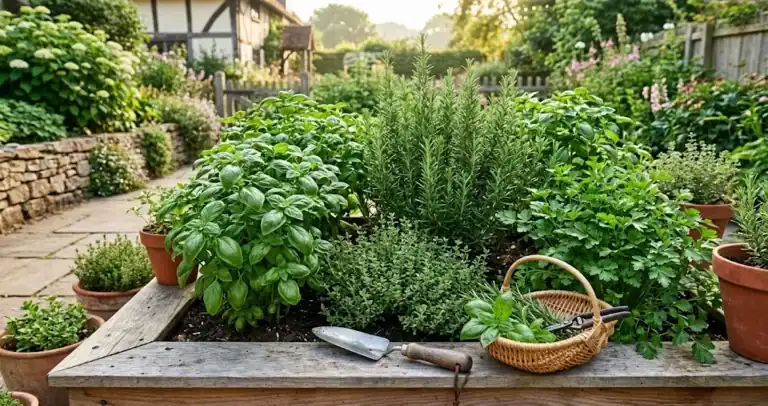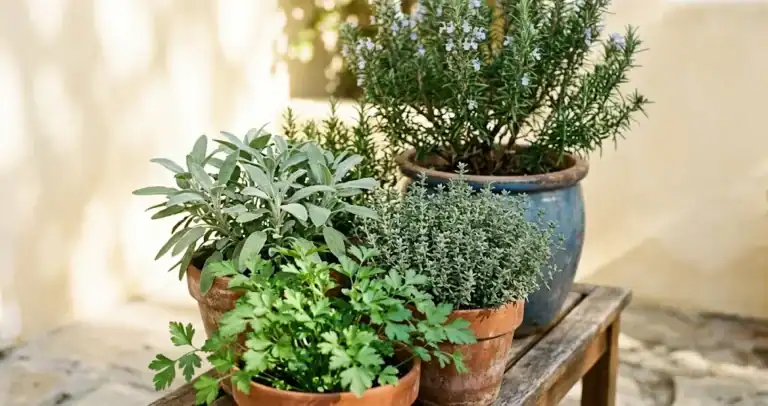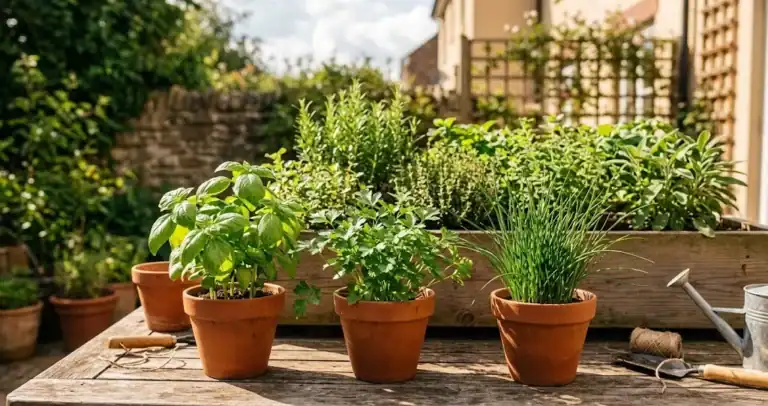
You do not need a backyard, a raised bed, or even a balcony to keep a steady supply of fresh herbs within arm’s reach of the kitchen. A sunny windowsill, a few containers, and a little attention to light and water are enough to grow basil, parsley, thyme, chives, mint, and a handful of other workhorses. This guide walks through what “no garden” really means, where to put your plants, how to keep them healthy, and which herbs are the easiest to start with.
What “no garden” really means for growing herbs
Most culinary herbs do not require open ground. They need sunlight, well-drained soil, regular water, and enough root room to keep producing leaves. A small planter on a kitchen counter, a hanging basket in a bright hallway, a self-watering container on a fire escape, or a hydroponic unit under a full-spectrum lamp all satisfy those needs. The category is broader than people expect: anything from a single four-inch vessel of chives to a wall of mason jars in a south-facing window counts.
Where gardeners run into trouble is assuming the plant cares about having “a garden.” It does not. It cares about light, drainage, and the right size container. Once you give it those, the plant grows. For more on the underlying mindset, the beginner’s guide to growing an herb garden walks through the broader framework.
Pick a spot with steady light first
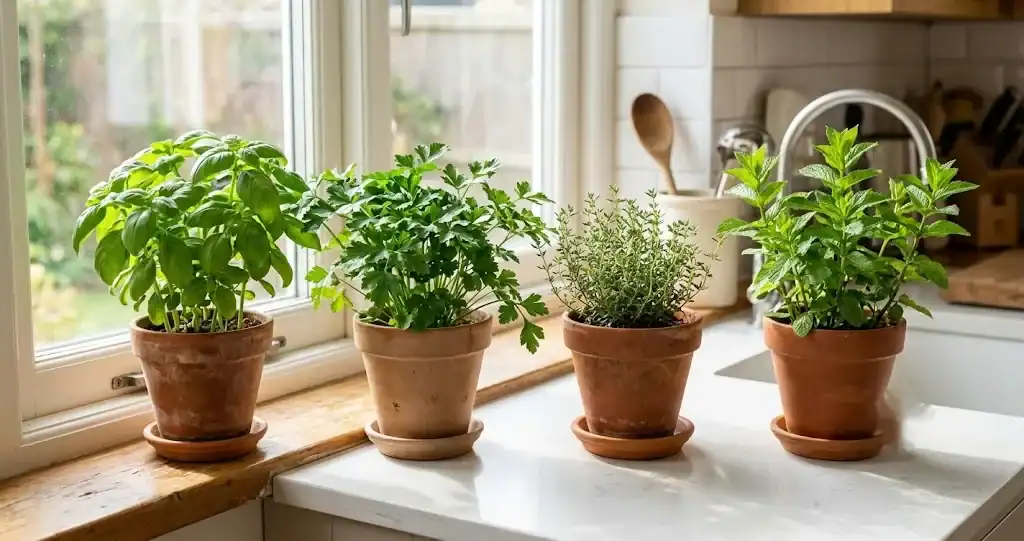
Light is the make-or-break factor when you grow herbs without a garden. Most culinary herbs need at least six hours of direct sunlight a day, and the more the better during the active growing season. A south-facing window is the classic choice because it delivers strong light for the longest stretch. East and west windows work too, with a slightly shorter window of direct sun. North-facing windows usually do not give enough light for Mediterranean herbs like thyme and oregano without supplemental lighting.
If your brightest window is shaded by a building or tree, or if you only have north light, a simple full-spectrum lamp fixes the gap. Set the fixture six to twelve inches above the top of the plant, run it for fourteen to sixteen hours a day, and turn it off at night so the plants get a rest period. Most herbs tolerate ambient room temperature and normal household humidity without fuss, although basil sulks below about 55°F (13°C).
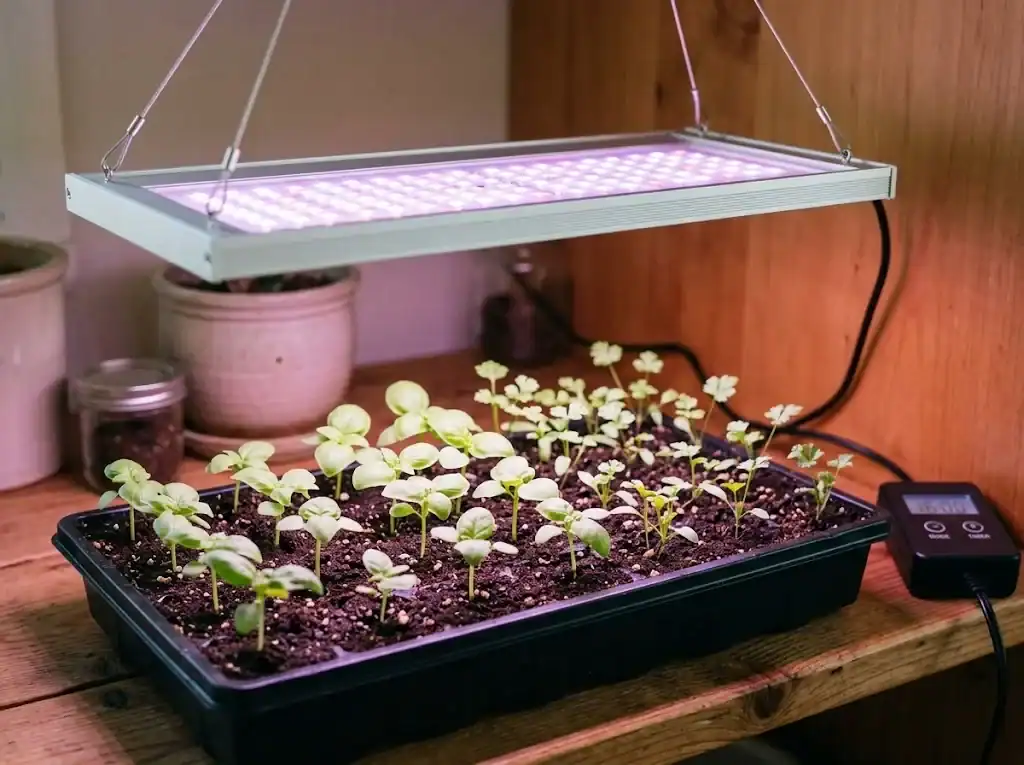
Watch the plant, not the calendar. If stems stretch and the space between leaves grows long, the plant is reaching for more light and you will need to move it closer to the window. Long, pale, leggy growth is the classic symptom of indoor herbs grown without enough sun. Better light makes new growth more compact, but it will not shorten stems that have already stretched. Prune the leggy growth or restart the plant if it no longer has enough healthy growth to shape.
Containers, soil, and drainage that match your space
Match the container to the herb. Small leafy herbs like parsley, chive, and basil do well in six- to eight-inch planters. Mediterranean herbs like thyme prefer drier conditions and a terra-cotta vessel that breathes. Mint is a famously aggressive spreader in the ground, so a dedicated container is the right call even when you do have a garden; keep it on its own or it will crowd out everything else.
Use a quality potting mix rather than garden soil. Bagged potting soil drains well, holds moisture evenly, and is free of the weed seeds and pathogens that come with outdoor soil. Most herbs prefer a mix that drains freely, so do not skip the drainage holes at the bottom of the vessel. A layer of pebbles in the bottom is not necessary if the holes are clear, and it can actually back up water if the soil settles and seals against them.
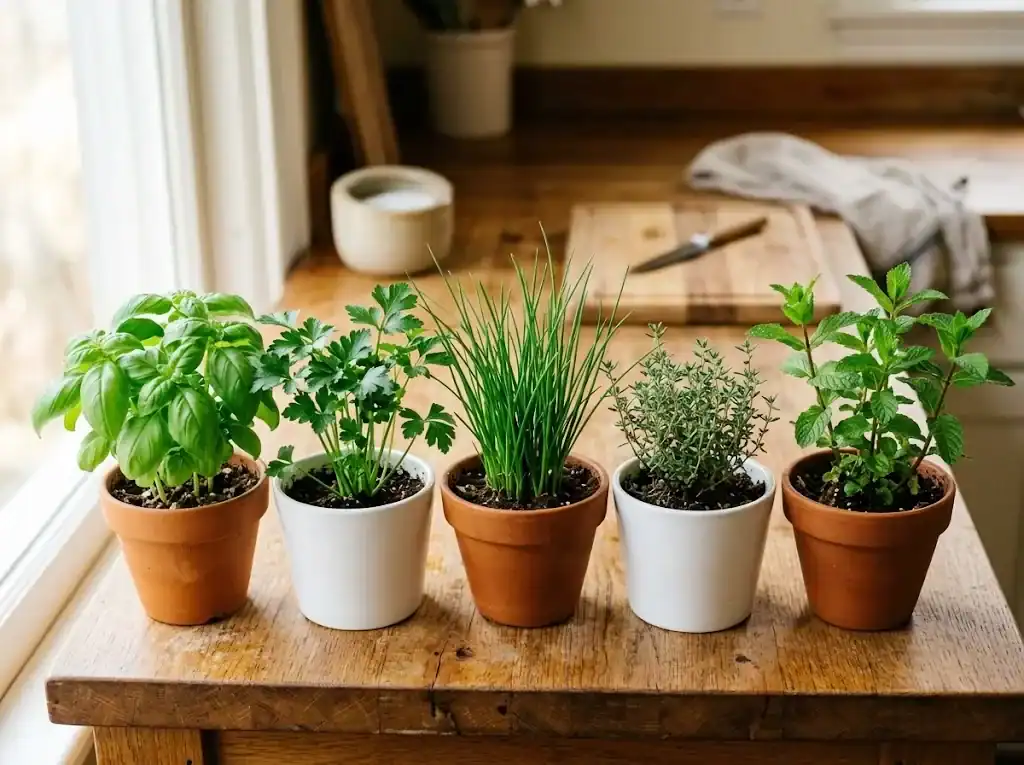
Separate planters beat a single crowded container. Each herb has slightly different water needs, and putting mint next to oregano in the same vessel is a recipe for one of them dying. If you want the look of a grouped kitchen herb garden, set individual containers on a tray or shelf so they read as a set without sharing soil.
Watering and feeding without overdoing it
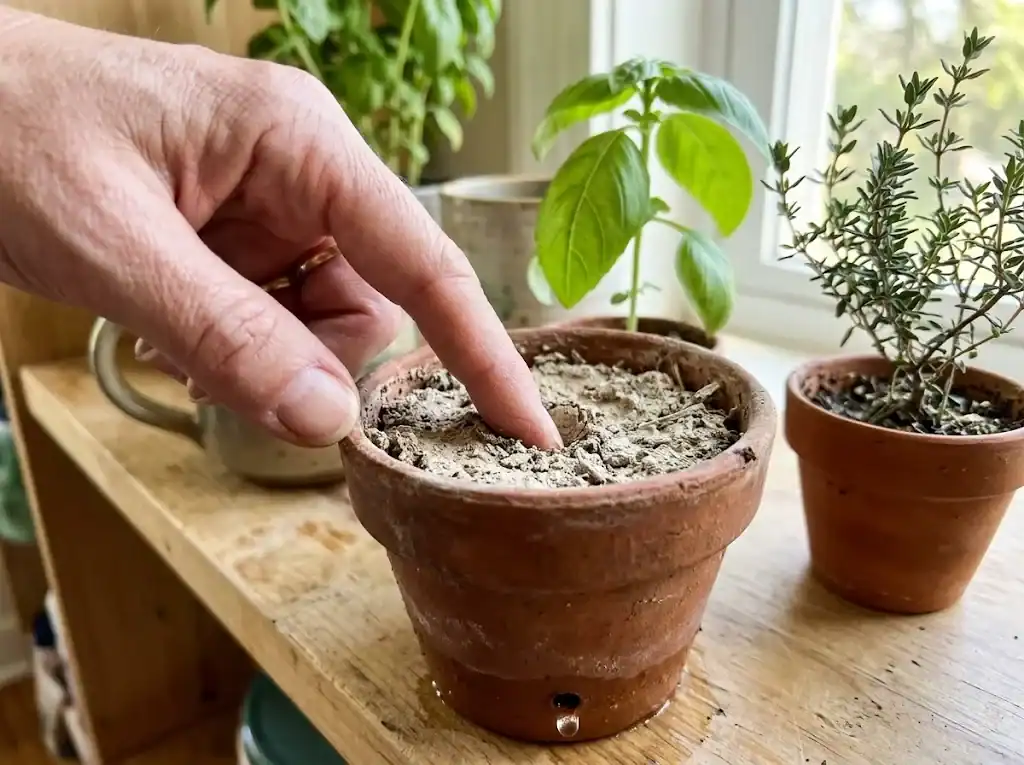
The fastest way to kill an indoor herb is to overwater it. Stick a finger into the soil; if the top inch feels dry, water. If it is still damp, wait. Most herbs like a thorough soak that wets the whole root zone, followed by a brief dry-down, not a constant wetness. Containers with drainage holes let excess water escape, so the plant is not sitting in a puddle.
Fertilizer is a small thing indoors. A half-strength liquid feed every three to four weeks during the active growing season is plenty. Cut back in winter when growth slows. Heavy feeding pushes soft, leafy growth with less flavor, which is the opposite of what most cooks want from a culinary herb.
Best herbs to start with when you don’t have a garden
A short list covers most kitchen needs and forgives beginner mistakes:
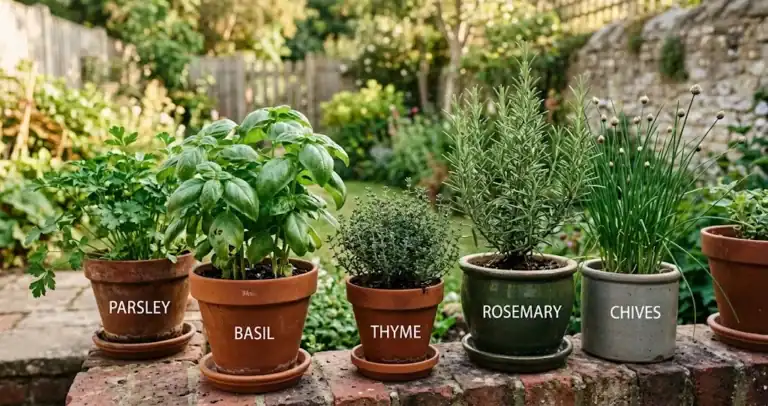
- Basil: Fast-growing, loves warmth and bright light. Pinch off the top leaves often to keep the plant bushy and delay flowering.
- Chive: Hardy, tolerant of cooler spots, and one of the easiest herbs to keep alive. Snip with scissors rather than pulling.
- Parsley: Slower to start but a steady producer once established. Soak the seeds overnight before planting to speed germination.
- Thyme: A Mediterranean herb that prefers drier soil and bright light. A terra-cotta planter suits it well.
- Mint: Grow it in its own container. Spearmint, peppermint, and chocolate mint all do well indoors and bring a fresh sprig to drinks and salads.
- Rosemary: Wants the brightest spot you have. Let the soil dry out between waterings.
Start with two or three herbs you actually cook with. A windowsill crowded with eight struggling plants is harder to manage than three healthy ones. For more ideas on getting started, see the helpful tips for nurturing herb gardens.
How to harvest so the plant keeps producing
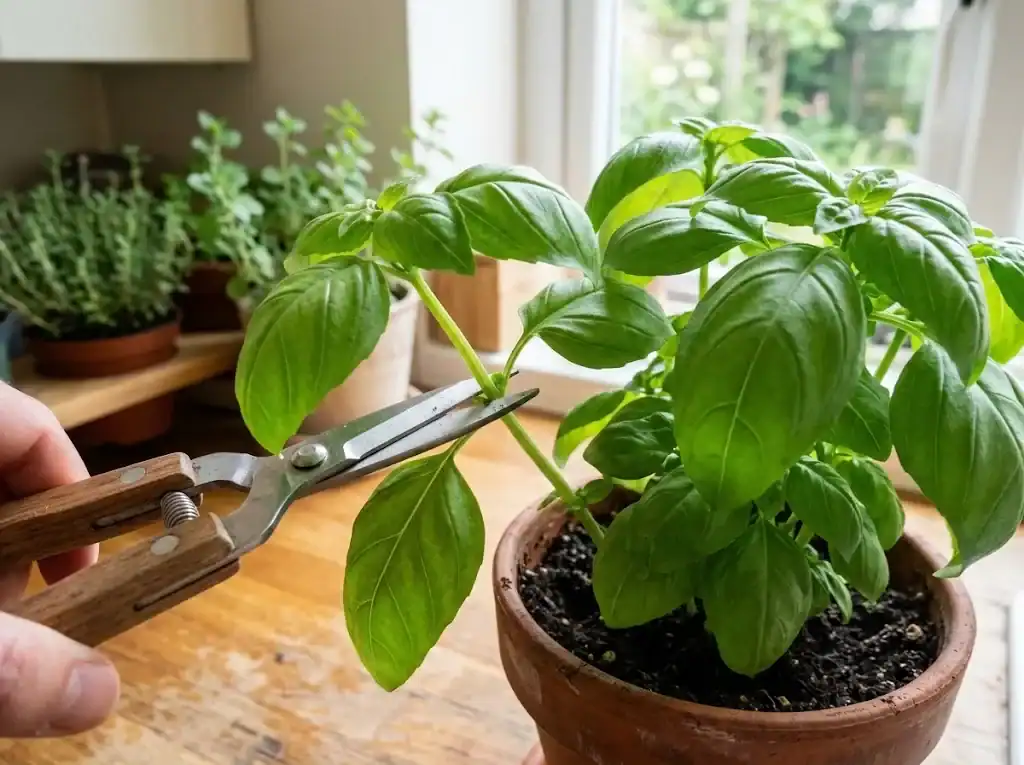
Regular harvesting keeps herbs productive. Pinch or snip the top few inches of growth rather than cutting single leaves at the bottom, which leaves a bald stem. For leafy herbs like basil and mint, cut just above a pair of leaves; the plant will branch from that point and grow two new stems. For woody herbs like rosemary, snip the soft new growth at the tips and avoid cutting into old bare wood that will not regrow.
Flowering changes the flavor of most culinary herbs, often making the leaves bitter. As soon as you see a flower bud, pinch it off. If a plant bolts despite your efforts, cut it back hard and let it regrow, or save seeds and start a fresh container.
Common problems and quick fixes
Yellowing leaves usually mean overwatering or poor drainage. Check the planter, ease up on the water, and make sure the holes are clear. Pale, leggy stems mean the plant wants more light. White powder on the leaves is powdery mildew, brought on by stale, humid air; space the containers out and water at the base rather than over the top. Tiny webs under the leaves point to spider mites, which thrive in dry indoor air; a quick spray with insecticidal soap and a humidity boost usually clears them up.
Most indoor herb problems come down to one of three causes: not enough light, too much water, or a container that is too small. Repot herbs every year or two into a slightly larger vessel with fresh potting mix, and you will avoid the small-pot slow decline that catches a lot of windowsill gardens. For the next layer of care, see things to keep in mind when cultivating herbs.
Next steps once your windowsill garden is underway
A few planters on a sunny counter grow into a year-round supply of fresh flavor with very little equipment. Pick a window, choose two or three herbs, and water when the soil dries out. Within a few weeks you will have a working kitchen herb garden that costs almost nothing to maintain and pays you back every time you cook.