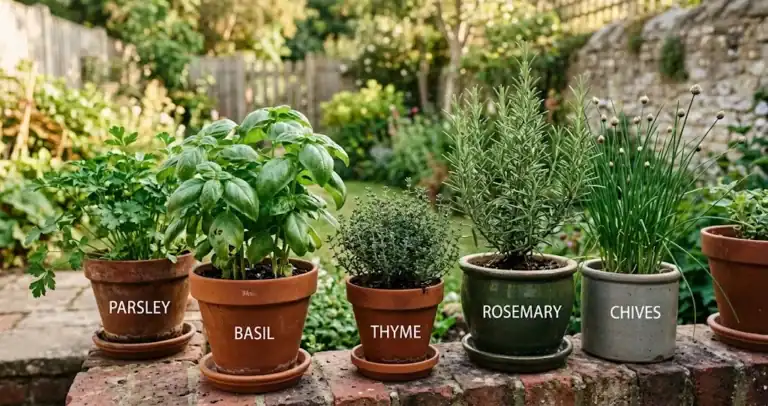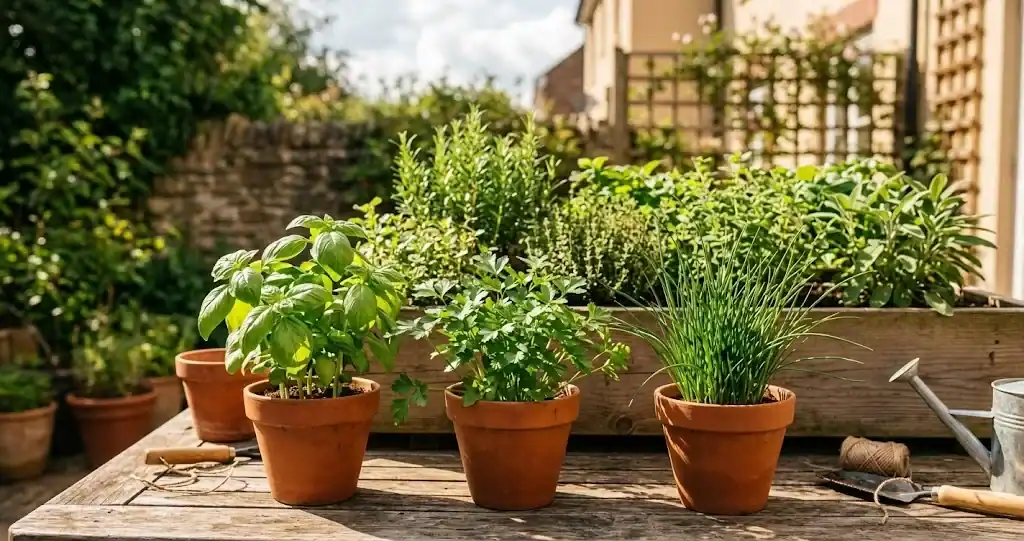
A small herb garden pays back faster than almost anything you can grow. Snip a few leaves for the pasta sauce, a sprig for the roast, a fistful for the tea. The plants are forgiving, the harvest is steady, and the smell of fresh herbs on a kitchen windowsill is reason enough to start. This herb cultivation guide and herb growing guide walks through every step a home grower needs: picking the right herb, choosing a spot, planting, watering, feeding, harvesting, and getting plants through the off-season without losing them.
Choose herbs that match your kitchen and your climate
The best first move is to plant what you already cook with. A grower who lives on Italian food will get real value from basil, parsley, and oregano. Someone who cooks Asian food gets equal value from cilantro and Thai basil. If the kitchen is more general purpose, start with a short selection of common herbs that earn their space: parsley, chive, sage, and mint. That short list covers a wide range of dishes and most climates, and once those are growing well the grower can add more.
Most herbs fall into one of three buckets, and the bucket matters more than the species:
- Perennial herbs, like thyme, sage, oregano, and mint, come back year after year in zones 5 to 9. Plant them once and they settle in. Each perennial herb is in the garden for the long term.
- Tender annuals, like basil, are grown for a single season in cold-winter zones and need to be replanted each spring.
- Biennials, like parsley, grow leaves the first year and flower the second year. Many growers replace them after that.
Perennial herbs are the easiest to grow. They tolerate a missed watering, shrug off poor soil, and come back stronger every year. Tender annuals demand a bit more attention, but they reward that attention with the brightest flavors. Pick at least one or two from each bucket so the herb garden has both structure and variety. Most types of herbs respond to the same general rules about sun, soil, and water, so a planting plan that works for one will work for the others.
Pick a sunny spot with good drainage
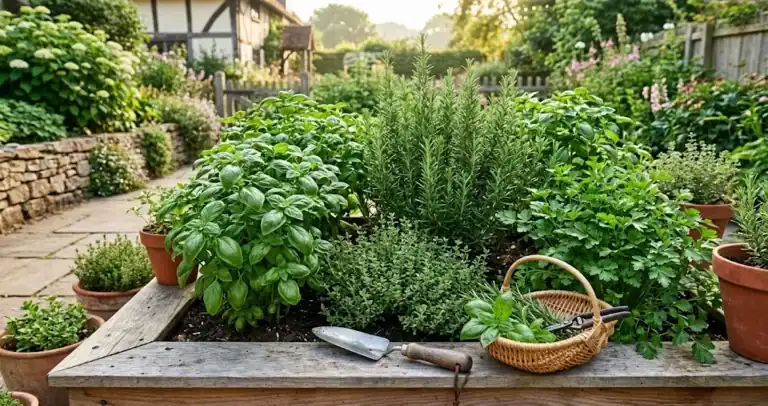
Almost all culinary herbs grow best with at least six hours of direct sun. The south or west side of a house, a raised bed in the open yard, or a sunny balcony all work well. Most herbs prefer full sun, and a few, like parsley and mint, will accept partial shade but grow more slowly there. Gardeners planning a brand new herb bed can find the broader framework in this beginner’s guide to growing an herb garden.
Wet soil is the fastest way to lose herbs. If the soil holds water after a rain, the roots rot and the plant dies within a season. A quick test: dig a hole about a foot deep, fill it with water, and see how long it takes to drain. Anything faster than an hour means the spot drains well. Anything slower means raised beds, mounded rows, or container pots are a better fit.
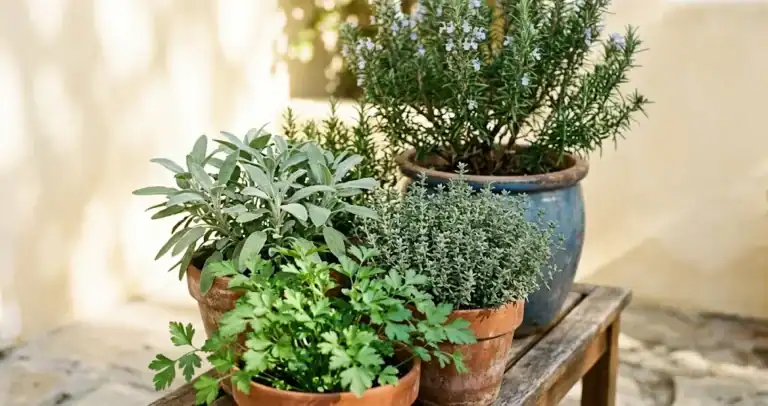
Container gardening is the easiest way to give an herb the conditions it wants. A pot lets the grower control drainage, move the plant to chase the sun, and keep invasive spreaders like mint under control. Most plants grow well in containers at least 10 inches deep. Terra cotta breathes and dries out faster than plastic, which is helpful in humid climates and less helpful in dry ones.
Plant at the right time of year
Timing depends on the herb and the climate, but the rule is simple: plant warm-season herbs after the danger of frost has passed and the soil has warmed, and plant cool-season herbs early in spring or in late summer for a fall harvest.
Basil is a warm-season herb. It sulks in cold soil and stops growing below about 50 degrees F. Wait until overnight lows are reliably above 55 degrees F, then plant out. Cilantro is fussy about heat and tends to bolt once summer temperatures climb, so planting it early in spring or late in summer gives the best window.
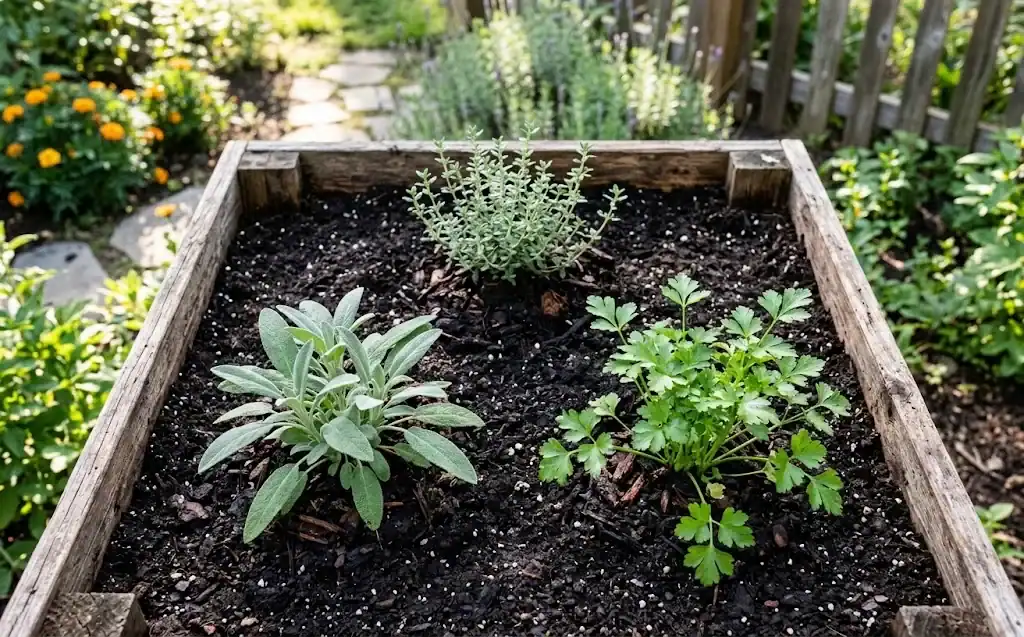
Parsley, chive, sage, oregano, and mint are cool-tolerant. Plant them as soon as the ground can be worked in spring. In warm zones, fall planting gives them a head start and a longer harvest the next year.
Start with seeds, seedlings, or cuttings
Planting herbs from seed, seedling, or cutting each has a place. Seeds are cheap and give the widest choice of varieties. Seedlings give a head start on the growing season. Cuttings are a free way to multiply plants you already have.
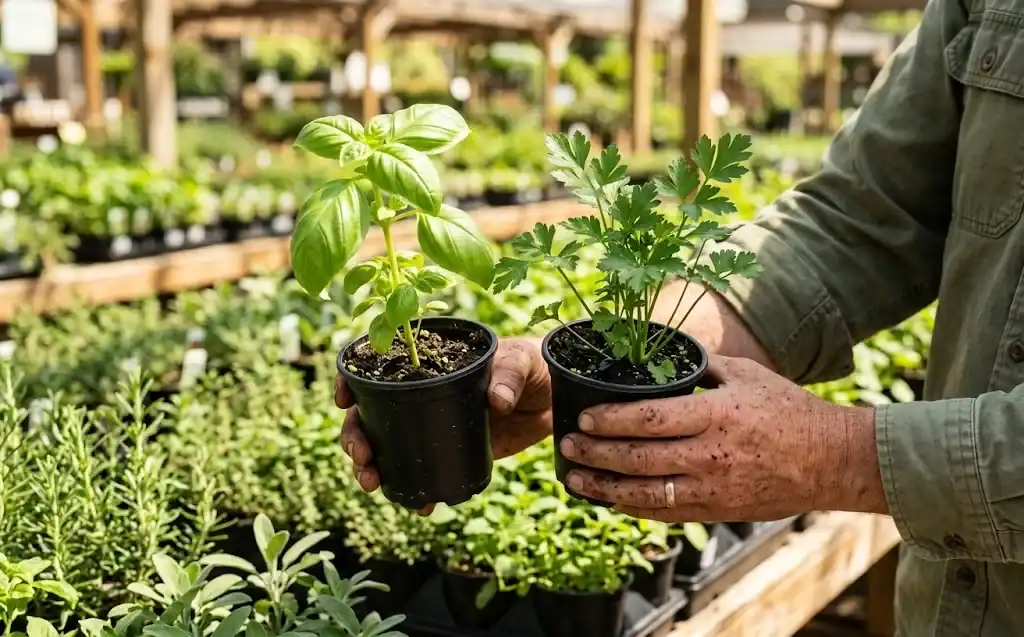
For most beginners, buying small starter plants from a local garden center is the easiest path. The seedling is already established, the grower skips the slow seed-starting step, and the harvest begins within weeks. Seeds make more sense for herbs that grow quickly and do not transplant well, like dill, or for varieties that are hard to find as plants.
Starting herbs from seed indoors gives the grower a six to eight week jump on the season. Sow seeds in trays six to eight weeks before the last frost date, keep them under bright light, and transplant out after hardening off. Herbs that are slow to germinate, like rosemary and lavender, are often easier to buy as plants than to start from seed.
Cuttings are the simplest way to multiply oregano, sage, and thyme. Cut a four inch stem just below a leaf node, strip the bottom leaves, and place the stem in a glass of water. Roots appear within a week or two. Pot the cutting up once the roots are an inch long.
Give them the right soil and water
Most herbs thrive in average, well-drained soil with a pH between 6.0 and 7.5. They do not need rich soil. A bed amended with a few inches of compost gives young plants everything they need. Overfeeding produces lush foliage with weak flavor, so resist the urge to load up on fertilizer.
Watering depends on the herb and the weather, but a few patterns hold. Most herbs prefer soil that dries out a little between waterings. Soggy soil is the fastest way to lose them. A deep watering once or twice a week is better than a daily sprinkle. Containers dry out faster than beds, especially in summer, and may need water every day in hot weather.
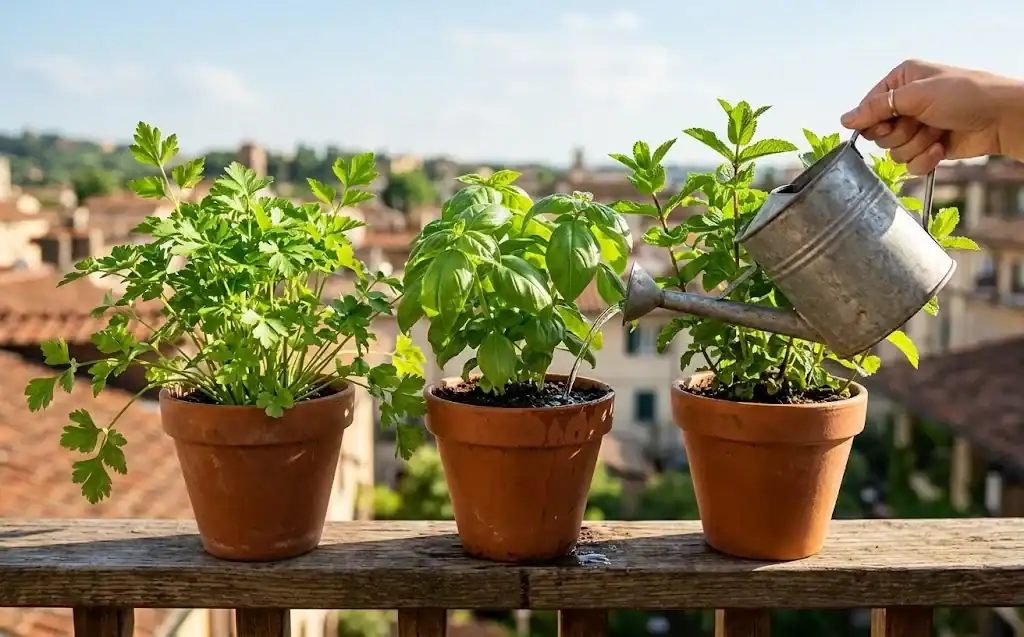
Mint is the exception that proves the rule. Mint prefers moist soil and will grow happily in a wetter spot than most other herbs. Plant it in its own container or it will spread aggressively through any bed it shares.
Feed lightly and prune often
Herbs do best with light feeding. A single application of a balanced organic fertilizer in early spring is enough for most beds. Container-grown herbs benefit from a diluted liquid feed every three to four weeks during the growing season. Skip the high-nitrogen lawn fertilizer; it pushes leafy growth at the cost of flavor.
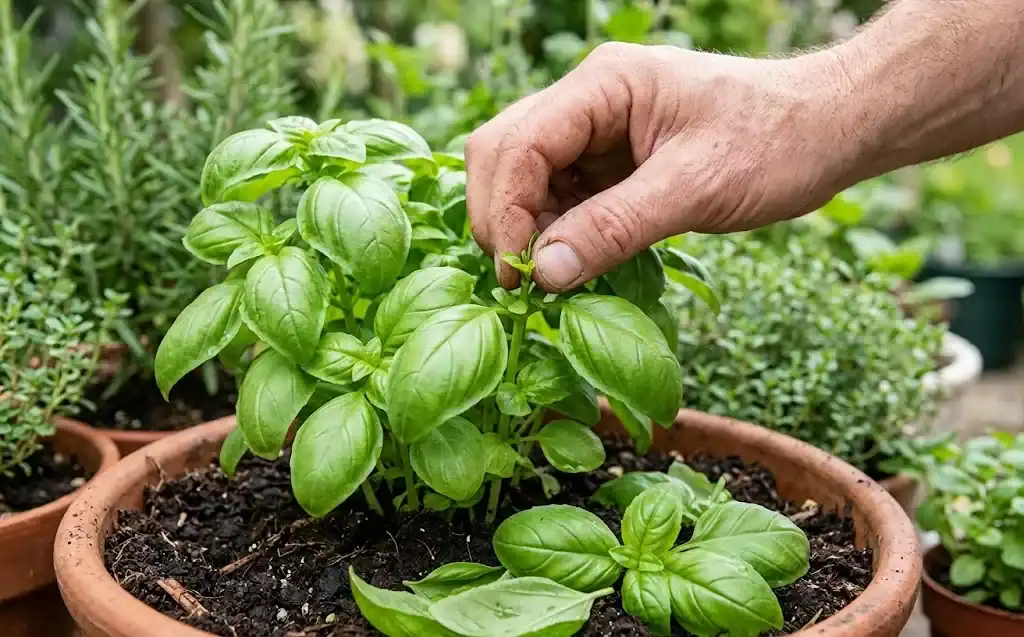
Regular pruning keeps herbs productive and bushy. Pinch back the growing tips of basil every week or two during the growing season, and the plant branches out instead of flowering. Cut sage and oregano down by about a third after they finish flowering to encourage a fresh flush of leaves. Remove flower stalks from cilantro and dill as soon as they appear unless the grower wants seed. Day-to-day care that keeps plants thriving through the season is covered in the practical tips for nurturing herb gardens.
Perennial herbs benefit from a heavier annual cut. Cut rosemary, sage, and oregano back by about a third in early spring, just as new growth begins at the base. Never cut into the woody parts of a stem, because the plant will not resprout from old wood.
Harvest herbs without killing the plant
The rule is simple: take no more than a third of the plant at once. A plant stripped of most of its leaves has to rebuild its photosynthetic capacity before it can grow again, and a stressed plant is more vulnerable to pests and disease.
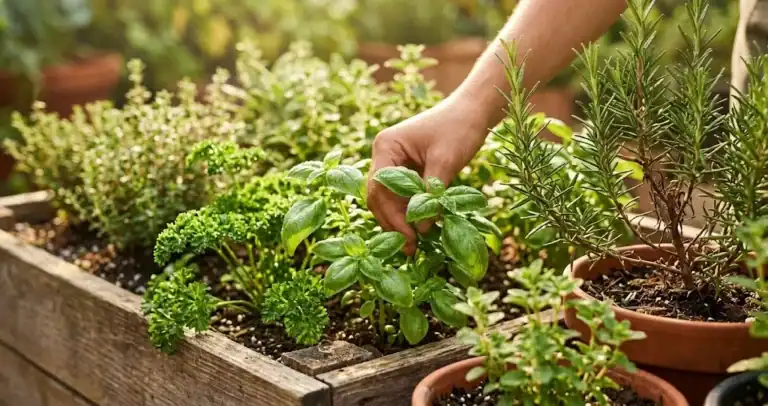
For leafy herbs like parsley, mint, and cilantro, harvest by snipping above a leaf pair. The plant branches from just below the cut and grows back bushier. For woody herbs, cut individual stems rather than plucking leaves, and cut just above a leaf node.

For the strongest flavor, harvest herbs in the morning after the dew has dried but before the heat of the day. Essential oil concentrations peak at that time. For drying or freezing, harvest just before the plant flowers. The leaves are most flavorful then.
Most herbs can be used fresh or dried. To dry, tie small bundles and hang them in a warm, dry, well-ventilated spot out of direct sun. To freeze, chop the leaves and pack them into ice cube trays with a little olive oil or water. Both methods preserve flavor far better than leaving herbs to sit in the fridge until they go limp. A handful of fresh leaves tossed into a green salad brings out the best of both.
Common herb problems and quick fixes
Most herb problems come down to three causes: too much water, too little sun, or poor air circulation. Yellowing leaves usually mean overwatering. Leggy, pale growth usually mean not enough sun. Powdery mildew or fuzzy growth on the leaves usually means poor air circulation, often combined with wet foliage.
Few pests bother herbs seriously, which is part of why they are easy to grow. Aphids show up on new growth sometimes and a strong spray from the hose knocks them off. Spider mites can bother rosemary in dry indoor air. A humidifier or a tray of water near the plants keeps them in check.
Slugs and snails will eat young seedlings down to the ground overnight. A ring of crushed eggshells or diatomaceous earth around the young plants deters them. For indoor herbs, fungus gnats are a sign that the soil is staying too wet. Let the surface dry out between waterings.
Three herbs that anchor a new garden
For a grower new to growing herbs, three plants teach most of what matters and cover most cooking needs. Pick all three to start.
- Basil: warm-season annual; full sun; rich, moist, well-drained soil. Pinch flower stalks to keep leaves coming. Many aromatic varieties grow well, including Genovese and lemon basil.
- Parsley: biennial grown as an annual; full sun to partial shade; rich, moist soil. Slow to germinate, so soak the seed overnight before sowing.
- Chive: a tough perennial in zones 3 to 10; full sun; well-drained soil. Both leaves and flowers are edible.
Once these are growing well, the grower can add more perennials, more annuals, and more unusual flavors as space and interest allow. By the time a grower has raised three of these well, growing herbs feels less like a project and more like a habit.
Frequently asked questions
How long does it take to grow herbs from seed?
Fast-growing herbs are ready for picking four to six weeks after sowing. Slow herbs like parsley take three to six months. Buying starter plants shortens the wait for the slow ones.
Can herbs take shade?
A few, like parsley and chive, will grow in partial shade, though they grow more slowly than in full sun. Most herbs need at least six hours of direct sun to thrive.
Do herbs come back every year?
Perennial herbs like thyme, sage, and chive come back every year in their preferred climate. Tender annuals need to be replanted each year. Half-hardy herbs like rosemary can overwinter indoors in cold zones.
What is the easiest herb to grow?
Mint is the easiest herb to grow, but it spreads aggressively and is best kept in its own container. Chive is nearly as easy and far better behaved in a mixed bed.
How do you keep basil alive indoors?
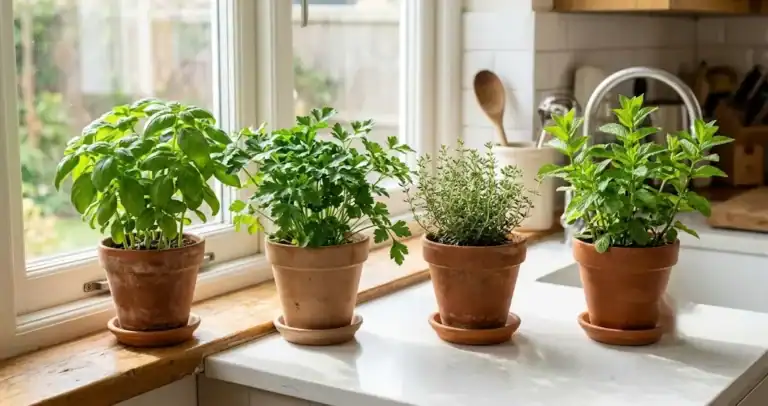
Give it as much direct sun as possible, ideally a south-facing window with six or more hours of light. Let the soil dry slightly between waterings, pinch back the growing tips every week, and remove flower stalks as soon as they form.
The next step is the easiest one
Start small. Pick three herbs that match what you cook with and plant them in a sunny spot with good soil. Water them when the soil dries out, pinch them back when they get leggy, and harvest a few leaves whenever a recipe calls for them. Within a month, the gardener has a kitchen herb garden that pays back every week of the growing season, and many herbs come back year after year. The things to keep in mind when cultivating herbs is a quick checklist worth reading before the first transplant goes in the ground.