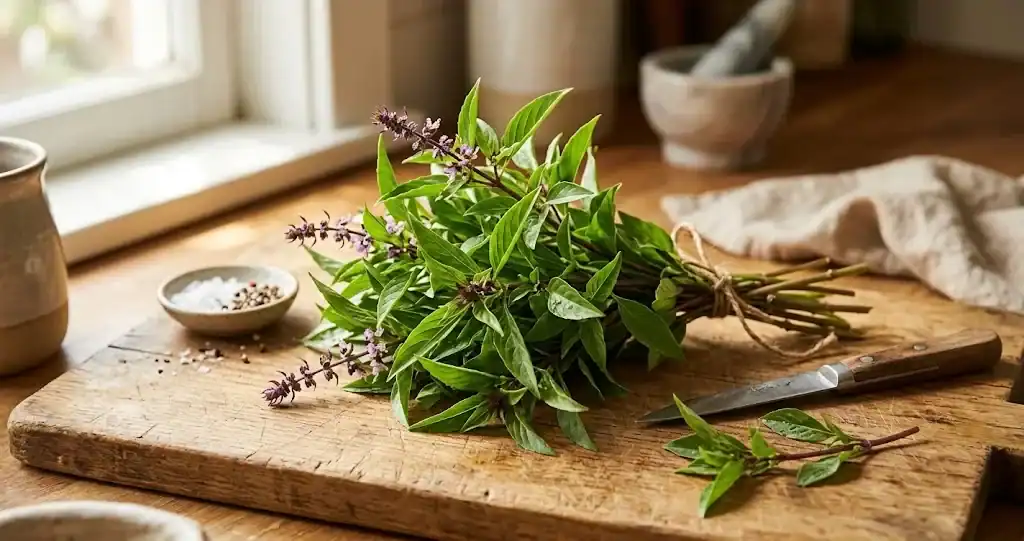
When a recipe says “Asian basil,” it almost always means Thai basil. The two names point to the same licorice-scented herb that gives Southeast Asian stir fries, curries, and noodle bowls their bright, slightly spicy finish. Once you know how it tastes, how it looks on the stem, and what it does in a hot pan, you can drop it into almost any savory dish that asks for a herbal lift. This guide walks through what the plant is, how it differs from the sweet and holy varieties, where it shows up in Thai cuisine and Vietnamese cooking, and the practical ways to use it at home.
What Asian basil is and why it matters
“Asian basil” is a broad umbrella. In a grocery store it almost always means Thai basil (Ocimum basilicum var. thyrsiflora), the variety most cooks in Thailand and Vietnam reach for first. The plant has narrow, bright green basil leaves, square stems that turn purple as it matures, and small purple flower spikes at the tips. The flowers are edible and pinch off easily if you want a longer harvest.
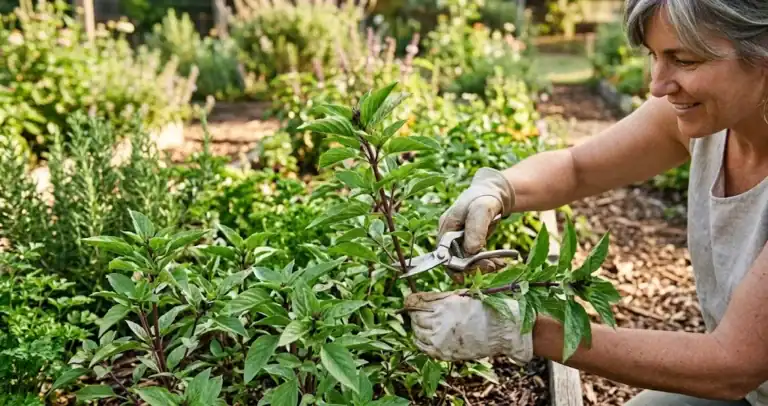
It grows as an annual in most climates and as a tender perennial in warm zones. Thai basil tolerates heat better than the Italian variety, which is one reason it stays in the kitchen garden long after Genovese has bolted. Pinch the tops regularly and the plant branches out, which gives you more stems to pick and delays flowering.
How Thai basil tastes and smells
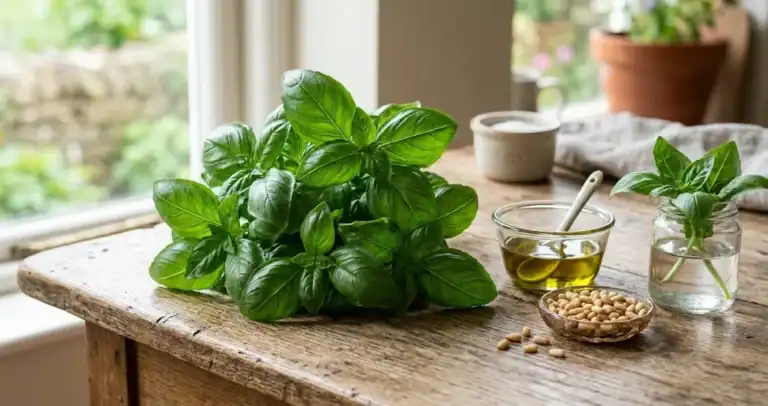
The leaves bring a clear licorice note, a touch of pepper, and a faint sweetness. That signature flavor is the giveaway, and it survives a hot pan better than the softer, more floral flavor of sweet basil. Crush a fresh leaf between your fingers and the licorice smell should be the first thing you notice.
Holy basil, often called “hot basil,” is pepperier and more clove-like, with a different aroma. Sweet basil is rounder and more perfumed, closer to the basil you taste in Italian pesto. If a recipe simply says “basil” without naming a type, it almost always means the Italian variety. If it says “Thai basil” or “Asian basil,” stick with this herb and let the sweet variety sit this one out.
How to tell Thai basil from the other two varieties
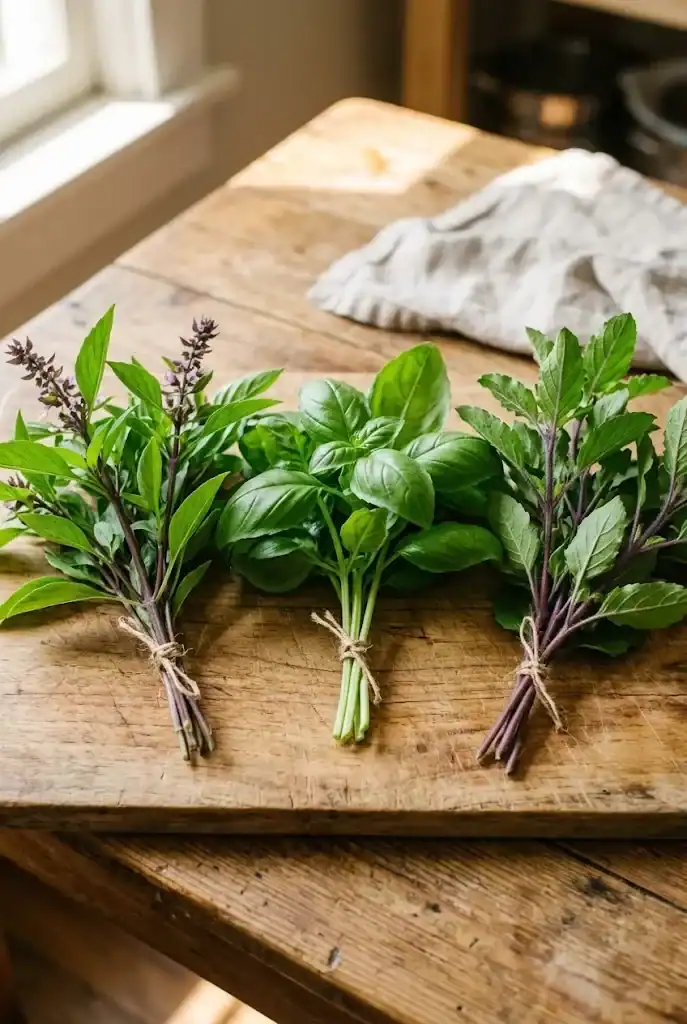
Side by side on a cutting board, the three are easy to separate:
- Thai basil: narrow, pointed basil leaves; purple or purple-tinged stems; small purple flower spikes; the strongest licorice aroma.
- Sweet basil (Italian): broader, rounder leaves; green stems throughout; no purple in the stem; a milder, sweeter, almost floral smell.
- Holy basil: leaves similar in shape to Thai basil but with slightly toothed edges; stems and flowers often more deeply purple; the most peppery, clove-like aroma of the three.
If you only have the Italian variety on hand, do not worry. Sweet basil works in lighter Thai food where the herbal note is meant to be gentle. Save Thai basil for recipes where the licorice note is part of the point.
How Asian cooks use this herb
This herb shows up in dishes that need a savory, slightly sweet, slightly herbal note that holds up under high heat. A few places you will see it most often across Thai and Vietnamese cuisine:
- Thai basil chicken (pad krapow gai): a quick stir-fry of ground chicken, garlic, Thai chilies, fish sauce, and a fistful of leaves tossed in at the very end. Served over jasmine rice with a fried egg on top.
- Thai green curry: coconut-based curry paste cooked with chicken, eggplant, and Thai basil stirred in just before serving.
- Pad Thai: rice noodles, tamarind, fish sauce, palm sugar, eggs, bean sprouts, and garlic chives. It is a Thai staple, but it is not a basil dish.
- Vietnamese pho and summer rolls: fresh leaves served as a garnish on the side so diners can tear them into the broth or roll them into rice paper.
- Taiwanese three-cup chicken: chicken braised with equal parts soy sauce, sesame oil, and rice wine, finished with a generous handful of the herb.

The pattern is clear. Thai basil goes in at the end of cooking or raw as a garnish, not simmered for a long time. Heat releases the flavor oils quickly, and overcooking drives them off.
Simple ways to use this herb at home
If you have a bunch and want to put it to work, start with one of these:
- Stir-fried vegetables: hot oil, garlic, sliced Thai chilies if you like heat, your choice of vegetables (eggplant, bell pepper, snap peas), then a big handful of leaves tossed in for the last 30 seconds. Finish with a splash of soy sauce and a squeeze of lime.
- Thai basil pesto: swap in this herb for the usual. The flavor pairs well with cashews or peanuts, garlic, lime juice, fish sauce, and a neutral oil. Toss with cold noodles or grilled chicken.
- Tomato and basil salad: a riff on caprese: ripe tomatoes, sliced, with torn Thai basil, salt, a good olive oil, and a splash of rice vinegar.
- Thai basil chicken at home: ground chicken or pork, garlic, Thai chilies, fish sauce, a little sugar, jasmine rice, and a fried egg. Cook the protein, season aggressively, then turn off the heat and stir in a cup of packed leaves.
- Garnish for noodle soups: torn leaves floated on top of pho or ramen right before serving.
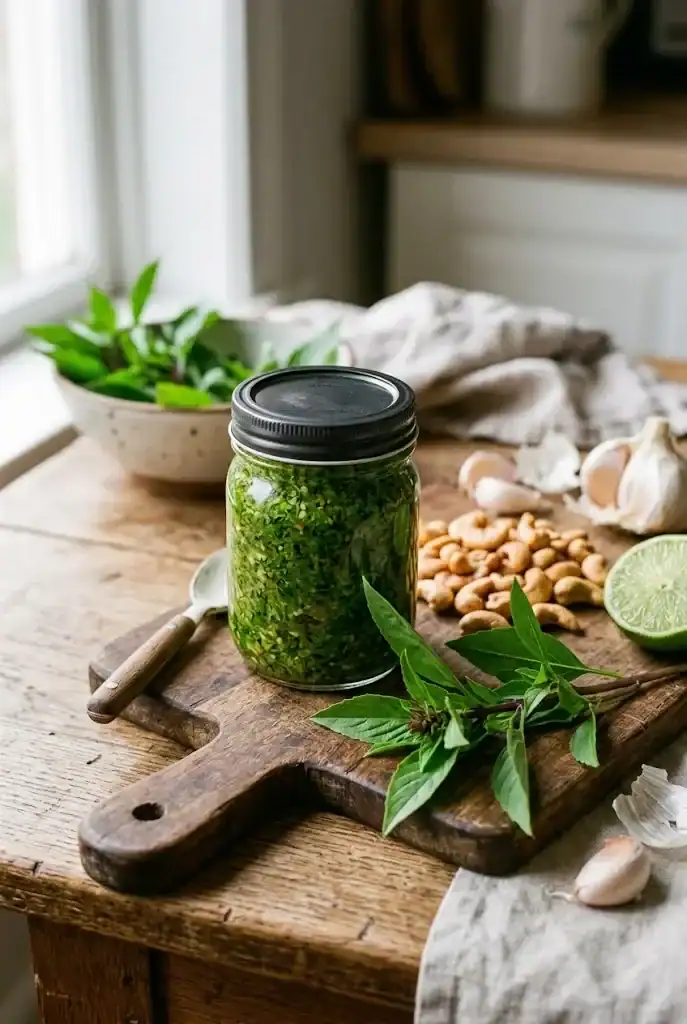
For more on turning Thai basil into a full meal, see our Asian basil recipe ideas.
Substitutes when you cannot find this herb
If your local grocery store is out, reach for one of these in order of preference:
- Holy basil (kaprao): pepperier and more clove-like than Thai basil, but useful in a stir-fry when that difference suits the dish.
- Italian basil plus a small pinch of anise seed: the licorice note covers most of what Thai basil brings. Add the spice sparingly so it does not dominate.
- Lemon basil: a different direction, citrusy rather than licorice-y, but a useful stand-in for cold salads.
- Italian basil alone: acceptable in cooked Thai food where the licorice note is not the headline.
None of these substitutes is a perfect match. If a recipe specifically calls for Thai basil and your dish centers the herb, it is worth a quick trip to an Asian market.
Where to buy and how to store this herb
Most well-stocked grocery stores in Thailand, Vietnam, and the United States carry Thai basil in the produce section near other fresh herbs. Asian markets carry it more reliably and at a better price. In a pinch, the freezer section of some Asian markets sells pre-washed Thai basil that holds its flavor well enough for cooked dishes.
For the freshest leaves, look for bunches with crisp, unwilted leaves, firm stems, and no slimy patches. The flower spikes, if present, should be tight and purple rather than brown and shedding.
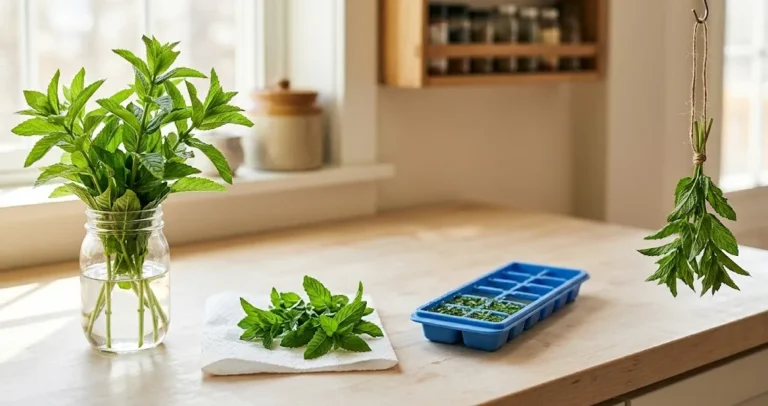
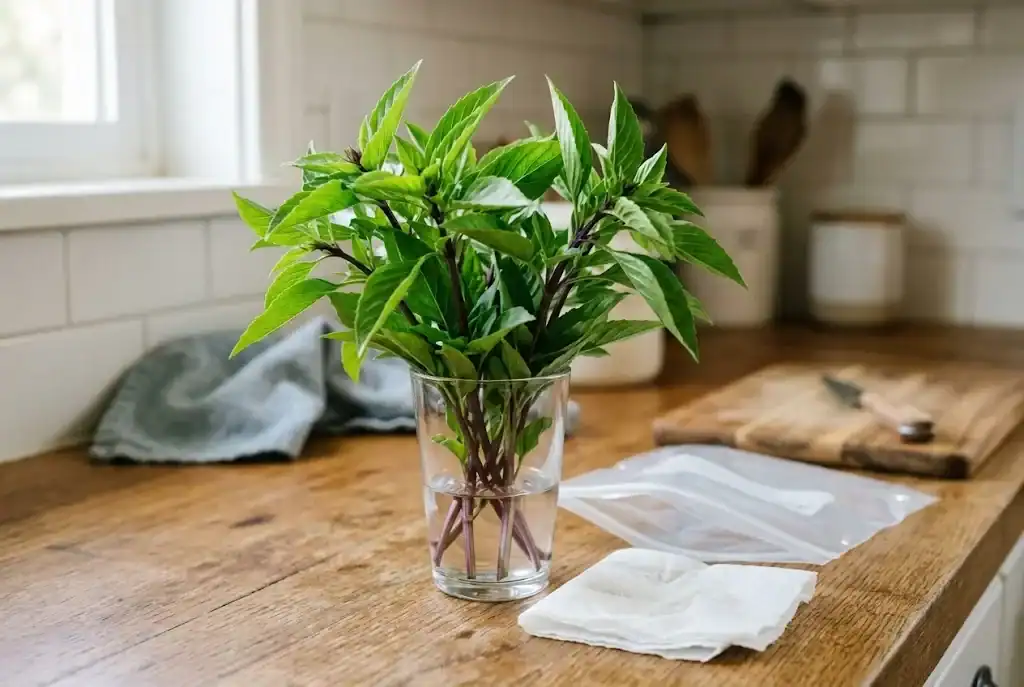
To store at home, treat it like a fresh cut flower. Trim the stem ends, set the bunch in a glass with an inch of water, cover loosely with a plastic bag, and refrigerate. Change the water every day or two and the leaves will hold for a week or more. Wrapping the bunch in a damp paper towel inside a sealed container also works for short-term storage.
For longer storage, blanch the leaves for a few seconds in boiling water, shock them in ice water, drain, and freeze in a single layer on a tray before transferring to a freezer bag. The frozen leaves lose their crisp texture but keep their flavor, which is what matters in cooked dishes.
If you grow herbs at home and want this herb in the patch, see our guide on how to grow Asian basil.
A short note on safety and sourcing
Use this herb as a culinary ingredient, and wash the leaves well before eating, especially if you are using them raw. If you have a known allergy to plants in the mint family, avoid it. Herbal supplements and concentrated essential oils are different from cooking with fresh leaves. If you are pregnant, breastfeeding, or taking prescription medication, speak with your health care professional before using herbal products or concentrated oils. MedlinePlus advises people who are pregnant, breastfeeding, or taking medicines to discuss herbal products with a health care provider.
The bottom line on Asian basil
Asian basil, in practice, is Thai basil: a heat-tolerant herb that anchors a lot of Southeast Asian food. Use it in stir fries, curries, and noodle soups, and add it at the end of cooking or as a raw garnish so the flavor stays bright. If you want a fuller sense of where this herb sits in the broader kitchen garden, our guide to common culinary herbs is a useful next read.