Basil tastes best when the plant is growing steadily and you pick it often. A careful harvest does more than fill your kitchen bowl: it keeps the plant branching, delays flowering, and gives you tender leaves for pesto, salads, pasta, and sauces.
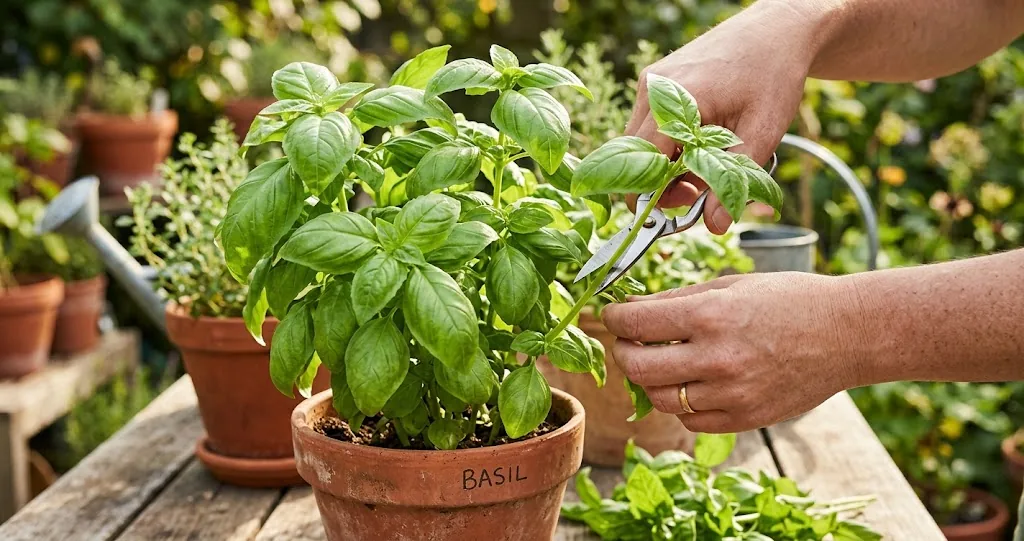
The simplest answer to how to harvest basil is to cut the growing tip just above a pair of healthy leaves, rather than pulling individual leaves at random. Make the cut with clean fingers, scissors, or garden snips, then use the leaves soon after picking.
When to start harvesting basil
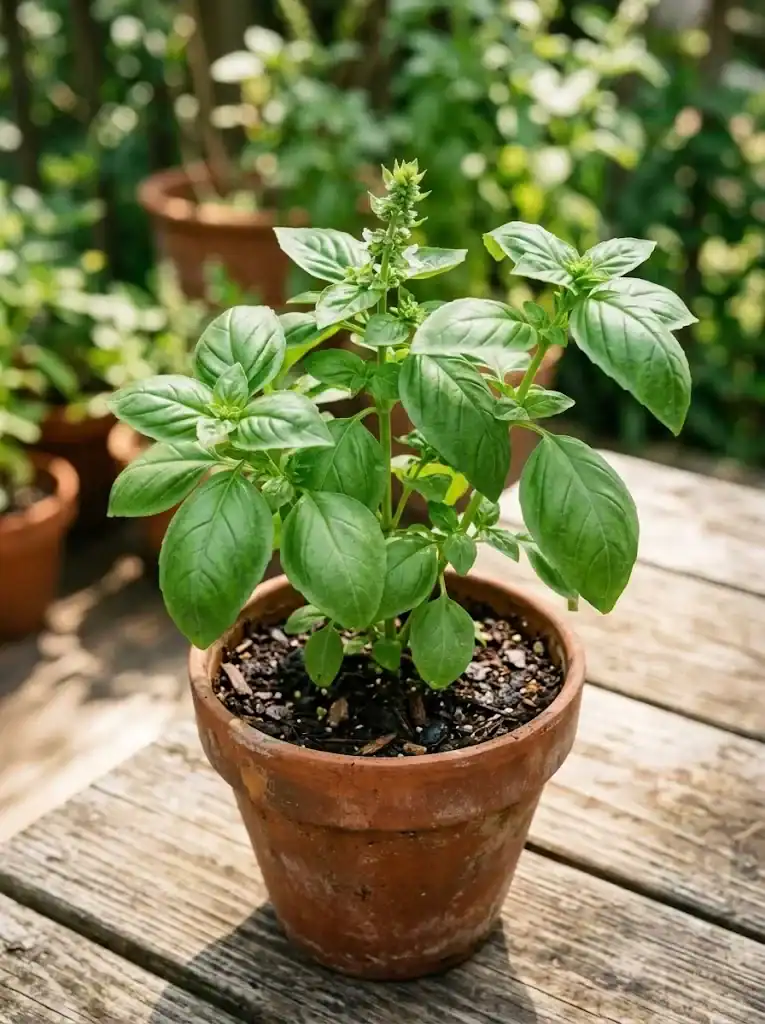
Start harvesting once a young plant has several sets of true leaves and stands about 6 to 8 inches tall. At that point, each cut can encourage two new side shoots. A small seedling needs time to establish roots, so take only a few leaves until it looks sturdy.
For the best flavor, pick basil in the morning after dew has dried and before afternoon heat makes the leaves limp. Choose dry, unblemished leaves and sprigs that look green and flexible. If the plant is flowering, harvest it promptly and pinch off the flower buds. Basil puts energy into seed once it blooms, which can leave the leaves less tender and slow regrowth.
A healthy plant can be picked every week or two during warm weather. Take a little at a time from several branches instead of stripping one side. If you want a broader refresher on timing and clean cuts across many kitchen plants, this guide to smart herb-harvesting habits puts the same principles in a wider garden context.
Cut stems above a leaf pair
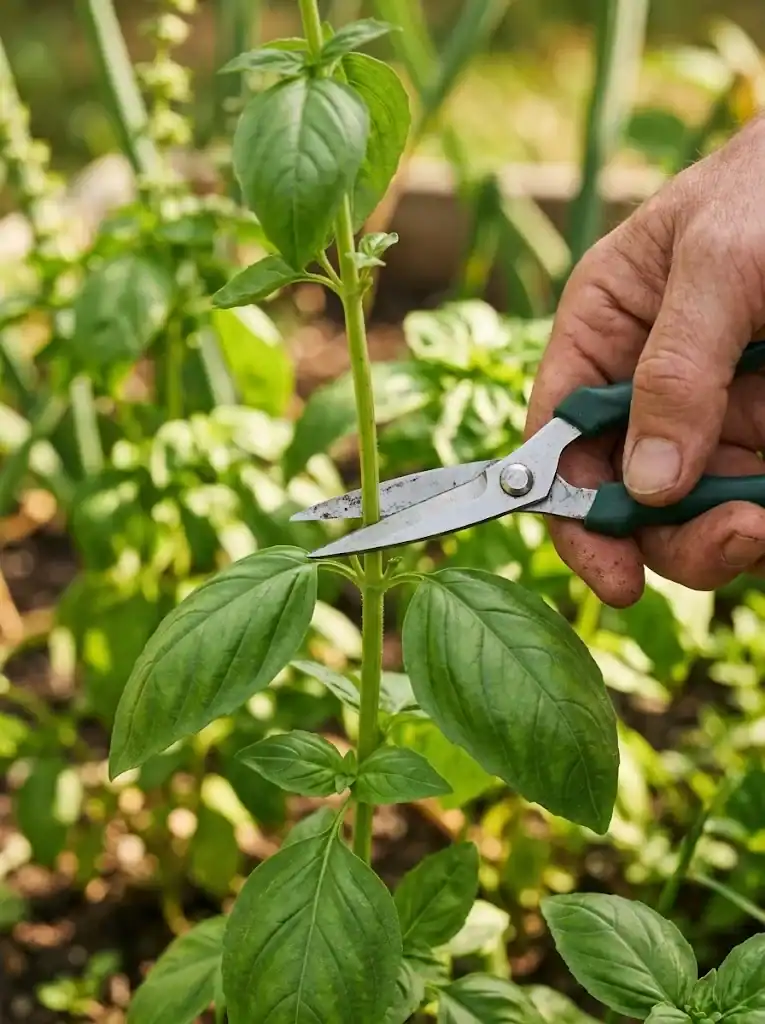
Look down a branch for a pair of leaves growing opposite each other. Make the cut about one quarter inch above that pair. The tiny buds at that junction can develop into two new stems, creating a bushier basil plant instead of one tall, bare stalk.
- Choose a branch with several leaf pairs below the point you plan to cut.
- Hold the branch gently so you do not tug at the roots.
- Make one clean cut just above a leaf pair.
- Move around the plant and repeat on a few stems as needed.
Use sharp, clean snips for a larger harvest. Pinching works well for soft tips, but tearing a thick branch can leave a ragged wound. Avoid cutting into the woody base of a mature plant, especially late in the season, because it may not push out fresh shoots as quickly.
How much basil to take at one time
As a rule of thumb, leave at least two thirds of a healthy basil plant in place. That gives it enough leaves to keep growing while still supplying a useful handful for dinner. A vigorous plant in a sunny container may handle a larger harvest, while a newly transplanted, thirsty, or pest-damaged plant needs a lighter touch.
When you need a lot of basil for pesto, harvest a portion from several plants if you can. You will get a more even crop and avoid setting one plant back. If you have only one plant, take the top growth first and return in a few days for more after it has recovered.
Remove flowers before they open fully
Flower buds usually appear at the tip of a stem. Pinch or snip that tip just above the next leaf pair as soon as you see the bud cluster. You can use the tender basil flowers as a garnish, but removing them is mainly a way to keep the plant focused on leafy growth.
Do not worry if a few flowers open before you notice them. Cut the flowering branch back to a leaf pair below the bloom, water the plant if the soil is dry, and resume regular picking. Consistent harvesting is often the easiest way to keep basil compact through summer.
Harvest leaves or stems based on how you will use them
For a quick garnish, you can remove a few large basil leaves individually without harming a well-established plant. For regular harvesting, cut the tender top portion of a branch above a pair of leaves. Stem cuts prune the plant at the same time, so they are the better choice when you want a bushier basil plant with new leaves.
Do not harvest every branch to the same height. Take a few tips from around the plant, leaving leaf pairs below each cut. This keeps the remaining leaves working as the season continues and helps the plant recover evenly.
Handle freshly picked basil gently
Bring basil indoors out of direct sun and keep it dry until you are ready to use it. Rinse leaves under cool water only when needed, then pat them dry. Wet leaves bruise easily and can darken faster in storage.
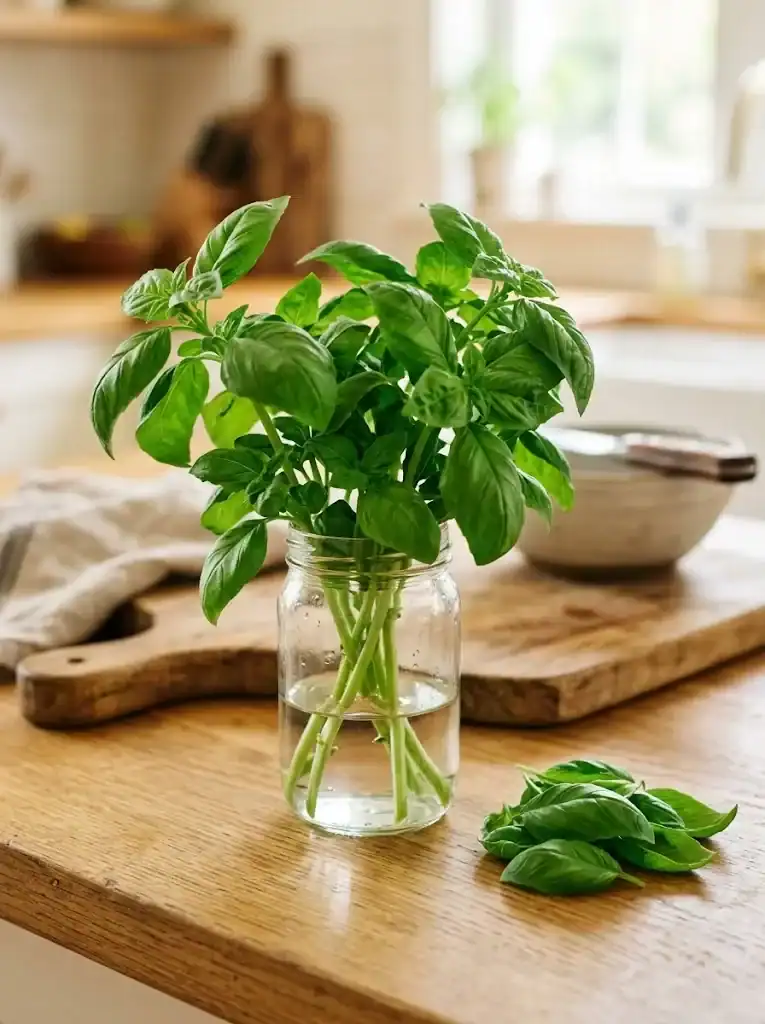
For a small harvest, stand the sprigs in a glass with a little water and leave them at room temperature for a day or two. Basil is sensitive to cold, so a refrigerator can blacken the leaves. For a larger harvest, learn practical ways to keep basil after picking, including short-term and longer-term options that fit how you cook.
Choose a storage method for the amount you picked
Use a small basil harvest within a day or two when you can. Keep the stems in a glass jar with a little water at room temperature, away from direct sun. Avoid sealing fresh basil leaves in a cold plastic bag, since chilled leaves often darken and soften.
For leftover basil, freezing is usually the better way to preserve its fresh flavor. Blend fresh basil with a little olive oil, spoon it into an ice cube tray, freeze, then transfer the cubes to a labeled freezer container. Dried basil is useful for pantry cooking, but it will not keep the same bright flavor as frozen basil.
For a fuller guide to storing or preserving the harvest, use the linked basil storage article after you decide whether you want fresh leaves, frozen basil, or dried basil.
Common basil harvesting mistakes
Picking only the largest leaves
Taking a few leaves for a recipe is fine, but always removing the biggest leaves can leave long stems and fewer places for new branches. Include occasional tip cuts above leaf pairs to shape the plant as you harvest.
Waiting until the plant flowers heavily
Basil is still edible after flowering, but the leaves can become tougher and the plant slows down. Check the tips each time you water and remove buds early.
Harvesting a stressed plant hard
Skip a major harvest if basil is wilted, newly planted, damaged by cold, or struggling with pests. Water and address the growing problem first. Once it is making leaves again, return to small, regular cuts.
Put your basil harvest to work
Fresh basil earns its place in simple meals. Tear it over tomatoes, stir it into a warm sauce just before serving, blend it into pesto, or use it in a caprese salad. If you make pesto, freeze a few small portions so leftover basil does not go to waste. For ideas that go beyond the usual pesto bowl, explore these fresh ways to cook with basil.
Keep harvesting little and often while the weather stays warm. Cutting above leaf pairs, removing flower buds, and leaving plenty of foliage gives you a basil plant that stays productive instead of exhausted.
What happens if you do not harvest basil?
If you do not harvest basil, the main branches keep stretching toward flowers. The plant is still alive and its basil flowers can feed pollinators, but it usually becomes taller, woodier, and less useful for frequent kitchen harvests. Regular harvesting encourages the plant to make new side shoots and continue producing leaves instead.
At the end of the growing season, you can allow one healthy basil plant to flower and set seed if you want to collect seed. For an abundant basil supply in the kitchen, keep cutting the tips and remove flower buds as they appear.
Frequently asked questions
Can you harvest basil more than once?
Yes. Basil is made for repeated light harvests. Pick stems above leaf pairs, leave most of the foliage on the plant, and it can continue producing leaves through the warm season.
Should you wash basil before storing it?
Wash basil right before use when possible. Keeping leaves dry helps prevent bruising and dark spots. If you must wash it first, dry it very thoroughly before storing.
Where should you cut basil so it keeps growing?
Cut about one quarter inch above a pair of healthy leaves. New shoots can form from the leaf junction below your cut, helping the plant become fuller.