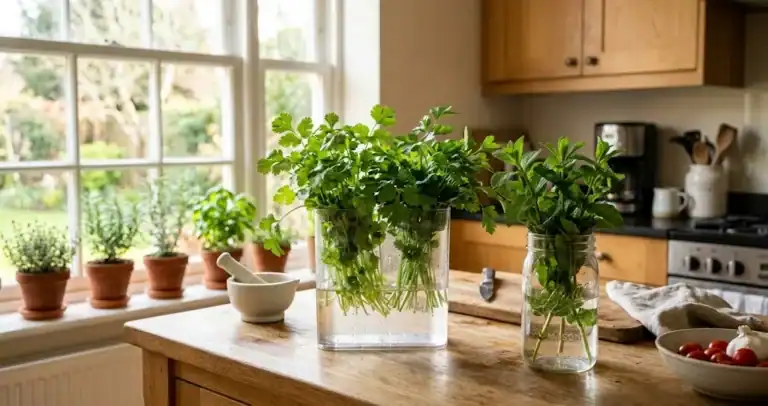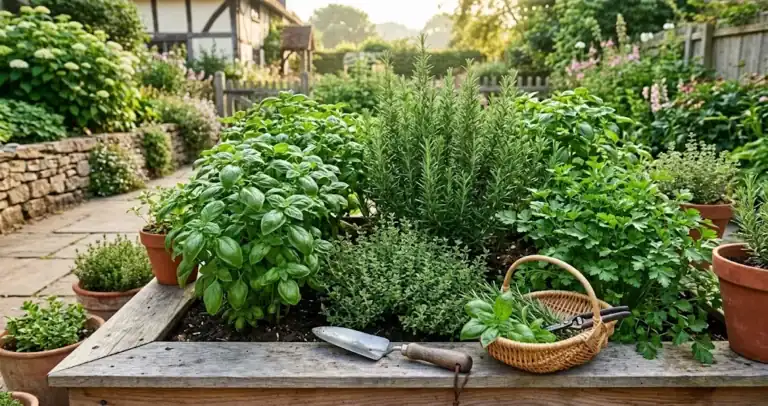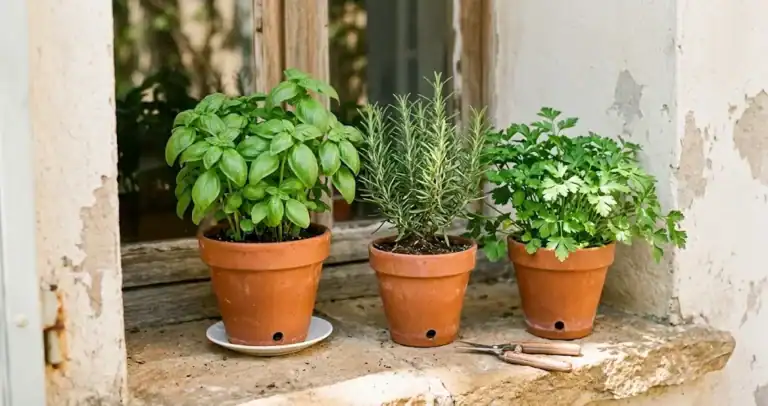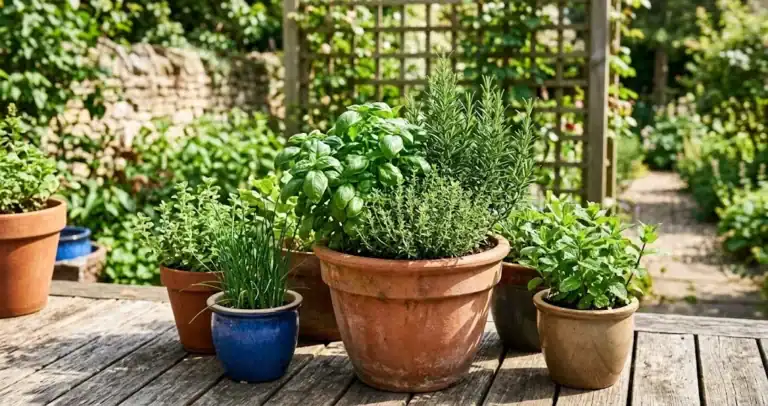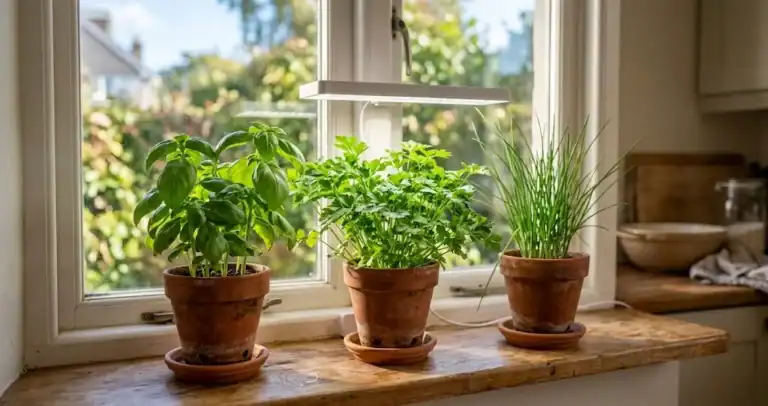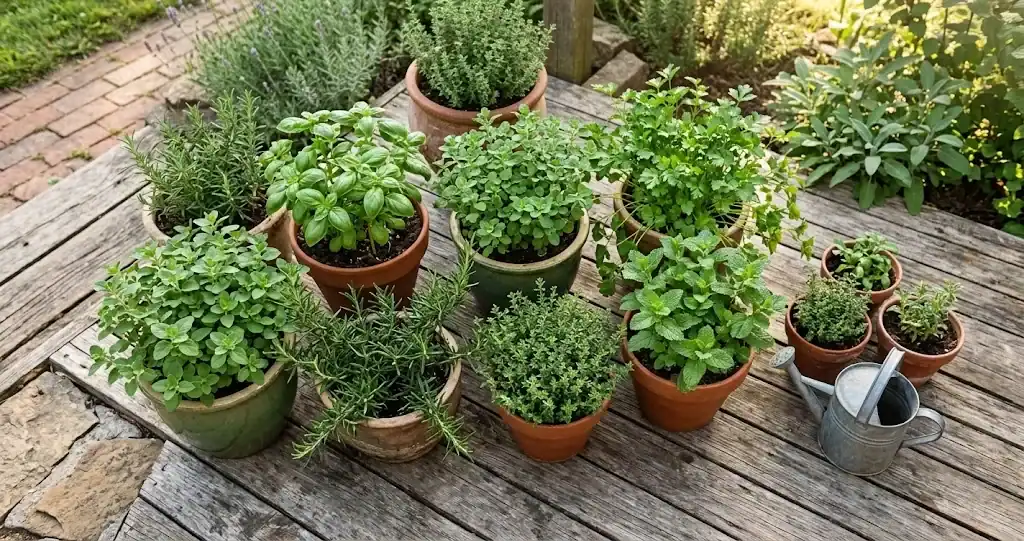
Stepping onto a sunny patio or opening a kitchen door to snip fresh herbs transforms everyday cooking. Keeping a pot just outside your kitchen door or placing containers on a sunny windowsill brings fresh flavor within arm’s reach. Potted gardening is one of the easiest ways to start a kitchen setup, whether you have a spacious garden bed, a raised-bed gardening plot, a compact balcony, or an indoor windowsill. Potted herbs give you direct control over soil quality, moisture runoff, and light exposure, making it simple to cultivate vibrant sweet basil, fragrant rosemary, and culinary herbs right where you need them. This container herb garden guide provides everything you need to succeed.
If you want to grow fresh herbs at home but feel limited by space, building a container garden offers an accessible solution. With a few suitable pots, quality potting soil, and simple growing tips, any home gardener can plant herbs and harvest fresh leaves that taste far better than wilting bunches bought from the grocery store.
Choosing the Right Pot and Container for Growing Herbs
Success with an indoor herb garden or patio container garden begins with selecting the proper vessel. Whether you choose a terracotta pot or container made of durable plastic, selecting the right size and material ensures each herb plant develops strong roots and avoids excess moisture issues.
- Drainage holes: Every herb container must feature functional bottom openings at the base. Without adequate outlets, excess water accumulates around the root system, causing root rot. Empty saucer trays after watering so pots never sit in stagnant standing water.
- Container material: Terracotta pots are porous and allow soil to breathe, making them ideal for Mediterranean herbs native to the Mediterranean Sea region, such as rosemary, oregano, and thyme. Plastic and glazed ceramic pots retain moisture longer, which benefits moisture-loving plants like basil, mint, and parsley.
- Container size: Shallow containers work well for single-season herbs with shallow roots, but larger containers measuring at least eight to ten inches in diameter give long-lived herbs room to establish stable root systems without needing frequent transplanting or room to replant.
When selecting your containers, consider how individual plants grow. You can find detailed guidance on selecting the right containers for your herbs to match specific plant sizes and moisture requirements.

Best Herbs to Plant in Containers
Selecting the best herbs to plant in containers depends on your cooking style, available light, and garden space. Many popular culinary herbs belong to the mint family (Lamiaceae) and thrive in container setups, yielding fresh harvests throughout the growing season.
Top Annual and Perennial Varieties
Different plants bring unique flavors, growing habits, and growth cycles to your potted setup. Because herbs are easy to grow when given proper care, mixing annual selections and perennial species creates a versatile collection of the easiest herbs to grow:
- Basil: A warm-season herb species that produces sweet, aromatic leaves essential for fresh pesto. Sweet basil and Thai basil thrive in full sun and warm potting soil.
- Mint: A vigorous perennial herb from the Mentha genus, including peppermint and spearmint. Mint spreads aggressively through its root network, so grow mint in its own dedicated pot to keep it from taking over neighboring plants.
- Rosemary: A woody Mediterranean herb that loves full sun and well-draining soil. Rosemary prefers the top of the soil to dry out between waterings.
- Thyme: A compact Mediterranean species that forms dense, fragrant foliage. It is one of the easiest herbs to cultivate in small pots or alongside larger plants.
- Oregano: A sun-loving Mediterranean herb with rich savory flavor. Fresh oregano is perfect for tomato sauce, roasted vegetables, and rustic food recipes.
- Sage: Known botanically as Salvia officinalis, this hardy aromatic species features soft grey-green leaves with an earthy aroma. Garden sage is wonderful in herb butter spread on warm crusty bread.
- Parsley: A versatile culinary herb that appreciates nutrient-rich soil and consistent moisture.
- Chive: Easy-to-grow chive plants produce mild onion-flavored foliage and edible purple blossoms. You can start them from herb seeds or nursery starts.
- Dill: An aromatic culinary plant featuring feathery foliage and a deep taproot, requiring a container at least ten inches deep.
- Tarragon: A bushy culinary plant with narrow aromatic leaves, perfect for adding bright notes to seafood, pickles, and herbal vinegars.
- Lemon Balm and Coriander: Lemon balm offers a pleasant citrus scent, while coriander (cilantro) produces delicate leaves and seeds used as a warm kitchen spice.
- Lavender: Compact species like Spanish lavender (Lavandula stoechas) and English lavender (Lavandula angustifolia) grow gracefully in sunny containers, offering floral scent and ornamental charm.
Combining favorite herb selections with similar sun and water needs into a big container creates an attractive arrangement. However, keep aggressive spreaders isolated when you grow in containers.

Growing Herbs in Containers: Soil and Drainage Essentials
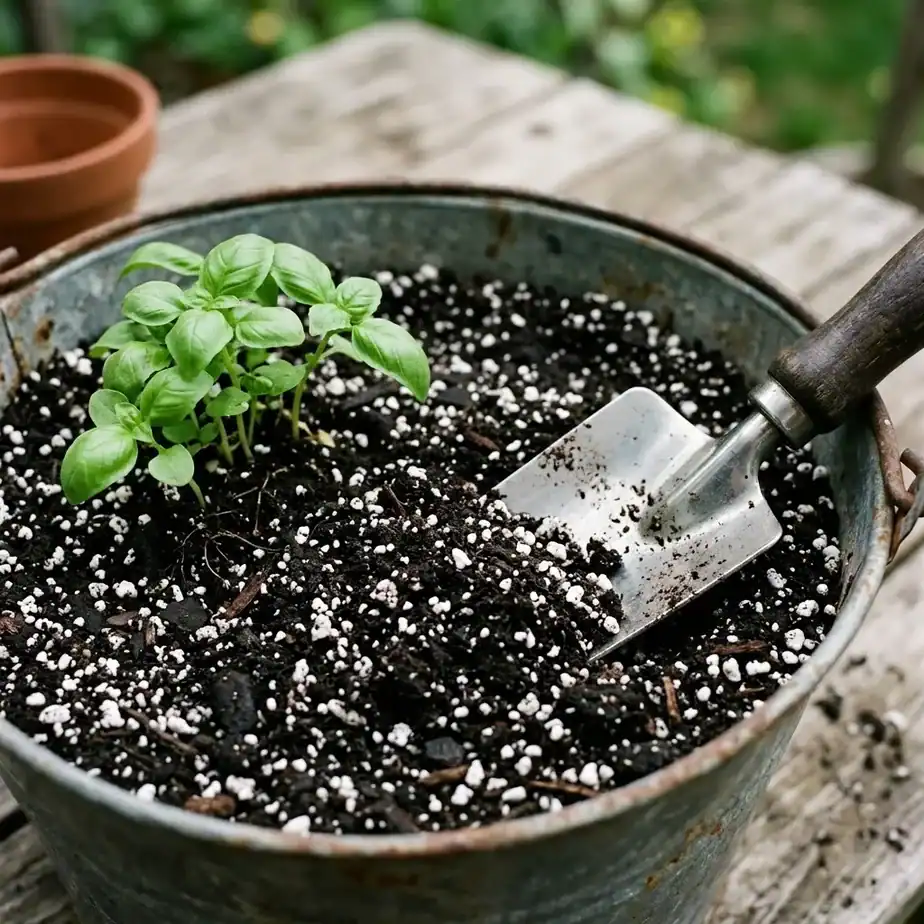
Using ordinary soil from a garden bed in containers is a common mistake. Heavy garden soil compacts inside a pot, restricting air circulation and suffocating delicate roots. Always use a lightweight commercial potting soil or custom potting mix used for cultivating herbs in pots.
A quality potting mix contains lightweight materials such as peat moss, coconut coir, perlite, and coarse sand. This mixture holds balanced moisture while ensuring good soil aeration. Mixing in a small amount of organic fertilizer or compost feeds the herbs grown in containers without burning delicate plant stems.
Sunlight, Watering, and Indoor Herb Garden Care
Most herbs need at least six hours of sun a day to develop rich essential oils. Place containers in a sunny spot on your patio, deck, or near a south-facing window when growing herbs inside your home.
Watering requires a consistent routine. As a general rule of thumb, check the top of the soil before watering. Press your finger one inch into the potting mix. If it feels dry, water thoroughly until water flows from the bottom holes. Keep the soil moist but never soggy. If the soil remains damp, wait another day before adding water.

How to Bring Herbs Inside for Winter
Before cold winter months arrive, bring tender herbs like rosemary, oregano, and thyme indoors to protect their roots and foliage from harsh frost. For ongoing maintenance, read these maintaining container-grown herbs over time guidelines to keep your potted plants healthy.
Harvesting Herbs for Continuous Production
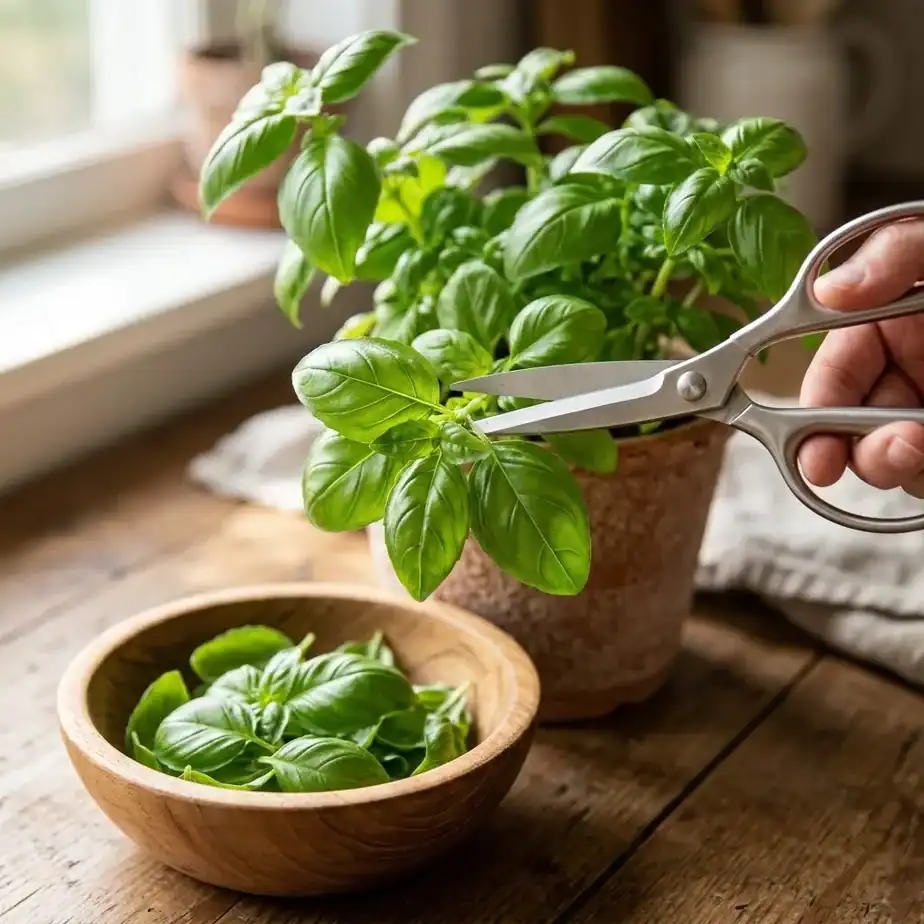
Regular harvesting encourages herbs in a container to grow back bushier and stronger. Instead of cutting entire plant stems at the soil line, use sharp stainless steel shears to pinch or snip off the top sets of leaves just above a leaf node.
Sweet basil requires consistent soil moisture and warm temperatures. Harvesting basil leaves frequently prevents plants from flowering and setting seed prematurely. A reliable rule of thumb is never to harvest more than one-third of the plant’s total foliage at once, ensuring the plant retains enough energy to produce fresh leaves all season long.
What Herbs Need in a Small Garden Setup
Growing a potted herb garden is a fantastic starting point for any gardener. Understanding what herbs need in a small garden helps you plan light, soil, and space. As your confidence grows, any home gardener might explore expanding their kitchen garden into larger outdoor garden plots or mixing herbs alongside fresh vegetables in containers.
To learn more about crop rotation, spacing, and seasonal planning, explore foundational basics of growing herbs across different garden layouts.

Frequently Asked Questions About Container Herb Gardening
Can you grow herbs in containers indoors year round?
Yes, many herbs grow well inside indoor spaces year round. When you grow indoors, place your containers near a south-facing window that receives six to eight hours of sun a day, or use LED grow lights to supplement natural sunlight.
How often should herbs in a container be watered?
Watering frequency depends on container size, weather, and material. In hot sun, small terracotta pots may require daily watering, whereas larger plastic containers in a small garden setup may only need water every three to five days.
Which herbs should not be planted together in one container?
Avoid planting aggressive spreaders from the mint family alongside slower growers. Additionally, do not combine moisture-loving herbs such as parsley and mint with Mediterranean varieties such as rosemary, oregano, and sage, which prefer drier soil conditions between waterings.