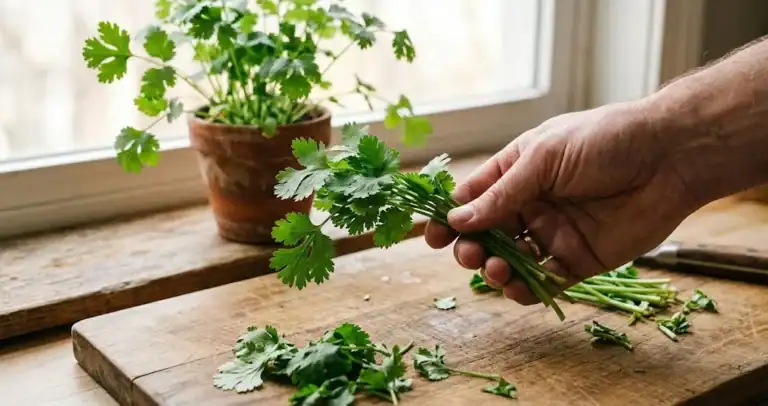
French tarragon is one of the most celebrated culinary herbs, cherished by chefs and home cooks for its refined, bittersweet anise-like flavor. Whether you want to whip up a classic French cuisine staple like creamy béarnaise sauce or elevate simple roasted chicken, ripe tomato salads, and delicate egg dishes, knowing how to pick your herbs at the exact right moment makes all the difference. Gathering stems at peak maturity ensures your fresh cut sprigs are rich in essential oils while keeping each tarragon plant vigorous and productive in the garden.
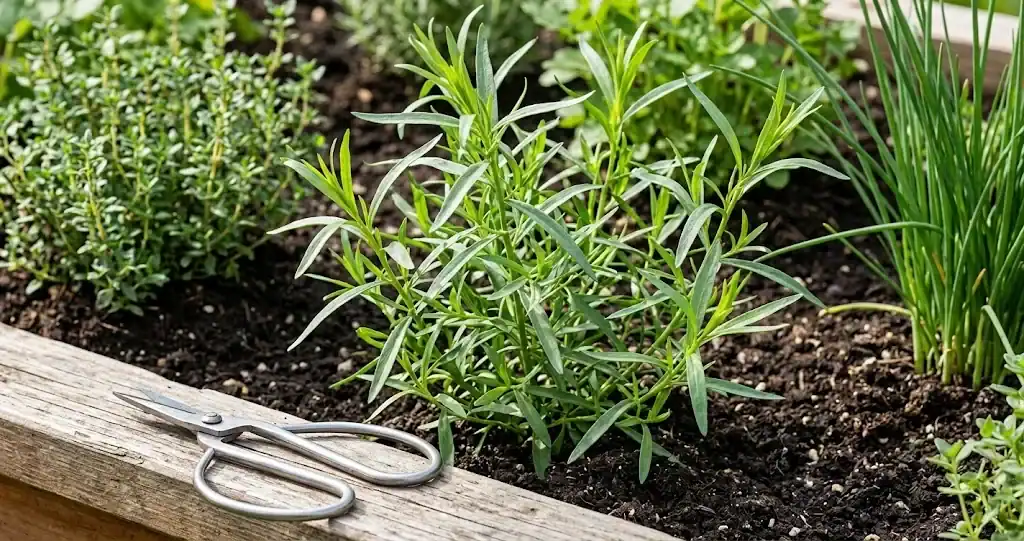
The best time to harvest tarragon is in the morning after the dew has dried but before the sun warms the garden. Using sharp shears or snips, cut top growth just above a set of healthy leaf nodes. Trimming stems regularly to encourage fresh side shoots keeps this hardy perennial herb compact, prevents premature flowering, and stimulates steady regrowth throughout the growing season. Following sound cutting principles is essential across the garden, and you can explore what good harvesting technique looks like when gathering other kitchen favorites.
Understanding French vs Russian tarragon before you harvest
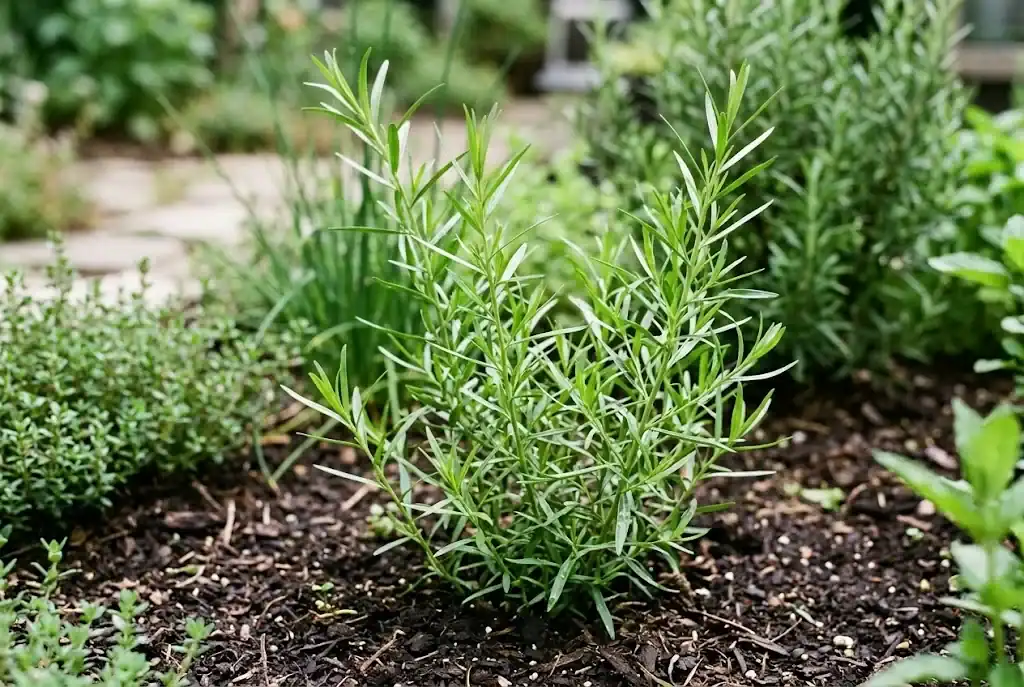
Before you begin gathering leaves, it helps to understand the two main types of tarragon found in home gardens: French tarragon (Artemisia dracunculus var. sativa) and Russian tarragon (Artemisia dracunculus var. dracunculoides). While they look similar at a glance, their growth habits, hardiness, and culinary qualities are completely different.
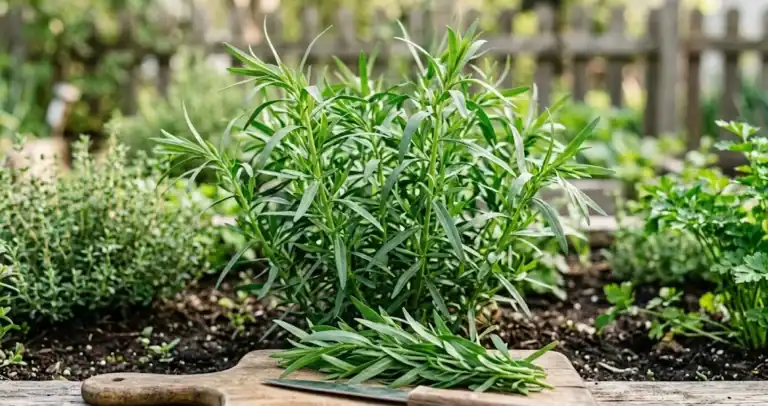
True French tarragon features smooth, narrow green leaves with a distinct anise odor and a warm, peppery bite. It is sterile and does not produce viable seed, meaning every authentic culinary herb must be propagated vegetatively by dividing an existing clump or taking cuttings from a healthy parent plant. In contrast, Russian tarragon grows taller and coarser, produces seeds readily, and yields milder, less aromatic foliage that turns bitter quickly. If you want intensely flavorful leaves for cooking, always ensure you grow tarragon of the true French variety in well-drained sandy loam or container potting soil enriched with compost, and avoid heavy, poorly drained clay.
When to pick tarragon for the best flavor
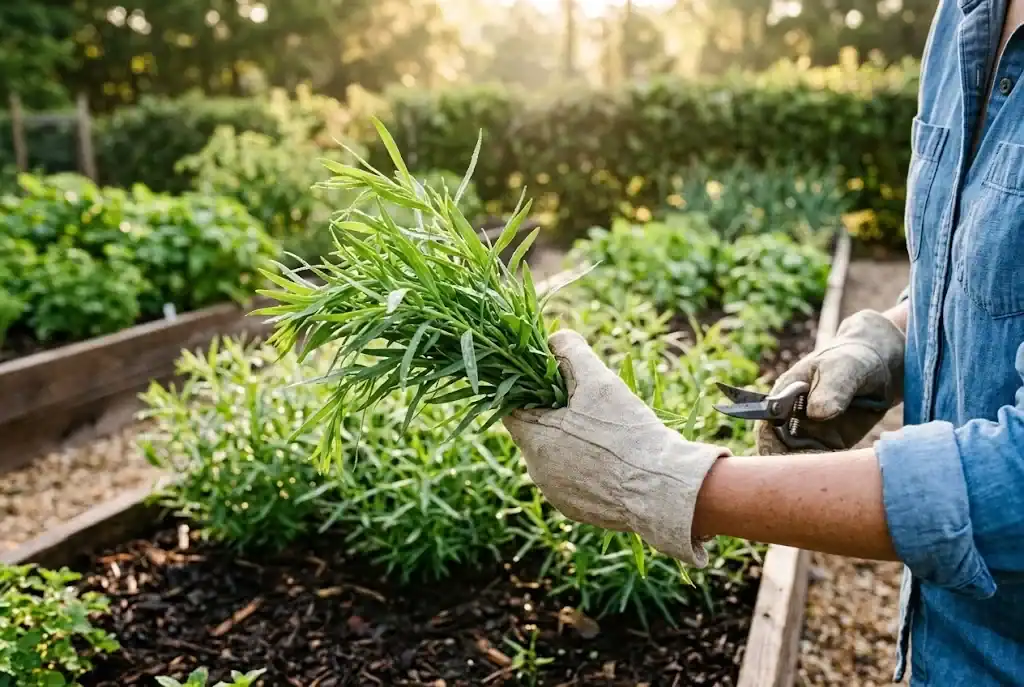
Timing your clippings ensures you capture maximum aroma without stressing the root system. Tarragon prefers full sun and warm soil to produce its signature aromatic oils. Here are the key timing factors to watch:
- Plant maturity: When you plant in spring, wait until newly planted stems reach 6 to 8 inches tall before taking your first cut. For an established clump in its second year, you can begin gathering tender shoot tips as soon as robust new growth surges in late spring.
- Time of day: Always collect sprigs in the cool morning after the morning dew has dried. Essential oils are concentrated in the aromatic leaves overnight, giving you the richest scent and taste before midday heat causes them to volatilize.
- Pre-flowering window: Snip stems consistently before flower buds begin to form. As the plant shifts its energy into blooming, older tarragon stems become woody and tough, and the leaves lose their delicate anise-like flavor.
How to cut tarragon stems without damaging the plant
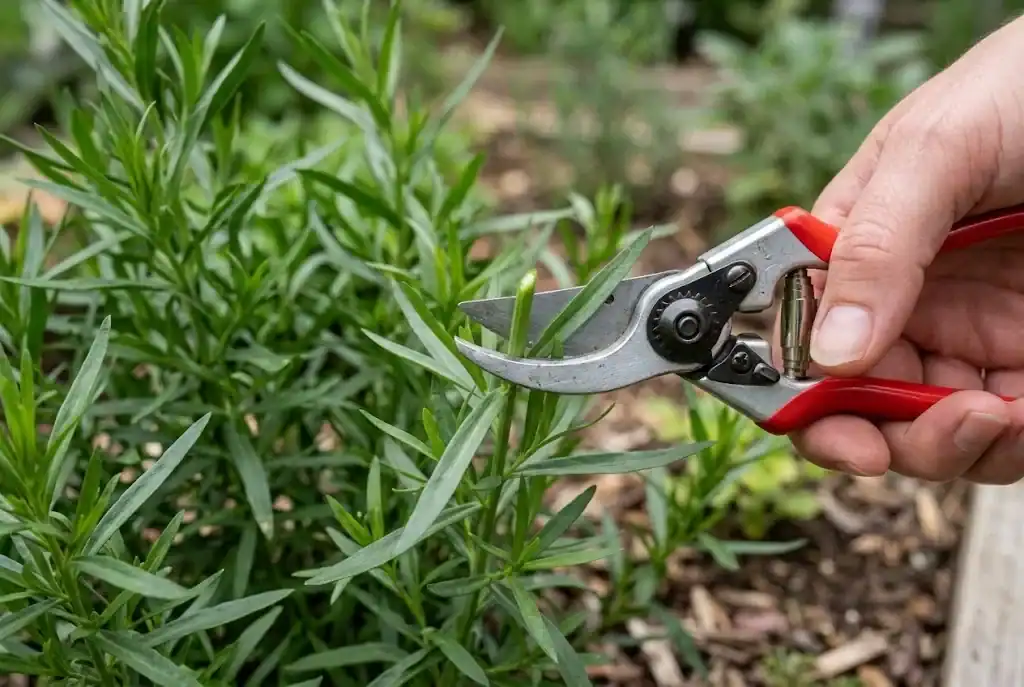
Proper cutting technique protects plant health and stimulates a denser, bushier habit. Tarragon stems are relatively tender early in the season but can become fibrous near the base, so careful cuts are vital.
Always use clean, sharp pruning snips, shears, or garden scissors rather than pulling or pinching by hand. Tearing stems can strip the outer bark and bruise the leaves, inviting fungal diseases and slowing recovery. When you cut the stems, select the top 4 to 6 inches of fresh green growth and make a clean diagonal cut about a quarter-inch above a leaf node. Pruning just above paired leaves triggers dormant buds to branch out into two new lateral stems, doubling your potential bounty later in the season.
Remember the classic one-third rule: never take more than one-third of the entire plant at a single gathering. Leaving plenty of healthy foliage ensures the herb retains enough leaves to maintain active photosynthesis and build root reserves, especially when grown in a container or pot where root space is limited.
Mid-season pruning and late-season collection tips
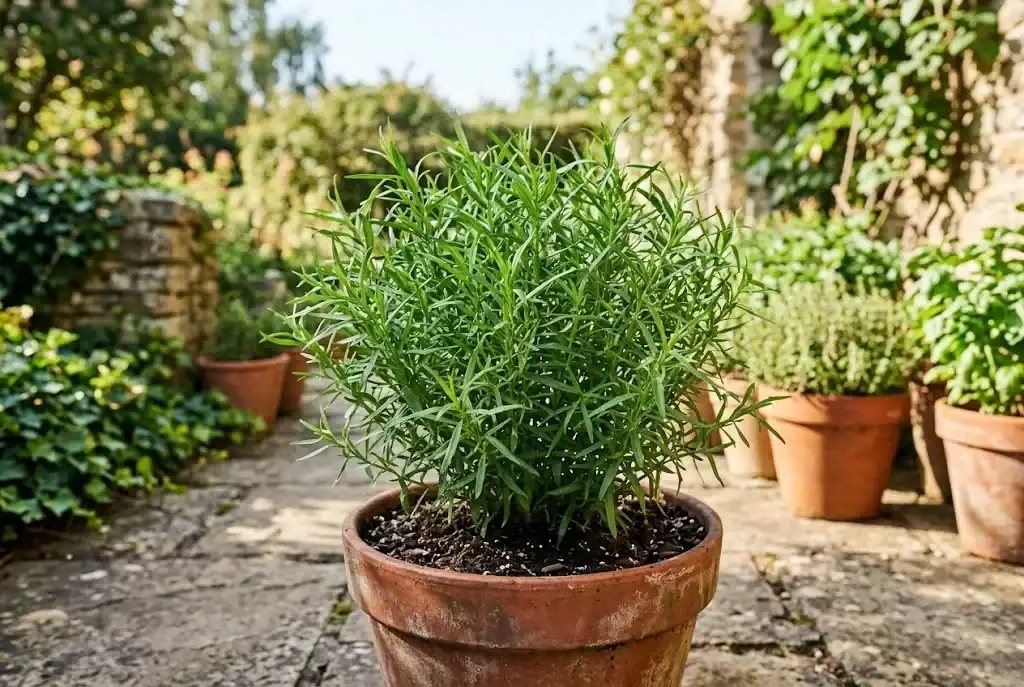
Throughout the growing season, a little proactive maintenance keeps your crop productive until autumn:
- Regular snip-and-come-again pruning: Even if you only need a few tarragon leaves for dinner, snipping top growth every two to three weeks prevents leggy stems and keeps foliage tender.
- Removing flower stems: If small yellow-green flower heads appear in mid-summer, prune them off immediately to keep the plant in an active vegetative state.
- Final autumn harvest: About four to six weeks before your region’s first autumn frost date, make your final major collection. In cold climates, top growth dies back to the ground after heavy frost. Cut the stems down to 2 to 3 inches above the soil line and top the crown with a light layer of dry mulch to protect the dormant roots.
Once you bring your freshly snipped bundles indoors, explore how to store tarragon to preserve its bright aroma and keep cut stems in prime condition for days or months.
Handling and preparing fresh tarragon sprigs
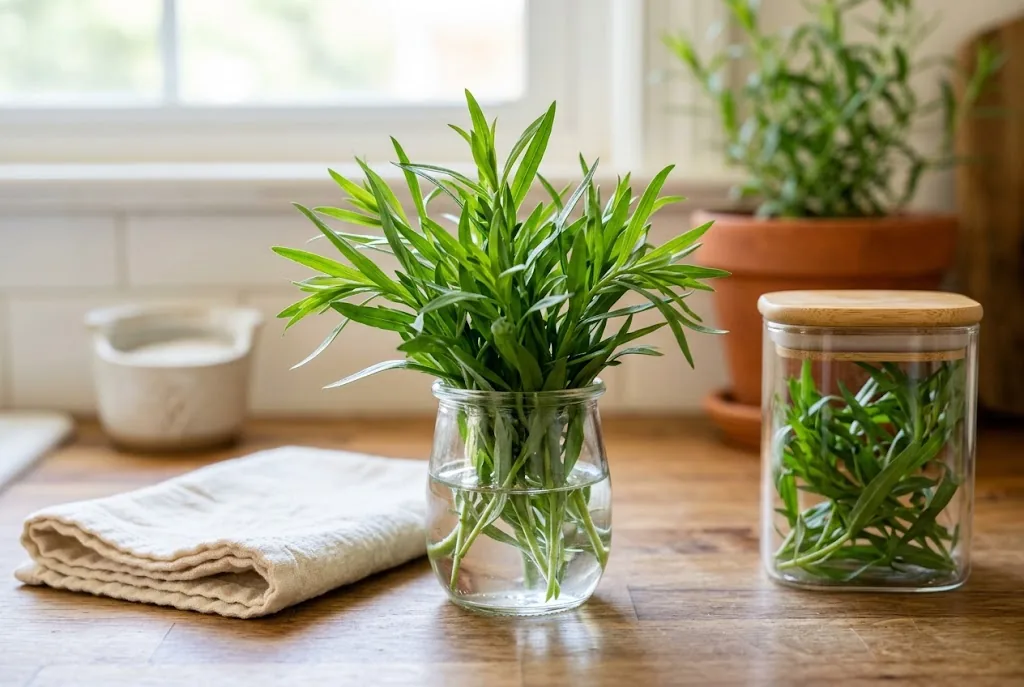
Freshly picked tarragon leaves are delicate and require gentle handling to preserve their volatile oils:
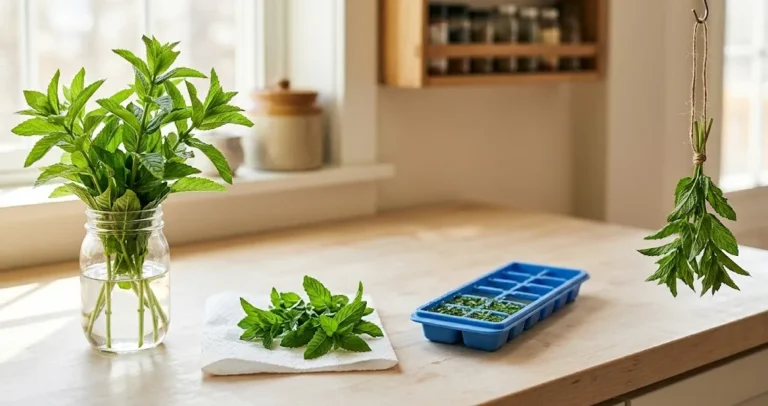
- Cleaning: Rinse cut stems sparingly in cool water only if soil splashed onto the lower leaves, then remove the lower damaged foliage. Shake off excess moisture and pat them dry gently between clean cotton towels. Excessive water accelerates decay.
- Stem care: While tarragon is best used fresh within a few days of picking, you can treat cut sprigs like fresh flowers by placing stem ends in a small glass of water on the countertop with the leaves still attached out of direct sunlight.
- Chilling: For refrigerator storage, wrap unwashed stems loosely in a damp cloth or slightly moist paper towel and place them inside a reusable airtight container or ventilated plastic bag in the vegetable crisper drawer.
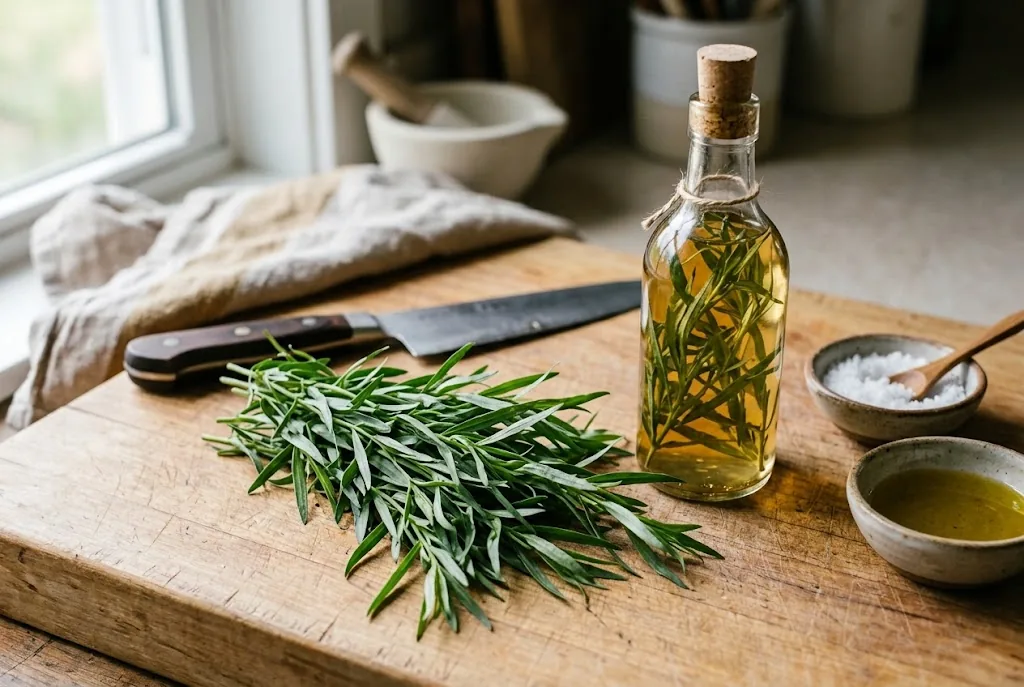
- Preserving: If you want to dry tarragon, hang small bundles in a dark, airy room or use a dehydrator on the lowest setting, though drying causes some aroma loss compared to freezing. For superior flavor, steep fresh sprigs in white wine vinegar to make homemade tarragon vinegar, or chop the leaves gently and freeze them in olive oil inside ice cube trays before transferring the frozen cubes to a freezer bag.
With a steady supply of fragrant green leaves on hand, you can discover creative ways to cook with tarragon across classic sauces, roasted poultry, vegetable sautés, and compound butters.
Frequently asked questions about harvesting tarragon
Does tarragon grow back after cutting?
Yes. French tarragon is a vigorous grower that responds eagerly to pruning. Cutting top growth just above leaf nodes encourages lateral branching and results in a fuller, bushier plant with continuous tender yields from spring through early autumn.
Can you pick tarragon in its first year?
Yes, but pick sparingly. In the first year after planting a starter nursery plant or rooted cutting, allow the herb to establish a robust root system. Snip only light shoot tips during the first summer, never taking more than a quarter of the foliage at once.
Should I dry or freeze extra harvested tarragon?
Freezing or infusing into vinegar is far superior to trying to dry the tarragon. Dried leaves lose much of their volatile anise-like aroma and can turn grassy or hay-like. Freezing chopped leaves in oil or ice cubes preserves the bright, peppery flavor for up to six months.