Tarragon is one of the few herbs that punishes carelessness in how you store or preserve it. Pick up a bunch at the market, leave it on the counter for two days, and the anise-like perfume that drew you in is gone, replaced by a flat, papery taste. Treat it right and the same sprigs can season béarnaise, roast chicken, fish, or a spring vegetable salad for months. This guide walks through six practical ways to preserve tarragon, sorted from a quick refrigerator method that lasts a week to long keeps that hold flavor through the winter. Most cooks only need two or three of these methods on rotation, and finding the way to preserve that fits your kitchen is the point.
Most soft-leaf herbs follow similar storage rules, with small adjustments for tougher leaves. The principles of when and how to cut, how to dry, and how to freeze carry across basil, parsley, chervil, and mint. A broader primer on when and how to cut any herb for storage walks through the same methods applied across a typical kitchen garden.
Start with a clean, well-timed harvest
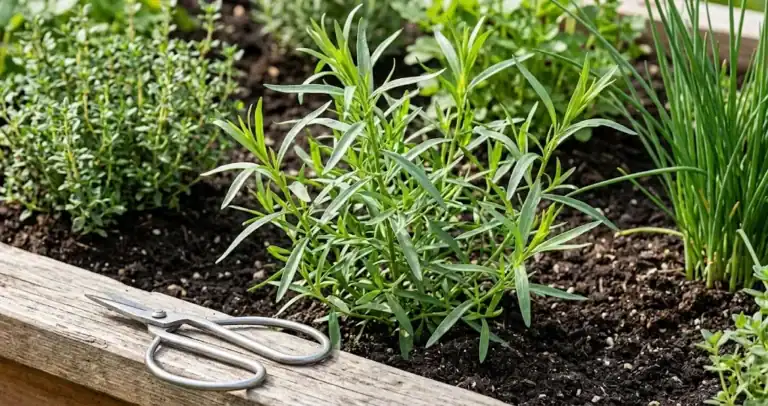
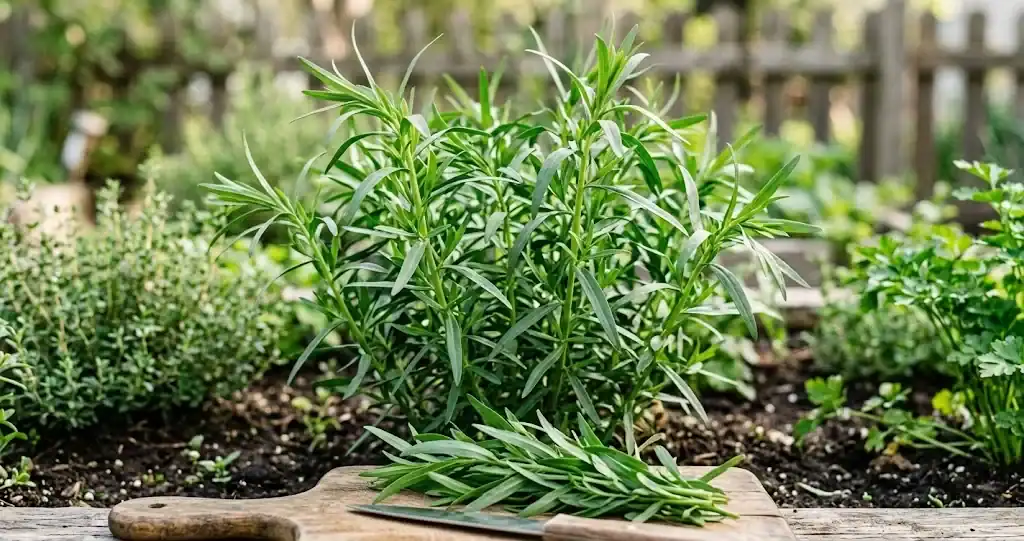
Storage quality begins in the garden. French tarragon (Artemisia dracunculus, the culinary variety with the true anise note) loses intensity quickly after the plant flowers, so cut stems in the morning before the heat sets in and before any buds open. Choose tender top growth rather than woody lower stems, and rinse only if grit is visible, then pat the leaves dry with a clean towel. Harvesting too late in the day, or after a rain, leaves the foliage damp enough to invite mold in any storage container.
If you grow tarragon or buy it by the bunch, the way you cut it shapes how it stores. Cut just above a leaf pair so the plant keeps producing, and skip anything that is yellowing or bruised. For readers working through a wider herb garden, the timing rules generalize to most soft-leaf herbs, and a deeper look at how to harvest tarragon for peak flavor covers the rest.
Refrigerator storage for a week or two
Short-term storage is the easiest and the one most people underuse. Two methods keep tarragon fresh in the refrigerator for seven to fourteen days.
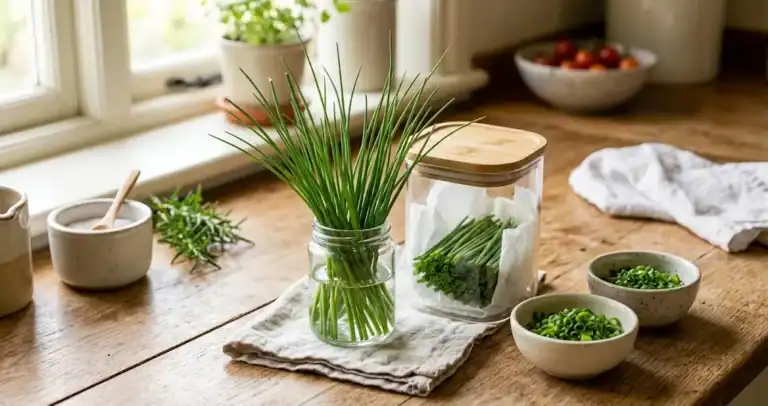
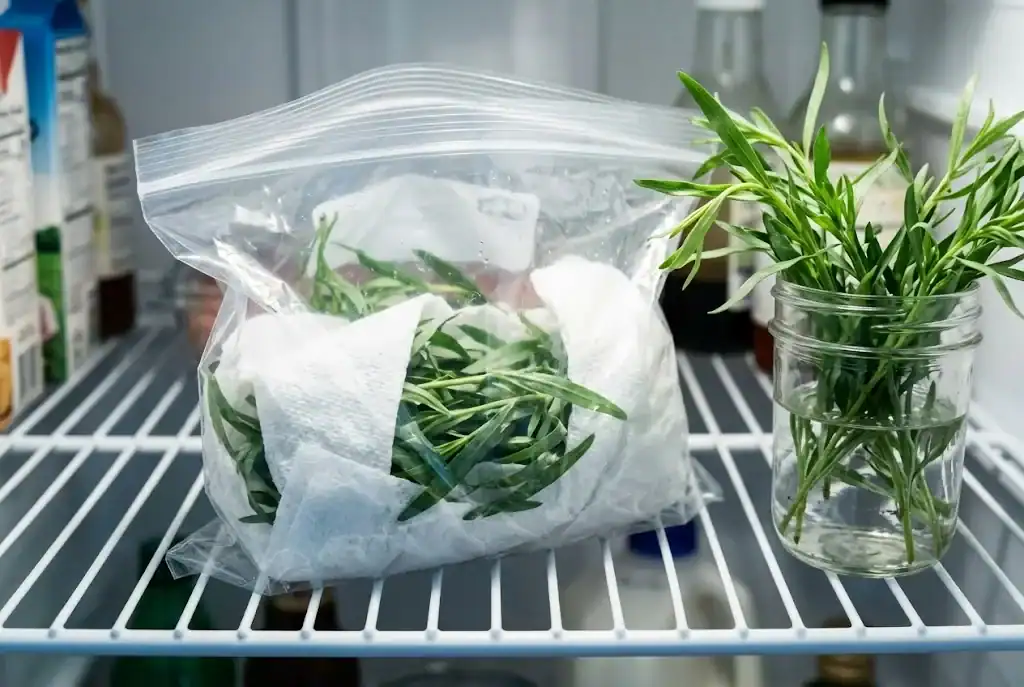
The first is the damp paper towel method. Spread a clean paper towel on the counter, lay the sprigs in a single layer, roll loosely, and slide the roll into a zip-lock bag left slightly open at one corner. Mist the towel once if it dries out. The second is the glass-of-water method. Trim the stem ends, place the bunch in a small jar with about an inch of water, cover loosely with a plastic bag, and refrigerate. Change the water every two days. Both methods keep the leaves supple enough to chop and sprinkle over fish, roast vegetables, or egg dishes without turning limp.
How to freeze tarragon
Freezing is the preservation method that best protects the herb’s signature anise flavor. Drying mutes it, and vinegar or oil preserves it in a different form, but frozen leaves cook almost like fresh. Three reliable techniques work for different kitchens.
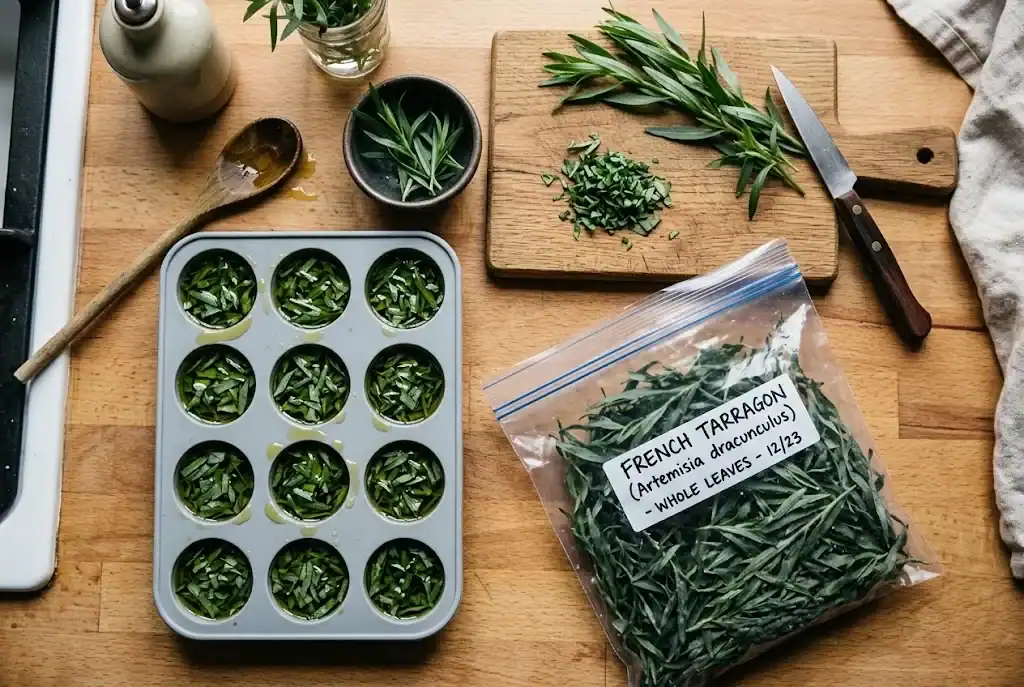
For whole leaves, strip them from the stems after washing and drying, spread them on a parchment-lined baking sheet in a single layer, freeze until firm, then transfer to a labeled storage bag. Pre-freezing on the sheet keeps the leaves from clumping. Press out the air, lay the bag flat, and tuck it into the cold compartment. The leaves keep well for four to six months.
For portioned use, the ice cube method is hard to beat. Chop the leaves, pack them into ice cube trays, and cover with a little olive oil or water. Freeze until solid, then pop the cubes into a bag and return them to the cold compartment. One cube equals roughly a tablespoon of fresh tarragon, ready to drop into a pan. Use these cubes within three months for the brightest flavor.
For cooks who dislike the texture of thawed leaves, freeze sprigs whole on the tray, then store in a sealed bag and add them directly to pan sauces while still frozen. The heat pulls the flavor off the leaves, and you can lift the stems out before serving. Skip thawing at room temperature; the leaves go limp and muddy in color. Either use them frozen or thaw them briefly in the pan.
How to dry tarragon without losing what matters
Drying is the weakest method for this herb. The volatile oils that give French tarragon its anise note break down faster than they do in basil, oregano, rosemary, thyme, or sage, so dried tarragon smells pleasant but tastes comparatively mild. Use it where the herb plays a background role, in egg dishes, cream sauces, or long-simmered stews, not where the bright top note has to carry the dish. A small jar of dried tarragon stirred into a winter pot of beans or a pan of roasted vegetables is the right place for it, and tarragon pesto made with a blend of fresh and dried leaves still has more aroma than one made with dried alone.
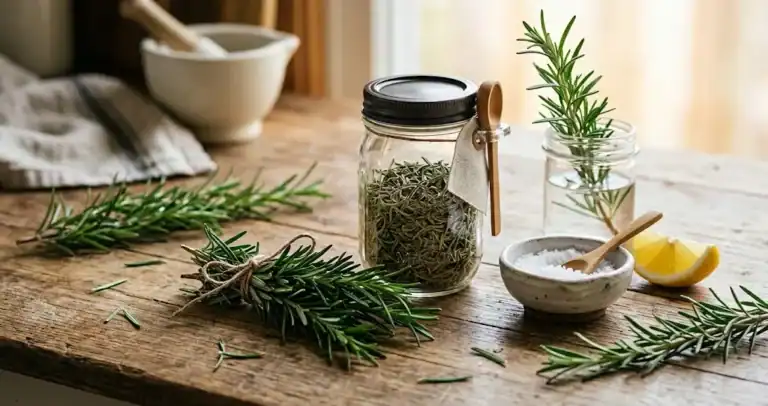
Air-drying is gentle but slow. Tie small bundles of stems with kitchen twine, hang them upside down in a warm, dry, well-ventilated room away from direct sun, and let them cure for seven to ten days. A dehydrator set to 95 to 110 degrees Fahrenheit cures the leaves in two to four hours with the most consistent results. For occasional drying, an oven on its lowest setting, with the door propped open a crack and a baking sheet lined with a single layer of leaves, works in one to two hours. Strip the leaves from the stems once they crumble, and store the dried herb in airtight containers in a dark cupboard. Properly dried and stored, the leaves keep their color and a usable flavor for up to a year, though most cooks use them within six months.

Tarragon vinegar and tarragon oil
Preserving tarragon in vinegar is one of the oldest kitchen tricks for this herb, and it still earns its place. Warm a cup of white wine vinegar gently, pour it over three or four fresh sprigs in a clean jar, seal, and let it steep in a cool dark place for two weeks. Strain and rebottle. The vinegar takes on a clean anise note that lifts simple green salads, potato salad, and roasted vegetables.
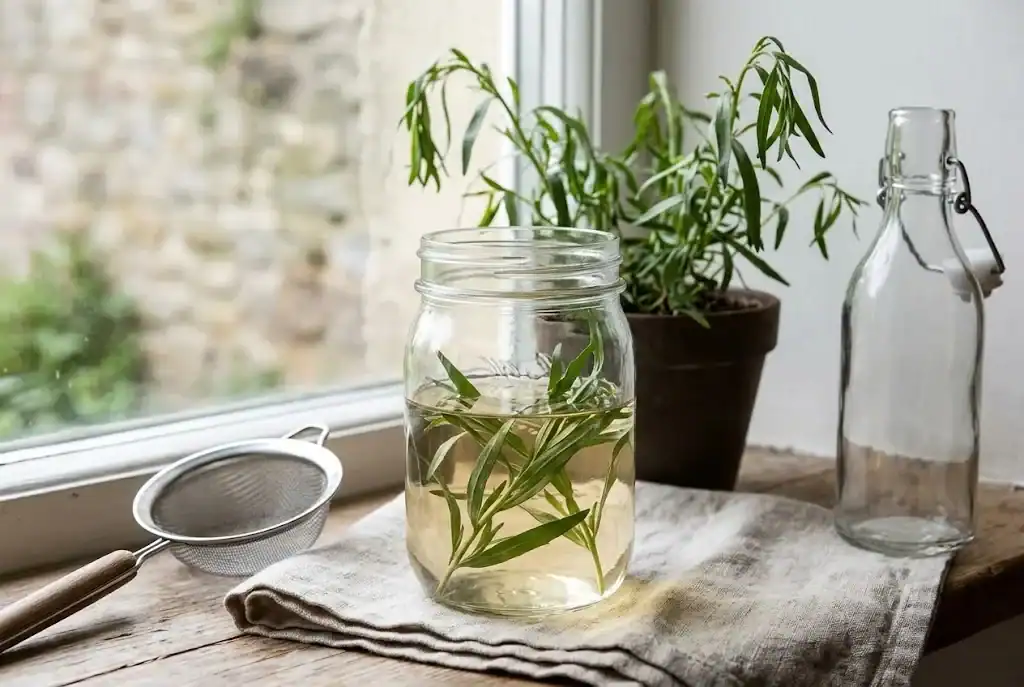
Olive oil infused with tarragon works for short-term cooking. Pack fresh leaves into a small jar, cover with oil, and refrigerate. Use within two weeks, because fresh herbs in oil can grow unwelcome bacteria at room temperature. The infused oil is good over fish, stirred into soups, or drizzled on bread. For longer storage, freeze oil cubes the same way you would water cubes, then thaw one cube at a time.
Tarragon butter for the freezer
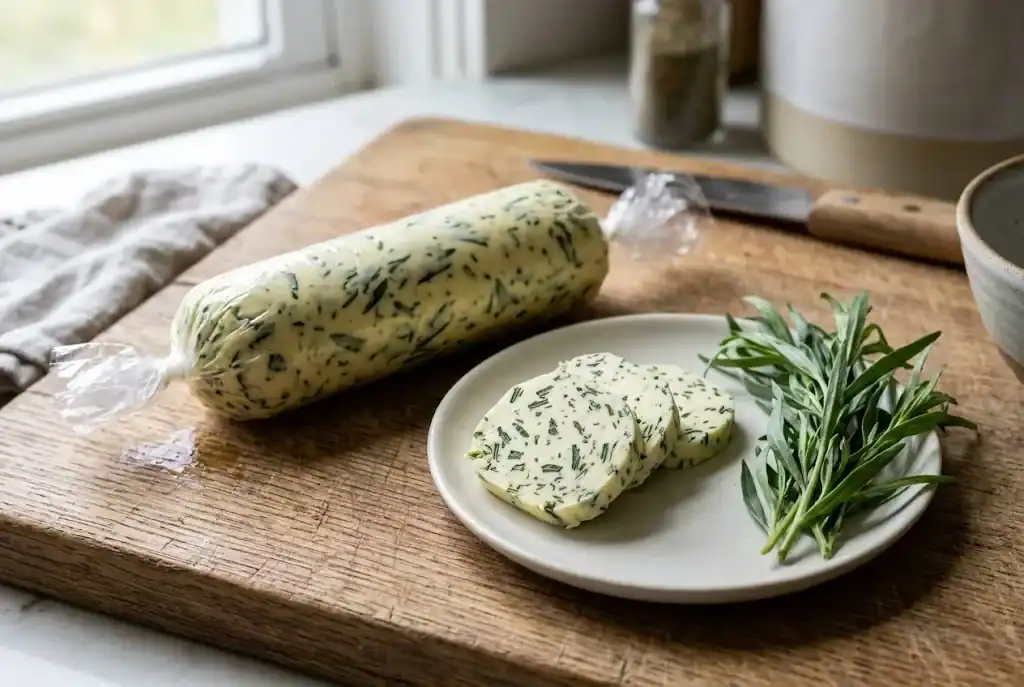
Compound butter is the easiest way to keep tarragon ready for weeknight cooking. Soften a stick of unsalted butter, mix in three tablespoons of finely chopped tarragon leaves and a small pinch of sea salt, then spoon the mixture onto a piece of plastic wrap. Roll into a log, twist the ends, and freeze. Slice rounds as needed to top grilled fish, melt onto steamed vegetables, or finish a pan sauce. The butter keeps for three months in the cold compartment and turns a plain piece of salmon into something memorable.
Common mistakes when storing tarragon
Most storage failures come from a small number of repeated errors.
- Washing too early. Moisture on the leaves before storage invites mold. If you must wash, dry the leaves thoroughly between two towels before packing them away.
- Storing at room temperature in plastic. Tarragon wilts and turns black within hours in a sealed bag on the counter. Either refrigerate, freeze, or dry.
- Skipping the strip step before freezing. Stems add a grassy, slightly bitter note to frozen herb packs. Strip the leaves from the stems first unless the recipe calls for whole sprigs.
- Overfilling containers. Tight packing bruises the leaves and traps moisture. A loose pack in an airtight container keeps better than a tight pack in a loose bag.
Putting your stored tarragon to work
Stored tarragon shines in sauces that depend on its anise note. A classic béarnaise starts with tarragon-infused vinegar; béarnaise without tarragon is just hollandaise with a different name. Tarragon butter melts over grilled white fish, stirs into scrambled eggs, and finishes a simple pasta with peas. Frozen tarragon cubes lift cream sauces and chicken braises, while the dried herb seasons blends for hearty broths. For cooks who want a wider tour of what this herb can do in a savory kitchen, the guide to ways to cook with tarragon covers the main recipe families in more depth.