Lavender can make a cake smell like a summer garden, or give roast chicken a faint piney lift. The line between fragrant and soapy is thin, though. Start with a small amount, taste as you go, and let the rest of the dish carry the meal.
Cooking with lavender works best when you treat the flowers as a seasoning, not a main ingredient. They have a sweet, floral aroma with notes that sit well beside citrus, honey, berries, vanilla, and thyme. This guide shows what to buy, how much to use, and where it earns a place at the table.
Choose lavender that belongs in the kitchen
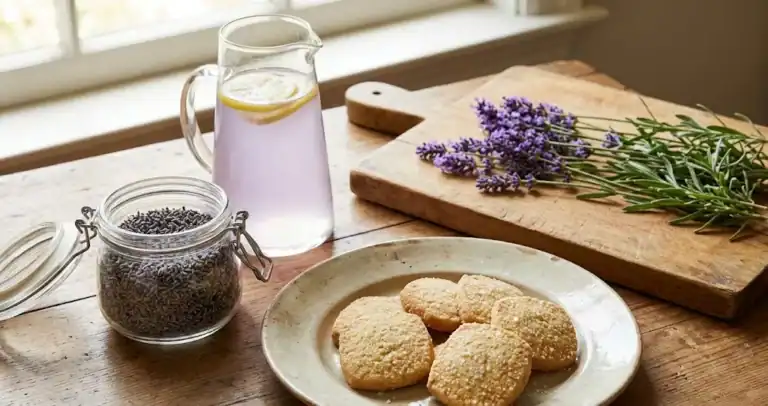
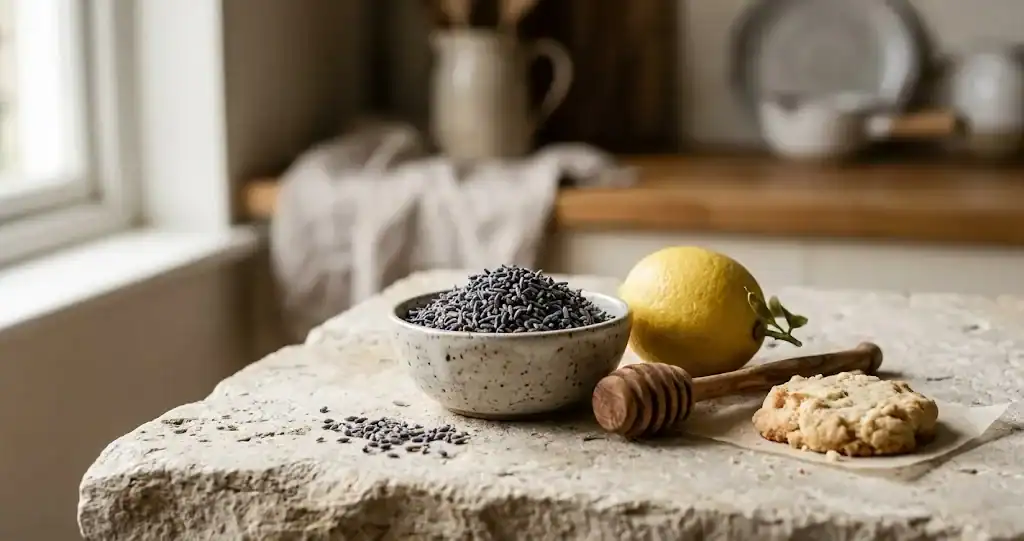
Look for dried culinary buds, usually from Lavandula angustifolia, from a food seller or a farm that labels them for culinary use. They should smell clean and floral, not dusty or sharply perfumed. The small purple-blue buds are usually easier to measure than whole flower heads.
Do not use a florist bouquet, potpourri, or ornamental lavender from an unknown source. Flowers sold for decoration may have been treated with products not intended for food. If you grow your own, identify the plant, use only unsprayed flowers, and rinse and dry them gently.
Skip essential oil for everyday cooking. A jar of culinary buds gives you a controllable flavor and is not interchangeable with a concentrated oil. If a recipe specifically calls for a food product, follow that recipe and its label exactly.
What does lavender taste like?
The flavor is floral, lightly sweet, and herbaceous, with hints that can recall mint. Too much can taste bitter, astringent, or like soap. That is why this flower rewards a light hand.
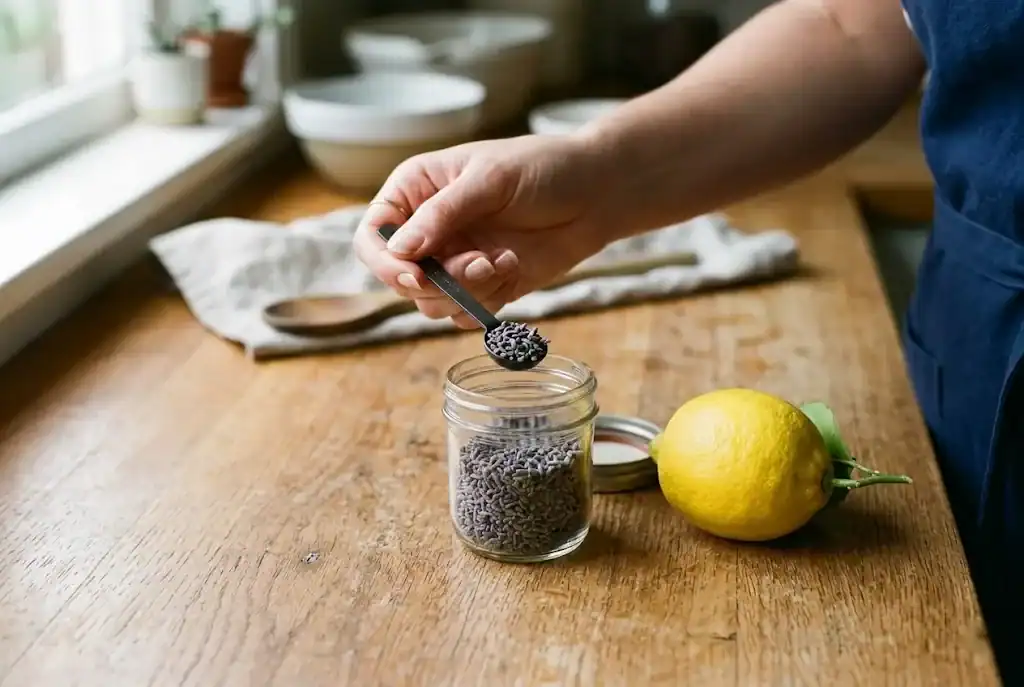
Use dried buds in small pinches. For a first test, add 1/4 teaspoon to a recipe that serves four, then adjust next time. Fresh flowers are milder by volume, but they vary, so taste one bud before you commit it to a dish.
Three reliable ways to add lavender flavor
Infuse it, then strain it out
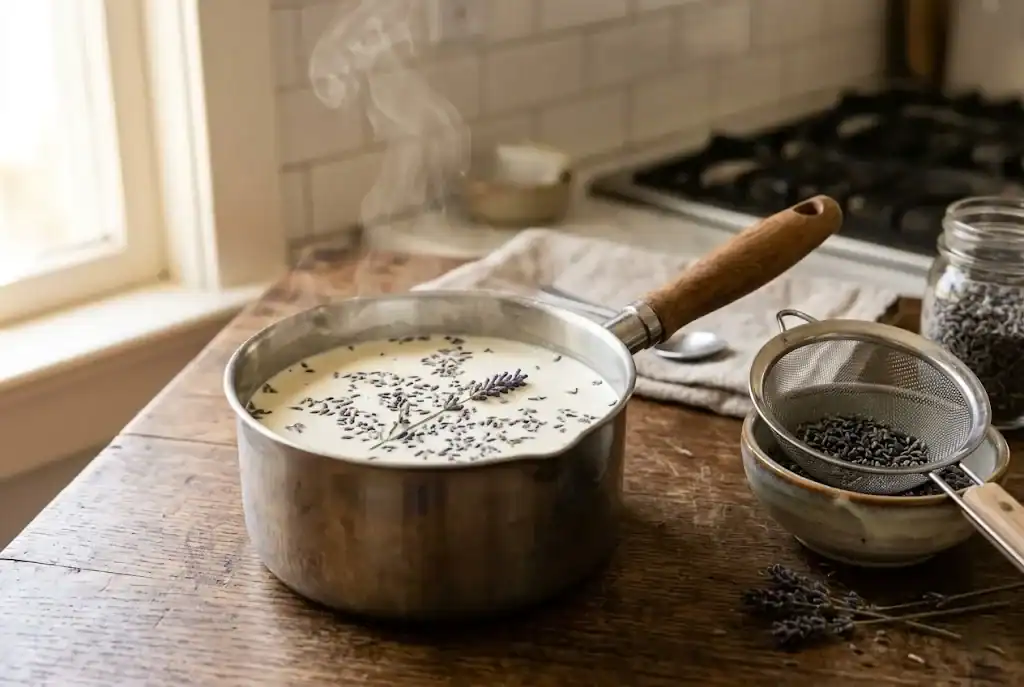
An infusion spreads floral flavor without leaving buds in every bite. Warm milk, cream, honey, syrup, or melted butter with a small pinch of dried flowers. Let it rest off the heat for 10 to 15 minutes, taste, then strain. Use the flavored cream in custard, whipped cream, ice cream, or a frosting. Use the syrup in a cold drink or a cocktail.
Grind it with sugar or salt
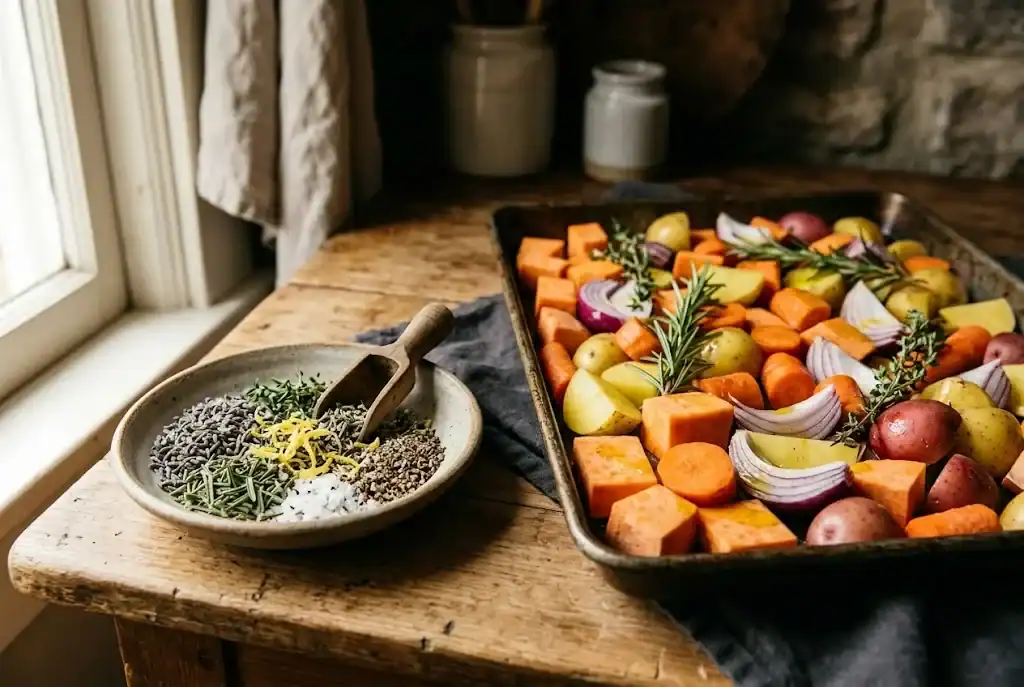
For baking, rub the buds with granulated sugar in a food processor or mortar until they are finely broken up. The scented sugar gives cookies, shortbread, cake, and fruit preserves a more even flavor than whole buds. For a main dish, crush a few with salt, thyme, and black pepper before rubbing the mixture onto chicken, lamb, or roasted vegetables.
Add a small amount directly to doughs and dishes
Finely ground dry flowers can go straight into a cake batter, bread dough, or cookie dough. In main dishes, add them early enough to mingle with fat and heat, but keep the amount modest. A teaspoon can be plenty for a full tray of roasted vegetables. If you want a stronger aroma, build it with citrus zest, garlic, or thyme instead of simply adding more.
Pair lavender with food that gives it a job
This flower does not need to lead every bite. It is most useful when a familiar ingredient softens its floral edge or pulls out its savory side.
- Citrus: Juice and zest keep a floral lemonade, curd, cake, and syrup bright.
- Honey and vanilla: These make the seasoning feel rounder in butter, whipped cream, custard, and ice cream.
- Berries and stone fruit: Blackberry, blueberry, peach, and apricot welcome a restrained floral note in jam, galette fillings, and dessert sauces.
- Chocolate: Dark chocolate can handle a small floral accent in truffles, brownies, or a chocolate cake.
- Thyme: This seasoning makes the flowers feel at home in a rub, brine, or southern French blend.
- Goat cheese and sheep’s-milk cheese: Try a few crushed buds in a honey drizzle for a cheese board, not a heavy blanket of flowers.
If you want finished dishes rather than technique, browse these lavender recipe ideas. Keep this page for the flavor decisions, then use a recipe when you want exact ingredients and timing.
Sweet uses for culinary lavender
Start with a simple base ingredient so you can learn the flavor. Honey, scented sugar, and syrup are all useful pantry projects, and each lets you add the flowers a little at a time.
- Stir the sugar into shortbread cookies, pound cake, or a citrus cake.
- Rest buds in cream for ice cream, custard, or whipped cream, then strain before chilling.
- Make a citrus syrup for iced tea or a Tom Collins.
- Use a small spoonful of scented honey over peaches, yogurt, ricotta, or warm toast.
- Fold a pinch into a blueberry or blackberry filling, then taste before baking.
For a first special occasion dessert, choose lemon shortbread or vanilla ice cream. Both offer enough sweetness and fat to carry the aroma without hiding it.
Ways to use lavender in main dishes
The flowers are not only for sweet dishes. In Provence, they can appear in a traditional seasoning blend beside thyme, oregano, and other seasonings. The blend varies, so check the jar rather than assuming every version includes them.
Try a few crushed buds in a dry rub for lamb, chicken, pork chops, or roasted carrots. Combine 1/4 teaspoon with a tablespoon of chopped thyme, citrus zest, salt, and pepper. Rub it on the food before roasting, then finish with a squeeze of juice. Citrus keeps the aroma clear.
A small amount can also work in a brine for chicken or pork, in a vinaigrette for grilled peaches, or in a saucepan of fruit compote served beside cheese. Do not use it to make a dish smell like perfume. Let it sit in the background with the other seasonings.
For broader context on choosing and using herbs, see our culinary herbs guide. It can help you build a pantry that reaches beyond one floral herb.
Fresh lavender, dry lavender, and storage
Dried buds are the easy choice for cooking because they are concentrated, measured, and shelf-stable. Keep the jar sealed in a cool, dark cupboard and use it while the aroma is lively. Fresh flowers work as a garnish or a gentle infusion, but remove the green stems and taste the petals first because they can be bitter.
Harvest flowers when they are clean, dry, and freshly opened, then use them the same day when possible. For a home-grown supply, see how to store lavender after harvesting for practical drying and storage steps.
Different varieties can taste noticeably different, so a culinary farm is a useful source when you want to compare buds. Label the jar with its purchase date. Fresh or dried flowers keep their best flavor when protected from heat and light.
Small tests before you scale up a recipe
You can cook with lavender in later baking and main dishes once you know the batch. Rather than risk a full cake, try one of these small tests and taste before you serve it.
- Lavender sugar: Rub a pinch of dried flowers into sugar, then use it on one cookie or a slice of fruit.
- Lavender butter: Stir a few finely ground buds into softened butter for toast or grilled peaches.
- Lavender honey: Warm honey with a few buds, let it rest, then strain it before drizzling.
- Lavender simple syrup: Make a small jar for sparkling water. If you visit a lavender farm that sells culinary buds, smell two varieties side by side before choosing one for a larger batch.
- Lavender flowers in salt: Crush a few petals with rosemary and salt for roasted chicken or lamb.
These tests make it easier to notice whether a particular batch is bright, woody, or too assertive. If the flavor seems strong, use less lavender in the finished recipe rather than covering it with extra sugar or salt.
For warm weather, freeze a few edible flowers into lavender ice for sparkling water, or add the syrup to a fizzy citrus drink. For dessert, a spoonful can lift lavender ice cream or a soft vanilla custard without taking over the bowl.
For an appetizer, set out goat cheese with a little fruit preserve and the scented honey. For a special occasion, serve a small pot of Earl Grey tea with shortbread rather than trying to put the flavor in every course. These quieter uses keep the aroma clear and make the food feel intentional.
For a fuller meal, use the same restraint in a frying pan sauce for pork chops or in a light brining liquid for chicken. Butter, olive oil, and a little cheese add richness, while a tart fruit preserve gives contrast. The goal is balance, not a floral shortcut to umami.
A simple first test: lavender lemon syrup
This small batch lets you learn the flavor before you put it in a cake or main dish.
- 1 cup water
- 1 cup sugar
- 1/2 teaspoon dried culinary lavender buds
- One strip of lemon peel
- Bring the water and sugar to a gentle boil in a small saucepan, stirring until the sugar dissolves.
- Take the pan off the heat. Add the lavender and lemon peel.
- Let the syrup rest for 10 minutes, then strain into a clean jar.
- Cool and refrigerate. Start with a teaspoon in sparkling water, iced tea, or a cocktail.
If it tastes too floral, dilute it with more water or lemon juice. Next time, shorten the steep or use fewer buds. Good cooking with lavender is mostly about restraint.
The same approach works for tea, bread, cookies, and frostings: make the flavoring first, taste it, then add only what the finished food needs.
Frequently asked questions
Can I use lavender from my garden for cooking?
Yes, if you have correctly identified it, know it was grown for edible use, and have not used unsuitable pesticides or treatments. Taste a small amount first. Garden-center plants and cut flowers are not automatically food-safe.
What is the 8 rule for lavender?
Some cooks use the 8 rule as a personal reminder to begin with very little lavender, often around 1/8 teaspoon in a small recipe. It is not a universal culinary rule. The sensible rule is to start small, taste, and keep notes on the amount that suits your recipe.
Can I use lavender essential oil in food?
Do not substitute essential oil for culinary buds. It is highly concentrated, and a standard food recipe does not give a safe conversion. Use the flowers unless you are following a tested recipe that specifically identifies a food-grade product and its exact amount.
What foods can I put lavender in?
Use it with citrus, honey, berries, vanilla, chocolate, tea, cream, goat cheese, lamb, chicken, and roasted vegetables. It also fits in cookies, cake, ice cream, dry rubs, and French herb blends.
Let lavender support the dish
Cooking with lavender becomes easy once you stop trying to make it the loudest flavor. Choose culinary buds, begin with a pinch, and pair them with citrus, honey, berries, or thyme. A gentle infusion gives you control, and a small tasting note can guide the next batch.