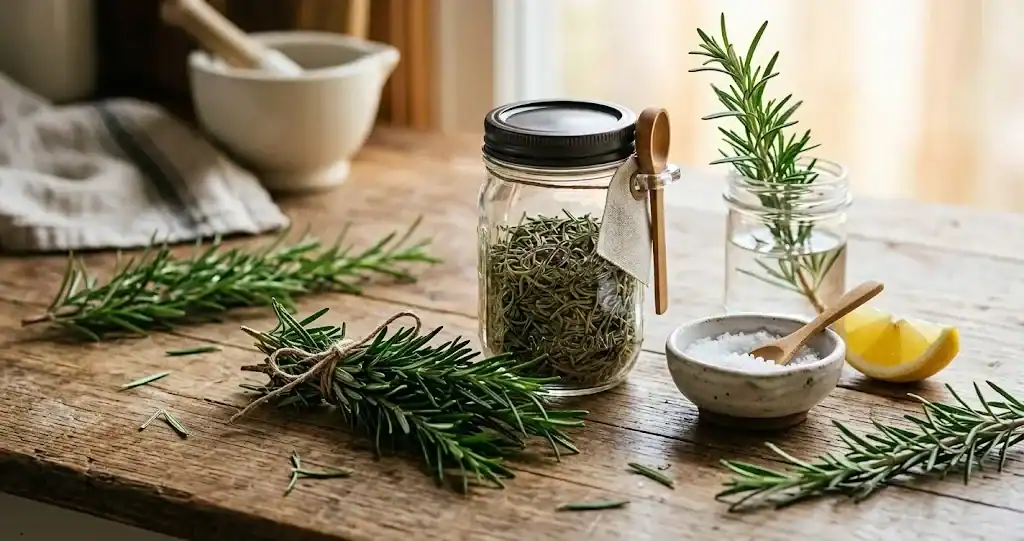
Rosemary rewards a little storage effort. Its piney, peppery fragrance stays lively for weeks in the fridge and months in the freezer or pantry, so you can cut a generous handful from the garden or buy a big bunch at the market without worrying about waste. The trick is matching the method to how you plan to use it: fresh sprigs for roasting, frozen cubes for weeknight stews, dried leaves for spice rubs, a fragrant infusion for bread dipping.
What changes when the herb is stored
Fresh rosemary is mostly water held in stiff, needle-like leaves on a woody sprig of an evergreen shrub. Once cut, three things work against it: the leaves lose moisture and turn brittle, the aromatic compounds that carry flavor oxidize and fade, and any dampness trapped around the branches invites mold. Storage either slows those losses (cold, sealed, low oxygen) or turns the fresh leaf into a stable, dry product (dehydrated leaves, frozen cubes, an infused jar in the fridge).
A few quick principles apply to every method below. Pat sprigs gently with a clean towel before preserving; moisture is the enemy of every technique except fresh fridge storage. Label and date whatever you keep. And remember that dried rosemary is roughly three times stronger by volume than fresh, so scale recipes down when you swap.
Refrigerator: short-term fresh sprigs (2 to 3 weeks)
The fridge is the easiest way to store fresh rosemary for cooking across two to three weeks. Two methods work, and the choice depends on when you plan to use them.
Paper-towel method for sprigs you will use within a week
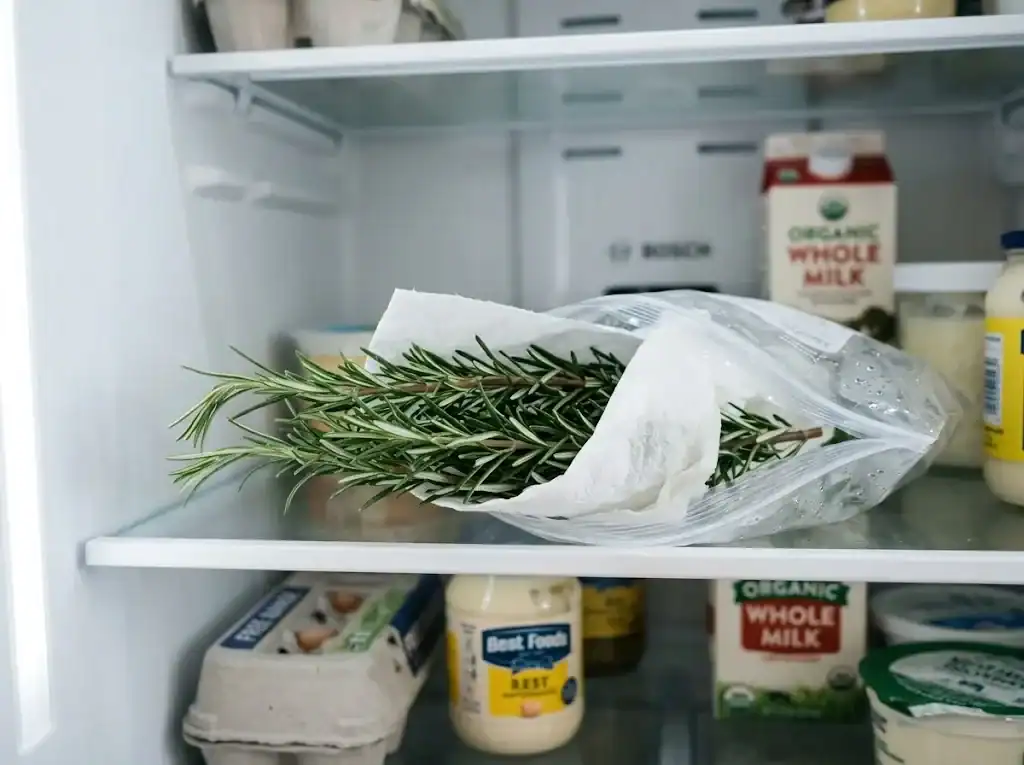
- Wrap unwashed sprigs loosely in a dry paper towel.
- Place the bundle inside a loosely closed plastic bag or a partially sealed container.
- Keep in the high-humidity drawer, not the back of the fridge where it can freeze.
The towel absorbs surface moisture and slows the black spotting that signals rot. Check every few days and swap the towel if it feels damp.
Water-cup method for branches you want to keep hydrated
- Trim the cut stem ends at a sharp angle.
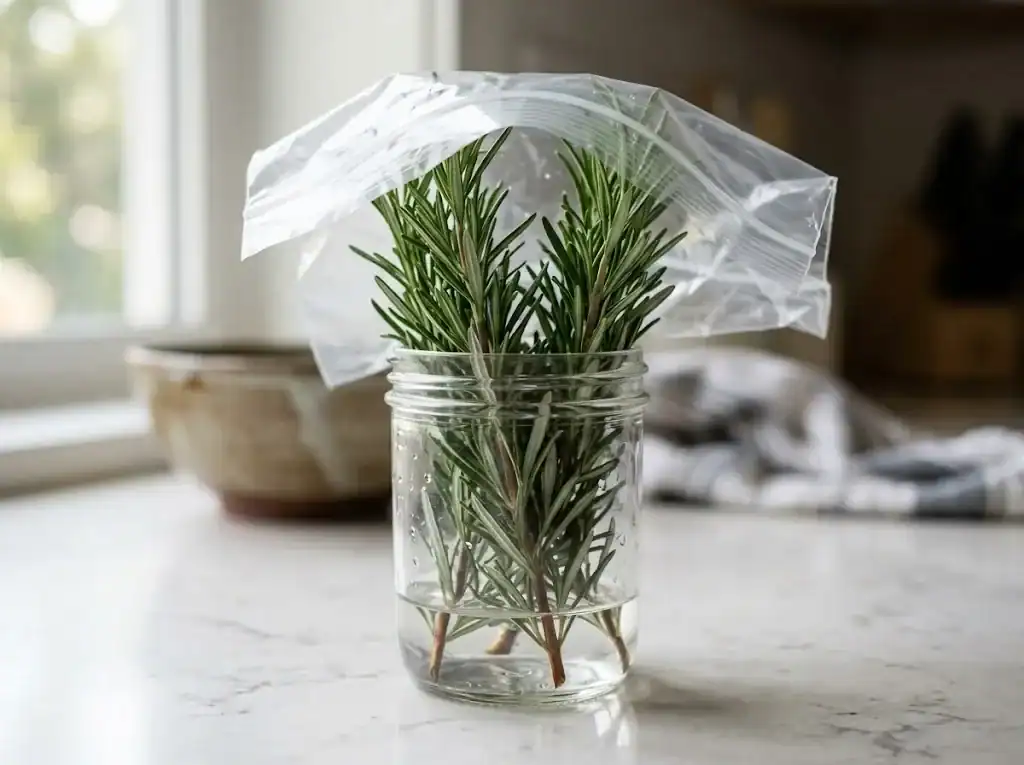
- Stand the bunch in a jar with one to two inches of water, like a small bouquet.
- Loosely drape a plastic bag over the leaves and refrigerate.
- Change the water every two days.
This keeps the bunch supple enough to slip into a chicken cavity or skewer for grilling. Expect about two weeks of good quality.
Freezer: the best long-term way to preserve fresh flavor
Freezing preserves more of the volatile aromatics than drying does, especially for cooked dishes where a little texture change is invisible. Plan on using frozen sprigs within six months for peak flavor, though they stay safe much longer.
Frozen whole sprigs
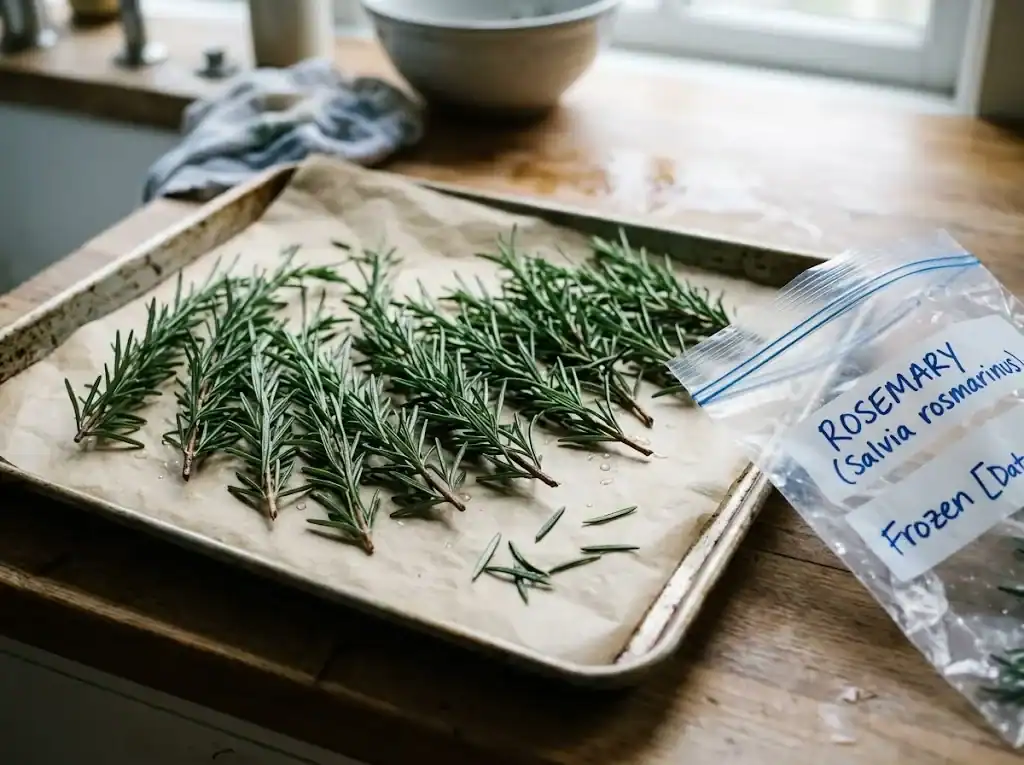
- Spread rinsed, thoroughly dried sprigs on a parchment-lined baking sheet in a single layer.
- Flash-freeze for two hours until firm.
- Transfer sprigs to a labeled freezer bag, press out the air, and seal.
Snap off leaves as needed; frozen needles crumble cleanly off the woody sprig.
Frozen cubes for weeknight cooking
For portioned, ready-to-cook servings, freeze rosemary as herbed cubes. Strip leaves from two or three sprigs and chop them finely, then stir into a half cup of good extra-virgin olive oil with a pinch of coarse salt. Spoon the mixture into ice cube trays and freeze, then pop the cubes into a freezer bag for keeping.
One cube equals about one tablespoon of seasoning. Drop a cube into a hot pan for sautéing potatoes, vegetables, or lamb. The fat freezes solid, so the cubes stack neatly.
Rosemary in water cubes for soups and stocks
- Place a few whole leaves in each compartment of an ice cube tray.
- Top up with water and freeze.
- Transfer to a freezer bag once solid.
These cubes slide straight into simmering stock, soup, or stew without any added fat.
Drying: pantry-stable rosemary (6 to 12 months)
Drying trades bright aroma for shelf life. It is the right way to preserve the herb for spice rubs, herb blends, and any long cook where the flavor can bloom slowly. Drying works because the aromatic compounds are stable; they do not evaporate the way basil’s do. Aim for leaves that crumble between your fingers, not bend.
Air-drying rosemary (no equipment, 1 to 2 weeks)
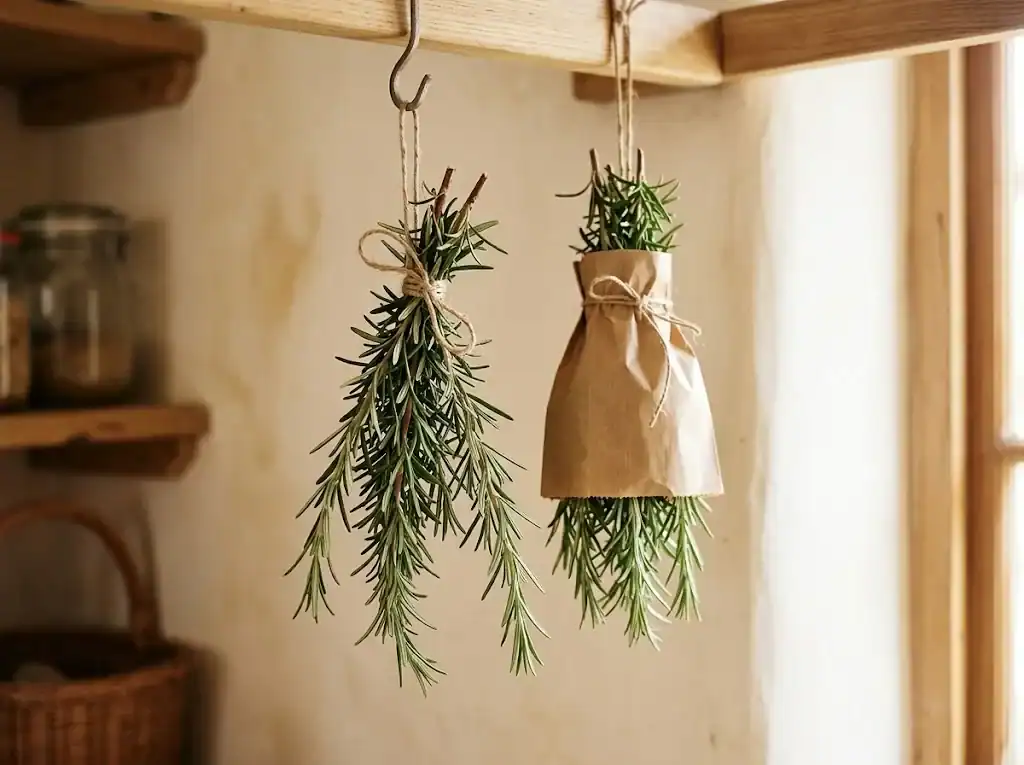
- Tie four to six sprigs at the cut end with kitchen twine.
- Hang the bundle upside down in a warm, well-ventilated area away from direct sunlight.
- Leave until leaves are brittle, usually seven to fourteen days.
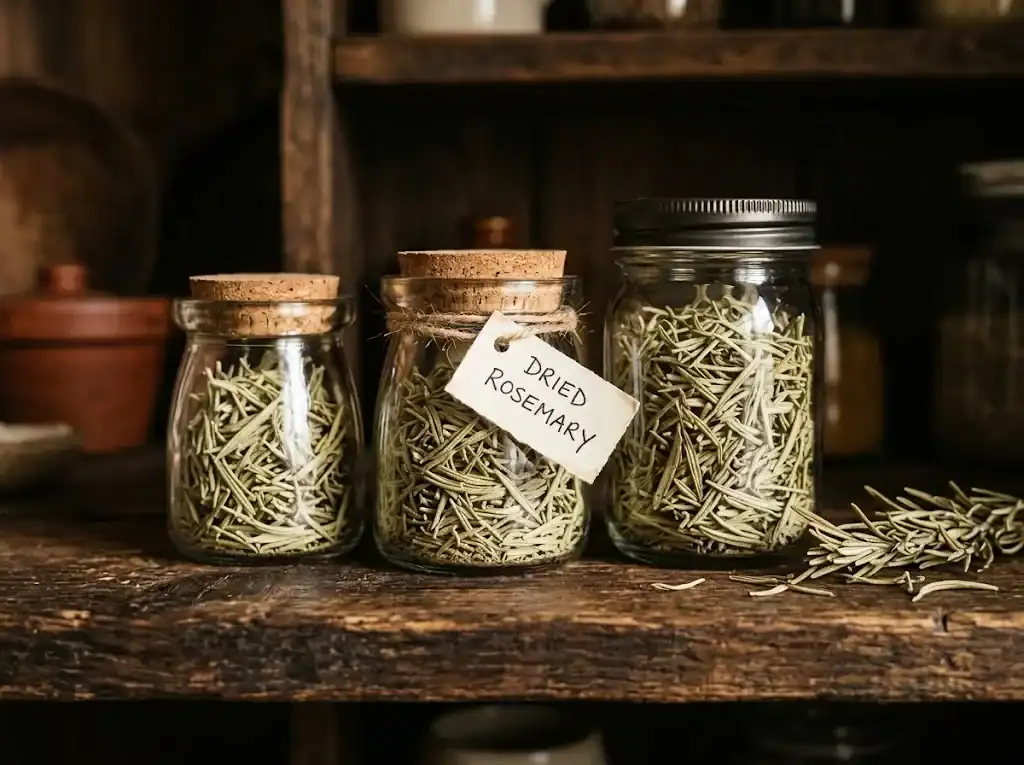
- Strip leaves from sprigs and keep in an airtight glass jar.
A paper bag slipped over the bundle catches falling leaves and keeps dust off. The technique works in any dry, airy room, even in winter with the heat running.
Oven drying for a faster result (about 2 hours)
- Set the oven to its lowest temperature, ideally 170 to 200 degrees F.
- Lay single layers of washed and fully dried sprigs on a parchment-lined baking sheet.
- Prop the oven door open with a wooden spoon to vent moisture.
- Bake for one and a half to two hours, checking every thirty minutes.
Watch the color: needles are ready when they turn pale green and crumble, not browned. Higher heat burns the aromatics and leaves a bitter note.
Dehydrator drying for the most consistent result
- Spread whole sprigs on dehydrator racks in a single layer.
- Run at 95 to 115 degrees F until leaves are crisp, four to eight hours depending on humidity.
- Cool fully before stripping and storing.
A dehydrator gives the most even result because the gentle airflow removes water without overheating the volatile compounds. If you preserve herbs often, it pays for itself in saved batches.
Storing dried leaves properly
Keep dried leaves in small airtight glass jars, away from light, heat, and moisture. A dark pantry shelf is ideal. Whole dried leaves hold their flavor longer than crumbled, so keep sprigs whole and crush them as needed. Expect peak flavor for six months and good flavor for up to a year.
Infused oils, vinegars, and salts
Infusions turn stored sprigs into a ready-to-use seasoning. They also make thoughtful small-batch gifts.
Rosemary-infused oil
Place four to five clean, fully dried sprigs in a clean glass jar, cover with a cup of good extra-virgin olive oil, cap tightly, and refrigerate immediately. Use the infusion within four days. For longer storage, pour measured portions into ice cube trays, freeze them, and keep the frozen cubes in a sealed bag.
Smell or appearance cannot establish safety in this kind of preparation. Reserve room-temperature storage for an infusion made by an exactly tested acidification procedure, not for an everyday kitchen batch. The Oregon State University Extension guide walks through the safe method: Oregon State’s guide to safe herb infusions

Rosemary salt
- Strip leaves from two sprigs and pulse with half a cup of coarse sea salt in a small food processor.
- Spread the damp salt on a parchment-lined pan and air-dry overnight, or dry in a 170 degree oven for twenty minutes.
- Crumble any clumps and store in a small jar.
Sprinkle on roasted potatoes, lamb, or focaccia just before baking. The salt carries the herb flavor into every grain.
Rosemary vinegar
- Warm a cup of white wine or apple cider vinegar gently; do not boil.
- Pour over three fresh sprigs in a clean jar and cap.
- Steep for ten days in a cool, dark place.
- Strain and keep in a sealed bottle for up to six months.
The vinegar is excellent in salad dressings and quick pickling brines.
Quick comparison of storage methods
- Fridge, paper towel: two weeks, fresh flavor, ready to use.
- Fridge, water cup: two weeks, hydrated sprigs for stuffing or skewers.
- Freezer, whole sprigs: six months, fresh flavor, slightly soft texture.
- Freezer, herb cubes: six months, portioned and ready to cook.
- Air-dry: six to twelve months, pantry-stable, stronger flavor.
- Oven-dry: six to twelve months, pantry-stable, fastest drying method.
- Dehydrator: six to twelve months, most even and gentle result.
- Fresh infusion: four days refrigerated, or frozen for longer keeping.
- Salt: six months in an airtight jar, pantry-stable seasoning.
- Vinegar: up to six months sealed, ready-to-use seasoning.
How to use stored rosemary
Each storage method suits different recipes. Frozen cubes slip straight into a simmering pot of stew or a sizzling pan of sautéed potatoes. Dried leaves shine in spice rubs for grilled lamb, focaccia dough, and long-simmered beans, adding their savory, piney note. Fresh fridge sprigs are the right choice when you want to stuff a chicken, slide a stem under the skin of roast potatoes, or pull a fragrant bundle out of the oven at the table.
When you are ready to put your stored sprigs to work, browse ways to cook with rosemary for dishes that make the most of each method.
A note on safety
Fresh herb infusions create ideal conditions for Clostridium botulinum growth if left at room temperature, which is why every batch that uses fresh herbs needs to go straight into the refrigerator and be used within four days. For longer keeping, freeze portions in ice cube trays and store the cubes in a sealed bag. Reserve room-temperature storage for an infusion made by an exactly tested acidification procedure, not for an everyday kitchen batch.
Dried leaves that smell musty, show any mold, or have lost their fragrance should be composted. Properly dried and stored rosemary keeps its scent for a full year, and you can tell at a glance when it has gone.
Frequently asked questions
Can you preserve fresh rosemary in water long-term?
The water-cup method keeps the herb fresh for about two weeks. Beyond that, the woody sprigs start to soften and the leaves turn black at the base. For longer storage, switch to freezing or drying.
Does dried rosemary lose its flavor?
Dried rosemary loses some of its top notes but keeps most of its woody, piney backbone, which is the part that survives slow cooking. Use dried leaves anywhere a recipe cooks for more than twenty minutes. For quick sautés, frozen or fresh gives a brighter result.
How do you preserve rosemary from the garden for winter?
Cut whole branches just before the first hard frost, when the volatile compounds are most concentrated. Strip the leaves and either freeze them in cubes for cooking or dry them in bundles for spice use. Properly frozen sprigs keep their flavor into the following spring.
Can you vacuum-seal rosemary?
Vacuum-sealing fresh sprigs speeds up browning because the pressure bruises the leaves. For best results, freeze first on a baking sheet, then vacuum-seal the frozen sprigs. Dried rosemary vacuum-seals well and stays potent longer.
Is it better to freeze or dry rosemary?
Freezing preserves more of the bright, herbal flavor for cooked dishes. Drying concentrates the woody, resinous notes and gives a pantry-stable product that does not need freezer space. Most home cooks keep both: dried rosemary in the spice rack, frozen cubes in the freezer for weeknight cooking.
The bottom line
Rosemary is one of the easiest herbs to keep on hand because it tolerates every storage method. Use the fridge for the next week or two of cooking, the freezer for everything beyond that, the dehydrator or oven when you want a pantry-stable supply, and infused oils and salts when you want seasoning ready at a moment’s notice. Label everything, watch for moisture, and keep infused oils refrigerated. With a single batch from the garden or a farmers’ market haul, you can have fragrant rosemary within arm’s reach all year.
For the full picture of how to bring the herb in from the garden at peak flavor, see how to harvest rosemary.
A simple way to think about storage is to match the technique to the meal: fridge for tonight, freezer for next month, dried for the spice rack. Whichever path you choose, label every jar, and your future self will thank you.
To step back and plan every stage of an herb garden, the broader harvest guide covers timing and technique across herbs.