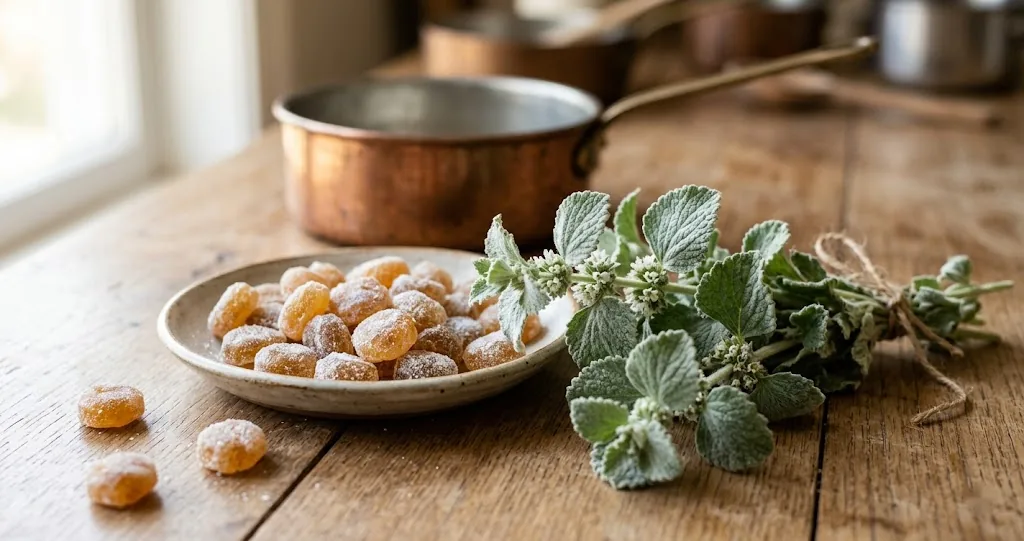
Traditional drops have a flavor that is hard to mistake: bitter, earthy, and lightly mint-like, with a deep brown-sugar finish. This old-fashioned hard candy is made by steeping white horehound leaves, then cooking the strained infusion with sugar to the firm brittle stage. It is a cooking project, not a remedy, but it is a satisfying way to use this distinctive herb.
This recipe makes small, crisp drops that keep well in an airtight jar. Read through the method before heating the syrup. Once the syrup reaches temperature, you need to work quickly and carefully.
What is horehound candy?
These hard sweets are flavored with Marrubium vulgare, commonly called white horehound. The plant is in the mint family, but its fuzzy gray-green leaves and strong bitterness set it apart from culinary mint. The finished drops are traditionally amber to dark brown and has a bittersweet, herbal taste.
Traditional horehound drops and cough drops are often associated with the herb, and are sometimes called a lozenge. This recipe makes confectionery, not medical treatment. If you are seeking care for a persistent cough, fever, breathing trouble, or another concerning symptom, contact a qualified clinician instead of relying on candy.
Old-fashioned horehound and its history
White horehound is native to Europe, northern Africa, and parts of Asia. Cooks have long steeped the bitter herb in water, then used the infusion to make hard candy. The familiar traditional confection is best understood as a bitter-sweet confection with a strong herbal flavor, not as a cure or a replacement for medical care. The herb is also brewed as horehound tea and used with other plants in traditional preparations, but this page stays focused on the hard-sweet form.
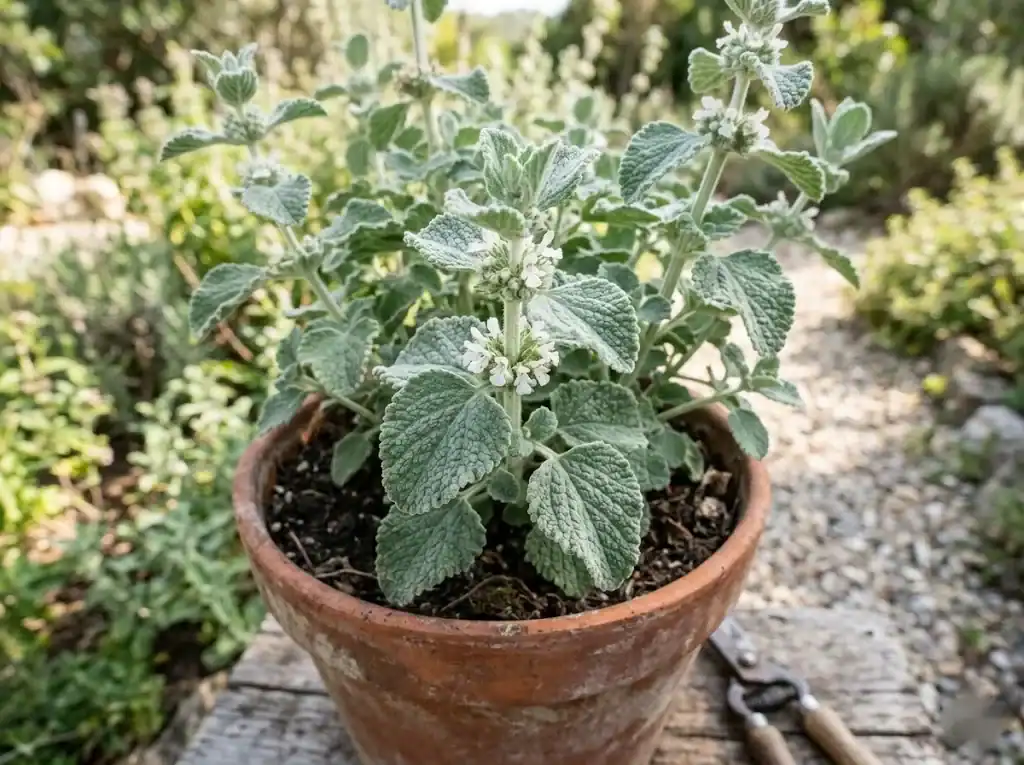
Horehound candy recipe ingredients and equipment
- 2 packed cups fresh white horehound leaves, washed
- 1.25 cups water
- 4 cups packed dark brown sugar
- 1/4 cup light corn syrup
- Neutral oil or butter, for the pan
- Powdered sugar, optional, for coating the finished pieces
You will also need a large heavy saucepan, fine-mesh strainer, heatproof spatula, candy thermometer, parchment paper, and a 9-by-13-inch heat-safe pan or baking sheet with a rim. A large pan matters because boiling syrup expands and can cause serious burns.
If you grow your own plant, use only positively identified white horehound. For growing guidance, see how to grow horehound. Do not substitute an unidentified wild plant.
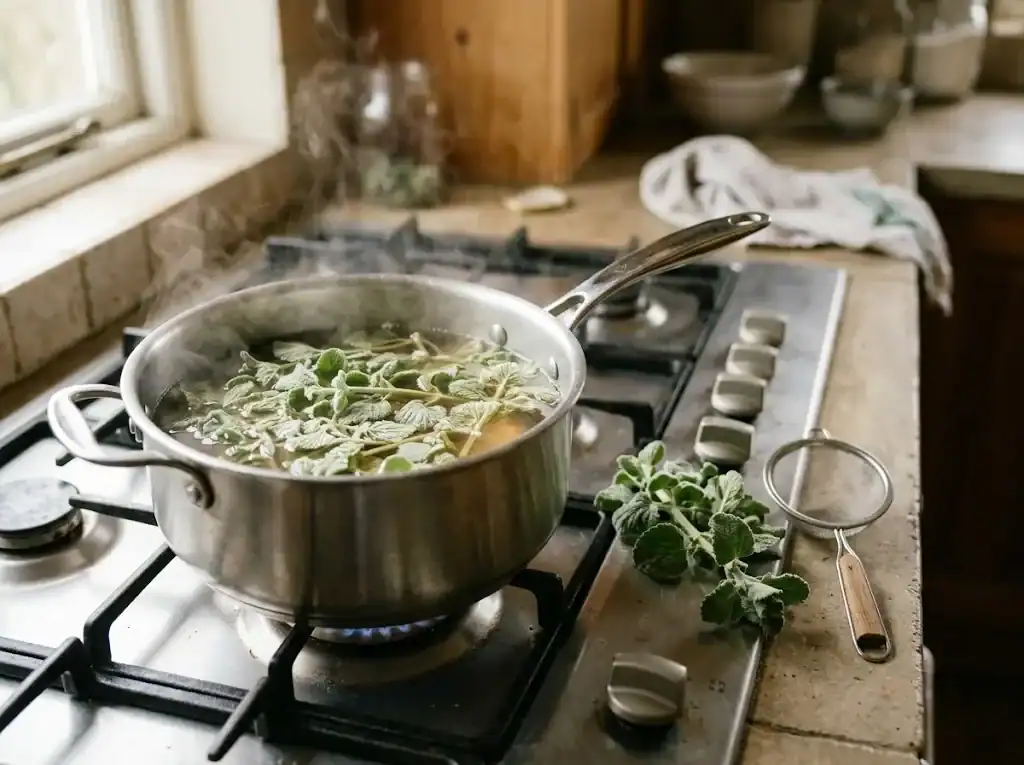
Method for old-fashioned herbal drops
- Make the infusion. Put the horehound leaves and water in a saucepan. Bring to a boil, reduce the heat, and simmer for 15 minutes. Remove from the heat, cover, and let the leaves steep for at least 30 minutes.
- Strain well. Strain the liquid into a heatproof measuring cup, pressing the leaves gently to collect the infusion. You need 1 cup of liquid. If you have less, add enough water to reach 1 cup.
- Prepare the pan. Lightly oil or butter the pan, then line it with parchment if desired. A buttered pan or oiled baking tray both work; use the one that gives you a flat, stable surface. Set it near the stove with your thermometer and a knife or bench scraper ready.
- Cook the syrup. Return 1 cup of infusion to a clean, heavy saucepan. Strain, then add the sugar and syrup: brown sugar and light corn syrup. Stir over medium heat only until the sugar dissolves. Bring the mixture to a steady boil, then boil and continue cooking without stirring until the thermometer reaches 300°F.
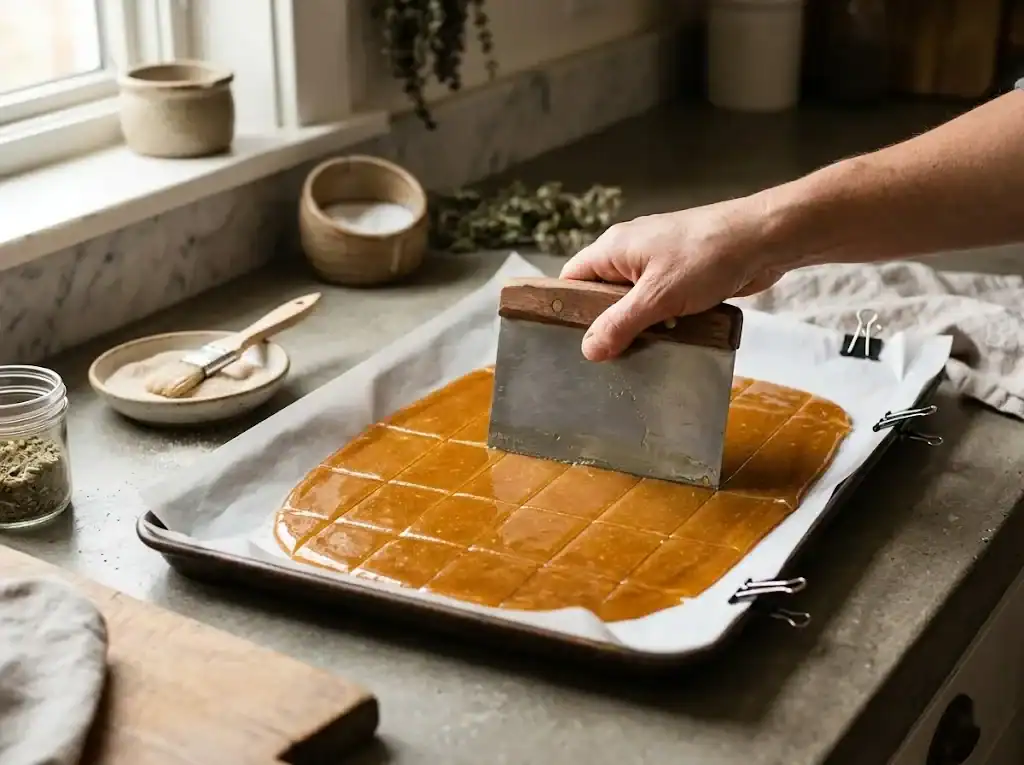
- Pour and score. Carefully pour the hot syrup into the prepared pan. Do not touch it. Let it stand until the surface begins to set but the sheet is still flexible, then score it into small squares with an oiled knife or bench scraper.
- Cool and break apart. Let the candy cool completely. Break it along the scored lines. Toss the pieces with a little powdered sugar if they feel sticky.
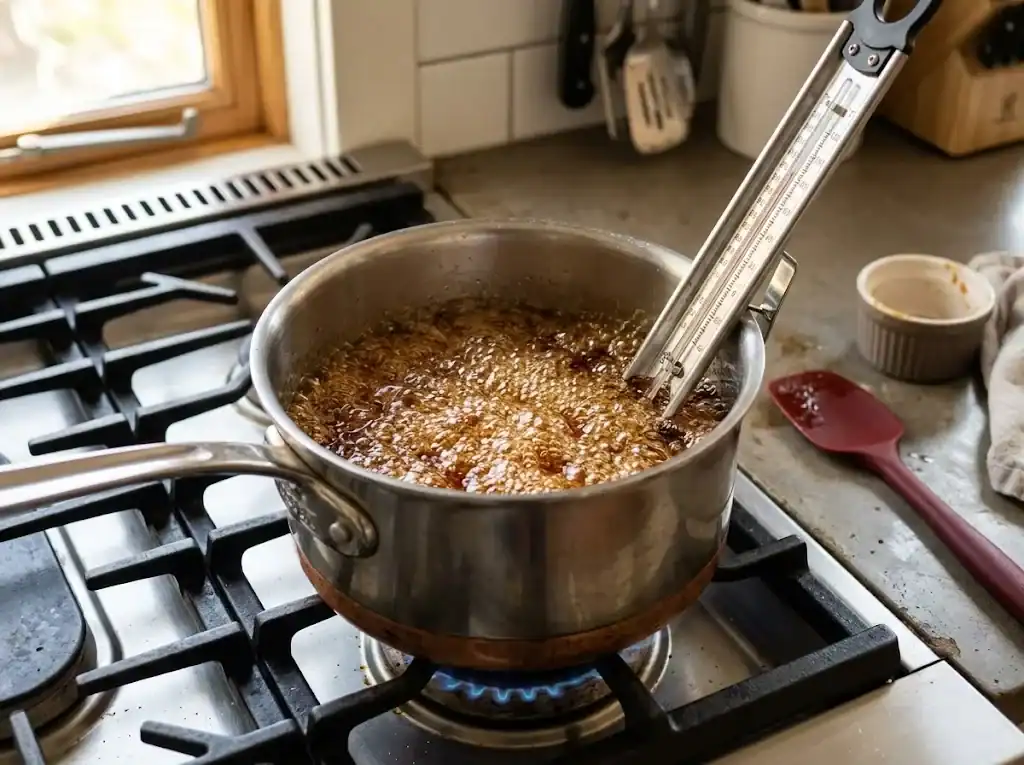
The finished stage generally falls between 146°C and 155°C, or about 295°F to 311°F. A thermometer is more reliable than judging by color alone, especially with dark brown sugar. The method and ingredient proportions above follow the Herb Society of America’s horehound candy recipe, while the temperature range is consistent with NIST’s candy-making guidance.
What does the horehound herb taste like in hard sweets?
Expect bitterness first, followed by caramel notes from the brown sugar. The flavor is more herbal and less cooling than peppermint. Some people enjoy the contrast immediately; others prefer very small pieces after a meal or alongside tea.
Do not add mint extract to the first batch. It can cover the horehound flavor rather than round it out. Make the recipe once as written, then decide whether the bitter edge is what you like about it.
Tips to make hard candy successfully
- Use a candy thermometer. It takes the guesswork out of the target stage and reduces the chance of soft, sticky candy.
- Choose a dry day if possible. Humidity can make hard sweets tacky as it cools and during storage.
- Keep water away from hot syrup. Do not add water after boiling begins, and never taste the syrup directly from the pan.
- Adjust for altitude. Syrup temperatures can need adjustment at higher elevations. Colorado State University Extension provides a useful high-altitude candy chart.
- Work without distractions. Hot sugar syrup sticks to skin. Keep children and pets away from the stove while you pour and score.
Can I use dried leaves?
Yes. The dried herb is convenient when fresh sprigs are out of season, but its flavor is concentrated. Start with a small batch, use a tested conversion for the recipe you choose, and taste the infusion before cooking the syrup. It should be distinctly bitter without tasting stale or musty.
Flavor variations to test later
Make the first batch as written. After you know the baseline flavor, you can test a small separate batch with a little lemon juice or a light honey note. Do not replace the measured syrup with molasses casually, because that changes both flavor and the way the sugar mixture cooks.
Storage and serving
Store completely cool these drops in an airtight glass jar or tin in a cool, dry cupboard. Separate layers with parchment if they are humid or sticky. For longer storage, keep the jar away from sunlight and heat. The candy is best when its surface stays dry and crisp.
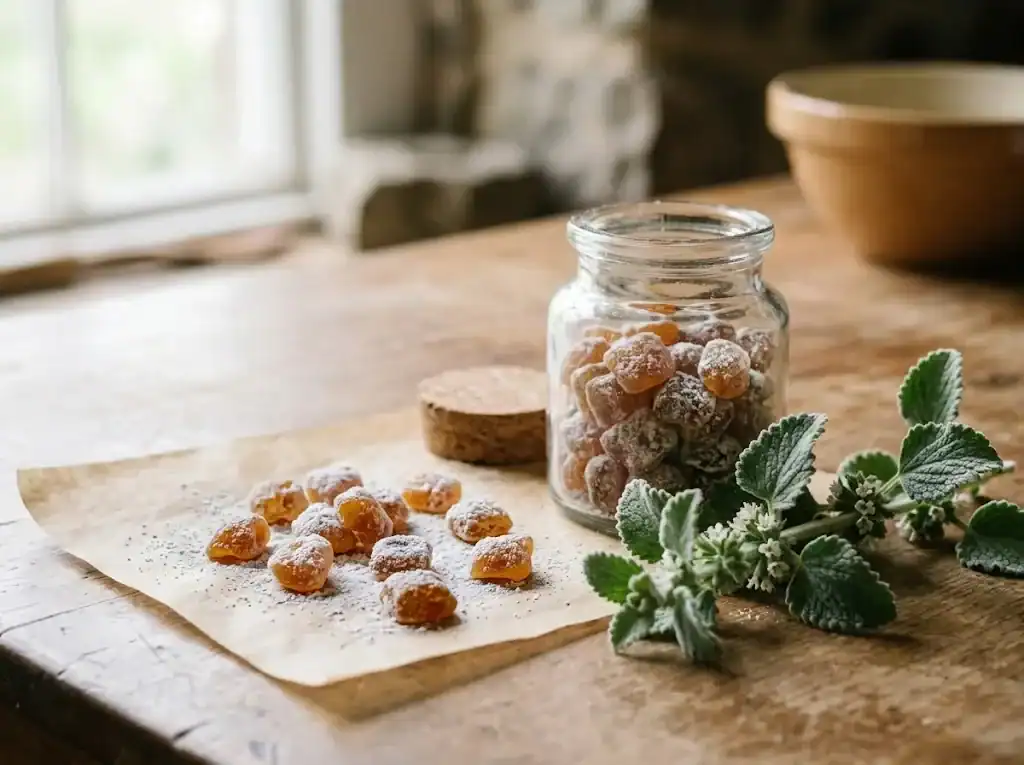
Serve a few pieces with black tea or pack them into small jars as a homemade gift. For more ways to use the herb in the kitchen, explore these horehound recipe ideas.
Can you make cough drops at home?
These drops and cough sweets have a place in traditional food and herbal culture, but a homemade drop is not a natural cough remedy. Do not use it to delay care for chest pain, shortness of breath, a high fever, a cough that will not improve, or symptoms in a young child.
Why this recipe uses an infusion
Steeping the leaves gives the syrup an even herbal flavor without leaving plant fragments in the finished drops. It also keeps the method simple: make the infusion, strain the leaves, then cook the clear liquid with the sugar.
Safety notes
Horehound has a long history of traditional use, but that history does not make these treats a substitute for medical advice or treatment. People who are pregnant, breastfeeding, taking prescription medicines, managing a chronic condition, or considering concentrated horehound products should discuss herb use with a qualified health professional. The European Medicines Agency notes that safety in pregnancy and lactation has not been established for white horehound preparations.
For a broader look at using herbs thoughtfully, visit our medicinal herb benefits guide. Enjoy this recipe for its distinctive flavor and the pleasure of old-fashioned confectionery making.
Frequently asked questions
Can I use dried horehound?
Yes, but dried leaves are more concentrated by volume. Start with a smaller amount and make a small infusion first. Fresh leaves give the cleanest visual cue and a gentler flavor for a first batch.
Why is my horehound candy sticky?
Sticky drops usually means the syrup did not reach hard crack, or the finished pieces absorbed moisture from humid air. Cook to 300 degrees F, cool fully, and store the pieces airtight.
Can I make these without syrup?
Use this tested old-fashioned tested recipe first. Corn syrup helps the sugar syrup cook smoothly. Changing it can affect crystallization and texture, so test a small batch if you decide to experiment.