A shady corner does not have to sit empty, and most yards have a few shady spots worth planting. Leafy herbs can be more forgiving of limited light than Mediterranean herbs grown for their fragrant oils. The useful question is not whether the bed is sunny enough for every herb. It is which herbs match the light it already gets.
A herb that grows in a dim corner still needs some daylight. A bright site with morning sun, filtered light under a deciduous tree, or a few hours of gentle sun is very different from a dark space beside a building. Start by watching the area for a day before choosing plants.
First, tell partial shade from full shade
Partial shade usually means about three to six hours of direct sun, often in the morning. Dappled light shifts as it passes through leaves. Full shade means little or no direct sun, and growth will be slower and harvests smaller there, even for shade-tolerant herbs.
For a new garden, it helps to learn the wider basics of growing herbs before filling the bed. Light is only one part of the plan. Soil drainage, moisture, container size, and air movement matter too.
The best herbs for partial shade
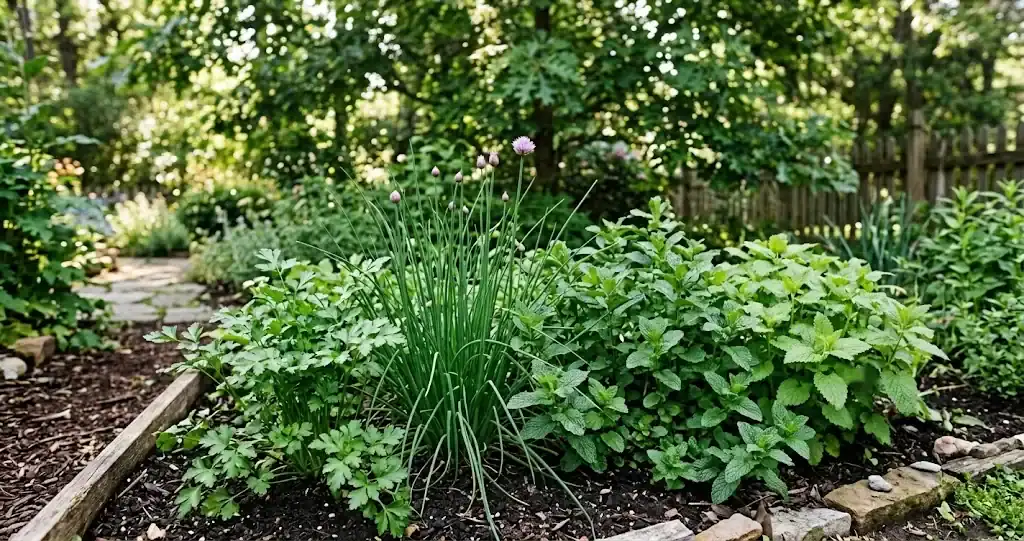
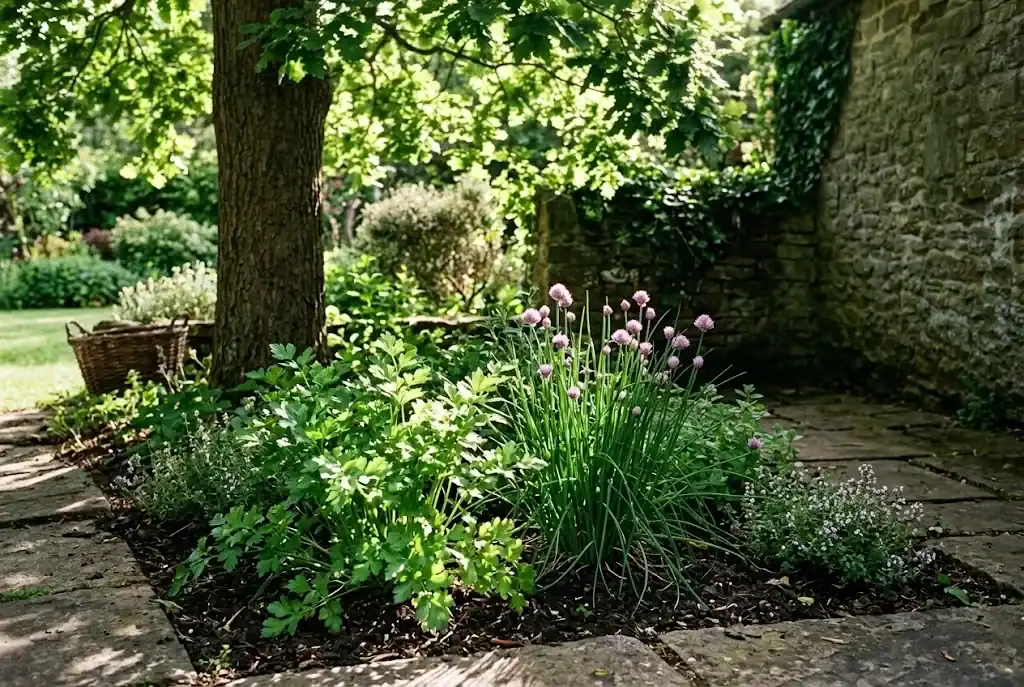
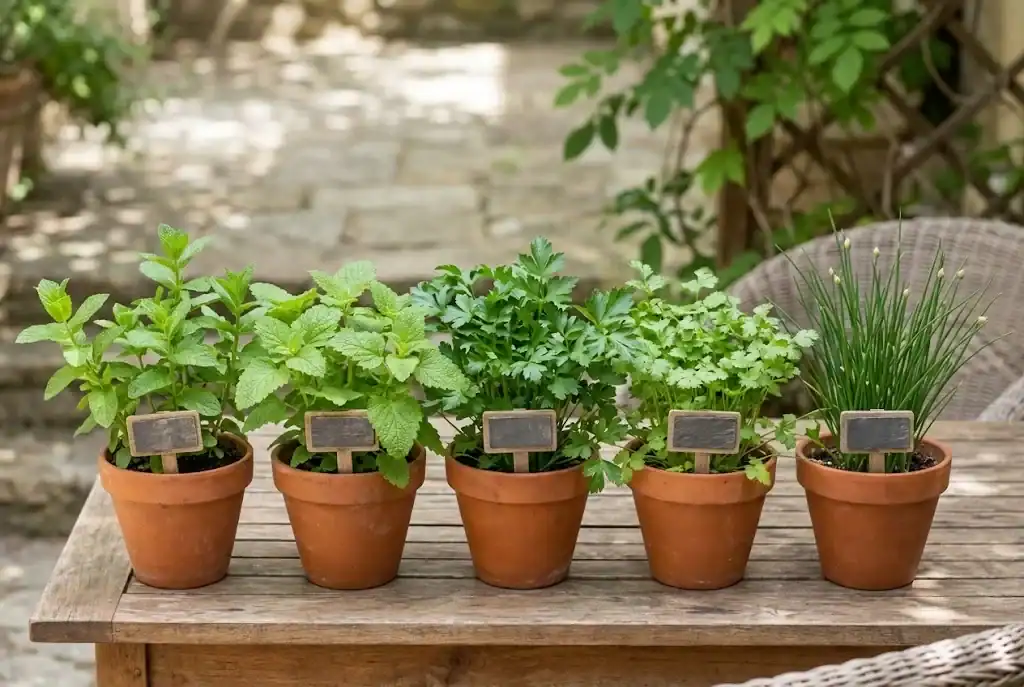
Parsley, cilantro, chives, mint, and chervil are the best herbs for a garden with morning sun or bright, filtered afternoon light. Mint and lemon balm spread readily and count as perennial spreaders once established, so give them a bit of room. Parsley tolerates partial shade well and often appreciates protection from harsh summer sun. Cilantro may bolt more slowly with afternoon cover. A single chive clump grows well here, although it flowers and bulks up faster with more direct sun. Chervil is a cool-season herb that prefers light cover in warm climates.
Herbs for deeper shade
Very few culinary herbs flourish in deep shade. Mint and lemon balm remain the most practical choices for a dim but bright spot. Sweet woodruff handles low light and works as a ground cover, though it is used more often as an ornamental herb than as a kitchen staple. In cool, humid regions, wasabi can grow in a sheltered corner when it has rich soil and reliable moisture, but it is demanding and not a beginner crop.
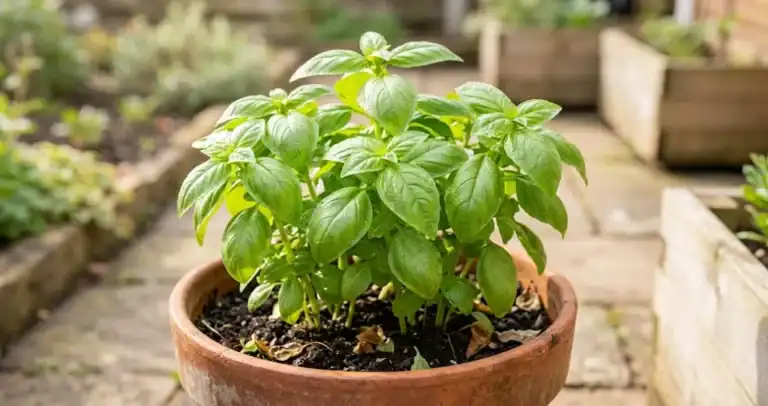
Rosemary, sage, thyme, lavender, oregano, and basil need full sun for sturdy growth and strong flavor. Away from direct light they often become leggy and weakly flavored. A bright windowsill may support parsley or chives instead, but a room without daylight needs a suitable grow light.
Other herbs to test in a sheltered spot
Dill, catnip, and chamomile can tolerate some cover in cool conditions, but they need more direct light than the herbs above. Dill may become floppy and flower early in a dim bed. Catnip is hardy and low maintenance once established, while chamomile needs a brighter edge of the garden to make enough flowers. Oregano, sage, and hyssop are all sun-loving herbs too, so use a sunny container if the garden lacks that light.
Start with one or two of the shade-friendly picks from earlier, then add a new herb at a time. Seedlings are easier to assess than a whole bed sown at once. If leaves become pale or stems stretch toward direct sunlight, move containers to a brighter spot.
Give shade-grown herbs the right soil and water
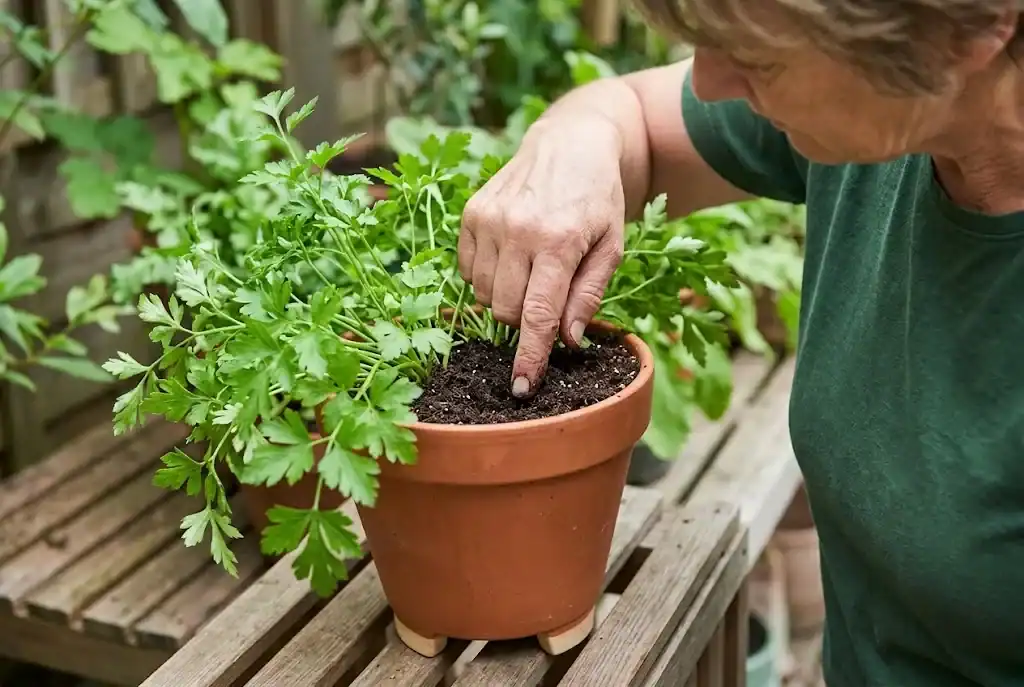
Reduced light also reduces evaporation, so water more carefully than you would in a sunnier herb bed. Check the top inch of soil before watering. It should feel lightly moist, not saturated. Heavy, constantly wet soil can damage roots and invite fungal disease. Mix compost into a garden bed to improve structure, then use potting mix in containers. Set containers on feet or bricks so water can drain freely.
How to harvest without weakening the plant
Pick little and often. Snip stems from the outside of the plant, or just above a set of leaves. Leave enough foliage for the plant to keep making energy in limited light. A light harvest every week is easier on a dim-grown herb than stripping it bare for one large meal.
Growing herbs where you can reach them makes that habit easier. If low light is part of a small patio garden, this guide to why growing your own is worth it can help turn a few useful pots into a routine you will keep.

Common mistakes in a shade herb garden
- Planting sun herbs: Rosemary, sage, and lavender need strong, direct light.
- Overwatering: Slow-growing plants use less water. Let the soil guide you instead of watering on a fixed schedule.
- Using a spot that is too dark: Tolerating low light does not mean thriving without any. Move pots toward brighter edges if stems stretch or leaves pale.
- Ignoring slugs and snails: Damp, dim ground gives them cover. Hand-pick them at dusk and keep mulch away from plant crowns.
Build a shade garden around what it does best
A dim bed is a good place for fresh leaves, not a test site for every herb in the catalog. Choose the partial-shade group above, then give each plant the drainage and moisture it needs. Put rosemary and sage in the sunniest available space.
For more ideas about the benefits of a home setup, see the benefits of a home herb garden.
Frequently asked questions
Can rosemary grow in shade?
Rosemary needs strong, direct light. Away from it, it usually becomes sparse and less aromatic.
Can basil grow in shade?
Basil needs plenty of sun for strong growth and flavor. It may survive in a little afternoon cover during very hot weather, but it is not a reliable choice for a shady bed.
What herbs grow in full shade?
Mint tolerates the most cover of any common culinary herb, but even it performs better in bright shade than in a truly dark site.