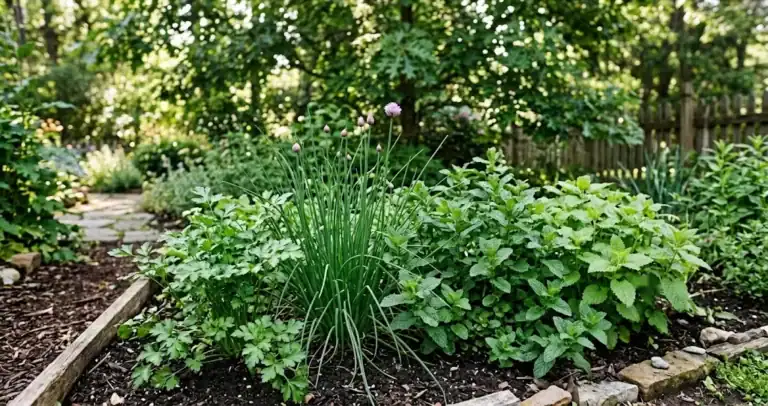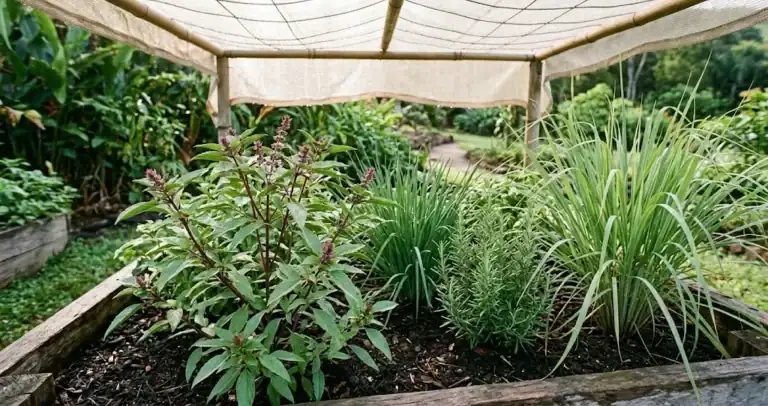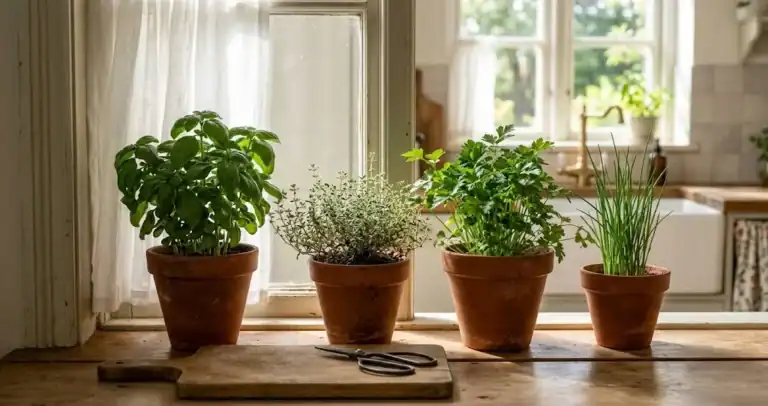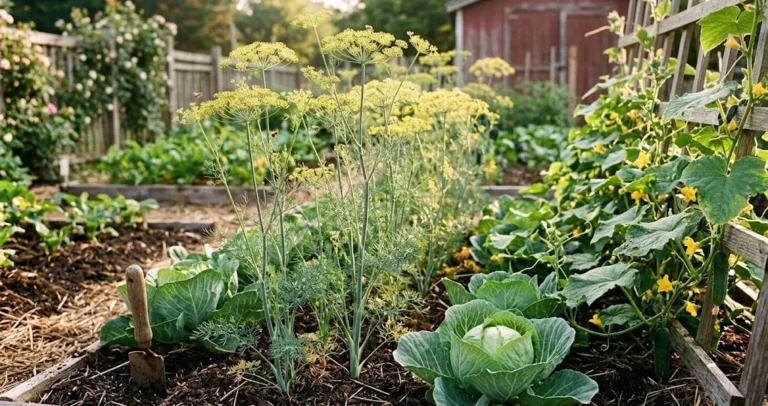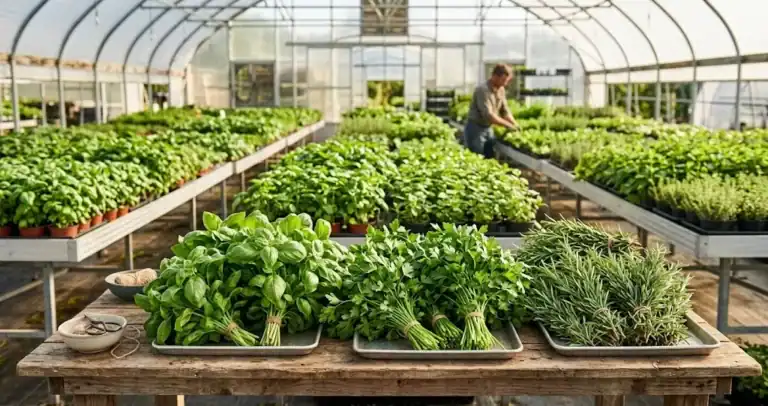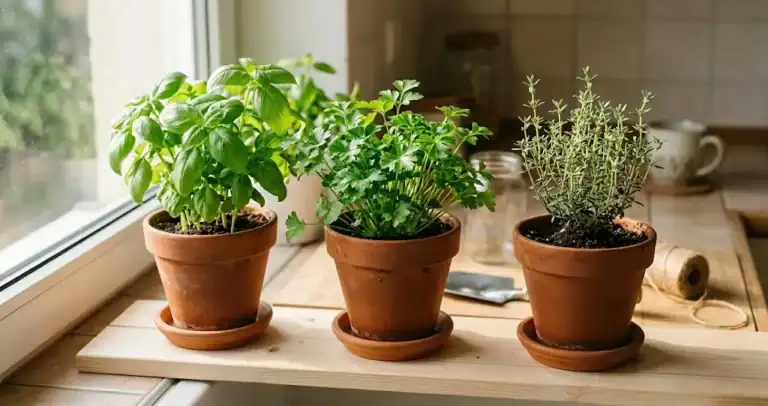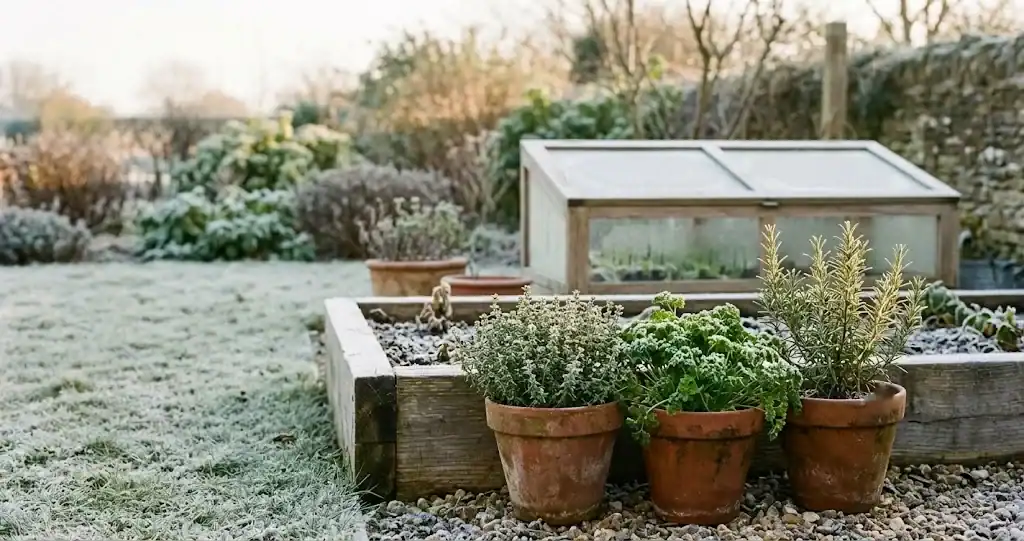
Growing herbs in winter is less about forcing summer growth to continue and more about giving each plant what it can actually use. A bright shelf keeps parsley, coriander, and chervil in leaf. Outside, a dry sheltered bed helps oregano, chives, and sage overwinter and reach spring in good shape.
Start with the place, not the plant list. A kitchen windowsill, a cold frame, and an exposed balcony have very different limits. Indoors the job is light and measured watering. Outdoors it is drainage, shelter, and protecting roots from repeated freezing and thawing.
Which herbs grow in winter, and which simply rest
There are two sensible goals, and they need different plants. The first is an active indoor harvest, which suits parsley, chervil, and compact thyme or oregano when light is strong enough. The second is outdoor survival: keeping established chives, mint, lemon balm, and rosemary alive so they can start again in spring.
Bay is an evergreen shrub in mild regions, and a bay leaf picked in January is worth the effort, but it wants a bright frost-free spot where winters bite. French tarragon goes dormant on purpose and should be left to it. Basil is the exception that catches people out: it hates chilled roots and will collapse on a cold sill, so it needs genuine warmth or a fresh sowing later. This is why hauling every pot indoors for the winter is rarely the right answer. Many herbs would rather be left where they are.
To grow herbs indoors, start with light
A south- or west-facing window is a reasonable start, but midwinter sun is short. Watch the stems rather than the calendar. Pale, stretched growth with long gaps between leaves means the light is not enough. Move the pot closer to the brightest glass, without letting leaves rest against a freezing pane.
A grow light is far more reliable. Use an LED fixture at the hanging distance its maker specifies and run it 12 to 14 hours a day. A small group of well-lit pots will beat a crowded sill every time. Turn them now and then so every side gets a share.
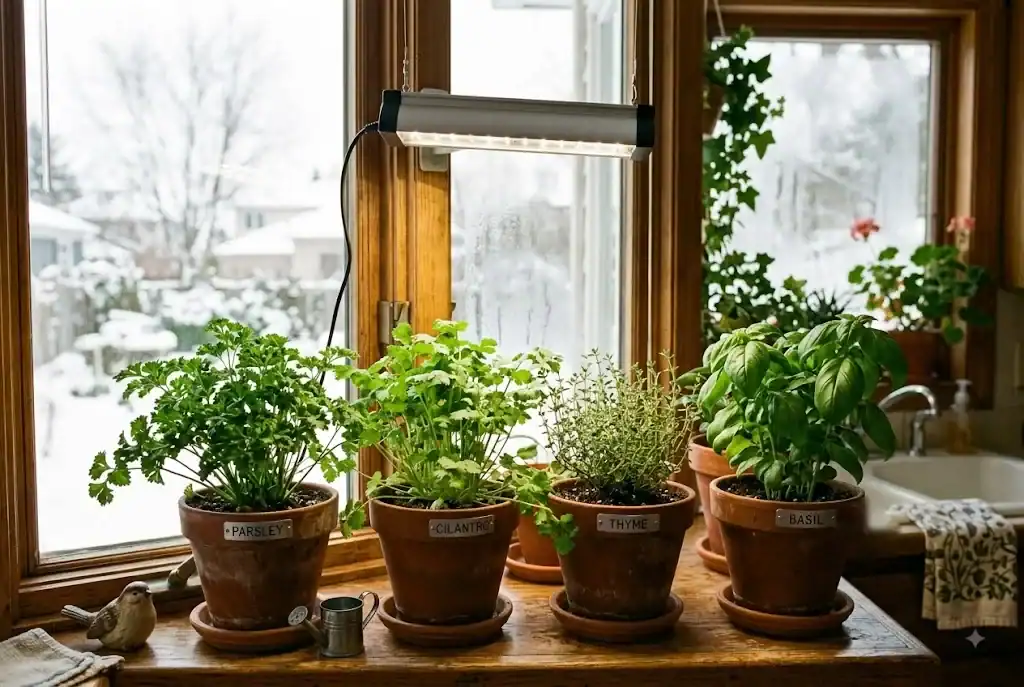
Use a loose potting soil or seed mix and pots that drain. Check the surface with a finger before watering. Parsley and chervil like steady moisture; the Mediterranean kinds want the top to dry a little between thorough soakings. Empty the saucer afterwards, every time.
If your brightest room is still dim, do not expect sun-lovers to cope. Our guide to herbs that grow in shade helps you pick for lower light.
The best herbs for a winter windowsill: parsley, cilantro, and chervil
Parsley earns its place first. It tolerates a cool room, picks over a long season, and goes into soups, omelets, sauces, and salads. Give it a deeper pot for its taproot, take outer stems, and leave the center to grow on.
Cilantro, sold as coriander in much of the world, grows fast from seed but bolts in a hot dry room, so sow a little every few weeks rather than one big batch. Chervil brings a delicate anise note and likes the same cool bright corner; cut it gently and use it soon after.
Winter savory and lemon thyme are worth a place too where they are winter hardy. Oregano does well indoors given real sun or a grow light and a mix that is never soggy. Rosemary can work in a bright cool room, but a dry heated house plus weak light is a hard combination, and a fresh sowing usually beats nursing a tired summer pot.
Prepare the winter herb garden: mulch, and when to prune
Outdoors, root health is the whole game. Improve drainage before the ground freezes, especially on clay or in low spots where water stands after rain. Once the soil cools, spread loose mulch around the crowns while keeping it clear of the stems, which moderates sharp swings without leaving a wet collar at the base.
Do not prune hard in late fall. Take off broken or diseased growth and leave real cutting until spring. Cutting rosemary or thyme deeply just before cold weather pushes out tender shoots at the worst possible moment. Stop heavy feeding well before winter too.
A cold frame, low tunnel, fleece, or cloche cuts wind and shelters a small crop of cool-season leaves. Vent it on sunny days. A sealed cover traps damp, and damp foliage is not protection. Where winter rain is the main threat, soil that sheds water beats extra insulation.
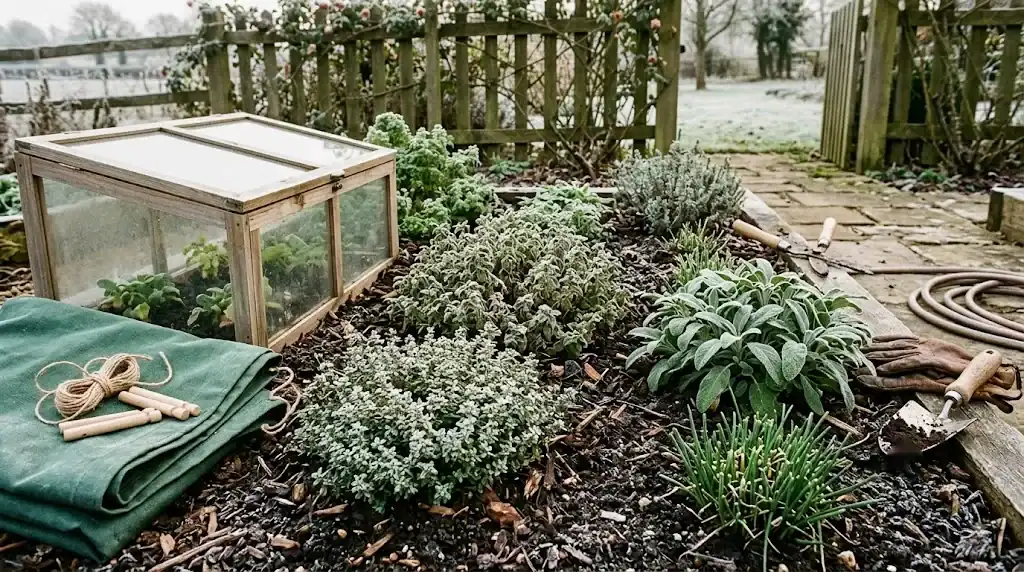
Potted herbs and winter survival
Roots in a pot are exposed on every side, so a plant that shrugs off a bed winter can die in the same weather in a container. Group them against a sheltered wall, lift them off frozen paving, and keep rain from pooling underneath. A larger outer container buffers temperature swings, provided water can still escape.
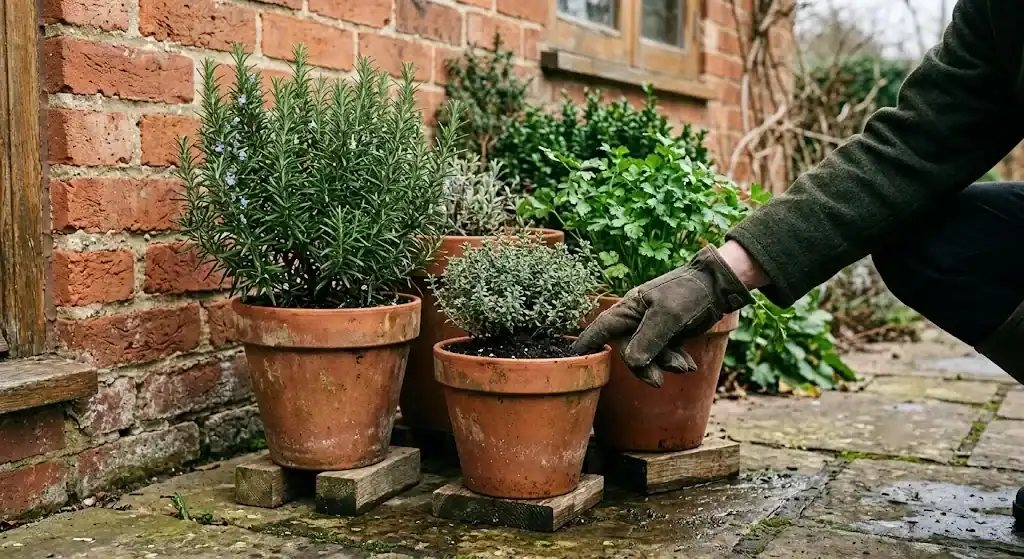
Tender plants come in before the first frost. Where winters are too cold for them, move bay and rosemary to a bright frost-free room, checking the leaves for aphids and spider mites first. Avoid moving anything straight from a cold patio to a dim spot beside a radiator; cool and bright is much kinder.
Potted herbs aside, chives, mint, and lemon balm can look finished after frost and still be very much alive below ground, ready to push new growth in spring. Keep the root zone from drying out completely, protect it to suit your climate, and wait. Spring shoots are a better verdict than brown tops in January.
A hardy perennial herb, a biennial, and what comes back
Parsley is a biennial, so it often gives leaves into a second season before it flowers. A hardy perennial herb such as oregano, sage, chives, or mint returns where its hardiness matches the site. The French kind is grown from divisions rather than seed and may sulk until conditions improve.
An annual is best restarted from seed once it turns leggy, chilled, or pest-ridden. Re-sowing the leafy kinds in small batches is the practical way to keep a kitchen supply coming.
Harvest lightly while growth is slow
Winter picking should be modest. Take a few outer parsley stems, some chervil, or green tips from shoots that are actively growing. Do not strip a plant bare or cut back into old wood. The less light a plant gets, the longer it needs to replace what you take.
Small harvests still change a meal. Harvest herbs sparingly through the winter months and they keep giving. Parsley lifts soup, eggs, and beans, and a stew is better for either. Chervil suits soft eggs and delicate sauces. Rosemary and thyme carry roasts, stews, and baked vegetables. Leave anything newly moved, visibly stressed, or recovering from cold alone for a while.
Use cold protection at the right moment
Cover for a short severe spell, not as a permanent tent. Put fleece or a cloche on before sunset when hard frost is forecast, then lift or vent it as the temperature climbs. That stops leaves being pressed under wet fabric and lets air move after rain.
Snow insulates soil, while bare ground that freezes and thaws repeatedly can heave shallow roots upward. When the ground softens, firm any lifted crown back in and replace the mulch. In a wet climate, choose an open position where leaves dry quickly after a storm. In zone 5 and zone 6, extra winter protection for a container is often the difference between survival and loss.
A quick weekly check
- Read the forecast for frost, wind, and long spells of rain.
- Feel the mix before watering anything indoors.
- Empty saucers and confirm outdoor pots still drain.
- Check indoor leaves for pests, pale stretching, and dry-heat damage.
- Open cold frames and cloches on mild sunny days.
- Pull mulch back from any crown that stays wet after a storm.
These few habits catch most winter problems early. Yellow leaves in a wet mix mean too much water. Brown edges beside a cold window are chill injury. Crisp tips near a radiator mean dry air. Leggy growth calls for more usable light, never more fertilizer.
Plan around your own microclimate
A hardiness zone is useful shorthand, but no gardener ever worked a plot the forecast described exactly. A brick wall holds warmth. A balcony runs colder than the forecast. Raised beds shed water fast, while a low corner stays wet for days. Watch where winter sun, wind, and rain actually fall before you commit a plant to a spot.
For the wider foundations of soil, spacing, and seasonal planning, see our beginner’s guide to growing an herb garden. Start small, note what copes, and let that shape next year’s list.
Common questions
Can I grow herbs indoors over the winter?
Yes. Give them a sunny window or a grow light, a loose mix, pots that drain, and water judged by the soil rather than the schedule. Parsley and chervil are the easiest places to start.
What temperature is too cold?
There is no single figure. Basil needs cover before frost, while an established plant in well-drained ground copes with far more cold than the same plant would in a small pot. Read the cultivar label alongside your local forecast.
Which herbs come back next year?
Chives, mint, lemon balm, thyme, oregano, and sage return where their hardiness suits the climate. A chive clump can be divided in spring once it has rested. Rosemary manages it in milder regions. Parsley may carry on into a second season.
Sources and further reading
- NC State Extension: Winterizing the Herb Garden
- University of Illinois Extension: Keep Growing Herbs Indoors This Fall and Winter
- Iowa State University Extension: Can I Grow Herbs Indoors Over the Winter?