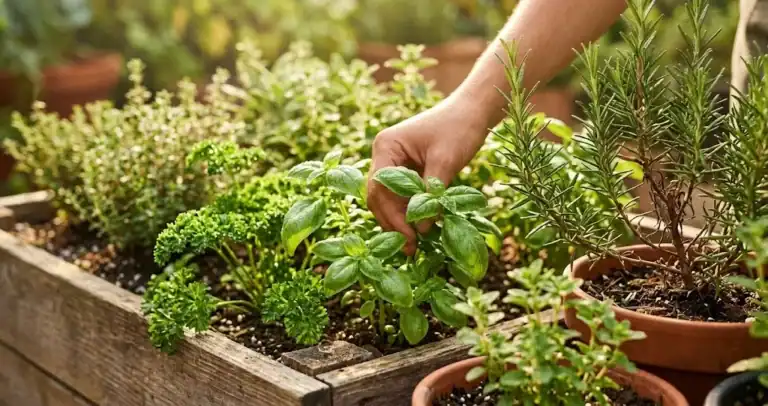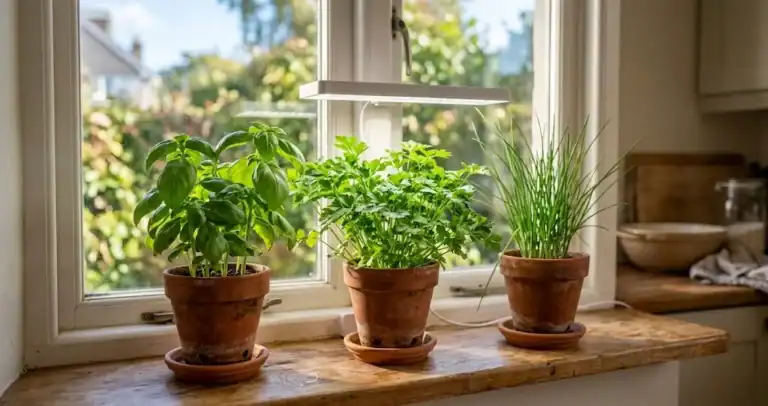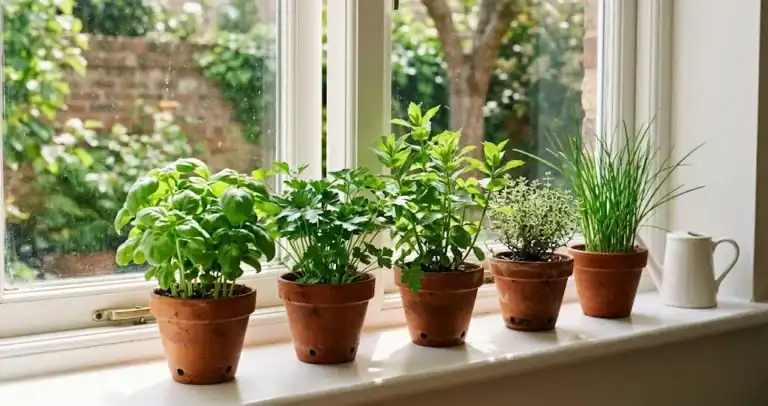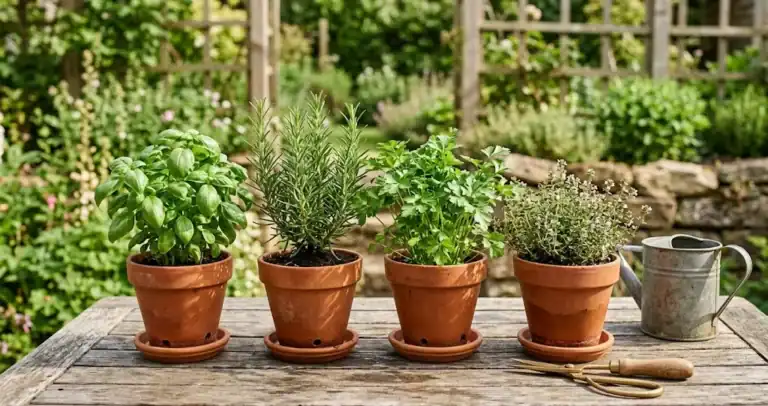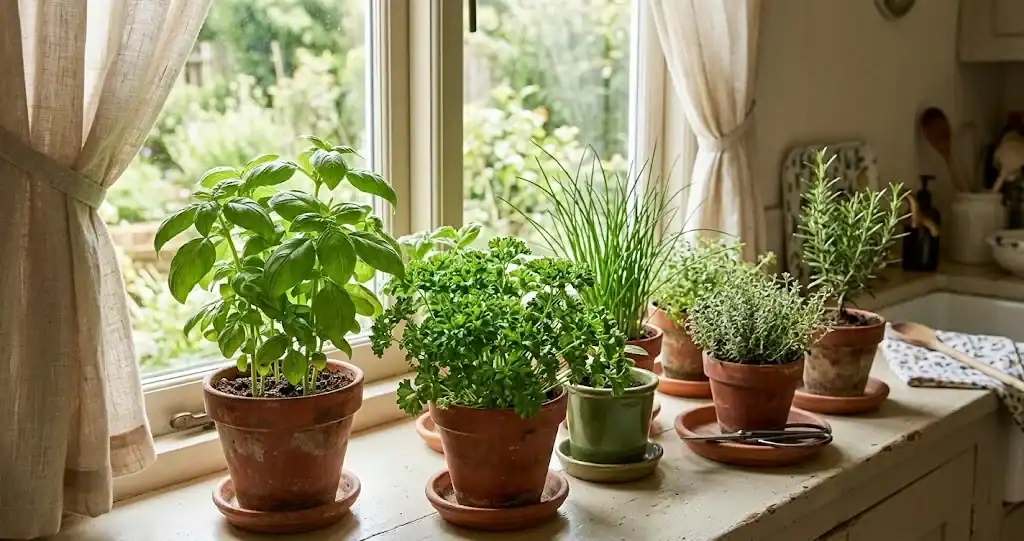
A pot of fresh basil on a sunny kitchen sill, a clump of chives perking up beside the sink, a sprig of rosemary that survives the winter because it never sits in a draft. A windowsill setup is the smallest, easiest way to keep cooking herbs close at hand, and it works for renters, apartment dwellers, and anyone with more counter space than garden bed. The plants do not ask for much. They need light, decent soil, regular watering, and a window you actually walk past every day.
The full guide below walks through what to plant, which window to pick, how to pot them up, and how to keep the harvesting coming rather than fading after a few cuttings. Whether you are starting your first pot of basil or trying to figure out why last year’s parsley gave up by March, this is the routine that works in a real kitchen window, not a sunroom or a greenhouse.
For a fuller grounding in planning an indoor herb garden from containers and soil to a year of fresh harvests, the Beginner’s Guide to Growing an Herb Garden covers the broader layout, soil, and spacing basics a kitchen setup builds on.
What kinds of herbs grow well on a kitchen sill?
Most culinary herbs are native to sunny, dry climates, so they actually like the warm air and bright light that a kitchen window provides. The varieties that settle in fastest are basil, parsley, chives, mint, thyme, sage, and tarragon. A few others, like rosemary, cilantro, and oregano, are doable but tend to bolt or get woody indoors, so they are better treated as short-term crops and replaced every few months.
These are the classic windowsill herbs to start with, and most grocery store plant sections carry at least a few of them in small nursery pots ready to drop into a planter.
For a beginner, a small, focused selection beats a sprawling collection. Three or four containers give you leafy herbs for caprese and finishing, a clump of alliums for eggs, and a woody Mediterranean for roasted potatoes. That is enough variety to feel like a real windowsill herb garden without crowding the window or running out of light.
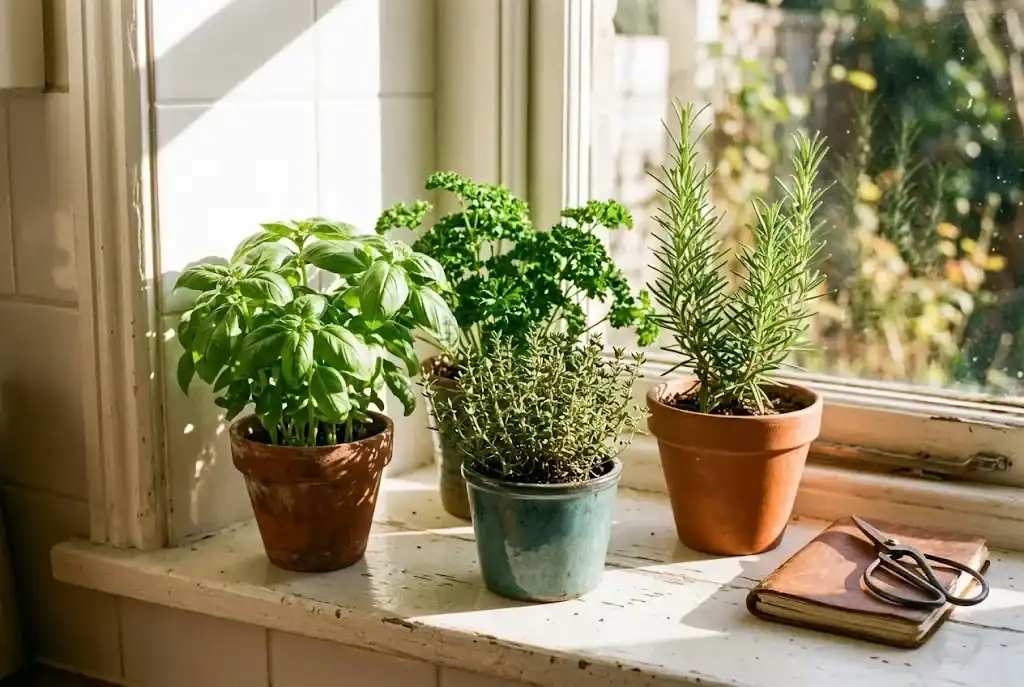
- Leafy annuals like Genovese and sweet basil grow fast from seed or starter plant and reward regular pinching with bushy new growth. Sweet basil is the standard; Genovese has the classic flavor for pesto.
- Curly-leaved options prefer a cooler spot, so set them a step back from the glass if the window runs hot in summer.
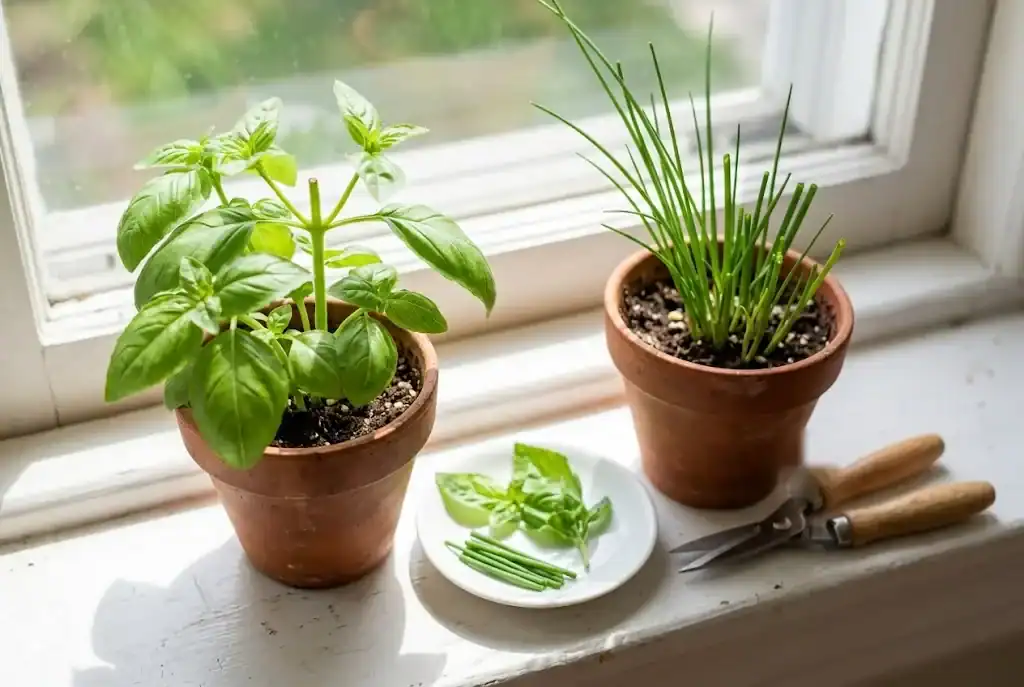
- Alliums like chives are forgiving. Cut a handful of stems about an inch above the soil and they grow back within a week. A single chive plant in a small pot is a great starter.
- Mint is one of the easiest to grow indoors, but keep it in its own container. Its roots run fast and will crowd out neighboring plants.
- Mediterranean woody varieties like rosemary prefer the drier side of watering and the sunniest window you have.
- Cool-season annuals like dill and tarragon do well in a cool, bright window. Dill will bolt in summer heat, so resow every few weeks for a steady supply.
Which window should you use for an indoor herb garden?
A south-facing exposure is ideal for most culinary herbs, especially in winter when the sun is low and the days are short. A west-facing window is the next best choice, particularly if it catches afternoon sun. East-facing windows work for parsley, mint, and chives, which prefer gentler light and cooler temperatures. North-facing windows rarely deliver enough light to keep herbs productive through winter unless you add a grow light to make up the gap.
Aim for at least six hours of direct sunlight a day for sun-loving selections like basil and woody Mediterranean picks. If the window only delivers four or fewer hours, choose shade-tolerant varieties like mint, chives, and cilantro, or plan to run a grow light for a few hours in the evening. Most culinary herbs lean toward the sunny side, and lack of sunlight is the single most common reason an indoor garden stops producing.
For a step-by-step walk-through of choosing the right spot, container, and starter herbs for a first-time setup, How to Grow Herbs in a Window goes deeper on the windowsill-specific details.
What containers and soil work best for indoor herbs?
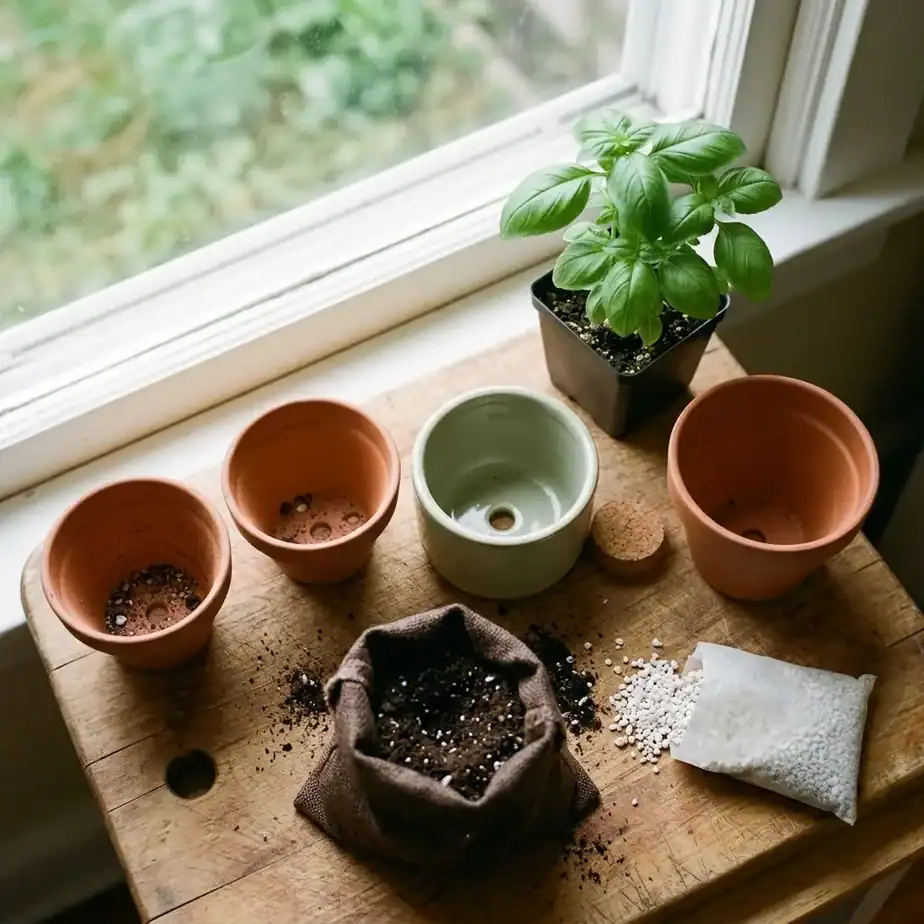
Herbs need containers with a hole in the bottom for drainage. Standing water in the base of a planter is the fastest way to kill a sun-loving herb. If the only vessel you love does not drain, nestle the plant in a cheap plastic nursery container that fits inside the decorative outer, then lift the inner one out to water and let it empty before putting it back.
Most herbs grow well in a six- to eight-inch planter. Smaller containers dry out too quickly and tip over when the plant gets top-heavy. Larger ones hold too much moisture around the roots and risk rot, especially for Mediterranean selections like rosemary. A quality indoor potting mix is the right starting point. Look for a mix that drains well and includes perlite or coarse sand to keep it from compacting. Avoid garden soil, which holds too much water and brings in pests.
For Mediterranean varieties, an even grittier mix works best. Blend two parts potting soil with one part perlite to give woody Mediterranean varieties the well-draining conditions they prefer. For leafy and allium types, plain potting soil on its own is fine. A small layer of compost mixed into the top inch gives a slow feed for the first month or so.
How do you plant herbs in an indoor container garden?
You can start herbs from seed or pick up starter plants from a nursery. Starter plants give you a harvest within a week or two, which is the easiest path when you only have a kitchen window and a limited supply of patience. Seeds are cheaper and offer a wider selection, but they need bright light from the moment they sprout and most take four to eight weeks before they are big enough to harvest.
If you are starting from seed, plant in small containers or seedling trays rather than directly in the final vessel. Press the seeds into moist soil, cover lightly, and keep the soil consistently damp until seedlings emerge. Once the seedlings have two sets of true leaves, thin them to one strong plant per container and move them to their final home.
If you are transplanting nursery herbs, loosen the roots gently before potting them up. Most nursery plants are root-bound, and teasing the roots apart helps them spread into the new soil rather than continuing to circle the original root ball. Water thoroughly after planting and keep the soil moist for the first week to help the plant settle.
How often do you water and feed indoor herbs?
The simplest rule is to water when the top inch of soil feels dry. Stick a finger in and check. Most herbs prefer a thorough watering followed by a short dry period rather than constant light sips. Water until it runs out the hole in the bottom, then wait until the surface of the soil feels dry before watering again. Empty any water that collects in the saucer within fifteen minutes so the roots are not sitting in it.
Mediterranean varieties prefer the soil to dry out a bit more between waterings than leafy annuals. If you are growing a mixed selection, group herbs with similar watering needs in the same window or at least close to each other so you do not overwater one to keep another happy.
Herbs grown in potting mix do not need much fertilizer. A half-strength liquid feed once a month during spring and summer is plenty. Too much produces leggy growth with less flavor. In fall and winter, the plants slow down naturally, and you can skip feeding altogether until days lengthen again in February or March.

For a fuller seasonal routine that keeps an indoor garden productive through the year, Helpful Tips for Nurturing Herb Gardens walks through the rhythm of watering, pinching, and replacing containers from one season to the next.
How do you harvest indoor herbs without killing the plant?
The trick is to harvest a little and often rather than cutting a whole stem at once. Pinch off the top few inches of growth just above a pair of leaves, and the plant branches out from that point and produces two new stems. For leafy varieties, regular pinching keeps the plant bushy and delays flowering, which is when the leaves turn bitter.
Cut chives by snipping a small bundle of stems about an inch above the soil. New shoots replace them within a week. For oregano and rosemary, snip the tender tips rather than cutting into the woody lower stems, which can struggle to regrow.
If a plant starts to flower, pinch the flowers off as soon as you see them. Once an herb sets seed, it slows leaf production and the leaves often turn tough or bitter. For basil, flowering is a sign the plant is winding down, and it is usually best to start a fresh container from seed or a new starter plant rather than fight to bring it back into production.
What are the most common problems with indoor herbs?
Leggy, pale growth usually means the plant is not getting enough light. Move it closer to the glass, switch to a brighter window, or add a grow light for a few hours in the evening. Yellowing leaves often mean overwatering; clear the hole in the bottom and let the soil dry out before watering again.
Aphids, whiteflies, and spider mites are the most common pests on indoor herbs. A strong spray of water in the kitchen sink usually knocks them back. For stubborn infestations, a spray of diluted insecticidal soap works, but rinse the leaves before cooking with them. Letting the soil dry out between waterings and giving each plant enough space for air to circulate around the leaves helps prevent most pest problems from getting started.
If a Mediterranean herb starts dropping leaves, the cause is usually either overwatering or a container that does not drain well enough. Repot it in a grittier mix with extra perlite, and let the soil dry out almost completely between waterings.
Can you keep a windowsill herb setup going through winter?
Yes, and for many kitchens this is when the indoor garden earns its keep. In summer the garden outside is bursting, but in winter, fresh herbs are expensive and a fresh sprig becomes a small daily luxury. The plants need a bit more attention in winter because indoor heating dries the air and the lower sun angle means less natural light.
Group containers together to raise the humidity around them, water less frequently since the plants grow more slowly, and rotate the planters a quarter turn each week so the plants do not lean toward the window. If any herb starts to struggle, accept that as the natural end of its season and start a fresh container from seed in late winter for the spring growth cycle.
A short routine for a healthy windowsill herb garden
- Pick a south-facing window with at least six hours of direct sunlight.
- Use containers with holes in the bottom and a quality, well-draining potting soil.
- Group herbs by watering needs: leafy annuals and alliums on the moist side; Mediterranean woody varieties on the drier side.
- Water thoroughly when the top inch of soil dries out, and empty the saucer afterward.
- Pinch and harvest the top few inches regularly to keep plants bushy.
- Feed lightly with a half-strength liquid fertilizer once a month in spring and summer.
- Watch for leggy growth, yellowing leaves, and pests, and respond early.
A windowsill setup is not a substitute for an outdoor bed, but for the cook who likes fresh herbs close at hand it is the easiest, most reliable way to keep leafy annuals, alliums, mint, and a few woody Mediterranean varieties productive through the year.
Frequently asked questions
What is the easiest herb to grow in a window?
Chives and mint are the easiest to start indoors. Both tolerate a bit of uneven watering, both come back quickly after cutting, and both do well in average indoor light. Leafy annuals are close behind but want more sun and steadier watering.
How much sunlight do herbs need on a windowsill?
Most culinary selections want six or more hours of direct sunlight a day, ideally through a south- or west-facing window. Mint, chives, and parsley manage with four to six hours in an east-facing window. Anything less than four hours usually means adding a grow light for a few hours each evening.
Should I start herbs from seed or buy starter plants?
Starter plants give you a harvest within a couple of weeks and are the easiest way to begin. Seeds are cheaper and offer a wider variety, but they take four to eight weeks before they are ready to harvest and need bright light from the day they sprout. Most indoor gardeners keep both on the go: starter plants for fast crops and seeds for steady replacement of fast-cycling herbs like basil and cilantro.