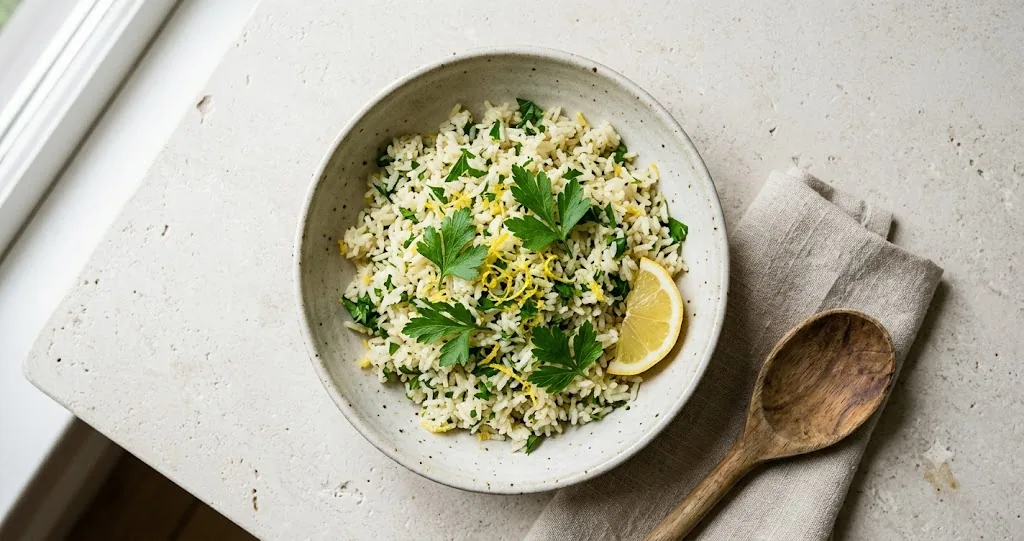
Parsley does more in rice than sprinkle color on top. Stirred in off the heat, its peppery, slightly grassy character cuts through starchy grains and turns a plain side dish into something worth serving on purpose. Yes, parsley tastes good in rice, especially fresh flat leaf (Italian) parsley, and it pairs naturally with lemon, garlic, and olive oil, whether in this base recipe or its lemon-garlic and Mediterranean variations. This parsley rice recipe covers all three, plus the practical details in between, so let’s get cooking.
Why parsley works so well in rice
Parsley brings a clean, herbal edge that plain rice lacks. Unlike heartier herbs such as rosemary or sage, parsley does not need long cooking to release its aroma, so it works well stirred in at the very end. Its color also stays vivid against white or light-colored rice, which makes the dish look freshly made even on a weeknight.
Parsley is one of the most versatile herbs in a home kitchen, useful well beyond this dish. For more ways to put it to work, see our guide to cooking with parsley in soups, sauces, and marinades.
Choosing the right rice for this recipe
Long-grain white rice, basmati, and jasmine rice all work well here, and each brings a slightly different result.
- Long-grain white rice: mild and neutral, holds its shape, and separates easily once fluffed. A dependable everyday choice.
- Basmati rice: aromatic and light, with slender grains that stay distinct. Good with the lemon-garlic and Mediterranean variations.
- Jasmine rice: slightly sticky and fragrant, with a soft texture that pairs well with butter-based versions.
- Brown rice: chewier and higher in fiber. It takes longer to cook and needs more liquid, but still takes parsley well once tender.
Avoid short-grain or sushi rice for this dish. Their higher starch content makes the grains clump, which works against the light, fluffy texture this recipe needs.
Getting the liquid ratio right
Liquid ratio matters more than any other step, since gummy or undercooked rice will not showcase the parsley.
- Long-grain white rice: 1 cup rice to 1 3/4 cups water or broth, simmered 18 to 20 minutes.
- Basmati rice: 1 cup rice to 1 1/2 cups water, after rinsing until the water runs mostly clear, simmered 15 to 18 minutes.
- Jasmine rice: 1 cup rice to 1 1/2 cups water, simmered 15 to 18 minutes.
- Brown rice: 1 cup rice to 2 1/4 cups water, simmered 40 to 45 minutes.
Rinsing white and basmati rice before cooking removes surface starch and helps keep the grains separate once the parsley is folded in. These ratios and times work for the standard stovetop method used in every recipe below. If the instructions on your rice package differ, follow the package instead, since exact ratios can vary a little by brand.
Troubleshooting mushy, dry, or scorched rice
- Mushy or gluey rice: usually too much liquid, or the lid was lifted partway through and let steam escape. Use slightly less liquid next time, or shorten the simmer by a minute or two.
- Dry rice or undercooked spots: usually not enough liquid, or the heat ran too high and it evaporated early. Add a tablespoon or two of hot water, re-cover, and simmer a few more minutes.
- Scorched or stuck-on rice: the heat crept up during the simmer. Keep it at a bare, low simmer once covered, and use a heavier-bottomed pot if this keeps happening, to prevent burning.
Using a rice cooker, and scaling the recipe
A rice cooker works well for the base and both variations, and it frees up a burner if you are cooking a full meal at once. Use the same rice-to-liquid ratios above, add the oil or butter and salt to the machine before starting, and run the standard white-rice or basmati setting depending on your rice. Stir in the parsley once the cooker switches to keep-warm, not while it is still actively cooking.
To scale this recipe up or down, keep the rice-to-liquid ratio and the fat amount proportional to the dry rice, not to the number of servings. A double batch, 2 cups rice, still needs only about 5 more minutes of covered rest and fluffs more evenly in a wide, shallow pan than in a narrow, deep pot. For a half batch, use a smaller pot so the liquid still covers the bottom by about half an inch, or the rice near the surface can dry out before the rice below is tender.
Prepping and storing your parsley
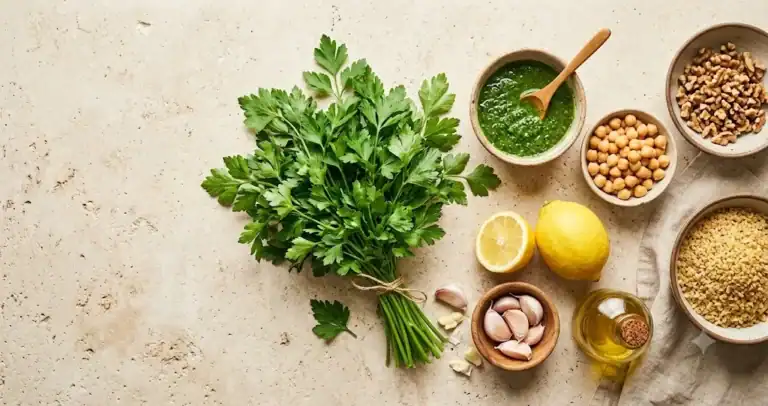
Fresh flat-leaf parsley gives the brightest aroma and color, though curly parsley works as a milder substitute. When you chop the parsley for a large bunch, wash it under cold water, shake or spin it dry, then strip the leaves from the thicker stems before chopping. The thin upper stems are tender and can be chopped along with the leaves for extra aroma.
If you grow your own, buying or picking more than you need for one recipe is common, and parsley keeps for a week or more with the right method. See our guide to harvesting and storing parsley for how to keep a bunch fresh in the refrigerator or freeze it for later use.
Dried parsley can stand in when fresh is not available, though its character is noticeably milder. Use about a third of the amount, and add it earlier in cooking since it needs time to rehydrate.
Tip: gather the leaves into a tight pile and rock a chef’s knife through them rather than mincing in small circles. A food processor works too, but pulse briefly so the parsley does not turn to paste.
Basic parsley rice
This base recipe is the starting point for both variations below. It serves 4 as an easy side dish. Olive oil is the default here since both variations below build on it. If you are serving this base on its own and want a richer, more classic side, unsalted butter works in the same amount, just skip that swap if you plan to make the lemon-garlic variation, since that recipe assumes an oil base.
Ingredients
- 1 cup long-grain white rice, rinsed
- 1 3/4 cups water or low-sodium chicken or vegetable broth
- 2 tablespoons olive oil (or unsalted butter, if serving the base on its own)
- 1/2 teaspoon salt, plus more to taste
- 1/3 cup finely chopped fresh parsley
- Freshly ground black pepper
Directions
- Combine the rinsed rice, water or broth, olive oil or butter, and salt in a medium pot. Bring to a boil over medium-high heat.
- Reduce the heat to low, cover, and simmer 18 to 20 minutes, or until the liquid is absorbed and the rice is tender.
- Remove from the heat and let the rice stand, covered, for 5 minutes.
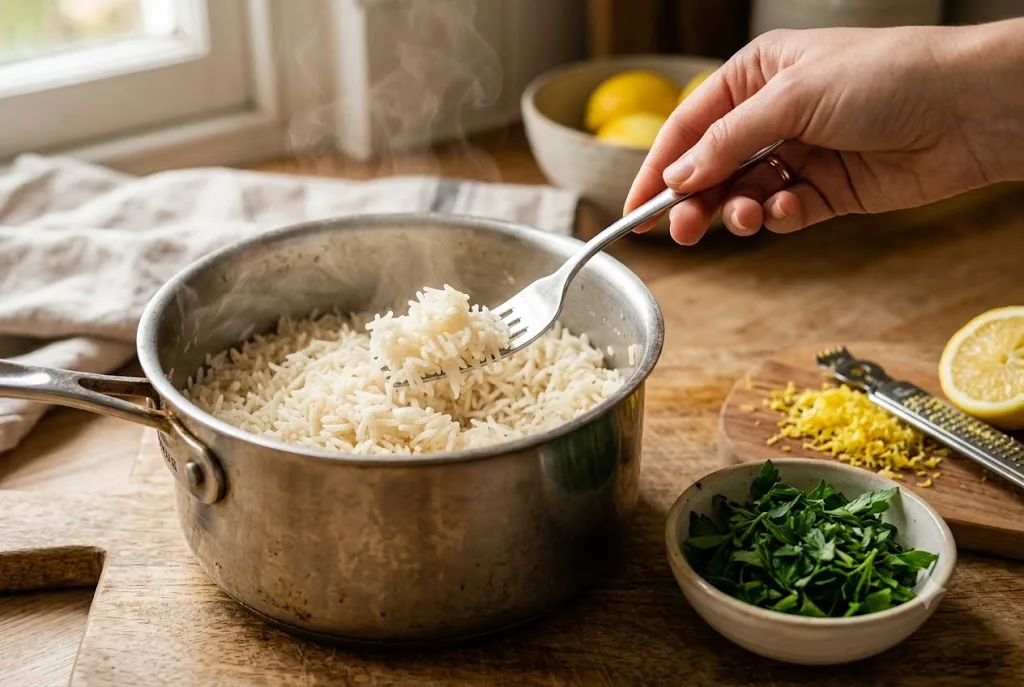
- Fluff the rice with a fork, then stir in the chopped parsley and a few grinds of pepper. Taste and adjust the salt.
Lemon-garlic variation
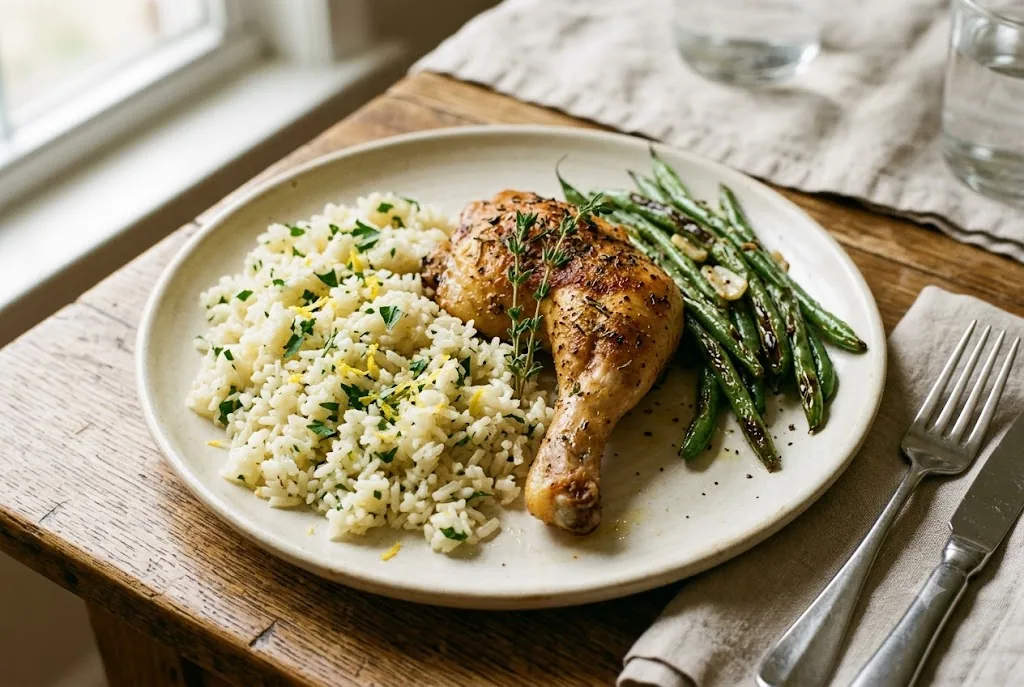
Bright and savory, this lemon parsley rice recipe comes together in a few extra minutes once the base rice is done. It works best when the base above is made with olive oil rather than butter, and it pairs well with roasted chicken, grilled fish, or a simple green salad.
Ingredients
- 1 batch rice from the basic recipe, above, made with olive oil
- 1 tablespoon olive oil
- 2 garlic cloves, minced
- Zest of 1 lemon
- 2 tablespoons fresh lemon juice
Directions
- Warm the tablespoon of olive oil in a small skillet over medium-low heat. Add the garlic and cook 30 to 60 seconds, stirring often, until fragrant but not browned.
- Fold the garlic oil, lemon zest, and lemon juice into the warm, fluffed rice. This variation calls for just one more tablespoon of oil, enough to bloom the garlic. It replaces the richness you might otherwise add with a separate pat of butter, rather than stacking on top of the base’s own oil, so the finished rice stays bright instead of greasy.
- Taste and adjust the salt, pepper, or lemon juice, then serve warm.
Swap the lemon for lime if you want a slightly sharper citrus note, or if that is what you already have on hand. A pinch of red pepper flakes or another favorite spice adds gentle heat if you like it.
Mediterranean variation
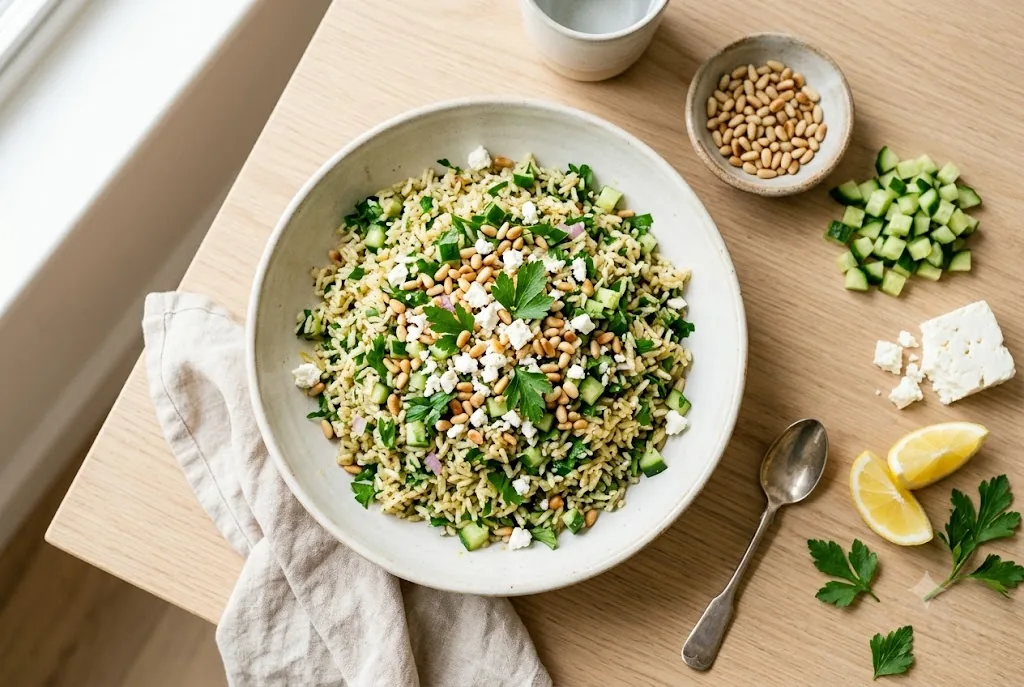
This variation turns the base recipe into a fuller side or a light meal on its own. Make the base with olive oil rather than butter here too. Butter firms up and turns waxy once the rice cools to room temperature, which dulls a feta-and-cucumber bowl, while olive oil stays fluid and keeps every grain coated.
Ingredients
- 1 batch rice from the basic recipe, above, made with olive oil, cooled to warm room temperature
- 1/3 cup diced cucumber
- 1/4 cup crumbled feta cheese, or a spoonful of capers for a dairy-free version
- 2 tablespoons chopped kalamata olives
- 2 tablespoons toasted pine nuts, or substitute chopped almonds or walnuts
- 1 tablespoon olive oil
- 1 tablespoon lemon juice
Directions
- Toss the cucumber, olives, pine nuts, olive oil, and lemon juice into the rice.
- Scatter the feta over the top just before serving so it stays in distinct pieces rather than melting in.
- Serve warm or at room temperature. Either way, the olive-oil base keeps the texture loose rather than clumped.
When to add the parsley
Parsley loses color and aroma quickly over direct heat, so add fresh parsley off the heat, after the rice has finished cooking. Stirring it into hot rice is enough to release its aroma without dulling its color or turning it bitter.
Dried parsley behaves differently and works better added earlier, during cooking, so it has time to soften.
Storing and reheating leftovers
For food safety, refrigerate cooked parsley rice promptly in an airtight container and use it within 3 to 4 days, in line with USDA leftover guidance. Reheat it in a covered pan over low heat, or in a microwave-safe dish in the microwave, adding a splash of water or broth to loosen the grains.
Fresh parsley dulls in color after a day or two in the refrigerator. For the brightest look and aroma in leftovers, stir in a small amount of freshly chopped parsley after reheating rather than relying only on what was mixed in earlier.
Plain cooked rice freezes well for up to a month. Freeze it without the parsley, then stir in fresh parsley after thawing and reheating.
Serving ideas
Parsley rice works as a healthy side for roasted or grilled meats, seafood, or a bean and vegetable stew. It also holds up well as the base of a grain bowl, turning it into a light main dish when topped with chickpeas, roasted vegetables, or a fried egg.
For more pairing ideas across other herbs in your kitchen, browse our full guide to culinary herbs.
Frequently asked questions
Can I use dried parsley instead of fresh?
Yes, though the flavor will be milder and less bright. Use about one-third the amount of dried parsley called for in fresh, and add it earlier in cooking so it has time to rehydrate.
Can I use cilantro instead of parsley in rice?
You can, but the result will taste different. Cilantro has a citrusy, sharper profile that reads differently from parsley’s peppery, grassy taste. Choose cilantro for a dish with more Mexican, Southeast Asian, or South Asian character, and save parsley for Mediterranean or European-style rice.
What other herbs go well with rice?
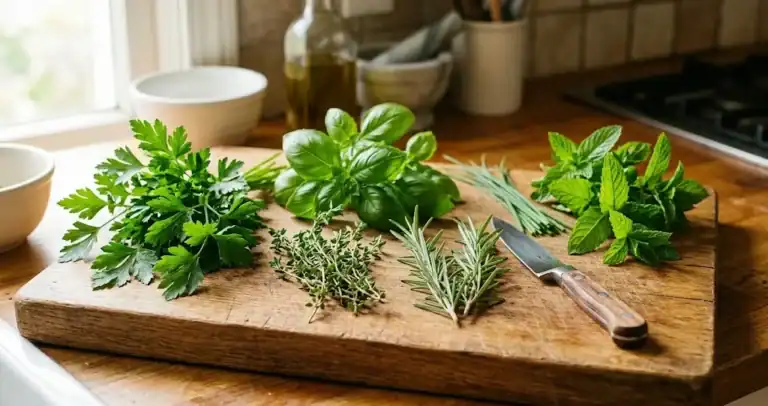
Dill, mint, chives, and basil all pair well with rice, especially in cold rice salads. Rosemary and thyme work best added earlier in cooking, since they need more time than parsley to release their flavor.
How much parsley should I add to a cup of rice?
About 1/3 cup of finely chopped fresh parsley per cup of dry rice is a good starting quantity. Adjust it gradually for a stronger herbal character, tasting as you go.
Is parsley rice gluten free?
Plain rice and fresh parsley are both naturally gluten free. If you use broth instead of water, check the label, since some pre-made broths include gluten-containing thickeners or seasonings, and choose a certified gluten-free brand if that matters for you.
How do you make lemon and parsley rice?
Cook the base recipe above with olive oil, then stir in the warmed garlic oil, lemon zest, and lemon juice while the rice is still hot, as in the lemon-garlic variation. That combination of lemon parsley rice is the version most people mean when they ask for a bright, simple side to serve with fish or chicken.