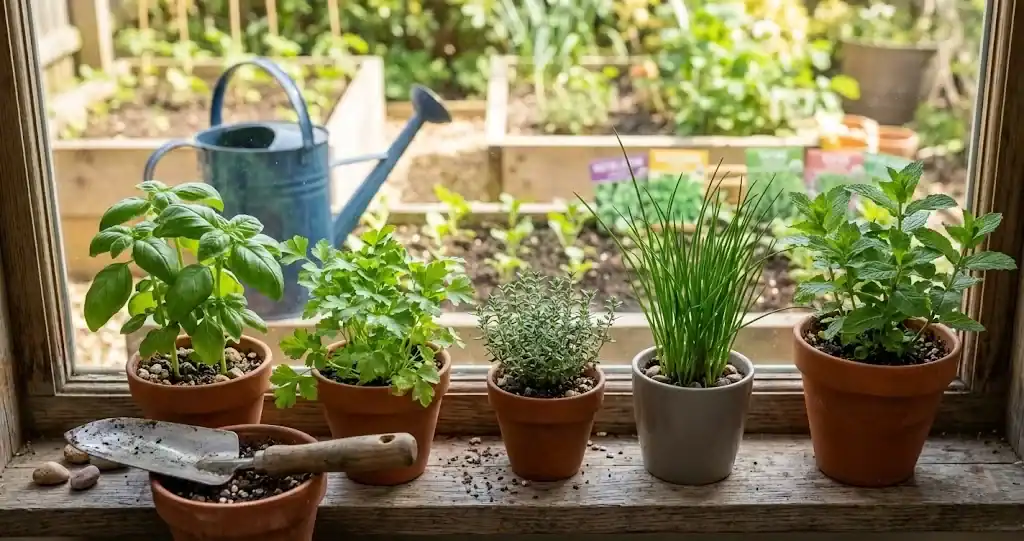
Most culinary herbs are forgiving. They want sun, they want soil that drains, and they want you to harvest them often enough that the plant keeps producing new growth. That is the whole game. Everything else in this guide is the detail that turns those three rules into a steady supply of fresh herb leaves for the kitchen.
A home herb garden can be a single pot of basil on a windowsill or a row of raised beds along a fence. The size does not matter. What matters is matching the herb to the spot you have and giving it the few herb basics it actually needs.
Choose where your herbs will grow
Pick the sunniest spot you can give them. Most culinary herbs grow best in full sun, which means at least six hours of direct light a day. A south-facing window, a balcony that catches morning light, or a strip of ground that is not shaded by trees or walls all work. If your only open ground is shaded, mint, parsley, and chives will tolerate part shade better than basil, rosemary, or sage will, and the leafier herbs stay productive with less sun than the woody ones do.
Decide between containers, raised beds, and the open ground. Containers give you control over soil and water and let you move the herbs to chase the sun or escape a hard frost. Raised beds warm up faster in spring and are easier on the back. Planting directly in the ground makes sense when you already have well-drained soil and enough room for the herb to spread, and it suits herbs that you want to leave in place year after year. Mint in particular should go in a pot unless you want it to fill a bed; it grows from running roots and will take over your herb garden within a season.
Pick easy herbs for a first garden
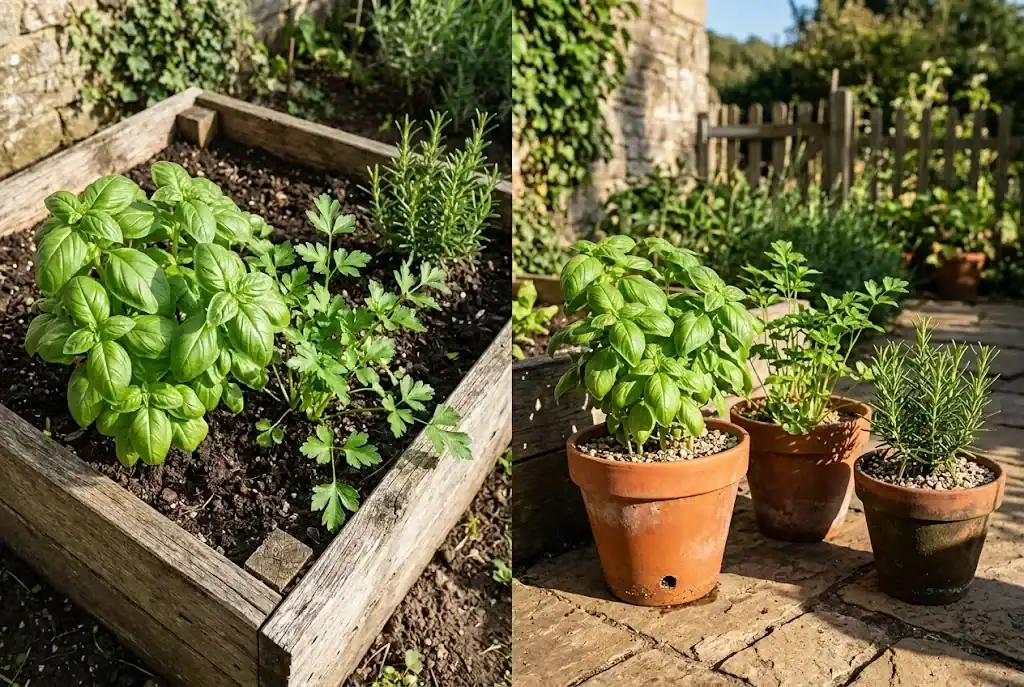
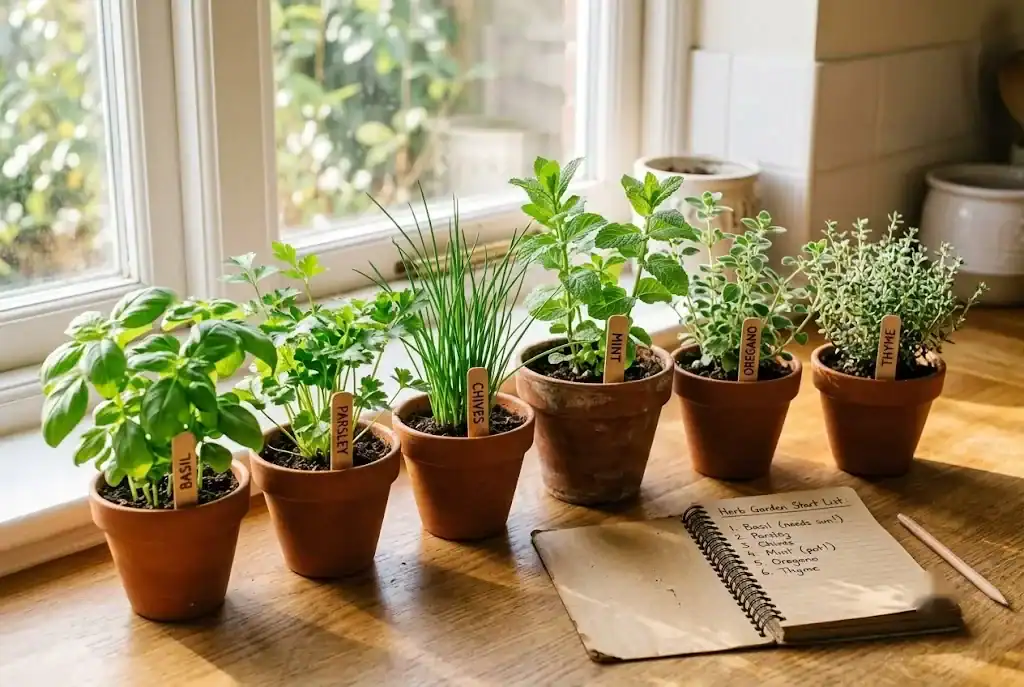
Start with herbs that are known to be easy to grow, and pick the herbs you will actually harvest. A short starter list covers most kitchen needs and lets you learn the rhythm without fighting the plants. Basil, parsley, chives, mint, rosemary, thyme, and oregano are the usual first choices, and they happen to be the herbs a home cook reaches for most often. Most of these are forgiving about soil and watering once they are established, and they recover well from beginner mistakes.
Look at what you already cook with. If basil, mint, and parsley show up in your weeknight recipes every week, those three are a sensible first trio. If you roast vegetables or cook a lot of beans and soups, thyme, sage, and oregano will get used more often than basil will. Pick herbs you will actually harvest, and skip the ones that sound interesting but sit untouched in the back of a drawer. Buying the right herb seeds for your goals makes the next season easier too.
Annual and perennial herbs: what comes back
Herbs split into two rough groups, and the difference shapes how you plan the planting. Annual herbs complete their whole life in one season. Basil, cilantro, dill, and summer savory are typical annuals. They grow quickly, flower, set seed, and die with the first hard frost, so you replant them each spring or let them self-sow where they finished. Perennial herbs come back year after year from the same roots. Thyme, oregano, sage, chives, and mint all return reliably in most climates, and an established plant of any of them can give you a steady harvest for several seasons without replanting. Rosemary is perennial in mild-winter regions but is not reliably cold-hardy north of roughly USDA zone 7, so where winters drop below about 20F treat it as a tender perennial and plan to bring it indoors, shelter it against a wall, or replace it in spring. Both types of herbs have their place in a starter garden, and the annuals give you a quick first harvest while the perennials settle in for the long term.
The split matters for the layout and for what you plant first. Perennials earn a permanent spot near the kitchen door or along a sunny edge, because they will live there for years. Annuals suit a different bed or a row of pots you refill each spring, which is also where you can try something new each year without committing the whole space to it. Most flowering herbs fall on one side or the other; the annuals flower in summer and then fade, while thyme and oregano flower for weeks and keep going once the blooms pass.
The easiest herbs for beginners
Some herbs are noticeably easier to grow than others, and they are the right place to start. Chives are one of the easiest herbs to grow; a single clump survives cold winters, asks for almost no attention, and gives you a handful of mild oniony stems every time you need a garnish. Mint is another forgiving starter, though it spreads so quickly that you should always keep it in a pot. Parsley is a biennial that grows steadily through cool weather, and oregano and thyme shrug off dry spells once they are settled in.
If you want to try growing herbs from seed, basil and cilantro are the easiest herbs to start with, and a small pot of each on a sunny windowsill is a useful first project. Mint, oregano, and thyme usually do better as starter plants or divisions from a friend’s plot, because the seed is slow or fussy. Pick the herbs you want to grow based on what you actually cook with, and try growing two or three the first season rather than a dozen; a small planting that gets used is better than a large one that gets ignored.
A small starter kit by kitchen habit
If your weeknight cooking leans Italian or Mediterranean, the best herbs to plant first are basil, oregano, thyme, sage, and parsley. You will reach for all five across a single week, and a single herb plant of each gives you enough for the season. If you cook more Asian and Middle Eastern food, the same warm, sunny corner grows cilantro, mint, and chives without complaint, and a small herb pot of each on the windowsill keeps the fresh flavors close to the wok.
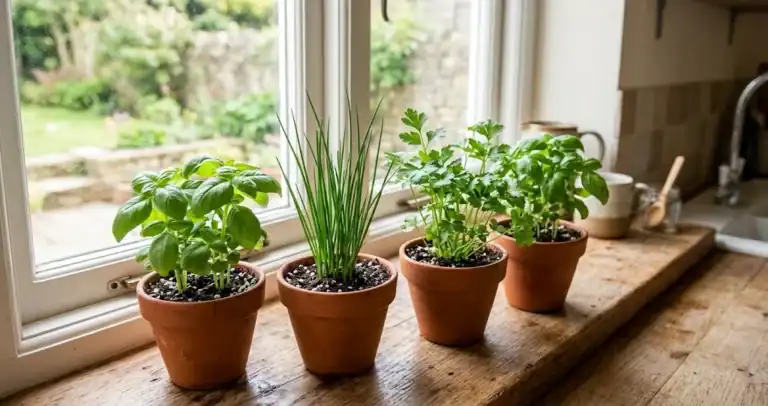
For cooks who want to grow herbs indoors all year, mint, chives, and parsley are the most reliable plants for the windowsill, since all three tolerate lower winter light and the dry indoor air of a heated kitchen better than basil does. Thyme is a useful fourth pot to add if you can give it the sunniest, coolest spot on the sill, because it wants strong direct light in winter more than the other three do and sulks in a dim corner. A sunny windowsill is enough garden space to keep all four of them productive through the colder months. Outdoors, the kitchen planting can stretch to sage and rosemary by the back door, a clump of oregano in a sunny corner, and a row of leafy seedlings set out after the last frost. Growing herbs in pots on a sunny patio keeps everything within reach of the back door and lets you move tender plants inside before a cold snap, and it works just as well for growing herbs indoors through the colder months.
Most beginners do well with five to seven different herb plants in their first season. Grow basil from seed or buy seedlings in late spring; grow mint in its own pot to keep it contained; grow thyme, oregano, sage, and a small rosemary as perennials that come back each year. Add chives for the mild onion flavor, parsley for the clean leafy note, and cilantro where the seasons are cool enough to keep it from bolting. That small kit covers most home cooking and gives you a feel for which herbs you actually use before you expand the planting in year two.
Build soil that drains well
The single most common reason herbs fail is wet feet. Herb roots rot in soil that stays soggy after rain or watering, and the herb wilts, yellows, and dies within a few weeks. The fix is almost always the soil rather than the watering schedule, and a well-drained mix turns most struggling herbs into productive ones.
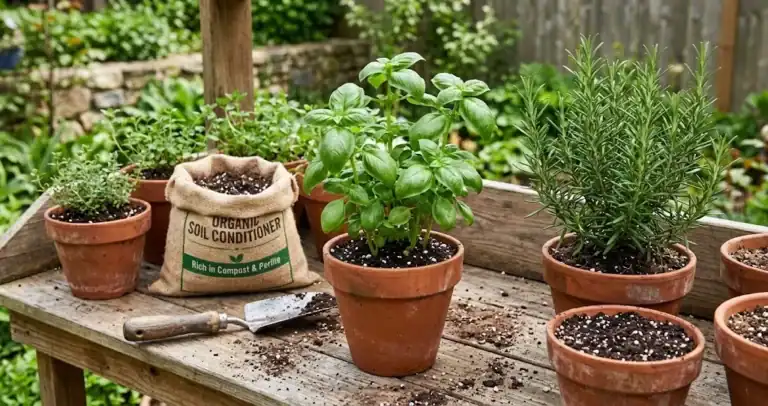
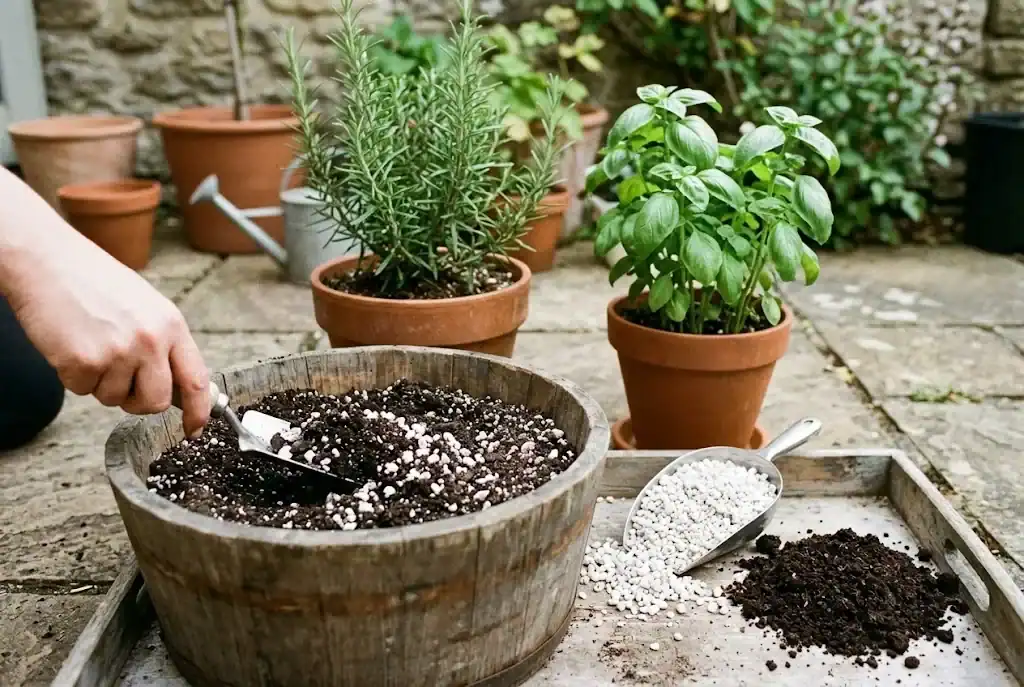
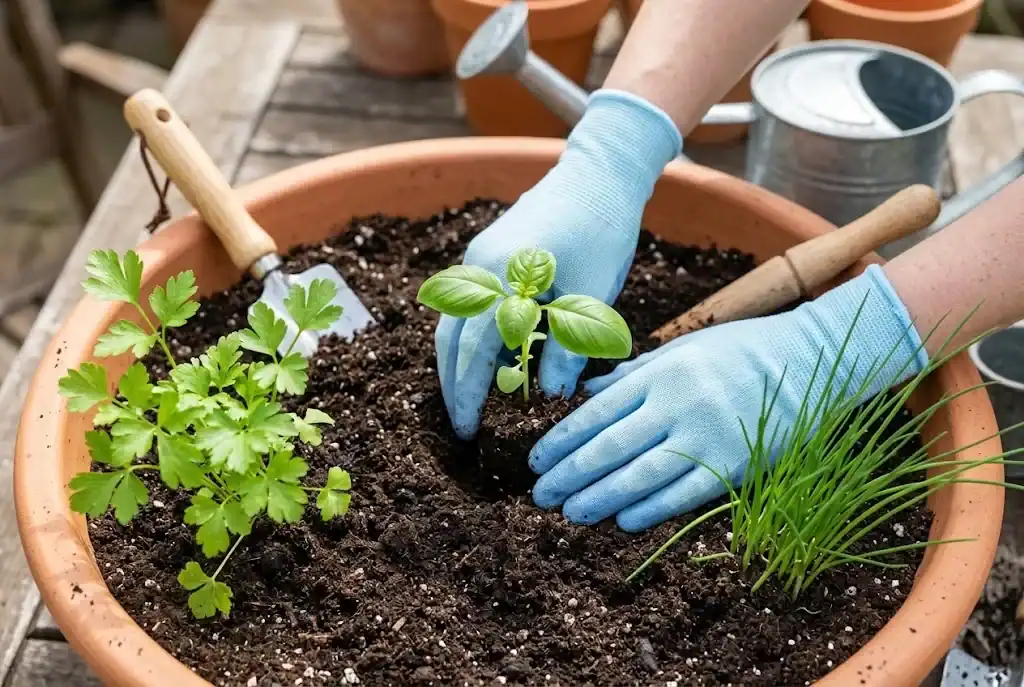
For containers, mix two parts of a general potting soil with one part coarse sand or perlite. The goal is a loose, gritty feel that water moves through quickly. Avoid using regular garden soil in pots; it compacts and holds too much moisture. For raised beds and open ground, work a two-inch layer of compost into the top six inches of soil to improve drainage and feed the herbs slowly through the year. If your soil is heavy clay, plant in raised beds or mounds rather than fighting the clay. A dedicated herb planter or a single large container also works well for the smallest spaces. The right soil mix suited to herbs is worth more than any fertilizer.
Plant with a beginner-friendly rhythm
Buy starter herb plants from a local nursery for your first season. Growing herbs from seed is satisfying, but seedlings are slow and need careful watering for their first few weeks, and the supermarket packet often carries more seed than a small herb garden needs. A four-pack of leafy seedlings gives you a productive plant in two months rather than four, and the same is true for most of the other beginner herbs on the starter list. If you want to grow your own herbs from seed, the easiest varieties are cilantro, dill, and chives; everything else usually does better as a starter plant or a division from a friend’s plot.
Plant after the last frost in spring for basil and other tender herbs. Hardier herbs like chives, mint, parsley, thyme, and oregano tolerate cool soil and can go out a few weeks earlier. Space the herbs so each plant has room to spread; a single plant wants at least eight inches on every side, and a rosemary can grow into a small shrub two feet across by the end of summer. Planting too close is one of the easiest mistakes to make and one of the hardest to undo, because the herbs shade each other and stay damp. If you only have room for one herb to grow, the leafy annuals are forgiving starters.
Water and feed without overdoing it
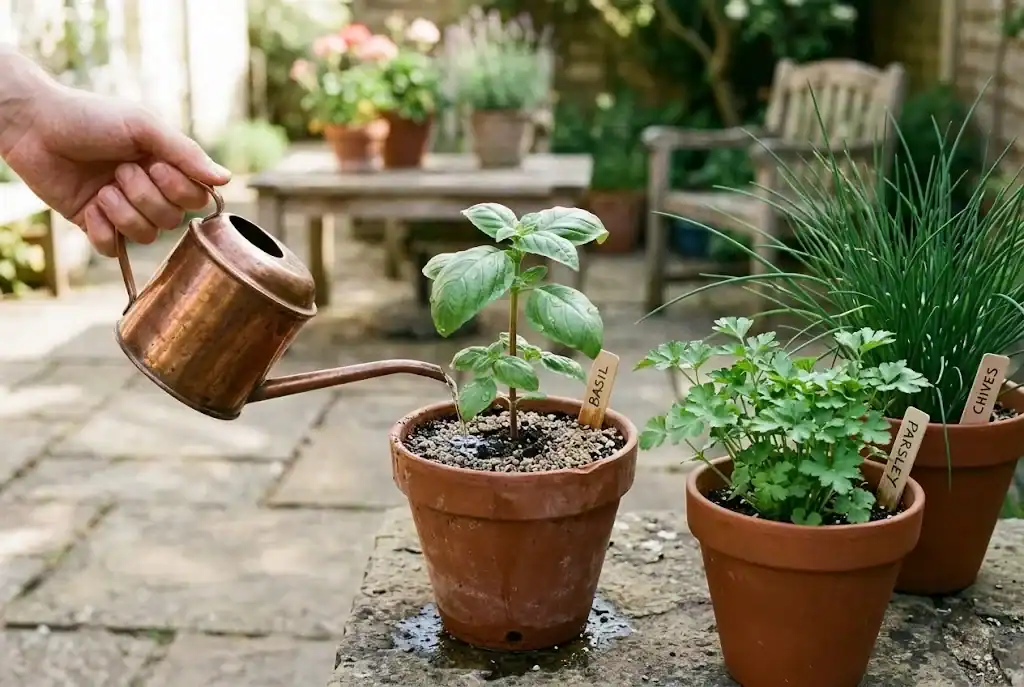
Water deeply and let the soil dry a little between waterings rather than sprinkling a little every day. Stick a finger an inch into the soil; if it feels dry at that depth, water the herb. If it still feels cool and damp, wait another day. Containers dry out faster than beds and may need water every day in midsummer, while in-ground herbs can often go two or three days between waterings once their roots are settled. The herb itself is a useful indicator: a slightly limp leaf usually means the plant wants water, and a yellowing lower leaf usually means it has had too much.
Feed lightly. Many herbs prefer lean soil to rich soil; too much nitrogen gives you leafy growth with weaker flavor. A single application of a balanced organic fertilizer at planting time is enough for most home herb gardens. If you composted the bed in spring, that is usually all the feeding the herbs need for the rest of the year. Container herbs appreciate a half-strength liquid feed every three or four weeks because watering leaches nutrients out of the pot faster than it does in the ground. Getting the watering rhythm and the growing conditions right matters more than any single feed, and a calm routine beats an attentive burst of attention once in a while.
Pinch back and prune lightly
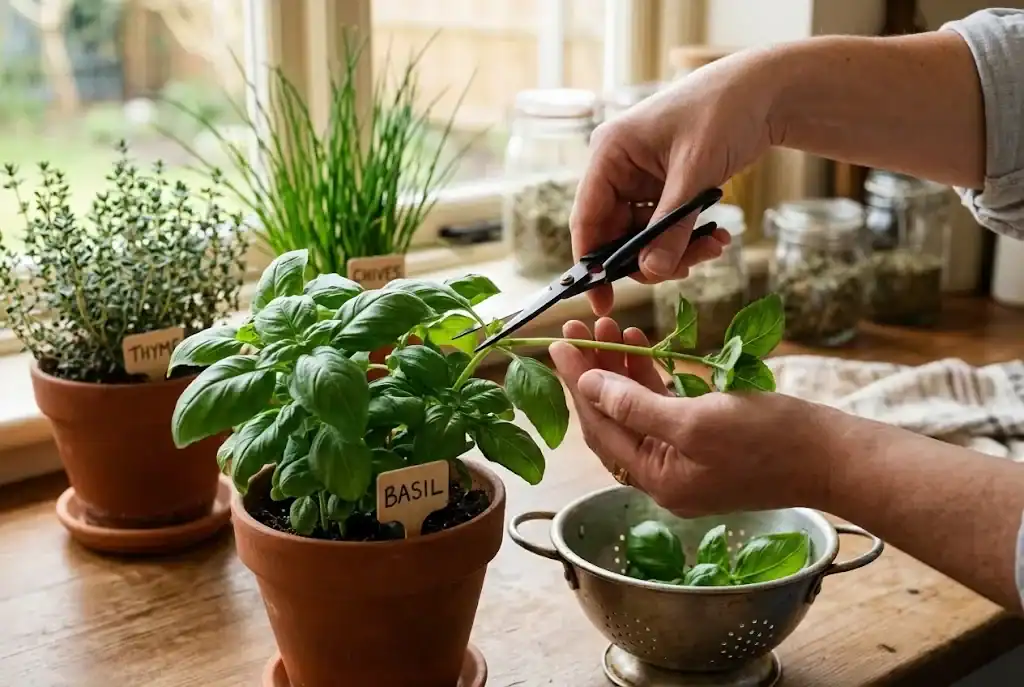
Use your herbs and the plant will give you more. Pinch back the growing tips of basil, mint, and oregano every week or two once the plant has six pairs of leaves. Cutting just above a pair of leaves forces the plant to send out two new stems from that node, and you end up with a bushier plant that produces more leaves over the year rather than a tall, leggy one that flowers and stops.
For woody herbs like thyme and sage, snip sprigs from the top rather than cutting into the bare lower stems. These plants do not regrow from old wood, so a hard prune into leafless branches can leave a gap that takes a season to fill. A light, regular harvest keeps the plant in shape and gives you plenty of fresh material for the kitchen. If you have a favorite herb on the windowsill, treat it the same way and it will keep producing all year.
Harvest by snipping the right way
The best time to harvest most leafy herbs is in the morning after the dew has dried but before the herb has been stressed by midday heat. The essential oils are most concentrated then, and the leaves hold their flavor better in cooking. Cut whole stems rather than single leaves; the plant recovers faster and you can strip the leaves off in the kitchen as you need them, so a single herb on the windowsill becomes a regular ingredient rather than a Sunday project.
Never take more than a third of the plant at one time. The leaves are how the herb feeds itself, and a heavy cut sets it back. For a healthy, mature basil or mint, harvesting a handful of stems every week keeps the plant in production through the entire year and well into autumn. Once you learn how to harvest herbs without killing the plant, the kitchen supply feels almost endless and the planting starts paying back the time you put in at the start of the season.
Common questions about growing herbs
Do herbs need lots of sun?
Most culinary herbs grow best in full sun, at least six hours of direct light a day. Basil, rosemary, sage, thyme, and oregano prefer a sunny spot and produce the most flavorful leaves there. Mint, parsley, and chives tolerate part shade and can be the right choice for a shadier corner. Watch how the sun moves across your beds through the growing season before deciding where each pot or bed should sit.
Can I grow herbs in pots?
Yes, and pots are often the easiest way to start. Any container with drainage holes works, whether it is a clay herb planter on the windowsill or a fabric grow bag on the patio. Use a potting mix with sand or perlite so water drains through, and water when the top inch of soil feels dry. Pots let you move herbs to follow the sun or shelter them from a hard frost, which is helpful in areas with cold winters or hot summers. Growing in containers also lets you bring tender herbs like basil indoors before the first frost and keep the harvest going for another month.
How often should I water herbs?
Water when the top inch of soil feels dry to the touch, then water deeply so the roots get a soak. The interval shifts with the weather rather than the calendar: container herbs dry out faster than in-ground beds and may need daily watering in midsummer heat, while herbs in the ground need water after a few dry, windy days in summer and far less once nights turn cool and the soil holds its moisture for longer. The same finger test governs both container and in-ground plantings.
When should I start herbs from seed?
Start seeds indoors under lights six to eight weeks before your last frost date for tender herbs like basil. Direct-sow hardy herbs like dill, cilantro, and chives once the soil can be worked in early spring. For most home gardeners, buying starter plants is faster and easier than growing from seed for the first season, but a single packet of seeds gives you enough plants to fill a small bed and then some for the price of one starter pot.
Where do herbs fit in a vegetable garden?
Herbs make excellent companions in a vegetable garden because they draw pollinators, distract a few pests, and put fresh flavor within arm’s reach of the kitchen. Tuck the leafy annuals near tomatoes, plant dill and parsley at the edge of a bed where they can flower without crowding the vegetables, and let a clump of chives border a path. Most herbs prefer the same sun and well-drained soil that vegetables do, and a small herb strip along the side of a raised garden bed gives you a steady harvest without taking space from the main crop.
Start small and add as you go
A herb garden does not need to be large or complicated to be useful. Two pots of basil and a clump of mint on a sunny step give you fresh herbs for pasta, salads, and tea through the summer. As you get a feel for what you actually use and how the herb responds to your spot, you can add a thyme plant, a rosemary by the back door, or a raised bed of mixed culinary herbs. Each season teaches a little more, and the planting gets easier to manage as it grows. A few stems hung to dry in a warm kitchen turns the summer surplus into jars of dried herbs that carry the harvest into winter. Once the basics feel comfortable, a slightly bigger plan like this beginner’s guide to growing an herb garden gives you the next layer of layout, timing, and harvest routines.