A small herb bed quietly out-pays almost any other garden start. You spend a few dollars on seeds or starter plants, give them a sunny corner, and within weeks you have fresh flavor steps from the kitchen. The benefits of growing herbs in a garden go well beyond that first taste. Herbs feed pollinators, stretch the grocery budget, fit into the smallest spaces, and turn an ordinary cook into a more confident one. None of it demands a green thumb or a big yard.
You taste the difference within a week
Cut a sprig of any leafy herb from a plant in the ground and you notice it immediately. The leaves are still warm from the sun, the oils are intact, and the flavor is brighter than anything that has spent days in a plastic clamshell on a grocery shelf. Store-bought herbs wilt fast and lose aroma with every hour they sit on a refrigerator shelf. A plant outside your back door is picked the moment you decide to use it, which is the only reliable way to keep those volatile oils where they belong.
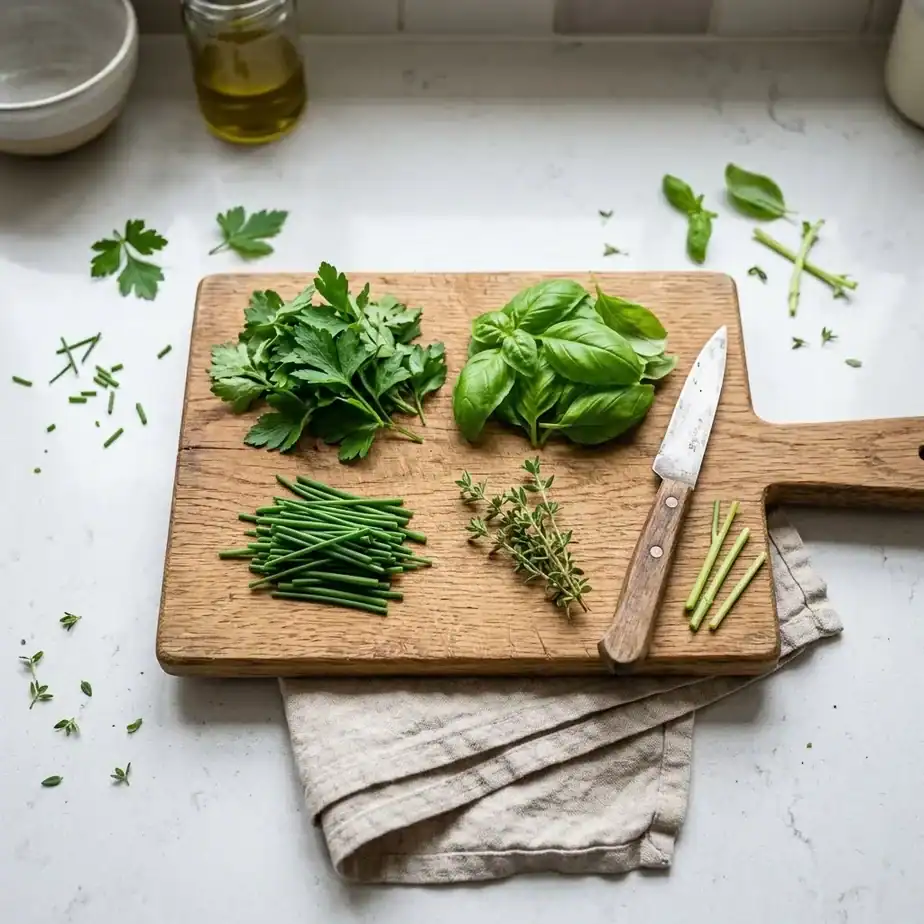
Fresh herbs also encourage you to cook with more of them. A few torn leaves change a plate of sliced tomatoes. A handful of chopped greens turns a pot of broth into something worth lingering over. The herbs that used to feel like an expensive garnish become a regular part of how you build a meal, because they are right there when you need them.
Herbs are the easiest food you can grow
If you have ever struggled with a row of vegetables, herbs are the reset. Most kitchen herbs are tough, forgiving, and quick to recover from mistakes. Many herb plants germinate readily from seed, transplant without drama, and start giving you a useful cutting within weeks. They are the closest thing in the garden to a guaranteed success, which is why a reaping-the-benefits mindset tends to start here rather than with the trickier crops.
You do not need a complex setup, fertilizer regimes, or pruning schedules to start. Most herbs want four things: sun, soil that drains, occasional water during dry spells, and the top of the plant snipped regularly so the plant stays bushy instead of leggy. That is the whole list. Skip a week of watering and they will wait for you. Forget to pick for a while and they will keep growing. Beginners who have killed tomato plants often find they cannot kill a container of chives.
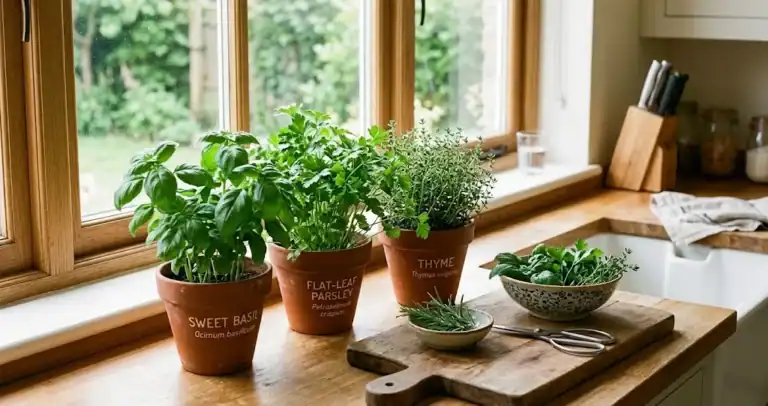
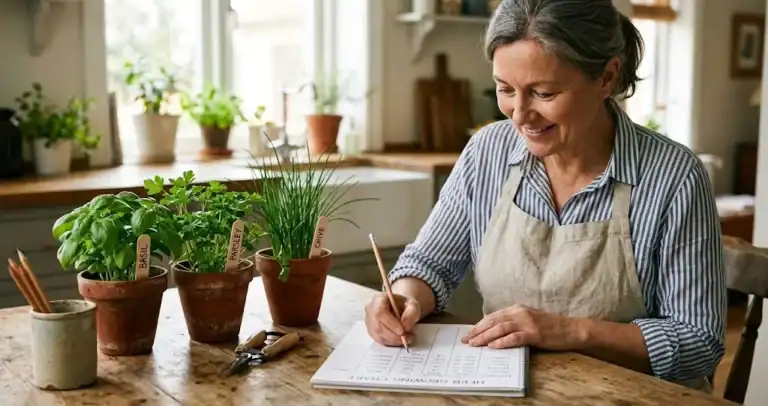
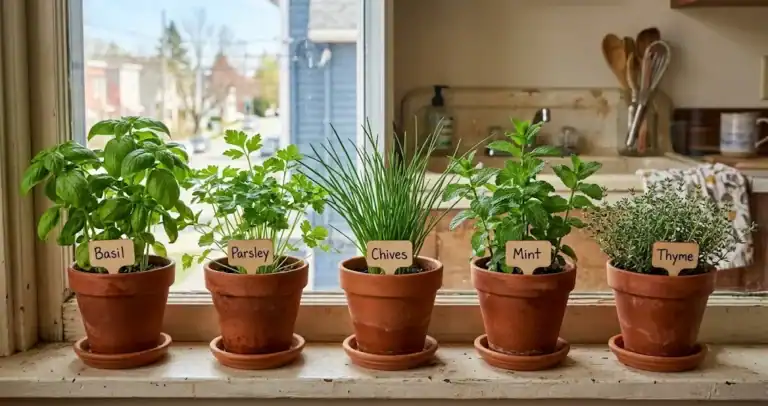
Herbs are also an easy way to start indoors. A sunny windowsill, a small container, and a packet of seeds are enough to get a few leaves on the table before the outdoor beds are ready. If you are new to gardening altogether, working through a basic primer on planning an herb garden properly first is a smart move. It saves the small trial-and-error cost of putting the wrong plant in the wrong spot.
A small bed quietly pays back the cost of starting
The numbers are simple. A packet of seed costs what a single clamshell of cut greens costs at the grocery store, and it will produce for an entire growing season. The same is true across most of the common kitchen herbs, from parsley and cilantro to basil, oregano, dill, and sage. Once a bed is established, the per-use cost drops to a few seconds of your time and a small amount of water. Over a few seasons the bed has paid for itself many times over, even if you only count the herbs you would otherwise have bought.
Money is not the only thing you save. A bed of herbs cuts down on food waste, because you step outside and pick exactly what the recipe calls for. You stop buying a full bunch when you only need three stems. You stop watching a clamshell of delicate leaves turn brown in the fridge. The savings are small each time, but they add up across a year of cooking.
Herbs bring pollinators and helpful insects
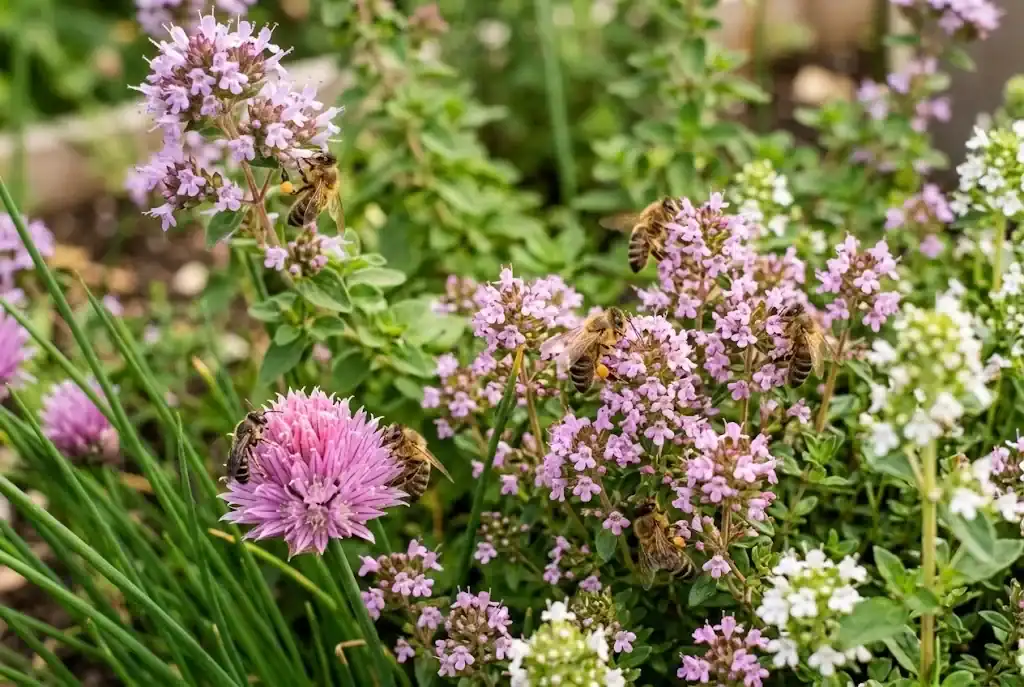
Most culinary herbs flower at some point if you let them. Several send up delicate white spikes, others erupt in a soft purple cloud, and a few cover themselves in tiny bee-magnet blossoms. Those flowers are not just pretty. They draw honeybees, native solitary bees, hoverflies, lacewings, and parasitic wasps, all of which are useful in the rest of the garden. A herb bed is one of the simplest ways to make a vegetable plot, a fruit shrub, or a flowering border more productive without ever spraying anything.
If you have a vegetable garden, the herbs do double duty. Pollinators that visit your flowering herbs are the same ones that will set fruit on your tomatoes, peppers, and squash. The herbs also bring in predator insects that help keep aphids and caterpillars in check on neighboring crops. A small herb bed is one of the cheapest pest-management tools a home gardener has.
They fit where nothing else does
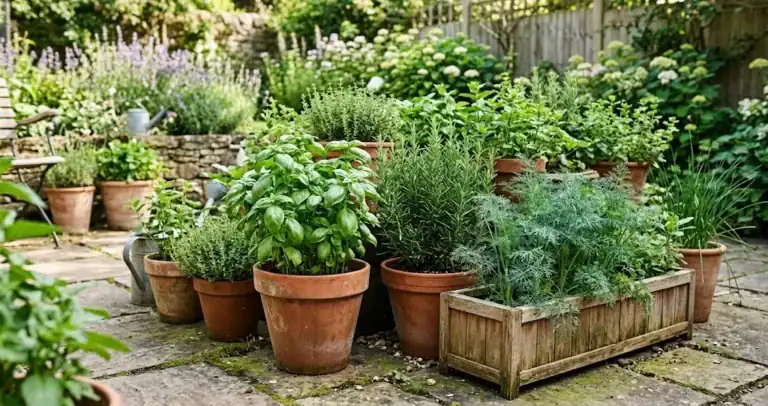
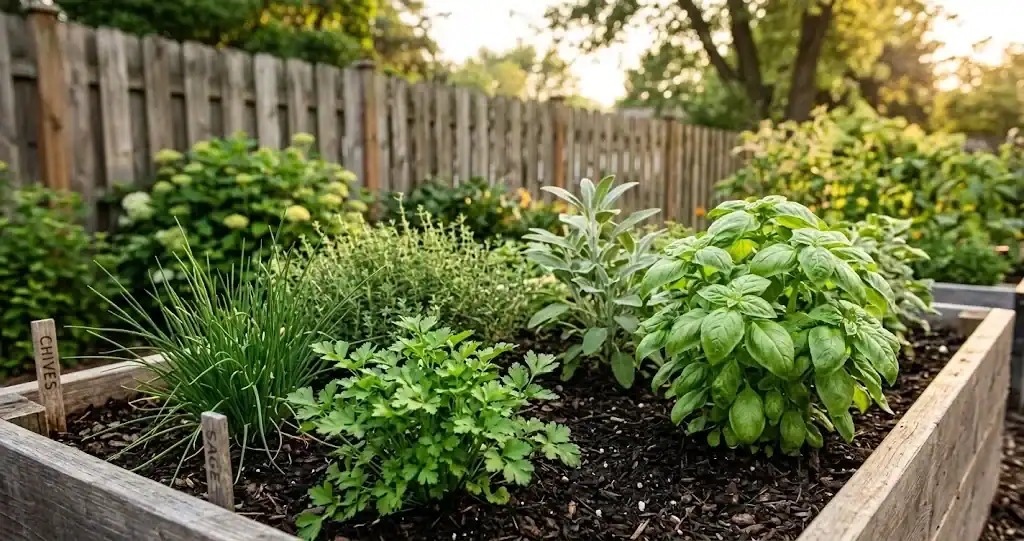
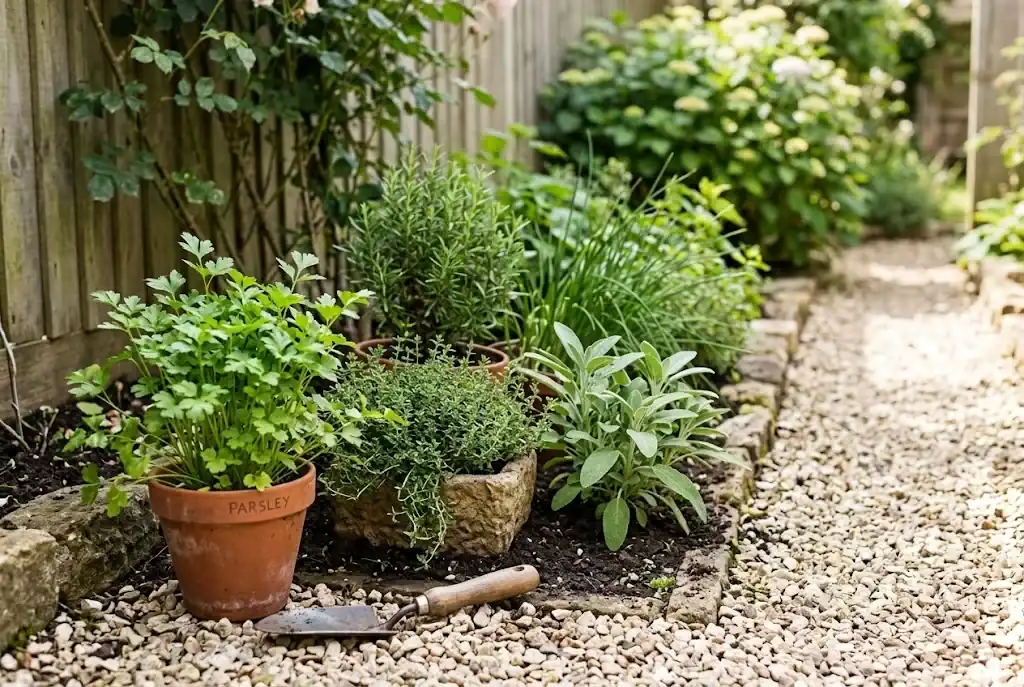
One of the underrated benefits of growing herbs in a garden is that the garden can be almost any size. A single container on a windowsill is enough to keep a household in fresh leaves for months. A narrow strip along a walkway handles the woody Mediterranean kinds. A corner of a raised bed grows enough leafy annuals to flavor an entire summer of soups and salads. Herbs are some of the few productive plants that genuinely thrive in containers, which is why they are the right starting point for a balcony or a rented yard.
You can also fit herbs into spots that would otherwise sit empty. The dry shoulder beside the driveway. The sunny end of a flower border. The strip between a fence and a path. A planter tucked into a kitchen window. None of these places is large enough for a tomato, but each one is enough for a herb plant that will produce for months. If you have been wondering where to start, the answer is usually right at the edge of whatever space you already have.
You control how they are grown
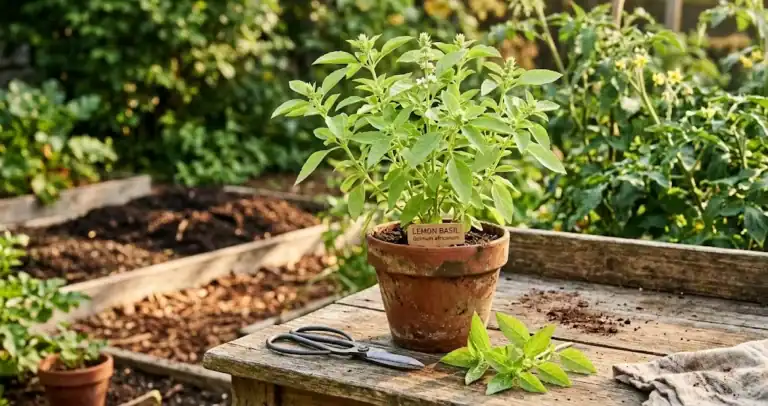
When you grow your own herbs, you decide what goes into the soil and onto the leaves. You can grow them organically, with compost and water and nothing else. You can skip the waxes and post-picking washes that keep store-bought herbs looking neat in the clamshell. You can pick them at the moment of peak flavor, not the moment a shipping schedule demands. You can also grow varieties you never see in a grocery store, like lemon basil, Thai basil, garlic chives, or a sharp English thyme that holds its flavor through a long braise.
For anyone who cooks regularly, the difference between a generic grocery leaf and a freshly picked one from a plant you tend yourself is the difference between a recipe and a meal. The same applies to the many kinds of parsley, mint, and thyme that are easy to grow and hard to find in a produce aisle. None of that is available at the supermarket. All of it is available in a container on the porch.
Cooking with what you grew
Herbs that you grew yourself change the way you cook in subtle ways. A few leaves go onto baked potatoes, into omelets, and over a bowl of soup without a second thought, because the plant is right there. A sprig of a woody type goes into a slow-cooked tomato sauce in the middle of winter, because you dried a jar of it the previous summer. A small bundle of fresh leaves goes into a roasting pan, because you have it growing in the yard. The garden feeds the kitchen, and the kitchen starts to use what the garden is offering.
There is also a quiet pleasure in cooking with something you grew from seed or a small starter plant. A child who has watched a plant go from a flat of seedlings to a two-foot bush is more likely to taste the pesto. A partner who has been handed a sprig from the back step is more likely to muddle it into a drink on a summer evening. The garden becomes part of the household in a way that store-bought produce never quite does.
Health and safety notes
Most culinary herbs are safe to use in normal cooking amounts. A few cautions are worth keeping in mind. Herbs grown for cooking are not the same as essential oils, which can be much more concentrated. The National Center for Complementary and Integrative Health notes that some common culinary herbs, including garlic, ginger, ginkgo, and chamomile, can interact with prescription medicines such as blood thinners, and concentrated forms of any herb should not be combined with medication without medical advice (NCCIH, Herbs at a Glance). Pregnant or breastfeeding readers and anyone with a known plant allergy should talk to a doctor before using herbs in concentrated form. For everyday cooking, normal amounts of common culinary herbs are well tolerated by most people.
If you grow herbs near a road or in soil of unknown history, wash them well before eating, and consider testing the soil if the bed was built in a former industrial site. The good news is that herbs accumulate far less than leafy greens, and a normal rinse under running water handles most household dust and pollen.
A small habit that lasts years
A herb bed is one of the few parts of a home garden that gets more useful with time. Many herbs are perennial in mild climates, which means the plants you put in this year will still be there in three, four, or five seasons. Some, like rosemary and bay, can become small shrubs. Others self-seed gently and surprise you with a volunteer in a corner you did not plant. The bed becomes a small, living part of the household rather than a project you restart every spring.
That is, in the end, what makes herbs worth growing. The benefits of growing herbs in a garden are not dramatic. They are the small, repeated wins of stepping outside, picking what you need, and finding the kitchen a little more alive for it. For readers who are thinking about starting an herb garden of their own, the simplest path is to pick three herbs you already cook with, put them in the sunniest spot you have, and let the rest unfold. The garden will meet you halfway. If you want a closer look at how an herb garden fits into a home setting, the article on growing a home herb garden is a useful next read.
Frequently asked questions
How much sun do kitchen herbs need?
Most culinary herbs want at least six hours of direct sun a day. The Mediterranean types all do best in a bright, open spot. Parsley, chive, and mint tolerate a little more shade, which makes them good choices for an east-facing border or a partly shaded windowsill indoors.
Can I grow herbs in containers?
Yes, and many herbs actually prefer it. Mint, in particular, is best kept in a container because it spreads aggressively in open soil. Most other common kitchen herbs do well in containers as long as the drainage is good. A 10 to 12 inch planter is plenty for a single plant of most species, and containers make it easy to move tender kinds out of bad weather.
Do herbs come back every year?
Some do and some do not. Perennial herbs come back for several seasons in most climates. Annual herbs grow for one season and need to be replanted. A small mix of both gives you a steady supply through the year without much extra work, and the perennials quietly fill in year after year.
When should I cut herbs?
The best time to pick is in the morning, after the dew has dried but before the day gets hot. That is when the aromatic oils are at their peak. Snip the top of the plant rather than the base, and never take more than a third of the foliage at one time. Regular cutting keeps the plant bushy and productive, and gives you a steady supply of fresh leaves for the kitchen.
How do I store herbs I cannot use right away?
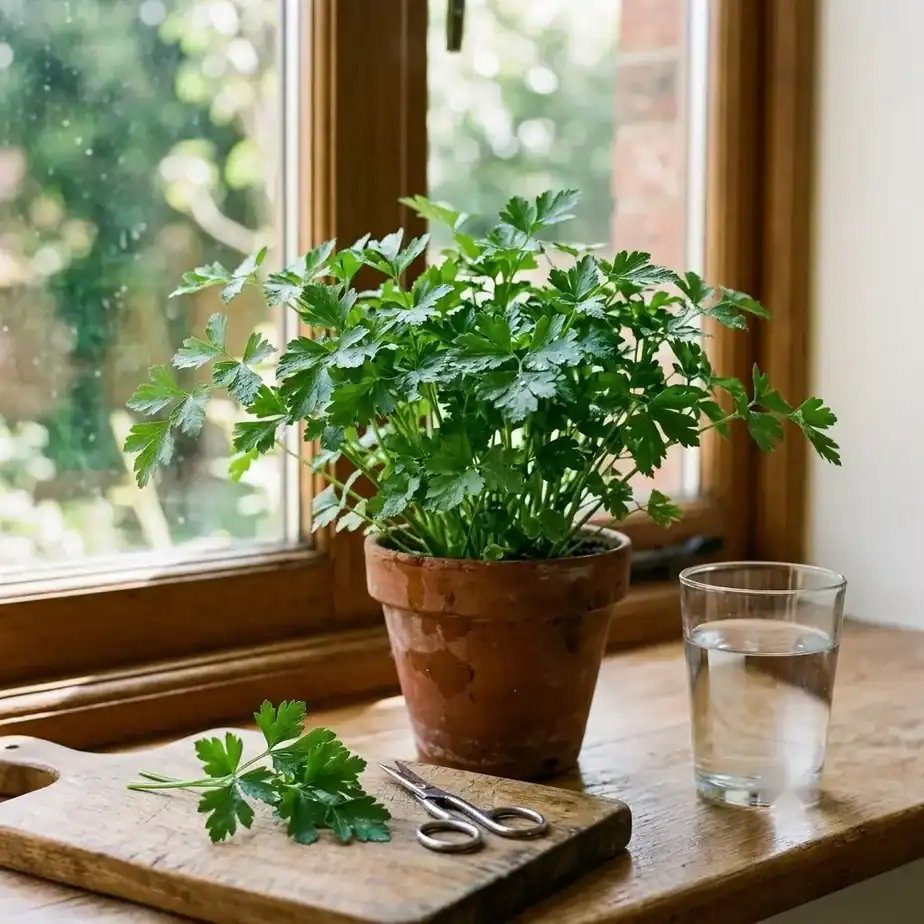
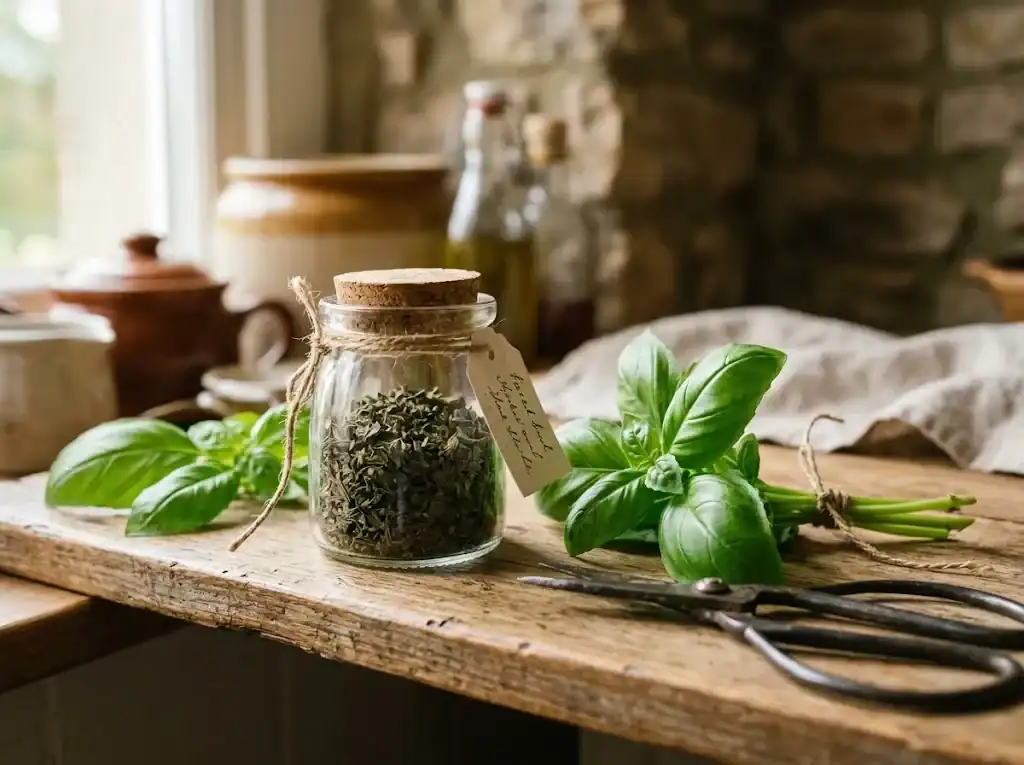
Tender herbs keep for a week in a glass of water on the counter, loosely covered with a plastic bag, or in the refrigerator wrapped in a slightly damp paper towel. Hardier herbs can be air dried in a warm, airy spot out of direct sun and stored in an airtight jar for cooking through the winter. Both methods keep the flavor usable for months, and a jar of home-dried herbs is a thoughtful gift from a productive garden.
Can I make a calming drink with herbs?
Yes. Mint, chamomile, and lemon balm make a gentle infusion when a small handful of leaves is steeped in hot water for several minutes. Dried versions of the same plants store well for year-round use. If you are pregnant, on medication, or have a known allergy, check with a clinician before drinking concentrated forms, because concentrated preparations are different from a casual cup.