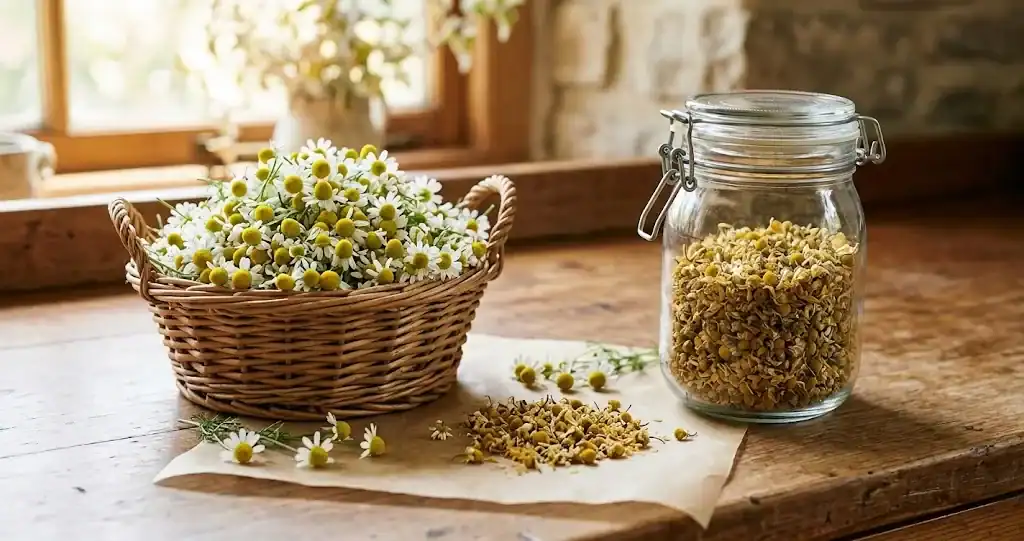
A basket of just-picked chamomile smells like apples and honey for about a day. Leave it on the counter and the flower heads wilt, the white petals brown at the edges, and that sweet scent thins into hay. Storage decides whether a summer of picking turns into a year of good tea or a jar of dusty beige crumbs.
The short answer: chill the picked blossoms and use them within two or three days, or dry them properly and seal them in glass, where they hold their aroma for about a year.
How long do chamomile flowers last after picking?
Three storage windows cover almost every situation in a home kitchen.
- Loose on the counter: less than a day. The blossoms close, soften, and start to smell grassy.
- Chilled in a covered container: two to three days, sometimes four if the flowers went in clean and dry.
- Dried and sealed: six to twelve months of full flavor, and still usable after that with a weaker aroma.
- Frozen: about six months, best for iced tea and syrups rather than a delicate hot brew.
How you harvest chamomile changes those numbers before storage even starts. Chamomile flowers are ready once the white petals have fully opened and sit flat, and the best time to harvest is a dry morning when the plants are in full bloom. Pick the flower heads by rolling them off between two fingers so no sap-wet stem goes into the basket, and keep the picking bowl shallow so the weight of the pile does not bruise what is underneath. Our guide to cutting chamomile at the right stage covers the timing in detail, and getting it right is the cheapest way to add a day of shelf life.
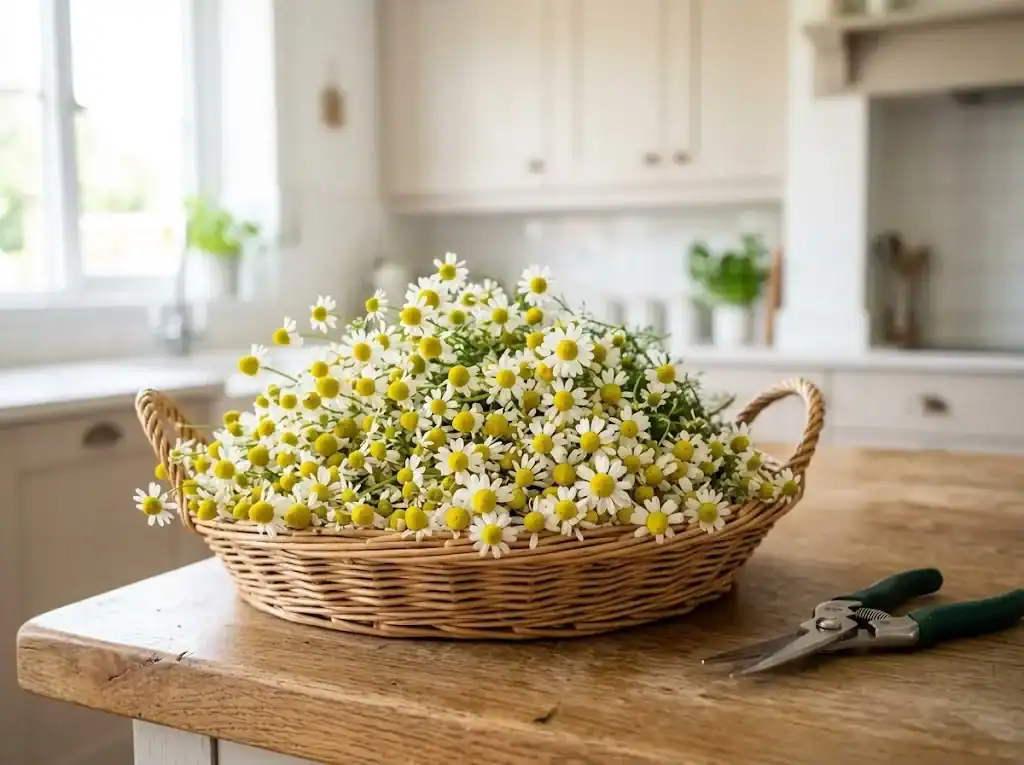
Keep picked chamomile in the refrigerator for a few days
Refrigeration buys you a few days, which is usually all you need while you gather enough flowers for a proper drying batch.
- Skip the rinse unless the flowers are muddy or dusty. Water is what starts the browning. If you do rinse, spread the flowers on a towel and pat dry before they go anywhere near a container.
- Shake the harvest gently over a sheet of paper first. Tiny thrips and spiders live in the yellow cones and will walk out on their own.
- Line a shallow container with a dry paper towel, add the flowers in a single loose layer, and rest the lid on top rather than clamping it down. Trapped humidity is the enemy here.
- Put it in the main body of the refrigerator, not the crisper drawer, where moisture collects.
- Check daily and pull out any flower head that has gone soft or gray so it does not spoil its neighbors.
If you cut long stems, you can also stand the bunch in a jar with an inch of water like a posy on the windowsill. It looks lovely for a day or two, but the flowers keep opening and the petals drop, so treat it as a display rather than storage.
Can you brew a cup from freshly picked flowers?
Yes, and you do not have to wait for anything to dry. Chamomile can be used fresh the same afternoon you pick it. To make the tea, use roughly two tablespoons of blossoms per cup, since undried flowers hold a lot of water and taste milder by volume. Pour water just off the boil, cover the cup, and steep five minutes. Tea with fresh petals comes out pale gold, green at the edges, and lighter than the honeyed cup you get from dried flowers.
Fresh or dried chamomile will both make tea worth drinking, and both are used for tea in the same proportions once you allow for the water weight. Drying simply concentrates the aroma and makes an herbal tea you can pour in January, which is why most of the fresh flowers you gather end up on a rack rather than in the pot. If you only ever drink chamomile tea in the evening, a jar of dried blossoms goes much further than a bowl of flowers to make one pot with.
Drying and storing chamomile for the long term
Most people dry chamomile for tea, and the drying process is where a harvest is won or lost. Good drying pulls moisture out fast enough that the petals stay pale, and gently enough that the volatile oils carrying the scent stay in the flower rather than evaporating. That means moving air, mild warmth, and a spot the sun cannot reach. Bright sun bleaches the petals and cooks off the smell.
Spread the flowers in one layer, never a heap. Drying and sealing the crop in glass follows the same logic for almost everything you preserve from the garden, and the wider guide to cutting and curing herbs through the season is worth a read if you plan to harvest and preserve more than one crop this year.
Air drying on a screen or rack
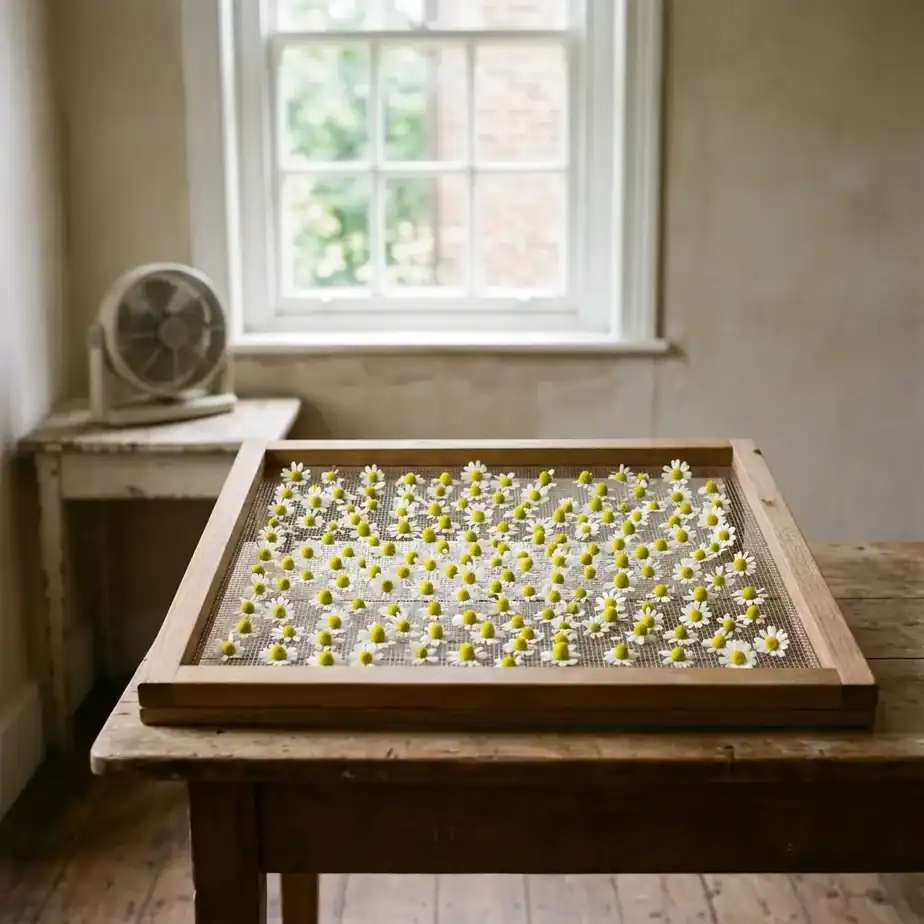
The simplest way to air dry a harvest needs no equipment beyond a mesh screen, a clean window screen, or an herb drying rack. Set it somewhere warm, shaded, and breezy, such as a spare room with the door open or an attic in summer. Turn the flowers with your fingers every couple of days. Drying time runs seven to ten days in dry weather and up to two weeks in a humid climate. A fan on its lowest setting, pointed past the screen rather than at it, cuts several days off. This is the way to dry a large picking when you have the space, and it is what most growers recommend drying by if the weather cooperates.
The paper bag method
For stems rather than loose heads, gather a small bundle, slide it upside down into a paper bag, punch a dozen holes in the sides, and tie the neck around the stems. Hang it in a warm cupboard. The bag catches any petals and seeds that drop. Keep the bundles thin, because a fat bunch stays damp in the middle and molds where you cannot see it.
Using a food dehydrator
A dehydrator gives you the most reliable result in the least time. Set it to its lowest temperature, around 95 to 105 degrees Fahrenheit, spread the flowers on the mesh trays, and start checking after four hours. Most batches finish in six to twelve hours. Anything hotter dries them faster and leaves you with tea that tastes like paper.
The oven, only if you must
An oven is a poor tool for this because most cannot hold a low enough temperature, and Penn State Extension recommends keeping dried herbs well below the point where their oils are driven off, which happens quickly with heat and light exposure, as their guidance on drying herbs explains. If it is your only option, use the lowest setting, prop the door open, spread the flowers on parchment, and check every fifteen minutes.
How to tell when they are done
A blossom is fully dried when the petals crumble at a touch and the yellow center crushes to a fine powder between your fingers instead of squashing. If a flower bends or feels leathery, it is not dry enough. Give it another day. Sealing flowers that are only nearly dry is the single most common reason a jar grows mold three weeks later.
How to store dried chamomile flowers
Once the flowers are completely dry, the storage rules are simple and they matter more than the drying method you chose. Whether you dry chamomile flowers on a screen or in a machine, this is the part that keeps the aroma for a year.
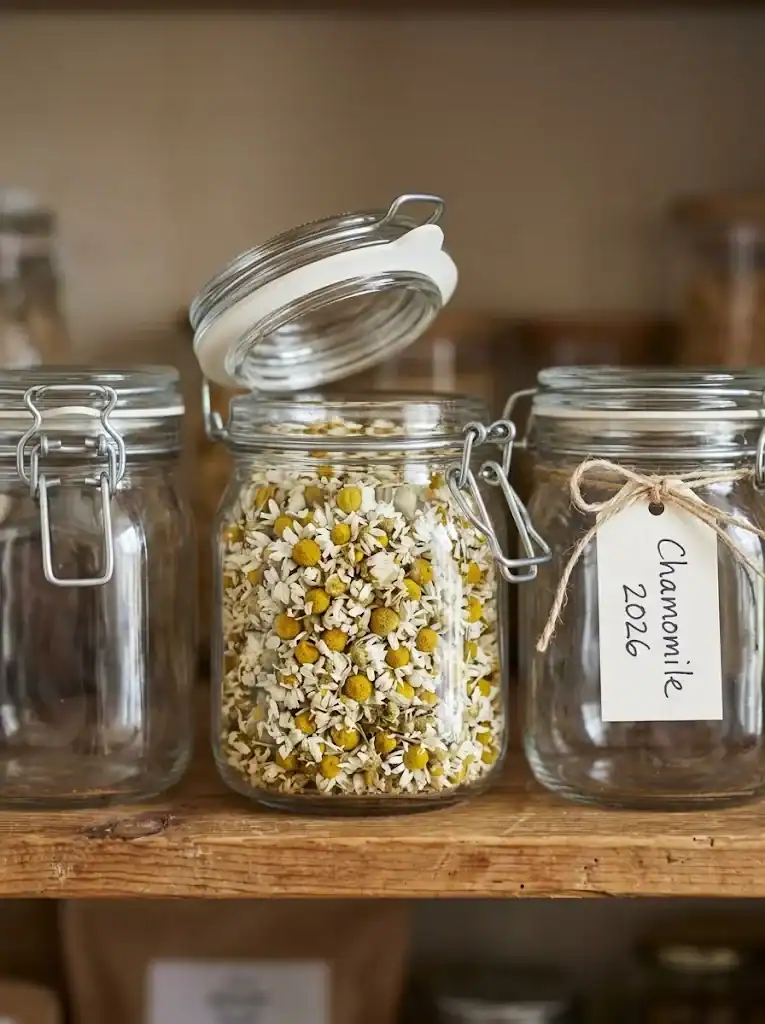
- Use glass, and seal it. A clean airtight jar beats a plastic bag, which lets aroma out and odors in.
- Keep dried flowers whole. Crushing them exposes more surface to air, so leave them intact and break them up as you brew.
- Keep the jar dark and cool. A closed cupboard out of the sun and well away from the stove is ideal. Heat and light are what fade both the color and the scent.
- Label with the date and the type. Two years of harvest look identical by February.
- Watch the first week. If you see any condensation on the glass, tip the flowers back onto the rack and dry them further.
Expect a year of good tea from each jar. After that the flowers are still safe, just quieter, so use a heavier spoonful or save them for a bath soak.
Can you freeze chamomile?
You can, and it is a useful backup when the weather turns humid and drying stalls. Two approaches work. Lay clean flowers on a tray, freeze them loose, then tip them into a labeled freezer bag with the air pressed out. Or pack the blossoms into an ice cube tray, top with water, and freeze the cubes for iced tea and lemonade.
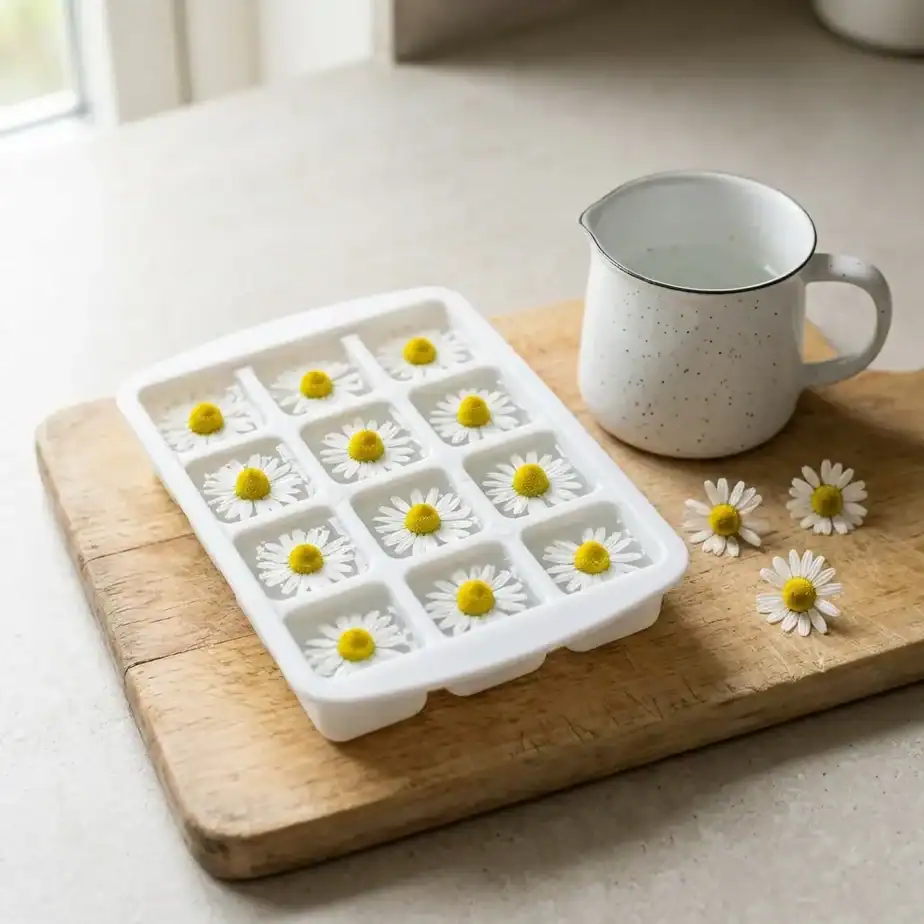
Either way the petals lose their structure and thaw limp, so frozen flowers belong in brews, syrups, and cordials rather than on a plate as a garnish. Freezing also takes far more space than a jar of dried flowers, which is why drying stays the default for a big harvest.
German or Roman chamomile changes a few details
Two plants share the name and both end up in the teapot, but they behave differently in the garden, and knowing which chamomile plant you picked from tells you how much to expect from a season.
German chamomile, Matricaria chamomilla, is the tall type with hollow yellow cones and the classic apple scent. Chamomile is an annual in this form, and it carries most home harvests because it flowers heavily for weeks and every picking encourages the plant to produce more blooms. If you planted German chamomile this spring, expect flushes of flowers throughout the growing season rather than one crop. Roman chamomile, Chamaemelum nobile, is a low perennial that spreads into a fragrant mat, gives a smaller crop, and tastes noticeably more bitter, so many people blend it rather than brewing it alone. The Roman kind also sits low to the ground, which means grit and rain splash reach the flowers and a rinse is more often unavoidable.
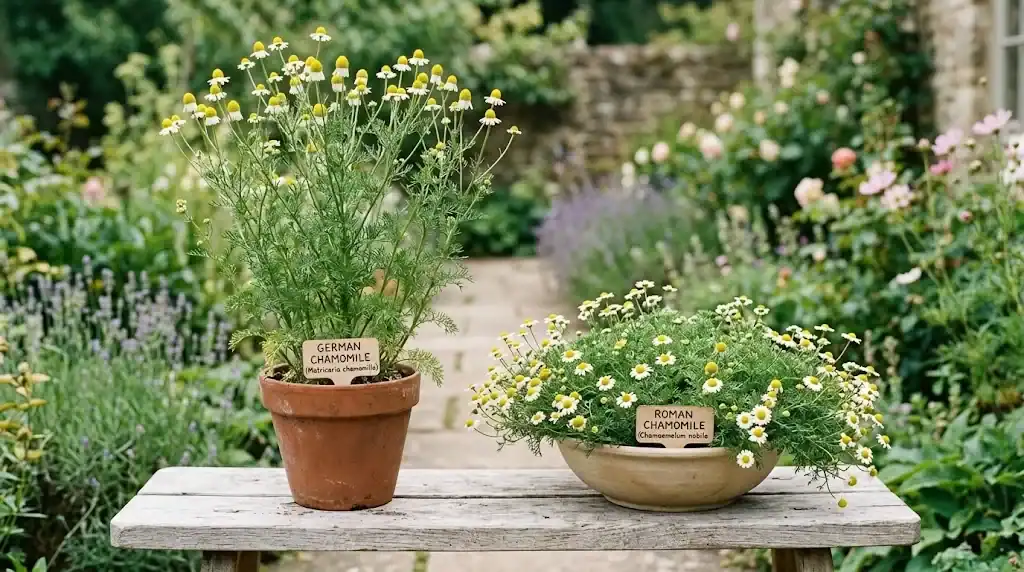
Storage is identical for both. If you grow chamomile in your garden and want next year handled for you, leave a few late flowers on the plant instead of picking them. Chamomile seeds are tiny, they self-sow readily, and volunteer chamomile will show up in spring where you least expect it, so a bed planted once from seeds or seedlings tends to keep going on its own. The leaves are another matter: you can use the leaves in a bath soak or the compost heap, but they are too bitter for the teapot.
Four things that spoil stored chamomile, and the fix
- Mold or a musty smell. The flowers went into the jar slightly damp. Throw that batch out, do not pick the good ones out of it, and leave the next round on the rack another day or two.
- Brown, brittle petals with no scent. Too much heat or too much sun during drying. Move the rack into a shaded room, or drop the dehydrator temperature.
- Faint aroma after a month. Usually a loose lid, a plastic container, or a jar stored above the stove. Move it to sealed glass in a dark cupboard.
- Small moths or webbing in the jar. Pantry pests that arrived with the harvest. Freeze new batches for 48 hours before shelving them, and keep jars off open shelves.
Safety notes before you put up a year of tea
Chamomile belongs to the daisy family, so people who react to ragweed, marigolds, or related plants can react to it too, occasionally seriously. The National Center for Complementary and Integrative Health notes that the evidence for its medicinal properties is limited, that it may interact with blood thinners such as warfarin, and that concentrated extracts carry stronger risks than a cup of chamomile tea. Its summary of chamomile research and cautions is the right place to start. People sometimes treat it as a gentle drink that cures anything from nerves to poor sleep, and the evidence does not stretch that far.
If you are pregnant, breastfeeding, taking prescription medication, or preparing for surgery, ask a pharmacist or doctor before drinking chamomile tea daily. Anyone with swelling, hives, or trouble breathing after a cup should stop and seek medical care rather than trying a smaller dose.
Common questions about storing chamomile
What part of the plant do you keep?
Only the flower heads. Snap or pinch them off at the top of the stalk, leaving the leaves and stems on the plant. Chamomile foliage is bitter and adds nothing to a brew, though it is pleasant thrown into a bath soak or the compost.
Should I wash the flowers first?
Not unless they are visibly dirty or you garden beside a road. A rinse adds the moisture you are about to spend a week removing. Shake, inspect, and dry the flowers instead.
Can I dry flowers that have been frozen?
No. Freezing ruptures the cells, so thawed flowers weep and go slimy on a rack instead of drying cleanly. Decide which method a batch is going into on the day you pick it.
How much dried chamomile does a plant give?
A dozen well-picked German chamomile plants, harvested every few days through summer, will typically fill a quart jar with dried blossoms. That is roughly a cup of tea a day for a year, which is why storage discipline pays off.
What to do with the jars
You now have a shelf of dried flowers that smell like the garden did in July. Blend them with lemon balm for an evening brew, steep them into a syrup for stone fruit, or bake with them; our collection of chamomile recipe ideas is a good next stop once the drying rack is finally empty.