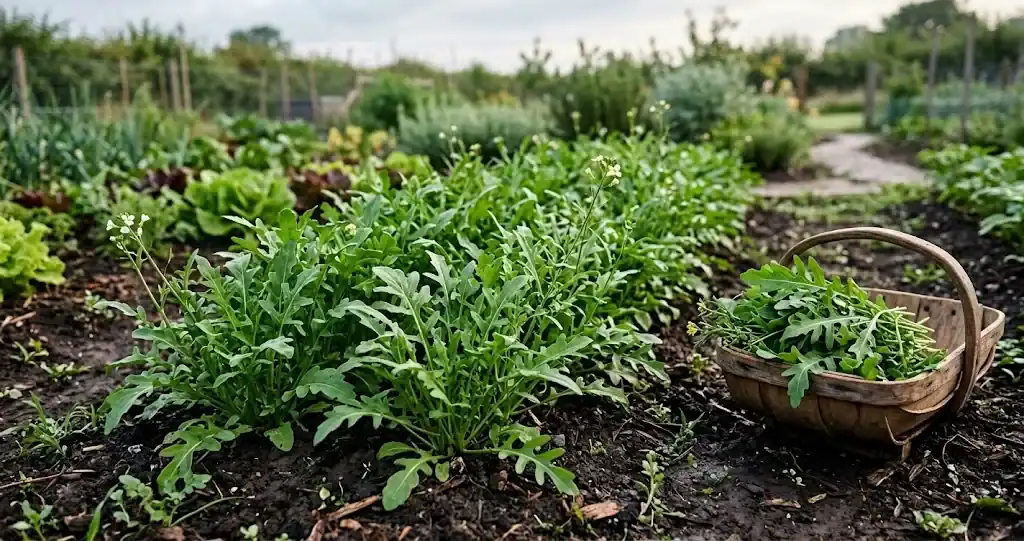
This leafy green earns its keep quickly. A handful of seeds can turn into crisp salad leaves in little more than a month, especially when the weather is cool. The trick is not complicated: sow early, keep the soil evenly moist, and pick young leaves before heat pushes the plants to flower.
Also called rocket, it is a fast-growing salad green in the brassica family. It is easy to grow from seed in a garden bed, raised bed, or container. Start small, plant a short row every couple of weeks, and you can keep a steady supply going through spring and fall.
Start with the right season
This crop grows best when nights are cool. Plant in early spring as soon as the soil can be worked, or in late summer for a fall crop. Seeds germinate in cool soil, and mature plants tolerate a light frost.
Hot weather changes both the plant and the flavor. When days warm up, the plant grows taller, sends up a flower stalk, and turns sharper and more bitter. In warm climates, grow it through the coolest months. In colder places, use a little afternoon shade to stretch the spring harvest.
If you are building a larger kitchen garden, our guide to growing herbs from the ground up can help you plan the bed, paths, and watering before you add quick crops like arugula.
Choose a sunny, well-drained spot
Arugula prefers full sun in cool weather. Once temperatures begin to climb, four to six hours of morning sun with afternoon shade is often the better choice. The plants still need good light, but a little shade can slow bolting.
Prepare loose, well-drained soil with compost mixed into the top few inches. It grows best in fertile soil that holds moisture without staying soggy. A soil pH near 6.0 to 7.0 suits it well, though ordinary productive vegetable-bed soil is usually enough.
Containers work well too. Choose a pot at least 6 to 8 inches deep with drainage holes, fill it with a quality potting mix, and place it where you can water it easily. A wide container gives you room to sow several short rows.
How to plant arugula seeds
Plant the seeds directly where they will grow. Transplants work, but direct seeding is simpler and avoids disturbing the small roots.
- Make a shallow furrow about one-quarter inch deep.
- Scatter or space the seeds about 1 inch apart, then cover them lightly.
- Water with a gentle spray so seeds do not wash away.
- Keep the top inch of soil consistently moist until seedlings emerge.
- Thin crowded seedlings to about 4 to 6 inches apart once they have a few true leaves.
Seeds often germinate within 4 to 8 days, depending on soil temperatures. Each seedling needs room to develop a compact root system before leaves begin to crowd. For a continuous supply, plant seeds every two to three weeks rather than planting all your seeds at once. This simple succession planting gives you young leaves while an earlier patch is ready to harvest, which helps extend the growing season without waste.

Pick a variety that fits your season
Most seed packets are either standard arugula or wild arugula. Standard arugula grows quickly and gives broad, tender leaves. Wild arugula has narrower, more deeply cut leaves and a stronger flavor, but it often handles warmth a little better. For a first planting, choose a standard variety and start with fresh arugula seed.
Care for arugula plants
Water is the main job. Check the bed often and water when the top inch of soil feels dry. Even moisture keeps growth tender and helps prevent the stress that can make leaves taste extra peppery. Mulch lightly around established plants if the weather is warming or the soil dries quickly.
Arugula is easy to care for and does not need heavy feeding in soil enriched with compost. If growth looks pale or slow, use a modest nitrogen-rich vegetable fertilizer according to its label. Too much fertilizer can give you soft growth without solving poor light, crowding, or dry soil.
Give plants good air circulation by thinning them on time and keeping weeds down. Crowded plants stay damp longer, compete for water, and are easier targets for problems.
Give seedlings a strong start
Arugula seedlings grow quickly once they have light, moisture, and room for their roots. Keep the soil evenly moist, but never saturated. If a cold snap is forecast after seeds germinate, cover the bed with a light row cover overnight. A light frost usually will not hurt established plants.
In a container, turn the pot every few days if one side receives much more light. This keeps the plants from leaning and helps the leaves grow evenly. Keep arugula close enough to check often, because quick greens can go from tender to ready for cutting in a few days.

Keep pests and disease from taking over
Flea beetles are the pest most likely to turn arugula leaves into tiny holes. Cover seedlings with lightweight row cover from the start if they are common in your garden. Remove the cover when you need pollinator access to flowering plants, or before you decide to let a few plants set seed.
Aphids and slugs can also show up. Knock aphids off with a firm spray of water and hand-pick slugs in the evening. Avoid overhead watering late in the day, remove damaged leaves, and leave enough space between plants for good air circulation. Those habits also reduce the risk of leaf diseases.
Harvest young leaves often
Most arugula is ready to harvest about 30 to 45 days after sowing, though you can pick baby leaves sooner. This quick growing time is one reason it is such a useful crop in a small garden bed. Use clean scissors to cut the outer leaves about an inch above the crown. Leave the center intact and the plant can continue growing for more cuts.
Harvest in the morning after dew has dried, when the leaves are crisp. Do not strip every leaf from a small plant. Regular, light cutting is kinder to the plant and gives you a longer harvest window. For a closer look at timing and technique, see how to harvest arugula.

Grow arugula in pots when space is tight
To grow arugula in a container, use a wide pot with drainage holes and fresh potting mix. Sow seeds thinly, keep the mix moist, and thin seedlings so air can move between them. Containers dry faster than a garden bed, so check them daily in bright or windy weather.
A pot lets you move arugula into afternoon shade when a warm spell arrives. It also keeps a crop close to the kitchen, which makes frequent harvesting more likely. Plant a few seeds every couple of weeks for a continuous supply of fresh greens.
What to do when arugula bolts
Bolting means the plant has shifted from leaf production to flowers and seeds, or is beginning to go to seed. The leaves become more strongly flavored, but they are still edible if you enjoy the bite. The pale flowers are edible too and make a lively garnish.
You can pull bolted plants and plant another patch when temperatures cool, or let one healthy plant flower and set seed. Arugula flowers and seeds can also attract small pollinators to the garden. Arugula is usually grown as an annual, although it may self-seed in a favorable spot. Save dry seed pods only after they have turned tan and brittle.
After the harvest
Rinse leaves only when you are ready to use them, then dry them well for salads, sandwiches, pasta, or pizza. If your crop outpaces dinner, learn how to store arugula so those tender leaves stay fresh a little longer.
Common growing problems
Why are my arugula leaves bitter?
Heat, dry soil, and delayed harvest all sharpen arugula’s flavor. Water deeply when the top inch of soil feels dry, harvest young leaves, and plant again in cooler weather. The plant is not failing, it is responding to stress and moving toward flowering.
Why are seedlings disappearing?
Flea beetles, slugs, and hungry birds can all damage young plants. Check the leaves and soil surface early in the day, protect seedlings with row cover when needed, and re-sow small gaps promptly.
Frequently asked questions
Is arugula hard to grow?
No. Arugula is one of the easiest salad greens for beginners because it grows fast and starts readily from seed. Cool weather, steady moisture, and timely harvesting matter more than elaborate care.
Does arugula regrow after cutting?
Yes. Cut outer leaves while leaving the central crown and a few young leaves in place. Plants can produce several harvests before they bolt.
Can arugula grow indoors?
Yes, if it receives strong light. A sunny window may be enough in cool, bright weather, but a grow light is more reliable. Use a shallow container with drainage and plant a little seed every few weeks.
Grow a small patch first
The crop rewards a simple routine. Plant a small row in cool weather, keep the soil moist, and cut young leaves often. Once you taste the difference between garden-fresh leaves and a bag that has spent days in transit, you may find yourself sowing another short row before the first one is gone.