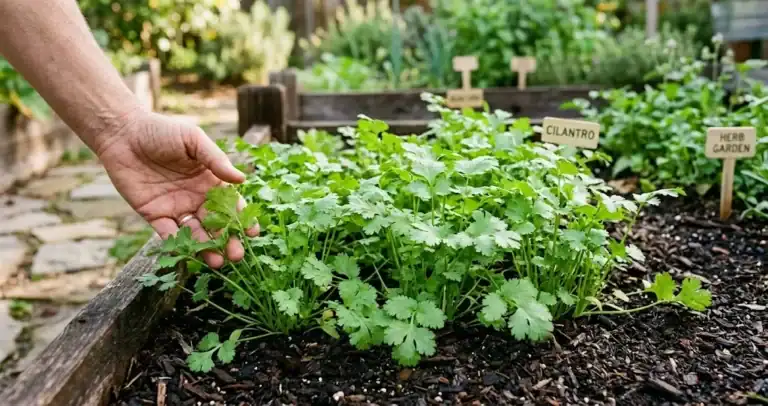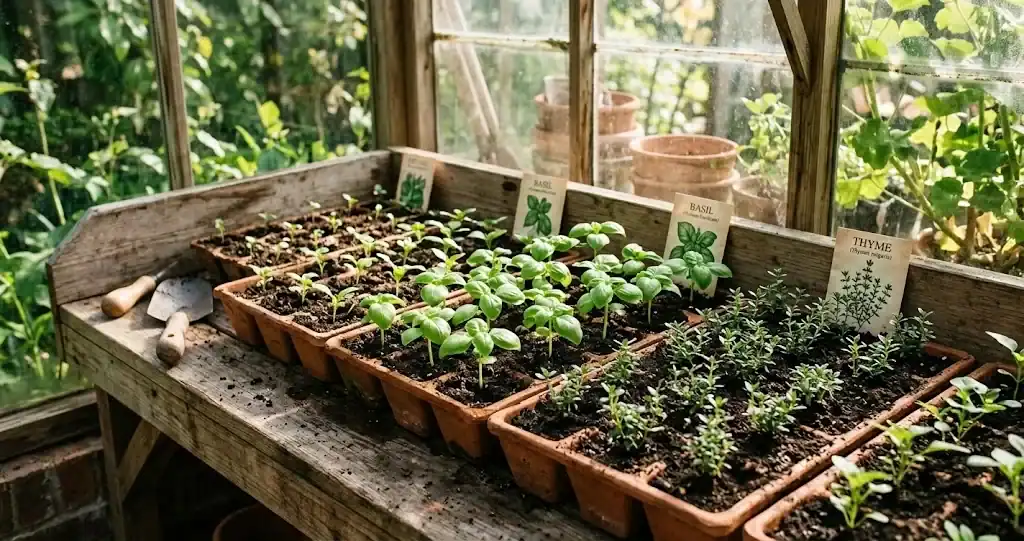
Starting herbs from seed gives you access to dozens of fragrant varieties you will rarely find as nursery starts. Whether you want sweet basil for summer sauces, curled parsley for seasoning, or pungent thyme for your kitchen garden, cultivating your own plants from the very beginning is economical, dependable, and deeply satisfying.
When you plan to grow from seed, success starts with understanding that different herb seeds have very distinct habits. Some seeds sprout within days on a warm windowsill, while slower perennial herbs take weeks to emerge. When you are starting an herb garden from scratch, matching your sowing calendar to the needs of each herb sets up a productive harvest from spring through autumn.
Choosing herb seeds for your garden and culinary uses
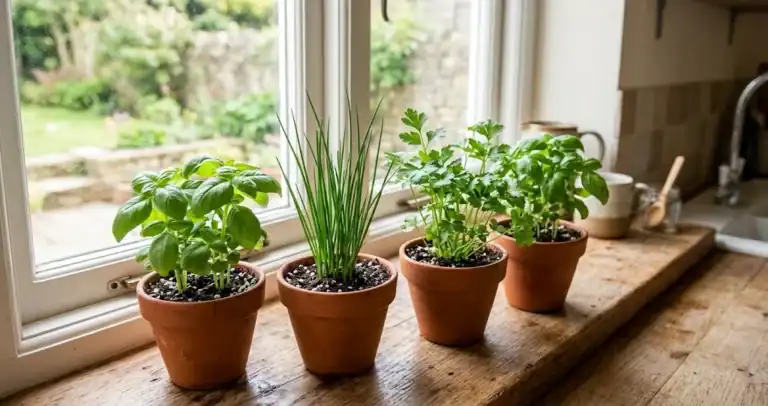
Before you buy seed packets, decide where your herb plants will spend the season. Many herbs thrive in a sunny garden bed, raised bed, or vegetable garden, while others produce continuous cuttings in a simple container or pot on the patio or windowsill.
Herbs fall into three primary growth cycles that influence how you start herbs:
- Is it an annual herb? Herbs like basil, cilantro (coriander), and dill grow rapidly, set seed, and complete their lifecycle in one season. These culinary herb varieties are exceptionally easy to grow from seed.
- Is it a biennial herb? Parsley and caraway grow lush foliage in their first year, survive mild winters, and produce flowers and seeds in their second year.
- Is it a perennial herb? Rosemary, thyme, oregano, and sage (Salvia officinalis) live for multiple seasons. Perennial seeds sprout more slowly and benefit from an early start indoors.
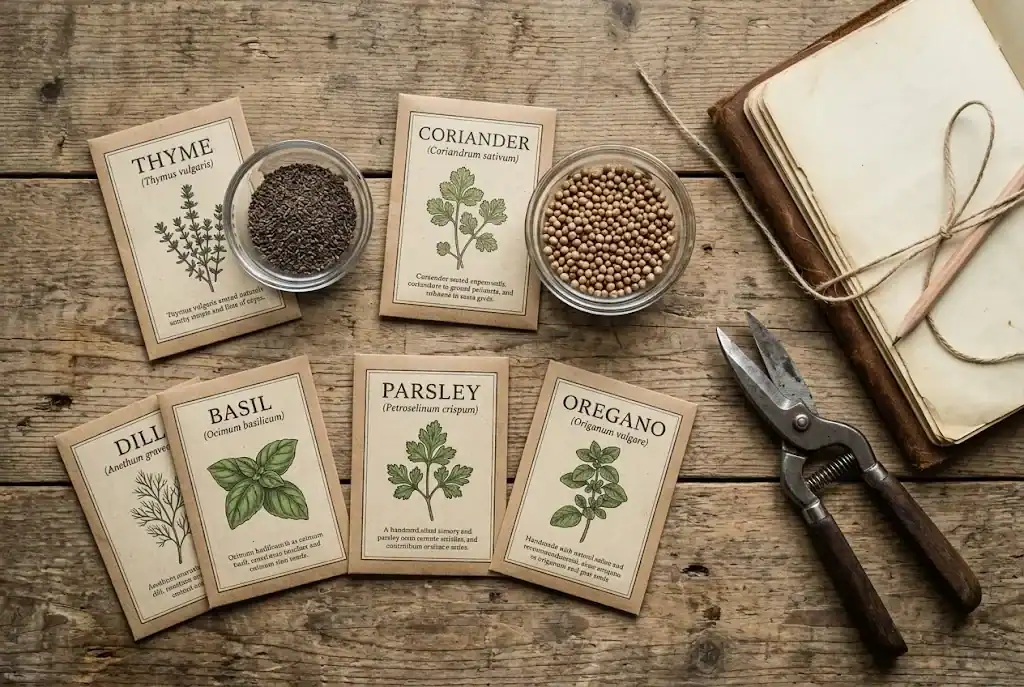
When shopping for seeds, examine the packet closely. Check your seed packet for the packaging year, germination rate, and recommended planting dates. Investing time in picking quality seed worth sowing ensures high viability, vigorous emergence, and true-to-type flavors for your kitchen recipes.
Understanding germination times and seed habits
Herb seed germination varies widely across species. Rapid growers like basil seeds often emerge in 5 to 10 days when kept warm. Slower seeds, including rosemary and lavender seeds, require patience, consistent moisture, and sometimes 2 to 4 weeks before green shoots appear.
Some perennial herbs and garden varieties prefer cold stratification before sowing. Chilling damp lavender or sage seeds in the refrigerator for 2 to 3 weeks softens the seed coat and triggers natural emergence hormones. Once stratified, these seeds sprout more evenly when moved into gentle indoor warmth.
Seed size also determines how you sow. Tiny seeds like oregano, thyme, and savory are fine seeds that need light to germinate. Large seeds like coriander and borage contain thicker coats and sprout reliably in dark, covered soil.
Preparing the right seedling mix and trays
Never use heavy garden soil in seed flats. Dense soil compacts under regular watering, suffocates delicate roots, and frequently harbors weed seeds or soil-borne fungal pathogens.
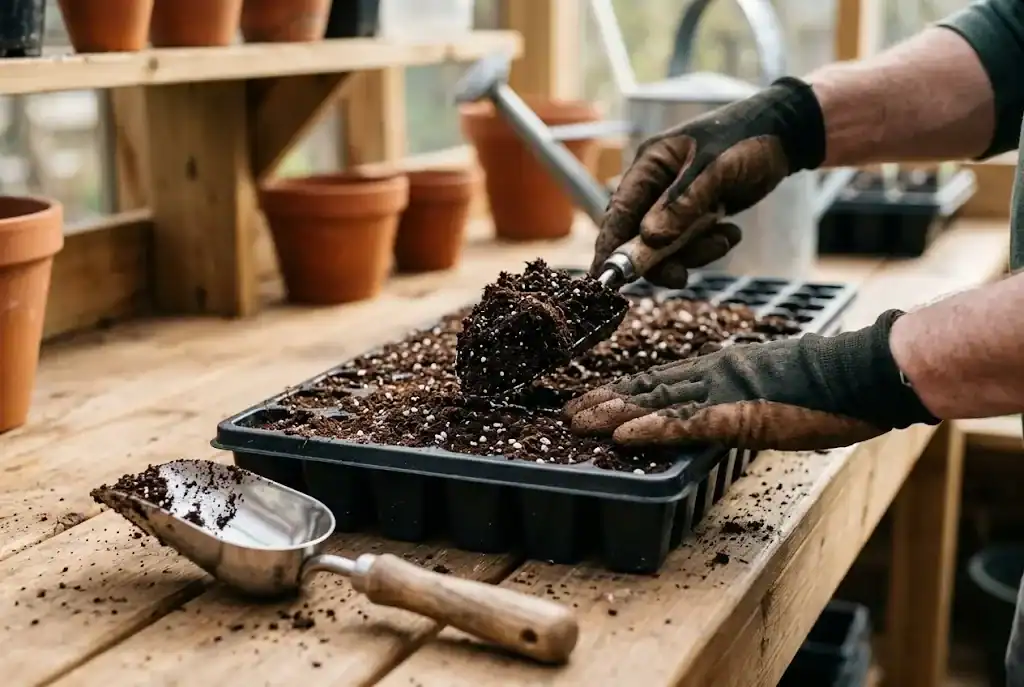
Use a sterile, loose seed starting mix formulated from milled sphagnum peat moss or coco coir blended with perlite and vermiculite. This lightweight growing medium retains uniform moisture while allowing plenty of oxygen to reach developing roots. Because a sterile starting mix contains virtually no nutrient charge, delicate new root tips are protected against fertilizer burn during initial emergence.
Choose shallow seed trays, plug flats, or small individual pots with generous drainage holes at the bottom. If you reuse plastic containers from previous seasons, wash them thoroughly in warm soapy water to eliminate lingering fungal spores before adding fresh mix.
Sowing herb seeds indoors at the correct depth
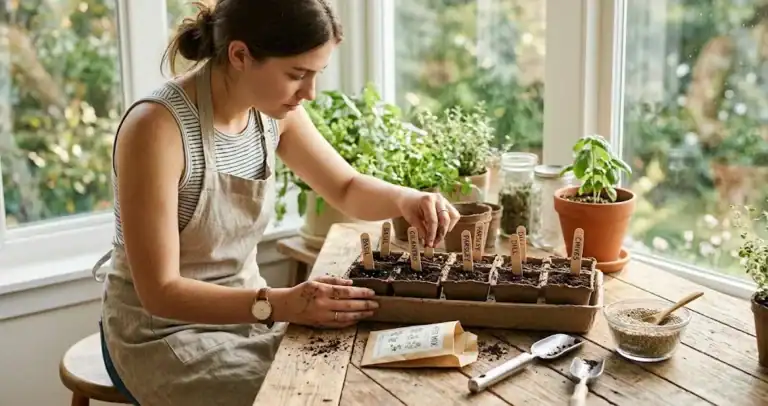
To start seeds indoors, pre-moisten your starting mix with lukewarm water until it feels like a wrung-out sponge. Fill your tray cells to within a quarter inch of the rim and tamp the surface lightly to remove air pockets.
Placing seeds at the right depth is critical for strong emergence:
- Surface-sown seeds: For fine, small seeds that need light to germinate, such as thyme and savory, scatter the seeds lightly on the soil surface. Press them gently with a fingertip so they make solid contact with the moist mix, but do not bury them under soil.
- Covered seeds: For medium and large seeds like parsley, chives, and coriander, sow seeds at a depth equal to 2 to 3 times their thickness, typically 1/8 to 1/4 inch deep. Cover them with a fine dusting of sifted starting mix.
Sow two seeds per cell to guarantee a healthy sprout in every compartment. If both seeds germinate, snip the weaker seedling at the soil line with clean scissors once the plants grow their first true leaves.

Moisture, warmth, and light requirements for seedlings
After you sow seeds, cover the tray with a clear plastic humidity dome or loose plastic wrap to trap moisture and create a humid microclimate without disturbing the surface. Place the flat in a warm spot where temperatures stay between 68 and 75 degrees Fahrenheit. A gentle heat mat under the tray speeds up sprouting for warm-season herbs like sweet marjoram and peppers.
Check the tray daily. Once seeds have germinated and tiny green arches appear, remove the plastic cover immediately to allow fresh air circulation. Seedlings need bright, direct light the moment they emerge.
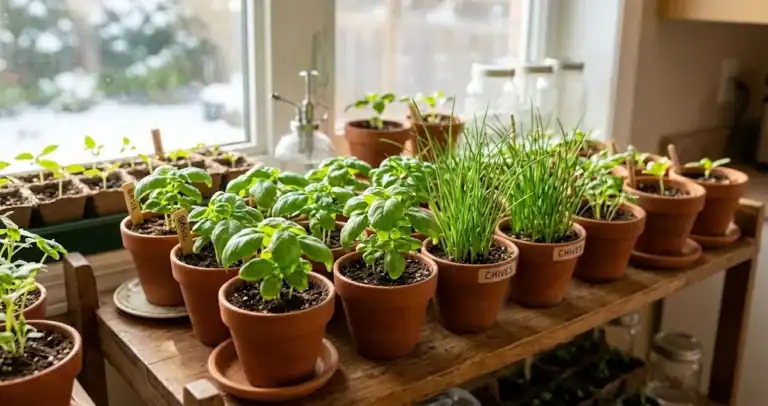
While a sunny south-facing window can support early growth, natural winter daylight is often too weak and short, leading to spindly, leggy stems. Setting up an adjustable grow light placed 2 to 3 inches above the seedlings for 14 to 16 hours a day produces sturdy, compact plants. For home growers refining an indoor setup, growing your culinary herbs indoors from seed offers detailed advice on lighting schedules and compact windowsill stations.
Water your seeds from the bottom by pouring lukewarm water into the solid lower tray. Capillary action draws moisture upward through the drainage holes, hydrating roots without dislodging tiny seeds or splashing stems.

Preventing early seedling problems and damping off
The most common hazard for young herb seedlings is damping off, a fungal condition caused by soil waterlogging, poor ventilation, and stagnant air. Infected seedlings suddenly collapse at the soil line with a developing dark, pinched stem.
To protect your herb plants against fungus and mold:
- Maintain good airflow by running a small oscillating fan on low near your seedling bench.
- Avoid overwatering; allow the top surface of the mix to dry slightly between waterings once seedlings establish.
- Ensure trays never sit in standing drainage water for more than 30 minutes.
- Provide balanced warmth and adequate grow light intensity so seedlings grow vigorously.
Once seedlings develop two sets of true leaves, they begin to need modest feeding. Feed them once every 10 to 14 days with a gentle, half-strength organic liquid fertilizer to support steady leaf and root expansion.
Hardening off and transplanting herbs into the garden
Young herb seedlings grown in protected indoor environments cannot move directly into full outdoor sun and wind without acclimating. Hardening off toughens leaf cuticles and strengthens stems over a 7 to 10 day period.
Begin hardening off when outdoor temperatures match your herbs’ preferences. Place trays in a sheltered, shaded outdoor spot for two hours on the first day. Gradually increase their outdoor exposure by two hours each day, slowly moving them into morning sun and gentle breezes. Keep the potting soil moist throughout this transition.
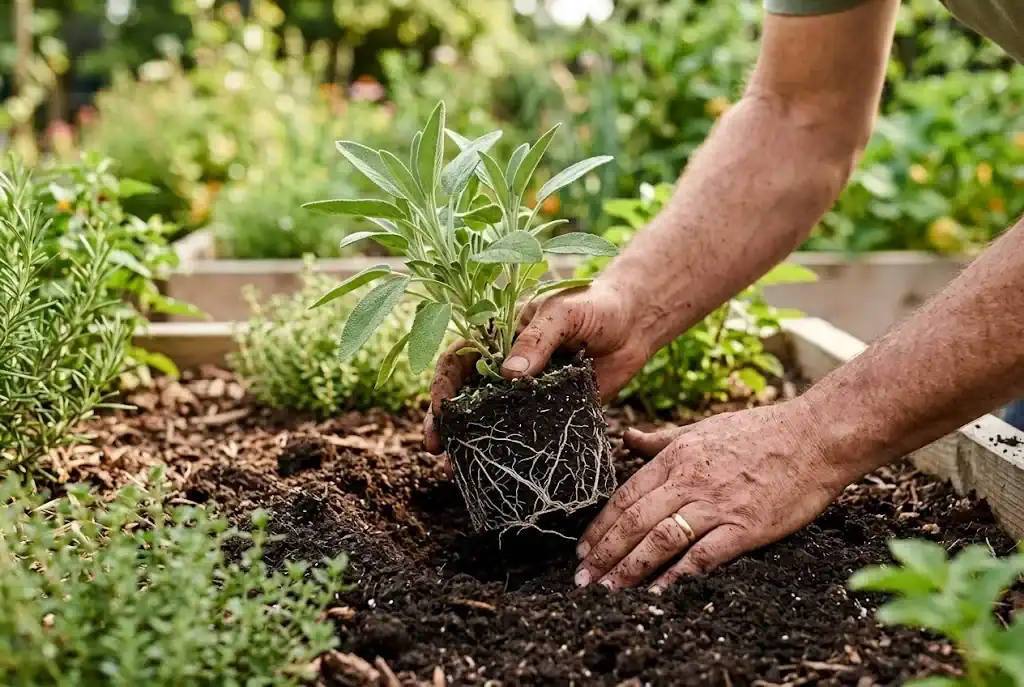
When transplanting into an outdoor garden bed, raised bed, or permanent patio pot:
- Dig a hole slightly wider than the root ball and equal to the seedling container depth.
- Ease the seedling out of its cell carefully, supporting the root ball rather than pulling the fragile plant stem.
- Set the plant in the soil, firm the surrounding earth gently, and water thoroughly to settle roots.
- Mulch lightly around the base with shredded leaves or straw to preserve soil moisture and regulate soil temperature.
Direct sowing herbs in outdoor beds and containers
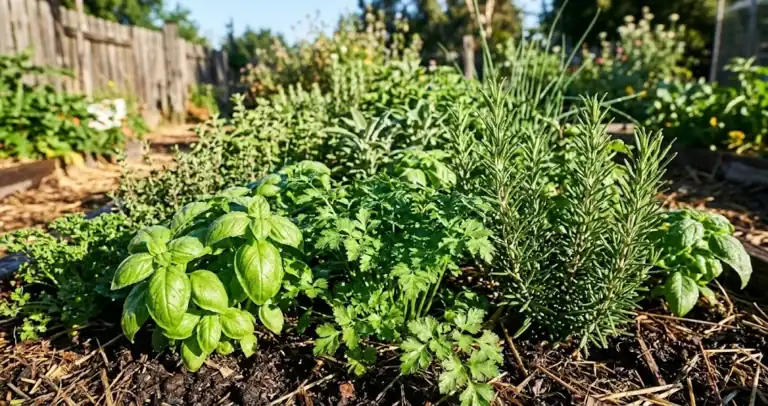
Certain culinary herbs dislike root disturbance and perform best when seeded directly in the garden or outdoor pots. Cilantro (coriander), dill, chervil, and borage develop taproots that resent transplant shock. These are herbs that do well when planted straight into warm garden soil.
Wait until all danger of spring frost has passed and outdoor garden soil warms to at least 60 degrees Fahrenheit before direct sowing herbs outdoors. Prepare the soil by raking out stones and working in well-rotted compost. Scatter the seeds along shallow furrows, cover lightly with fine soil, and keep the bed evenly moist with a gentle misting spray until seeds sprout.
Cultivating your own culinary herbs from seed offers total control over your planting schedule, garden design, and culinary pantry. With good seeds, a sterile seedling mix, steady warmth, and attentive light management, you can grow your herbs with confidence and harvest fresh seasonings all season long.