Dill leaves taste brightest when you snip them in the morning, before the sun has warmed the feathery fronds and foliage. Cut too early and the flavor stays grassy and thin. Wait too long and the plant bolts, the leafy fronds turn sparse, and your kitchen window becomes a flat little bouquet of nothing. A little timing and a sharp pair of scissors is all that stands between a steady harvest of fresh dill through summer and a single disappointed handful.
When is dill ready to pick?
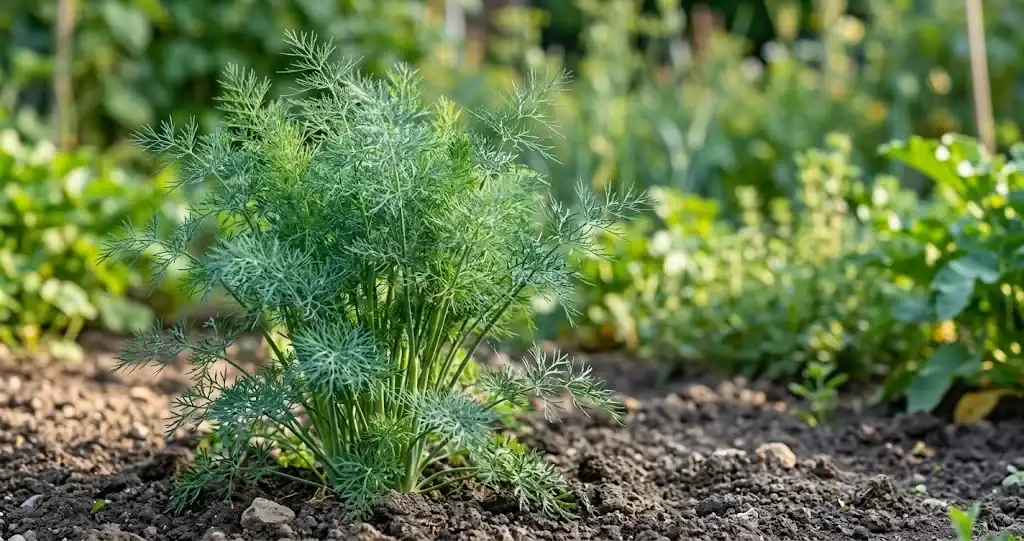
Dill is ready to start harvesting about six to eight weeks after sowing, once the plant has put on a bushy clump of feathery foliage at least a foot tall. Look for stems with full, deep green fronds and no sign of a central flower stalk pushing up from the middle. You can pinch a leaflet and rub it between your fingers to check: the aroma should be clean and unmistakably dill, with no bitter or grassy edge. Once a plant starts to flower, the gardener usually shifts focus from leaves to flowers and seeds rather than fighting the natural rhythm.
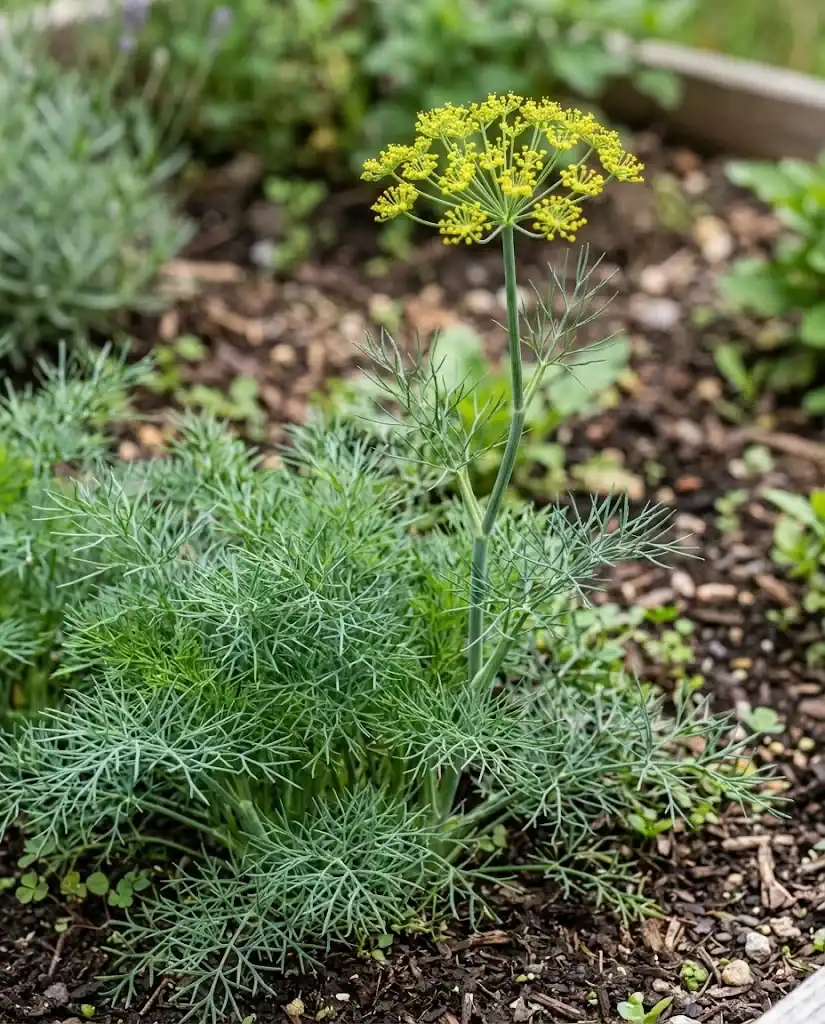
Younger leaves carry the gentlest flavor, so begin with the outer stems and let the inner crown keep producing. If you see yellow flowers forming at the top, the plant is shifting its energy toward seed production. That is not a failure. It just means you have moved into the next stage of the season, not the end of one. For the broader framework on timing, tool choice, and continuous harvest across many kitchen herbs, see harvesting herbs the right way.
How to cut dill leaves
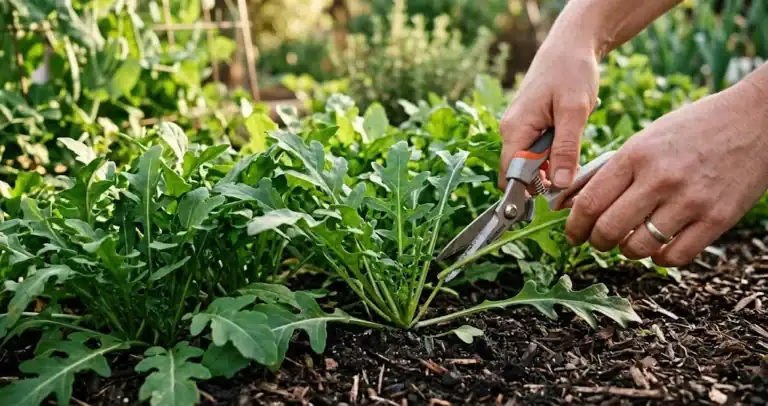
Cut single stems rather than plucking leaflets. Pinching individual leaves damages the soft fronds and slows regrowth, while a clean cut above a leaf joint tells the plant to send out two new shoots in its place. Use a sharp knife or a pair of garden snips, and snip the stem about a third of the way down, just above a set of side leaves.
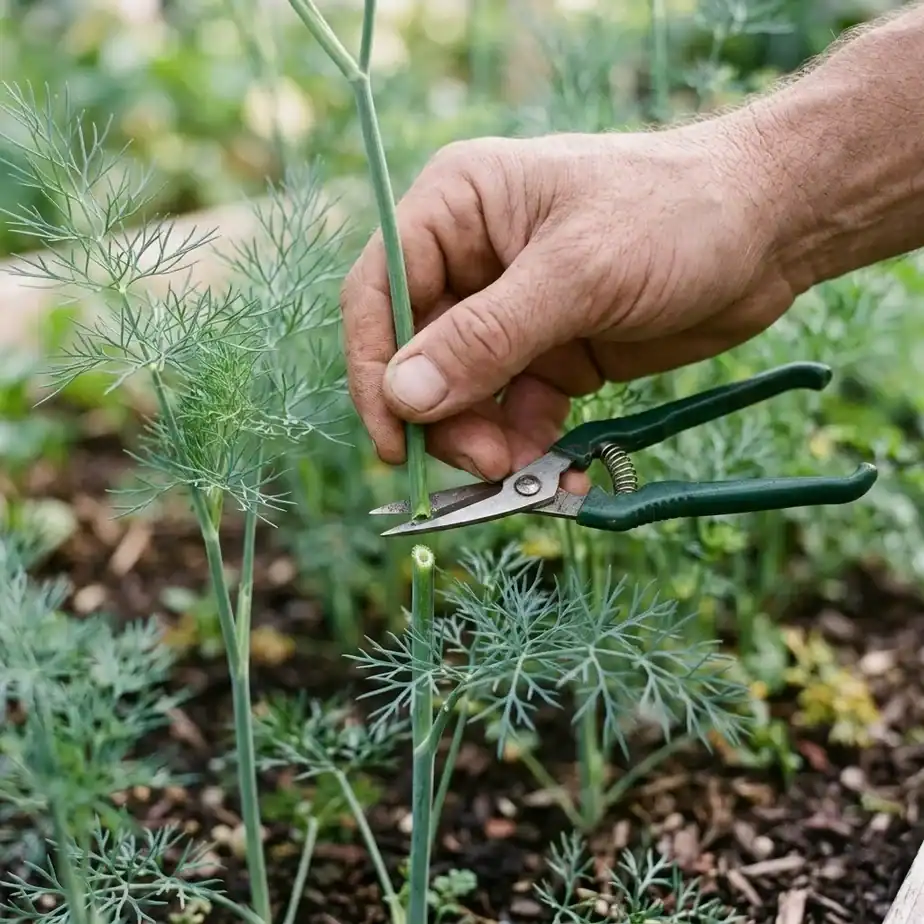
Take no more than a third of the plant at one time. Dill grows quickly in warm weather, and a hard cut can shock the foliage into early flowering. Most gardeners find that picking a small bunch every week or two keeps the plant producing steadily throughout the growing season without ever exhausting it.
How to gather dill blooms
Once the plant sends up its central stalk and the buds open into small yellow blooms, you have moved from leaf cutting to bloom gathering. Cut the flower head with about six inches of stem attached, just below the lowest cluster of yellow petals. The flowers carry a softer, slightly sweeter flavor than the leaves and fronds, and they look beautiful standing in a mason jar of water on the kitchen counter while you decide what to do with them.
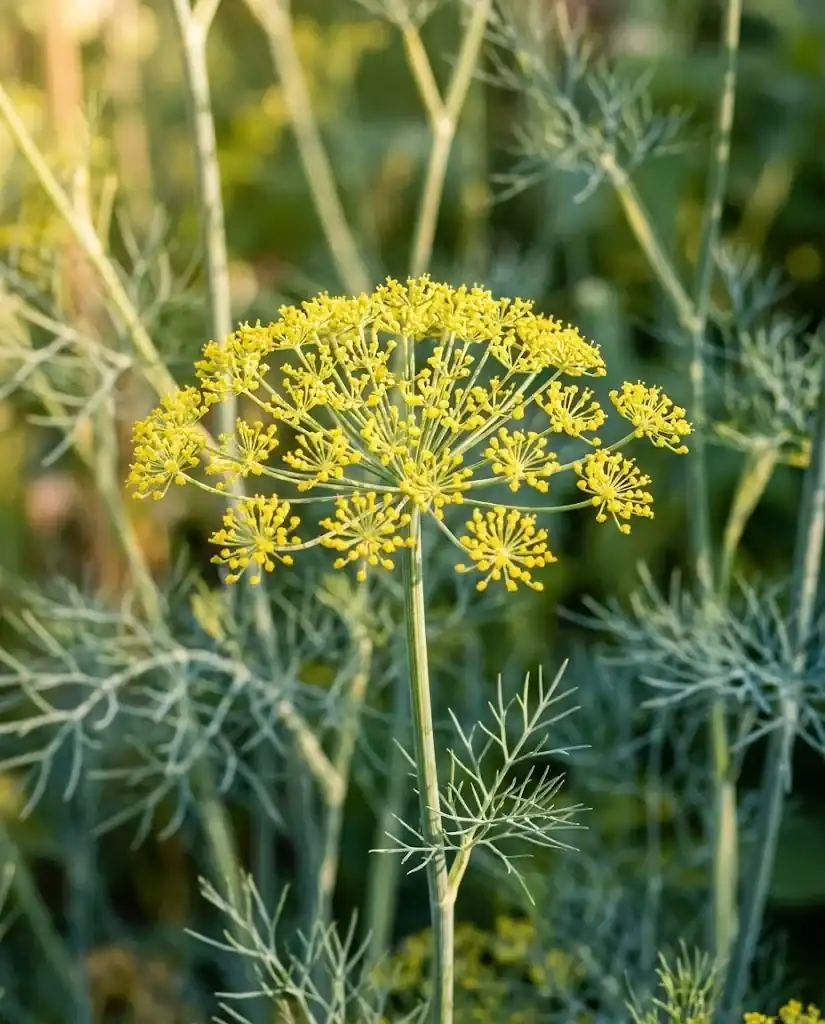
Pick flowers in the morning after the dew has dried. Damp petals turn to brown mush in the bag before you get them indoors. If you are saving flowers for a quick dill pickle batch, the open-bloom stage is ideal. If you want seed for planting or for the spice jar, leave them on the plant and move to the next step.
How to collect seeds from dill
Let the flower heads dry on the plant until the petals have fallen away and the flat, oval seeds turn from green to tan. Cut the entire seed head with its stalk and hang it upside down inside a paper bag tied loosely around the stem. Tie the bag in a warm, dry spot out of direct sunlight and the seeds will drop into the bag as they finish drying.
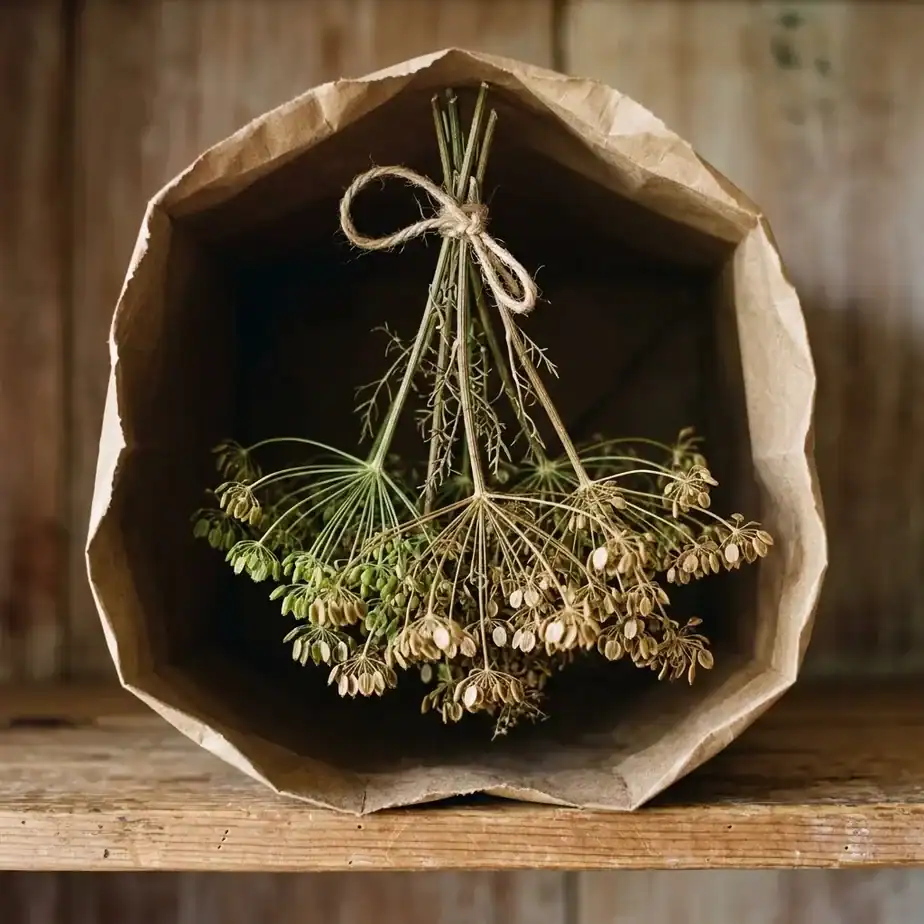
Pour the seeds onto a clean plate and pick out the chaff. Store the dried seeds in an airtight container in a cool, dark cupboard. Properly dried dill seed keeps its aroma for about a year and works beautifully in bread, pickle brine, and salad dressings.
How to keep dill producing through the season
Dill does not transplant well from the seedling stage, so the easiest way to keep a steady harvest is to sow dill seeds in a fresh short row every three weeks from spring until midsummer. Each sowing matures at its own pace, so as one clump bolts and goes to seed the next is just reaching its prime. If you only have space for a single planting, pinch out the first flower stalk as soon as you see it forming. The plant will branch and put out a second, smaller flush of leafy growth before it finally bolts for good.
Sow into well-draining soil in a full sun spot once the threat of frost has passed. The seeds germinate in about ten days when the soil is warm. Avoid overhead watering once the seed heads form, since wet seed heads mold quickly and you can lose the whole crop in a humid week. Water at the soil line in the morning and let the foliage dry before evening.
Putting your dill to work in the kitchen
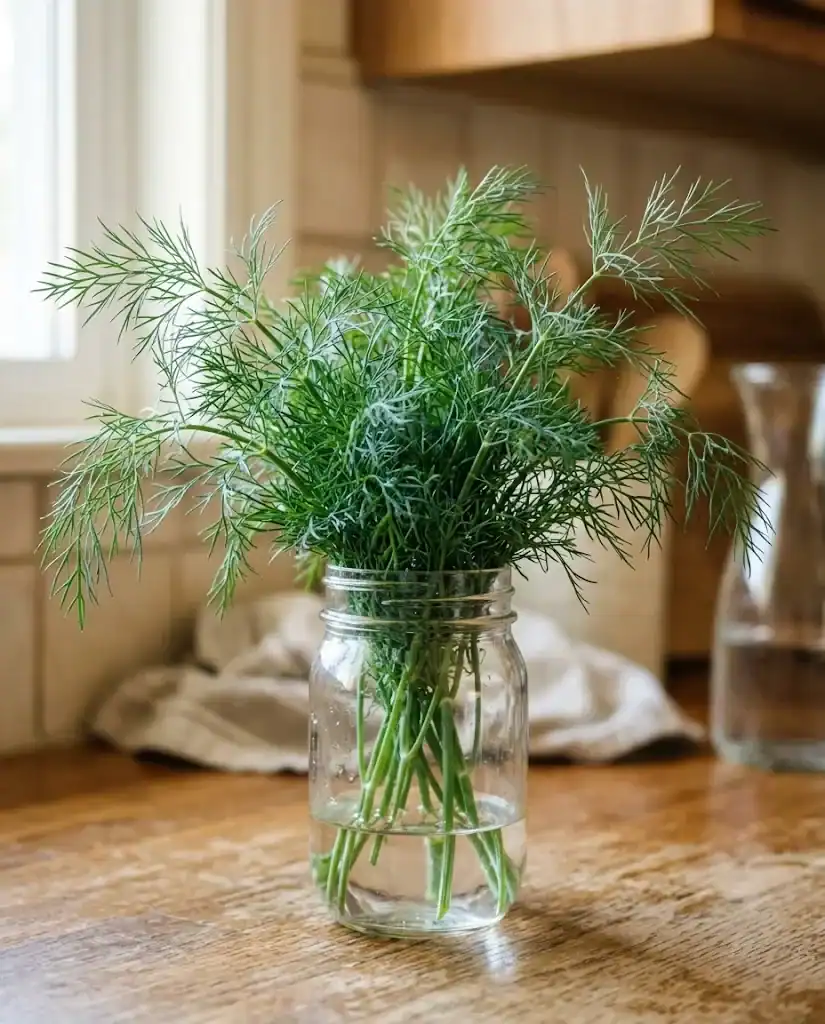
Fresh dill keeps in the refrigerator for about a week if you stand the stems in a jar with an inch of water and loosely cover the tops with a plastic bag. For longer-term storage, chop the leaves and freeze them in olive oil in an ice cube tray, or hang small bunches in a warm, dry, well-ventilated spot until the leaves crumble between your fingers. Long-term storage in a cool, dark pantry keeps dried dill ready to use in recipes for up to a year. The details for each method matter enough to deserve their own page, and the steps for keeping this herb at peak flavor for later use are covered in how to store dill after it is picked.
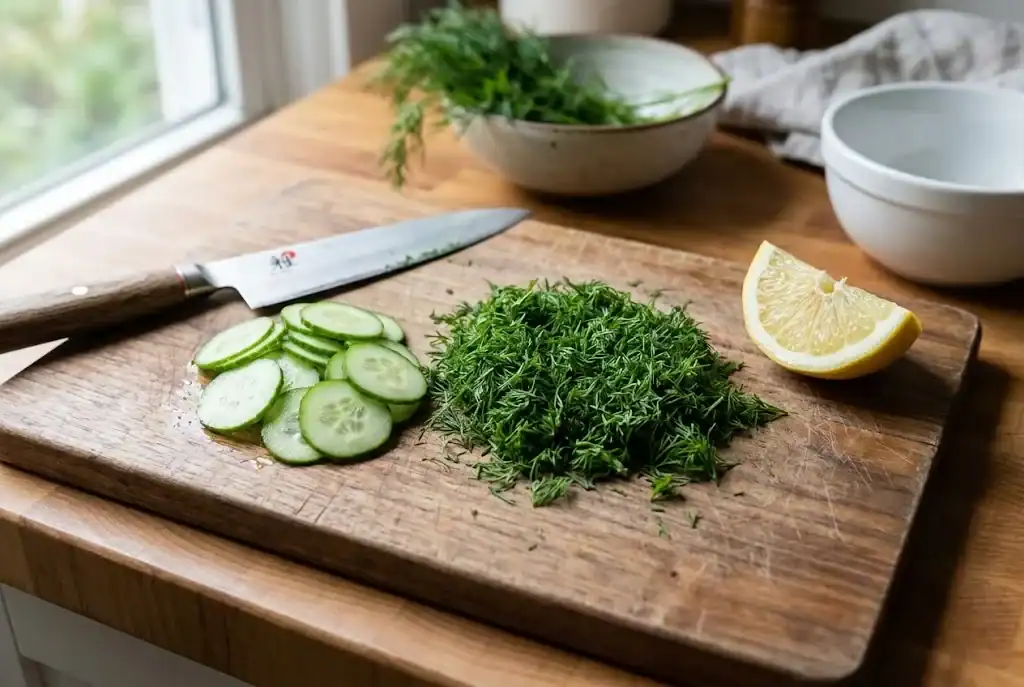
Once you have a steady supply coming in, the fun moves into the kitchen. Chopped dill turns plain cucumber salad into something special, lifts a pot of new potatoes, and is the quiet star of any salmon dish. A spoonful of chopped fresh dill folded into tzatziki or yogurt sauce carries that bright, slightly sweet note through the whole dish. Use dill generously in recipes during the early summer months when the foliage is at its brightest, and freeze dill in olive oil cubes so the same flavor carries through winter.
Frequently asked questions
Can you pick dill after it flowers?
Yes. The leaves become smaller and a touch more bitter after flowering, but the flowers themselves are edible and have a milder, slightly sweeter flavor than the leaves. Most gardeners pick a few flowers for the kitchen and let the rest go to seed for the next round.
How many times can you pick from one dill plant?
A healthy plant gives several cuttings over four to six weeks before it bolts. After that, the bloom and seed stages take over. The simplest way to keep picking fresh leaves all summer is to sow a fresh short row every three weeks, so a young clump is always ready to step in when the older one flowers.
Should you wash dill before storing it?
Only if it needs it. Wet foliage encourages mold in storage, so it is better to cut from dry plants, shake off any dust, and rinse just before using. If you must wash before storage, spin the leaves dry in a salad spinner and pat them dry before packing. Tuck a paper towel into the storage jar to catch any last trace of moisture.
What can I do with a generous dill picking?
A good dill picking opens the door to many classic pairings. The leaves go into cream sauces for salmon, potato salad, cucumber salad, and tzatziki. The seeds belong in bread dough, salad dressings, and any pickle brine. For a fuller look at putting both leaves and seeds to work in recipes using both fresh and dried dill, see ways to cook with dill.