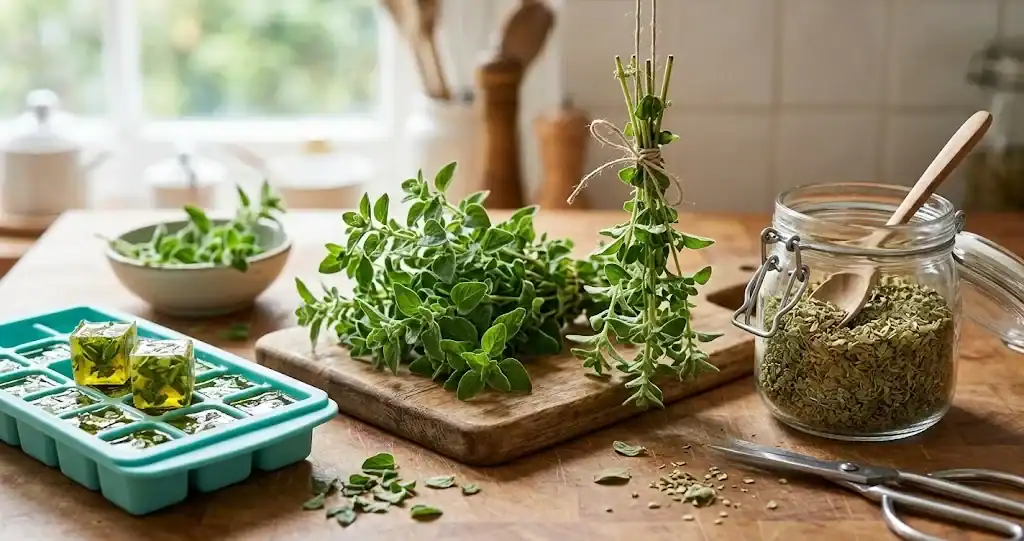
Fresh oregano brings a pungent, peppery aroma to the kitchen that commercial spice containers rarely match. When vigorous oregano plants produce abundant foliage in early summer, learning how to store oregano ensures you capture that vibrant flavor for months ahead. Whether you cultivate classic Greek varieties (Origanum vulgare) or gentle sweet marjoram in a patio pot, finding the best way to preserve oregano keeps your homegrown harvest aromatic, flavorful, and ready for seasoning every meal.
Before preserving your cut stems, mastering harvesting garden herbs the right way establishes the foundation for long-lasting quality. Snapping stems in the morning after morning dew has cleared but before midday sunlight warms the foliage preserves the plant’s essential oils. From traditional air-dehydrating to freezing in olive oil, every home gardener can choose a preservation method that matches their cooking style and available pantry space.
How to harvest oregano and prep garden stems for storage
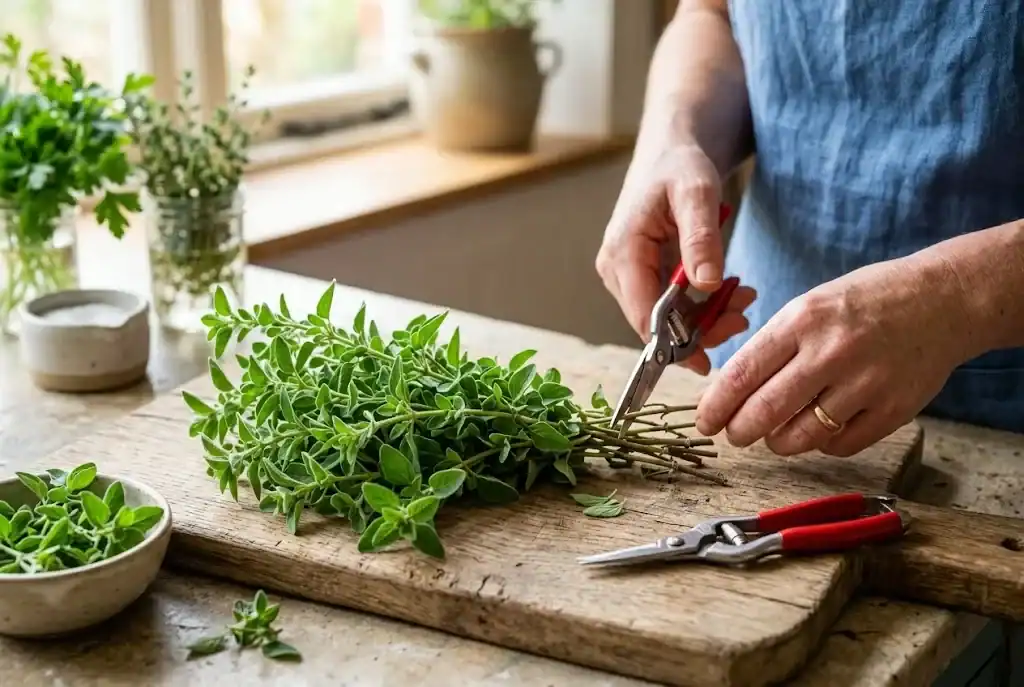
Proper handling right after you harvest oregano prevents spoilage and keeps delicate aromatic compounds intact. Start by inspecting cut sprigs and removing any yellowed, bruised, or damaged leaves. If your garden beds are clean and you gathered stems on a clear morning, a gentle shake to dislodge dust may be all that is needed. When dirt clings to the foliage, give the sprigs a brief rinse under cool tap water.
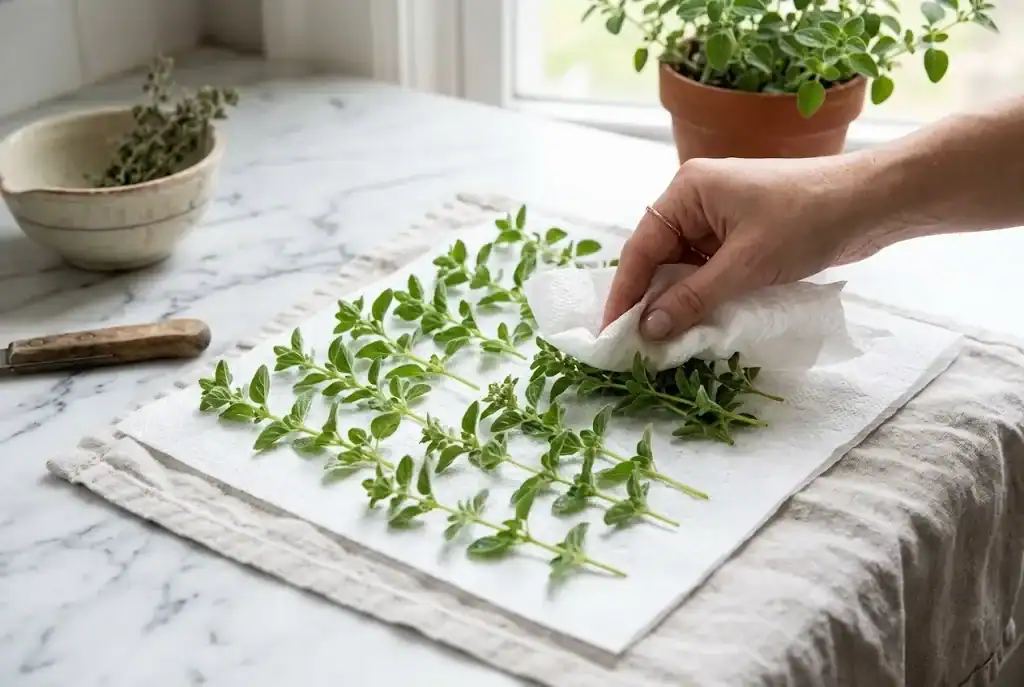
Excess water is the main hazard for preserved herbs. After washing, gently pat dry each sprig between clean paper towels or spin them lightly in a salad spinner. Spread the sprigs in a single layer until surface moisture can evaporate completely. Never pack damp leaves into an airtight glass jar, as trapped moisture quickly encourages mold.
How to dry oregano in bundles or with a food dehydrator
Dehydrating is the classic, time-tested approach to dry oregano while concentrating its signature resinous taste. Because it is a hardy Mediterranean perennial with relatively low natural moisture compared to tender herbs like basil, the leaves dry quickly and maintain remarkable potency.
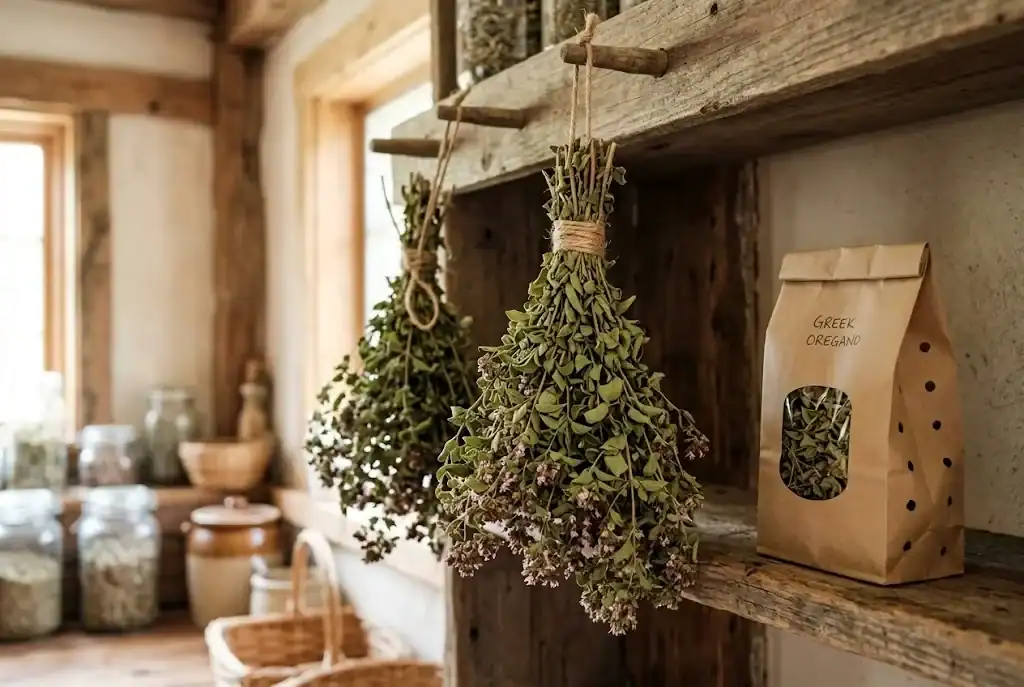
To air-dry using traditional bundles:
- Gather four to six stems together and bind the base with kitchen twine.
- Hang the bundle upside down in a warm, well-ventilated area with plenty of shade away from direct sunlight, such as an airy pantry or cupboard.
- To protect from dust, slip a breathable paper bag with punched holes over the hanging herbs.
- Allow stems to hang for one to two weeks until crispy leaves crumble easily between your fingers.
For faster results or in humid weather, an electric food dehydrator provides dependable temperature regulation. Arrange clean sprigs across each dehydrator tray with ample spacing for airflow. Set the machine to its lowest setting, ideally between 95 and 105 degrees Fahrenheit. Within two to four hours, the foliage becomes crisp. According to food preservation guidelines from Colorado State University Extension, maintaining steady low temperatures prevents the loss of volatile flavor compounds during dehydration.
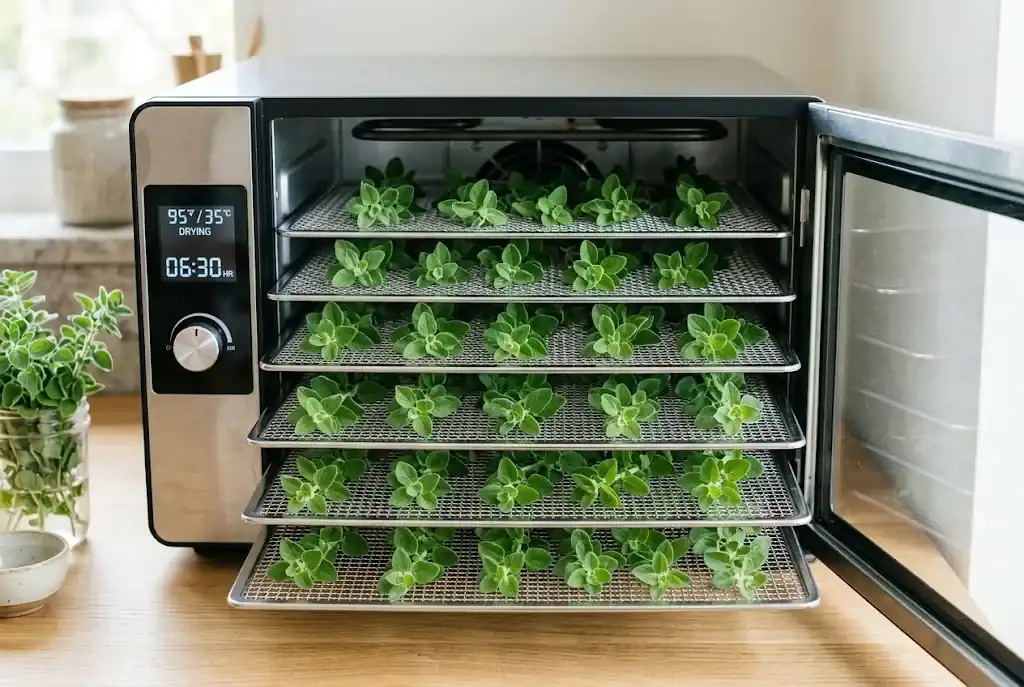
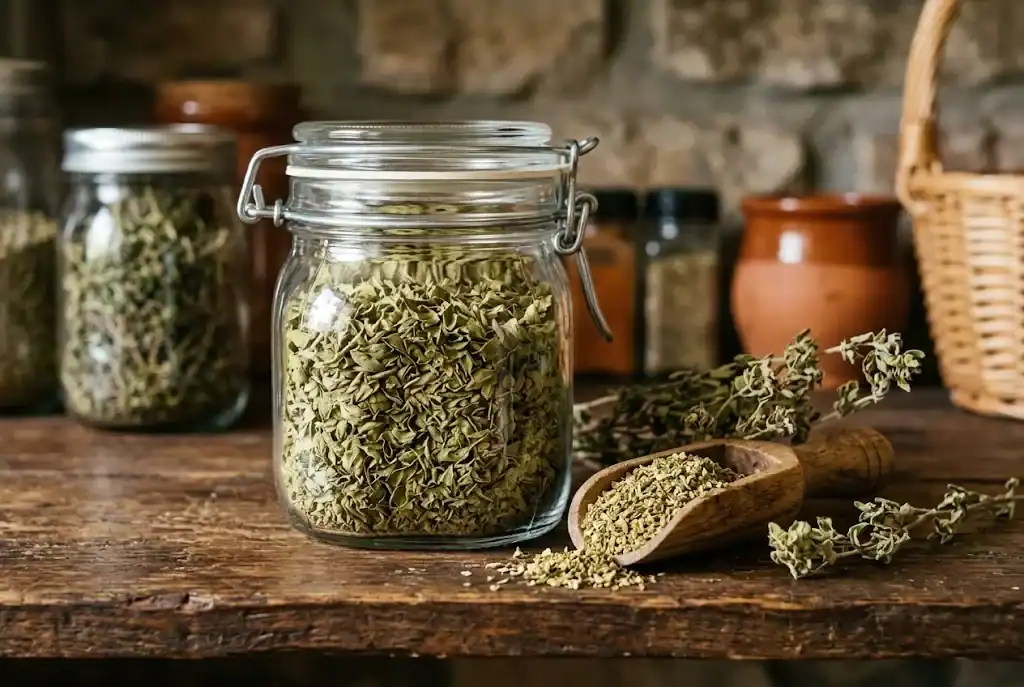
Once fully dehydrated, strip the leaves from each woody plant stem. Store whole dry herbs rather than broken bits, since uncrushed leaves preserve aromatics best. Transfer the harvest into clean glass jars or an opaque vessel, keeping them in a cool and dry cupboard away from heat and light.
Best methods to freeze fresh oregano for savory cooking
Freezing fresh oregano captures its bright green color and herbal notes better than heat processing, making it ideal for simmered tomato sauce, hearty soups, and meat marinades. Low temperatures protect delicate aromatics without altering leaf chemistry.
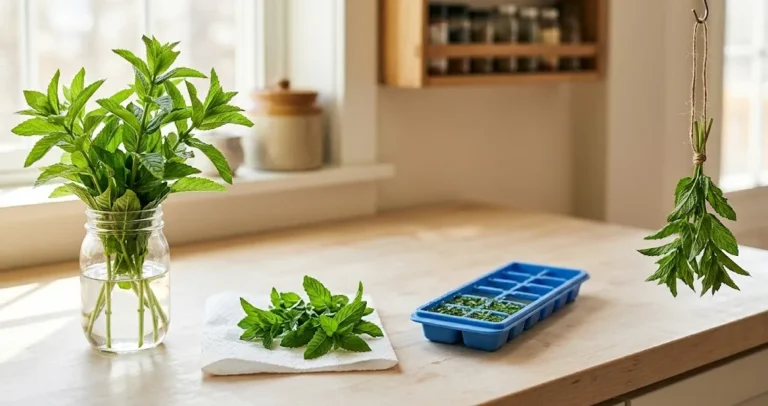
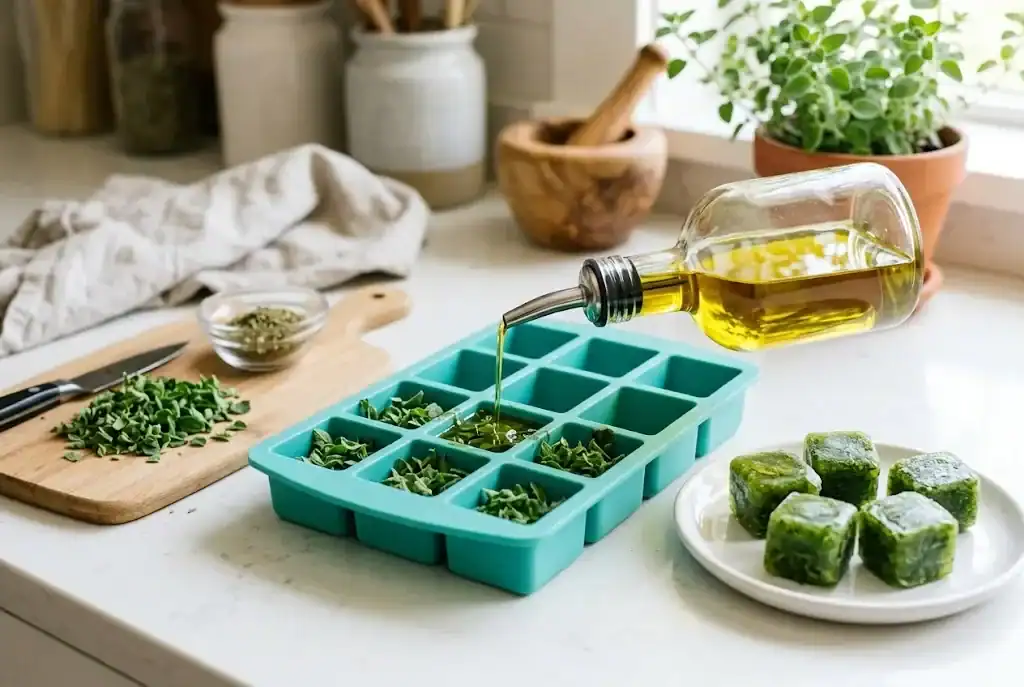
One reliable freezing technique uses ice cube trays. Strip fresh leaves from stems and chop them coarsely. Fill each cube compartment with the chopped greens, then pour extra virgin olive oil or melted unsalted butter over the greens until fully covered. Freeze until solid, then pop the herb cubes into a freezer bag. Dropping an olive-infused cube directly into a warm skillet creates an instant base when you cook pasta dishes and roasted meats.
Alternatively, freeze whole sprigs individually. Lay clean, moisture-free stems on a parchment-lined sheet and freeze for two hours. Once frozen, transfer the sprigs into an airtight freezer pouch. When preparing a hot stew or braise, slide your fingers down the frozen stem to drop individual leaves right into your cooking pot.
Simple ways to store fresh oregano in the refrigerator
When you plan to use cut sprigs within a couple of weeks, proper refrigeration keeps them crisp and fragrant. Learning how to store fresh oregano requires maintaining slight humidity while preventing standing droplets.
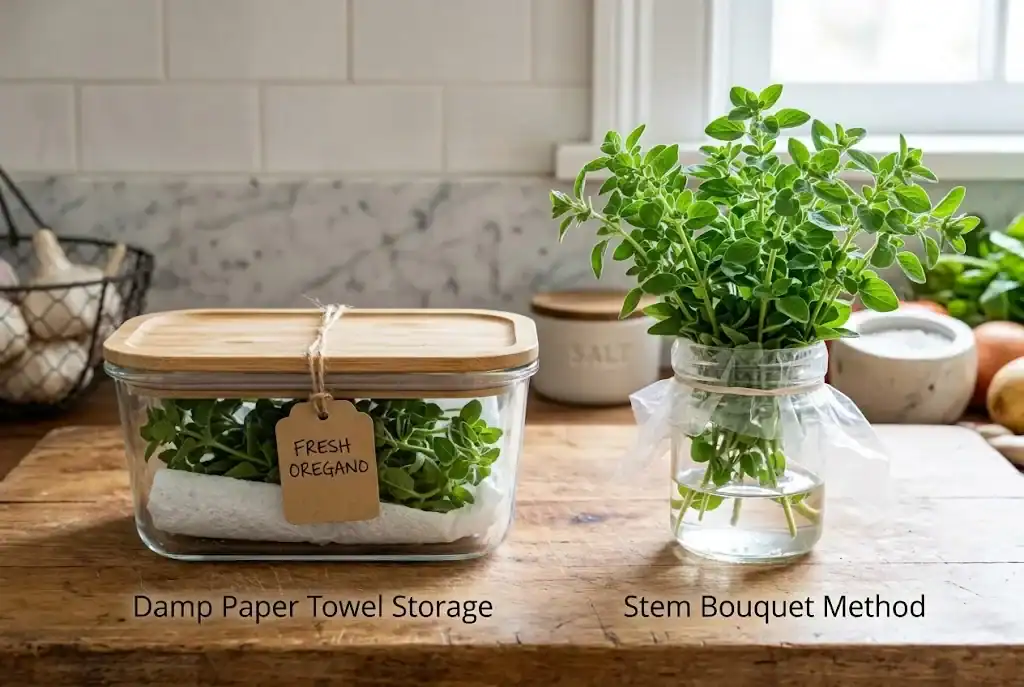
For optimal results, wrap clean, moisture-free sprigs loosely in slightly dampened paper towels, then place them inside a sealed container in your refrigerator crisper drawer. Another effective method treats stems like a floral bouquet: trim the bottom stem ends, stand them upright in a small glass vessel containing an inch of fresh water, and drape a loose plastic bag over the top. Refresh the water every three days to maintain freshness.
When to use fresh or dried oregano in your recipes
Understanding when to use fresh or dried herbs helps you balance kitchen seasonings accurately. The dehydration process evaporates water content and concentrates flavor, meaning one teaspoon of dried leaves equals roughly one tablespoon of fresh chopped herb. Discovering diverse culinary oregano herb uses helps home cooks make the most of every sprig in daily cooking.
Add dried seasonings early during slow simmering so natural essences have time to infuse into soups, chili, and rich marinara. In contrast, stir fresh leaves into dishes near the end of cooking or scatter them over hot pizza, roasted potatoes, and Greek salads for a bright finish. According to botanical nutrition guidelines from the National Center for Complementary and Integrative Health (NCCIH), this culinary herb provides safe dietary antioxidants when used as a wholesome food ingredient.
Growing and preserving oregano for year-round flavor
Successful herb preservation starts out in the garden. When growing oregano in garden beds or patio containers, regular pruning encourages bushy growth and prevents early flowering. Snip stem tips frequently throughout early summer before blossoms appear, as blooming redirects plant energy and can make foliage taste bitter.
Unlike annual herbs you must replant each spring, this hardy perennial returns reliably year after year. Once you start growing Mediterranean seasonings like thyme, rosemary, and sage alongside this garden crop, adopting reliable harvesting and curing best practices ensures an abundant culinary supply through every season.
Shelf life and signs of spoilage in stored oregano
Stored properly in an airtight glass container, dried herbs maintain maximum flavor and aroma for up to one year. While properly dehydrated herbs do not spoil dangerously, they gradually lose potency. To test an older batch, crush a few leaves between your fingers; if the scent is weak or stale, it is time to refresh your stock.
Frozen herb cubes in olive fat retain excellent quality for six to nine months, while frozen sprigs last about six months. In the refrigerator, fresh sprigs stay usable for ten to fourteen days. Discard any fresh stems that develop slimy black spots, strange odors, or mold.
Everyday ways to use oregano in delicious kitchen dishes
Having a well-stocked pantry of preserved herbs creates wonderful culinary opportunities. Whether whisked with garlic, red wine vinegar, and olive oil for salad dressings, or rubbed onto roasted poultry, this versatile seasoning elevates everyday cooking. Explore our collection of flavorful oregano recipe ideas to discover exciting meal inspirations.
Whether you manage a bountiful late-season flush or freeze weekly kitchen clippings, careful storage preserves the garden’s best flavors long after the growing season ends.