Oregano earns its place in a home garden because it asks for remarkably little while delivering pungent, savory leaves all season long. Native to the rocky, sun-drenched hillsides of the Mediterranean, this woody perennial is exceptionally easy to grow and thrives on neglect that would wither thirstier garden herbs. Once an established plant takes hold in lean, fast-draining soil with plenty of direct sunlight, a single healthy oregano plant produces abundant aromatic cuttings from late spring through the first autumn freeze.
Whether you tuck a nursery transplant into outdoor garden beds or try growing potted herbs on a sunny patio, mastering how to grow oregano at home comes down to replicating its native Mediterranean environment: generous warmth, sharp drainage, and a steady soak-and-dry watering rhythm. If you are just starting your herb garden journey, this comprehensive guide to growing oregano provides the essential growing tips, plant care techniques, and harvesting methods you need. For those designing a larger garden layout, reviewing our foundational advice on planning an herb garden properly will help you group sun-loving perennials together for effortless maintenance.
Types of Oregano and Ideal Growing Conditions
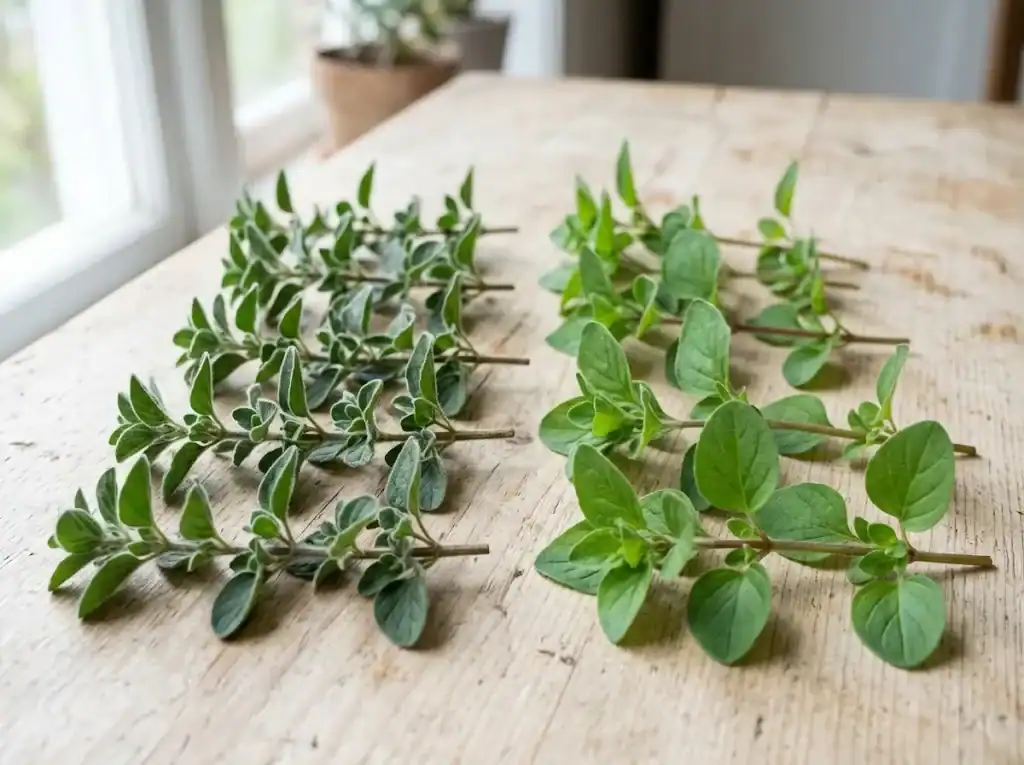
Before planting oregano in your garden, choosing the right variety is essential. Not all types of oregano offer the same kitchen value:
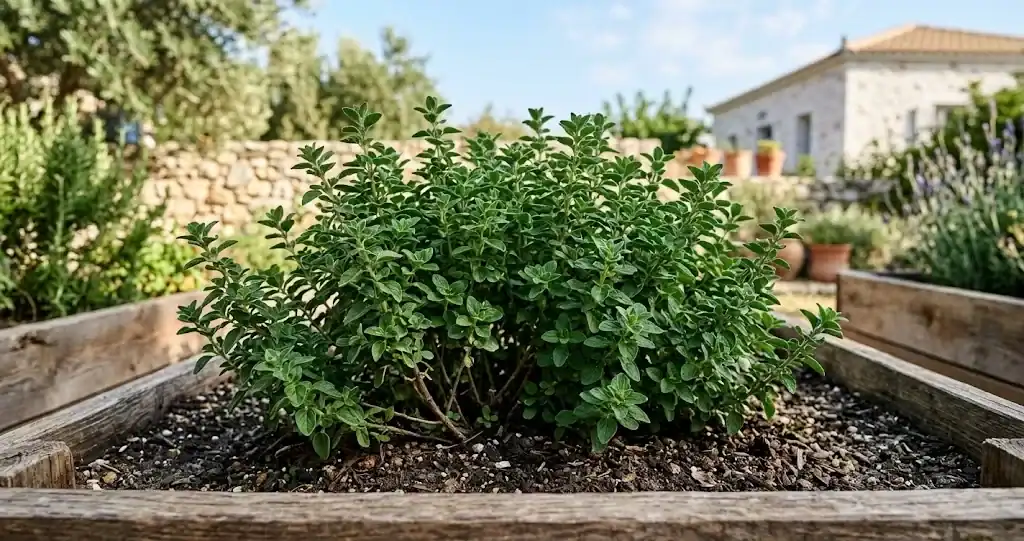
- Greek Oregano (Origanum vulgare subsp. hirtum): The premier culinary herb for cooking, prized for its robust peppery bite, high concentration of volatile essential oils, and reliable cold hardiness across USDA hardiness zones 4 through 9.
- Italian Oregano (Origanum × majoricum): A vigorous hybrid between common oregano and sweet marjoram, offering a milder, sweeter flavor that blends beautifully into delicate pasta sauces and roasted vegetables.
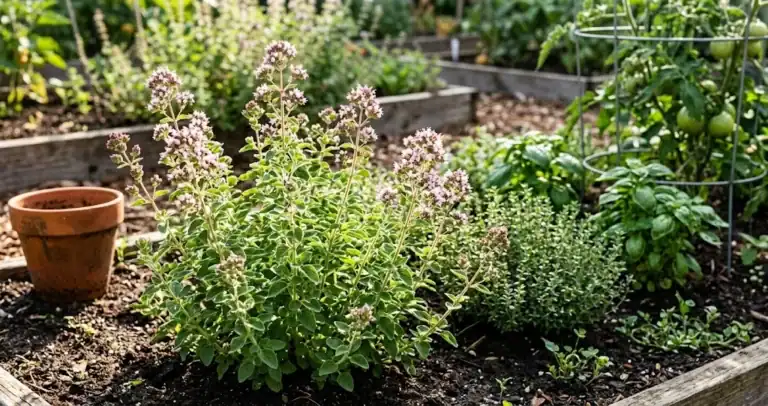
- Common Oregano (Origanum vulgare): Often grown as a flowering ornamental ground cover with attractive pink or purple blossoms. While bees and other beneficial pollinators love the flowers, the foliage is generally mild or grassy compared to Greek oregano.
- Golden Oregano (Origanum vulgare ‘Aureum’): An ornamental variety featuring bright chartreuse foliage that adds striking color to garden borders and patio containers.
Note that Mexican oregano (Lippia graveolens) is not a true oregano; it belongs to the verbena family. While it shares a similar earthy pungency in southwestern cuisine, its warm-climate requirements differ from Mediterranean cultivars. For creative cooking techniques and seasoning pairings across classic dishes, explore our companion guide on culinary oregano herb uses.
To ensure your oregano plants grow well throughout the season, provide these primary environmental conditions:
- Sunlight and Warmth: Oregano thrives in full sun and warm, bright conditions that provide at least six to eight hours of direct light daily, stimulating dense foliage and concentrated essential oils. In intensely hot desert climates, you can offer partial shade during scorching afternoon hours to prevent leaf scorch.
- Soil and Drainage: Oregano needs light, well-draining sandy or loamy soil with a neutral pH between 6.5 and 7.0. Heavy clay holds excessive water and quickly rots roots; amend clay soils with coarse horticultural sand, pumice, or aged compost to improve drainage before planting.
- Spacing: Set young plants 12 to 18 inches apart to allow adequate airflow as the bushy mounds expand.
How to Plant Oregano: Sowing Seed, Rooting Cuttings, and Transplants
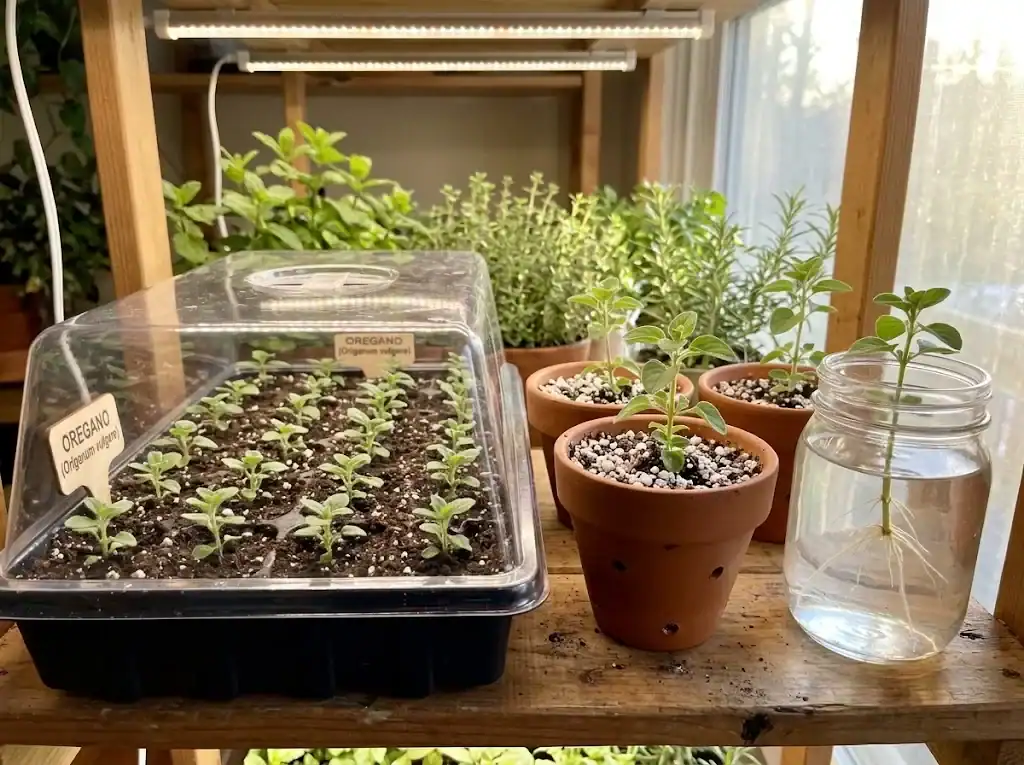
You can start oregano from seed, take softwood stem cuttings, or purchase nursery transplants. Because seed-grown oregano can exhibit natural genetic variation in flavor and aroma, propagating from vegetative cuttings or purchasing named nursery plants guarantees top-tier kitchen quality.
How to Grow Oregano from Seed
To start oregano from seed, sow seeds six to eight weeks before your region’s last expected spring frost date:
- Prepare shallow seed trays filled with sterile, moistened seed-starting potting mix.
- Scatter the fine oregano seed lightly across the surface. Because oregano seeds require light for prompt seed germination, press them gently into the mix with a fingertip rather than burying them under soil.
- Mist the surface with water and cover the tray with a clear plastic dome to preserve humidity. Maintain ambient temperatures around 65 to 70 degrees Fahrenheit.
- Tiny seedlings emerge within 8 to 14 days. Once sprouts appear, remove the humidity cover and place the tray directly under supplemental grow lights or along a sunny windowsill. When seedlings develop several sets of true leaves, thin the strongest plants to individual pots.
Propagating from Stem Cuttings and Nursery Transplants
Propagating from stem cuttings is a fast, reliable method to multiply your favorite plants in late spring or early summer. Snip a 4-to-5-inch softwood cutting from vigorous new growth, clipping just below a leaf node. Strip the lower leaves from the bottom two inches of the cutting, then place the stem into a jar of clean water or into moist potting soil mixed with perlite. Roots develop readily within two to three weeks.
When planting nursery starts or hardened-off cuttings outdoors in the ground or raised beds, wait until the soil warms in spring after all cold danger passes. Dig a planting hole equal to the root ball depth, place the oregano plant in the ground, backfill gently with loose soil, and water thoroughly to settle roots.
Plant Care: Watering, Feeding, and Pruning Oregano
Oregano is remarkably low-maintenance, but attentive basic plant care keeps the herb productive, bushy, and flavorful for years.
Watering Practices
Water your oregano thoroughly after planting, then allow the top two inches of soil to dry out completely before watering again. Established oregano prefers slightly dry soil and demonstrates outstanding drought tolerance. Overwatering is the single most common mistake in herb gardening, as stagnant moisture quickly causes fungal root rot. Always apply water directly to the soil at the base of the plant to keep foliage dry.
Fertilizer and Nutrient Requirements
Oregano needs very little supplemental fertilizer. Growing herbs in overly rich soil with heavy nitrogen fertilizers produces lush, watery growth while diluting the pungent volatile oils that give the herb its distinct flavor. A modest top-dressing of organic compost around the base of plants in the spring provides all the nutrients needed throughout the growing season.
Pinching and Pruning to Encourage New Growth
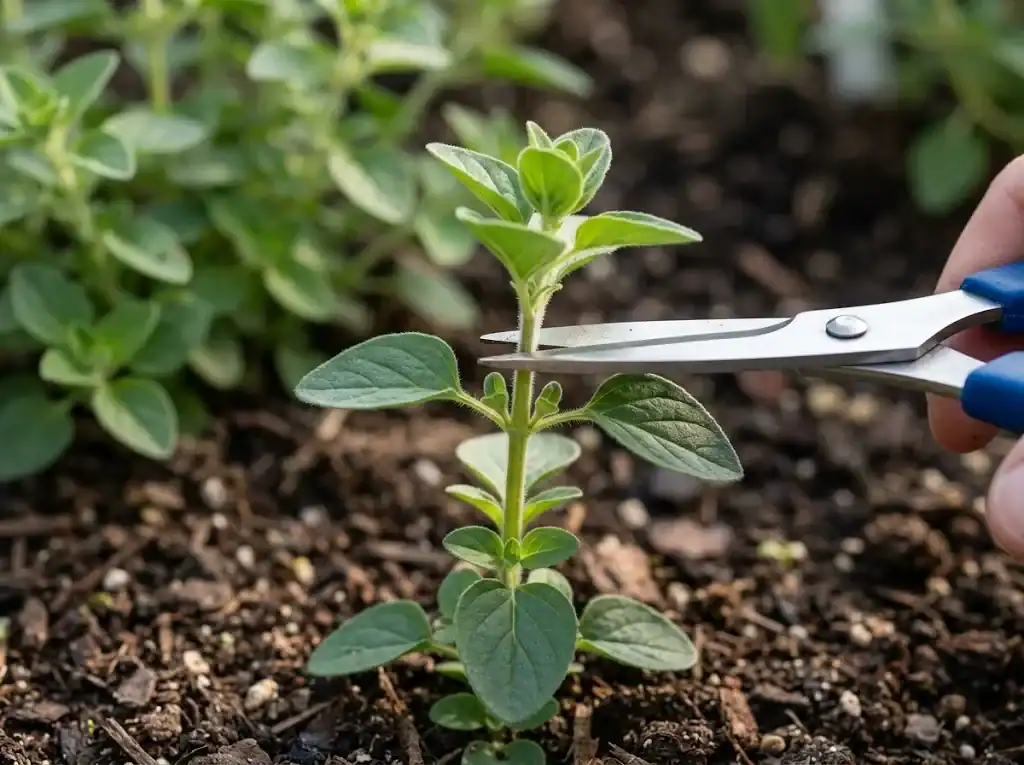
When young plants are approximately four to six inches tall, pinch off the top growing tips. Pinching removes apical dominance, stimulating lateral buds to branch out and form a compact, bushy habit. Regularly trimming the stems throughout the growing season prevents woody lower stems, delays flowering, and continually encourages tender fresh shoots.
How to Grow Oregano in Containers and Indoors
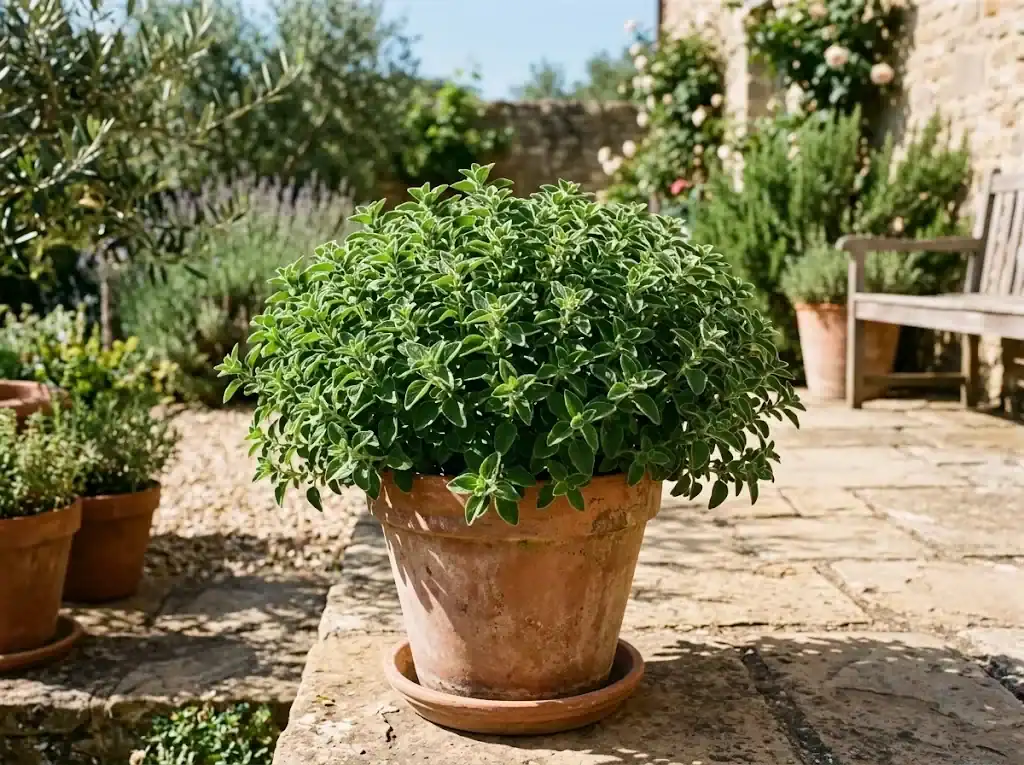
Growing oregano in pots is an ideal solution for gardeners with limited outdoor space, poor native soil, or harsh winters. Potted oregano thrives on sunny decks, patios, and balconies.
Pot Selection and Potting Soil
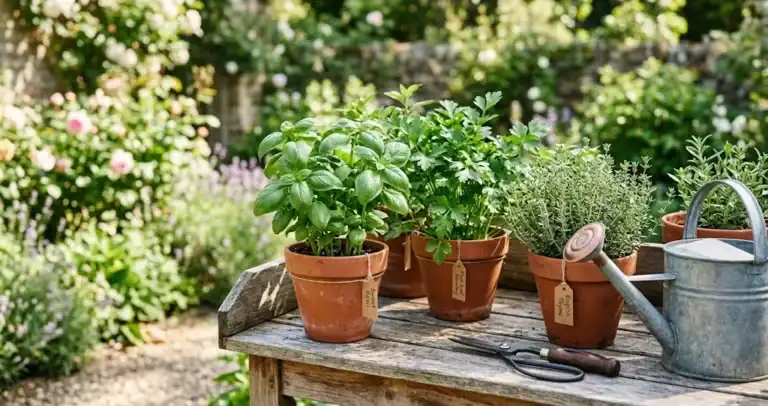
Select a container or pot at least 10 to 12 inches wide with functional drainage holes. Unglazed terracotta pots are particularly well-suited for oregano because the porous clay breathes, allowing excess soil moisture to evaporate efficiently. Fill the container with a well-aerated potting mix containing perlite, pumice, or coarse grit. Never use dense garden topsoil in containers.
Growing Oregano Indoors Year-Round
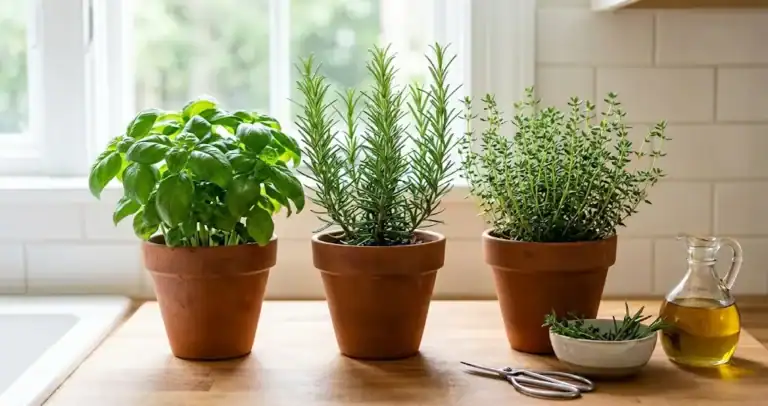
To grow oregano indoors successfully, place your pot in a south-facing window where the plant receives six or more hours of direct sun. If natural winter sunlight is inadequate, supplement with LED grow lights positioned a few inches above the foliage for 12 to 14 hours daily. In cold climates, bring outdoor container plants inside before hard freezing temperatures arrive, reducing watering frequency while the plant rests.
Managing Garden Pests and Plant Diseases
Because of its pungent essential oils, oregano is naturally pest-resistant and functions as a great companion plant in vegetable gardens, deterring harmful insects while attracting beneficial pollinators when allowed to flower. However, plants under environmental stress can encounter occasional issues:
- Spider Mites and Aphids: These tiny pests create fine webbing during hot, dry spells, while aphids feed on tender young shoots. Wash affected stems with a firm water spray, or treat with organic insecticidal soap or diluted horticultural neem oil.
- Root Rot: Saturated soil suffocates root systems, causing yellowing leaves and darkened lower stems. Ensure sharp soil drainage and let potting soil dry between waterings.
- Powdery Mildew: High humidity and crowded planting can cause a white powdery fungal dusting on leaves. Provide adequate spacing between plants to optimize air circulation.
How to Harvest Oregano for Maximum Flavor
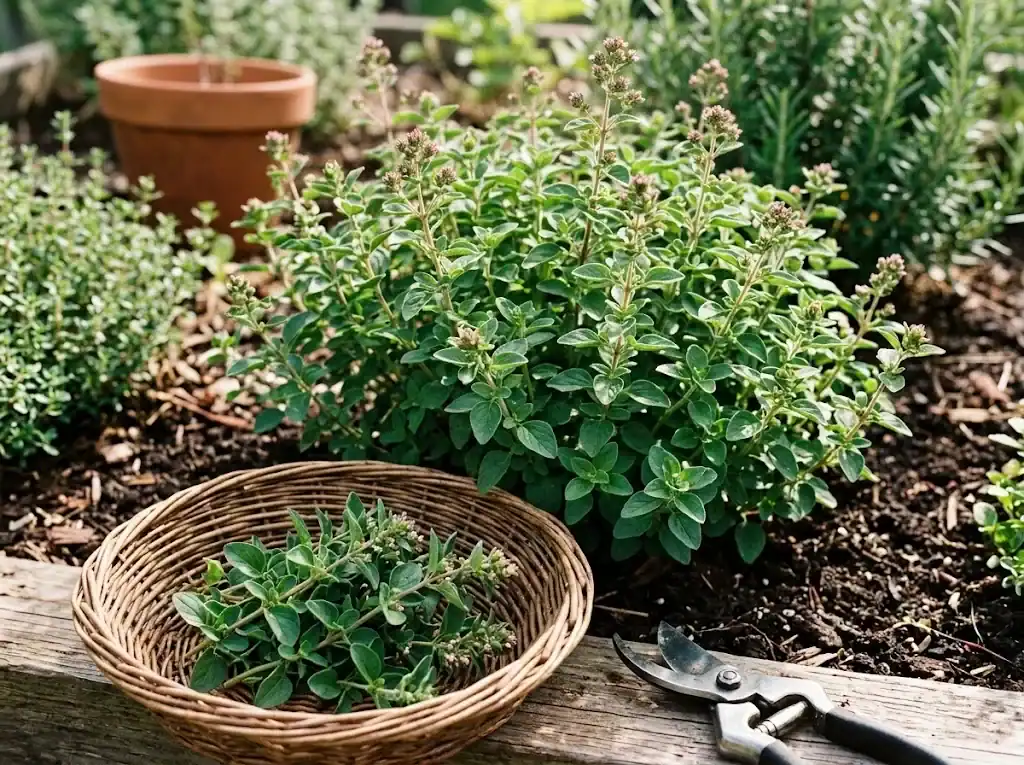
You can begin to harvest oregano leaves as soon as the plant is several inches tall and growing vigorously. For the richest kitchen flavor, gather fresh stems in the morning once dew evaporates but before the hot midday sun warms the garden.
The concentration of essential oils peaks just as flower buds appear, right before the oregano blooms. If your primary goal is savory seasoning, snip off emerging flower buds to keep foliage tender. Use clean garden snips or scissors to cut stems just above a pair of leaves. Always follow the general rule of harvesting no more than one-third of the plant at a time. Pruning stems back cleanly prompts the herb to grow back quickly with fresh lateral shoots.
Drying, Storing, and Using Fresh Oregano in Cooking
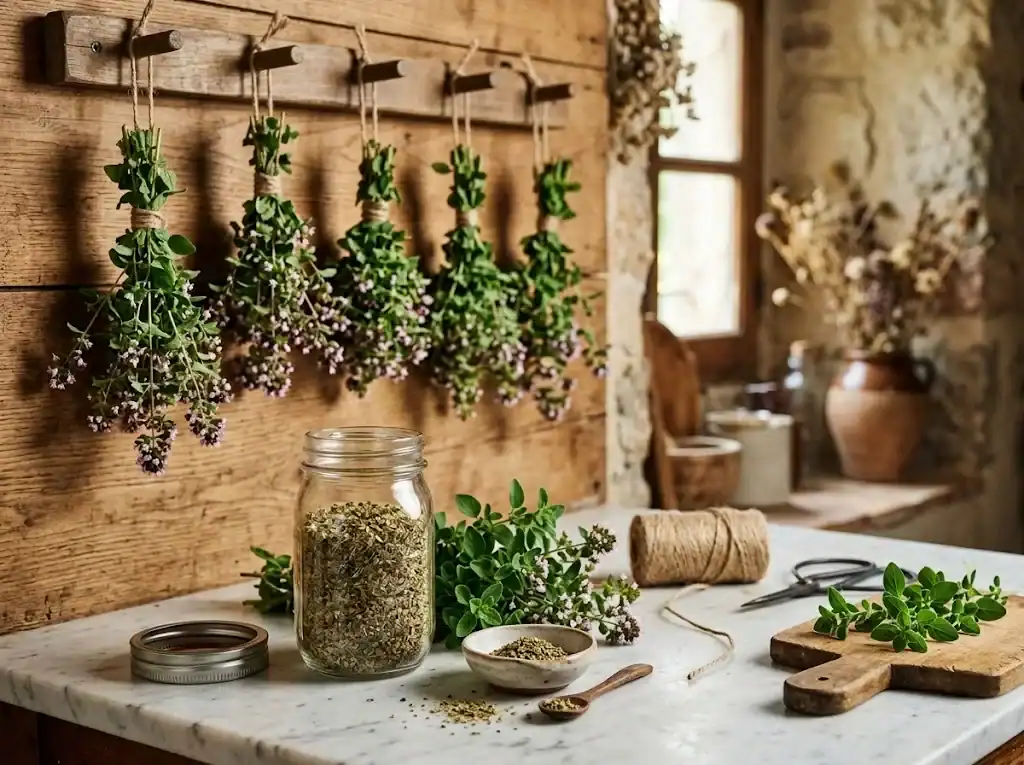
Unlike many soft leafy herbs, dry oregano possesses a deeper, more concentrated flavor than fresh leaves. To dry the harvest, bundle five to eight washed and dried stems with kitchen twine, then hang the bundles upside down in a warm, dry, dark room with good ventilation. Alternatively, dry sprigs on mesh drying screens or in a food dehydrator set to 95 degrees Fahrenheit. Once the leaves are completely crisp, strip them from the woody stems and store the crushed dried herb in airtight glass jars away from heat and light.
For detailed step-by-step preservation methods, including freezing fresh sprigs in olive oil cubes, consult our dedicated guide on how to store oregano.
In everyday cooking, freshly harvested oregano adds robust Mediterranean warmth to homemade pizza sauces, roasted poultry, grilled lamb, Greek salads, and herb vinaigrettes.
Frequently Asked Questions About Growing Oregano
Is oregano a perennial herb?
Yes, common Greek oregano is a hardy perennial herb that survives winter freezing in USDA zones 5 through 9. In cold winter regions, protect plants with mulch around the base in late autumn. The plant goes dormant in winter and emerges with vigorous green growth each spring.
Does oregano spread across the garden?
Oregano spreads gradually outward via underground roots and trailing stems to form a spreading clump about two feet across. It is easy to contain by trimming edges or digging and dividing mature clumps every three to four years in early spring.
How long does an oregano plant live?
A healthy oregano plant remains productive for five to six years. Over time, the central stems become excessively woody and produce smaller, less flavorful leaves. You can easily rejuvenate your patch by rooting fresh softwood cuttings or dividing older crowns to start vigorous new plants.