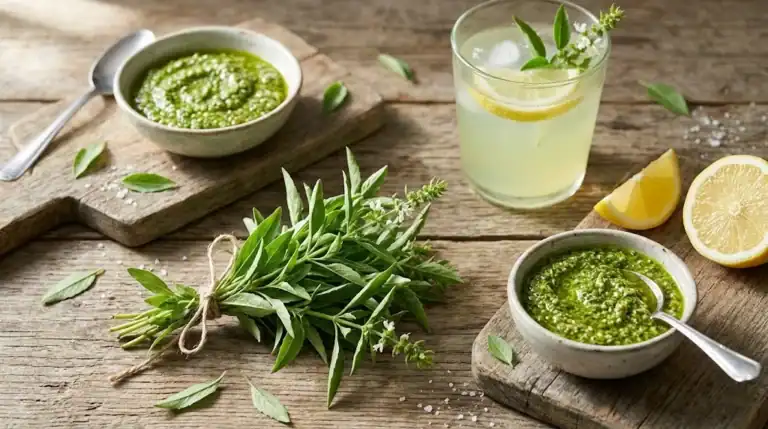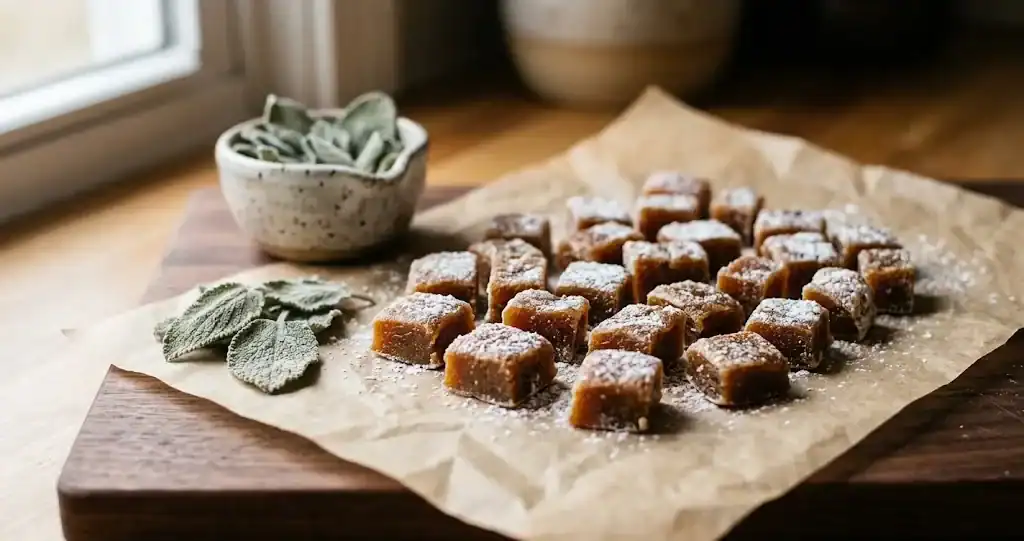
Horehound candy has been settling coughs and brightening winter jars for centuries, and it is far from the only way to coax something sweet out of this bitter herb. A few pantry staples and a small pot turn fresh or dried leaves into old-fashioned hard candy, a mellow spoonable cordial for cold season, or a softly sweetened tea that slips easily into an evening routine. Each recipe leans on the same backbone, a strong bitter infusion or decoction, then lets sugar, honey, or fruit do the rest of the work.
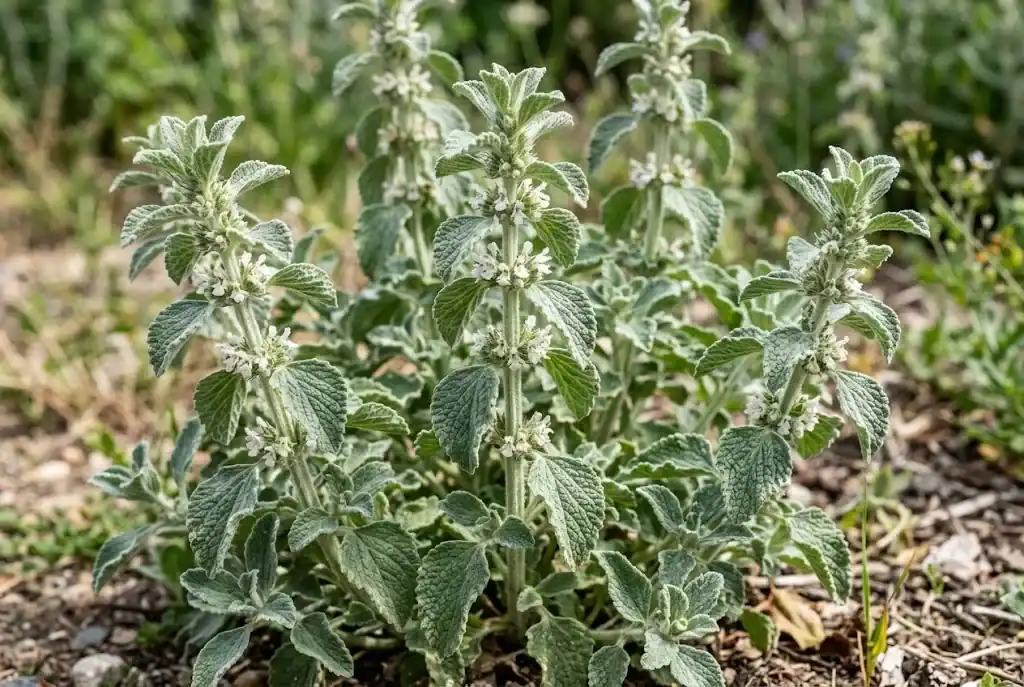
Horehound (Marrubium vulgare) is a member of the mint family with a gray-green leaf, a fuzzy square stem, and a flavor that lands well on the bitter side of herbs. Its place in the wider family of kitchen herbs sits closer to medicinal simples than to everyday cooking greens, which is why most sweet recipes read like a cross between confection and remedy. If you have never tasted it before, expect a deep, vegetal bitterness first, followed by a long sweet finish once sugar joins the pot.
What horehound tastes like and why sugar helps
Plain tea is bracing. Even a five-minute steep of a teaspoon of dried material in hot water pulls a dark, earthy cup with a bitter edge and almost no sweetness of its own. Most cooks solve that by leaning on sugar, honey, or both, which is exactly the move traditional horehound cough drops rely on. The sugar is not just for flavor: it also carries the active compounds in a stable, shelf-stable form once the mixture reaches hard crack.
A second consideration is texture. The leaves are fuzzy and slightly tough, so recipes that call for long simmering benefit from a strain step before sugar is added. If you want a clearer lozenge or a milder final drink, simmer the leaves in water for ten to twenty minutes, strain, and then return the liquid to the pot for the sugar stage. If you want a more rustic result, finely chopped fresh material can go straight into a honey-based preparation where the solids stay suspended.
Old-fashioned horehound candy
This is the recipe most people mean when they ask how to make a traditional sweet at home, and it is the easiest place to start. The finished lozenge is a bittersweet dark amber drop that dissolves slowly in the mouth, which is why homemade cough drops have looked like this for as long as anyone has been making them.
Ingredients for the hard candy
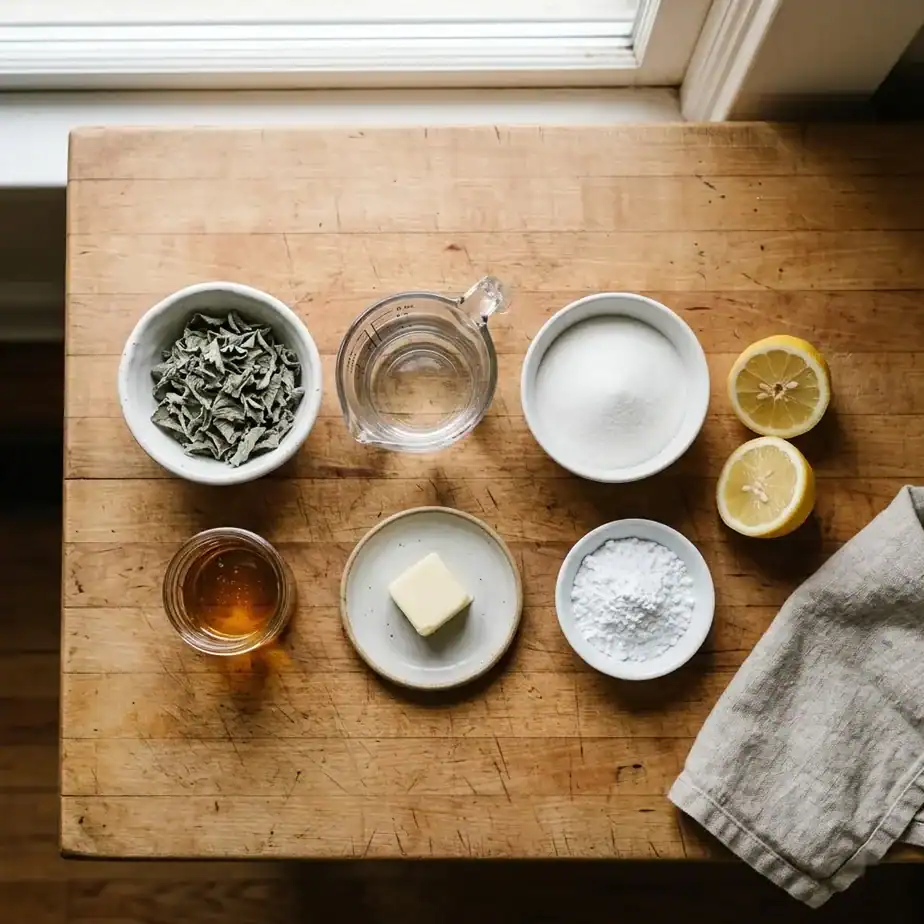
- 3/4 cup horehound leaves, dried, or 1.5 cups horehound leaves and stems, fresh, roughly chopped
- 1.5 cups water
- 4 cups granulated sugar
- 1/4 cup light corn syrup
- 1 tablespoon lemon juice
- 1 teaspoon butter, plus more for the pan
- Powdered sugar, for dusting the finished pieces
Method for the hard candy
- Combine the dried leaves and water in a small heavy saucepan. Bring to a boil, reduce to a simmer, and cook for 10 minutes. Remove from the heat and let the leaves steep for another 20 minutes.
- Strain the liquid through a fine mesh strainer into a clean pot, pressing the leaves gently to release as much liquid as possible. You should have just under 1.5 cups of strong tea.
- Add the sugar, corn syrup, lemon juice, and butter to the pot. Stir over medium heat until the sugar dissolves, then bring the mixture to a boil.
- Clip a candy thermometer to the side of the pot and continue boiling without stirring until the temperature reaches 300 degrees F, the hard crack stage. This takes 20 to 30 minutes depending on your pot and stove.
- While the mixture cooks, butter a 9 by 13-inch baking sheet or cookie sheet and dust it lightly with powdered sugar so the pieces release cleanly.
- When the mixture hits 300 degrees F, immediately pour it onto the prepared pan. Let it cool just until it is firm enough to score, about 2 to 3 minutes.
- Use a sharp knife to score the slab into small squares, or let it cool fully and then crack it into pieces with the back of a knife. Dust with powdered sugar if you want a less tacky finish.
- Wrap the cooled pieces in wax paper or store them in an airtight tin between layers of parchment paper for up to 3 months.
If you do not have a thermometer, drop a small spoonful of the boiling syrup into a cup of cold water. At hard crack, the liquid will form brittle threads that snap cleanly rather than bending.

Horehound cordial for cold season
A homemade cordial is the gentlest entry point for someone new to the herb. It uses a much weaker sugar concentration than hard candy, so the bitterness stays rounded rather than sharp, and the result lands somewhere between a glaze and a light dessert sauce. Use it the way you would a flavored simple sweetener: a spoonful at a time stirred into tea, spooned over yogurt or ice cream, or used to sweeten a winter cocktail. It is worth saying up front that any persistent cough deserves a real conversation with a clinician rather than a steady pour from a jar, and the cordial is best treated as an occasional culinary preparation rather than a daily remedy.
Ingredients for the soothing cordial
- 1/2 cup horehound leaves, dried, or 1 cup horehound leaves, fresh, finely chopped
- 2 cups water
- 1.5 cups honey, or 1.5 cups sugar for a vegan version
- 1 strip of lemon peel, optional
- 1 small knob of fresh ginger, sliced, optional
Method for the soothing cordial
- Combine the dried leaves, water, lemon peel, and ginger in a small saucepan. Bring to a gentle boil, then reduce to a low simmer and cook for 20 minutes.
- Strain the liquid into a clean pot and discard the solids. You should have roughly 1 cup of strong tea.
- Return the liquid to the pot over low heat. Warm the honey in a separate bowl so it pours easily, then whisk it into the tea until fully dissolved. If using sugar instead, add it directly and stir until dissolved.
- Let the finished cordial cool to room temperature, then transfer to a clean glass jar. Store in the refrigerator for up to 6 weeks.
Skip honey for any child under one year of age because of the risk of infant botulism, and use sugar instead.
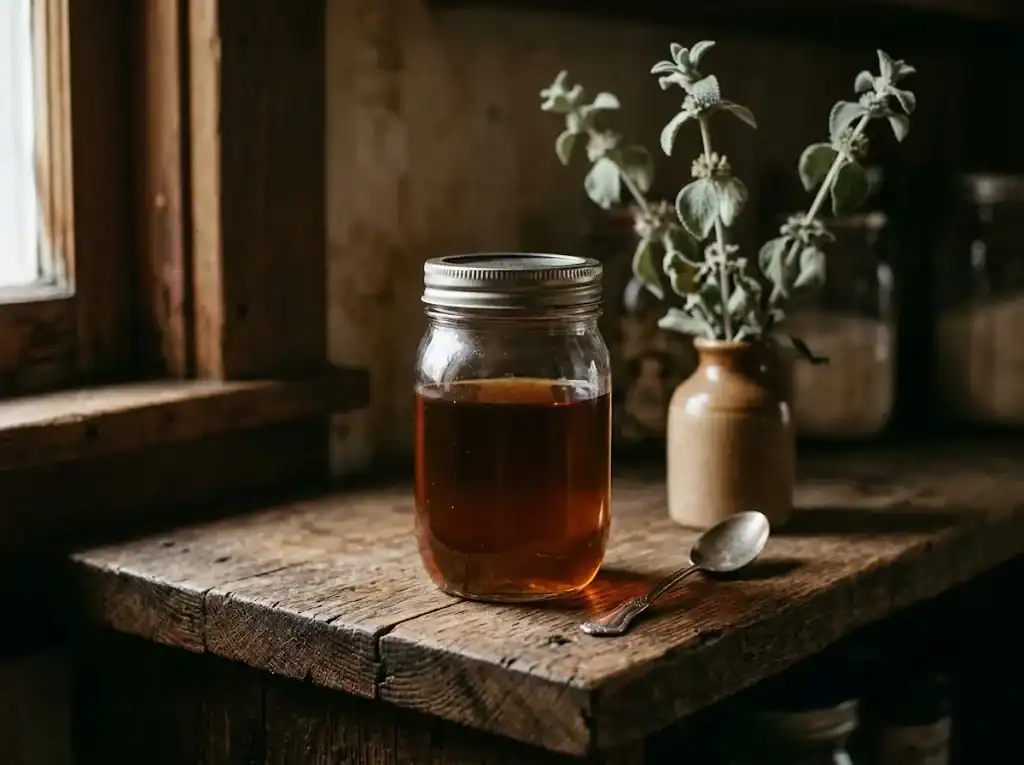
Sweet horehound tea
If hard candy feels like a project and cordial feels like a commitment, tea is the everyday option. A short steep with honey and a slice of lemon gives you most of the soothing quality of the more involved preparations, and the pot is clean in five minutes. This is the version to keep in your back pocket for a cold evening when you want something warm and faintly bitter that is not coffee.
Ingredients for one mug of tea
- 1 teaspoon horehound leaves, dried, or 2 teaspoons horehound leaves, fresh, lightly crushed
- 1 cup just-boiled water
- 1 to 2 teaspoons honey, to taste
- 1 thin slice of lemon, optional
- A small slice of fresh ginger, optional
Method for one mug of tea
- Place the dried leaves in a heat-safe mug or small teapot. If using fresh ginger, add it now.
- Pour the just-boiled water over the herbs, cover the mug with a small plate, and steep for 7 to 10 minutes. Covering the mug keeps the volatile oils in the cup rather than the kitchen.
- Strain into a fresh mug, add honey to taste, and finish with the lemon slice if you like. Serve hot.
Honey is the sweetener that pairs best with the leaf because it carries its own gentle floral note that softens the bitter edge without flattening it. White sugar works in a pinch but tends to read one-dimensionally sweet next to the herb.
Sweet cordials and cold infusions
For a liquid preparation that sits between a glaze and a liqueur, a cold infusion with sugar and a splash of fruit juice turns the herb into a sip-worthy cordial. This is the recipe that travels best to a dinner table: pour it over ice, top with sparkling water, or use a small splash in a warm toddy on a cold night.
Ingredients for the cold cordial
- 1/2 cup horehound leaves, dried
- 2 cups boiling water
- 3/4 cup honey or sugar
- 1/2 cup apple juice or pear juice, for body and a softer bitter edge
- 1 strip of lemon peel
Method for the cold cordial
- Combine the dried leaves, lemon peel, and boiling water in a heatproof jar. Cover and let it steep at room temperature for 4 to 6 hours, or overnight in the refrigerator for a stronger pull.
- Strain the infusion into a clean saucepan and add the honey or sugar. Warm gently over low heat, stirring, until the sweetener fully dissolves.
- Add the apple or pear juice and bring the cordial just barely to a simmer. Remove from the heat and let it cool.
- Bottle in a clean glass jar or bottle and store in the refrigerator for up to 4 weeks. Serve over ice, topped with sparkling water, or warm in a small pot with a cinnamon stick for a winter toddy.
Choosing and storing horehound for sweet recipes
The flavor of any sweet recipe depends almost entirely on the strength of the infusion you start with, and that depends on the herb itself. Fresh leaves picked just before the plant flowers carry the brightest flavor; dried material should smell strongly of dried grass and faint mint, not musty or flat. If you are buying dried horehound, look for a recent harvest date and a tightly sealed bag, since the volatile oils fade quickly once the leaves are exposed to air.
For cooks who grow or forage their own, two habits help. First, harvest in the morning after the dew has dried but before the afternoon heat sets in, which is when the aromatic oils are at their peak. Second, dry the leaves quickly in a single layer on a screen in a warm, shaded, well-ventilated spot; bunching them or drying them in direct sun dulls the flavor and can drive off the very compounds you want to keep. Storing dried leaves in an airtight jar away from light keeps them useful for about a year.
If you want to learn how to keep a plant productive through the season, the guide on how to harvest horehound walks through the timing and the cuts, including the right way to make a clean cut so the plant recovers for another round of growth later in the year.
Most readers never need to think about a digestion-tonic dose or a respiratory aid separately from the recipes above, but if you do want a deeper dive into the herbalist traditions behind the sweetened forms, see the section on preserving the leaf and turning it into tea infusions through the colder months.
Substitutions and sweet variations
This herb does not have a perfect substitute, because its particular bitter-and-menthol balance is the whole point. If you cannot find it and want to make a similar bittersweet treat, a blend of dried mint and a small amount of dried sage produces a sweet with a comparable aromatic profile, though the bitterness will read differently. For a soothing winter cup, a strong mint or lemon balm infusion sweetened with honey lands closer to a winter bedtime drink than a true horehound brew does.
For sweet variations on the recipes above, several small moves change the character without losing the herb. A teaspoon of anise seed simmered with the leaves pushes the finished piece toward a black-licorice finish that some readers love. A strip of orange peel added to the winter drink gives the final product a softer, almost marmalade note. A splash of elderberry or blackberry juice stirred into the cordial turns it from a digestif into a winter dessert sauce that drapes nicely over plain yogurt or vanilla ice cream.
Safety notes for cooking with horehound
This herb is generally safe as a flavoring in normal culinary amounts, and the sweet preparations above all use small doses relative to the volume of sugar and water. That said, anyone who is pregnant or breastfeeding, taking prescription medication, managing a chronic condition, or scheduled for surgery should talk with a qualified clinician before using horehound regularly, because the herb can interact with certain medications including diabetes drugs and blood-pressure drugs, and may potentiate the effect of blood thinners (National Center for Complementary and Integrative Health overview on this species). The sweet preparations should be treated as occasional foods, not as a daily remedy, and a chronic sore throat always warrants a conversation with a clinician rather than a steady diet of homemade sweets.
If a cough lasts more than two weeks, comes with fever or shortness of breath, produces blood or colored mucus, or comes with chest pain, seek medical care rather than reaching for another teaspoon. Honey should not be given to children under one year of age, so swap in sugar for any recipe you plan to share with infants. People with ragweed or other Asteraceae family allergies may react to this herb as well, since the plants share some chemistry. The European Medicines Agency monograph on traditional herbal use of Marrubii herba notes that digestive, respiratory, and appetite-related traditional uses are documented (EMA community herbal monograph on Marrubii herba), which is the herb’s traditional place rather than a clinical recommendation.
For cooks who want to keep a small jar on hand for an entire winter rather than restocking each season, the dedicated guide to how to store horehound walks through drying, jar storage, and how to keep the dried material from picking up kitchen odors over many months.
A short list of sweet recipes to try first
- Classic hard candy: tea base, sugar, corn syrup, hard crack to 300 degrees F.
- Soothing winter drink: tea base, honey, ginger, lemon peel, refrigerated up to six weeks.
- Quick bedtime cup: leaves steeped seven to ten minutes, finished with honey and lemon.
- Cold cordial: overnight tea base, honey, apple juice, lemon peel, served over ice or warmed.
- Cough-drop lozenges: a softer batch poured into silicone drop molds instead of a sheet pan.
Start with whichever recipe fits your evening. The bedtime cup takes minutes and asks nothing of your stove; the cordial keeps in the fridge for weeks and gives you a teaspoon of sweet bitter whenever you want it; the hard candy takes a long simmer and a thermometer but stores for months. Each one uses the same handful of ingredients, and once you have made one you will know how to adjust the sweetness, the steep time, and the strength of the infusion for any of the others. Once you have a jar of finished sweet on the counter, you will know how to make horehound candies, syrups, and cordials in any form that suits the season.