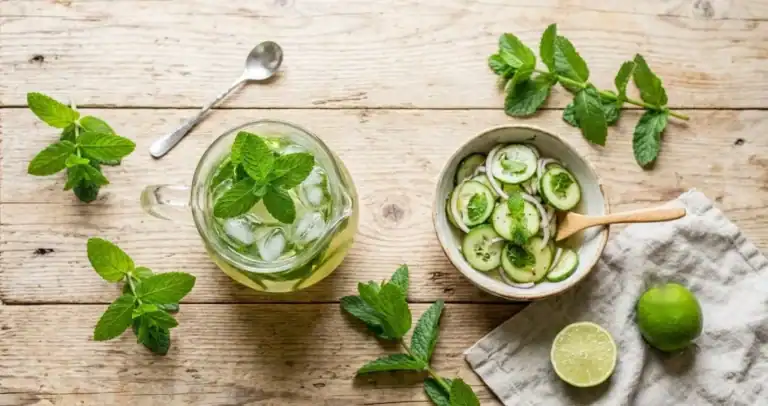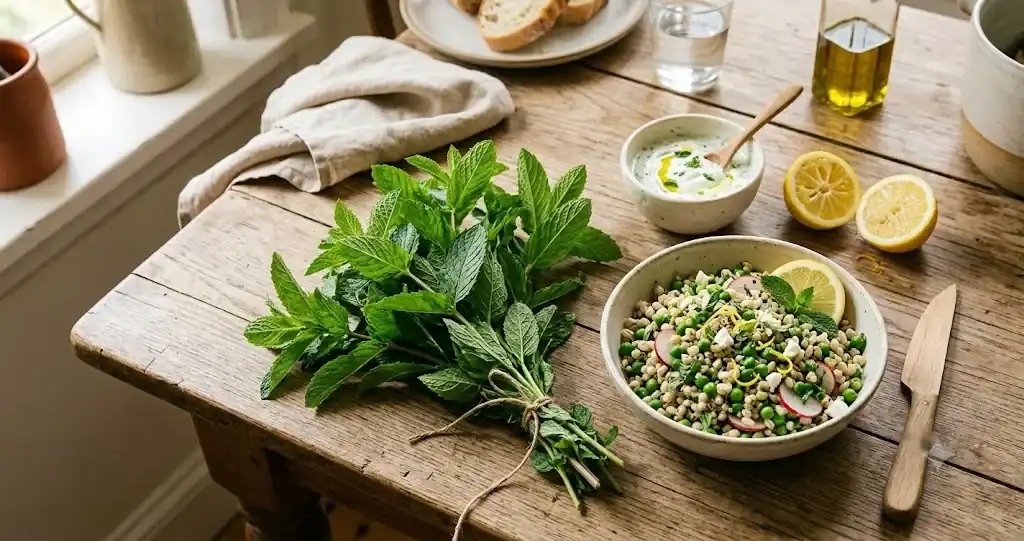
Mint can wake up a bowl of peas, a creamy yogurt sauce, or a simple fruit salad with almost no effort. Its cool, aromatic flavor works best when you treat it as a fresh finishing herb, not a background seasoning. Start with a few torn mint leaves, taste, then add more only if the dish still needs lift.
This guide focuses on techniques and flavor pairings for cooking with mint. If you want a dedicated collection of mint recipe ideas, use that separate guide after you have a feel for the ingredient.
Choose the right mint for the dish
The common garden variety is the most useful everyday choice. It is sweet, green, and gentle enough for salads, sauces, grains, and savory dishes. The sharper variety carries a cool flavor that can dominate a delicate meal, so reserve it for tea, chocolate mint desserts, candy-style flavoring, or a very restrained garnish. Chocolate mint has a mild cocoa note, but it still behaves like a fresh herb rather than a substitute for mint extract.
Use leaves that look vivid and smell clean when rubbed between your fingers. Stems are tender enough to steep in a simple syrup or marinade, but their texture is usually too fibrous for a finished dish. If you grow it, pick sprigs as needed. University of Minnesota Extension notes that culinary herbs are best harvested in the morning after dew dries and before daytime heat, and recommends gathering only what you will use fresh that day.
Prepare fresh mint without bruising it
Rinse mint only when needed, then dry it well in a salad spinner or between clean towels. Water left on the leaves dilutes dressings and makes chopped herbs clump. Pull leaves from tougher stems, stack them loosely, and slice just before serving. A dull knife can blacken the edges, so use a sharp knife or simply tear the leaves.
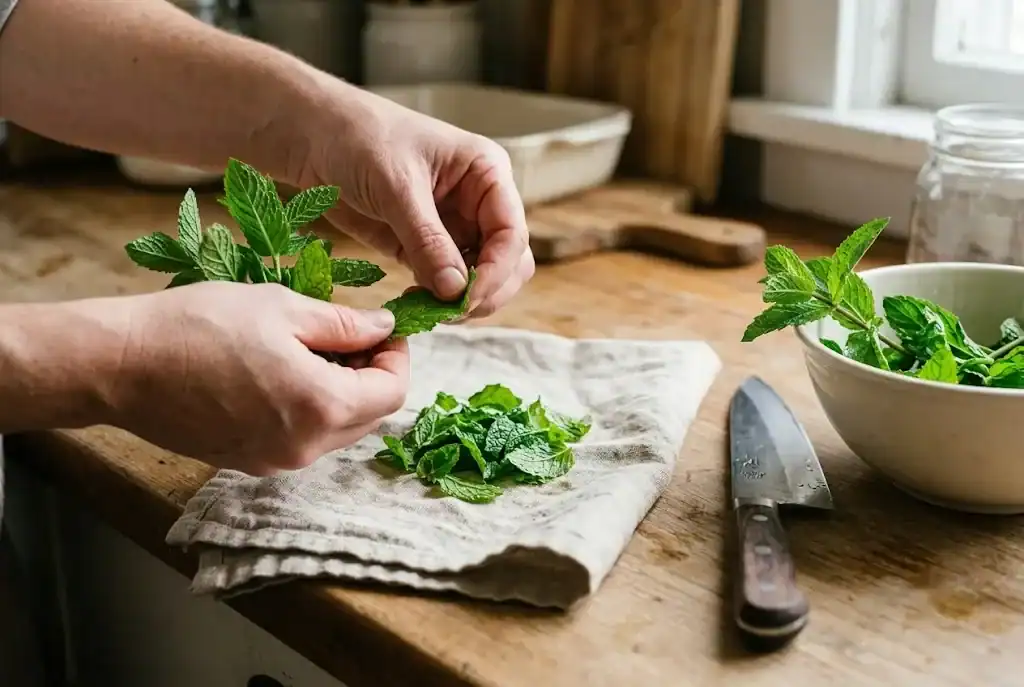
For hot food, add the herb late. Long cooking dulls its bright top notes. Stir it into a warm rice dish, pea soup, braise, or roasted summer squash just before the heat goes off. For a quick flavor test, add a small pinch, wait a minute, and taste again. Minty flavor grows more noticeable as it sits.
Build flavor with mint instead of treating it as garnish
Mint loves ingredients that are rich, salty, tart, sweet, or lightly spicy. It can brighten feta, yogurt, avocado, crisp vegetables, garlic, lemon juice, lime juice, ginger, jalapeño, shallot, and pomegranate molasses. It is especially good with watermelon, mango, peas, grilled chicken, lamb, beans, and tender vegetables.
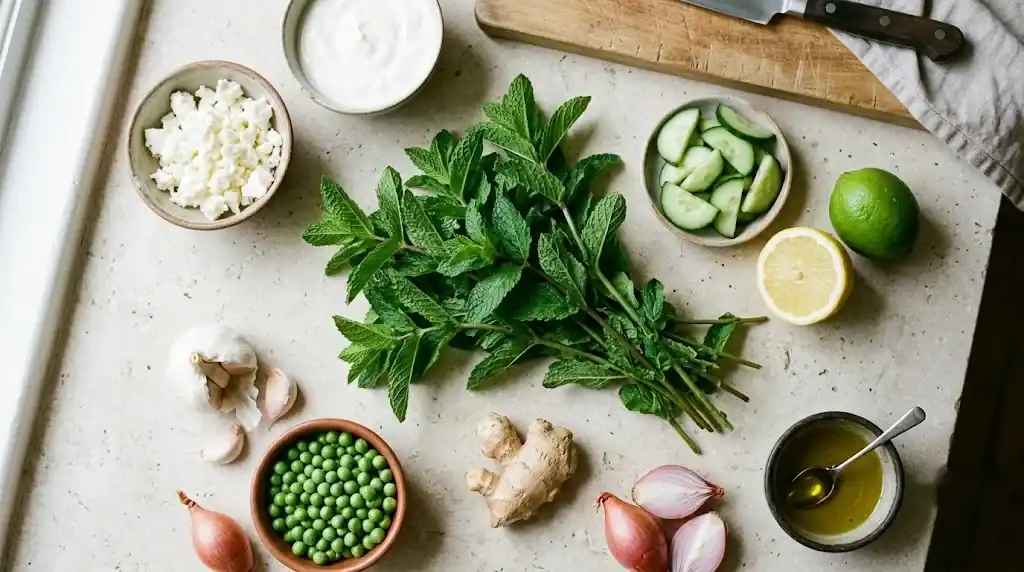
- Rich foods: Fold chopped leaves into yogurt, labneh, or a creamy dip. The cool herb keeps the sauce from tasting heavy.
- Tart foods: Whisk a little mint into lemon or sherry vinaigrette for crisp green vegetables, cabbage slaw, or grain dish.
- Sweet foods: Pair it with fruit, especially watermelon, berries, pineapple, and mango. A little lime juice keeps the sweetness focused.
- Spiced foods: Add it with coriander, garlic, and fish sauce in a Southeast Asian-style dressing, or use it with cumin and chile in a Moroccan-inspired salad.
Think in contrast. A briny cheese, tangy dressing, or warm spice gives fresh herbs like mint something to push against. That is why tabbouleh, tzatziki sauce, chimichurri, and herb-heavy summer rolls taste lively rather than merely green.
Five dependable ways to use mint in savory cooking
1. Finish salads and grain bowls
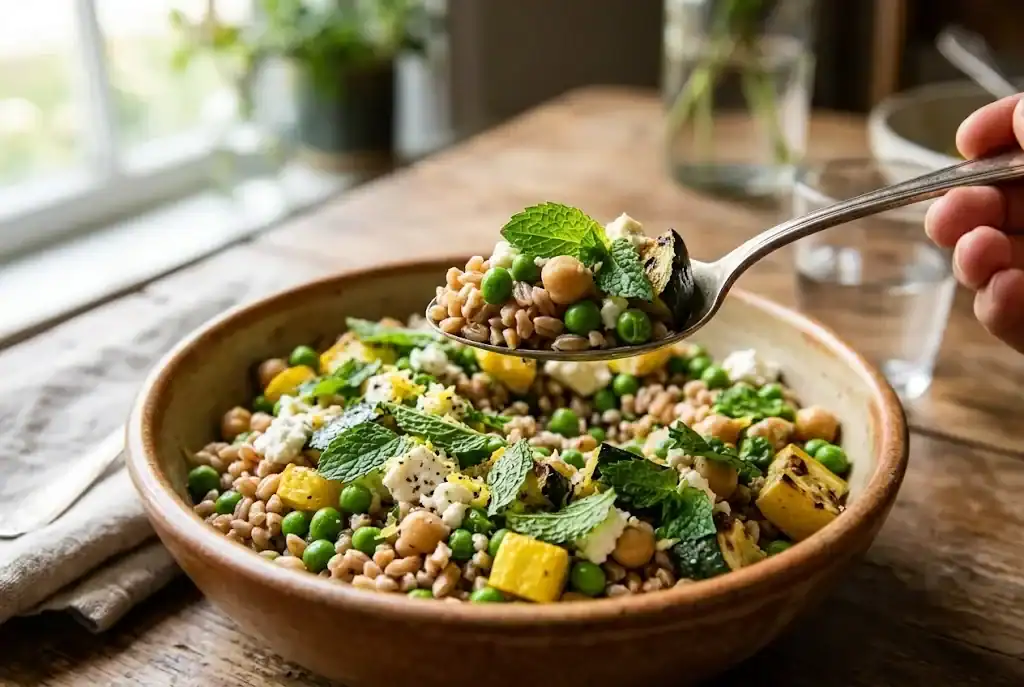
Use mint in a bowl with tomato, parsley, coriander, feta, chickpeas, or lentils. Tear the leaves over the top after dressing it so they stay distinct. In a grain bowl, combine a handful with warm couscous, bulgur, or rice, then add lemon and olive oil. The herb gives a veggie-packed lunch a clear, refreshing direction without needing a separate sauce.
2. Make a quick yogurt sauce
Whisk finely chopped leaves into plain Greek yogurt with grated cucumber, garlic, lemon, salt, and olive oil. Spoon it over grilled vegetables, chicken, lamb, falafel, or tacos. Keep the sauce simple, because too many aromatic herbs can make it taste muddy. A small sprig on top is enough garnish.
3. Add it to peas, beans, and tender vegetables
Mint has a natural affinity for peas. Stir it into buttered peas with lemon, add it to a bean salad, or scatter it over charred artichoke and summer squash. It also works well in a light vegetable soup. Let the vegetables cook fully, then add the chopped herb at the end so it stays herby rather than dull.
4. Use it in a dressing, pesto, or marinade
A mint pesto can be as simple as mint, parsley, garlic, lemon, nuts, olive oil, and salt. Use it as a spoonable sauce for fish, roasted vegetables, or a sandwich. For a marinade, combine chopped leaves with lime, garlic, oil, and a little chile for chicken or firm tofu. Mint can also soften a sharp dressing, especially one made with sherry vinegar or lemon.
For broader ideas on choosing and using culinary herbs, the cluster guide explains how different herbs behave in cooking without turning this page into a general herb reference.
5. Add it to warm dishes at the last minute
Stir a handful into pasta with peas, scatter it over grilled fish, or fold it into a warm lentil dish just before serving. The same rule works for a weeknight braise: cook the main ingredients first, then finish with a little chopped mint and lemon. This late addition gives a complete meal a fresh edge without requiring a new recipe.
Use mint in drinks and sweet dishes with restraint
The leaves belong in iced tea, mint tea, lemonade, a smoothie, or a sparkling spritzer. For drinks, slap a sprig lightly between your hands before adding it. That releases aroma without shredding the leaves into bitter-looking bits. Freeze chopped leaves with water in an ice cube tray for a simple way to cool summer drinks.

For sweets, steep leaves in warm milk, cream, or simple syrup, then strain. This gives cakes, fruit, and frozen desserts a cleaner flavor than adding large pieces of leaf. A mint julep or mojito depends on the same idea: aroma should lead, while sugar and alcohol should not bury the herb. If you use mint extract, add it sparingly because it is far more concentrated than fresh leaves.
What to do with extra leaves
If your garden gives you more leaves than one meal needs, do not force them all into one dish. Make a small batch of pesto, blend a green sauce for grilled food, steep a simple syrup, or chop leaves into freezer cubes. You can also use it across several meals: a crunchy vegetable plate at lunch, yogurt sauce at dinner, and fruit the next day. This approach preserves their character better than trying to force every bunch into a recipe.
Keep the remaining sprigs in the refrigerator and use them promptly. For longer keeping, follow the site’s separate guide on how to store mint. It covers preservation choices without distracting from the cooking techniques here.
Fresh and dried leaves are not interchangeable
Fresh leaves deliver lift, aroma, and a soft green texture. Dried leaves taste more concentrated and earthy, so they work best when it can rehydrate in a dressing, sauce, rice dish, or cooked vegetable preparation. A practical starting point is to use about one-third as much dried herb as the amount of fresh called for, then taste. University of Minnesota Extension gives the same one-to-three dried-to-fresh substitution guidance for herbs.
Common mistakes
- Adding it too early: Heat mutes the flavor. Finish most hot dishes with it.
- Using the sharper variety too freely: Its cool intensity can make savory food taste like candy.
- Chopping it far ahead: Cut leaves darken and lose their clean aroma.
- Pairing it only with desserts: Try it with crisp vegetables, peas, feta, yogurt, fish, and beans.
- Confusing a technique guide with a recipe collection: Use these flavor rules to adapt meals you already cook, then explore a dedicated recipe page when you want exact quantities.
FAQs
Can the leaves be eaten raw?
Yes. Tender fresh leaves are good raw in salads, sauces, fruit, and drinks. Tear or slice them just before serving for the best texture and aroma.
What foods pair well with it?
Mint pairs especially well with yogurt, feta, lemon, lime, peas, beans, lamb, chicken, fish, watermelon, mango, and chocolate. Choose one rich or sweet element and one tart or salty element to keep the dish balanced.
What can I do with extra leaves?
Use them as a finishing herb, in yogurt sauce, pesto, marinades, salads, tea, simple syrup, or freezer cubes. Start small and add more after tasting.
Can I cook it for a long time?
You can, but it loses much of its fresh character. Add it near the end unless you are steeping it in a liquid, where you plan to strain the leaves out.
Give the herb one clear job
The easiest way to use this herb is to give it a clear role: freshness in a rich sauce, contrast in a fruit salad, lift in a warm vegetable dish, or aroma in a drink. Use it late, pair it with ingredients that need brightness, and keep a few leaves in reserve for the final taste. That small habit turns an overgrown garden herb into a reliable kitchen tool.
Sources
- University of Minnesota Extension: Growing herbs in home gardens
- University of Minnesota Extension: Preserving food at home, drying
- University of Minnesota Extension: Edible flowers