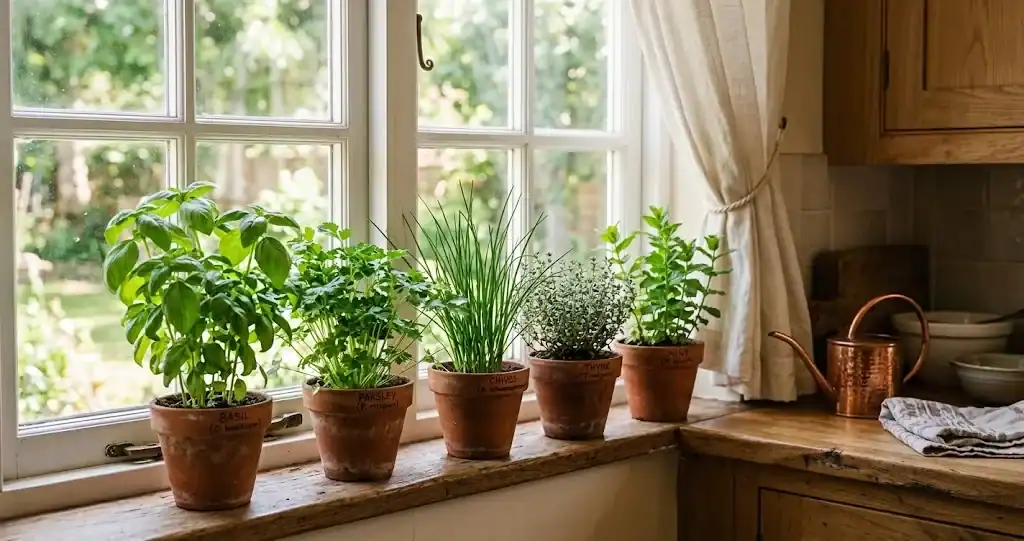
A sunny kitchen window, a handful of clay pots, and a packet of basil seed are enough to start an indoor herb garden that earns its keep all year. Growing herbs in the house is one of the most forgiving ways to keep fresh flavor within arm’s reach of the stove, and the same five or six pots can supply snippings for soups, salads, roasted vegetables, and morning tea. The trick is matching the herb to the light you actually have, then giving it a pot that drains and a watering rhythm that lets the soil dry between drinks. Once these basics are right, the routine settles into place after a few weeks of paying attention.
This guide walks through the simple steps that turn an empty windowsill into a working indoor herb garden. You will pick the right spot, choose pots that do not drown the roots, water and feed on a sensible rhythm, harvest in a way that keeps plants bushy rather than leggy, and handle the small problems that come up indoors, from low light to fungus gnats. Pick two or three herbs to start, then expand once those are thriving.
Most herbs grow well indoors with a little attention to light, water, and pot choice. The biggest payoff comes from picking the right spot, choosing pots that drain freely, and harvesting often enough that the plant stays bushy. With those three habits in place, a windowsill can supply fresh herbs for cooking every week of the year.
Pick a spot that gets honest light
Most edible herbs need six hours of direct sunlight a day. The best spot is a south-facing window where the sun lands directly on the leaves for the morning and early afternoon. East-facing windows work for chives, parsley, mint, and other herbs that prefer a slightly cooler exposure. West-facing windows are usually hot in late afternoon, which suits basil and other Mediterranean species. North-facing windows deliver the least sun, and only the most tolerant herbs, like chives and mint, will grow there without a supplement. The total hours of direct light your window actually receives each day is the single best predictor of whether herbs will thrive there or simply sit and sulk. Even a bright east window is enough to start growing herbs inside, so do not wait for the perfect sill, south-facing or otherwise. Pick a spot, then build the rest of the routine around it.
Sorting out the light, drainage, and daily rhythm a kitchen herb garden needs is the work that turns a sunny sill into a real growing space rather than a holding pen for the pots you bought on impulse. Indoor herb growing starts with that decision, and the rest of the routine falls into place once the spot is right. Try to grow herbs in the brightest spot you have, even if it is not technically a south exposure, and you will learn quickly which herbs accept the lower light and which ones want more.
Before you settle on a location, watch the spot for a full day. Note when direct sun first reaches it and when it leaves. Most herbs will tell you within a week whether they are getting enough light: pale, stretched stems and small leaves mean the plant is reaching for the sun and wants a brighter spot or a supplemental fixture. If leaves turn yellow while the stems stay upright, the opposite is true and the plant wants less sun, which is rare for culinary herbs but does happen in a west window during a heat wave.
If no window gets enough direct sun, a basic full-spectrum grow light fixed about 15 cm (6 in) above the plants and run on a 12 to 14 hour timer will keep most herbs productive year-round, so you can grow herbs indoors even on a shaded sill. The fixture does not need to be expensive; a basic full-spectrum bulb on a clamp and a 12 hour outlet timer is enough through the darker months. Indoor growing in a closet or basement is also possible with a grow tent and a stronger fixture, which is how some apartment dwellers start growing herbs inside with no usable natural light at all.
Choose pots that let the roots breathe
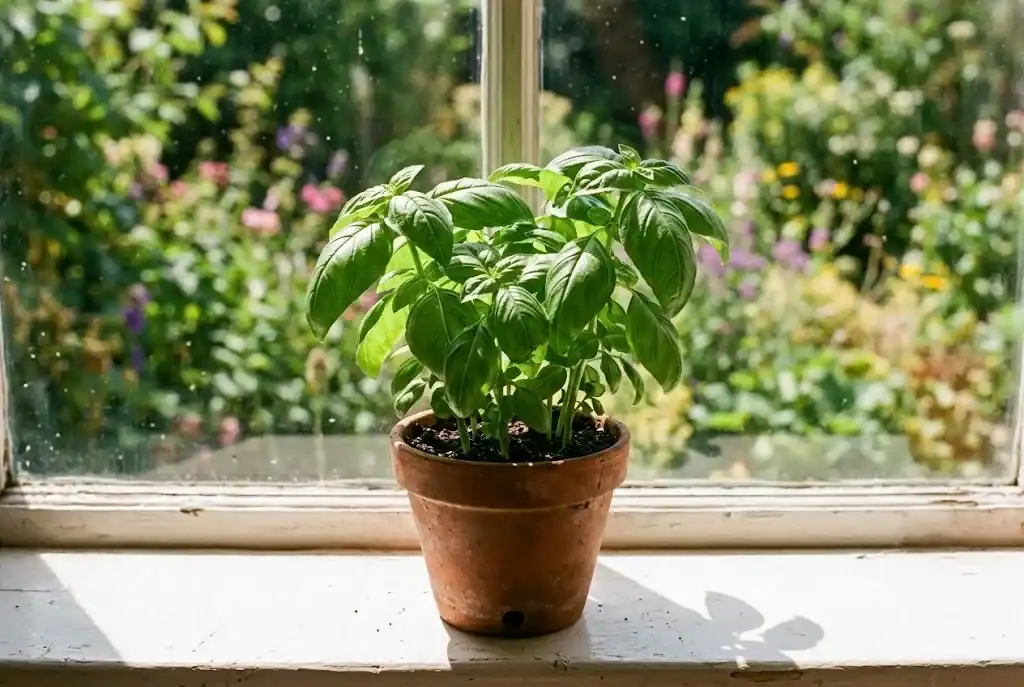
The single biggest reason indoor herbs fail is wet feet. Pots without drainage holes fill the bottom with water, the roots suffocate, and the plant goes yellow and limp within a few weeks. Always choose pots with at least one drainage hole, and set them on a saucer or tray to catch what drains through. A herb planter with a matching saucer is the easiest choice, and most garden centers carry 10 to 20 cm (4 to 8 in) options that suit a windowsill. Most herbs prefer a snug pot over a too-large one, since loose soil in a big container stays wet for too long and starves the roots of air.
Most herbs are happy in 10 to 15 cm (4 to 6 in) pots while they are young. A single chive, parsley, or basil plant needs about that much space. Mint spreads fast and quickly exhausts a small pot; plan on a 15 to 20 cm (6 to 8 in) container, or split the clump twice a year. Mediterranean species like thyme, oregano, rosemary, and sage prefer their pots on the smaller, snugger side, since a tight root ball encourages the concentrated oils that give them flavor.
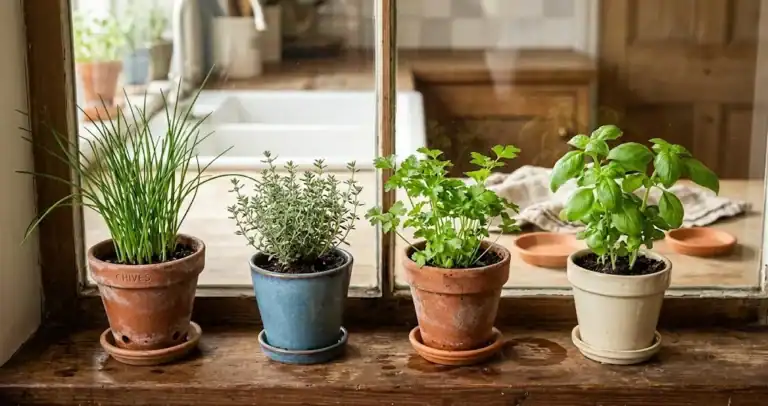
Both terracotta and glazed ceramic work well. Terracotta breathes and helps the soil dry between waterings, which suits herbs that prefer drier conditions. Glazed ceramic holds moisture longer and is a better match for basil, parsley, and mint. A potted herb on a bright windowsill looks as good as it grows, so choose a style you want to look at every day.
Use a light, well-draining potting mix
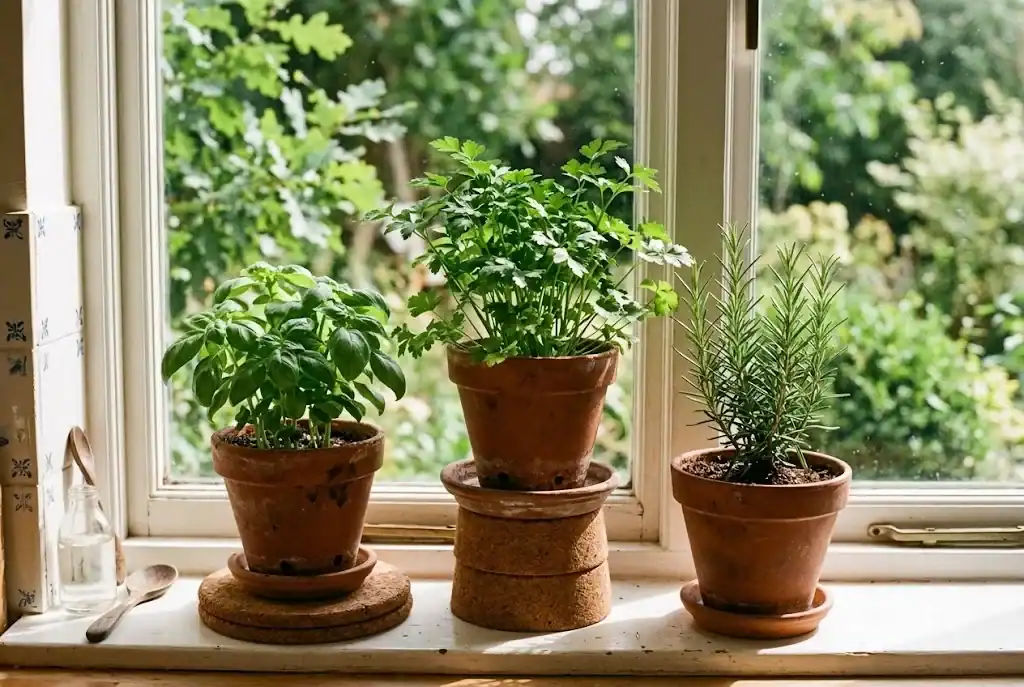
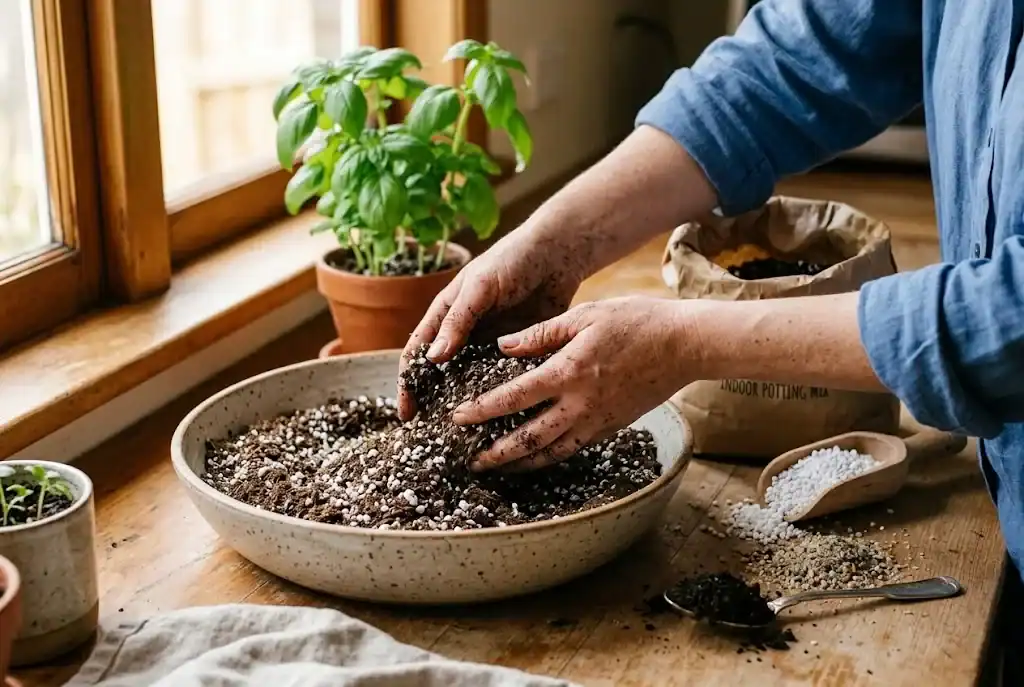
Garden soil is too heavy for pots. It compacts, drains poorly, and carries insects and disease. Use a bagged indoor potting mix and improve the drainage by stirring in a handful of perlite or coarse sand, roughly one part perlite to three parts potting mix. This keeps water moving through the root zone and lets air reach the roots.
Skip soil moisture crystals, moisture-control mixes marketed for outdoor use, and anything labeled for tropical plants. Herbs that evolved on dry hillsides want to dry out between waterings, not stay evenly damp. The growing conditions indoors, with lower light and steady room temperature, already slow evaporation compared to an outdoor bed, so a fast-draining mix matters even more than it does outside. Most prefer a slightly drier root zone than houseplants, and the right mix is what makes that possible in a small pot.
If you have a worm bin or make compost, a spoonful of finished compost stirred into each pot adds a slow, gentle feed that herbs appreciate, especially basil and parsley, which are heavy feeders. The compost also helps the mix hold a little more moisture without going soggy, which suits herbs from seed that are still building their root systems. A handful of perlite or coarse sand added to the mix keeps the drainage fast for Mediterranean species, which prefer a drier root zone and tolerate a tight herb pot more than a waterlogged one.
Water on a rhythm the soil sets
The most reliable watering test is also the simplest. Stick a finger about 2 cm (1 in) into the soil. If it feels dry, water. If it feels cool and slightly damp, wait another day. Pots in sunny windows dry faster than pots in dim corners, and herbs in small terracotta pots can dry out in a single afternoon. Indoor herbs need less water in winter, when shorter days and cooler air slow evaporation, and more water in summer when the windowsill is warm.
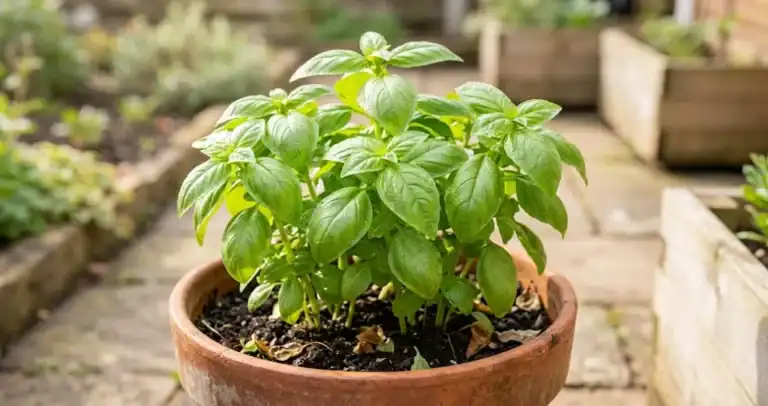
When you do water, soak the pot until water runs freely from the drainage hole, then empty the saucer after 15 minutes. Standing water in the saucer keeps the bottom of the root ball wet and invites root rot. Bottom-watering by setting the pot in a shallow tray of water for 20 minutes works for mint and basil, which prefer steady moisture, but it is not a default for Mediterranean species. Give your herbs a steady rhythm rather than feast or famine, and the soil will reward you with healthy root growth.
If the pot dries out completely and the plant wilts, set the whole pot in a sink of room-temperature water up to its rim for 20 minutes, then let it drain. Most herbs recover from a single drought, but repeated wilting costs the plant weeks of growth.

Feed lightly and only during active growth
Indoor herbs grow more slowly than their outdoor cousins, and they do not need much fertilizer. A half-strength liquid feed every two to three weeks during the active growing season (spring and summer, or whenever your windowsill is brightest) is plenty. Skip feeding in winter when growth slows, since the plant cannot use the nutrients and they build up in the soil.
Fish emulsion, seaweed extract, and balanced liquid herb fertilizers all work. Avoid granular time-release spikes and high-nitrogen lawn fertilizers, which push soft leafy growth that lacks flavor and aroma.
Start with forgiving herbs
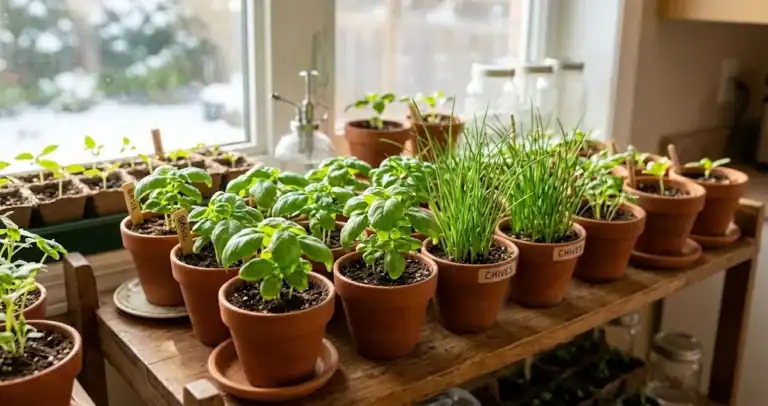
If you prefer to grow herbs from seed, starting herb seed under cover on a bright sill gives you a wider choice of varieties than a garden center offers and saves money if you want more than two or three pots. Basil, parsley, and chives all start easily indoors, and seed packets usually give you a dozen plants for the price of one nursery start. Choose to grow herbs that suit how you actually cook, and the routine becomes a pleasure rather than a chore. The same pot-and-windowsill setup will suit basil, parsley, chives, and thyme through every season of the year, and most herbs behave the same way indoors once their watering rhythm is right.
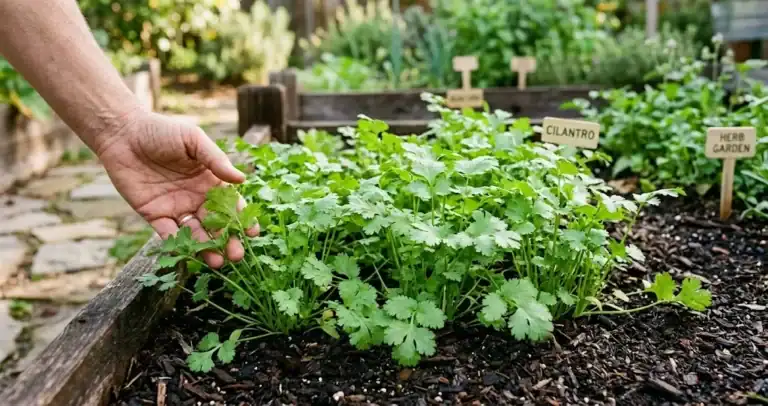
If you are putting together an indoor herb garden for the first time, pick from the easy side of the list. Basil, parsley, chives, mint, and thyme are all reliable indoors and recover well from the small mistakes new growers make. Cilantro and dill grow quickly but bolt at the first sign of stress, so plan on replanting them every few weeks rather than expecting a single herb plant to last all season. Pick three favorites to start and learn their rhythm before adding more.
Mediterranean species such as rosemary, oregano, and sage are slower to establish indoors and prefer drier conditions. They are worth growing but are best as a second wave, once you have a watering rhythm that suits the easier herbs. Basil and parsley prefer a steady supply of water rather than the dry-down-then-soak rhythm that suits Mediterranean species, so matching the herb to your watering habits saves a lot of troubleshooting later. Several perennial herbs, including thyme, oregano, chives, and mint, tolerate these conditions for years, which makes them the easiest to grow over the long term. Other Mediterranean herbs like thyme and oregano also tolerate indoor life well once the watering rhythm suits them.
Mint is the exception to the shared-pot rule. Mint runners will crowd out neighboring plants within a month, so keep it in its own pot or share a container only with another mint of the same vigor. A few herbs can share one large pot if they share a watering rhythm; most cannot, and a mixed pot is often where new growers lose plants.
Harvest in a way that keeps plants bushy
For leafy herbs, pinch or snip the stem just above a pair of leaves. Two new shoots grow from that node, and the plant becomes bushier with each cut. Once the plant has at least three pairs of leaves, you can begin harvesting, and the more you cut the more it grows.
For woody herbs, cut a single stem at a time rather than trimming the whole plant. Snip just above a leaf pair or a side shoot, leaving at least two-thirds of the plant in place. Hard cuts into bare wood on rosemary often kill the stem, so always cut where you can see green growth.
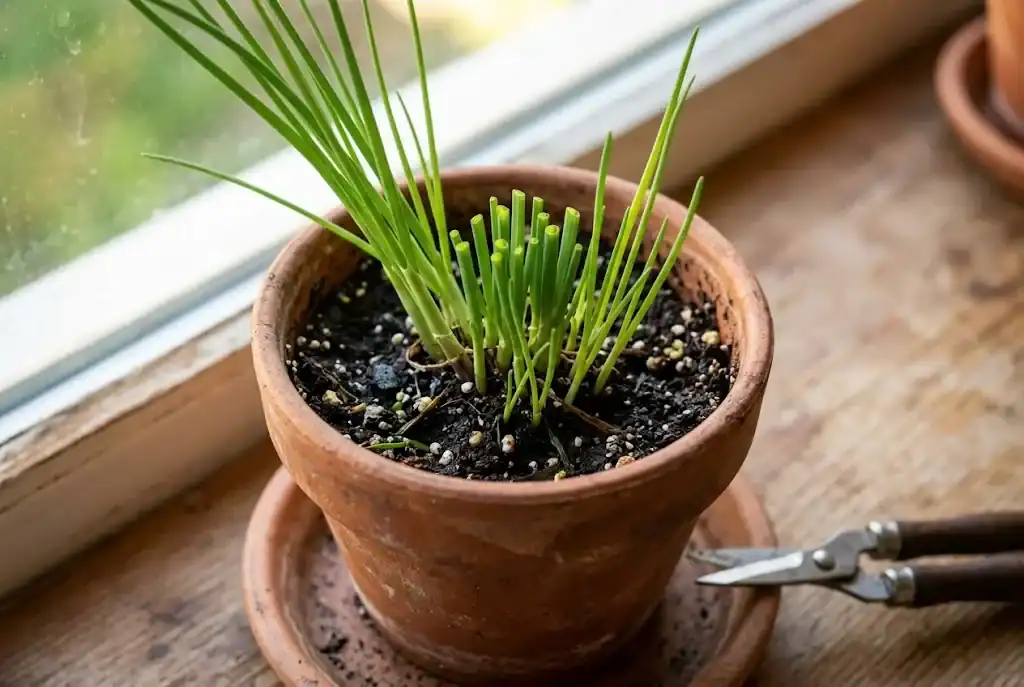
For chives, cut a small clump of leaves down to about 5 cm (2 in) above the soil. New leaves replace them in two to three weeks. Avoid cutting the whole plant down at once; leave some leaves so it can photosynthesize and regrow.
Always harvest in the morning after the dew has dried. The leaves are at their most flavorful then, and the plant handles the cut better than it does in the heat of the day.

Troubleshoot the small problems
Even with the right pot and a sunny window, indoor herbs run into a few common issues. Recognizing them early makes the fix simple.
Long, pale stems and small leaves
The plant is stretching for light. Move it closer to the window, rotate the pot a quarter turn each week so all sides get sun, or add a supplemental fixture above the canopy. This is the most common indoor problem and the easiest to fix once you see it.
Yellow leaves with soggy soil
The plant has been overwatered, or the pot has no drainage. Tip the plant out, shake off the wet soil, trim any black or mushy roots with clean scissors, and repot into fresh dry mix. Going forward, let the top 2 cm of soil dry between waterings.
White powder on leaves
Powdery mildew shows up when air circulation is poor and humidity is high. Move the plant to a less crowded spot, increase airflow with a small fan, and remove the most affected leaves. A spray of one part milk to nine parts water, applied once a week, helps prevent it from coming back.
Small black flies around the pots
Those are fungus gnats, and they live in constantly damp soil. Let the top of the soil dry out fully between waterings, top-dress the pot with a 1 cm layer of coarse sand or gravel, and set sticky yellow traps near the plants to catch the adults. The larvae cannot survive dry topsoil, so this problem solves itself within a few weeks.
Crispy brown leaf edges
The air is too dry, often in winter when the heater is running. Group pots together on a tray of pebbles with a little water in the tray, or run a small humidifier nearby. Misting is a temporary fix and does not change humidity for long.
Refresh the pot and the soil once a year
Most indoor herbs benefit from a yearly refresh. Tip the plant out, shake off the old soil, tease the roots apart gently, and move it up to a pot 2 to 3 cm larger in diameter if the root ball is crowded. Replace the potting mix, water until it drains, and resume the regular feeding schedule. Spring is the best time for this, just as new growth begins. A divided perennial herb that has outgrown its pot will reward you with two or three healthy new plants in fresh mix.
Herbs that have grown leggy can be cut back by up to one-third and propagated from the cuttings. Snip a healthy non-flowering stem, strip the lower leaves, and set it in a glass of water on a bright windowsill. Roots appear in one to three weeks for basil, mint, and oregano. Pot it up in fresh mix and you have a second plant for free.
Build out your indoor herb garden over time
Once the basics are working, expand with herbs that suit how you cook. Cilantro and dill belong near a window that stays cool. Lemongrass wants a large pot and steady moisture. Bay laurel grows into a small tree and rewards a bright window with leaves that hold their flavor for months in the pantry. Curry leaf plant needs the brightest spot you have and warm room temperatures, which suits a kitchen window above the radiator in winter. Each new herb to grow opens up a different recipe, and most do well in the same basic indoor setup once you match the pot and the water.
When the windowsill feels reliable and you want to grow in larger numbers or move outside for summer, the wider basics of growing herbs at home cover soil depth, garden planning, and the choices that come up the moment your indoor setup wants company. A guide to growing herbs at scale also walks through garden space, succession planting, and how to keep favorite herbs going through every season of the year.
If your goal is to grow an herb garden in containers on a balcony, patio, or outdoor herb planter once summer arrives, many of the same rules apply: a pot with a drainage hole, a light mix, and at least six hours of direct sun. The difference is mainly in the water; outdoor pots dry out faster, and a few perennial herbs such as thyme and oregano will overwinter outside in mild climates and come back stronger the following year. Indoor herbs tend to give fresh flavor year-round, while outdoor beds take a break in winter, so a kitchen setup is often the easiest way to keep herbs on hand for every meal. A herb garden planter by the back door is the natural next step, and a windowsill is still the easiest place to grow herbs indoors during the colder months.
Space to grow is rarely the limit indoors. Most herbs are compact by nature and a single plant fits happily in a 12 to 15 cm (5 to 6 in) pot. What matters more is the gardener’s attention: a few minutes every couple of days to check the soil, rotate the pot, and harvest the top growth is enough to keep a small indoor herb garden productive through every growing season.
Pick one herb this week. Set it on the sunniest windowsill in a pot with a drainage hole. Water it when the top of the soil dries, harvest the top leaves once it has bushed out, and see what you can do with fresh flavor within arm’s reach of the stove. Start with one plant, then add more as you learn what each one wants, and you will have the most-used herbs growing well indoors within a season or two. If you prefer to grow herbs inside a cabinet or pantry, a small grow tent with one fixture and a fan can support four to six pots at a time, which is enough for most home cooks.
Use this guide as a starting point. The best way to start a kitchen herb garden is to begin with one easy plant, learn its rhythm, and add the next one once the first is settled. The easiest to grow indoors are basil, parsley, chives, mint, and thyme. Pick the three you cook with most often and you will be ahead of most new growers before the season is out.