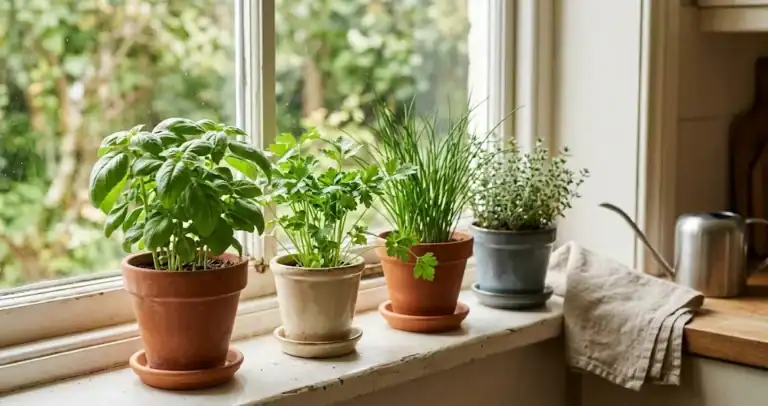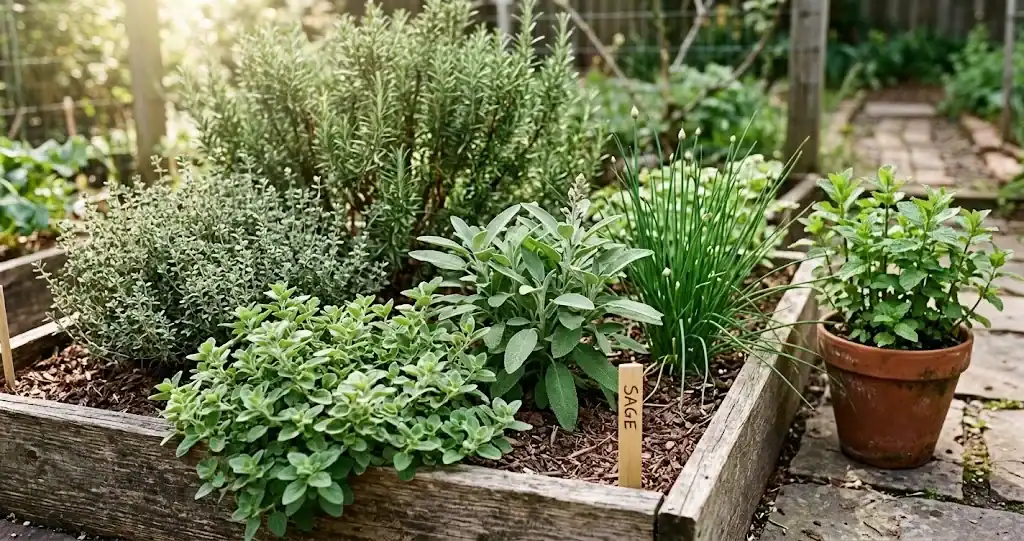
A perennial herb is one that comes back year after year from the same roots, so you plant it once and harvest for many seasons. Rosemary, thyme, oregano, sage, chives, and mint all behave this way in most climates, and they form the backbone of a low-maintenance herb garden. Annual herbs like basil, cilantro, and dill complete their life cycle in one season, so a long-lived planting saves time and money once it is established. This guide explains what makes an herb perennial, how to choose and site the right plants, and how to keep them productive for years.
What perennial means for an herb
Herbs that survive winter and reshoot from their roots the next spring are perennials. The top of the plant may die back in cold weather, while the root system stays alive underground and pushes fresh growth when soil warms. Woody herbs such as rosemary, thyme, sage, and oregano keep some live stems through winter in mild climates, while leafy herbs such as chives, mint, and lemon balm disappear almost completely and regrow from the soil line. Most kitchen perennials develop a woody stem or rhizome over time, which is how they survive the cold.
These herbs are not the same as biennials. A biennial herb, such as parsley, grows leaves in its first year, flowers and seeds in its second, and then dies. A short-lived type may live two to four years, while a hardy one can keep producing for a decade or longer if conditions suit it. Tender herbs such as lemon verbena behave like returning plants only in frost-free climates and are usually grown as annuals where winters drop below freezing.
The terms annual and perennial are tied to your climate, not just the plant. A true perennial in zone 7 may behave like an annual in zone 4, because its roots cannot survive that cold. Always check the zone rating for the specific herb you want, not just the label.
Reliable perennial herbs to start with
These are the herbs that earn their place in a beginner’s herb garden. Most are easy to grow, widely available as small plants, and useful in the kitchen. A gardener who wants to grow herbs year after year usually starts with three or four from this list rather than a dozen at once.
- Rosemary. A woody Mediterranean herb that prefers lean, fast-draining soil and full sun. A single plant can fill a corner of a bed for a decade.
- Thyme. Low-growing and tidy, with small aromatic leaves that tolerate drought once established. Lemon thyme is a milder option for fish and chicken.
- Oregano. Spreads steadily in a sunny bed. Greek oregano is the workhorse for cooking.
- Sage. Gray-green leaves on a woody frame. Purple sage adds color and overwinters well in zones 4 to 8.
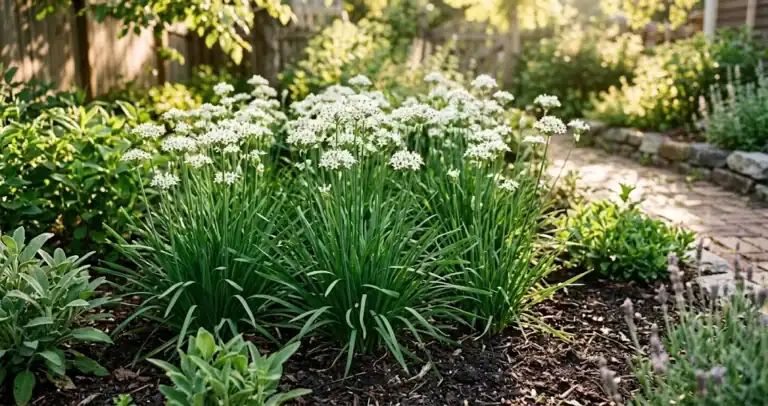
- Chives. A grass-like clump in the onion family. Each chive sends up fresh leaves earlier than almost any other returning herb, often before the last frost.
- Mint. Spearmint, peppermint, and apple mint all come back reliably. Mint is the one herb that benefits from a container rather than open ground, because its roots spread fast.
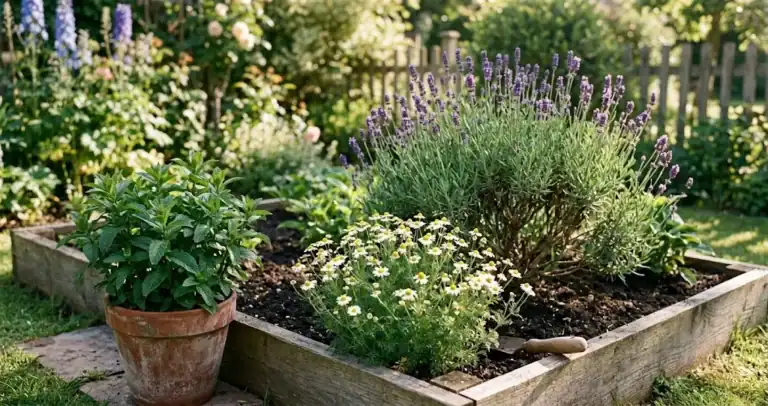
- Lavender. English lavender is the hardiest for cold climates; French lavender is tender and grown as an annual where winters are wet and cold.
- Lemon balm. A member of the mint family with bright, citrus-scented leaves. It can spread, so give it room or a barrier.
- Winter savory. A peppery, low-growing option that pairs well with beans and roasts.
- Tarragon. French tarragon is the true culinary type; it goes dormant in winter and reshoots in spring. It dislikes wet soil.
Anise hyssop, fennel, chervil, and sweet marjoram can also act as short-lived perennials in mild climates. Treat them as experiments rather than staples until you see how they handle your winters.
Pick the right site and prepare the soil
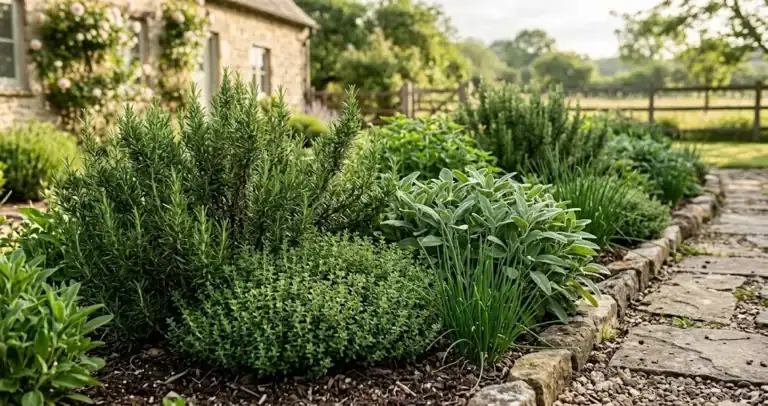
Most kitchen herbs that come back every year evolved on dry, sunny hillsides, so the rule of thumb is sun and drainage. Pick a spot that gets at least six hours of direct sun and that does not puddle after rain. If your soil is heavy clay, plant in a raised bed or on a gentle slope so roots never sit in cold, wet ground over winter.
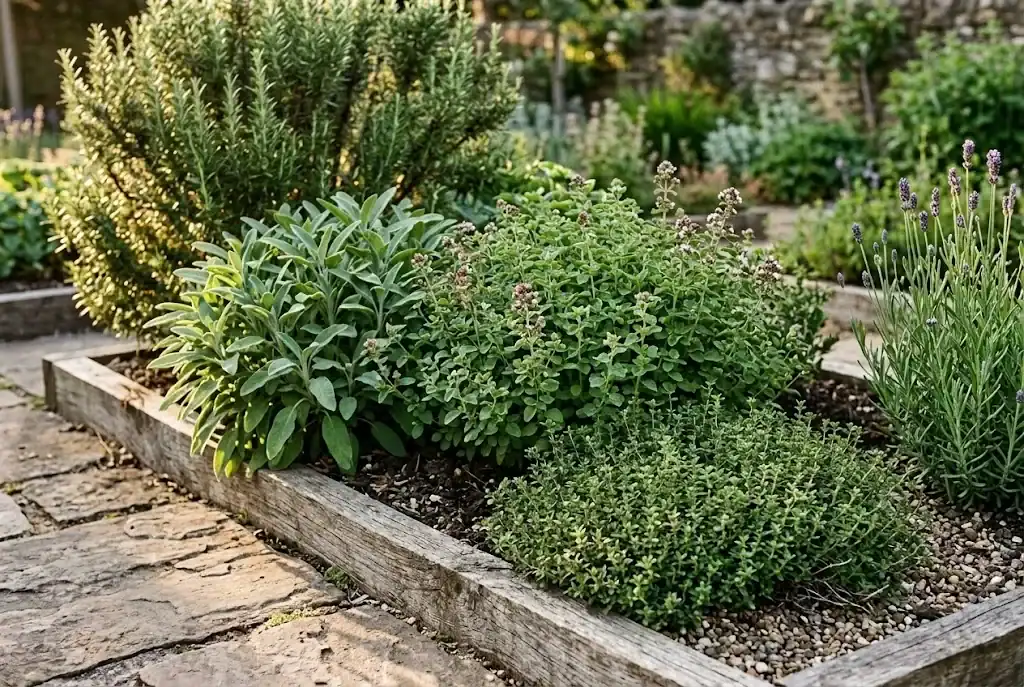
Soil conditions matter more than soil type. Aim for a loose, well-drained mix with a near-neutral pH, in the range of about 6.0 to 7.5. Work an inch or two of well-rotted compost into the top few inches before planting. Skip fresh manure and skip high-nitrogen feeds, because rich soil pushes soft leafy growth that does not survive winter as well as steady, balanced growth. If you have heavy clay or sandy fill, the deeper walkthrough on getting the soil right for herbs covers amendments, drainage, and what each Mediterranean herb actually wants at root level.
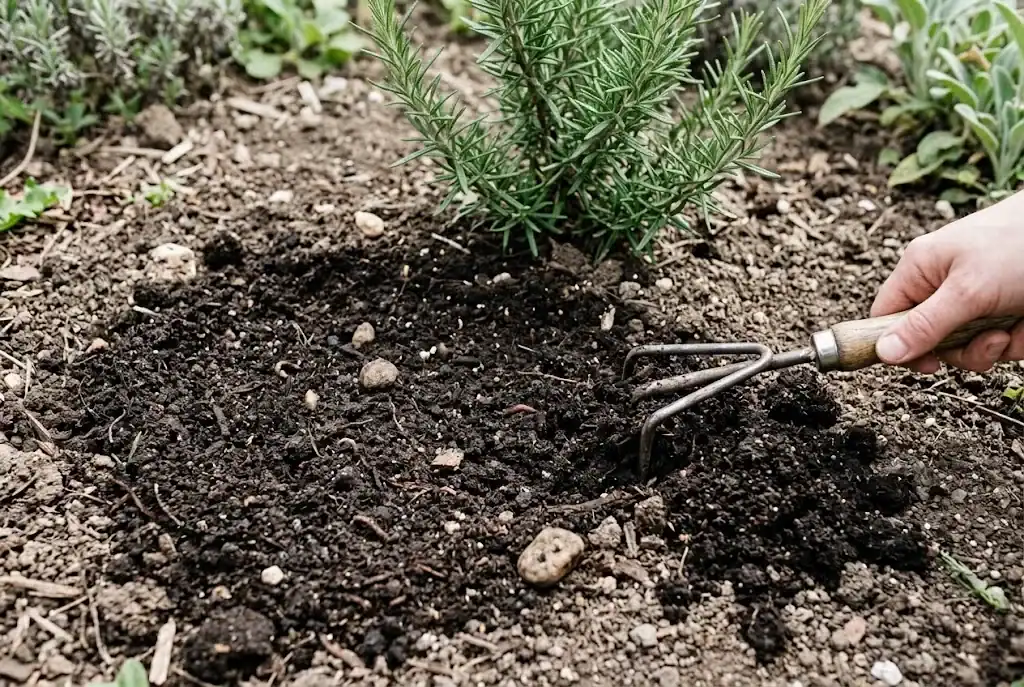
Plan for the size the plant will reach in its third year, not its first week in the ground. Many of these herbs can spread three feet across once settled. Mint and lemon balm spread by runners and will fill any space you let them have.
Planting: starts, seeds, and cuttings
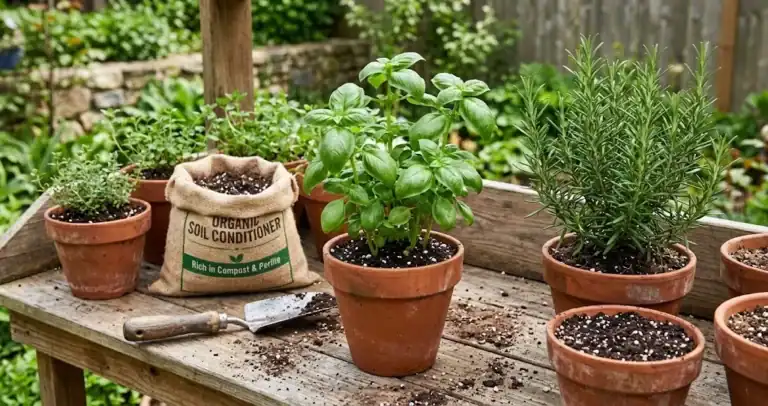
Starting with small potted plants from a nursery is the easiest path for most kitchen herbs. You can see what the leaves smell and taste like, the plants skip the fragile seedling stage, and most are harvestable the first season. Set the crown of the plant level with the soil surface, water in well, and keep the soil just moist for the first two weeks while roots establish.
Seeds work well for herbs that are hard to find as plants, including chives and anise hyssop. Sow indoors in late winter under lights, then move the seedlings out after the last frost. Expect the first harvest to wait a season while the roots build.
Cuttings are a free way to multiply rosemary, thyme, oregano, and mint. Snip a four-inch non-flowering stem, strip the lower leaves, and root it in a small pot of damp sand or perlite. Pot up once roots are an inch long. The new plant is a clone of the parent, which is the surest way to keep a named cultivar true. You can also transplant a divided clump from a friend’s garden in early spring.
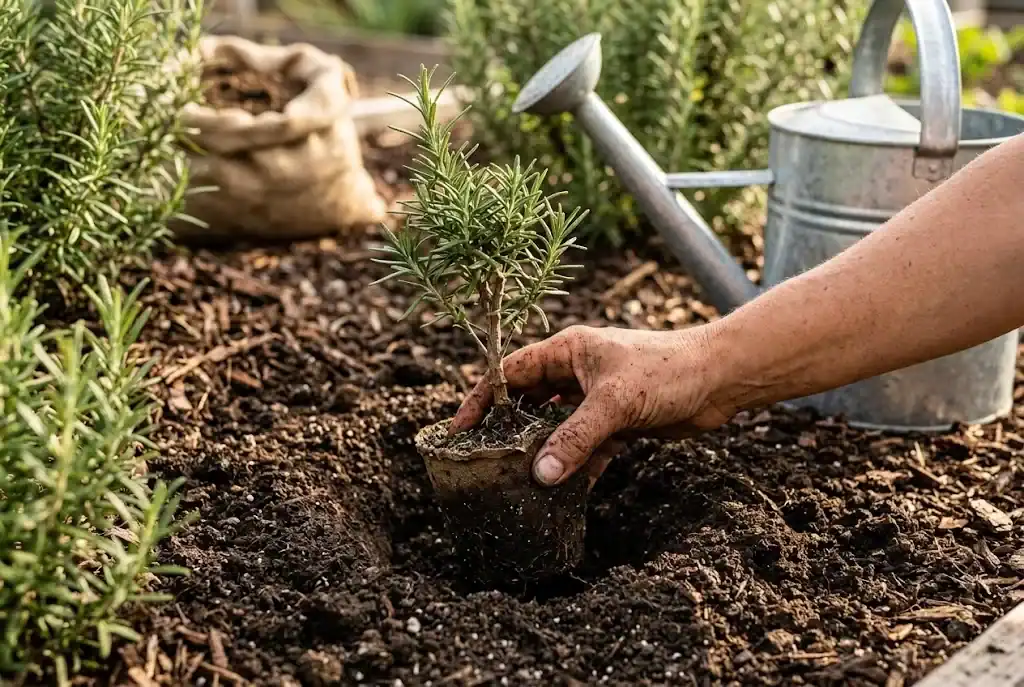
Whatever you start with, water at planting, mulch lightly the first winter to keep the soil from heaving, and avoid overhead watering on the woody Mediterranean types, which prefer to stay drier on the leaves.
Care through the season
Returning herbs need less attention than annuals, but a little steady care keeps them productive and tidy.
- Water. Deep, infrequent watering encourages roots to reach down. A soak once a week in dry weather is usually enough after the first year.
- Prune. Pinch or snip regularly to keep plants bushy. Stop heavy cutting about a month before your first expected frost so new growth has time to harden off. If you let a plant go to seed, it puts energy into the flowers instead of new leafy growth.
- Divide. Chives, mint, oregano, and lemon balm benefit from a division every three to four years. Lift the clump in early spring, cut it into sections with healthy roots, and replant.
- Watch the calendar. These herbs do most of their new growth in spring and early summer. A light spring feed is plenty for most.
If a plant becomes woody and bare at the center after several years, that is a sign it is time to replace it. Most kitchen herbs do not take well to hard cutting into old wood, so it is faster to start a fresh plant from a cutting than to fight an aging one back into shape. The seasonal checklist in tips for growing perennial herbs is a good place to start if you want a calendar view of feeding, dividing, and renewal pruning through the year.
Harvesting without weakening the plant
These herbs are made to be cut. Regular harvesting keeps them bushy and prevents flowering, which can dull leaf flavor. Pick in the morning after the dew has dried, when the aromatic oils are strongest. Take no more than a third of the plant at a time, and leave enough leafy growth for the plant to keep producing fresh leaves.
For leafy herbs such as chives, mint, and parsley, cut whole stems near the base. For woody herbs, snip the tips of the stems rather than stripping a single branch. For lavender, harvest stems just as the buds open and before the flowers fully open, then dry them for sachets or shortbread. The goal is to harvest herbs often enough to keep fresh herbs in the kitchen without ever weakening the parent plant.
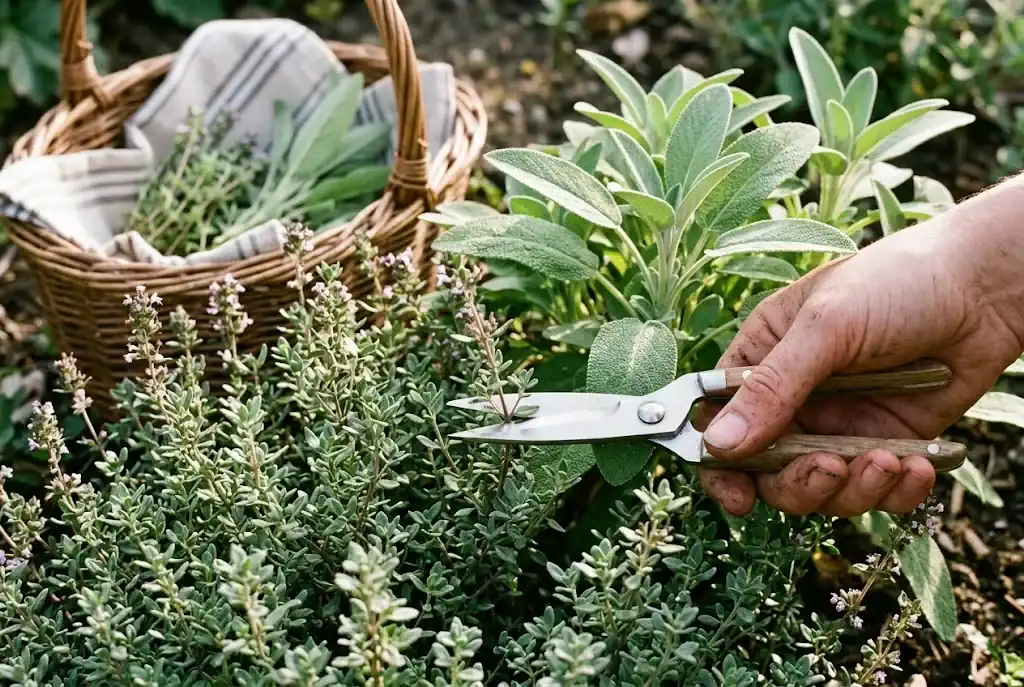
If a plant flowers, the leaves usually turn bitter. Pinch buds off chives, basil-like herbs, and mint the first year to push energy into roots. Let chives flower in late summer if you want to feed pollinators; their blooms are a magnet for bees.
Overwintering and renewal
In cold climates, returning herbs ask for a little help to come back strong. Stop cutting about four to six weeks before the first expected frost so growth has time to harden. Rake away fallen leaves from the base of rosemary and any silvery Mediterranean herb, because damp mulch against the stems invites rot. A loose layer of straw or shredded leaves over the root zone protects against freeze-thaw heaving, especially for newly planted herbs in their first or second winter.
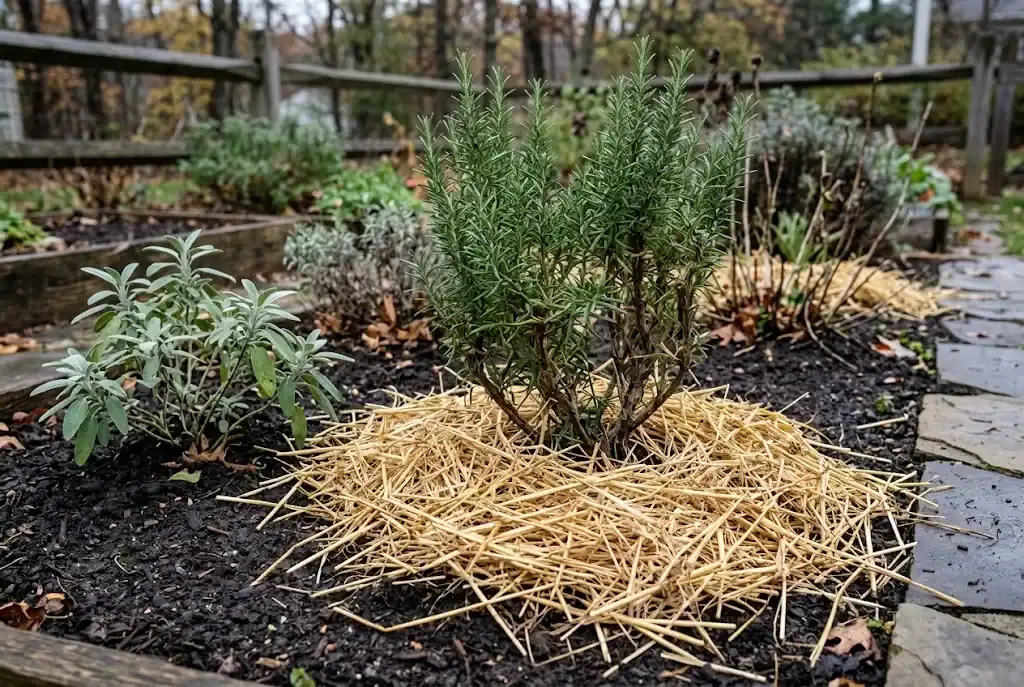
Potted herbs are more vulnerable than herbs in the ground because their roots freeze faster. Move tender types and first-year plants into an unheated garage or cold frame where temperatures stay cold but do not drop to zero. Water sparingly during winter dormancy, only enough to keep the soil from drying out completely.
In spring, cut away any winter damage once new growth appears at the base. A light top-dressing is usually all the feeding these plants need to begin the new season.
Common problems and quick fixes
Perennial herbs are tough, but a few issues show up year after year.
- Woody, leggy growth. Usually age or under-pruning. Take cuttings to replace the plant rather than cutting into old wood.
- Yellowing leaves. Often overwatering or poor drainage. Check that the soil drains within a minute of a heavy rain.
- Few new leaves in spring. The plant may have died back to the roots in a cold winter. Wait a few weeks before assuming it is gone, since many herbs reshoot late.
- Flavor fading. Plants grown in rich soil or heavy shade have milder flavor. Move them to a sunnier, leaner spot and replace with a fresh cutting.
Most returning herbs are tough enough that a watchful eye and a clean, sharp pair of pruners covers almost everything that goes wrong.
Putting it all together
Pick three or four kitchen herbs you actually cook with, give them a sunny corner with sharp drainage, and water them like a Mediterranean hillside. Rosemary, thyme, oregano, sage, and chives will keep producing for years with very little fuss. Mint and lemon balm want their own space or a pot because they spread. Add a silvery flowering herb if you want fragrance and pollinator flowers, and tuck parsley nearby for its cool-season leaves even though parsley is biennial. A small herb garden of returning plants is one of the easiest ways to put fresh flavor within arm’s reach every day of the growing season.
For the wider picture of planning a home herb garden from scratch, the beginner’s guide to growing an herb garden walks through layout, plant selection, and the first season end to end.