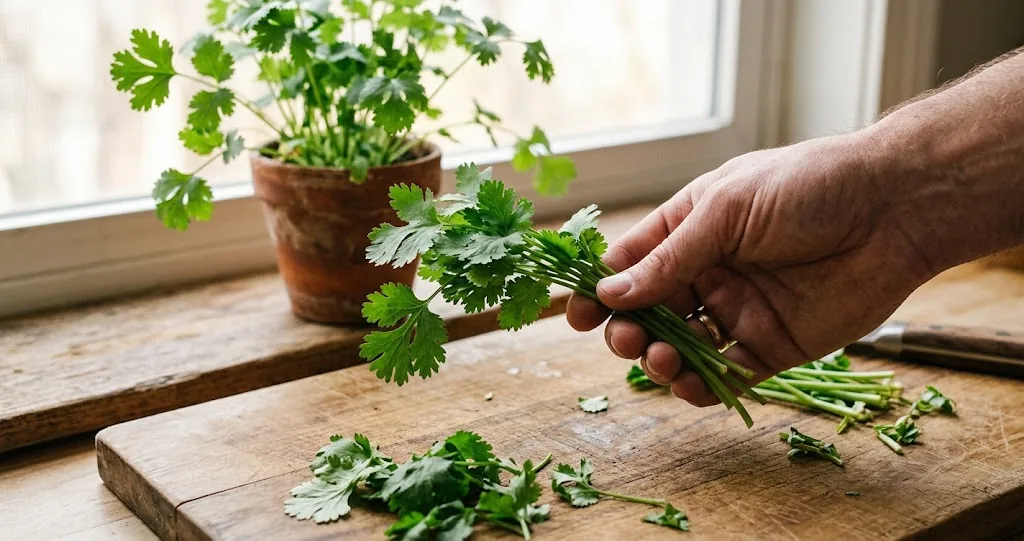
Cilantro grows fast and bolts fast, which is the whole reason harvesting matters. Pick it right and one plant keeps giving for weeks. Pick it wrong and you get a single flush of leaves and a flower stalk. This guide walks through when cilantro is ready to harvest, how to cut it so it keeps producing, what to do when it starts to bolt, and how to handle the harvest once it is in your kitchen.
When cilantro is ready to pick
Cilantro is a fast-growing cool-weather annual herb that is ready to be harvested once the plant has at least six inches of leafy stem above the soil. Most home gardeners start cutting around four to six weeks after sowing cilantro from seed, when the plant has set a solid rosette of leaves and the stems are thick enough to hold their shape. Younger plants have tender leaves but very little to take. Older plants tend to bolt quickly under warm weather, so the window between ready and bolting can be short.
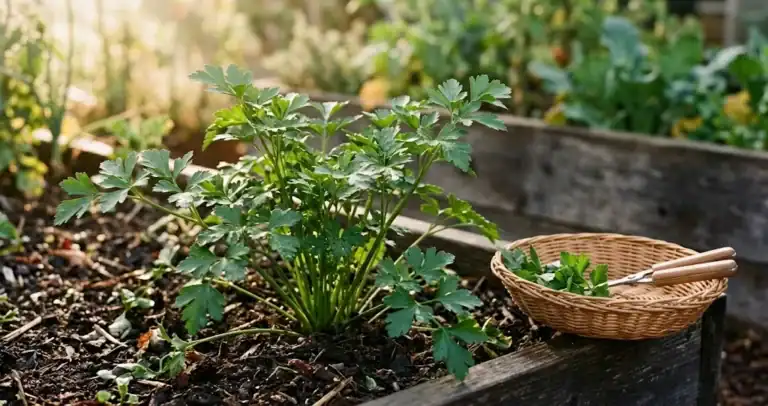
Look for stems with deeply lobed leaves that look like flat-leaf or Italian parsley. That shape is the cue. If the leaves look thin or stringy, the plant is still settling in and a single small cut will buy you a few more days of growth. If you can already see a central stalk starting to rise above the rosette, harvest the leafy growth right away, because that stalk is the start of bolting.
Will cilantro grow back after cutting?
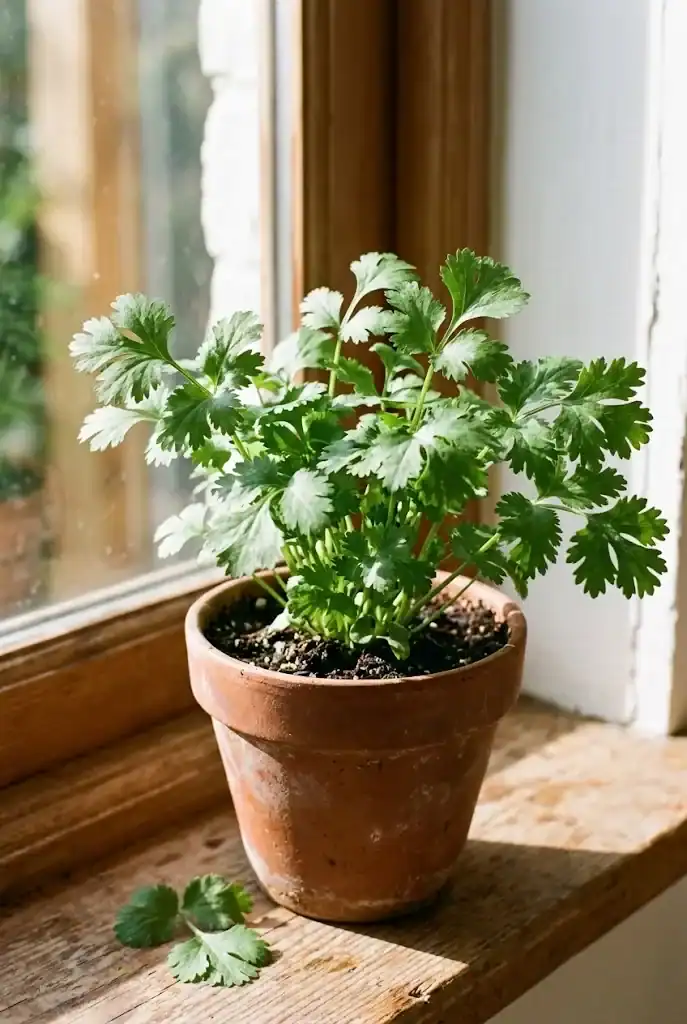
Yes, as long as you leave the central crown and the inner stems alone. Cut-and-come-again is the harvest method that keeps cilantro producing for weeks. The idea is simple. You take outer stems only, leave the inner stems and the central crown alone, and the plant sends up new growth from the center. Done correctly, a single cilantro plant can give you three or four cuttings before it runs out of steam.
The common mistake is to grab a bunch of leaves at the top or to shear the whole plant flat. Both of those cuts take the growing crown with them. The plant has to start over from the root, and that costs you at least a week of growth. A clean outer-stem cut leaves the inner rosette intact and the plant keeps moving.
Cilantro is one of several herbs that respond well to this approach. The broader framework, with notes on which herbs bounce back and which do not, sits in the guide to cutting herbs the right way.
Where cilantro grows best for a steady harvest
Cilantro grows best in full sun during cool weather, with light shade in warmer afternoons. Soil that drains well and stays evenly moist is the easiest setup. Sow cilantro from seed directly in the garden in late spring or late summer. Most gardeners skip transplanting because cilantro does not like its roots disturbed. A short row sown every three weeks is the most reliable way to keep cilantro leaves coming into the kitchen from spring through fall.
Cilantro is one of the easier herbs to grow for new gardeners. The seeds sprout in a week or two in cool soil, the plants establish quickly, and the harvest window opens within a month. With the same cut-and-come-again rhythm and a steady succession of sowings, cilantro keeps rewarding the gardener well into the warm season.
To grow cilantro in pots, choose a container at least eight inches deep so the tap root has room to settle, and use clean potting mix that holds moisture without staying soggy. Place the pot where it gets morning sun and afternoon shade, especially once daytime temperatures climb above seventy-five degrees Fahrenheit. Water often enough to keep the soil lightly moist and feed lightly every few weeks. Harvest by the same cut-and-come-again rhythm as garden plants.
How to harvest cilantro step by step
Begin harvesting in the cool part of the day. Morning is best, after the dew has dried and before the sun has pushed the plant into heat stress. Cut leaves hold their flavor better when the plant is cool and well-watered.
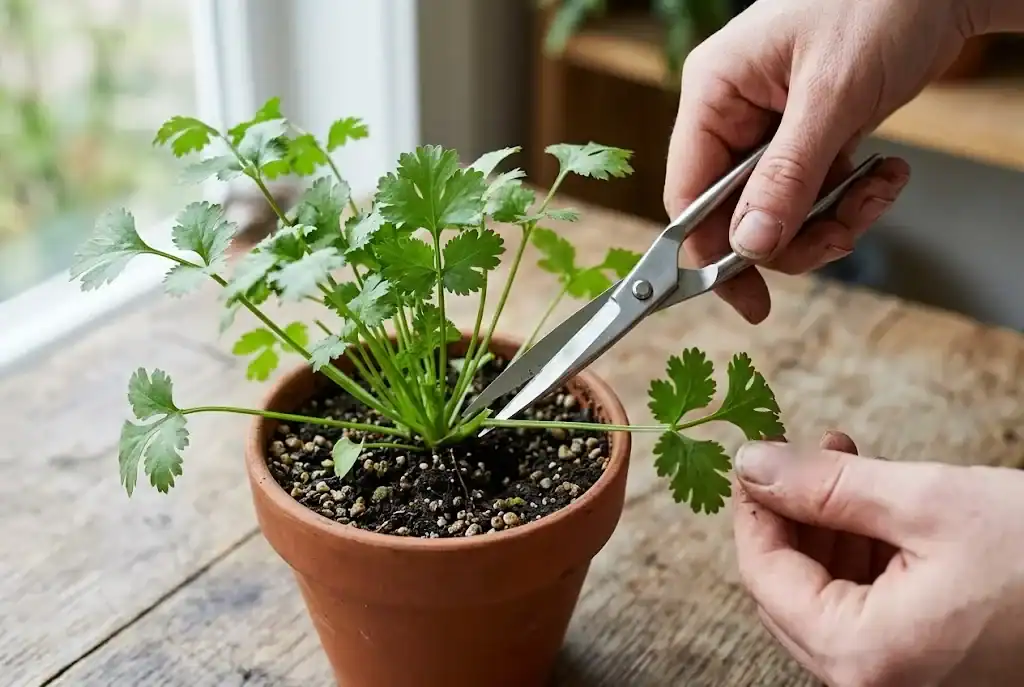
Use clean, sharp snips or herb shears. The stems of the plant are soft and the crown is fragile, so a clean cut matters more than for tougher growing herbs like rosemary or thyme. Avoid pulling stems off by hand, which often tears the crown and slows regrowth.
Choose outer stems first. Cut each stem about one to two inches above the soil, just above a leaf joint, and leave the smaller inner stems and the central growing point untouched. Take no more than a third of the plant at a time. A heavy cut slows recovery and pushes the plant toward flowering.
For a smaller harvest, pinch off individual leaves from the plant for use that day rather than cutting stems. Pinching slows the plant down the least and is a clean way to top up a few tablespoons of fresh cilantro leaves for a single recipe.
For a single harvest of the entire plant, cut all stems at once about an inch or two above the soil. The plant will not regrow, but you get the largest possible cut. This makes sense at the end of the cool season, or when the plant is about to set seed and you would rather save the leaves than wait another week.
How often to harvest cilantro
Every seven to ten days is a healthy rhythm during cool weather. Cilantro grows quickly when temperatures stay below seventy-five degrees Fahrenheit, so a regular light harvest keeps new leaves coming and discourages the plant from rushing to flower. Pick too little and the stems get thick and the leaves tougher. Pick too much and the plant struggles to recover.
When your cilantro plants reach about six inches tall, they are ready to be harvested for the first time. Most gardeners start cutting around four to six weeks after the seeds sprout. If you want a steady supply through the season, sow a fresh short row every three to four weeks. Cilantro is a cool-weather annual that is easy to grow, and even the best-tended plant eventually bolts when warm weather arrives. Succession planting is the most reliable way to keep cilantro coming from spring through fall.
Should I let my cilantro plants flower?
Bolt is the word for the moment a cilantro plant sends up its central flower stalk. Once that stalk forms, leaf production slows and the existing leaves turn tough and slightly bitter. The leaves are still safe to eat, just less pleasant.
Once a plant is sending up a stalk, removing it does not reset the plant’s life cycle. The plant has already shifted into flowering mode and will send up another stalk quickly. The real levers for slowing future bolting are cooler temperatures, evenly moist soil, light afternoon shade during heat waves, and a fresh succession of sowings every few weeks so that younger plants are ready to step in as older ones finish. A plant that has already started to bolt is best treated as a final harvest. Strip the remaining leaves for the kitchen and either let the plant bloom for pollinators and seed, or pull it and replace it with a fresh sowing.
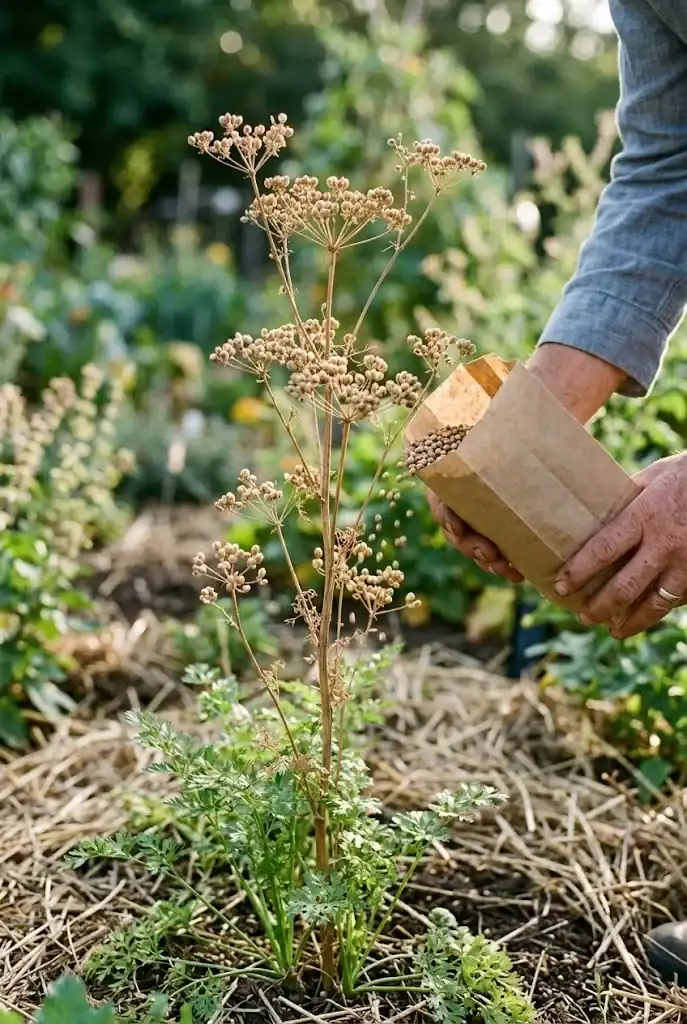
To harvest the dried seeds, let the plant go to seed and wait for the seed heads to turn brown on the stalk. Cut the stalk, hang it upside down in a paper bag in a dry spot, and let the seeds drop on their own. The dried seeds store for years in a sealed jar and are the starting point for a fresh round of cilantro the following spring.
How do you use and store cilantro?
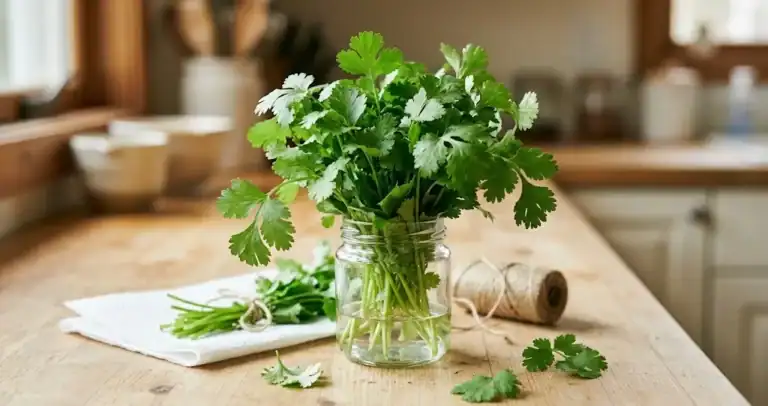
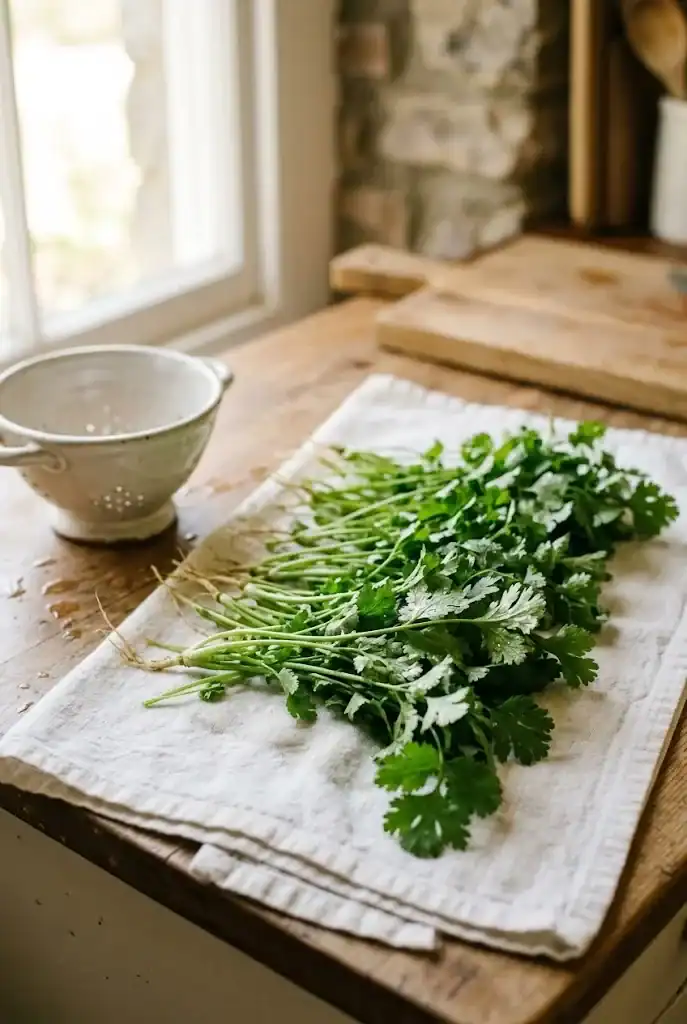
Fresh cilantro keeps its flavor best in the first day or two. Rinse the cut stems in cool water, pat them dry, and store them in the fridge with a light cover. A short paper towel in a loosely closed container keeps the leaves from drying out without trapping the moisture that rots them. Stems and leaves both go into the pot. The stems carry more of the aromatic oils than the leaves and they soften quickly in soups, salsas, and rice dishes. If you want to store cilantro for a week, the simplest way is a small glass with an inch of water, a loose plastic bag over the top, and a fridge door spot that is not too cold.
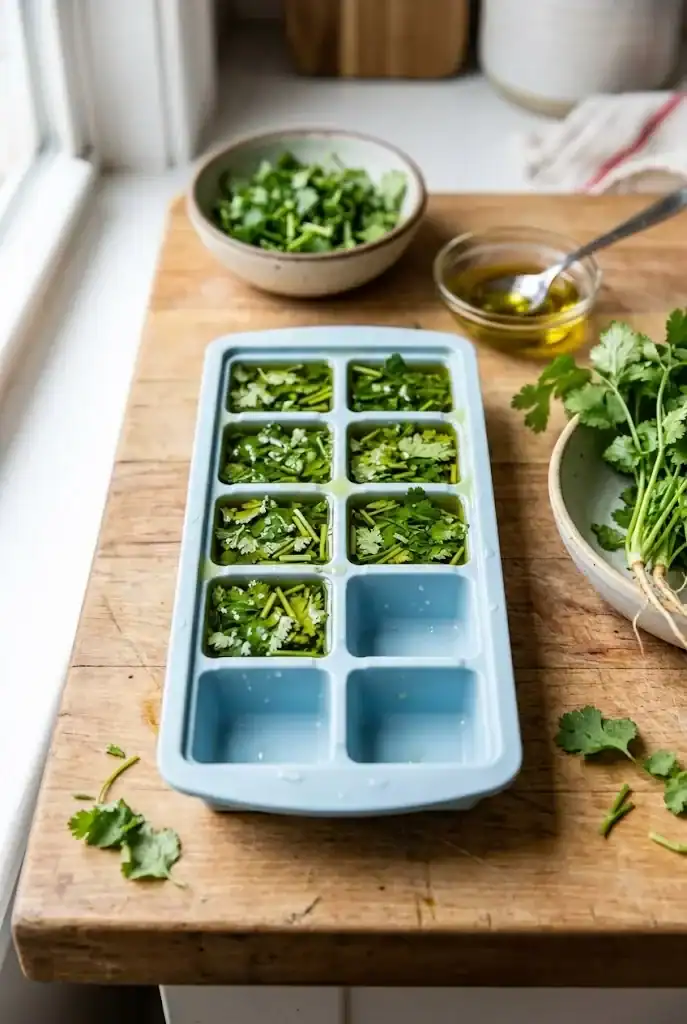
For longer storage, cilantro freezes well. Chop the leaves and stems, pack them into an ice cube tray with a little water or olive oil, and freeze. The cubes drop straight into cooked dishes. The texture changes but the flavor holds for months. Fresh leaves are best for garnishes, frozen cubes are best for cooked dishes where the herb is part of the flavor base.
For a fuller walk through every storage method, from the bouquet-in-a-glass trick to the freezer bag, the practical guide at how to store cilantro covers it in depth.
For gardeners without a yard, cilantro also grows well in pots on a windowsill that gets morning light, so the same cut-and-come-again rhythm keeps a steady supply going even where space is tight.
If you want to harvest your cilantro in quantity for cooking or preserving, the simplest way is a quick succession of short rows. Each plant gives its biggest cut just before it bolts, and a few rows planted two weeks apart mean you always have a fresh plant at that stage. That rhythm also gives you enough cilantro leaves at once to pack a few trays of frozen cubes with herb and oil for the freezer. To dry cilantro for later, hang small bunches in a warm, dry spot out of direct sun until the leaves crumble, then store them in an airtight jar away from light.
Frequently asked questions
Does cilantro grow back after being harvested?
Yes, as long as the central crown and inner stems are left in place. Outer-stem harvests using the cut-and-come-again method keep a single plant productive for several weeks. A whole-plant cut at the soil line is a final harvest and the plant does not come back from it; treat that cut as the end of that plant, not the start of a second one.
Can you eat cilantro after it has bolted?
The leaves are still safe, though the flavor turns bitter and the texture gets tougher once the plant sets a flower stalk. Most gardeners strip the last useful leaves off and let the plant finish for seed rather than eating bolted leaves.
Can you eat cilantro stems?
Yes. The stems are more strongly flavored than the leaves and they soften quickly when cooked. Finely chop them and add them with the onions and garlic at the start of a dish, or blend them into salsa, pesto, and chimichurri. Save the tender upper stems for garnishes and use the thicker lower stems in cooked dishes.
What is the difference between cilantro and coriander?
They are the same plant. Cilantro is the name most North American recipes use for the fresh leaves and stems. The dried seeds of the same plant are sold under another name in many kitchens, and that name is also used for the fresh leaves in many other cuisines. When a recipe calls for the ground spice, it means the dried seeds.
How do you harvest coriander seeds from cilantro?
Let the plant bloom and let the seed heads turn brown on the stalk. Cut the stalk, dry it in a paper bag, and shake the seeds loose. The dried seeds store for years and can be sown for next season’s cilantro.
Regular harvesting does more than supply leaves. It keeps the plant young and productive, and it tells you how the plant is responding to the season so you can adjust sowing times for the next round. The cut-and-come-again rhythm is the simplest way to make sure every cilantro harvest ends up in a meal rather than going to seed on the plant.
Once your harvest is in, the next decision is what to do with it. From salsa and tacos to rice and broth, cilantro shows up in a wide range of cuisines and is a versatile herb to keep on hand. The leaves and stems find their way into soups, curries, marinades, and condiments with equal ease, and most cooks who love cilantro find new ways to use it every season. A practical guide to using it well sits at ways to cook with cilantro.