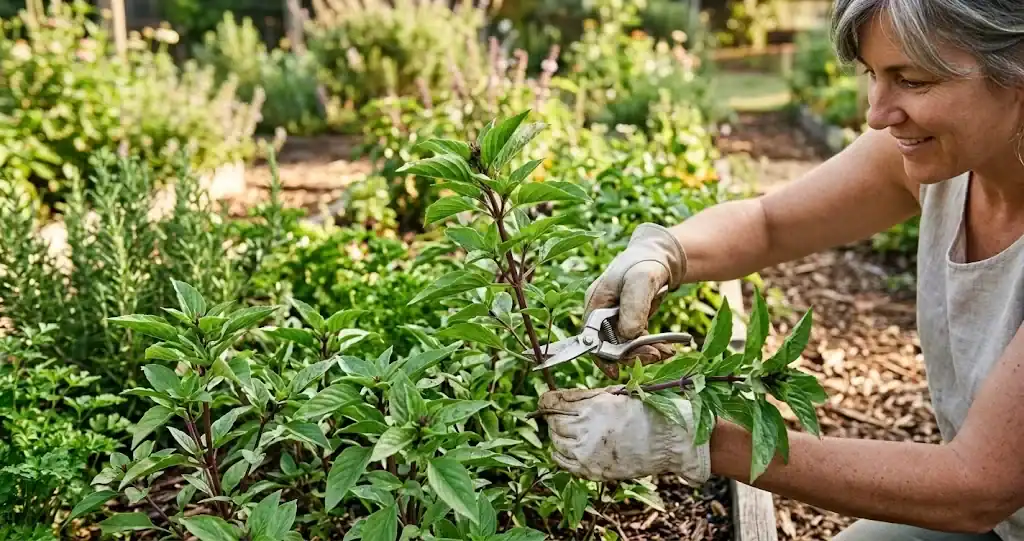
Asian basil brings an unmistakable punch to the kitchen garden. With sturdy square stems, pointed green leaves, and an intoxicating fragrance of anise, clove, and sweet spice, this vigorous herb transforms homemade curries, noodle dishes, and fresh summer stir-fries. Yet many home gardeners treat it like standard Italian sweet basil, plucking single leaves from the bottom of the plant until they are left with bare, woody stalks and an early crop of purple flowers. Learning how to harvest Asian basil properly changes everything, turning a single young plant into a bushy, productive powerhouse that provides fragrant clippings all summer long.
The secret lies in understanding plant structure. In botany and cooking, the term Asian basil most commonly refers to Thai basil (Ocimum basilicum var. thyrsiflora), known in Thai cooking as horapha. It is closely related to Mediterranean sweet basil, but features narrower lance-shaped foliage and deep purple stems. Other popular basil varieties across Southeast Asian cooking include holy basil (Ocimum tenuiflorum, known as kaphrao) and citrusy lemon basil (Ocimum citriodorum). While each type of basil offers a distinct flavor profile, they all share identical branching habits. Whether you start basil from seeds indoors before the last frost date or sow seeds directly outdoors once the soil has warmed, adopting a disciplined pruning routine ensures continuous yields without killing the plant.
When to Harvest Asian Basil for Peak Flavor
Timing your pick directly influences both leaf flavor and plant stamina. You can start harvesting basil once the young plant reaches about six to eight inches tall and has established at least three to four sets of leaves. Gathering foliage earlier deprives the seedling of the foliage it needs to manufacture food through photosynthesis, while waiting too long encourages the plant to direct its energy into tall, spindly growth.
The best time of day to harvest Asian basil is early in the morning. As morning light warms the garden, wait until the morning dew has evaporated from the green leaves, but pick your basil before the intense midday heat sets in. During the cool overnight hours, the plant refills its tissues with moisture, and its aromatic essential oils settle in high concentrations within tiny glands across each basil leaf. If you gather stems under hot afternoon sun, those volatile aromatic oils evaporate rapidly, leaving the cut stems limp and muting the pungent flavor that defines good Asian cooking.
If you are growing basil in the ground or managing a broader backyard patch, check our complete guide on the general principles of harvesting herbs to coordinate cutting schedules across your entire culinary garden.
Where to Cut: Pruning Techniques for Bushy Growth
The most common mistake new growers make is plucking individual single leaves off the stem. While grabbing a few leaves for dinner seems harmless, pulling foliage from the lower branches strips the plant of solar collectors while leaving tall, unbranched stalks behind. When growing Thai basil, always gather your herbs using a technique known as cut-and-come-again pruning.
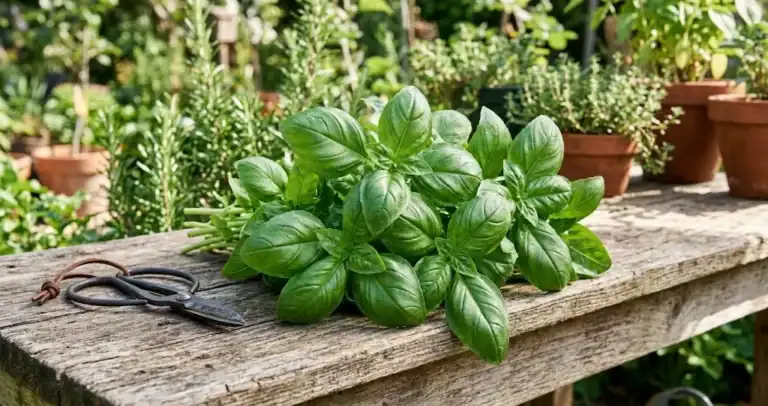
Inspect the stem you intend to trim and locate a prominent leaf junction. That junction is the growth node where a pair of mature leaves connects to the main stalk, and where two tiny new leaves or dormant side shoots are already emerging. Using a clean, small pair of scissors or sharp garden snips, make a clean cut roughly one-quarter inch above that growth point. Never tear or twist the stem with bare hands, as ragged tears invite fungal pathogens and damage sensitive plant tissue.
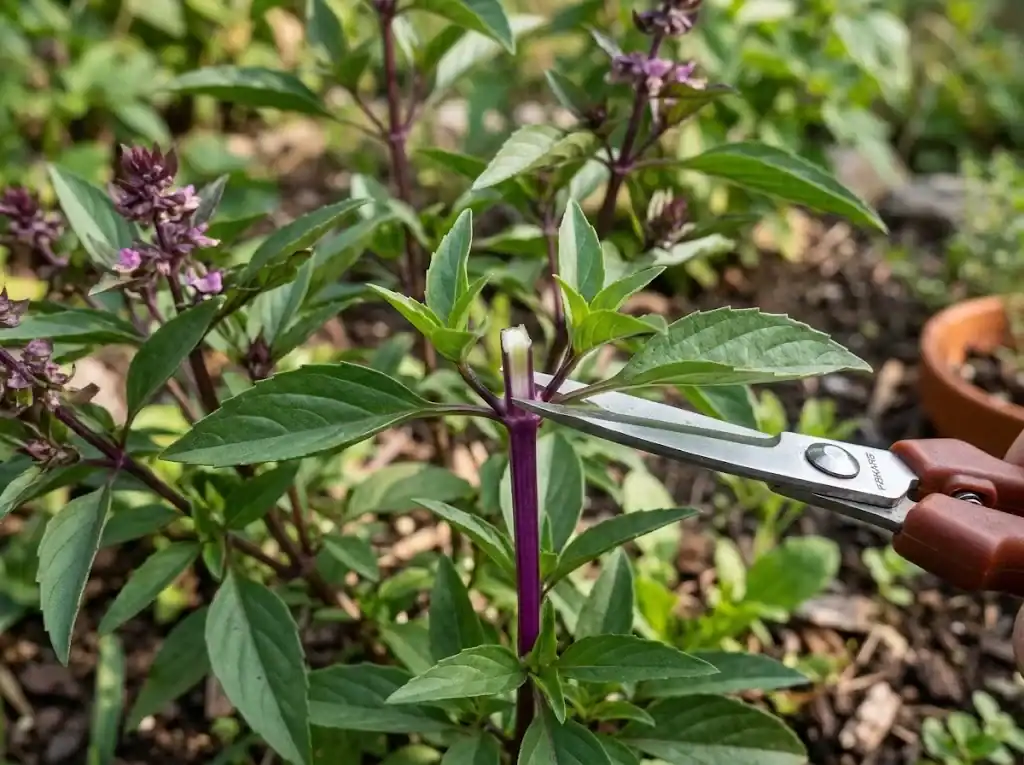
Removing the stem just above the branching junction triggers a natural hormonal shift in the Thai basil plant. With the terminal top bud removed, the plant redirects its energy into the two dormant buds nestled at the joint. Over the next week, those two buds sprout into two vigorous new branches, effectively doubling your future yield. Regular trimming through selective pruning creates a compact, bushy basil plant rather than a leggy, top-heavy stalk.
Follow the one-third rule whenever you harvest leaves: never remove more than one-third of the total foliage at any single gathering. Taking too much green growth shocks the root system and stunts recovery. After a heavy trim, give the herb a week or two to develop fresh foliage before you gather more stems.
Handling Flowers: Why Pinching Buds Extends the Season
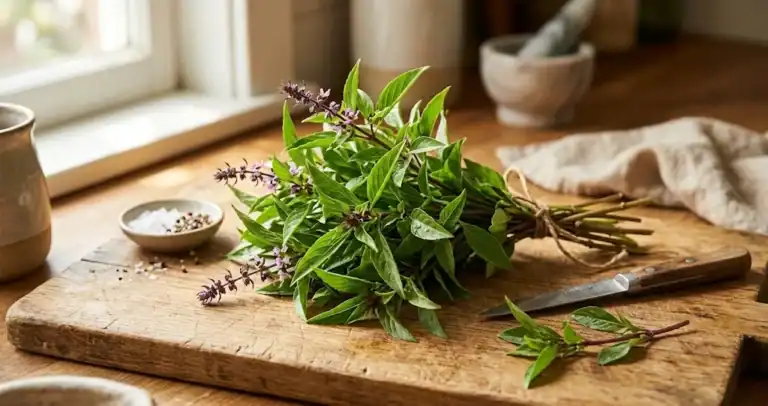
In warm summer weather, a Thai basil plant is an eager bloomer. It quickly sends up dense terminal flower spikes with tiny pink blossoms surrounded by deep purple bracts. While these basil flowers are visually striking and attractive to garden pollinators, allowing flower heads to mature signals the end of your culinary harvest.
As soon as a basil plant begins to flower, its internal priorities change. The plant stops developing tender new leaves and pours its carbohydrates and nutrients into flowering and maturing viable basil seeds. During this shift, existing foliage becomes noticeably smaller, leathery, and increasingly bitter. The sweet, peppery aroma fades as volatile oil composition alters.
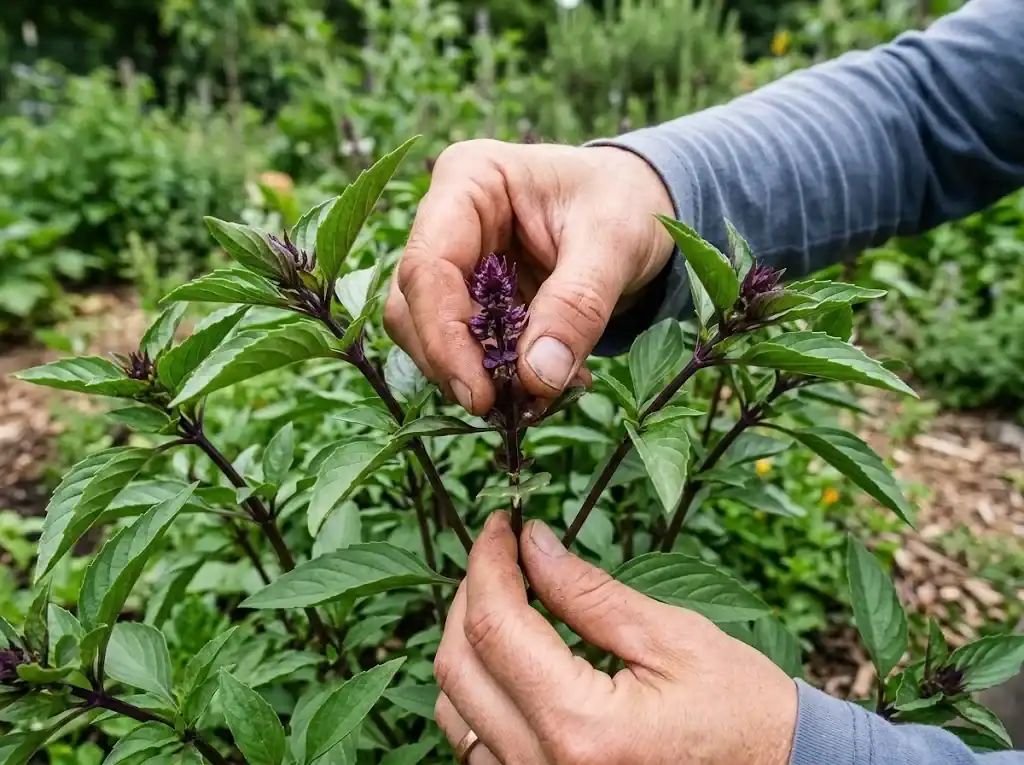
To keep growing high-quality Thai basil leaves throughout the growing season, inspect your plants weekly and pinch off every emerging flower bud as soon as you spot it. Use your fingernails or snips to remove the entire budding tip down to the first set of mature leaves below the flower spike. This simple practice of deadheading halts seed production and forces the herb to resume vegetative growth. If a neglected plant does set flowers, prune the flowering branches back aggressively above a strong set of leaves, enrich the soil with compost or liquid organic fertilizer, and new tender shoots will emerge within days.
Growing Conditions That Support Continuous Regrowth
Vigorous regrowth after each trim depends on providing the right growing conditions. When you grow Thai basil or holy basil, remember they are warm-season annuals that require plenty of warmth and sunlight to recover quickly from clipping. Place your herb in a sunny spot receiving at least six to eight hours of direct sunlight each day. In cooler northern regions, gardeners often grow basil in a pot on a bright windowsill or under an indoor grow light to maintain steady temperatures above 65 degrees Fahrenheit.
Soil moisture and fertility also play a significant role in leaf production. When you plant basil in garden beds or patio containers, ensure the soil is fertile, well-draining, and enriched with plenty of organic matter. Water deeply whenever the top inch of soil feels dry to the touch, directing moisture at the base of the plant to keep the foliage dry and prevent fungal leaf spot. Container-grown herbs dry out quickly in midsummer heat, so daily watering may be necessary during peak warmth. A light feeding with diluted fish emulsion or seaweed extract every three weeks replaces lost nutrients and fuels rapid stem development.
Post-Harvest Care and Storage Methods
Once you snip stems from the garden, handle them with care to protect their fresh flavor. Fresh Thai basil leaves bruise easily, which causes rapid enzymatic browning and ruins their appearance. Gently rinse the newly gathered stems under cool running water to remove garden dust, then pat them dry with clean paper towels or spin them briefly in a salad spinner.
A critical rule for storing fresh basil is to keep it away from the refrigerator. Unlike hearty greens or parsley, all varieties of basil are extremely sensitive to chilling injury. Temperatures inside a standard refrigerator cause the cell walls of fresh basil leaves to collapse, turning the bright green foliage black and mushy within twenty-four hours.
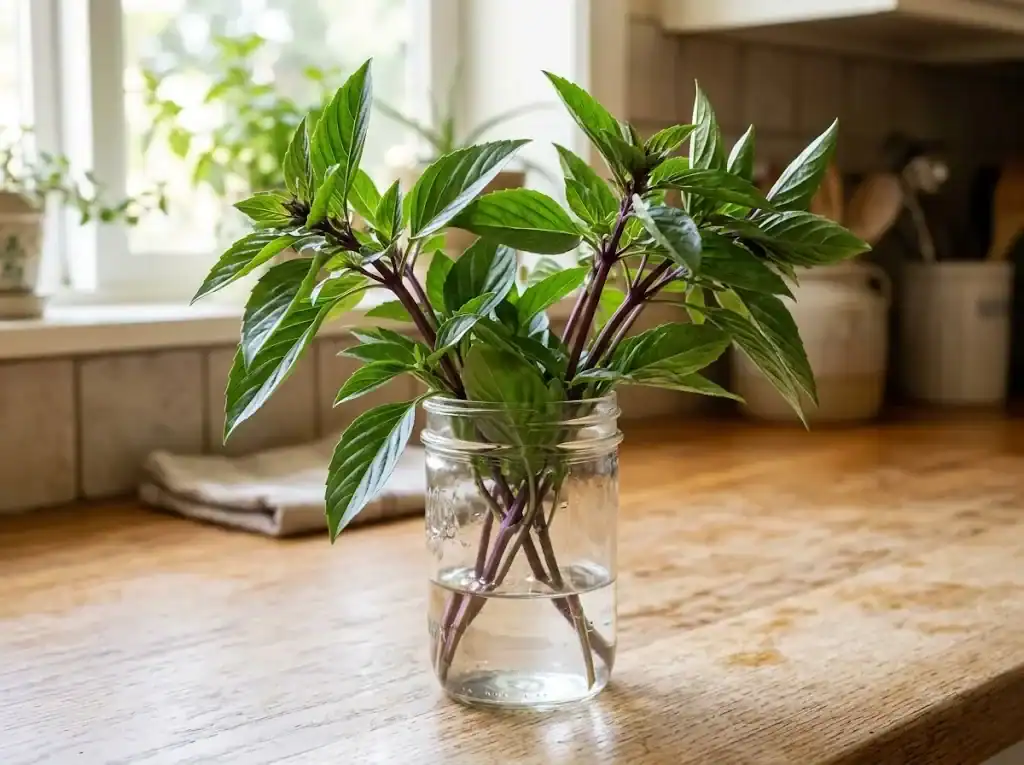
The best way to store fresh stems for immediate kitchen use is the countertop bouquet method. Trim a half-inch off the bottom of the cut stems, strip away any lower leaves that would sit below the waterline, and place the bunch upright in a small glass jar containing an inch or two of clean water. Keep the jar on your kitchen counter out of direct sunlight. Fresh stems stored this way stay crisp and fragrant for a week or longer. For detailed guidance on long-term preservation, freezing, and cold-sensitive handling, explore our guide on technical methods to store Asian basil after harvest.
If you have an abundant yield that exceeds what you can use fresh, freezing whole leaves in olive oil or pureeing them into frozen cubes provides another way to preserve aromatic flavor for winter cooking. While drying is possible, dehydrating Thai basil causes a significant loss of its volatile anise notes, making freezing or oil infusion the superior choice for preserving its distinct culinary punch.
Cooking with Your Fresh Harvest
Freshly gathered Asian basil is a cornerstone of Southeast Asian cuisine. In Thai cooking, fresh horapha leaves are tossed into bubbling green and red curries during the final minute of cooking, allowing their sweet licorice aroma to infuse the rich coconut broth without wilting the leaves into limp shreds. Stems are added generously to steaming bowls of Vietnamese pho, spicy stir-fries like pad krapow, and crisp summer rolls.
You can also use fresh basil leaves to bring an exotic twist to Western dishes. Blend the leaves into a pungent Asian pesto made with toasted sesame oil, garlic, and roasted peanuts, or scatter shredded leaves across summer tomato salads and grilled chicken. If you are looking for culinary inspiration to make the most of your fresh clippings, try these delicious Asian basil recipes to showcase your garden produce.
With proper pruning above leaf junctions, prompt flower pinching, and careful post-harvest storage, your Asian basil plants will reward you with an abundant supply of aromatic leaves from late spring until the first autumn frost.