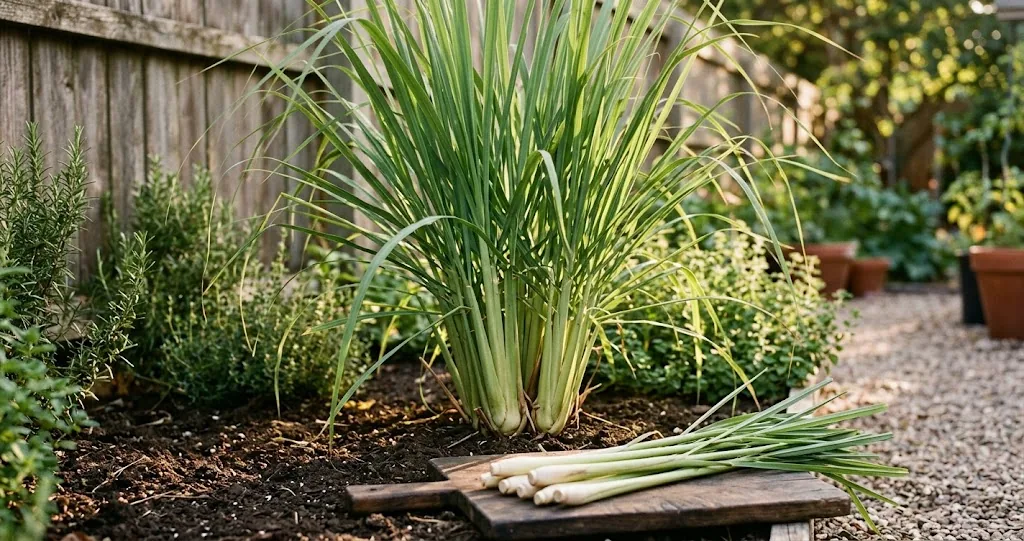
Lemongrass earns its place in a sunny bed or a generous container because it gives a lot for very little. Plant it once, water it through summer, and you will have the bright, lemony backbone for Thai curries, Vietnamese soups, and a quiet pot of herbal tea well into autumn. Lemongrass (Cymbopogon citratus) is a tropical perennial grass that grows as an annual in cold climates and a year-round stand in zones 9 to 11. The base of the stalk is the part you cook with; the tall lemongrass leaves give the plant its shape and its name.
For the basics of building an herb bed that suits your space and climate, see our guide to growing herbs from the ground up. The advice below focuses specifically on how to grow lemongrass so the lemongrass plant actually thrives rather than just surviving.
What lemongrass needs to grow well
Lemongrass is a heavy feeder from a warm, sunny climate, so the conditions you give it indoors or in a container need to mimic its tropical home. The plant is easy to grow once those conditions are met. Give it:
- Full sun. Six to eight hours of direct light is the minimum. In cooler summers, a south-facing wall or a bright patio makes a real difference.
- Warmth. Active growth kicks in above 70°F (21°C). Below 50°F (10°C) the plant slows down and the tops are usually killed back when temperatures drop near freezing.
- Damp, well-drained soil. Lemongrass likes steady moisture but not waterlogged roots. A rich, loamy bed enriched with aged organic matter is ideal. Sandy soil is fine if you water more often.
- Space to spread. A single stalk becomes a 2 to 3 foot wide stand in a season, and a mature plant can reach 5 feet tall, so set it out where its spread will not crowd smaller herbs.
If your soil is heavy clay, work in several inches of organic matter before planting or grow lemongrass in a raised bed or large container. The plant dislikes sitting in cold, wet soil almost as much as it dislikes an icy snap.
Choosing how to start your plant
There are four reliable ways to get lemongrass going, and which one you pick depends on patience, climate, and what your grocery store happens to have.
From a fresh stalk at the grocery store
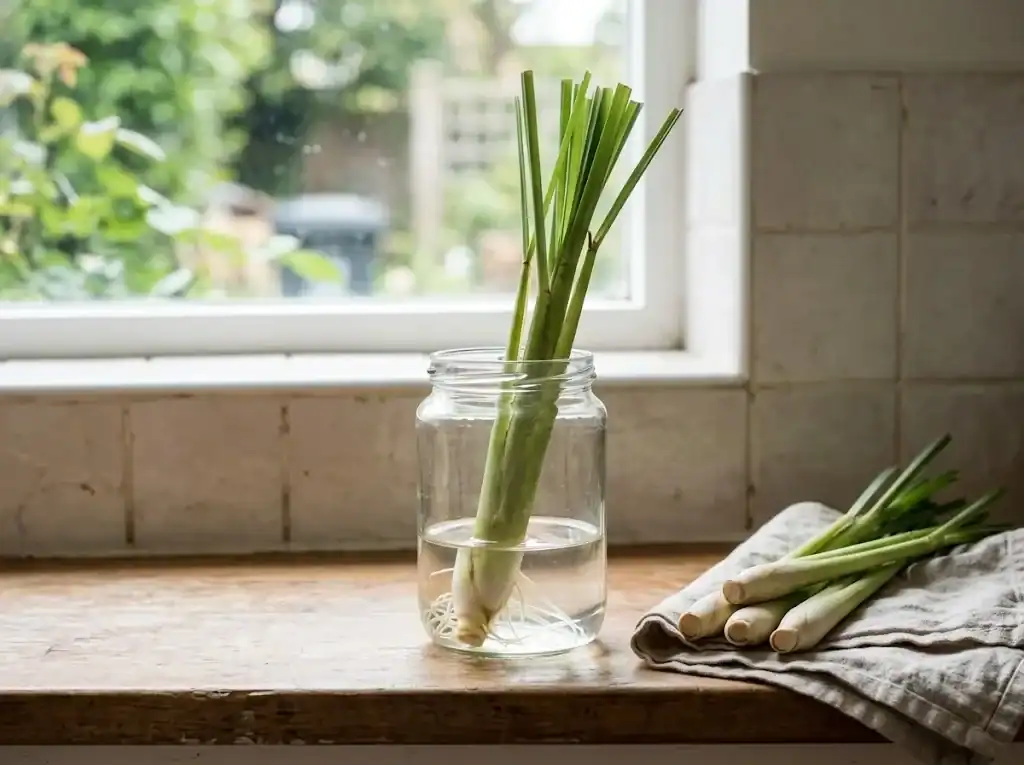
This is the easiest and most reliable method in North America and Europe. Look for firm, pale green stalks with the bulb end still intact. Trim the top of the leaves, place the lemongrass stalk in a jar of water on a bright windowsill, and change the water every couple of days. Roots appear in 2 to 3 weeks, and the cutting is ready to pot up when the roots are 2 to 3 inches long.
By division of an established stand
If a neighbor is dividing their lemongrass in spring, take a chunk with at least one or two stalks attached and some healthy roots. Replant immediately, water in well, and treat it as you would a nursery transplant.
From seed
Lemongrass seed germinates slowly and unevenly, so this is the slowest path. Start seeds indoors 6 to 8 weeks before your expected last frost date. Press the seeds into damp potting soil, cover lightly, and keep them warm (75 to 85°F). Germination takes 14 to 25 days. Seed-grown plants are slower to reach a usable size than stalk-started ones.
From a nursery transplant
Most garden centers carry lemongrass in spring in pots. Choose a plant with several stalks and bright green leaves, avoid any that look root-bound or have brown leaf tips, and set them out after your final frost date.
Setting lemongrass out in the ground
Wait until your final frost date has safely passed and night temperatures are reliably above 55°F (13°C). Lemongrass prefers a bed that has been enriched with aged organic matter, so work 2 to 3 inches into the top 6 inches before planting. Space plants 24 inches apart to give each stand room to expand, and set the crown at the same depth it was growing in the pot. Water in well with a long, slow soak.
A 2 to 3 inch mulch of straw or shredded leaves helps the soil hold moisture and keeps the roots cool through the hottest weeks. As the season progresses, lemongrass grows slowly at first and then fills out quickly once nights stay warm.
Growing lemongrass in a pot
If you are growing lemongrass in a container, choose a pot that is at least 12 inches across and 12 inches deep. Lemongrass develops a substantial root system and a small pot will stunt it. Use a rich potting soil mixed with a handful of compost, and check that the pot has drainage holes. Lemongrass grown in a pot dries out faster than in-ground plants, so plan to water when the top inch of soil feels dry.
Container-grown lemongrass is the easiest way to bring the plant inside for winter in cold climates. More on that below.

Watering and feeding
Lemongrass is thirsty during active growth. In a typical summer, plan to give it about an inch of water per week, more in heat waves or if it is growing in sandy soil. Let the top of the soil dry slightly between waterings, but do not let it dry out completely.
The plant responds strongly to nitrogen-rich feed. Fertilize every couple of weeks during the growing season with a balanced liquid fertilizer or a fish emulsion, especially if you are cutting regularly. Stop feeding in late summer so the plant hardens off before cold weather arrives.
Overwintering lemongrass in cold climates
Lemongrass is a tender perennial, so in zones 8 and colder it will not survive winter outdoors without help. The simplest approach for a single plant is to grow it in a pot and bring the whole container indoors before the first freeze. Cut the tops back to about 6 inches, set the pot in a bright sunny window, and water sparingly through winter. The plant will not produce much new growth but it will stay alive until spring.
If your lemongrass is growing in a bed, you can try digging a stand in fall before the first hard freeze, potting it up, and overwintering it the same way. Mulch heavily around any plant you are leaving outside; some gardeners in zone 8 find that a deep straw mulch over the crown brings the plant through mild winters, although the tops usually die back and regrow from the roots in spring.

When and how to harvest lemongrass
Most lemongrass plants are ready to pick when the stand is well established and the individual stalks are at least half an inch thick at the base, usually 3 to 4 months after planting. The leaves can be snipped any time for tea or soup stocks, but the thick pale base is the prized cooking ingredient.
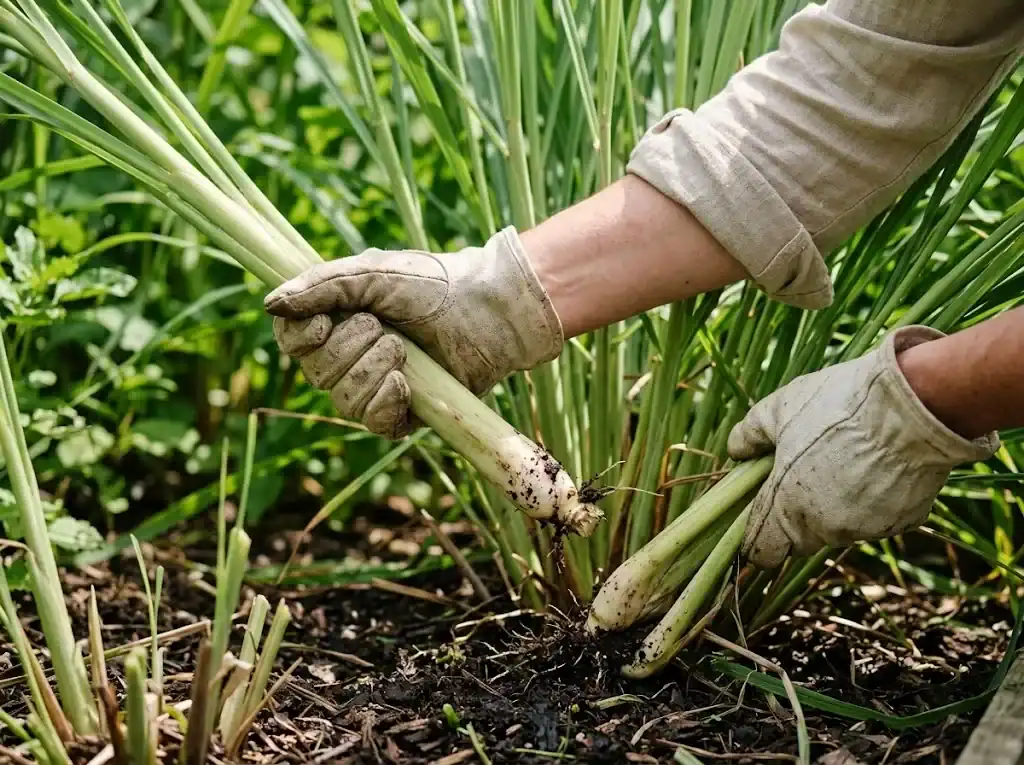
To harvest, grasp an outer stalk near the base and pull it sideways with a firm twist. The stem should separate cleanly from the rest. Alternatively, use a sharp knife to cut a stalk at soil level, leaving the inner stems in place to keep producing. For the full rundown of when and how to pull your harvest, see our guide on how to harvest lemongrass without weakening the stand.
Common problems and quick fixes
Lemongrass is largely trouble-free, but a few issues can show up:
- Yellow leaves in summer. Usually a watering issue. Either the soil is drying out too fast or drainage is poor and roots are sitting in water.
- Slow growth in containers. Almost always a pot that is too small or soil that has run out of feed. Pot up to a larger container and resume feeding every couple of weeks.
- Freeze damage. The tops blacken at the first hard freeze. Cut back damaged leaves and let the crown regrow in spring if the roots were protected, or bring the plant indoors if you want to keep it growing through winter.
- Mosquitoes. Citronella oil is derived from lemongrass and is used in some outdoor candles and sprays, but a stand of lemongrass in the garden will not meaningfully reduce mosquitoes on its own. Treat the plant as a culinary herb, not a bug repellent.
A short checklist for the season
Set out lemongrass after your final frost date in full sun and rich, evenly moist soil. Water steadily through summer, feed every couple of weeks, and cut outer stalks as the stand thickens. Before your first freeze in cold climates, bring potted plants indoors or dig a stand to overwinter. For preserving what you grow, see our walkthrough on freezing lemongrass so nothing from your harvest goes to waste.