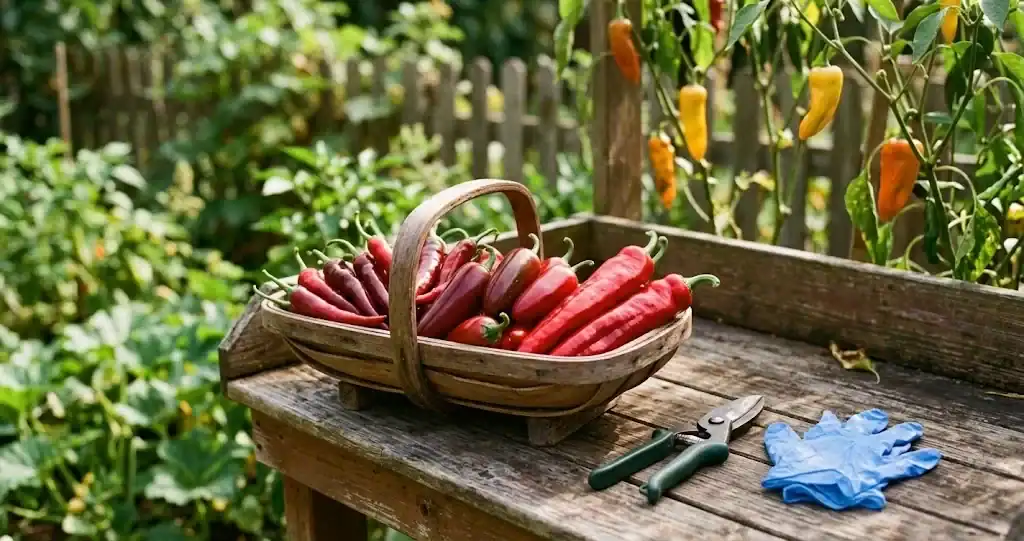
A single chilli plant can quietly turn a backyard bed or a sun-warmed patio pot into a steady supply of fiery pods from mid-summer through the first frost. The vines keep producing as long as you keep picking, and a fully red pepper in the hand has a sweeter, fruitier heat than any green pod you can buy. Knowing when to harvest peppers, how to cut the stem cleanly, and how to handle the capsaicin on your skin makes the difference between a small handful of pods and a pantry full of dried flakes, hot sauce, and pickled rings by Thanksgiving.
This guide covers the harvest window for both red and green fruit, the tools and gloves that make a clean pick possible, the small habits that keep the vines fruiting through the season, and the choices to make at the moment you pull the pod off the stem. For the broader framework of when and how to bring in a harvest without setting the growth back, see the general guide to harvesting herbs from your garden.
When a red chili pepper is ready to pick
Color is the most useful signal, and the signal most home growers read wrong. A chilli pepper does not turn red by accident: the fruit has reached full size, the pepper seeds inside are fully formed, and the capsaicin has settled into the ripe form the variety was selected for. A red cayenne, a fully red jalapeño, and a ripe habanero all share the same pattern, even though the heat level and the time on the vine are very different. UK growers tend to spell the same fruit chilli peppers, US growers spell it chili peppers, and both spellings cover the same Capsicum genus and its long list of cultivars.
A few tells confirm the timing:
- Uniform color across the pod. Streaks of green near the stem or shoulder mean the fruit is still coloring up and the sugars have not finished developing.
- Pod feels heavy and crisp for its size. A fully ripe red pepper has thick walls and full seeds, so it sits solidly in the palm rather than feeling hollow or papery.
- Skin has gone from glossy to slightly waxy. The fresh shine of an unripe pod dulls as the color deepens.
- The vines have been in the ground 60 to 120 days, depending on the type. A fast bell-shaped cultivar ripens earlier than a long-season cayenne or a thick-walled Anaheim.
Some growers pick a few pods while still green to encourage the next flush of fruit, then let the following round ripen fully. Both green and red pods have a place in the kitchen, and picking small amounts early rarely slows the vine down.
How to pick a pod without damaging the vine
The vines produce fruit where the stem meets a branch, and the cluster above that junction is next season’s earliest pod if the year is long enough. The goal is to remove the red pepper without tearing the soft tissue where the next flower buds will form.
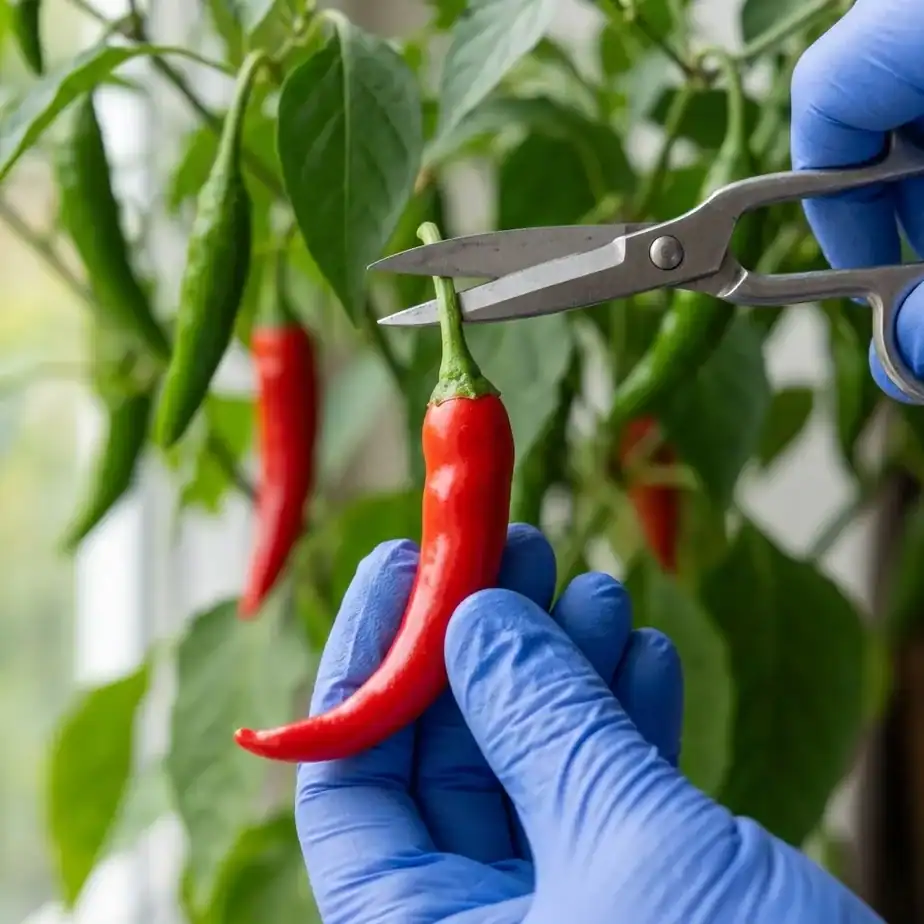
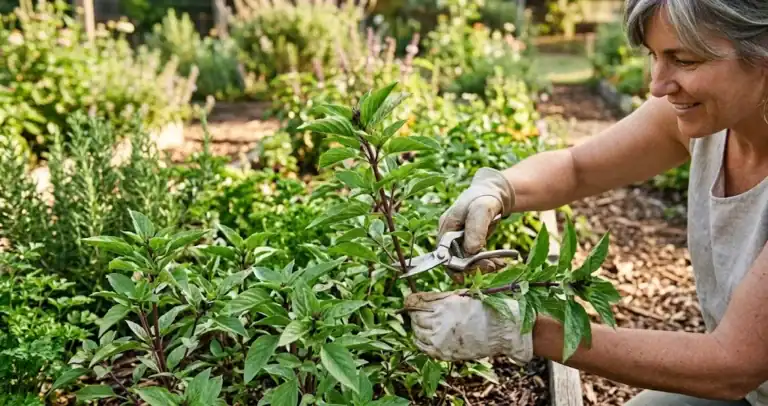
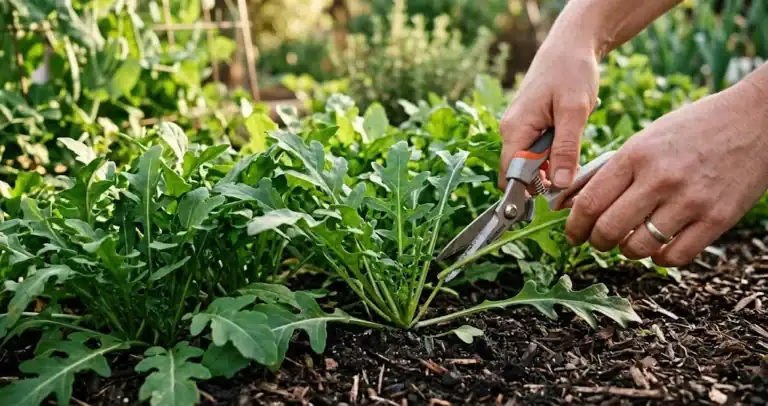
The cleanest pick uses a small, sharp pair of garden snips or pruners rather than a pulling motion. Leave about half an inch of stem attached to the pod so the cap stays sealed and the fruit stores longer. Cut just above the joint where the stem meets the branch, never into the branch itself.
A few small habits make the harvest easier:
- Pick in the cool of the morning. The pods are firm and the capsaicin has not been driven into the leaves by midday heat.
- Bring a shallow basket or bowl. Stacked fruit bruises, and a bruised pod spoils at the stem end within a day.
- Set green and red peppers in separate piles as you pick. Mixed ripeness makes storage decisions harder later.
- Check under the lower leaves. Mature red fruit often hides where the foliage has flopped over a heavy cluster.
A healthy vine responds to regular picking by setting new flowers, so a steady weekly harvest through August and September usually yields more than a single large pick at the end of the season.
Safety with hot peppers
Capsaicin is the compound that gives a chilli its heat, and the same compound burns the skin, the eyes, and any small cut on the hand. Most home gardeners underestimate how much capsaicin transfers to the fingers during a long pick.
A pair of disposable nitrile gloves keeps the active compound off the skin. Thin rubber dish gloves work almost as well. Skip the thick leather pair: they make the snips hard to control, and the oils still find their way through the fingertips.
A few habits help:
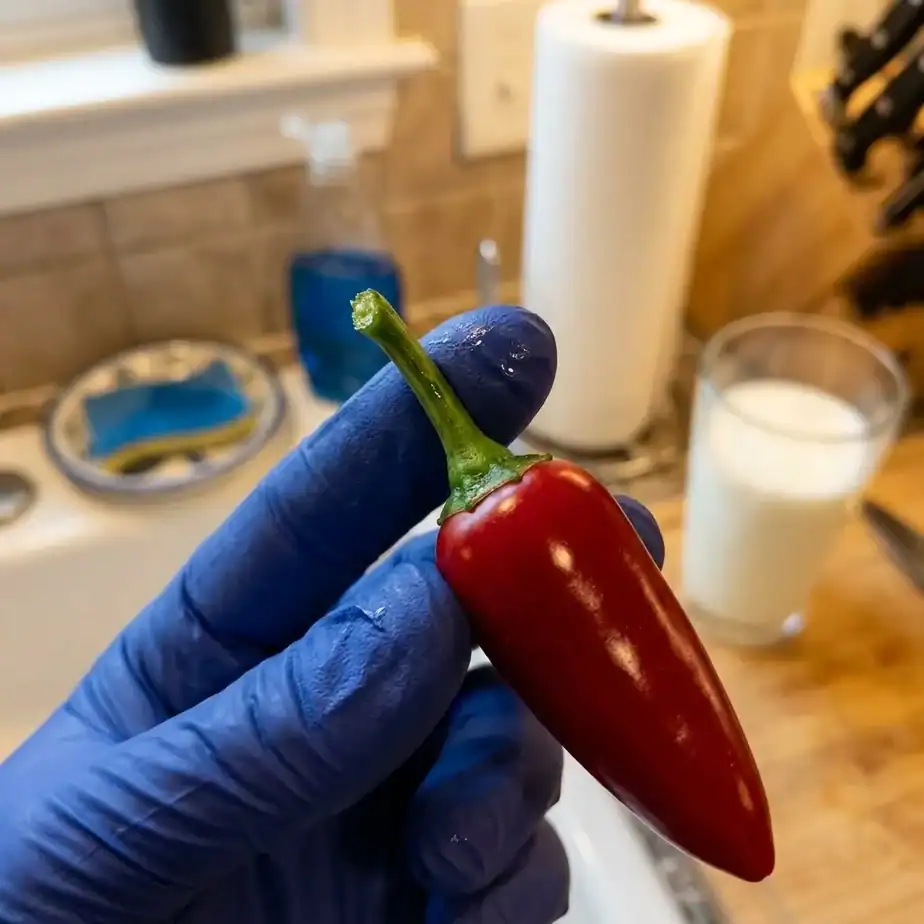
- Wear gloves the moment the first pod is cut. The first handful is when the most capsaicin gets onto bare skin.
- Do not touch your face, especially your eyes, while you are picking or until your hands have been washed with soap and cool water.
- Wash gloves and tools with dish soap, not just water. Capsaicin is oil-soluble and rinses off only with a degreaser.
- If a burn develops on the skin, soak the area in cool whole milk for ten to fifteen minutes. The casein binds the capsaicin and pulls it away from the nerve endings.
Green versus red: when to pick which
Green and red peppers are the same fruit at two different stages, but the kitchen uses are different. A green pod has thinner walls, a sharper grassy flavor, and a heat that builds quickly. It pickles well and fries well, and it holds its texture after a quick sauté. A red pod has thicker walls, a sweeter undertone, and a deeper, rounder heat. It dries well, smokes well, and turns into hot sauce or paste with little effort.
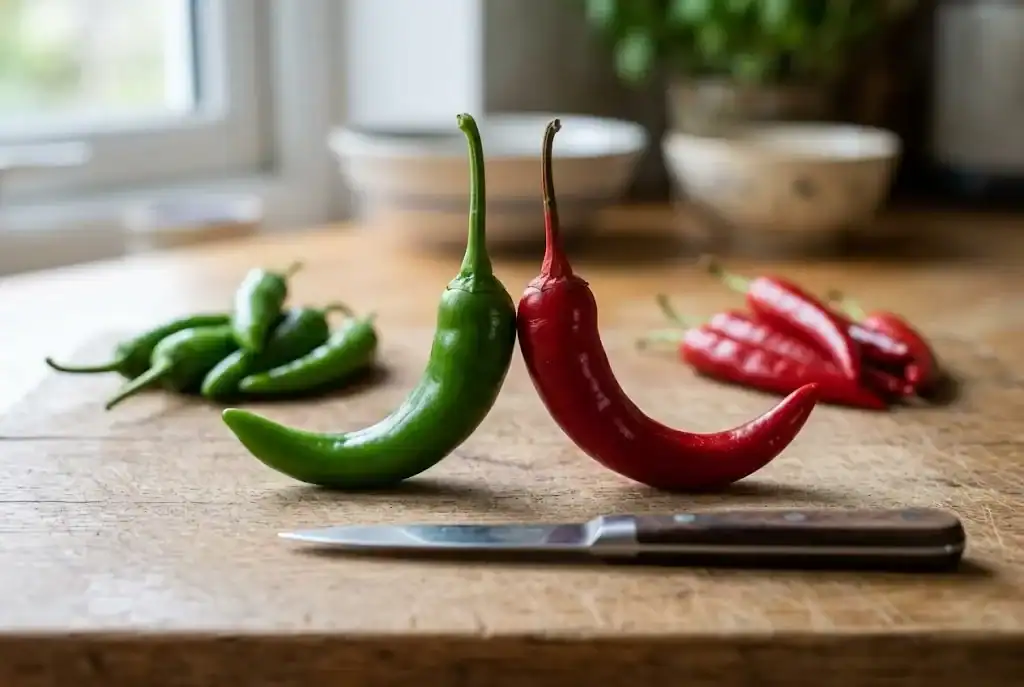
A practical pattern is to pick about a third of the harvest while still green for fresh use during the peak of summer, then let the rest ripen to red on the vines for drying and preserving. The growth keeps flowering at the top of the season, so the green pick at the bottom usually does not reduce the late red harvest. As a rule, the hotter the variety, the longer the gardener lets the pods stay on the plant, since heat builds steadily through the ripening window.
Type differences worth knowing
Not every chilli turns red at the same speed, and not every red pepper tastes like another. A cayenne is thin-walled and dries on a kitchen counter in a week. An Anaheim ripens to a deep brick red and is best roasted and frozen. A jalapeño left on the vine turns a dark, almost burgundy red and develops a smoky sweetness that the green stage lacks. Tabasco plants hold their small, pointy pods upright on the vine, which signals the right harvest window from across the garden.
If the goal is a dried pepper for grinding into powder, a cayenne, a Thai, or a long, slim pod dries the fastest and the cleanest. If the goal is hot sauce, a fleshy red jalapeño or serrano gives the best balance of heat and body. Habaneros and other superhots can ripen to a bright red, but the late season means a northern yard often runs out of heat before the last fruit colors up; in that case, bring the whole specimen indoors to finish ripening on a sunny windowsill. A few ornamental varieties, grown mostly for their bright color, also produce edible fruit, though their heat and flavor are usually mild next to a true culinary chilli.
What to do with a fresh chili right after picking
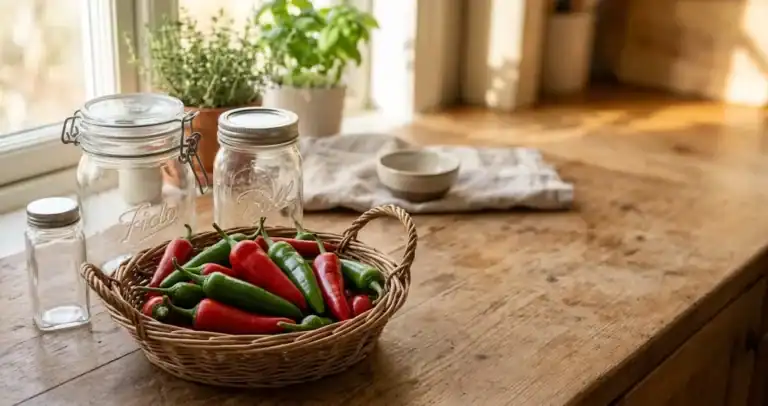
A freshly picked red pepper keeps in the fridge for about a week in a paper bag set in the crisper drawer. The paper absorbs the small amount of moisture the pods give off, and the cool temperature slows the breakdown of the capsicum.
For longer storage, three simple paths cover most home kitchens. Pick the path that matches how you want to use the harvest later:
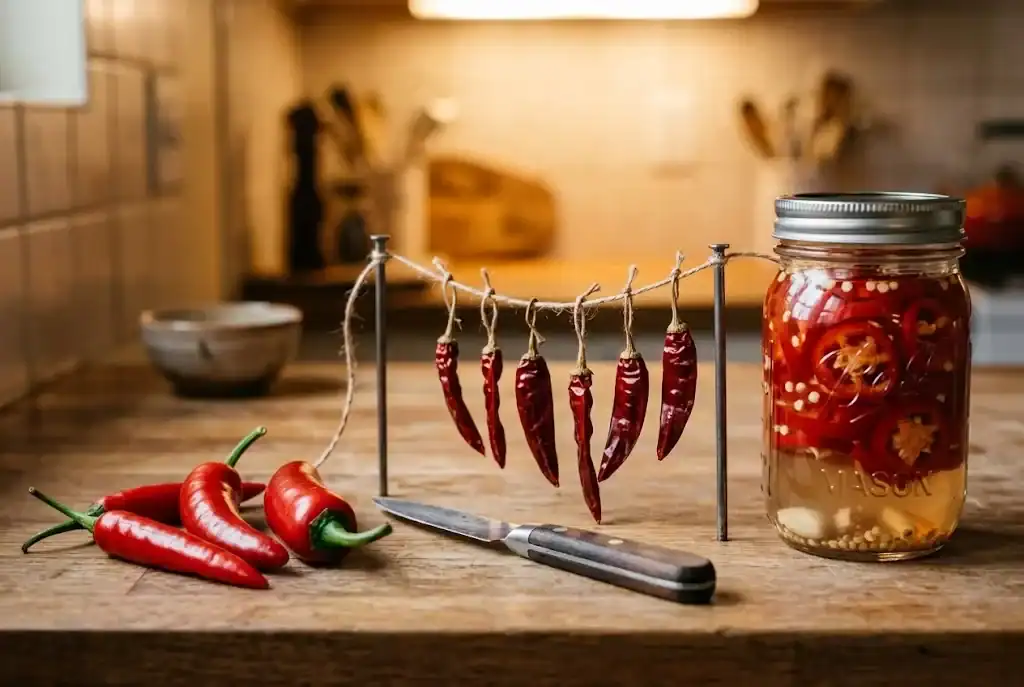
- Drying on a string. Thread the stems onto a length of kitchen twine, knot the ends, and hang the rope in a warm, dry room with good airflow. The pods dry in two to four weeks depending on humidity. Black spots or any softness at the stem end mean a pod was not fully mature and should be used first.
- Freezing on a tray. Lay whole peppers on a baking sheet so they do not touch, freeze until solid, then bag them. Frozen pods slice easily on a cutting board and go straight into a pan without thawing.
- Pickle in vinegar. Pack sliced fruit into a clean jar, cover with hot vinegar and a teaspoon of salt per cup, and seal. Pickled peppers keep for months in the fridge and turn a sandwich or a bowl of rice into a bright, hot bite.
For step-by-step guidance on freezing, drying, and pickling in more detail, see the companion guide to keeping chili fresh after harvesting.
Putting the harvest to work in the kitchen
A full basket of red pods rewards a short session at the cutting board. Slice the fruit into thin rings for a fried-egg topper, or roast a tray under the broiler until the skins char and slip off for a smoky salsa base. A few red peppers cooked down with onion, garlic, and a splash of vinegar blend into a quick hot sauce that keeps in the fridge for a month.
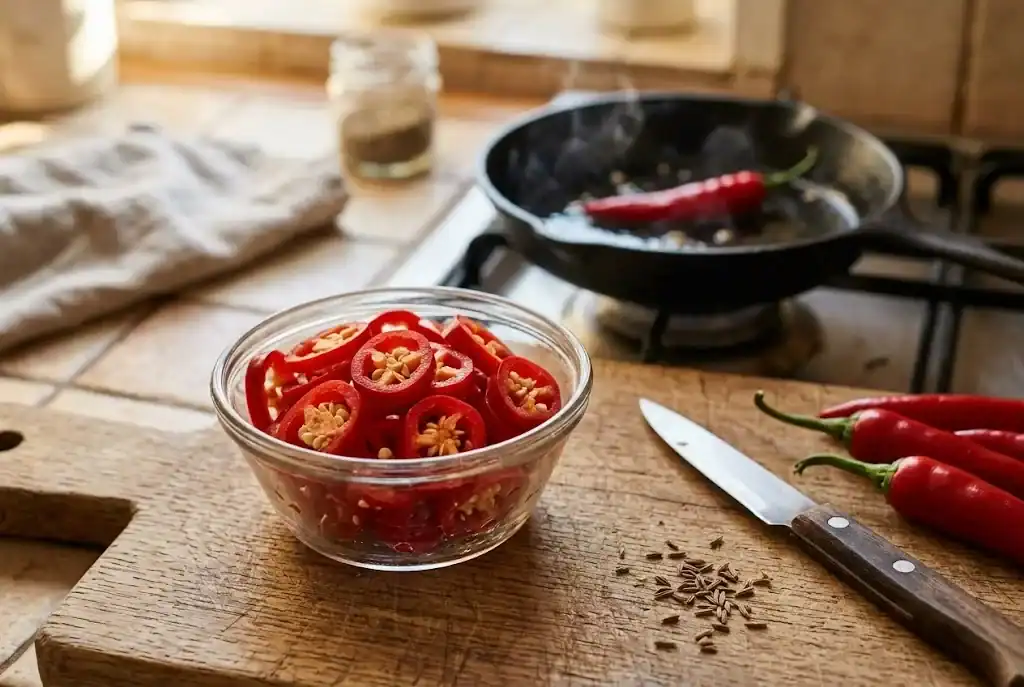
If the harvest is bigger than the week can eat, dry the surplus and grind it into chili powder for winter stews and chilis. The dried pods keep their heat for a full year in a sealed jar in a cool dark cupboard. For a wider sweep of red pod recipes and a few non-spicy options, see the red chili recipe collection.
Common questions about harvesting red chili
How long does a chilli plant keep producing?
In most of the United States, a healthy specimen produces from early July through the first hard frost, often into October. In a warm climate, the same vines can fruit year-round. Picking ripe pods promptly is what keeps the growth setting new flowers; a specimen loaded with overripe fruit will slow its production noticeably.
Will a green chili pepper turn red after it is picked?
Yes, slowly. A fully sized green pod will ripen to red on a kitchen counter over one to three weeks if kept at room temperature out of direct sun. The flavor is sweeter than a pepper that ripened on the vine, because the sugars and seed oils develop without the constant pull of the growth itself.
How do I know if a pod is too hot to handle without gloves?
Any type that rates above a jalapeño on the Scoville scale, including cayenne, serrano, Thai, and habanero, should be picked with gloves. Even a mild bell pepper can irritate a small cut on the finger. When in doubt, put on a pair.
Can I leave peppers on the vine until the first frost?
Most types tolerate a light frost, and a cold snap actually concentrates the sugars and deepens the color of late-season pods. A hard freeze, however, damages the fruit wall and turns the pepper mushy within hours. Watch the forecast in late October and pick anything close to fully red before the temperature drops below 28 degrees Fahrenheit.